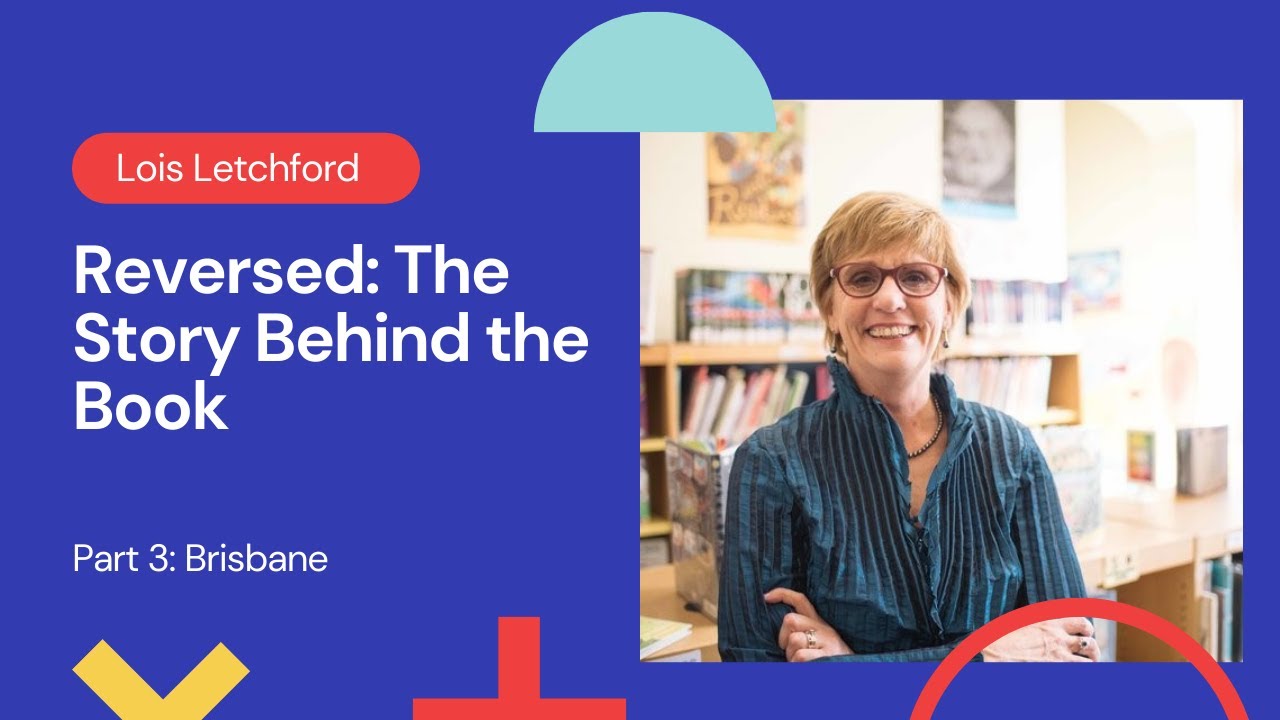
In this video Lois Letchford recounts the Brisbane chapter of her memoir Reversed: A Memoir, focusing on her son Nicholas’s struggle with early literacy after failing first grade in 1994. She describes how a devastating label from a diagnostician (“the worst child I’ve seen in 20 years”) spurred her to rethink teaching approaches. Lois details concrete, experiential interventions she devised: contextualizing sight words (the “saw” example), using physical placement cards to teach the word “under,” and creating a diagnostic “box lesson” that engages children in decision‑making. She connects these practices to Brian Camborne’s Beyond the Deficit Theory, which critiques labeling children and urges richer demonstrations. The narrative follows Nicholas’s progress through second to fifth grade across three continents, highlighting milestones such as independent reading at a third‑grade level, social challenges, and the pivotal moment when he read fluently at home. Throughout, Lois urges teachers to abandon rote, one‑size‑fits‑all methods, adopt experiential strategies, and to read or purchase her book to spread these ideas. The video ends with a call to like, subscribe, and share the message.
Chapters
Hello. I'm talking about my book, Reversed: A Memoir. It's a story of education and it's a story of overcoming the odds. When a child fails first grade, the chances of achieving a normal life are really limited. And someone wrote online, why should we listen to you? Why does she think she's got something to say? I think I have something to say because my son not only failed first grade, but the journey out of this quagmire was through a series of accidents. And today I'm going to talk about Our time back in Brisbane, Australia. In 1994, Nicholas was in first grade and he failed. 1995, he went into second grade, had a wonderful teacher, and then our family moved to Oxford, England for 6 months. And during that time, my opinion of Nicholas changed, so my mindset was impacted. Instead of seeing a child who failed, I'm seeing a child who can think. I'm seeing his learning of letters and sounds is slow, but I'm learning he can learn. That's why I think my voice is important. Then in 1996, we returned to Brisbane, Australia, to our home, and Nicholas goes back to school. And that's the story I want to share today. Because he was not keen to go to school, I remember him clinging to the bedpost and grinning and me thinking, well, my kid's just being silly. I didn't realise how afraid he was of going to school, and that took me a while to work out. And so he goes back to school, he goes back to the same teacher, he's going to repeat second grade this year. I happened to visit the lady, the person, in Australia we call them guidance counsellors, in the US it's diagnostician, who had done the testing of Nicholas the year prior. And I just happened to be passing and just thought I'd let her know what happened in Oxford and really how delighted I was with Nicholas and his learning and that he was excited to learn. And the words she told me I will never forget. And she said, I've spoken to the reading teacher and he's gone backwards and he's the worst child I've seen in 20 years of teaching. And I still struggle to say those words with limited anger. Utterly devastated is how I felt as I left her office. I didn't know what to do. I actually, in reality, I went and visited a lady up the street and just talked. But it was through that talking and thinking that I realised Nicholas can learn. And what I did was I went back to that lady that day and said, well, if he is that, if he is the worst child you've seen in 20 years of teaching, Then don't expect him to learn like everyone else. And those— that thinking was critical in my ability to change my approach. But I also needed the knowledge that Nicholas could do things, that he was capable of learning and capable of thinking. And then this is the scenario that just transformed my life, the moment that What changed me was recognising that someone had labelled him this terrible label. Then the reading teacher sent Nicholas home with 10 sight words to learn all of his sight words. Her expected way was to give him 2 sentences for each word, the same 2 sentences she gave for every single child in her care. And I'll never forget the word saw. She gave him the sentences, I saw a cat climb up a tree, and I saw a man rob a bank, and Nicholas read, I saw a cat, and he stopped. And he went back and he read, I was a cat, and he stopped again. Then he went back and said, I saw a cat, and I said it again, and he just handed me the paper. It took me a while to work out what was happening and to work out what I had to do to teach him. Nicholas was in fact cutting the cat in half, which is why he stopped after I saw a cat. And then he went back and tried again and he said, I was a cat. No, he said, I was never a cat. And the other 2 don't make any sense. And I changed it there and then, but it took me an hour of talking with Nicholas about— talking about the experiences of what we had seen in, in the UK, what had we seen in Oxford, and then giving him the concrete meaning. When we went to Windsor Castle, did we pack a saw in our bag? Did we take the saw out? When we got there and cut a brick out of the wall. Did we do that? No, we didn't. When we went to visit the British Museum, did we take a saw with us to look at Captain Cook's maps? Did we take a saw with us when we saw the Gutenberg Bible? And Nicholas had been in each of these situations, so now he has experiential knowledge of what he did to used the word saw. And the Gutenberg Bible in particular was fascinating because it's under glass, it's under lights, and Nicholas knew it was the world's first printed book. And we were in awe as we went and looked at this, this artefact. It's an original document, so he knew that we would never be cutting it in half. And he now knows from experience and reality that the word saw has more than one meaning. This incident of labelling a child and poor teaching came out when I went back and did my studies in literacy, and it came out through the academic paper of Professor Brian Camborne in Beyond the Deficit Theory, and Camborne said exactly that. We label the children a whole different range of labels, and what we fail to do is give them adequate demonstrations of our work. And so that was the start really Of the second component of my teaching and of the book, and it gave me power to realise that the teaching was critical and changing the teaching was critical. But then again, how we see children, if we so quickly write them off, then we've lost that child. So this whole scenario really turned my life around as to how I think, how we teach, and what else we have to do to teach children to read. I'm talking about my book so that teachers can realise how simple things stop our children from learning, and our children never have the language to say This doesn't make sense, and that's the problem that we face. And we as teachers have to identify when it doesn't make sense instead of just repeating the failing teaching method. So thank you. Hit like, hit subscribe, share it with others, and let people know that we must teach children to read and that my book is Reverse a Memoir. Buy a copy. Write a review and read it and leave it on Amazon or Goodreads and know again, again and again that we can, we must teach children to read because this is the picture of my son Nicholas who outran his label and achieved way beyond expectation but only after living on 3 continents. But the ease of saying those words defies the challenges that were involved in making him successful. Beyond the Deficit Theory: A 1990s Perspective on Literacy Failure by Brian Camborne. And it was this paper that really had me rethink— rethinking the way we teach. And the last video I talked about Nicholas's failure and then his success in that teacher's label. From there on, from that time on in 1996, I stayed at home, sent my boys to school, and when Nicholas came home I had an activity ready for him to help him learn. And I did the activity based on where I saw I saw his struggles and one in particular was with the word under. He actually had the spelling word thunder to learn, T-H-U-N-D-E-R, and in the word thunder is the word under and he couldn't remember it. So what I did was I wrote slips of paper and this paper is under your bed, this paper is under your pillow, this paper is under your chair, This paper is under. And I had all of these papers written and I placed them in the correct position in his bedroom. So when he came home, I said, I've got a little activity for you, will you do it? And he said, no. And I said, what if I give you a bar, a chocolate bar? Yeah, yeah, I'll do it, he said. So he did, and it didn't take long. And he got it. He got under. The next day, I put all of those papers together in a pile and said, when Nicholas came home from school, I said, now you put them all in the right places. And he did it, except for this paper is under the chair and this paper is under a chair leg. And he'd flipped those 2. So I was then able to say, oh, look, Nicholas, see, you've got them all right. But this one here, this is the chair leg. Where's the chair leg? Now it's not an abstract thought we're doing, we're physically doing it. This is the chair leg. Where does this paper belong? And under the chair, where does this paper belong? And from there he was really quite happy and he learnt the word thunder and he learnt the word under. I continued to do this until we came to Woodcote and Shoreditch And then I put up an activity which I sent from home to school for the reading teacher to do. I just said, Nicholas, take this box with you. The reading teacher didn't speak to me, but the classroom teacher did and said that lesson was phenomenal. I now have a video of my box lesson on my YouTube channel for anyone to see and to use. And the box lesson itself became the first lesson I used with every child that came to me from there on in. Because it gave me a diagnostic tool in a fun setting to say, what does this child understand about language? And it has them thinking, it has them actively engaged in making decisions as to whether This— what could be in this box, what should be in this box, and what would you like to find in this box? It was a critical breakthrough in my teaching, another critical breakthrough in my teaching, in showing if we change the teaching that our students can learn. And in Brisbane, Australia, 1996, it wasn't It wasn't too long into second grade when Nicholas was up dressed for school and reading in the lounge room. And it was 5 o'clock in the morning and I heard a voice reading. It was very early, so I didn't know what was going on, but I tiptoed out of bed and that's when I saw Nicholas dressed for school, totally dressed in his uniform and reading a book that we had previously read. And it was fluent. It made— he made sense of it. And that was a breakthrough because now he knows that he can read. And he was excited. And it's a time when I recognised that how much effort I had put in had made gains. And then he was coping in the classroom. and he could read effectively. The speed of reading was not important because he was reading slowly, but he was self-correcting, he had prosody, he was happily picking up a book to be successful, and in his mind he's saying, I can read these words and I can comprehend. Huge moment. It was a huge moment. And the whole section of Brisbane, Australia goes from 1996, he's successful in second grade. Third grade, he had an even better teacher. But there's an incident right at the beginning of third grade in 1997 where when I wake him up to go to school, he now cries. And it's The first time he said to me, I know it'll be all right when I get there, it's just that going is so hard. Socially, Nicholas was still isolated, although he had friends in the classroom. In the playground, he rarely spoke to anyone, but he was very happy with his teachers. 1996 was Sorry, 1997, his 3rd grade teacher, would have been his best year ever with a teacher who focused on reading books to the children, and he absolutely loved it. 1998, 4th grade, he had another fantastic year with a wonderful teacher who saw his strengths. And 1999 would There was a year or another change and this teacher was only okay, but Nicholas was doing much better and coping in the classroom. And at the middle of 1999, our family faces yet another dramatic change which also impacts Nicholas and his life. He's reading at home independently. I'm reading some books to him and encouraging him to read more and more and more. But everyone is absolutely delighted with what Nicholas has achieved because no one expected him to read or write independently, and now he's doing both and doing well, relatively well, in the classroom. Despite being in 5th grade, he's reading independently on a 3rd grade level and he's writing. And for that, we are incredibly thankful. So that's really the story of Brisbane, Australia. So again, hit like, share it, let people know why this story is so important, because the journey could have been entirely different. Thank you. I'm Lois Letchford. Hit like, hit subscribe, and share it with others.