When Learning is Trauma: Alex Chused, Lois Letchford, & Lisa McCarty
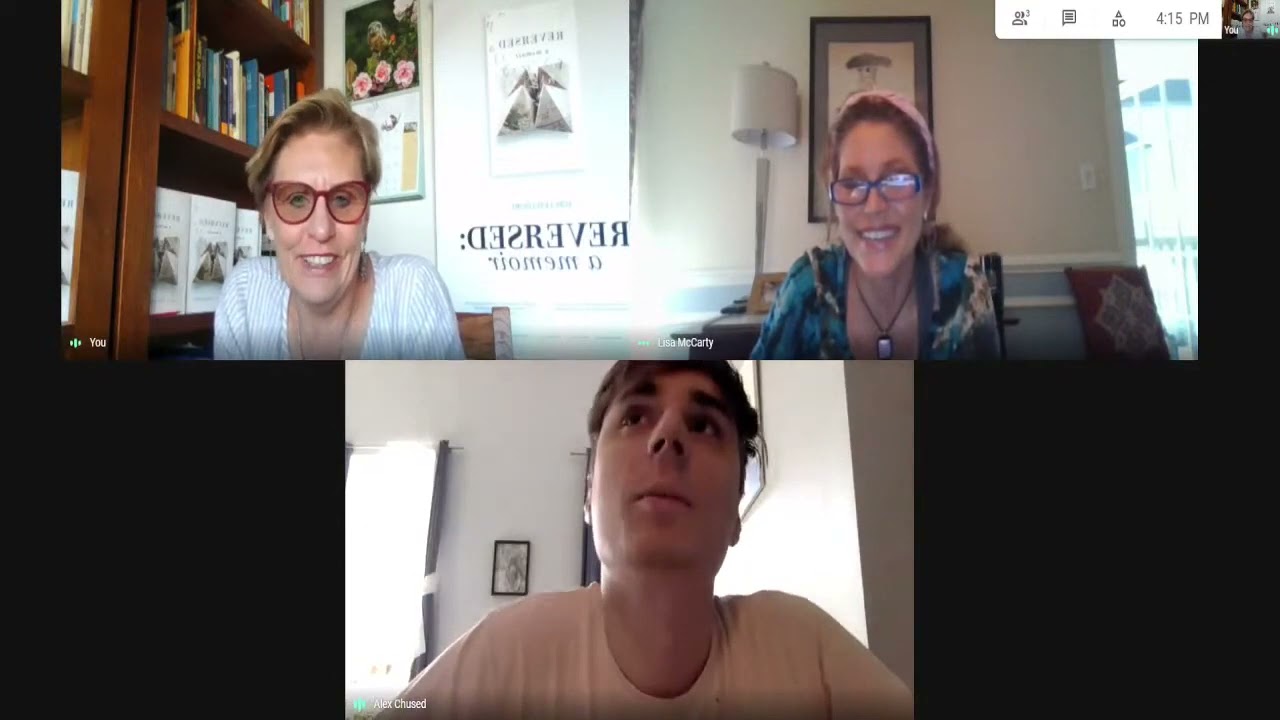
Alex Chused, a civil engineering graduate, describes how dismissive teachers and lack of reading support in elementary school created lasting trauma and blocked memories. He survived through his parents' support, discovered solace in math and diving, and now advocates for accommodations and assistive technology like Read Please and Grammarly for struggling students.
Chapters
Welcome, welcome to When Learning Is Trauma, and we welcome Alex and Lisa. But I wanted to start by reading something that Alex had sent me, written when he was 8 or 9, and it's— he titled it Birdie the Bird. Here we go again. All I remember was what I'd been told. The next day, The lessons continued. Our teacher divided the class into groups to meet one of the reading, the teaching assistants at a table at the back of the classroom. All right, you guys, she said. Say it with me. Birdie the bird. Birdie the bird. Ah, er, er. Perhaps I wasn't paying attention in the past, but I never recalled learning these words. Instinctively, I raised my hand to ask a question. Have we learned these words yet? She replied, yes, in fact, we contacted your mum and she told me that you spent all night crying over Birdie the Bird. Alex, it breaks my heart to read that now. I don't know how you survived school.
Um, it was probably the hardest when I was that age because that was before I considered myself what I call a person yet. And, you know, these things were already happening to me. That occurred in I grew up in a town called Wayland. It was in Massachusetts. It was near Boston. And before that, I lived in a town called Natick, next town over, for till I was five or six. And we moved because the school district was so tough, and they were just kind of mean to me. I don't I don't remember it a lot. I remember a couple things, but. We moved to this town, Wayland, because their school district was so good. And that happened in Wayland. So it puts things into perspective. And for one, and, you know, I don't really know how I survived, survived it during that time.
I did.
Obviously, I'm still here. But I just remember freezing and not knowing what to say and just being helpless. I didn't have words for like any of the things that were happening. And that kind of stuff continued in middle school, high school, you know. I mean, once I got older, once I, you know, had a voice, I was able to deal with it in different ways. But at that age, it was It was— it almost felt as though it didn't even happen. When I think about it, I sometimes question like, did that even just— did that even happen? Because it's so unbelievable. And I remember turning bright red and looking at the people on the— in the table, my peers. And, um, yeah, it haunts me. Like whenever I see a blue bird or a You can, I think of Birdie the Bird because I think that was like the mascot. So it was tough back then. I don't really know how I dealt with it. I mean, I just had to. I had to go to school every day. I had to go home every day with my parents and do the homework and apparently cry.
Yeah.
I don't remember doing that to this day, but I guess I did.
Alex, I think what happened is you've actually blocked it out.
That's what I believe too sometimes. Um, it definitely was probably the most vivid memory I have, so if I blocked that out, that makes me think of what else I blocked out, and it's just very I mean, right now as an adult, you know, I'm going to turn 24 soon. I don't, I don't have those kind of problems anymore. I have different problems, but like, um, yeah, uh, yeah.
But you said it, you said it then, you know, I didn't have words to say. I didn't know what to say to the teacher. And I can relate to this. When something goes wrong, all you know is you didn't get it. Right.
I knew. And I don't recall being like rude or anything. I was like, have we learned this? I don't remember. I have ADHD, so that would make sense. And then that was the response I got. So it's just shocking. It's just so weird. It's so weird to describe. So I wrote it down.
Well, I mean, it gets me on a number of levels, but then it's also, you're going to a TA. You're not going to a reading specialist. You're going to the one with the least knowledge. And she's told, just do this. Which is even— Traumatic.
Traumatic. Traumatic is probably the best word.
Which is why we've got the series When Learning Is Trauma, because things like this happen to children and it leaves a mark and an impression at a very young age.
That's what strikes me, that you said in elementary school you were aware that, you know, you weren't really getting some of the material, material, and that you said you were worried about getting to the next level. And it blows my mind that such young kids— I think we take it for granted that, you know, they're suffering with these thoughts of feeling different or, or just, just being Frustrated and anxious and whatever else, that you're so young and you're aware of that. And I think you also mentioned right before we were talking that some of the school leaders were essentially— it sounded kind of like being mean or bullying, bullying the students at a young age. How did— I mean, can you tell us a little bit more about—
There were instances where, especially in that 3rd grade class, we had 2 teachers, Miss Milkwood and Miss Olivier. I don't know if I should have said that, but whatever. They would just— I remember they would lose their temper sometimes and just kind of get frustrated and like treat our class as if we were her children that she was yelling at rather than, you You know, an educator who was supposed to lead us and discipline us the right way and things like that. And of course, that wasn't the only year that I was struggling with teachers like that. Of course, in kindergarten and first grade, I had teachers who would just accuse me of things and, you know, not even reading really. I was accused of stealing someone's fruit snacks in kindergarten.
Oh my God.
And I don't, I don't remember that happening, but my mom reminded me of it. You know, things like, things like that. It's just so cringy. It's just so weird to think about. I feel lucky because I feel like I've reflected and learned a lot from those experiences. But I don't know if other kids, you know, maybe they don't have as much guidance or, you know, it manifests into Like really, you know, profound issues. Um, so I, I think of myself lucky in that way, but it's just, it's horrible.
That's, that's about it. Well, I think what struck me is, like you said, you're 24, and we've had people on this show, you know, who are in their 40s and 50s. I can understand people in their 40s and 50s being traumatized by school because that's what it was. When we were younger, in the '50s and the '60s. I don't understand it in the 21st century. And that's when I get upset, when kids like you are still facing that same drama today. You know, what is going wrong? What are we doing? Blows my mind.
I think that part of it is we underestimate the art of education and how important it is to like If I'm getting paid as much to build a bridge that a school bus can cross over, why can't the people at the school that the school bus gets to get, you know, get paid the same amount? We're doing the same thing. I'm making the bridge, they're providing the education. It just doesn't make sense to me. I'm sure there's some stupid logic to it somewhere that— but I know there's not. I don't know why I said that. It just I just, um, it shocks me. And, um, I have friends who are— who have just finished their degrees in education and things like that. And, you know, it's so hard for them to find, like, um, stable jobs. I mean, yeah, it's so— and it's so— you would hope that there's progress being made, but there's Really not in a lot of ways.
Yeah.
I think people talk about it a lot, but I don't think they do anything about it. People are like, education is so important, yet look at our country. You know what I mean? It's weird, I guess. I don't have like the best vocabulary, so I'm trying to— maybe it's not weird, but I don't know, I don't know.
Well, we've got to tell people where you ended up because that's why we're talking to you. You know, tell us where you've ended up, Alex. Tell us how— yeah, tell us where you ended up first.
Okay, Daisy. Um, we have a dog right here who's— so I— so where I ended up, right? So hate reading, always hated reading, still hate reading. Um, I discovered that I was good at things in probably high school. I discovered like that I wasn't gonna just fail and flop, and that discovery was math and science. So I used that and I was able to excel in math and science in ways that no one around me could. Um, and I brought that skill set to RPI where I got my Bachelor's in civil engineering. So I like to— I don't usually like to toot my own horn, but I— when I, when I think about in hindsight my education, when I was— my earlier education, and then when I think about my accomplishments and my academics, it's very— it blows my own mind. And it's— It's very, again, lucky for me because I, you know, had a lot going for me in a lot of ways. But it's just, it was something I would never imagine. Like when I was at that age, when I was in the classroom with Birdie the Bird, I would never think that I would have had an engineering degree. I don't even think I didn't know what engineering meant. So it's, it's really I feel really lucky that I was able to, um—
Survive?
Confront these problems and like use, you know, I know that I can use these skills. Not everyone does though. Like there's people who are in the middle of the country and they're just undiscovered and it's because they grew up with people telling them that they can't do it and it's disgusting.
And it's not even telling you, it's implied, isn't it? You can't get this stuff, so you're not going to be able to do anything else. That's the implication.
I will say though that I don't know if I could have gotten through all of that without finding other things to distract me. So I started to I was on the diving team in high school and in college. And I don't know if I told you, Lois, but I consider that my therapy because when I was there, I felt like this flow that I never felt. And I, I use that, you know, if I was having a horrible day, whatever. It was something that Nothing else fed me like that.
Yeah.
And you can see that it's true because I went to RPI 4 years, took a year off, and dove all 4 years. However, when I came back my senior year, my coach didn't want me to dive the first semester. She, she thought I needed to catch up on academics, and it ended up being the worst semester of my life. I got Ds. Never happened before. Next semester, joined the team, straight As. Never happened before. It's really important that kids know that they need to use what they have. And it's going to save them. It saved me.
So it's finding the strength. It's finding a strength.
Right.
And you're right. You do need it. You do need something that you can say, I can do this.
And it was the first time that I actually, like I said before, like I for the first time felt like I wasn't the worst in the room.
Yeah.
And I'm good at something. And that never happened to me before. You know, people say all the time like, oh, trust yourself, like follow your dreams, but you don't really feel it until it happens.
Yeah.
And you need— yeah, it's sad when it doesn't happen, I think.
Yeah.
But—
You've done a few things that have been really good. One is to find your strength. And then writing down these memories actually is shifting them from a memory that's got, you know, this thing that you can't even deal with, to putting it into words. And that shifts, according to the psychologist, that shifts where that memory is stored. So now you can say, yes, this did happen. And you're acknowledging it. And so that's the second thing that you've done that's been really good, that has helped you— writing down your memories. It doesn't matter how it's written. The fact is you're, you're writing it down and acknowledging this is what went on.
Absolutely. And it's such an important tool, which is ironic because I hate reading and writing. Um, but when I think about Writing. I don't know if anyone knows the movie Precious, but it's about this, this girl living in Harlem, and she has probably the worst life you could ever imagine. And in my opinion, the, the message of the story is everything starts with education. And one of the themes is like writing everything down. So You know, there's a scene where Precious was diagnosed with HIV, and then she had to go to class and write in her journal, and all she wrote was, why me? And her teacher is, you know, everyone's breaking— the teacher's breaking down, and so is Precious, and she's like, just write, just write. It doesn't matter if you spell it wrong, doesn't matter if it's grammatically incorrect, just write. And And yeah, I, I would highly recommend that movie. It's very hard to watch, but I think the message about how important education is, is so— it's so well done. It hasn't been, in my opinion, better in any other Hollywood film or any book or anything. I've never read books, but— Um, yeah, I would recommend it because the education theme is so strong.
Have you got a question, Lisa?
Well, I was just wondering if we could take it back to middle school just for a quick second, because I'm really wondering, how did you make it through that? Because you mentioned that when you were in high school is when you found your skill Of your passion or your talent of diving, but what happened before that? How did you get through?
So I think that once I got to middle school I was— it's very personal because I think I just had like a confidence level that allowed me to get through it. I like to think that I go into fight-or-flight. It's like a survival skill I call it. You know, like I'm so anxious about going into seventh grade because there's gonna be so much work. But when I'm in there, I'm just like it's like a switch that turns on. I didn't know I had. And again, I'm lucky because I was able to use that. But that's definitely how I got through. I would say between me becoming like a fully realized. I guess adolescent and when I was completely helpless asking my parents for rides and playdates. So it's just it's just my instincts like because I couldn't rely on anything else. I didn't have anything else. I didn't have any activities. I didn't have I had friends but I didn't have like anything. I wasn't fully realized. I just was dealing with it. So I had to deal with it. And I'm so lucky that I had the support I had. I had very loving parents and it was really easy to Yeah. Get through it with that. They've given me everything and, you know, they moved towns because the education was so bad. So obviously they were doing something right. Without that, I don't know how it would have gone. I usually try not to think about that because it just doesn't end well.
Yeah.
But It's a switch. For me, it was a switch because I didn't— I couldn't use anything else. There was no one else other than like my parents that loved me, which is a pretty big thing. Yeah, um, very important. But I kind of taught myself to do that, I guess.
Alex, did you feel—
oh, go ahead.
Did you feel like your parents understood you, like understood how you learned or the struggles you had?
I feel like they understood the fact that learning was hard for me, but I don't think they understood the full effect that it had and that it was going to have on me later on. I don't think— they definitely knew that I struggled because they would say all the time up until a certain age, like, we were gonna hold you back and we didn't, in kindergarten or something. And hearing that is just very discouraging when, you know, it's just But they approached it, but they sometimes approached it with frustration because they didn't— they couldn't get in my head. They didn't know what I was— they didn't know why I would throw tantrums at night doing my homework. And then they got upset and they, you know, try to hire tutors. They try to medicate me. They're doing everything that they think they know how to— that they're doing their best. Um, and I was lucky for that. Um, but they didn't— they were never able to feel the pain.
Yeah, because you seem like a really chill guy. So I'm just wondering, like, is that just how you are, or did you have those struggles? And you mentioned having some frustrations to the point where you're having, you know, tantrums. So I think it's important for other people to understand that. You know, I have— I talk about my boys, and my middle son was having trouble in school, but I didn't realize why. And, you know, we were pretty hard on him. Well, you just, you know, you have to do it. And, you know, he would get in trouble, and then emotions would escalate, as opposed to really understanding what he was going through.
Yeah.
And I think it's really important for parents to, or anybody, to understand a struggling student, maybe find out what they're going through. And I think it's overlooked a lot. What do you think?
I don't know. Yeah, because I, when I think about other, because I had friends and stuff that also struggled sometimes, but they didn't have the support that I did. And, you know, like with their parents. So I can't even imagine what it was like for them. But I mean, my dad, for example, struggled a lot in school. He—I think a lot of that got passed down to me. I think a lot of my hatred for reading is in was from him, and when he went to school, you know, his parent—he had five siblings. He was the youngest, and his parents just would laugh at him, and they didn't understand it. They would say, "Why are you so stupid?" Things like that. I don't think he would be very happy if I was saying these things, but it's things that happen all the time. They're happening today. Like, how could— I don't know how he got by. Because you're asking me how I got by, I don't know how he got by. Yeah.
I mean, I don't know.
Parents need to know that like their role in their education is like just as as important as the educators. They need to know exactly what's happening all the time. They need to know, they need to understand what it is and how to deal with it and like not condition the child to think that they're limited because of it.
You know, I take this from my point of view as a mother and I, with my 2 boys who struggled, and one of the problems is no one can tell you what's going on with the child. All the schools say is he's not conforming or not learning. And they don't say we've got to change what we have to do to help them learn. And that's the struggle that I have.
It's— I feel like it's a problem that is just as hard as, like, peace in the Middle East. I mean, it's— I really don't see this problem. Like, I see it getting better. I just— it's really frustrating. And it's really frustrating when you are someone who struggled and like trying to think of how it could be, you know, try to represent everyone who struggled. And because I don't know, and I don't, I don't like have like any technical Like, I don't— I'm not psychologically trained. I don't— I don't— I don't know. I don't have the answer.
It's— it's—
I just wish that the answer was there so that I didn't have such a rough—
Yes. Yes.
Third grade year. I mean, it's— I don't— I'm not responsible for the answer. That's not—
Well, you know, see, part of the problem is, to me, is that if you have a— if you have cancer, if you have a cold, You go to a doctor, you go to the general practitioner, and they do whatever. If the cold does not get better, we don't send you to a nurse, we send you to a specialist.
Right.
And when we come to reading problems, we've got the general classroom teacher, and when the child doesn't get better, we send you to whom? Are they specialists? Are they knowledgeable? Or are we giving you the cheapest option, which is not even the nurse, is it?
There needs— there just needs to be some system and protocol, and it needs to be normalized. We can't look at education like it's going to be— you're going to have a year of kids, 20 people in your class, and you have to teach them addition and everything, and they're going to get it. Like, Every child. No, that's just not— it's not, it's not that the teacher in the classroom needs to be trained in every single field of education that there ever is necessarily. But there needs to be like a system and a standard for making sure everyone is getting the education they need.
Yeah.
I mean, when I was in like Middle school, we had special ed, and, um, it was called org skills, short for organization skills. And they just kind of like threw all the kids in org skills who had a learning disability. If there were, um, sometimes some children received like, um, specialized, um, shadowers or whatever they're called.
Mm-hmm.
But other than that, it was— it's just not understood. And it's not understood amongst educators, which is— it's just so weird.
Yes.
It's so weird.
You're right, it's not understood amongst educators. Yeah. That's a good— Chris Latchwa has given us a comment. That's a good analogy. It's difficult to find the answer. As a student, what advice do you have for other students that are struggling?
I would say that, first of all, your— if you have a learning disability or whatever's going on, it has nothing to do with how good you are at anything. It's just a complete— it's like, it's an irrelevant factor. It's like, I don't know, BMI. I'm trying to think of some stupid thing. But like, don't connect them. Because if you connect them, like, Don't do it.
Yeah.
It's so liberating when you don't. It's so liberating when you know that you are not the worst in the room. So have that mindset first of all. And then second of all, I would say just make sure you're advocating for yourself all the time because it sucks when you have to always have to convince other people and You know, I wouldn't have gotten through RPI without getting accommodations, for example, for my, for my issues. So make sure you're just on top of it. Make sure you like know what you have and like how you can get by, how you can achieve what you want to achieve, because you can do it. But you might need extra time. You might need to, you know, so just be— take care of yourself the way you would take care of your hygiene. Because it's there, it's not gonna go away.
Yeah.
I think that that's where I would start. And then just find support, like, be honest about your learning disabilities, like, be honest about what's— what you feel is holding you back to the people you love and people who love you and like your family and friends. Just make sure that they know everything that's happening so that they're not like— you just got to be free. You got to be free. You got to own it, look good, and run with it because you can. You can't do that if you don't confront it though.
That's a good one. Do you use technology to help you do things, to read and to write today?
Um, I personally don't do a lot of technology stuff, I guess. I kind of just like write in a notebook. I'm very— I don't know, maybe I'm just old-fashioned, but I, um, yeah, I just— I paper, pen, or if I'm reading, it's gonna be reading a book. I don't really like— There were a lot of, there were a lot of, you know, pieces of aids when I was in school, definitely, you know, for it to cater to all types of learning styles. So there definitely are like lots of stuff out there. There's, I think my mom like has been convincing me to get a Kindle for years now. She's like, isn't it gonna be so much better? Like you can just look at a screen, you love screens. I'm like, yeah, but I don't know. Anyway.
That shift is interesting though, isn't it? Even the shift from, yeah, I do it this way, to that. Because I use Read Please all the time. The only way I can write something and send it out effectively is if it's gone through Read Please. If I haven't put it through Read Please, there'll be a mistake in it.
Okay. What is that?
Oh, it just reads it back to you.
Oh, okay. I've been looking for one of those actually.
There's a lot. Yeah, there's things on, on— I think Microsoft now has a lot that just reads it for you.
And I think like there's like apps. I, I need to look into that.
Yeah, you know, it all takes time to get to know, but it, it certainly makes it— makes the writing more normal and stops errors because I don't notice the difference between the word out and the word hour.
Or stared or started for me.
Yeah, that's right. You know, we all have our ones and I, you know, and I have Grammarly all the time. Grammarly is on. I pay for that one because that's really been good for me. Anyway, we have another question. What are your thoughts on post-school learning and learning disabilities job training?
So that is interesting because I'm actually trying to figure out that myself right now. I'm in a weird phase of my life where I'm in yet another transition that I'm pretty anxious about because I'm looking for a full-time job. I feel satisfied with my bachelor's degree, I mean, to say the least, but I know that I need to, you know, be certified and take this huge exam in order to get what I really want. Or, you know, some people need to get their master's or something like that. I wish I had like a really inspiring thing to say about that. Just, it's for me, it's just another transition. It's, you know, like going from elementary to middle to high. It's another transition. You need to find your thing. You need to like be able— you need to do it. Don't get lazy. But don't overextend yourself. Just keep going. I mean, if you can do that, if you're like in the post-education era in your life, that's so good. That's already like, you already got it. You just have to not get lazy, in my opinion. But that being said, I'm still trying to— Figure it out myself. Still trying to find ways to, uh, I think I'll get there soon. I can almost taste it, but yeah.
But that's so encouraging for people. I mean, it is. You're helping other people with your strong mindset, whether you think that or not.
I just let it, it just happens. I would not be able, I don't think I would be able to speak this comfortably like a few years ago. But it's just another part of figuring everything out, or at least enough of it out to be as confident as I am right now. Like I— years ago I was just awkward. I didn't, you know, but—
Would you hide some of those problems? Would you not talk about it? And when did you feel like you started to, as you said, own it? Can you pinpoint?
I believe it. I believe that there were a couple phases of that for me. I think in high school I, um, started to learn that I was good at math and science. So that was the first kind of milestone for me. And then the second happened in college. Um, it was not a pleasant experience. It was basically, we have a course that We have a course where you're supposed to work in groups of people and create like a product with the engineering process. So I was in a group with like 6 other kids who are a year older than me. They have all of these technical electives and stuff under their belt, and I had Physics 1 and Calculus 1 under my belt. So by the end of that experience, I think that was my best wake-up call. That was the first time I knew that I needed to take care of my, my stuff, my disabilities. I needed to be clear about it with my partners. We, we even— I remember we had a meeting where we were talking about, okay, if anyone has anything that we should know about that in terms of, you know, whatever, just say it, like learning disabilities, say it. I didn't say anything because I was like, oh, I don't need to. But I mean, aside from that, my partners were just kind of mean to me. But it was just— and I ended up doing the worst in that class in my group. Not in the whole class, but just in the group because I didn't speak up. Mm-hmm. I consider that a traumatic moment because I was humiliated when I look back. I didn't know that I was, you know, as bad as they basically told me. But I think I started to really take action after that in a million different areas. It took a long time to like get over it. But it was A useful little thing that I— it's like I'm using it like in my tool belt, I guess, if I am to be corny.
No, I think that's fantastic. But you know what you're really wanting to say too is try and avoid that humiliation before you— and it's like a come-to-Jesus moment or whatever we want to call it.
Right.
If I don't do something about this, These things are not going to happen, right? So take it on board. Yeah, I am different. Yes, I do have strengths, but I have these weaknesses. You know, I, I'm impressed. I'm so impressed with what you've done, what you've achieved, and that you can talk so well about what's happened and, and how to go through it. You know, I'm amazed, Alex.
Um, I, I— it really is a testament to Thank you, by the way. And it's really just a testament to like how I struggled in the past because I would never see myself— I'm very comfortable speaking today. I would never see myself like that during Birdie the Bird, you know?
Yeah.
I mean, and it's so— it's just so possible. It's so going to happen if you do the work. Like it's going to happen. I'm still figuring things out. Like I said, I don't— I think I'm gonna get this job that I interviewed for last week, but we'll see. Yeah, I mean, like, just keep doing it. You already have it. If you're in, you have it. Everybody has it. You gotta just discover it. You're not— you're never going to see like the top if you don't. Reach the bottom, I guess.
It's almost like you have to trust your brain.
I know, as ironic as that is, because I didn't know—
Because it's a good one. Because it's a very good brain.
And, and like I said, it— I definitely was able to get through it with diving. I would not have survived that incident or whatever it was in college without diving. There's no way. There's no way. I think I would have transferred a long time ago. Yeah, maybe after freshman year. It was— it really did save me. So, excellent.
I love these stories, by the way.
Oh, you've got so much to offer, Alex. So much to offer because you overcome so much, you know. So it's build on your strength. Find a strength and build on your strength. Isn't it? Identify where your weaknesses are and your strengths and acknowledge them. Don't just pretend they don't exist. And then support yourself. That's, that's what I've taken away from all that you've talked about today. I mean, I really am so impressed with all that you have done and achieved. And you're right, it's not over, but you're just going to keep going forward and keep doing it. That's right. Lisa, have you got anything else to add?
No, I was just really happy to speak with you today. I loved your stories. It's so important to get this message out there that, you know, kids do struggle and they're great students. If we can help them and we can help them see what value they have, you know, nobody loses. So I really thank you.
Yeah, I'm so— I feel so excited that I was able to come come on this and do this because I really, I believe I would be a teacher if I wasn't an engineer or whatever I am. Because I'm so like the art of teaching. I don't know if I phrased that well, but it's just so special. And I love, I love it. Like it's so, I'm so passionate about it. Like I love, I wanted to be a 4th grade teacher. The first thing I wanted to be when I was little, I was like, I want to be this. It was a 4th grade teacher. So I love it. I love it when it's done right.
Yes. Yes. And you bring such a wealth of experience of how you'd never want it done again.
Yeah.
Oh boy.
Well, you can tell how creative he is. He said the art of teaching, it really is an art, not just the rote memorization of things. And I'm not trying to come down on teachers. I really am disappointed with the system, not the teachers.
Right, exactly. Because some of them, like, so much of— more, in my opinion, more of them love it so much. But I guess it would make sense we're gonna have lousy teachers if we teach them— if we treat them lousily. Lousy. Badly.
Well done.
You just gotta own it. Just gotta own it.
You just do it, right? It works. It always works out, right?
There you go. Oh, mine's saying— I'm on my way to my second vaccine in about 10, 5 or 10 minutes.
So we've got to wrap up now. So thank you, thank you, Alex. Thank you. And where can people find you if they want to connect with you?
Oh my God. I never got this before. I have an Instagram, Alex James. I have— I don't really have anything else.
Are you on Twitter?
Well, you can find me there. Sorry?
Are you on Twitter or LinkedIn?
I don't have a Twitter. I do have a LinkedIn. Um, it's my name, Alex Chusid, and that's all.
Facebook?
Yeah, I guess you can do that.
Younger generation doesn't do Facebook so much. That's the old heads.
Lisa, where can we find you?
Facebook.
Just search my name and anything that pops up. Social media-wise, I will— it'll probably be me.
We will let you go, Alex, and I'll finish. Yes, because you've got to go and get your thing. So thank you very much. And I've just got a few minutes to say, you can go now, you can leave. Smash the like and subscribe button, hit the bell for notifications, share the channel with friends and family and with all with dyslexia, because on my channel I read stories and poems and and books and share some of my ideas. Find me on Twitter and Facebook and LinkedIn. My book is available on audiobook now as well. The book is Reversed, a memoir where I tell the story of my child who outran his label and graduated with his PhD. Thank you. Next week, next week we've got Elizabeth Takey from London who Began the website Inspired to Create A2I Dyslexia. Write it down, write your diary, write it down all the time, just write.
Yeah, because it really is a traumatic experience.
Yes.
And I'm just— I loved his story, like the grit that he had, has to come through that and have that mindset is excellent. At any rate, well, we gotta go, but—
Oh, I didn't say thank you for Chris and Isaac. I forgot that because without them, this show would not go on, believe me. And it's all their work. Re-say this, please share this channel with friends and family and, um, with dyslexia so that we can grow the channel. Have you had smashed and hit the like and subscribe button yet? So do it again. Thank you, and we'll see you next week.
More from Lois


Overcoming Adversity: A Dyslexic Learner's Journey to Success | When Learning is Trauma #shorts

Redefining Success, Beyond Grades in Education | When Learning is Trauma #shorts

Turning Awareness into Action for Dyslexic Learners | When Learning is Trauma #shorts

Why Dyslexia Goes Unnoticed: A Systemic Issue | When Learning is Trauma #shorts

The Long-Term Impact of Unrecognized Dyslexia | When Learning is Trauma #shorts

The Heartbreaking Reality of School for Some Kids When Learning is Trauma #shorts



