When Learning is Trauma: Keisha Swaby, Lisa Mccarty, Lois Letchford
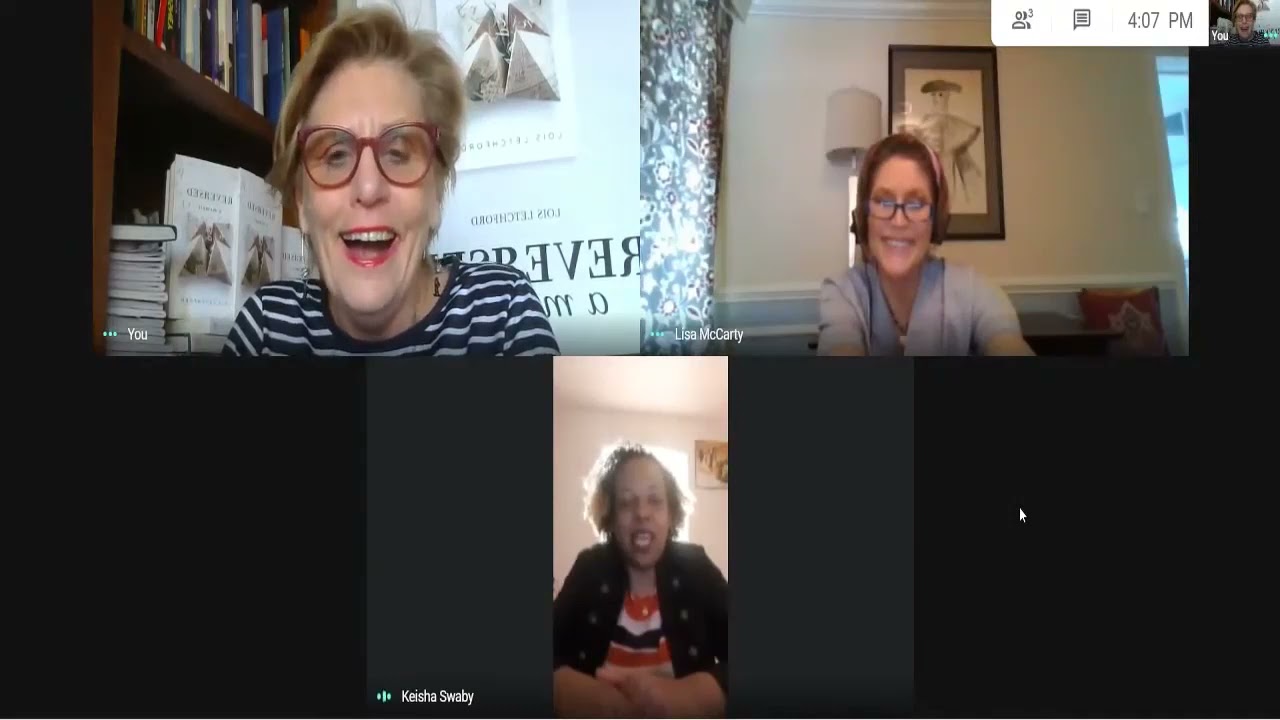
Keisha Swaby, a dyslexia and dyspraxia advocate from Jamaica who moved to Manchester at 14, describes facing misunderstanding and bullying while completing secondary school without qualifications. She later earned a first-class honours degree despite ongoing reading and memory difficulties, and now runs Empowering Dyslexics to raise awareness and challenge stigma in the Black community.
Chapters
Ready to go.
Welcome. I am Lois Letchford. I'm the author of the book Reversed: A Memoir, and welcome to our YouTube Live series, When Learning Is Trauma. Lisa, over to you, then we'll introduce our guest, Keisha.
Yes.
Hi everyone, I'm Lisa Hardy. I'm working with Lois. We're doing When Learning Is Trauma, and I'm really excited to talk to Keisha today because I missed the the conversation that you guys had leading up to this, so I'm excited to get into this.
Welcome, Keisha. Keisha lives in Manchester, UK, and she said she has many passions. She's a wife, a mother, inspirational speaker and radio diamond presenter, Jamaican Parish Ambassador, Project Operations Manager for the Northwest, founder of Empowering Dyslexics and Creating Awareness of dyslexia and dyspraxia. She's passionate about speaking and sharing her story on the importance of believing in yourself while also writing a book on experiences with dyslexia and dyspraxia. Welcome, Keisha. Tell us about your journey. That's got to be the starting point.
Thank you, Lois, and thanks for that introduction as well. Well, where do I start? be a long story. I don't know how far you want me to go, whether I want to go back to Jamaica, growing up in Jamaica, coming here to the UK at 14. Where— my first question is, where did the trauma happen? Did you have trauma in, in, um, in school in Jamaica, or was it only in the UK?
Yeah, really, because in Jamaica they have no understanding of dyslexia at that when I was going to school, and that was in the '80s, '90s. So I struggled with certain aspects of schooling in regards to maths. It just wasn't my subject, so I suffered really bad. And until today, I still don't like maths because the regime at the time was you get, um, beat if you don't know your maths, if you don't know your timetable. So I sort of developed Sort of like issues surrounding math. I just couldn't get the hang of it, and going through all of that as well just created it. And then when I came to the UK at 14, I started school. And when I started school, it was just a completely different world, as you can imagine, coming from the sunshine to the UK. It's really cold. And when I started school, I got bullied really badly because of my accent, the way I spoke. Um, they'd ask me to repeat certain things, and that really affected me for a long time because I was sort of muted. So I wouldn't put my hand up in class to say anything whatsoever because I was always having that fear of someone, you know, pointing out something I just said.
So more in, in the UK than Yeah, I think it's a mixture of starting from a different country, new system, trying to understand what they're trying to teach you, completely different world from where I was coming from.
We have— I have it here, and this is the picture— whoops, I'll take it out of its sleeve, you know, of of the brain when we're learning. And the moment you change schools, let alone countries, I think we're back to here, to stress-relater before— and that's got to be dealt with before you can begin to learn.
Yeah.
What I'm hearing from you is that it's, it's just stress, stress, stress, and then you just shut down.
Yeah, definitely.
And how did you catch up then? What happened to help you catch up?
Well, I finished school at 16 in the UK, so I only spent 2 years in the UK schooling system, and then I started college after appearing in school, and I didn't come out of school with any substantial qualifications at all, and I was determined to achieve one for my English because that was my passion. I absolutely loved English, and I put myself through college and I achieved that. Well, that's incredible.
One of the questions I have is, how did you survive that? You know, it sounds like you were— you're coming from another country and you're having trouble with your timetables and there's a lot of stress there. You come here. You're having a lot of trouble just fitting in, it sounds like, then also with the schooling, and then you go on to college and you go on to get a degree. I mean, it sounds like you manage that somehow in order to do all those things.
Yeah, because I'm— I'm sort of, um, create these strategies to get through daily life, to create things that make things a little bit easier for us. It's quite hard to reflect on the last few weeks of my degree and think about the first stuff I unlocked today. But I feel really great. So I look back and I think, if I knew that I was going to be on this journey, what would I have achieved without the help and the help of people all the way through to the end?
And it's just now coming to pass that I have I'm going to want you to talk a little bit about that first because the American system is quite different to the English system.
Yeah.
You know, an honours degree really takes a lot of work because In the school system in America, 70 is a pass. 80 to 90 is a B, and everyone wants 90 to 100, you know, in the 90s. And anything less than a 90 is unacceptable. But the questions are all multi-choice, and it's— to me, the testing system here is much easier.
Yeah.
In the UK, it's not that simple. Well, it's not as easy as that, is it? So tell us what it means to get a first-class honours degree in the UK.
Well, it was— to get a first-class honours degree, we have this thing where we have exams, so we have a mixture of exams and then assignments. So sometimes you can get an assignment ranging from 3,000 words at the minimum Going up to six, you know, ten thousand words assignment. However, for me, I was really really happy with myself to achieve that regardless of what I was going through. So it was one of the greatest achievements that I've done. It's more that I came out of there with a credit that I needed to bring in while I had this lecture and this lecture with no support always. But your strength is in English, in writing. Yeah, I love writing. I love communicating, and that's my passion. That's my strength— communicating and also writing as well.
I'm jealous. I am so jealous. So what, what do you, what are your weaknesses then? What do you struggle with?
Oh, that's, that's, that's a lot.
Um, things like my daily studies, it's one of the assignments trying to get my understanding of what I need to do. It takes me a lot longer Get my head around it. Also, I can read something and then I just forget. I can't remember what I just read, so I'll have to read it again. Then things like making notes as well. I know what I'm trying to say, but the words just come out. Other things like Yeah, yeah, I appreciate that.
Lisa?
Well, I'm amazed that you didn't have any supports through any of that, but my question is, how did you feel about yourself going through that? Like, did you feel different? Did you feel a sense of despair? I don't know. It's amazing to me that you didn't have the support and you didn't know why you had to suffer. How did you feel about yourself at that time? I didn't know why I was suffering.
Are you referring to when they found out that I was dyslexic?
No, before that time. Yeah, before that, here you are doing, you know, essentially very well, maybe working really hard, I'm gonna assume, and having some struggles with no supports, not knowing that you're dyslexic. What was your self-esteem like during that period?
It was very frustrating because here I am, I know there's something not right, I know that I have challenges, I knew it, but I still wasn't sure how to deal with it. I just wasn't sure how it was, what it was that was wrong. Myself, I was coping with, you know, different things, what's going on in my life, but as you know, it only takes a little bit to throw everything out the window.
I can feel with you. I know exactly how you feel. You know, with doing that work. And yes, I can do it, I know it, but getting it— for me, it's getting it down on paper.
Yeah.
And not only getting it, get it in, getting it in a way that's acceptable to the professors.
Academically.
Yeah.
Yeah.
And that to me is just— that stops me from doing it. And you're like you say, your emotions are going up and down and up and down all the time. But you, yeah, anyway, that's, that's, I love it. But you know, you wanted to talk about what you wanted people to know about dyslexia.
Black community. There's a lot of stigma attached to it. There's a lot of shame. There's a lot of embarrassment. There's people not owning up to the situation that they're going through. Some people don't even know that's what it is.
And yet there's so many people that will say, it's my superpower, this is terrible, this is awful, I can't do it. And it's just interesting that you have such a—
it's almost like it's just a mind shift to say, okay, maybe I have struggles in these areas, but the second I, as you said, own it and then look slightly more to the positive aspect, If you have that task or something that you know that you're not very good at, find somebody else who is good at that task and you can do a skill swap where you can use people that are extremely valuable and they can benefit from that. That's fine. Okay.
In a sense, toughen the rock to for the rest.
Yeah, after that, I still kind of feel like struggling. I saw other girls really resilient because I was in a country on my own. My parents were here in Jamaica. My father only came back a year. So I had to build up everything that I had to build here. You were there by yourself with no support at 14. I take my hat off to you. That's phenomenal. Grandparents, the role they played at the time. So it was minimal support that I had. I did most everything myself.
Were you in boarding school?
No, no, it was a normal regular school.
And where did you live then?
At the time, in the Midlands first, so I lived with my aunt and then my grandma. Those were the only really proper Yeah.
So, when you're in school, a lot of dyslexic learners who are struggling, they tend to either hide or they act out. Did you have any— what was it like in school?
Yeah, yeah. So you just shut down basically. And yeah, yeah, it's— I mean, it blows my mind really that, that we allow people to just sit at the back of the class. And I go back to Martin Bloom's field. And what he says is, the way we treat people like you, we then say it's acceptable for that child to be quiet and for us to put her down and mock her because she doesn't have an accent like that. That's the part that really breaks me apart.
Yeah.
That we find as adults and other children that no one pulls up and says, can we deal with this in a much better way and in a much more I mean, as you know, children can be—
What's amazing too, to me, that you can Um, that's self-medication.
That's the folks that I tend to see as adults where they've had struggles and unfortunately they— excuse me— their defense mechanism maybe was to, you know, to pick up substances and self-medicate basically. And I just find that really incredible that, you know, you were really— I mean, I think it's like people in general are very resilient people. They really are hardworking and resilient, but unfortunately sometimes they just get so exasperated and they shut down and give up. And for Lois, they don't. And I just find that so encouraging, um, and just incredible that you had that stick-to-itiveness and grit to essentially just keep pushing through, um, to get where you need to go. But to know that you always have that positive I do have another question. I'm so fascinated by this story.
Sorry, monopolizing. Sorry.
Was the creativity with the English language or with writing and that sort of thing. And I find that a lot of dyslexic learners tend to be really good in other areas that don't involve language, like maybe artists or I don't know builders or very hands-on learners. And I and I wonder if that's part of the difference between how you were able to push through because that's the thing that you have shown with the language.
You know, there's a real overlap between poor teaching and dyslexia. One of my biggest concerns for marginalized people of any race is that they do not see themselves in literature. And that compounds any learning disability that they have. They start to question, not out— they can't say it out loud, but why should I be doing this?
That sounds like it goes back to what she said earlier about how Maybe that's part of that.
I'm sure it's part of that.
Yeah, definitely. Definitely that. Because it goes with me to say, you know, we have to see a kind of beauty behind it. That's it. You know, and it's important that we have role models, important that we have relatives, people behind the scenes, having this conversation, talking about it. Everywhere.
When I teach young children in particular, and I was teaching a young black boy, he was repeating second grade, can't read anything. and I had been given, or we had access to a certain number of books, all labeled for these children. And what struck me, particularly with this little boy, was that it was white, it was female, and it was middle class. And if you want to engage a child, don't do that. You know, and it goes back to you. How do we— what did you say? If I can't see it, I can't be it.
Can't be it, no.
And that's there from grade 1. So we're alienating people from grade 1. So what we want is right at the beginning, teachers should be taking pictures of children and of their—
well, their—
where they live and their community to say, there you are, you're part of it, instead of excluding. I mean, we've got such a shift to make in the teaching of language and the teaching of children to be inclusive.
Yeah, definitely.
Telling them to be doing certain things, certain subjects that they're not more interested in. They're not going to stick with it. They're just going to play off those actions and then they lead to behaviour problems, then exclusion, and then they get caught up in the system. Drop out, not going to college, not doing this, still not knowing what's wrong. Don't want to go through it step by step. You know, I want to go to college.
I mean, I totally agree with you. I don't understand how we do it for so long and we're not recognising, you know, it's found the cost. It's foundational for children's lives.
Yeah.
You know, why can they do it in university? Why can they diagnose in university and not at 4th or 5th grade or 2nd or 3rd grade? You know what? Mind shift there.
The awareness, the knowledge, the understanding, and within the school you need teachers who really understand what they need to look out for. You know, there's so many children who are just slipping through the net because the teacher isn't lost. They don't understand.
Yeah, yeah. I mean, I actually, I feel like learners tend to have pretty common characteristics, a lot of variation, but very common characteristics that you tend to see the same patterns over and over again. And I don't know if it's because I've been studying this for a while, but I think that teachers have gotten to see pretty much the same patterns as well. Recognize this is mind-boggling to me. I mean, I find frustration with that because you don't—I mean, the teachers don't get training in this, and I wish that they did. But I feel like you're seeing like the same thing sort of over and over again, and all you have to do with most of these class problems, for example, is go look at your reading scores or see how are they writing, and it's kind of you know it's very similar. It's not so clean-cut, but you do see these patterns. I don't know why they don't recognize the patterns.
Yeah. ADHD.
ADHD. And then the schools basically say, well, it's in the parent area, take them to the family doctor. And again, some of these kids really could benefit from those types of medications, but they don't always help the way they should because the other problem really is that they have these different patterns of thinking. And I would just, you know, I would say dyslexic learners really do tend to— and we know this from science— they tend to process this language information And I feel like that's the pattern, though, that you can see, and that the young want to, I don't know, get frustrated. They get very frustrated.
But you were commenting on you really wanted to be a force in the Black community, and it's okay to be dyslexic. From what I've read about numbers in the US, the most— the people who are diagnosed with dyslexia or a learning disability are often white and middle class.
Yeah, yeah, this is where a lot of change needs to go because I can honestly say since I started doing— I created the Facebook group that I'm running now on in April, coming up to a year now, um, April this coming. And when I put that out and I started to talk about my own, um, dyslexia, so many people within the Black community reached out to me saying, no, I've had these types of quiet challenges about it. That's what I'm trying to go back to, is thinking that that has to be Yeah, yeah.
And to be inclusive and part of, you know, the whole dyslexic world is not just these particular colour people, but it's a whole range.
Yeah.
And that's what we want to get across. And the trauma. And I think when you haven't acknowledged it, then you're not acknowledging the trauma that comes with it either.
No, no. And that's a real shame because to be going through it— say you don't get diagnosed like Michelle all the way on and you carry on 16, 17, 18, never get diagnosed, carry all that all the way through your life without doing it. Not knowing anything about it, because you don't know what it is.
Yeah. My mother came to me and she was 75 and said, Lois, I needed help like you're giving your son, when I was in—
Wow.
And that's the first time that she had openly acknowledged, to me anyway, that she had had a problem. And then I was then similar age to you. And then you look back on her life and you see, ah, these are the little pieces that all came together. Yeah, my mother has it, I have it, my son has it. 2 of my sons have learning disabilities or dyslexia.
That's the big thing about the hereditary side of it. When I had my assessment done, I had a diagnosis of dyslexia. It's not a system. Yeah, yeah. Are your children dyslexic? Yeah, I have a child, my first daughter, who's 19, she has dyspraxia, and I've got twins as well, and I have 2 kids in primary school, especially girls, who have been identified to a certain level as being dyspraxic.
So what have you been able to do to help them and stay in school and enjoy school?
Well, She started her journey in college. She couldn't get the diagnosis because when I got diagnosed in university, I already had a long history of depression and a lot of things. And when I approached the college about it, they said, you know, let's see what we can do for you. So when she joined my group in college, we made this effort.
Reach out to me if you need some help.
Thank you.
Because, yeah, well, you know, there's, there's no reason why children shouldn't learn to read. But then again, saying that, there's a number of things that don't happen Because we have this fixed mindset on what has to happen as opposed to the depth. That's another story. We're talking about—
We're talking about it.
You know, the importance of stopping the trauma. And as you kept saying, the things that we can do. And then you were saying for adults, I love that idea. of swapping, swapping skills that I've never come across before. Tell me more, tell me more about that. Okay, and your other solutions.
Yes, so, um, if you had— if you could work in business, you had your own business, and you struggle with things like sending emails and making sure that everything is correct in the email, spelling, Everything is right. If you struggle doing that, find someone who's more, you know, more open doing things like that. That's their game. That's their ball game. If you're not artistic and you're not creative like Fly is, get somebody else. Find somebody else that you can do things like that. You can swap things like that and stay alive. Yeah, check your work. That's how I got identified. Always get someone to check your work when you submit, especially if you do assignments. Because what happened was I got a lot of checking lines by saying did not do that degree. And the reason why I was identified is because it sounds like my last time was a regular class, but that one assignment What did you say when she pointed that out? Knockout word. It's such a laugh thing. I couldn't work. She said to me, Keisha, I didn't know that you looked like me. And it was like, and I was looking around, so they thought I was doing shows. Did you know what dyslexia was at that point? And I really think that I used to, so I kind of think people should know what it is. I don't want you to go to these people and say, oh, you need to be aware of this. But I think it's critical to try to go out there and talk about things and touch in with everything.
Yeah, that's interesting because we find that people don't really quite understand dyslexia across the board, and so that's one of the reasons we're doing all this is to bring awareness to That's what it is, those patterns of relative weaknesses and strengths that you see. And there are certain characteristics, like just as the person in the library can see, you know, there's certain things you can look at pretty quickly. And so I think that the more people really start to really understand what dyslexia is, hopefully this problem will start to get fixed. That is so interesting.
This is what I was going to ask.
It's interesting that you had heard this word and then it's almost like we shut it out, isn't it? And we don't ask any questions.
Backwards, and that's where it stops.
Yeah, but I do have people that get a little bit nervous about saying it's my superpower because I think they don't want to put that pressure on somebody to be like, oh, I have to be like Superman now. But I do think it's so important to highlight and to talk about.
Yeah, I think that's a great point.
Because then people would be not ashamed to say, you know, maybe even in just identifying in different communities to say, hey, you know, I'm proud to be rejected. I don't think we're quite there yet with that. Is that an understatement? This is actually a good thing.
When I talk about rejection, I think rejection is a learning experience.
And then I go on to highlight the wonderful ways in which they can do these things, which is just like, I think sometimes they don't even know that that is because of those characteristic strengths that they have that maybe other people don't necessarily have.
You know, as you say these things, I mean, I'm right in this the same position as you, and I haven't done a swap of my skills because it means identifying my weaknesses. Writing is a real struggle for me. But one of the things that I have done, because I know I have to write more in journals, is reached out to a professor and said, will you write with me?
Mm-hmm.
That has been huge. But for me to reach out, it makes me very vulnerable.
Definitely. I totally get what you're saying. We don't want anyone to sort of identify that we might have a flaw there, you know, because people see us and one of the biggest things is people say, no way you're dyslexic, people can't be dyslexic. And they're saying that because people can't make it.
My son really, really, really struggled with writing big time in school, and now he's actually doing some writing, and I enjoy the way he writes. Technically, there's some issues with it, but I don't focus on that because we know why that is, and who cares? Because it's the creativeness. Now, I do a lot of reading. I am a reader, and I love it when the writing is good, not technically, I mean Like creatively, when the writing is good and the story is good. And sometimes I'll read a story where the story is not so great, but the writing's so fantastic that I love the book. And so, and to me, so I I I know what I'm talking about when I say certain writing and like some of the writing is entertaining in that way. I really like to read it even though he really struggled with it. And so again, I don't point out all the little oh you might see it.
I saw that. I saw those posts on that. And we have a question. Some say I say that dyslexia can be like a superpower. What are your thoughts on that? That's from Chris, who talks to us every week, which is phenomenal. What are your thoughts on being a superpower, like a superpower?
Well, my superpower is I am creative in other ways.
I might not be able to put things However, about as it's gone back to its own way, it's almost realizing that I do what I do for me. Yeah, so important. You can see me identifying with you.
You and I must be sisters.
We are sisters.
Because it, you know, I think Like when you go to school and you're always lesser because you've not been identified or you've not been given the support. Even though I wasn't traumatized in such, you're never allowed to be really good because everything else holds you back.
Yes.
And that impacts the way you see yourself as an adult. You know, the first thing that will come out of my mind is I'm stupid. Yeah. It's overcoming that and working on getting rid of that to say it's okay.
What they think of you is never going to be anything. It shouldn't be your business. Nothing to do with you what they think of you. And that is a massive thing for this sector because we have to try so hard in everything that we do. We don't want anyone to say, trying to fault anything that we're doing, identify that we have much weaknesses that we have to deal with. It really is just, yes, just told you that's something.
Yeah, yeah. But it, you know, it's all— it all comes together from the way we are seen early on and the way people react to us and we get put down. And then you've got to, like you say, be persistent and come out of that. I mean, my persistence, I think, is the only thing that got me through college, through school and college and all my education, was sheer pigheadedness.
Yeah.
Really, more than anything else. So I think we have another question here. What is it? How would you say this could be used for students dealing with bad professors? How can you use your superpower to deal with students dealing with bad professors?
That's the loaded question.
Let us understand what it is that you're going through and all the things that you might be struggling with, all the things that you might not be keen for that. It's letting teachers, lecturers, professors all know that this person, the work that you're marking for them here, is a dyslexic learner. So be courteous about marking. I think it also helps if you, like you say, you have documentation. Yes, yes, that's key as well, because without getting support, we have to get paid for care we've got, say, with human allowance, and if you haven't got a diagnosis and you can't show that you have this, you won't get support that you should get. So that is key. That is one of those— I'm always wanting the idea of getting diagnosed. Getting a diagnosis is important.
Before you were diagnosed, did you go to the professors and advocate for yourself before you had the diagnosis?
No, because I didn't know. I didn't. I didn't. I just got what it was or anything. So I was able to go through it. I just did. I just got on with it. Yeah.
Yeah. I'm just wondering because it sounds like they need a little bit of self-understanding in order to do that. A lot of a lot of dyslexic learners might feel very nervous to talk to a teacher. So it sounds like what you're saying is you really understand yourself. That's that kind. You really have a leg to stand on once you understand yourself.
Does that sound accurate?
To be able to, to stand up to authority basically and advocate for yourself, you know, in a kind way, in a calm way. But you need to do that. You have to be persistent, it sounds like, too. Yeah, yeah. And I would say mentorship too. Find that community and get some backup, I guess.
On my class, I have 2 conversations with other students. I identified that they too had struggles. So I reached out to them.
We've been talking for 50 minutes. I'm trying to summarize what you've said, and I think, you know, if I say build on Focus on your strengths is one of the first things. Identify what you're good at. And then acknowledge what you're good at, but acknowledge the weaknesses and get support to do that. And if you need to then do some swaps or outsource what your weaknesses are, do that. That all helps you through. And then, you know, that in the Black community in particular, that it's okay to struggle with things and put out that it's— it's— you're not lesser. Yeah. Is there anything else you want to say?
Quite a lot of it. Just be able to do it. This is saying to people, don't get too hung up about little things. Look at the bigger picture. Look at your potential. It's all about looking at your potential. Look at what you can achieve. Yeah, yeah, yeah, yeah, I've seen that, which is very good.
Oh, thank you, thank you for spending time with us, and we'll certainly have you back in September. Where can people find you? Thank you, kind.
Empowering collective. That's one group. And the one that was beautiful last year. Last year. Oh yes. Yes. Yes. We run that. I created it to help people to post their budget. And also Instagram and also on LinkedIn. LinkedIn is my place.
Do we do Twitter?
Yeah, I do, but not much.
Instagram, LinkedIn, and Facebook.
There's, there's only so much I think you can do. That's my— yeah, Lisa, where do we find you?
Well, apparently I should probably get on to LinkedIn, um, because that seems to be where everything's happening, and I'm getting lost in the sauce over here because I'm on it but I never check it. So I am going to make a promise to you that I'm going to check it out I'm going to get more active with LinkedIn. I am on Facebook, and you can find me talking to Lois on Monday afternoon.
And I'm on Facebook, I'm on Twitter @LetchfordLois, I'm on LinkedIn, and you can find my YouTube videos. And there's a whole range of videos that I talk about. And I have to thank my son Isaac for all his technical support, because it wouldn't happen without him, and his buddy Chris, who does my editing. And next week we talk to Vic Williams, also from the UK, who runs the Audacious Training Company, dyslexic. He's creating, delivering bold initiatives and forward-thinking change leadership. So— Yes, I said I can find myself. I could find myself on Facebook, then I've just repeated all of that. And I get my COVID shot tomorrow.
Oh, good luck.
So we'll see. Anyway, thank you so much for your time and for your expertise. And I'll write up a little blog about what we've talked about today.
Thanks, Lois.
Thank you. And we'll talk to you again soon.
Thanks, Lisa. Take care.
Bye. Hang up.
More from Lois


Overcoming Adversity: A Dyslexic Learner's Journey to Success | When Learning is Trauma #shorts

Redefining Success, Beyond Grades in Education | When Learning is Trauma #shorts

Turning Awareness into Action for Dyslexic Learners | When Learning is Trauma #shorts

Why Dyslexia Goes Unnoticed: A Systemic Issue | When Learning is Trauma #shorts

The Long-Term Impact of Unrecognized Dyslexia | When Learning is Trauma #shorts

The Heartbreaking Reality of School for Some Kids When Learning is Trauma #shorts



