When Learning is Trauma: Lenore Hall, Lois Letchford, & Lisa McCarty
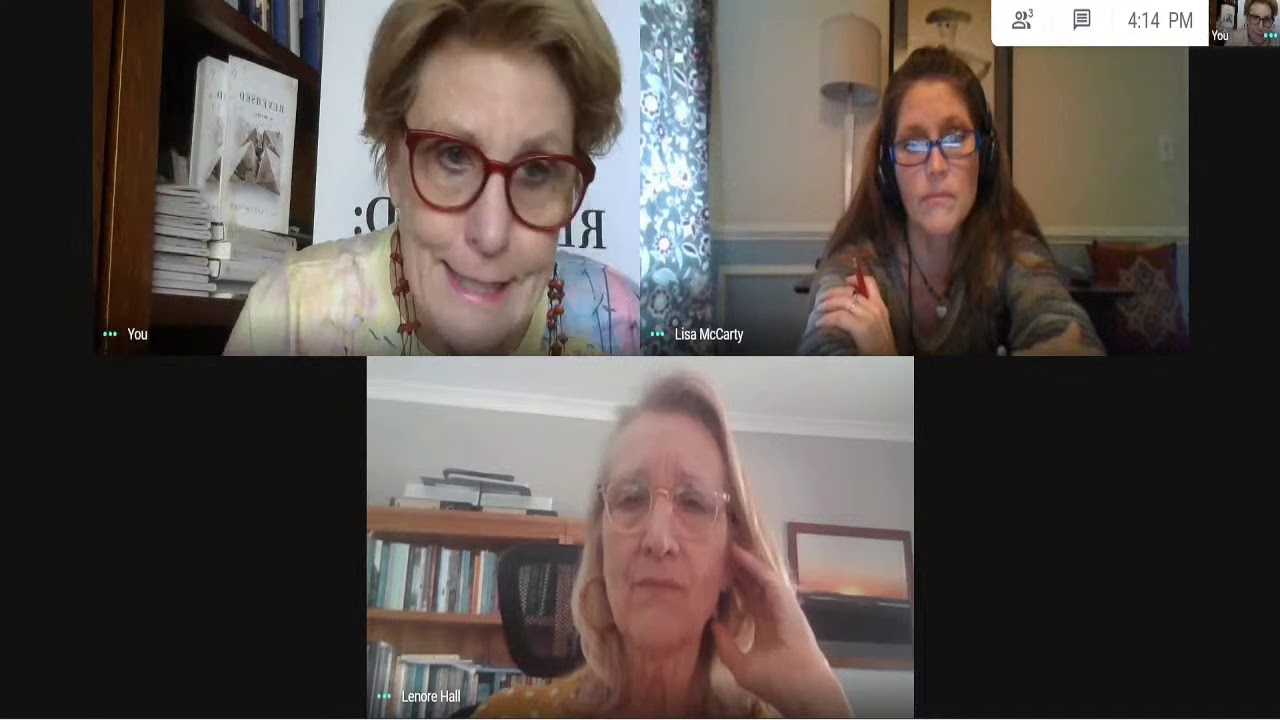
Lenore Hall and Lisa McCarty explain how repeated academic failures and undiagnosed learning differences function as trauma. Schools prioritize literacy over creative and emotional needs, creating shame and identity damage that accumulates daily. Trauma-informed care, mentorship, creative outlets, and early diagnosis can help break the cycle.
Questions this video answers
Both panelists suggest creative outlets (journaling, songwriting, drawing, music), physical movement/exercise, mentorship or supportive peer connections, participation in dyslexia or trauma‑support groups, and professional counseling. They stress that these strategies help externalize stuck emotions, build self‑esteem, and counter isolation.
Chapters
February's an interesting month. Hello, Lenore, welcome! It's wonderful to see you. Hello, Lisa, I'm delighted you're here. We've got When Learning Is Trauma, and we're talking to my sister Lenore Hall, who is a registered nurse and deals with trauma patients. That's the easiest introduction.
Yeah.
Lisa is also a nurse, and Lisa, tell us where you're working and what you're doing.
So I'm a nurse in an inpatient— well, we call it a substance use disorder and withdrawal management facility, basically. So we do a lot of work with folks who are, you know, dealing with substances and also have some mental health issues as well. So I'm really excited to talk to Lenore today. Yeah, up my alley.
Well, Lisa and I Sorry, can I just say one of the biggest issues with substance abuse is trauma.
Yeah.
It's the way people medicate to deal with trauma. And it's accepted by society, you know, it's just that normal thing. You have a hard day, you go home and have a drink. One drink turns into 2, 3. It's Just such a big issue.
So it's the way people medicate to what? To deal with trauma?
To deal with trauma. So you've got, you know, you— how many kids, how many people— I work as a counselor— do I see who have— who started drinking in their teenage years because they didn't know that that's the only way to fit in, for one thing. But also, it took away the the pain for a while, you know. It gives you a chance to, to have a break from, from life and what life's throwing at you.
Yeah, yeah, yeah, absolutely. And, uh, so, you know, we all talk with the counselors and the nurses all together so everybody's on the same page with the clients. And you're right, a lot of these clients have trauma in their backgrounds as well as depression, anxiety. But then I also get to see that a lot of the clients struggle with Things like, oh, a lot of people have the ADHD or ADD diagnosis.
Yes.
Rarely do they have the specific learning disability diagnosis that I see because, well, A, you know, it's hard to get those diagnoses for one. That's why we're doing all this work that we do in the field of dyslexia. But also, I think it's just more common that people will diagnose these folks with ADD, ADHD. So I would say out of 10 clients that I see, 9 of them have these diagnoses. So then, right, and so, and there's so many things that go along with that. And Lenore, you mentioned, you know, trying to fit in. So we know when kids are having struggles in school, yeah, hard for them, they need this group. But the other thing I noticed specifically talking about the trauma is that people tend to underestimate the trauma that's happening in the school. Like these, they, I think people look for the major trauma in somebody's life. So they're looking for, oh, you know, well, the, you know, the family was homeless or, you know, somebody saw somebody get shot and these big traumas.
Yeah.
And they don't realize that those little itty-bitty, they're not little itty-bitty, but there's Those frequent failures in school are adding up to trauma.
That's— Lisa, I'm so glad you brought this up. This is absolutely— we're in, I believe, in like a pandemic, if we can talk in those terms, of issues with pure relational fitting in schools. Like, it's a societal issue we're dealing with. of pandemic proportions, as you're just saying, so many clients you see who don't have a language for, I'm struggling here. And it's, it's not the big traumas we're talking about, the little traumas in life, which the way we're living in our world and in society. I wrote— I heard— I read a book one of the authors was saying that the ADHD, that agitation and inability to manage just what's going on, his version of that was a lot of emotional issues in the background, like just not being able to put the words on what's happening. And your body expresses that in that agitation, in that inability to Just be in a calm place.
But what's worse in America is that— and I don't really know how it is abroad. I think that people in Europe seem to have a little bit of a better handle on this, and in Australia as well— that in America, it's so, so, so hard to get these kids identified as having these learning problems. It's much easier to get them a diagnosis of ADD, ADHD, and then they'll say, well, take them to your family doctor and just put them on medications. And a lot A lot of people, you know, they can have ADD, ADHD as well, but sometimes the medications aren't helping as much as they should because the other problem is that they're struggling with specific learning disabilities. That's what we call it. And most of those folks are dyslexic folks. Now, when I say dyslexic, excuse me, I also put in there dysgraphia and dyscalculia. I just lump the whole thing up because it's very related. to get those diagnoses. And even if you do, we still have the problem of nobody knows what to do with these kids in the school. The other problem is that people feel embarrassment about having low literacy skills. It's much more acceptable to say, I'm bad at math, but to say I'm bad at reading or writing, it carries, you know, an embarrassment factor to it.
Yeah.
So that when the counselors are working with these folks, they very rarely are going to tell the counselors, oh, and by the way, I'm really terrible at reading. You see, they say, what's your trauma background? And then they're looking for those—
Oh gosh, yeah.
Those other things, not realizing.
And that's exactly right. We need to broaden that definition of trauma to understand, like, when we say trauma, exactly what you said. I love that. It's not the big traumas we're looking at, but it's those— that inability to say, you know, I'm hurting here, or I'm struggling, or I'm not managing my reading and writing. and the shame that that evokes. Now that's a trauma.
Mm-hmm.
When you feel shamed and you want to— you have to hide. That's what shame does. We hide it. So it's like, oh no, I can't talk about that because it's not acceptable, or whatever the child's reasoning is around that. Can we really be clear? I think if we can get that message out, and I think maybe trauma is the wrong word to use. I don't know. Yeah, maybe, you know, it's like because we suddenly say, you know, what trauma— suddenly identify or say, no, that's not an issue, trauma is not an issue, when it actually is.
Lenore, I just want to take you back. You said something about people— the children don't have the language to say this is what's happening. And I think that's where we even have to start. Before we even identify anything.
That's exactly right. And part of the issue is, too, what Lisa was saying, is everything, you know, it's become so medicalized. It becomes so you've got an issue, then you've got to get it diagnosed, you've got to get medication and all this sort of thing. When in actual fact, it's much more relational issue about, okay, what's going on here? And trying to get the kids to put words on it.
Yeah.
Like, what's happening in school? And just being able to put some words on, well, I had a bad day today, you know, or I— it's, you know, I got left out, or those sorts of things.
I can't do the work. And then people say, what does that mean? Well, And that's where we're expecting, I think, children to tell us what's wrong when all they're saying is, I don't understand what you're saying.
Yeah.
But you're absolutely— I think that we've really hit something here, is we've got to give children the language and teachers then have to respect the child to say, I'm not getting it. Because I was telling Lisa, I remember when The young— my youngest was in 2nd grade, and at the end of the year they sent home a book. And throughout that book, every line was crossed. So for a whole year, there'd been cross marks, and no one called me up. No one said there's a problem, and the child can't say, I didn't get it, on a weekly basis or even a daily basis. Tell me more, Lenore.
Yeah. And whoa, you know, that's, that, that's already— it's, it's in the realm of, you know, a much bigger issue. So we've got to learn to catch it much earlier, right? Because at that stage, it's like it was dramatic, and you then went on and had to take him out of school and all that, you know, that knowing the story, I mean, it's And everybody's going to have a story, like these are your stories too. It's challenging and gosh, okay.
But I think you've got it.
Go ahead.
Yeah.
I also noticed that, you know, the people that I deal with at work, they're adults. And as a language-based learning problem, They struggle with their words as adults trying to work through things with the counselors, for example. And I think the last time we talked, Lenore, you did such a great job of just discussing the brain when it's under stress.
Yes.
And, you know, so here we have little kids in the classroom or teenagers, there it is, and They're under stress, and then we're asking them to put names to what they're feeling and to be able to learn and do well. It's overwhelming. And I think an awareness in general has to be had by educators to understand these kids, to help them through these times. But even once they get out of school, we have to be aware as counselors. I mean, again, in America, we don't— nobody really still understands dyslexia. And that's unfortunate, because if you do understand that, then you see some of these patterns of communication, or sometimes they're not communicating. And as adults, you're still hearing, well, they're not engaged, or they're not motivated. And here the problem is, you know, that they're—
Oh, we froze.
They are struggling still. And as you discussed— are we back?
Right.
Lisa, can I also bring in here, there's a lot going on in the brain and you're talking about— let me bring in the hemispheres as well, the right and the left hemisphere, not so much that one and it was— I have another one I should have— I could send it to you another time. The education system is very left brain. The left brain is very much about literacy, the, the L's, the logic, the language, the linear, the— it's all to the lists, logic. It's all very much compartmentalized and putting things into, you know, just so you can understand it and get language on it. The right brain is much more the emotional brain, the big picture, the motivation, all those things. And when you A lot of the— with dyslexic children, I've noticed, and all that area of learning, there's a real disconnect between the hemispheres. And with a lot of people who have emotional inability to put words on their emotions, it's because they get stuck in that part of the brain that the hemispheres are not coordinating very or communicating very well. And here we've got a big problem. We, we need the right brain and the left brain to be really communicating well. And that's— that part of that is the right brain and the emotions that they're doing, the body work, the creative work, the singing, the movement. Those things activate the right brain and help. And when you can put words on your experience, that's where you get the communication between the hemispheres going.
Yeah.
Which is vital to connect these parts of the brain. Lois, you're looking—
Well, you know, I realize, see, that's what I, that's what I had to do. That's what I did with, you know, with the children. I didn't realize I was doing that.
Yes, exactly.
You know, and that you're the movement, but I could have done more language and more talking about the emotion, which I didn't do, which we can do.
Yeah, absolutely. And it— that's vital to connect because the emotional brain, and this— that's also very much involved with your attachment, that when you bring up those 3 parts of the brain, your social brain, that where the attachments and all the memories are kept as well. So when you start like talking about your emotions or sensory or things that, you know, to do with your senses, oh, you know, how music or a smell connects you to a memory.
Mm-hmm.
You know, when you put on a piece of music and it's like, oh, I remember that, because it's held in, it's stored in that part of the brain. So it connects, it's doing all those connections when we are putting words to our experiences as well. And we're talking about it. It's helping the brain be more, more regulated and more, more connected. Whereas school system focuses just on the— so much on the left. You need to just get all this stuff and get it in there somehow, you know. We need all parts of the brain really working together.
Yeah. Well, one of the problems that I see too is that a lot of these learners, as you're saying, are what we would say hands-on learners. They're very good learning that way. They're good in careers that are hands-on. But what I see is that a lot of adults have no idea that the reason that they struggle in school with these more left-brain types of activities is because they are essentially dyslexic. And some of them, you know, maybe I— again, I throw the dyslexia word out there to include all those other—
Yeah, yeah, let's do that.
Yeah, but they don't know that the reason that they struggled was due to this Way of thinking. So therefore, they also don't realize that their talents are part of that as well. And these hands-on learners, you know, unfortunately, some of these people are either unemployed or underemployed. But even those that are doing the jobs that they really love, that self-esteem piece is not there.
Yeah.
They don't understand that they're good at, you know, construction jobs, or they're good at plumbing, or whatever it is, or mechanics, because very good thinkers that way. They think that, oh, everybody can do what I can do, and also I'm done, I was dumb in school, and that's simply not true.
Yes. And Lisa, that, that is very important in terms of when we talk about trauma, because that affects, deeply affects that whole, like, the small traumas of life, that image of oneself, you know, not being able to achieve, that self- The sense of self, the self-identity that's forming through all those childhood years when they were having repeated, you're not good at this, you're not— underachieving, you know, this is not working for you, this is not happening, and I can't fit in with my peers. The identity and the image of themselves is so affected by how we manage, how we navigate the world, right?
Yeah.
As we're forming those images through the childhood years. So you get to adulthood and it's like, you know, I'm no good. I'm— I can't— I can't do it. And then the fact they're brilliant, you know, they've got amazing skills, you know. And it's—
oh, I use the example of my father just recently died, and, um, he was 80 years old and 1/2 years. He was a brilliant photographer. He was a brilliant artist. He built things. He built this, uh, bed for me when I was when I was little in our old house. It was like this house bed. It was incredible. So he's a— he was a, you know, photographer, an artist, a builder. He was in a band at the age of 12 as the drummer, like so talented. And this man had to spend his entire life feeling less than.
Oh my God.
Spent his whole life feeling less than because in school he wasn't good at these things. And he, he would himself against the folks that were better at writing papers or spelling, or it was, but none of those people necessarily were, you know, had the talent that he did. So why did he have to feel less than his whole life? And this is what I see, and this is why I fight the way I do, because it's so underestimated, this schooling experience and judging yourself against the people that society says are the smart ones. If you can spell If you can write papers, if you know your times tables, if you can do all these skills, you're the smart ones. And people underestimate what happens as a kid when you're faced with daily failure.
Yes, that's traumatic. That's traumatic, right? And you, you're, you're affected by it as well. We all get affected by the way this is happening in our world, in our schools. You know, when you, when you talk about your dad, you're so affected by it.
I am, I am. It makes me sad.
It's so sad because he's an incredibly creative right-brain person trying to fit into a very left-brain society that values the lists, the logic, the literacy, the language, all those things that, yeah, they're good, but we need both. We need these incredibly talented right-brain people to give us the richness and the variety, the wonderful things we have in this world. We need everyone working together. We need all these things, skills that not everybody is going to fit in the same box. You know, it was just interesting. I just yesterday visiting my elderly parents and they had, you know, the TV on in the background and there was Ellen. I'm not promoting Helen's program, but she was interviewing a school principal. And he was just saying, and it caught my ear, he was saying, we value music and dancing and we incorporate this into our school program. Because, you know, imagine a school doing that, where it's part of the program and kids are valued for all these different things. And it's using— he didn't know it, but he's actually using the hemispheres and he's using the parts of the nervous system that are calmed when we actually are doing things like singing and joining with other people. It calms us down, it joins us together. It's brilliant. We need more schools that value all those right-brain creative activities. We really do.
When in fact what happens in a regular school, you know, it goes back to what Lisa was saying. I don't think it's the way— I've lost my train of thought. It's not that we don't teach them, it's they don't learn the way they're taught and we can't change the teaching. That was the one. And that when our children do struggle, the first thing we take them out of, art and music.
Yes.
You know, the very places where they can shine and learn different ways and get an emotional attachment and, and calm down.
Yes, yes. And sports.
And sports.
You know, if you don't have good grades, you can't play the sports. And some of these people, that's the only thing that's giving them their sense of self-esteem, and we take that away from them.
Because they can't read. Or they can't learn to read in the way they're taught is my big deal.
Yeah.
So yeah. Oh, Lenore, keep going. You know, you—
That's traumatic. That's incredibly traumatic. Let's just be really clear. We are— this is all about expanding that whole idea of trauma. We have to get our heads around how traumatic this is. And what we started with, Lisa, in talking about those little traumas that kids are experiencing, they get stuck in that part of the brain where it's incredibly difficult then to move on. You know, it gets stuck in the brain, trauma. We've talked about this before. So that you, like in Lois's description of her son, when he was talking about his school experience, he had no words for it. Because it was, it was stuck in his brain and he wasn't— it wasn't able to process that. Because processing involves our words.
Mm-hmm.
It involves the connections between the hemispheres where you— those emotions in the right brain can be expressed in the left brain and let the body express all the emotions that it holds, like the tears and the rage, because it's an incredibly difficult— the anger that comes with that.
Yes.
Yeah, just like the frustration— can I say that word? Frustration. Yeah, of these poor kids. Yeah, and anger. And that's an energy that's stuck in their bodies. Can you imagine what that does? You know, you're sitting there with all that pent-up energy of, I'm not, I'm not getting this, I'm not feeling heard, I don't know what to do with myself in this world.
And then we put them into the dumb category. And you've got, you know, then you've got Nicholas, you know, 20 years later got a PhD in Oxford showing that, you know, how much of a brain that we are losing.
Yeah.
You know, that's not— he's not within the normal range on any aspect of his life. But by not teaching him to read, we just— I can't go there, actually. It's too hard.
I know, I'm with you, Lois. But at the same time, and I know the struggles he's having even now.
Yes.
Even PhD.
Yes. You know, yes, yes, it's—
we've got to work with these kids.
Yeah.
From an early age and get the brain hemispheres connected.
Yeah.
Get them, get them really just like, you know, in our homes, learning to put words on what's happening.
Yeah. Well, another problem is that where people don't understand dyslexia, for example, some parents don't want their kids labeled. And if you don't understand that dyslexia, for example, is actually basically a genetic variation in brain wiring, that they have usually talents in an area that's outside of the literacy skills, then you're not going to necessarily think of it in a positive light. But these kids need to know that there's nothing wrong with their brains, that— and it's going to take everybody to understand this, to help these kids understand how valuable they are.
Yes.
And, you know, it's— when my son— I never told him when he was younger that he was dyslexic because I was one of those persons that thought, well, I don't know if I want to label him. I used the term, but I didn't sit him down and explain it to him. It was him that came to me and asked if he was dyslexic. And well, he asked me, what does— what did it mean? And I explained it, and he asked me, am I dyslexic? And I said, yeah. And he said, well, that explains it, you know. So here he was.
Can I ask how old he was?
He was in 8th grade by the time I gave him that technical label.
So here's a kid who's gone through like a number of years going, oh, there's something going on here, I'm not fitting in, I'm not— I'm really struggling, and it's a whole lot of years leading up to him coming and saying—
Right, and so I always go back to the importance of a supported versus an unsupported dyslexic learner. Because, you know, if we support these people, they do come to value what they're good at, and they can do anything they want. If you're unsupported and you don't know, as, as you're saying, Lenore, you don't know, you know something's wrong, but you don't know what it is, you know, you're really at risk for self-medicating, which is where we see some of these people getting involved with some unfortunate situations.
Yes. It's a people joining a group that are maybe— they've got their own identity of— and they're, they're identifying themselves by, you know, like issues that are— that you don't want your kids to be involved in because they fit in there. Makes sense. It totally makes sense.
I mean, that—
because I'm accepted.
Yeah, and they need this support. So this is why one of the reasons that we're doing all this So, I mean, again, I know teachers have a hard job. I say this every single time we get on here, and I get that, but they really need to know why these kids are struggling. And here's the other thing, Lenore, you know, and Lois, I'm sure you do too, that it's not just— it's a whole family affair.
Yes.
Yes.
You know, the trauma doesn't stop with my son sitting in class. The trauma is the whole entire family. I'm scared. I don't know why he's not doing well. And, you know, families get very emotional and wrapped up in it, and then other things are going on. It's, it's not just a one-person show here.
It's the whole family.
Now imagine if you have parents who are dyslexic too. They themselves have had struggles, didn't know why, and that sets up the fear cycle, and it goes around and around in circles. And it is—
it's awful.
It's just So important, Lisa. This is so important what you said, because we've got to, we've got to understand that issues are not just a one-off. What we do, how we are relating to each other, and absolutely it starts in the family. Our relationships are incredibly, incredibly important. But not only— I can't say that enough— but affecting— we affect each other, our issues affect Yeah.
No, no, we've got it. Yeah, keep going.
No, the family issues, Lisa, that is absolutely vital that we bring this into it because we are— and then we're dealing with generational issues that we don't know how to deal with.
Yes.
A sense of despair and don't know where to turn to get help.
Yeah.
And your whole family, your story would be just a little microcosm, a little system there of all these issues that you could write about, as in Lois's family.
And, and a lot and loads of people for decades have been going through this same thing. And I have to say, I, I feel a little frustrated today. I mean, I think you can see that in the way I'm talking. I am, I'm exasperated. And, you know, I was looking through my son's, uh, second grade work last night, and I was, I was feeling so guilty inside at some of the chaos that I contributed to because I was insisting he goes to school and insisting he does well and, you know, trusting that the school knew what this, you know, what they were talking about. And all I kept hearing was, well, he's a boy, he's messy, he'll catch up. And, and I didn't know because I wasn't a teacher, you know, then it took for my, you know, son to fail out of high school and, and, you know, come and then my, my 8th grader to come to me and say, hey, am I dyslexic? To say, wait a second.
Yeah.
Then I did all this research, and this is how I've come to, you know, to be doing the work that I'm doing. But I, as a family, you know, as a mom, I carry a lot of guilt that I didn't know what this was, and I don't want any more families to go through this. But unfortunately, my story is far from unique.
Yes, exactly. And that's so— oh my goodness, Lisa, it is. And Lois is In the same situation, I know. And it's, it's about dealing with your own pain in this as well.
Yeah.
Because it is, it is incredibly painful. What I'm hearing is getting stuck yourself in these things. And part of your process is to put words on that just exactly like you're doing, and putting it into, reframing it into that context of, you know what, I, I did the best I could, even though you still beat yourself up. Yeah, but it's put me down to be a warrior for this. We, we are out there. You're out there doing this, so good on you.
And getting a free therapy lesson. Thank you, Lenore. I need it.
Yes, because the guilt, the guilt and the shame, you know, keeps us stuck in that and, and not And good on you for talking about it and saying, I'm exasperated. It's so important because it just is about processing your pain and reframing it into, we're doing this, we're pushing for changes. We've got to keep talking about it.
Yeah. We have a question from Chris. And he says— my glasses, okay. What are some methods of coping with academic trauma that you would recommend? Middle school and high school can be especially stressful due to the change of environment. So what methods have you got for coping with academic trauma? Thank you, Chris. That's an incredible question.
Yeah, it's a great question. You know, and that's, that's something that, you know, I'm sure Lisa can speak to, and maybe that's part of your frustration that you You weren't able to pick it up and really deal with it.
Well, one of the things that I see, at least with the clients that I deal with, a lot of them actually like to journal or— and/or write song lyrics. I find that a lot of these people, they may have trouble with the physical writing or spelling, but they're very creative. And they have great ideas if they can get them down in a way that's not intimidating to them. It's one way, I think, Lenore, what you're saying is to get it out of there, to move that emotional stuff that's stuck in the brain and literally get it out, like onto paper or in a song. Maybe write— people that are musical or art. Art.
Art.
My son does a lot of really neat Drawings and things.
Yeah.
It helps him.
It's— that is absolutely vital. Or movement, you know, let those kids get and move and move their bodies. But at the same time, it's— at some point, it's really important they can find connections with other people, you know, mentoring, places where there's a unheard, you know, unseen. So that there is a— that those connections with other people are being strengthened and built. You know, if there's a mentor that they can find, or like— because especially you get into the teenage years, their peers are incredibly important. But finding a connection, yes, absolutely, the journaling, the music, the creative outlets that help them express their emotions, and then being able to just put the words on it. You know, this is really tough.
Yep.
I'm feeling really awful here, you know, and just getting those words out there are vitally important via human connection. We cannot underestimate their value. of connecting as humans.
There's been a lot of research done on the effects of loneliness, and then also exercise. So exercise and human connection are 2 great ways that don't, you know, involve medicating people, that they can work on their mental health, basically. So I've been looking into that.
Oh, beautiful, beautiful. And that, that the Surgeon General under Obama, what was his name? He's now in the cabinet with Biden. He's written, I read a paper of his about loneliness. It was brilliant. His name escapes me. But you, if you, you know, he's in Biden's cabinet now. But he was the Surgeon General under Obama.
Hmm.
Brilliant paper on, um, just on loneliness.
Which has really been exacerbated through the pandemic.
Oh, massive issue.
And I, I mean, from my point of view, I'm just thankful that my children are not in their early 20s and stuck in a room on their own for months on end.
I mean, I—
Yeah, yeah.
It's a collective trauma, you know. We are going to be working on this for years, dealing with it. But talking about it is really important, just acknowledging it, you know, saying, hey, we really—
it's tough.
It's tough for these teenagers, young 20s. It's tough for everybody.
Yes.
But, you know, just hearing someone say that, it's so, so important, you know, to say, you know, I hear you.
Yeah.
I see you.
Yeah.
We need to say that to our kids from what— from an early age, you know. My little 3-year-old grandson, it starts, it starts from when they're born. You know, the fact that, that to be seen, to be heard is, is what it's all about. Yeah.
I think that's another good reason why, um, I mean, again, people that don't like labels But if you know why you've struggled in school, for example, and it's caused a lot of adverse emotions, to know that you're not the only one, I think is so important, especially with the clientele that I see, because a lot of these folks feel isolated.
Yes.
And, you know, coming from a substance use disorder facility, what may have started out as a social event quickly turns into a very isolating problem where you have substance use disorders and you feel really alienated. And so then how do you— you have low self-esteem, maybe you feel isolated, you feel, you know, stressed and like you don't belong. How do you rejoin the community with positive, you know, feelings? How do you do that? And I think One important thing is to, to know that you're not alone, you know, find some support groups. There's so many dyslexia support groups that I see. I'm on Facebook a lot, and I find that, I don't know, just talking with other people that have gone through these same things. I don't know if, Lois, if your son has ever talked to other people that went through that, if that has helped him, or— I don't know.
Nicholas has actually found counseling recently, which has been huge for him. When he was first— when we were first struggling, finding someone who had been through the journey, and our mentor was Richard Rogers, you know, just knowing about him was phenomenal.
Yes.
You know, and it really resonated with Nicholas. Nicholas didn't talk much because of his language disability. And then he'd come back months later and say, well, why did this happen? And you knew it was, it was very important to him. But it was important to me.
And mentors, exactly.
Yeah.
So, so vital. You know, we need, we need each other. We've got to remember that we need, we need people, we need those people who are doing those great works of support groups of all that. Yeah. But realizing really, and they need support from, you know, they need the supporting government bodies and all that. We realize how connected we are, and it's at a turning point in the world where we realize how connected we are with what the pandemic's done. You know, as bad as it is, it's made us all realize, hey, What we do affects each other. You know, some people have a harder time getting the message. And yeah, that's, you know, it's, it's not about individual gain here. We're not competing against each other. We desperately need to learn to lay down our arms and connect. And, you know, in talking to a divided America, that's a tough journey ahead you guys have got.
Yes.
It's just, it's so vital that we We just like, you know, oh my goodness, just realize that yes, we can connect in small groups and that's important, those support groups, and find those areas of interest where we connect with each other. It's, yeah, we've got to lay down our arms. We have to move forward.
To move forward.
And a lot of the The reason that we, we get all divided is again trauma, because we get all defensive, you know, like I've been hurt in the past, you know. If you've got a history of hurts, of course you're going to have your defenses up.
Yes, yes. So it's a matter of breaking them all down.
Yeah, it's a matter of realizing, hey, we've all got issues, but we, we have to lay down our arms is the only way to, to move forward and breathe, calm our own nervous systems first.
What I was thinking about with Lisa and school, you know, the teaching of— the training of a teacher is all of 4 years, and they cover a huge amount during that time. But it really has to be now much, much longer. Yeah. And the The pay should reflect that because they're now being asked to do and they're being asked to know so much more.
Yeah, and Lois, I hear you, but I, you know, and that's a whole huge area of how we train. And, you know, I just take my hat off to teachers. My son was a teacher. Yeah, there you go. At the same time, You know, the training— I don't know about longer because we put so much emphasis on all this training, but I think we have to learn to do it differently.
Yes.
We have to learn to realize that it's, it's—
Yes.
The creative side of our brain. It's not just about filling our brain with stuff.
Yes.
But it's about getting those brain connections going and letting it seep into ourselves that we are more at peace as people. To hear each other. Yeah, you know, not just to rattle off a whole lot of facts. That's not going to do it. It's not going to cut it.
And just, just reading from a textbook is not going to improve it, but it is learning on the field, learning more on the job. But it's the whole range, I think, of what teachers are now expected to do.
Oh, bless you.
Yeah, it's no longer just teaching a subject area.
Well, just as in medicine, I mean, you know, you go to your general practitioner for general things, and then depending on what issue you're having, they'll send you to a specialist. So, you know, I think that a lot of us in this work expect that our reading specialists have some more specialized training in some of the problems that our kids have. And, you know, a lot of the groups that I'm involved in, they're trying to change laws at the government level. And, you know, the, like, the Literacy Alliance of Pennsylvania, for example— I live in Pennsylvania— is doing a lot of really great work trying to do things better. Not necessarily want, you know, more training, but to really to do what— to do things better and specialize in You know, what these kids need.
Yes.
That there's no excuse in my mind anymore that a 2nd grader is just told, oh, well, they're just lazy or messy. No, you should know what that looks like, and then you should know how to start helping them to keep their self-esteem afloat so that by the time they, you know, they're adults, they don't feel like they're losers and less than. Because that's what I see, and that's what's frustrating me, that this is not changing. I mean, I think it will eventually, but it's, it's taking too long, really, in my estimation, because people's lives are literally suffering.
Yes, yes, yes, the process. And we've got to remember, it's, you know, we as a society, we're on a continuum of learning to do better. When we know better, we do better. So, you know, and like medicine, this specialized care. I think teaching will probably become more specialized. But what, what is help— what I found helpful in the area of medicine, being a nurse, when I was working in psychiatry, we suddenly got to a point, you know, in Australia, where within psychiatry, they brought in what was called trauma-informed care. So instead of psychiatry just being these categories of diagnoses, which the psychiatrists tended to do, you know, you fit these different diagnoses and you medicate for them. Suddenly this whole world was opening up about, you know, there's a lot of— probably most of psychiatry is about early childhood trauma. You know, people who've had a history and a background of trauma. So suddenly taking a history became much more important.
Right.
And we're not talking about like the big traumas, but all the little traumas that carry— that go on, that build up and up and up to a place, coupled with learning, the learning history.
Yeah.
So taking a history is very important, understanding the history. Now, you can't expect the teacher to know all the history and all those things, but, but being trauma-informed, as in what we've talked about today, understanding that these Small traumas are incredibly impacting in an individual's identity and self-esteem and, and how they're seeing the world.
Right. And themselves.
And themselves. Exactly.
Especially themselves.
Yeah, especially themselves, because that is forming the basis of their self-esteem and who they are as a person, how they're interacting with the world. So that trauma in trauma-informed process is, is, you know, getting this message out there. But, you know, holding on to that trauma is, is not just those big events.
Not a car crash.
I'm struggling with the language because I think it's the wrong word. What we— I don't know, it needs to be some other definition. I'm not sure what, you know, and that's something to to talk about and throw around with each other. How do we get the message out there that this matters? All these things that are building up in our child's life, the small traumas. There is that definition, the little t traumas and the big T traumas.
Yeah.
But we've got to really understand—
But I think when we say little, like that tends to minimize this. No, it can't be minimized.
It's an accumulation of small traumas. That's the word.
But even to say small traumas, like, again, they're not small traumas.
Exactly. That's what I'm saying.
The grappling was to the kid who's sitting in the classroom just feeling like a big dummy.
Yeah.
You know, it's like daily personal school failure.
You're so right.
That's why we—
I don't know what we would call it, but—
Yes. We're really grappling with this. We're kind of trying to find another language. It's huge in this kid's life. Yeah, let's not minimize it. Yeah, but I think it's a little trauma.
That's what I mean.
It's not. It's like, what do we call this? Let's just put it out there, throw it out to your listeners.
And I know what you mean, Lenore. Like, I know, I— and, and Lois as well. But I think that again, like, we can't minimize this anymore. Like, this has to be right out front and center to say these kids are daily suffering, and it is affecting their self-esteem, their outlook on themselves and the rest of the world. And they're winding up, you know, becoming— if they're unsupported, I have to make that distinction. If you're supported, people will say, well, dyslexics do very well in this world. Yeah, some do. And those are the people who have been supported somehow or another.
Sure.
The people that are not supported, they are really, really at risk. And that's a shame.
Lenore, 3 weeks ago or 2 weeks ago, we had Joe Brummer on the show, and his is a trauma-informed classroom.
Oh, I love it. Yeah, there you go. Yeah, how it does tell us how it works, you know. This is, this is what I'm saying.
We—
this is beautiful. This is just really beautiful. Because it's where we're going, where society has to be aware of how important this is. Yeah, yeah.
And his book is about— or his training is— this doesn't happen in a day or even a week. You know, this is a whole school approach and it's going to take time and we have to unpack it.
Yes.
You know, it's not, it's not a quick fix.
No.
And talking about it is so important.
Yeah.
Getting the message out there, laying down our arms the way we talk about it, you know, not attacking the poor teachers.
Yes.
You know, the best they can. But, you know, it's like, oh, okay, this is tough. We, you know, get support where you can. Those groups are wonderful. The wonderful work, getting— talking to kids about what are you good at.
Yeah.
You know, where you can find that self-esteem, it's really important.
Yeah.
And feel like you belong.
Yeah.
But keep working on it. Yes, we do need the literacy. We do need to get these tasks and find ways to help our kids get a handle on the world. you know, in the way they fit in the world. Because we all fit. That's the message we're going to get out there. We all fit somewhere in this, and it's all important. We all have a place to pay, to part, to play. It's just, it doesn't fit one mold.
Particularly now as we have, you know, the worldview that we have 9, over 9 billion people on this planet. Yeah, you know, that's a lot of people, and the world is struggling to cope with so many humans. And particularly want to live a particular lifestyle. So, you know, we've got a lot to discuss and we are now far more interconnected and connected than we ever have been.
Yeah. Yeah. And it's overwhelming, you know. Yes. You know, and that, you know, when we get like that and then we go into shutdown. So it's really important we start with where we're at.
Yeah.
Build those connections and start with, you know, dealing with our own traumas. You know, start with ourselves. Like, because whatever we don't— this is really important too— whatever we don't process in ourselves, we will project it onto others. So what, what, what is a blind spot or unprocessed pain in ourselves? You know, we just project it and blame, blame, blame. And we've had— you had 4 years of a man who stood up and blamed everybody around him. And that was all his unprocessed pain, you know, that he throws and he still does it. Not my fault, you know, blame somebody. And so we've got to start with ourselves.
Yeah.
And, you know, take a breath and deal with it. Get a handle on, you know, what triggers me. You know, that was great, Lisa, when you said before in the session, you know, this is really something I'm passionate about. It's really— I carry a lot of guilt here.
Yeah.
It tells you, okay, I need to deal with this. I need to let myself grieve this pain that I'm carrying. It is painful to go through what you've done. It was the same. And talk about it and let the tears come and process it. So then you can, you can go out there and have that freedom to hear other people's pain because it's tough. There's a lot of it out there.
Yeah, I've just written 6 pages of notes.
I feel instantly better.
You've given me a lot to write about because, you know, there's a lot of questions that I think we have to really start exploring. And it's, you know, one of the ones is accumulation of small trauma and not small traumas, you know. So what do we mean? We're even back to what do we mean by trauma?
Exactly. You know, put that out there, put that out there to your listeners. Yeah, it's going to be huge. You'll open up a lot. I'm sure we really need to together find a new language for this. You know what it is? It is trauma.
Yeah.
But it is, it is a— see, I'm even struggling.
Yeah.
As we all are, to put words on it. It's huge.
Yeah.
It's not just a little trauma. Let's not minimize it. Yeah.
So the word small does minimize it, and there's your— back to your language again.
Yeah.
It's a small trauma, it's unimportant.
Yeah.
No, but it's—
yeah.
So anyway, Lenore, thank you, thank you so much. Um, now we've got to do our little bit— where do we find you? You're on Facebook, not much?
Yeah, yeah, I'm on Facebook.
You're not on Twitter?
No. Um, but you're overwhelmed by all that stuff. I'm doing my best to manage my own life at the moment.
You're doing very well. Speaking to us. Lenore, just thank you for all that you have given us today, because I've, you know, as I said, I've got 6 pages of notes to write up, and I'll do a LinkedIn post on it and talk about it because there's a lot to unpack. Lisa, thank you. Where do we find you?
Facebook.
Facebook. Twitter?
No, I don't use Twitter yet. I'm telling you, I will one day, but I, I sort of do. I think I'm on it, but I never check it.
Can I just say, your language, your grasp of this stuff and putting it into words, I'm in awe of you. I really am.
Yes. Well, thank you. I'm not, but thank you.
Well, I'm pretty new at all this in terms of just relating in this way. I'm much better at the counseling room, you know, but I just I just think the way you've been able to grasp things and summarize it, put it into words, it's really helpful. It's really good. And I think you have a real opportunity to use your voice in this because that's a real strength you have.
I appreciate that. I do study this an awful lot.
Yeah, it's great.
And we live it. This is not an academic exercise for any of us.
This has been your life. This has been, you know, I can hear, I can hear how much of a struggle it's been. But, you know, you're doing it and you're a warrior. You're a warrior.
You both are.
Thank you, Lenore. Thank you very, very much.
Okay, all good.
Well, I'm on Facebook, I'm on Twitter, and I'm on LinkedIn. And please hit like, hit subscribe, and share it with others because we are here telling the story. We must teach children to read. And hit the bell for notifications. My son tells me all the list of things I have to say.
Okay, good on you. What a blessing. Love you. I love your work, Lois.
Because otherwise I couldn't do it. Well, thank you. Thank you, Lisa. And we'll talk again next week. And next week we're talking to Kaisha Adair-Swadby from England. And it says she's a mother, a wife, an inspirational speaker and radio presenter. She's Jamaican Parish Ambassador. She's living in England. She's passionate about speaking and sharing her importance on the story of believing in yourself while writing a book about her dyslexia and dyspraxia. So we look forward to talking to Kayisha next week. Lenore, thank you. Thank you for coming on. Thank you for getting— and we'll certainly speak to you again.
Yeah, okay.
Lovely. Thank you.
More from Lois


Overcoming Adversity: A Dyslexic Learner's Journey to Success | When Learning is Trauma #shorts

Redefining Success, Beyond Grades in Education | When Learning is Trauma #shorts

Turning Awareness into Action for Dyslexic Learners | When Learning is Trauma #shorts

Why Dyslexia Goes Unnoticed: A Systemic Issue | When Learning is Trauma #shorts

The Long-Term Impact of Unrecognized Dyslexia | When Learning is Trauma #shorts

The Heartbreaking Reality of School for Some Kids When Learning is Trauma #shorts



