How Texas Sales Tax Permits Work - Filing a Return - DANGERS to be Aware of
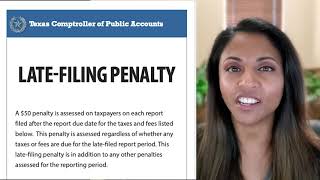
Texas sales tax permits require you to collect and remit taxes to the state, with filing deadlines on the 20th of each month. A $50 penalty applies for late filing even if you had zero sales, and the Comptroller can freeze bank accounts and garnish wages faster than the IRS. Contact the Texas Comptroller to confirm your filing frequency based on projected sales volume.
Chapters
Hi everyone, my name is Loma, and on my channel I teach entrepreneurs business and money management skills. And today I want to talk to my Texas entrepreneurs who sell physical products in their business. More specifically, I want to talk to the ones that have their Texas sales tax permit and they haven't filed their sales tax return yet. Now, before we really get into this, I'm going to ask, how many of you guys got this permit because someone told you that you can get a discount when you buy products from the store just by showing them your permit, then they just wouldn't charge you the sales tax? Wait a minute, wait, wait a minute. Okay, so how many of y'all actually understood the responsibilities that are attached to having this permit? I know a lot of entrepreneurs, they don't get the right support when it comes to understanding how business works in different aspects. What I try to do on my channel is really sit down with, with you guys and give you— kind of hold your hand through the process to understand what's what and also why, so that you can kind of steer yourself and your business in the direction that you really want to actually go, because you know, knowledge is power. So here we go. Let's start with this sales tax permit and the whole purpose behind it. If you have a sales tax permit, it was given to you as permission for you to do business in Texas, but it's in exchange for you to collect sales tax for the government. And the way that you do this is anytime it's It's essentially the same way when you go to the store and you buy product. Even before your sales tax permit, you'll notice when you go to the store, Walmart for example, you'll see on your receipt that the stuff that you bought all got charged tax except for food. But you'll see that you got charged tax, and that tax— what Walmart has to do, their responsibility for getting their sales tax permit is they have to charge you, the customer, and then they have to collect that tax and then go and return it in to the Texas State Comptroller. This is the agreement for having a sales tax permit. So essentially, you work for the government. It's essentially like being pimped by the government, really. Oh no, she didn't! Because you go out there and you sell your product. While you're selling your product, you have to charge your customers an extra fee, and that fee, you have to collect it and you have to turn it into the government. Now, the amount that you have to charge your customers depends on the location where you're actually selling your product, but we're not going to go into the details of that right now. What you can do if you'd like more information on how that works, just put in the comments below that you'd like to learn more about that or that you'd like to see a video about that. Another alternative is you can always go to my website. I actually have a full course on teaching exactly how this— how sales tax works, who has to pay it, you know, in what situations, and then how to actually file it, how to apply for the permit, how to file it whenever it's time for you to file your regular taxes, different ways you can save money. It just kind of goes through all of that in case you're interested or, you know, you want to learn more about how this works. All you have to do is go to www.lomabam.com. Again, that's Loma for me, and then Bam is business and money management. So that's, uh, that's pretty much what you'll see there is a bunch of courses on how to have a different business and money management. Teaches you different skills for business and also for personal. Okay, so the next thing we need to talk about is the due date. So when you first got your sales tax permit, you would have been told how often that you have to file, and everybody doesn't have the same filing date. It could have been monthly, quarterly, or yearly. It just depends on how much money that— or how many— how much in sales that you are planning to make. They'll ask you if you're making— if you're planning to sell more than $8,000 worth of product, then that helps them determine how frequently you'll have to file your sales tax return. So just kind of stepping back for a second, you think about you normally have been filing income tax returns with the IRS. That's one once a year. But when you come back here and look at what Texas requires, Texas doesn't charge income tax. And, you know, side note, some other states actually do. So those people in those other states pay income tax in their state, and they also pay the IRS for income tax. So they have to pay twice. But you're lucky you live in Texas. So in Texas, we don't get charged income tax. What we do get charged is sales tax, and that gets charged again like we talked just a few moments ago by the customers. The ones who get charged sales tax every time they buy something, they pay sales tax, and that's how the government in Texas makes their money to pay for, you know, different public services that we all enjoy. But going back to the due date, so they— that's— they would have told you what your due date is. They would have told you what your due date is whenever you first got your permit. But if you don't remember what date that was or you can't find the paperwork where it shows you what that due date is, or as far as how frequently you have to file, then the next step is just to give them a call. Well, who you're going to be calling is the Texas State Comptroller, and I'm going to leave in the description below their direct phone number, and that way you can give them a call. And what you'll need to have with you is your sales tax permit number. And you'll need this number whenever you call in. If you don't have it, I'm sure there's other ways for them to look up your, your company name in order to find the information that you need. But you're definitely going to want to give them a call so that you know how often you have to file. And once you know how often you have to file, you also— that's how you figure out what your due date is. And so if you look here on the Comptroller's website, the Texas Comptroller's website, You can find so much information here that you'd need about how sales tax works and what's due, when, when it's due, and those type of things. So due dates, just so you know, they're always due on the 20th. So if you're monthly, it's every 20th of every month. If you're quarterly, whenever that quarter ends the following month. So January through March is the actual dates that you're calculating your sales tax. And then in April is when you would file, and April 20th would be your due date. Now, if the 20th ends up being on a weekend or on a holiday, then it'll be the next business day after that. Most popular or frequently assigned frequency for filing your tax returns is quarterly. So that's normally what someone will be required to file, is every quarter. And so if you're looking at the screen, you'll be able to see, um, I've got the quarterly filing due dates up. So April 20th, like I was saying, would be the due date for the first quarter, and that is when you're reporting your January through March dates. And then July 20th, you're going to be reporting your April through your June sales. And then your 20th, October 20th, to— for reporting your— on October 20th, you'll report your July through September sales. And then on January 20th, which in this case at the time of this recording, January 20th is in less than a week, and what we'd be reporting for sales tax would be the October through December sales here. So if you were on monthly, the monthly filers, again, like I said, is every 20th of every month. So no breaks, every single 12 times a year you'll file your sales tax. And this is only if they require you to file monthly, and usually that depends on how much money that you're pulling in. So if you've got a lot of sales, then they're going to want you to turn in their money more frequently, if you know what I mean. They don't want you to hold on to this money and get extracurricular ideas about what to do with this extra money that is not yours. And then lastly, you've got the You got the yearly filers. So folks that are barely making, uh, much in sales, they can request to be able to file only once a year, and that way they don't have the hassle of having to file so frequently throughout the year. So when you're able to file yearly, your due date is always January 20th. So you'll notice the common theme amongst each of the different frequencies is that Everybody, no matter if you're annual, monthly, quarterly, everybody has to file on January 20th. That's definitely the one date they have in common. The rest of the months, not necessarily, but definitely January 20th. And that's why I thought it was important to get this video out here to make sure that I stress the importance of making sure that you guys file your, your Texas sales tax. But if you make a lot of money and you need to turn in $25,000 worth sales tax, then this is where you end up having to send the money in through a specific method, and it's called TexNet. I don't know much about TexNet. Normally, the entrepreneurs that I work with are not quite in that ballpark. Not to say that they won't get there, just saying that that's not normally the ones that I'm trying to help because I'm usually trying to help the startups. You see that the deadline is coming up on January 20th, in the next few days. At least from this video. And it's going to be really important that you get this done early or on time. Early is better, you know, takes the stress off. You know that it's done, it's out the way. But you definitely— everybody who's got a sales tax permit, your deadline is January 20th for sure. That is at least one of your due dates. Okay, so now I'm going to go into why is it so important to file on time or early. Okay, I'm going to put this to you bluntly. There are some government entities that you just don't want to mess with, or especially not want to piss off. I know everybody's scared of the IRS and they think that's the worst one to deal with, and, and I know so many people that are like literally terrified to deal with the IRS. But in Texas, who you really don't want to mess around with is the Texas State Comptroller. They are literally worse than the IRS. They're the ones who charge sales tax, and that's who you have to file your sales tax return through, and they do not play about getting their money. So if I say the Texas Comptroller is worse than the IRS, that should help you understand why I say not to mess with them. I'm telling you, they do not play about their money. If you're late, they start out playing nice. They charge you $50 for a late filing penalty, and you get charged this whether you had any sales or not. And that's a lot of money, especially when you don't make any sales, to have to pay $50 when you didn't make anything. So you might be wondering, how do you file if you didn't make any money? Well, they literally have something called filing a zero sales tax return. They expect for you to report that you made nothing, and they will take that as what you say, as for the truth, and they will not charge you a late fee for filing late because you'll be filing that you didn't make any money. Now, I hope you aren't getting any extra bright ideas about trying to file zero when you actually had some sales. Um, because I just got through telling you guys, please don't play with these folks. They are bad and they do some pretty harsh things compared to the IRS. You know, you hear about different stuff about the IRS. Well, here's what happens with the Texas State Comptroller. If you rack up a bill with the Comptroller from you know, $50 adding up for not filing. Or say if they estimate what they think that you made because you weren't filing, and they send you a bill saying you need to turn in, you know, a certain amount of money because that's what they're feeling like you made. And yes, they can estimate because the IRS does that too, just in case you didn't know. But if you don't pay when they send you the bill, they could put a lien on your property. That means they can own your property if you don't pay your debt. Another thing that they can do is they can freeze your bank account. And in case you're not clear what that means, that means you go— you're going about your daily day, you've got your, your deposits going into your bank account, you, you try to use your, your card, and all of a sudden you can't because Your bank account's been frozen. You cannot take any money out. You can't do anything with this account until you fix the problem with the Texas State Comptroller. So do not play with these folks. File, first of all. File on time, second of all. And pay them their money, third of all. They can even go so far as to garnish your wages. You do not want them to start taking your money out of your paychecks, just trying to get your bills settled up with them. The other thing about the, the Comptroller is that they're faster to take these steps of putting a lien out or freezing your bank account or garnishing your wages. They're faster to do that than what the IRS would do. The IRS, they'll send you multiple notices and they'll give you time to get back to them. But the comptroller, the Texas State Comptroller, they do not play, and they expect for you to let them know when you close down your business doors so that they don't continue to charge you. So, you know, if you've got a permit and then you didn't end up doing any business, make sure you let them know, because if they don't know, they're assuming you're continuing to do business. They're going to assume that that you owe them money. And that's the last thing you want for them to do, is to make that assumption about you and your business. So if you did not do any business, if you stopped doing business, just make sure you let them know and you follow the process of what it takes to close your Texas sales tax permit account. Because if you don't, they will keep it open under the assumption that you are continuing to run your business. Now there's a lot of things that I'd like to talk about, but I just can't discuss them here on this channel. Where I can actually be frank and open about my theories and my understanding over the years, what I've learned about leveraging situations to the best of your advantage, that information is on my website. On my website, I go into go into so many different details about how to maneuver the sales tax situation, you know, how to manage how— what you're paying and how much to pay and all of that type of stuff. Any gray areas that, that, you know, you're just not gonna find in writing anywhere, you'll find it in my course. That's all I can say. So you'll have to go to my website, you have to sign up for a membership. Membership's only $29, uh, I think it's $29.99 or like $30 a month, so it's not real expensive, but it's set that way so that you can access everything that I teach, and I go into a lot of these details. I understand entrepreneurs can get wrapped up into situations that they don't really understand how to deal with, and that's why I started this channel. I started this channel to steer entrepreneurs in the right direction, to help them with business and money management. Management. So let me know in the comments below if there's anything you'd like me to make a video about. I want to thank y'all for watching. If you found this video helpful today, make sure you click that like, share, and subscribe button. And if you want to know about my next video, my next post, just make sure you hit that bell. I post every Monday and Thursday. Bye for now.
More from Loma



Texas LLC Warning Franchise Tax: How to Prevent Business Name Forfeiture & Theft
Texas LLC Franchise Tax Account Reinstated in 24 Hours: A Step-by-Step Success Story