One LLC or Multiple? Avoid This $500+ Texas Mistake Most Entrepreneurs Make!
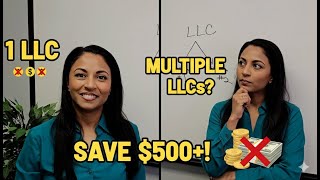
Should you add DBAs to one LLC or create separate LLCs for new ventures? A Texas accountant compares four options: separate Schedule Cs per business (IRS-compliant but pricey), DBAs under one LLC (cheaper at $25 each), a multi-member partnership (more paperwork, lower audit risk), or one LLC with DBAs and a single Schedule C when risk is low. Filing costs range from $25 to $300.
Chapters
Do you have a single-member LLC and you're wondering whether or not you should create a DBA up underneath your single-member LLC, or a number of DBAs up underneath your single-member LLC? I know there's different reasons why you might want to do that, and there's other reasons why you might not want to do that. We're going to talk about that today in this video. I want to thank Patty for bringing up this question. She is one of my BAM Boss members, and I'm going to tell you a little bit about her situation and what it is that she asked specifically. Patty's been running a personal development coaching program, and she has a single-member LLC, and she wanted to know whether or not she should start 2 new DBAs underneath the LLC versus setting up new LLCs, and whether or not she would need to get a new EIN for the DBAs, along with wanting to know how does this affect her bookkeeping process, which she uses QuickBooks. So I'm going to get into breaking down her situation and helping you guys kind of understand exactly how, how this works when you're choosing to set up a DBA and the other options involved in making that decision, or the alternatives to making that decision. So let's get started on that. The first thing I want to say is that she already has the single-member LLC, like I said, and she's doing her coaching business up under that, and it's related to personal development. With your personal tax return, you would file a Schedule C as a single-member LLC, which your business Income and your expenses would go on the Schedule C, right? So the same thing happens for if you just had a straight DBA and no LLC, right? So you would also fill out a Schedule C and fill out your income and your expenses, and it would go with your personal tax return on the 1040. So the question here is whether or not Patty wants to know if she should set up her new art business under a DBA under the LLC. The second DBA she was thinking about setting up is for her husband when he retires. He is looking to start a consulting business. In Patty's situation, she said that they file married joint, they don't have any employees, and she has been filing a regular Schedule C, as she should be, for her single-member LLC. And then she also said— I did ask her where she was kind of, you know, where she kind of got the thought of how to structure her business along with her husband's business. And she said her sister also has a similar situation. And I know this happens frequently where small business owners get information from other small business owners, and that's kind of their basis for what they could or could not do or what what's possible in, in how you should handle business. I know that even when I research Patty's question, just to make sure that I have the right information for her as I prepared some options for what she could do, I looked at several different sources. I do a lot of internet research, and that includes going straight to the IRS website. It includes going to different accounting firm blogs, included TurboTax's help area. There's just different places I go to gather information, compare the information that I find with one location from another, one source from another, and really try to digest that along with bringing in my experience that I've had, because I've been in business for over 25 years helping small businesses with a variety of different business situations, you know, from taxes, consulting, credit. It's just a variety of things that I've helped clients with over these 25 years. But Today I'm gonna go deeper into the formation questions, so hopefully it's more clear as to what you can do and when you should and when you shouldn't when it comes to LLCs and DBAs. We're in Texas, so in Texas, if you do set up a DBA, it's $25. You would set it up at the Secretary of State's level, not at your county level. So back in the day, you would set it up with the county, but the current rule in Texas is if you have an LLC you would go to the Texas Secretary of State and set up your DBA as an assumed name underneath your single-member LLC. Or if you have a multi-member LLC, that would be set up with the Secretary of State, and it only costs $25 to do that. Now, in Patty's situation, one of the key situations was that she said the second DBA is for her husband's consulting business when he retires. Okay, now what has to be taken in consideration here is that because her— it's her husband's business. I asked whether or not she was going to be a partner at any level as far as ownership and working the business, whether or not she was going to be a partner. So she did mention that she planned to work the operations and that he would be doing the actual, like, the consulting. And so with that said, she said it might be a partnership type of situation that she— they might decide to go into. So let's go into the different options that I came up with according to some of the rules that I was able to find regarding this situation. So the way I come up with options is based on what's important to the person I'm speaking with, and in this case it's Patty, my member. I want to make sure she has the right options according to what's important to her. So I'm going to break down 4 different options Patty has according to her situation. Again, remember she's got a single-member LLC She's thinking about creating 2 DBAs, one for her art business, her new art business, and then another one for her husband's consulting business that he wants to start in the future once he retires. Now, she's also retiring from her coaching business that the single-member LLC is— that the single element— that the single-member LLC was originally created for. So she's basically retiring that business, but at the same time she's getting ready— she's starting up her new art business. And so, um, there's something in that particular situation that we also got to talk about. So I'm going to go over that real quick so that you have a basis to go off of. So this is where I put up the example. This is her single-member LLC. She's got DBA number 1 for her art business and DBA number 2 that she wants to start for her husband's consulting business once he retires, and then she's going to retire from working this particular business, but she wants to start that new art business. So let's go into that just a little bit. All right, you see that? I think it's okay. Sometimes it leaves a bit of residue. It's kind of hard to erase all the way. Okay. The first option I want to bring up is whether or not following rules is important. Can you see that okay? Yeah, I think so. So following rules is something to take into consideration. So some people are sticklers for following the rules, and that's so important to them that they would shy away from anything that might be a little bit pushing the envelope. Okay, so So her first option is, if following the rules is important, we're going to talk about what the rules are. So in her situation, she's got the LLC and the DBA. One is for consulting— I'm sorry, coaching. The first one is for coaching. The DBA is for art. Those are considered two different categories or industries, right? And the reason why industries is important is because the IRS wants you to file a separate Schedule C per industry. Let's see, you'll still be able to see. Okay, there we go. Can you see that? There we go. Yeah, you can see that. So if you're If following the rules is important to Patty, she's going to take into account that the IRS wants a different Schedule C for each industry. Technically, that would mean that LLC would have its own for the coaching that she's doing until she retires it, which she did mention she was planning to retire from her personal development coaching program. And then she would need another one, even if they were under the, the DBA, she would need another Schedule C for the art business, right? And then she asked about an LLC for her husband's consulting business, and this is for hubby. So just in thinking about the first part, and that's having a different Schedule C per industry, she would have 3 different Schedule Cs. And so the LLC would go on the main line, then there'd be DBA, her LLC for the coaching business. And then there would be a NAICS code, which is how the IRS— so for the NAICS code, and I might be saying it wrong, that's just how I say it, so don't worry about it. Um, so the NAICS code is how the IRS can tell what type of business that you have. There's a whole website that you can go to that you can look up based on your particular industry what category it falls into. And there's a number code, a 6-digit number code that you would put on your actual Schedule C based on your industry. And that's why the IRS says they would need one for each because they're all different NAICS codes. Now, the part that's important to think about is that when they're looking at, say for example, just her coaching business, they're going to analyze that Schedule C that she fills out based on what the industry standard basic income and expenses that would be reasonable are for this particular industry. And so you'd, you'd notice that Art would have a different income or expenses type of balance to it, and the type of income, the type of expenses that would be associated with that business. Same goes for the consulting, and that's why they would require the 3 different Schedule Cs. Now, if you remember earlier, Patty also asked about the bookkeeping and how that works with it. So in this scenario, she would have bookkeeping for her coaching, bookkeeping for her art, and bookkeeping for her husband's consulting. Technically, that would kind of triple her work, so to speak, until she retires this, and then she'd be down to just doing the bookkeeping for the two. But she was wondering whether or not she could consolidate it, and I'm going to tell you right now, um, based on following the rules, if that's the most important thing, then she would keep these two separate until she no longer has the coaching. Once the coaching is retired, the coaching business, once that's retired and she only has this DBA for the art, then she'll be down to just doing the Schedule C for the art. Now you'll notice I'm not talking about hubby's consulting business. I'll address that in just a second. But in the meantime, she'll be doing bookkeeping for both businesses. Now what she could do to reduce, like, not having to have like a a separate account, or so to speak, for, for QuickBooks. And I'm not a QuickBooks expert. I do use QuickBooks, but I only use it to a certain extent to, um, to keep up with bookkeeping. But that's not like my main forte. And so what I do say is that what— from what I looked up, what she would do is have separate locations, and that way she can have it all— these two the coaching and the art up under the same QuickBooks account, and then all she has to do is create a location and separate it by location and classes to organize these two, uh, separately. And that way she can understand at the end of the year, how did the coaching business do, how did the art business do, along with making it easier to fill out her Schedule C for each one. Okay, so that is what's involved with Option 1 if following the rules is the most important. There is one other thing that she could do, but that would be if she wasn't all the way worried about following rules. And she could consolidate the coaching and the art income and expenses, but if she does that and she doesn't create the separate location with the classes and all that within the, the software, then she just puts it— she just keeps it all all together, together, like intermingled. And then she, she would end up only filing one Schedule C and consolidating all of the income under that, under that one Schedule C, along all the income and the expenses. And if she's retiring this year from the coaching and she started the art this year, then this year specifically would be the only year where the income and the expenses are all kind of bundled together starting the following year, then her bookkeeping would all reflect just the art if she's already finished retiring the coaching business. So that's something to keep in mind. And just one more thing on this category of following the rules, um, the art business, since it is a DBA up underneath the LLC, it would also benefit from the same protection that the coaching business has from the corporate veil. So as long as she doesn't commingle funds and she keeps her business income and expenses separate from her personal income and expenses, she'll have that protection for her art business as well without having to register a brand new LLC. As y'all know, costs $300 for the state of Texas. And then some of y'all I know use companies like Incfile or Busy or LegalZoom, and I'm not a big fan of using those because aside from being expensive, there's always a lot of add-on fees that Um, they may not be upfront, but they're definitely built in, and most people are not clear about how LLCs work enough to know what parts that they can do themselves. Like, for example, if you watch one of my other videos, I taught you guys how to file your own franchise taxes, and starting this year in 2024, simpler than ever because all you're doing is filling out your public information report because they changed the rules as of January 1st this year, and you don't have to file any other reports. It's just the Public Information Report as long as you make less than $2.47 million. If for option number 2, protection for her businesses protecting her personal assets from being considered in case her art or her coaching business ever got sued, or if they had outstanding debt and they went under, or heaven forbid, any of the, those type of negative situations. If any of that were to happen, if she were to have the LLC for the way that she set up with just these two, she'll still have that protection which I just talked about just a moment ago. So that is, that's important right there as well. That's just one of the things that I wanted to bring up regarding the protection of her companies and her personal assets against any debt that her businesses might incur. The third situation is, And 3 and 2 are gonna kind of go together. So number 3 is, if having a partnership— so if partnership is more important to Patty and her husband as well, right, for his consulting business. And this is where his consulting business comes into play. This is why I had to create more options, because if we had just stopped right there and Patty had asked me about the coaching business and her new art business, and that's the only question that she had, I would be like, yeah, you can do that. You can keep the same EIN. You wouldn't create a new DBA— you wouldn't create— get a new DBA I'm sorry, you wouldn't get a new EIN for your DBA because they're not going to give you one. But overall, they would only— because this DBA is working off the LLC's EIN. And then, you know, that would be the, the answer to her question, along with the bookkeeping, which we already talked about on how to handle the bookkeeping and her options. She can either consolidate or she can create locations and classes to separate the income between the two types of businesses. And then file her Schedule C. And again, she has the option of doing— well, she can choose to file a Schedule C for one for each, or she can do a consolidated one. Honestly speaking, the IRS, as long as the numbers, as long as they're not too wild and crazy, it's a low likelihood that the audit system would pick out her tax return to audit. And so I just put that out there so that she knows what she could do to lower her chances of an audit, along with what might possibly increase her chance of an audit. So going back down here to the partnership, Patty has two options. Patty has two options regarding the partnership. Number 1, if she wants to do— the IRS said that she can do a partnership with her husband as— we'll put it right here. See how far down— oh, I'm still good. Okay, so 1, she can do a partnership with her husband for his consulting business when he gets ready to start it. As a sole prop. She can start as a sole prop and it can be considered a— I'm going to put a dash— joint venture. Can y'all still see? Okay, good. What that means is that if Patty and her husband want to both own part of his consulting business, or their consulting business in this case, if they want to own it together legally, they could file as sole props, but they— and it under the joint venture rules, but they would still need to file 2 Schedule Cs and keep up with their bookkeeping for his and her income and expenses, because he'll need to report his income and expenses on a Schedule C and she'll need to report her income and expenses on a Schedule C specifically just for that business, for this consulting business that her husband would like to start after he retires. Now, they'll be paying the 15.3% for, you know, the income tax, so the actual tax amount doesn't change. It doesn't matter from a single-member LLC by itself whether they add on the DBA, or they, they create this sole prop joint venture scenario, every time the, the tax is going to be the 15.3%. Now, this makes the most amount of sense if you want to reduce your paperwork. And even though you're having to keep up with the bookkeeping for the two different partners, if you will, that's like the worst of the situation, and that's not bad. So it's, it's not bad to say, okay, say if, uh, say if hubby owns like, um, say if hubby owns, uh, 60% and Patty owns 40%. Please don't get mad at me, I'm just making up some numbers here, uh, just to give us something to reference. But if hubby owns 60% and Patty owns 40% of this sole prop joint venture, and this is going to be done up under a DBA, right? So apart— I'm not going to put it there. So this sole prop is going to be, right, so under the DBA they'll have, they'll collect the money for it and then they'll split it between the two of them on their income and expenses. And this can be done up under the social, or they can get an EIN, but they might— because they're running it as a sole prop, they might as well just do it up under their social. There is no benefit to getting an EIN in this situation unless they get employees. Now, if they get employees, they definitely need to get an EIN because the IRS has to keep track of all of the money involved in paying wages and the payroll taxes and all that good stuff. So if you don't have employees, just sticking with the DBA and using your SS number is probably going to be the best way to run the business. And you can have the payments made payable to the DBA. You can set up a bank account for the DBA and probably write up a contract between the two of you that shows the percentage of ownership between the two of you so that they can add both of you to the bank account. So that is option number one, but there is no— because it's a DBA, there's no protection here. So I'm going to mark that down: no protection for your personal assets. If anything goes wrong whether it's a lawsuit or the company goes into debt, you have no protection because it's not an LLC. So the next option, of course, is if you decide— if you decide to set up a proper partnership I would probably go with the multi-member. Let's see, we'll put that over here because that's the other option. A multi-member LLC. Again, if protection— and we're going to have to go back to number 2— if protection is important, then you would go with this option, right? But that's if you're going to go with the official partnership option where you both have legal ownership of the business and the income and expenses and all that. You share in all of that. The other option is if you go with the multi-member LLC, you will get the protection that you need against your personal assets in case anything goes wrong. So you'll be taxed as a partnership but a multi-member LLC which is taxed as a partnership has to file a separate business tax return on Form 1065, and you have to issue Schedule— handwriting is getting bad— okay, Schedule K-1 to each of you. That's ugly, but hey, I think y'all get the point. There we go. Okay, so a multi-member LLC, more paperwork, more cost, because there's your $300 you're going to have to pay to set up this LLC, and you have to let the Secretary of State know that you're going to have a multi-member LLC. So then you're going to have to choose whether or not it's a manager-managed managed LLC, or if it's a member-managed LLC. And with it being husband-wife, the best thing probably to choose would be to be a member-managed. That way you both have proper control over the company, whether one is available or both of y'all are available, you know, you're able to take care of business. If you were to choose a manager-managed LLC, then you— either one of you could be the manager that is able to control, uh, the different aspects of the business, or you can hire somebody outside of the two of you to manage the company. And then that information would end up on your franchise tax where they ask you about who the directors and managers and all that good stuff is. That would need to be on there as well. But in this case, I would assume likely you both would be fine with being a member-managed LLC. And then when you file for an EIN, which you'll also need, new EIN for this new LLC, you'll let the IRS know that you are going to have 2 members in this multi-member LLC so that they know to expect your Form 1065 and Schedule K-1s, and these are due in March, just so you know. These are not due in April like a regular tax return, so it's March 15th. So you would not only be doing your personal tax return in April, you would be doing your business tax return in March. Again, more paperwork if you choose the multi-member LLC. But if protection is the most important thing to you, that's what you'll choose is the multi-member LLC. The last thing I would say about the multi-member LLC is you might want to hire an accountant at this point because the things that you'll need, the information you'll need to keep up with in the bookkeeping for the multi-member LLC is going to be a little bit different from what you've been used to from for the Schedule C. And so you, you'll probably want to get some consulting from an accountant that is well-versed in the partnerships, like in partnership tax returns. And that way they can tell you ahead of time to make sure that you get the information together that you'll need by the end of the year, and what things to keep up with, because there are certain pieces of information that has to do with basis and things like that that need to be accounted for when it's time to file your actual 1065. So that's what I wanted to make sure you guys know about the responsibilities involved in a multi-member LLC. I will say one more thing though, I just thought about that. I've learned that having a multi-member LLC or a partnership, or a partnership, not this one, this is not included in this scenario, but a multi-member LLC that's a partnership is less likely to be audited by the IRS. I've been told from what my research and what I've been reading and learning, you know, recently in the last few years, is that sole proprietors, Schedule C filers, have become quite a bit of a target. Single-member LLCs still in the same boat and still have to file a Schedule C. I'm afraid the IRS has decided to zone in on that particular group of people. So if you have one, it's— and you're wanting to avoid an audit or try to not become part of the, the group that they're targeting, you would end up needing to switch over to having a multi-member LLC partnership. And I'm sure that— I've already seen that there's some videos out there giving more guidance on this. I could possibly come up with one in the future, but a multi-member LLC partnership, because they're filing a 1065, is not on the same radar with the IRS as the Schedule C's because they are aware, and it doesn't go for everybody, but they are aware that most sole props are not doing their bookkeeping correctly. Most of them are really just haphazard on what they're putting on their Schedule C. And so, you know, not keeping up with income and expenses properly. And so they are a larger target for the IRS to go in and say, hey, your information is not correct. And here's what you still owe us because you didn't— or unless you can come up with every single receipt to match every single piece of income and expense that you had. So sometimes that's a tall order for sole props because sole props are so busy doing all of the work in their business. They're the marketer, the salesperson, the bookkeeper, the trash man, the— they're everybody in their business. And so in the actual service providers. So with all those hats that a sole prop has to wear, they are aware that, you know, things slip through the cracks and they could be not keeping up with this correctly, or they are likely not keeping up with it correctly. And so they have a reason to take a magnifying glass to anybody that has a Schedule C, which is why the word out there right now is that multi-member LLC partnerships are the way to go. Definitely less complicated than having a C-corp. And at some point, if you're real profitable, you would convert to an S-corp, or being taxed as an S-corp. Okay, so you would still be an LLC, but you can— instead of being taxed as a partnership, you'd get taxed as an S-corp. And you would want to wait until you are making, you know, a good amount of money. If you start aging, I say like— I want to say like, if you're in a partnership, I would wait until you're like closer to $100,000 a year in profit. Okay, that's after your expenses. If you're making that type of income, then you want to talk to an accountant that can analyze your whole picture before giving you advice as to whether or not converting your partnership to an S corp is the right move, because there's a lot of costs involved in switching over to being an S corp. And I'm not going to go into that here, but definitely don't skip the step of talking to a professional that can give you advice after taking into account all the details of your situation before giving you the final word of this is what you should do, or this is how it would look financially compared to what you're doing now and where you'll be. Yeah, I'm not going to go in. There's a lot, there's a lot that goes on into having an S-corp. So I just want to at least throw that out there so you have that tidbit of information to have that on your radar if you become very profitable. And just know that everybody in the multi-member LLC, if you do switch to being taxed as an S-corp, has to also be taxed as an S-corp. So if their personal tax return is not going to benefit from switching to being an S corp, then they're going to end up paying more if it doesn't benefit theirs and everybody has to switch, right, to being an S corp in this multi-member LLC. Same goes for a single-member LLC. If a single-member LLC reaches a certain, certain income point, then if they switch to being taxed, instead of being taxed as a single-member LLC, LLC, which is a pass-through entity, and they're just being taxed basically same thing as a sole prop, then if they switch to being taxed as an S corp, then they're going to incur all the costs involved in running an S corp business. And definitely you're going to want an accountant, because you've also got to file another business form, not the 1065, it's an 1120-S, along with your Schedule K-1s. And so there's a whole lot more that goes into being an S-corp versus being in a partnership versus being in a sole prop slash single-member LLC. So the fourth option is going to be what I would think is the most simplest paperwork-wise, bookkeeping-wise, and just overall cost-effectiveness. So let me take all this off the board, rewind the video video if there was something in there that you needed to double-check what I was talking about regarding these first 3 options. Let's— wow, this board is just, uh, I can see all of them right now. I know it's kind of bad. Um, I found a hack for cleaning the whiteboard. You see the eraser's not doing a great job, so a little bottle of 90% isopropyl alcohol and a paper towel, just spray that on and it does a pretty good job of like instantly getting the rest of the residue from the marker off. It does a pretty good job here. I feel like it's even better than some of those sprays that Expo makes for wiping off these types of boards and whiteboards. So just a little hack that I found after some research because I got a little OCD in me and I like to have things clean and organized. Okay, okay, alright, so now I'm going to go over the simplest and the overall most simple solution that I could think of, or the most simple option I could think of for Patty regarding her situation. So that is— let's put it right here— number 4, simple and— that's ugly, okay— and cost-effective. One other thing I needed to mention for Patty is that when it comes to the IRS and the rules regarding reporting your husband's income for his new consulting business when he gets ready to start, they would not have you put it on under your LLC. But unless you have— even if you have a level of ownership, you wouldn't be able to do that because that single-member LLC that you registered, unless you were going to convert that to a partnership, and then now it's— and technically it's not converting it to a partnership, you're electing to be taxed as a partnership, and then everything that's owned up underneath that LLC would be owned by yourself and your husband And again, I would advise that you get an accountant that can look over your particular situation or to best advise you on the way that that would work. But that would be one of the options is to elect that. But there's going to be, again, you've got to start filing a new business tax return along with your personal tax return, and you'd have to do your bookkeeping a little bit differently because of what, all of everything that's involved in a partnership. Tax return. And so just having your husband's business, I just wanted to make sure that was clear. You can't just have your husband's business up under yours from the ways that I've looked at it, the different research that I did. I am going to include the links for the different websites I went to to gather the different details. Some of it I I had to take with a grain of salt because it did— I didn't find the laws to back up what was said in some of these articles, but there were portions of the information that did make sense and that did match up. And so I'm just going to provide everything that I did go through, that way you have that for reference as well. Now, if I were doing, um, if I were in Patty's situation, this is what I would do. I would use the— and this is under the assumption that Patty's coaching business that she's about to retire from is low risk, like super low risk. She's not really worried about getting sued by anybody, and she's not in debt for her company. And then the same for her art, that she's not— it's not really risky, or she's not really worried about getting sued. Or that she would be in debt for that company. If she's not worried about those two things, what I would do is I would keep the single-member LLC and keep the bookkeeping the same with your QuickBooks. All you would do is— and to keep things organized, just for your own edification, not for your actual tax return. For your tax return, you could just do the one Schedule C, even though the IRS would prefer you do two separate ones for the art and for the coaching, and then do just locations to separate it. Coaching is Location 1. And that's just up until you closed out that business. And then your art would be Location 2. And so you would keep doing your QuickBooks, you just add on the second location for your art. I would just say filing the one Schedule C would be okay because likely, um, from the way that you worded your message, that the coaching business might actually be shut down this year and that the art business has already started this year. And so this year's tax return would be the only one that would be a little bit jumbled, but likely not enough to set off an audit. Unless you spent a lot of money on the art expenses, now that's different. Then I would say you need to do 2 Schedule Cs, at least for, at least until you're done with your, your coaching business altogether. That's where I'm at on that thought. And then for your husband, when he's ready to start his consulting business, again, if it is low risk and he's not expecting— and again, who expects to be sued? But at the same time, you do have to think about who your clients are, who your customers are, and what type of risk is involved. As a business owner, you have to assess whether or not you have a risky business or not. And if he has a consulting business, depending on what he is consulting on, You can decide if a DBA with no protection for your personal assets, meaning if his consulting business gets sued and his consulting business doesn't have enough money to pay for the lawsuit or his debts, they're going to come after your personal assets in order to satisfy the debt. So that's the way I would go, as long as you're— you feel like his consulting business is low risk. That also means you have to do separate, uh, you'll need to do his Schedule C, which you were going to have to do anyways because you can't mix up his and yours as far as income and expenses. And so he'd have a separate Schedule C. He'd have to do a separate bookkeeping for that one. Now, what I'll say about the bookkeeping— there we go. That's a lot. Okay. Sorry. What I will say about the bookkeeping is that I know you're paying for the service, likely for QuickBooks, because they go by subscriptions normally. But for his, if there's not a lot of transactions between income and expenses, really mainly expenses, because income is relatively simple to keep up with, you know, you're just like adding up each customer's payment, right? However many there are for per month or whatnot, and then keeping track of who paid what and what payment method and all of that good stuff. So you're keeping up with that. You can, you can set up a bank account. If you do a DBA with your county, then you would, uh, you wouldn't get an EIN. There's no real need to go out and get an EIN because there's no protection or anything that's involved in having an EIN. If you were hiring employees, that's different, then you would need an EIN. But hubby can use his Social Security number to use his— to get his— well, he doesn't need a Social Security number to set up his DBA, but so like you go to the county, get the DBA, and then you would use his Social Security number, the DBA, any other paperwork that the bank requires to set up his bank account to make sure that all of his deposits for his income and expenses go into that bank account, and that'll make your bookkeeping simpler. In fact, you can either set up a spreadsheet, just a simple— I use Google and all their different products, so I use Google Docs, Google Sheets versus Microsoft Excel. But if you have Excel, that's fine, you can use that. So any spreadsheet, and you could create the chart to track his income and his expenses, because I can't imagine there being a lot of expenses. But if you anticipate a lot of different expenses for the consulting business, then you could consider setting up more QuickBooks service to accommodate keeping up with that in there. But really, you know, my rule of thumb is kind of like if you have like 10 transactions of expenses per month or less, they're even 20, really, there's really no need to, to keep, to have like a full-on service to keep up with your bookkeeping because it's pretty simple. And so you can just keep up with that in a spreadsheet and you're good to go. And that way you'll have the information you need to fill out your Schedule C. Just make sure you, if you do the spreadsheet method, I do recommend making sure that you keep up with your, your dates, your amounts, your location of where the money was spent, along with referencing your Schedule C for the different categories of office expenses, supplies, repairs and maintenance, commission fees, just everything that's on the Schedule C. See what applies to your hubby's consulting business and then put it on there. Now, this is if hubby is going to own 100% of his business. And the reason why I put it like that is the simple and most cost-effective way is because my husband, he has his own business, and I help him with his business, you know, all the time because I'm his wife. So, and he helps me with my business. So with that said, we haven't found a reason to necessarily set up a legal partnership to balance out the ownership of the businesses because, like I said, I help him with his and he helps me with mine, but it's not to the level where I feel like we need to— where we need to make it a legal situation and legally put a partnership together. But if you— because our finances are consolidated pretty much, so, and we, you know, we organize everything, but at the end of the day, there's not a his money, my money type of thing. The business has its money, and then personal money is separate and all that good stuff. But if in your situation it's important for you to have ownership in the consulting business with your husband, if y'all want to have co-ownership, then you won't go with— you can go with the DBA and then do the— then you would end up doing the So you got choose from either only hubby owns the company, or you both own it at whatever percentage you, you decide. Both hubby and Patty. And if you choose the second option, then you would also have to keep up with the bookkeeping correctly so that you could split the income for the two Schedule Cs. And this would be considered the sole prop joint venture option. I know I was only trying to put the simple and most cost-effective way, but I, I don't want to skip out on the determining factor is whether or not only he owns it or if both of y'all own it. And if only he owns it, it's just the one, uh, it— you'll still have just the one DBA, but you'll have one Schedule C if he just owns it. If both of y'all own it, then you're gonna have two Schedule Cs, and it'll be considered a sole prop joint venture, and you'll need to do the bookkeeping to split it— split up the income and the expenses when it's time to file. I mean, you keep up with it just so that it's ready for when you're ready to file your tax returns, because you'll need to have that information on the separate Schedule Cs. So with taking all this into account, because he's not ready for his, his, his business yet, you have time to think about the situation and whether or not which one of the options that we talked about today would work for your situation. Situation. Because you are one of my members, you can always ask me any questions in our community online, and that way I— or we can also talk about it during our monthly meeting that we have once a month, which the next one is coming up on the 14th of September because it's at 11 o'clock on the second Saturday. Yeah, September 14th, 11 o'clock. You don't worry, you'll get reminders for the meeting. Uh, it's because that one's coming up next week. I'll start sending out the reminders for that meeting, but it'll be a video call where we'll get on Google Meet and get a chance to talk about this if you still have any questions, or if you wanted to ask me any new questions that you came up with after watching this video. So I hope this was valuable to you. If you have any questions regarding what I talked about today, please put it in the comments and let me know. I'll do my best to answer your questions there. If you want to be able to get some of your questions answered, like in a new video, I do give my members priority. So if you're one of my members, I can always answer questions to you. If it's something, you know, short and sweet, if you ask it in the community, I'll just answer it right there in the community. If it's something we need to talk about and you want to ask me over the video call, we can do that during the monthly meetings. And then if If it's something that I can, that I feel like the YouTube community can benefit from, then I might just put a video together like I did today in order to answer the question for you as well as everybody else that might have the same question. If you want to check out the BAM Boss Membership, there's a link in the description that can take you to all the information that tells you about the membership and what you get in the membership. And there's also usually freebies in the description below. I want to thank y'all for watching today, and until next time, see you.
More from Loma



Texas LLC Warning Franchise Tax: How to Prevent Business Name Forfeiture & Theft

Texas LLC Franchise Tax Account Reinstated in 24 Hours: A Step-by-Step Success Story