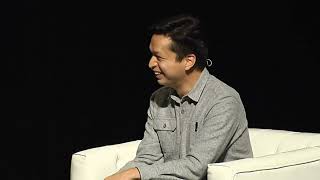
Ben Silbermann describes Pinterest's early days: friends ignored it, but everyday people started using it for real decisions about homes and food. He learned that early adopters aren't just tech people, and obsessively listening to users in coffee shops revealed what to fix.
Questions this video answers
June 16, 2024
"This is like few hundred, so very early. A few thousand, pretty early on."
Created and uploaded by Lorenzo.
Chapters
So we released it and I did probably what everyone does. The first thing you do is you email all your friends, and no one really got it, to be totally honest with you. And they were really polite. They were like, oh, looks interesting, like, very interesting. But there was a small group of people that were enjoying it. And those folks were not who I think stereotypically you think about early adopters. They were folks that I grew up with, people that were using it for regular stuff in their life. What was my house going to look like? What kind of food do I want to eat? Things like that. And we really thought, you know, where are those people congregating? Who's their community? And I ended up, you know, going to a conference where a lot of the blogs that people were reading about those things, a lot of those bloggers gathered, and they seem like the kind of people that would really enjoy it. So we organized a marketing event with those bloggers where we had each of them introduce the service to their audience. How many users did you have at this point? How small was Pintrus? This is like few hundred, so very early. A few thousand, pretty early on. And that's how we got started. But, you know, in between, I mean, we did all kinds of, honestly, like, pretty desperate things. I was in Palo Alto and I'd walk by the Apple Store and I would like stand in the Apple Store and just like change all the computers to say Pinterest. And then like kind of stand in the back, be like, wow, this Pinterest thing really blowing up. But, you know, slowly we started to get folks who really loved the service. And then since it took us so long to get those users, we cared about them so much. I used to have my cell phone on all the customer support emails, so when the service would go down, everyone would start calling me, be like, hey, I can't get my pins. For me, there were these two lessons in one, it's that there's a stereotype of where early adopters come from, and they should be these technology forward folks. And I just think that that idea is really outdated now. So many people have these amazing computers in their pockets. Early adopters are coming from everywhere. And I think if we had been really dogmatic about wanting kind of cool Silicon Valley people to like it, we probably wouldn't have made the service that we made. I mean, I think there was a lesson in really taking care of users. And so all the time I would sit in coffee shops and ask people to try this service and just try to watch them and see what they were doing to see where we could smooth out the edges and improve the service. What people say they want and what people mean can sometimes be different. So a really common thing that I would ask people sitting in a coffee shop, I'd be like, hey, you know, why don't you try to create a board or try to pin something? And then I would ask them to do it, or I'd ask them to look at a button and push it. And right before I'd say, you know, what do you expect to see on the other side of that? And then right after I'd be like, is that what you saw? And if it was different, I'd be like, we should fix that up. And so I do think that listening to the people that use the service is incredibly important. But you have to use judgment to decide what parts of the product you really want to invest in.