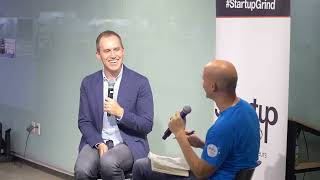
Excerpt from a YouTube interview (Dec 8, 2023) where Bret Taylor and another speaker discuss the psychological challenges of entrepreneurship, how founders internalize failure, the grind of fundraising and sales, and the critical role of a reliable cofounder. Key points: being an entrepreneur is "brutally hard," founders often take failure personally, many fundraising conversations result in rejection (speaker cites ~75% rejection), and investing in the cofounder relationship (emotionally and strategically) provided resilience and grit to persist and iterate.
Chapters
Like the PR beats over the years as the company progressed, it just looks like one home run after another. Was there were like.
I'm glad that you've forgotten all of our failures. Bless you. Bless you.
I'm an optimist. Yes.
Good.
Did it, like. Were there moments of doubt or was it just like.
You talking about Facebook?
No, no, no, not Facebook. I'm talking about Equip.
Oh, yeah, yeah.
Like, did it feel like. I mean, you leave, you raise a bunch of money, you build this product, you have amazing people working on this team, and, you know, you get these cool clients, and then a few years later, like, boom, this big thing happened. Salesforce Bicycle. I know that's a ridiculous way to look at it, but I'm just saying.
Pretty much sums it up. It showed up one day.
Do you think, like, I'm, like, lost for words as an entrepreneur? I have struggled so, so much so many times, and I've interviewed so many people who struggled so many times. And I look at this last and I just think, man, that's the one I want to do. Because was it hard? Was it really hard? Was it sort of hard?
It's brutally hard. I mean, that's the thing, is, I presume a lot of you are entrepreneurs in the audience. I mean, it's just so grueling. I mean, the hardest part about being an entrepreneur, I think, is the managing your own psychology. It's so hard where I find that when I'm. I just take failure very personally when it's my company in my product. And it's so hard not to become dejected with rejection. You're raising money, you get rejected by 75% of the people. It doesn't matter. You only need funding from one of them. But all you remember is the rejections. And then you go and you're trying to sell the product and you get a bunch of no's, or usually it's not even a no. They don't even grace you.
They don't actually give you an answer.
Just don't return.
Let's stay in touch.
And that's what you remember. And it's really. I would just say you didn't ask this question, but I. I reflect on it because the main thing that I did differently with my second company is I just thought so intentionally about sort of like finding a co founder that was someone that I knew I could sort of be sort of, I guess, metaphorically married to for a long period of time that would not only be a partner in business, but sort of like A partner through those struggles. Because it is interesting how much of the last thing you need is a founding team with drama and all the drama that's inherent in starting a company. And so my co founder, Kevin and I are. We spend as much time sort of investing in our relationship as we do in the company. And it's been sort of like the anchor that has sort of like kept us stable through just all the inevitable down. All the inevitable failures that come with starting a company. The thing that I think that we probably had at that was valuable was sort of grit. Like we. When something failed, we would diagnose it and move on to the next thing. And we weren't pivoting. We were just like moving forward, but, like changing our angle slightly. We were really committed to our mission. You know, we were fully like, there's just no, you know, the productivity suite was invented in the 80s and it was the killer app for the PC. Visicock was the killer app for the PC. MacWright was introduced on stage with Steve Jobs. When the Macintosh was introduced, we knew that there would be a successor to these products in the mobile era. We felt, we knew that. We knew as much as an entrepreneur can be committed to a vision. And so when we had the vision and we had the commitment to do it, it was like, you're willing to tolerate failure in the middle because it's not like a existential setback. It's a, you know, it's sort of a tactical setback. I think that really helps. And we spend a lot of time like basically in the proverbial couch in psychiatry sessions with each other. You know, it's like, it's okay.
You're not a failure talking each other out of it.
So it is crazy. I think people don't talk about it enough because it is so trying. You come home, you just feel dejected and defeated and it's okay. And everyone does it. And finding a co founder or a friend that you can talk to about it is super meaningful.