Facebook cofounder Dustin Moskovitz on you shouldn't start a company
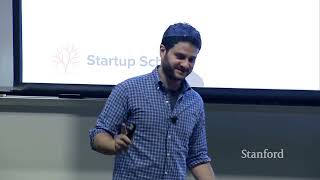
Dustin Moskovitz (Facebook cofounder) gives a short, slide-driven talk arguing that most people should carefully reconsider starting a company. He walks through the funding "funnel" (citing CB Insights) and claims only ~1% of seed-funded startups progress to late rounds, contrasts the high-risk/high-reward founder path with the lower-risk route of joining a later-stage/established company (similar financial and impact upside with less downside), and describes the stressful lifestyle realities of founding. He concludes that the best reason to start a company is intrinsic: deep passion or being uniquely positioned so the world would lose value if you didn't do it ("you can't not do it").
Chapters
So I hear a variety of common motivators from potential entrepreneurs. But I found that once they fully considered the trade off, they often decide that starting a company isn't actually the best way to achieve their goals. So I'll help you make sure you're choosing the best solution and I'll also explain the reason. I like to hear best from people about why they want to start a company. What I hear when I think someone's really set up for success. So I've given this talk before, as Sam said, and a bunch of people have come up to me after and said it really helped them with their decision. In a few cases, they decided that they shouldn't start a company and they should really join and establish one. But I know a lot of you are resolved on what you're doing. If that's true, no problem. I think this will still be useful for you because you'll get a better sense of the reality of, of what you're about to go through. So it's not a long talk, it's just about 10 slides and I have left some time for questions at the end. Great. So it's called Spade a Spade. A lot of people become entrepreneurs specifically as a way to try to become extremely wealthy. So they see themselves starting the next Facebook or Google. However, the odds of being that successful are actually incredibly small. So only a handful, an entire generation of companies actually end up getting to that scale. So here's a funnel from CB Insights. Actually it shows how many seed funded tech companies get through each round of funding. So even if we reduce our ambitions a bit to becoming a unicorn, so a company with a billion dollar valuation, you still have like incredibly long odds. So only 1% of seed funded companies get all the way through this funnel. Now getting the six rounds of funding, it's not exactly the same as becoming a unicorn, but it's pretty well correlated. Most of the unicorns I know had to have at least that many rounds of funding. So to get there, you have to have a truly great idea. It's got to be unique, defensible. Going after a large market, you have to execute. Oh, sorry. You have to execute extremely well. So that means you have to work hard, you have to attract the right people and you have to have a better strategy than your competitors. And you also just have to be really, really lucky because there's a lot of things that can get in your way and a lot of them aren't even in. So I've talked to a bunch of investors, entrepreneurs, and the sense is that it's actually getting harder over time to get through this funnel. So not only are more people starting companies, meaning you have more people to compete with, but they're becoming more expensive to operate for a lot of reasons, particularly here in the Bay Area. And investors have higher expectations too. So you've seen valuation multiples start to decline, particularly on the public market. And perhaps most importantly, it's becoming harder to disrupt incumbents. So they're not the slow moving giants that they were 10 or 20 years ago. They know how to take advantage of their market position. So some of you are thinking, sure, it's hard, but you get so much more equity as a founder that it's clearly the only way to make a lot of money. So let's talk about two different ways that you might get to a great financial outcome. So story one, you're the founder, you started a company that does Uber for pet sitting. So in this picture, this is the customer, not the founder. It's a great idea and you execute it well. So you sell the company at some point for $100 million. And if you've been really successful, limiting dilution, your equity might be as high as 10% of the company at that point by the time it becomes liquid. So you're walking away with $10 million. Pretty great outcome. However, I just showed you, only a small portion of startups make it that far. So this is the lucky case. $100 million, a little easier than a billion dollars, but it's still extremely rare. And it's actually most likely that you end up with nothing on this path because you just end up shutting down the company for whatever reason. And oftentimes you see a company sell to an acquirer at this kind of range of valuation. In a lot of those cases, the founder still ends up with nothing because of investor liquidity preference. So it depends a lot on how much money you've raised to get there. So this is definitely the high risk path. But another way to make a similar amount of money is to join a later stage company and help them scale from say 500 million in valuation to 20 billion. So even straight out of college, you can do really well financially by joining a company at that stage. But especially if you have a few years of experience, you're going to get a really good options package and you're going to have a fairly high salary too. So I just sort of swagged five basis points here. If you joined a little earlier, it might be more than that. If you have more experience, it might be more than that. But this is sort of a good sort of benchmark and you probably know the market for experienced tech workers, extremely competitive right now, particularly for product roles. So if you choose well, you can also walk away with $10 million by taking this path. And if you choose really well and you do find that next Facebook or Google, while it's still not yet a unicorn, you can do extremely well. So the 100th engineer at Facebook had a way better financial outcome than the vast majority of entrepreneurs. So of course it's still possible you'll choose the wrong company won't grow enough for this kind of outcome. This is actually 40x growth, which is pretty impressive, but the key is you get to join it much later in its life cycle. So you have a lot more information, you can see the performance so far, you can meet some of the team, you can understand the competitive length landscape, and even if you don't find a company that's going to grow this much, you've got a good chance of picking one that's going to grow some. In fact, your equity value is probably already non zero, so you've got a pretty good chance of having a positive outcome in that situation and maybe a really great outcome. And then finally, if you found a company, you have a long term commitment, so there's a good chance you're going to be putting 10 years or more into making it scale and you still may fail in the end. Whereas if you join established company, you can work there for a couple years, you can get a sense of whether it's growing, if not, you can easily leave and try again. So you can actually work for several different ones in that same 10 year period and that really increases your chances of a home run. So the ultimate takeaway here is there are multiple ways to get a great financial outcome, but it's a lot lower risk to join an established company. Don't worry, not all of these will be arguments about why you should join established company. So similarly, a lot of people want to start a company in order to maximize their impact. So usually financial outcome is pretty well correlated with that. So a lot of the arguments I just made apply here as well. But when you join a company that's already established, you get some big advantages. So you get access to their existing user base, might be hundreds of millions, sometimes a billion million people. You get the ability to work on top of infrastructure that's already been built out and scaled and you're collaborating with an established team, so they're going to help you succeed. So I want to give some concrete examples of massive impact that people achieved as an employee. So Brett Taylor, who's the head of Quip before he became an entrepreneur, he joined Google after it already had over 1,000 employees. And there he was able to spearhead the creation of Google Maps, which is used by hundreds of millions of people, including me on my way here today. Similarly, my co founder at Asana, Justin Rosenstein, he joined Google at a similar time, and there he prototyped Gchat inside Gmail. So this was over 10 years ago, still used by a ton of people. And then shortly after that, he went to Facebook after it had a few hundred employees, and he led the hackathon project that created the like button. Some of you have probably used it once or twice. So you can still join teams at Facebook and Google today and work on something that literally might reach a billion people. So that's a lot of impact, even if your contribution is a relatively small portion of the product surface area. So if you want to become an entrepreneur to maximize impact, these are the types of stories that I think you should be comparing opportunity to. So next, there's lifestyle. So everyone's got their own story about what it means to be an entrepreneur. So in general, the media likes to make it seem glamorous, emphasizing launches and funding milestones. They tend to talk about success cases and ignore failures. And the entrepreneurs themselves are like ducks. They're calm on the surface, but they're paddling like hell underneath. But you only get to see them on that surface, looking passionate and focused on. So the first image here is from the Social Network, which is a fictional movie about the founding of Facebook. Looks pretty fun. And the last image is an actual photo from the founding of Facebook. They're a little different. So reality is a lot of heads down, time doing hard work. We hardly had any time to bust open champagne and spray it all over our laptops. All right, so in practice, tech is a little less like the social network and more like Silicon Valley. It's actually really stressful. So why is that? Well, a few reasons. One, your team is relying on you, so they're betting some of their best years on a story you've told them and their recruiters pinging them constantly, like many times a week. So you're always worried you're going to lose them. Each round of fundraising feels a little like life and death, and your competitors are actually trying to kill you. And you always feel stretched then because it's hard to make time for the company, your significant other, your family, and yourself. So, of course, my title here is a reference to Ben Horowitz's book, the Hard Thing about Hard Things. If you want to go, like, way deep on this subject, I definitely recommend giving that a read. So, relatedly, people also think being a founder will give you control over how you spend your time. There's a great quote from Phil Leibin here. Give you a sec to read it. So Phil and I both learned this the hard way, but you don't actually have control in practice. So I spend most of my time working on the problems I just couldn't delegate, reacting to issues that are popping up or resolving conflicts. And you're always on call, so it makes it hard to really unplug during a vacation or on the weekends. And your role model, too. So if you take your foot off the gas, then so will your team. So that said, this one really doesn't apply if you want to have a lifestyle business or be like a small business entrepreneur. If you do that, then you actually do have a lot of control over your lifestyle, but the financial and impact outcomes are going to be smaller. All right, so this is a recap of those first four topics. So these are the top reasons I usually hear from people. So the success funnel that I showed you in practice suggests that startups aren't clearly the best way to maximize financial impact or, sorry, financial reward or impact. You might do better by joining an established company. And then similarly, the reality of entrepreneurship doesn't usually match what you see in the media. So if you want to aim for a home run, you should feel committed to putting in the many years of effort and discipline that it takes to become a professional athlete. And you still may fail. So now that I've given you a bunch of bad news, let's talk about what I see as the best reason for starting a company. So basically, you can't not do it. So this has two routes. The first is passion. So passion is really important, since we just talked about how hard it is to start a company. So you're going to need that passion power through, and you also need it to recruit great people to follow you as a leader. And then the second part of this is that you're the right person to make this happen by starting your company. So if you fail to do it, you're actually going to be depriving the world of something great. So this implies that the idea itself is really valuable, and it also implies that you're the best person to bring that idea into the world. If you're not the best person, then that best person's out there and they're probably going to out compete you and create something even more valuable. So one twist on this is maybe you're the best person, but you should do it within the context of an existing company. So I often feel this way when I hear someone describe something to me that really sounds like a feature of an existing product. So if you want to have the next twist on photo sharing, I definitely recommend considering Instagram or Snapchat and helping them build it into their products so you can be entrepreneurial inside the context of an existing company. So I've twice chosen to become an entrepreneur myself, and both of the times were motivated by this reason. Exactly. So for Facebook, we actually continued to be students at Harvard until the site had over 100,000 monthly active users. So we had cognitive dissonance. We're kind of of an embarrassing long period of time that we could just be students and have this little side project on the side. But eventually it pulled us out because we couldn't bear the idea of it not living up to its full potential. And then similarly at Asana, Justin and I were both reluctant entrepreneurs, but we thought the problem of work tracking was really important and that the other people working on it were going to develop incremental solutions, leave a lot of value on the table. So we couldn't stop working on it. Eventually we decided to leave Facebook and focus on it full time. So when I meet entrepreneurs that really seem set up for success, this is usually the reason I'm hearing from them. They're starting a company because it felt like really the only thing that they could do.
More from Lorenzo


Netflix founder Reed Hastings explains why “family” is a bad metaphor for your startup

Netflix founder Reed Hastings explains why “family” is a bad metaphor for your startup

Stripe founder John Collison explains his product principle of “talking up to the user”

Stripe CEO Patrick Collison shares the tactics he used for finding product/market fit

Stripe CEO Patrick Collison shares the tactics he used for finding product/market fit

Sam Altman explains his two biggest mistakes when he started investing in startups



Naval Ravikant on Elon Musk: “The great entrepreneurs are always willing to start over”

Jeff Bezos explains Amazon’s process for expanding into new products like Kindle and AWS