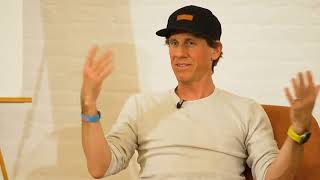
Interview excerpt in which Dennis Crowley (Foursquare founder) responds to Facebook launching a check-in feature similar to Foursquare’s. He recounts conversations with Mark Zuckerberg about potential acquisition, describes giving a pep talk to his team after Facebook’s announcement, and frames the copy as both a setback and a legitimizing event that accelerated competing product improvements (Google, Yelp). Crowley summarizes Foursquare’s long trajectory—products invented for the category, a future vision of automatic location detection, and company outcomes (over $100M revenue, ~400 employees); he notes he is no longer CEO but remains on the board.
Chapters
One thing that obviously springs to mind is Facebook rolling out this complete clone feature of check ins. And was that a big inflection point for you? It sort of certainly seemed like it to me as a user, because people started checking in on Facebook where it used to be. You checked it on Foursquare and then posted it to Facebook.
Yeah. I mean, I had spent a bunch of time with Mark, like that spring he was here in New York, and I'd fly out there because they were interested in buying the company. And I was like, I. I sold a company before and it was crappy and I did not have a great experience. And I left and I had to start the same company again. And it was like, well, that's not gonna happen here. And so Mark was like, if you guys don't end up here, we're probably just gonna end up doing something like this. It's a feature we'll build into our app. And I remember we knew that was coming. It wasn't a surprise, it wasn't bad luck. But I remember we watched that keynote and we watched them announce it, and having to get up in front of the team, which might have been like, you know, 50 people, 60 people at the time, and give a pep talk, like, just off the top of my head. And the vibe of the talk was like, they can copy everything that we've done, but they can't copy what our roadmap is. And our roadmap was that epiphany we had at Google. You should never have to check in. A check in button is stupid. The phone should just know where you are, and then based on where you are, the map gets smarter. Right. That's obviously how it's going to go. Like, that is what we're going to build. Like, will Facebook try to do that? They'll copy all the stuff that we'll do, but we will always be one step ahead. And I remember giving that, like, pep talk to people at Foursquare and people at Foursquare at that time. Like, they still remember that. Like we. Like, I remember that they remember that. You know, the whole thing. Like, you don't remember. People said they remember how you made them feel. Right. I've heard the stories that people in the room remembered how that made them feel, that we were still going to win and that we could still do this. And that was, you know, yes, it took a hit. Right. But at the same time, it kind of like legitimized the category. Check ins are a thing, and we are a check in company. And we are now maybe the second biggest check in app on the planet now that, you know, Facebook is doing their thing. All that stuff was kind of tough, but that was the summer. Like, yeah, Facebook did it first, but then Google started doing it and then Yelp. Yelp was like, we have check ins and we have, you can be the duchess of a place. And I was like, guys, that was like, shameless. But if there's a silver lining, like the Foursquare consumer story, I think it's like, all of these apps are better because we were all competing at the time. Like, if you go into Google and you see that thing, it's like, what are the popular hours? Like, that's a feature that's ripped off of Foursquare. Like, we did that. The automatic history. Where are the places you've been? Like, we did that. Little mini reviews that aren't long. Yelp things. We invented like a lot of the stuff in the category here and which makes its way through a thousand of our other Internet products. Foursquare is like 15 years, 16 years old now. And, you know, a company has had like a long period of like, ups and downs in terms of valuation, in terms of, like, perception in the market. You know, a company does, you know, north of $100 million in revenue, profitable companies, 400 people, a bunch of offices. I don't work there anymore. I'm on the board. Just part of the long journey.