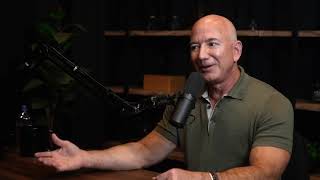
Jeff Bezos distinguishes two-way door decisions, which are reversible and should be made fast by small teams, from one-way door decisions that are hard to undo and need senior leadership. Amazon Prime and propellant selection are examples of how the wrong process wastes time on routine choices.
Chapters
Most decisions are two way doors. Can you explain that? Because I love that metaphor. If you make the wrong decision, if it's a two way door decision, you walk out the door, you pick a door, you walk out and you spend a little time there, it turns out to be the wrong decision, you can come back in and pick another door. Some decisions are so consequential and so important and so hard to reverse that they really are one way door decisions. You go in that door, you're not coming back. And those decisions have to be made very deliberately, very carefully. If you can think of yet another way to analyze the decision, you should slow down and do that. So when I was CEO of Amazon, I often found myself in the position of being the chief slowdown officer because somebody would be bringing me a one way door decision. I would say, okay, I can think of three more ways to analyze that. So let's go do that because we are not going to be able to reverse this one easily. Maybe you can reverse if it's going to be very costly and very time consuming. We really have to get this one right from the beginning. And what happens, unfortunately in companies what can happen is that you have a one size fits all decision making process where you end up using the heavyweight process on all decisions for everything. Yeah, including the lightweight ones, the two way door decisions. Two way door decisions should mostly be made by single individuals or by very small teams deep in the organization. And one way door decisions are the ones that are the irreversible ones. Those are the ones that should be elevated up to the senior most executives who should slow them down and make sure that the right thing is being done. Yeah, I mean part of the skill here is to, to know the difference between one way and two way. I think you. Yes, I mean, I think you mentioned Amazon prime. The decision to sort of create Amazon prime as a one way door. I mean it's not, it's unclear if it is or not, but it probably is. And it's a really big risk to go there. There are a bunch of decisions like that that are, you know, changing the decision is going to be very, very complicated. Some of them are technical decisions too, because some technical decisions are like quick drying cement. You know, if you're going to, once you make them, it gets really hard choosing which propellants to use in a vehicle. You know, selecting LNG for the booster stage and selecting hydrogen for the upper stage. That has turned out to be a very good decision. But if you changed your mind, that would be a very that would be a very big setback. Do you see what I was saying? So that's the kind of decision you scrutinize very, very carefully. Other things just aren't like that. Most decisions are not that way. Most decisions should be made by single individuals, but they need and done quickly in the full understanding that you can always change your mind.