Jensen Huang: “If you want to be successful, I would encourage you to grow a tolerance for failure.”
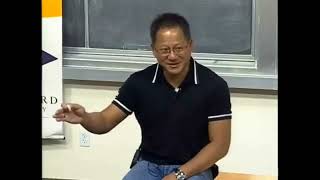
A short transcript of Jensen Huang urging listeners to develop a tolerance for failure as a prerequisite for innovation and success. He clarifies that tolerance for failure does not mean neglecting responsibilities but means being willing to experiment when outcomes are uncertain, using examples (e.g., Google labeling features 'beta') to show iterative testing and removal of failed ideas.
Chapters
More from Lorenzo


Netflix founder Reed Hastings explains why “family” is a bad metaphor for your startup

Netflix founder Reed Hastings explains why “family” is a bad metaphor for your startup

Stripe founder John Collison explains his product principle of “talking up to the user”

Stripe CEO Patrick Collison shares the tactics he used for finding product/market fit

Stripe CEO Patrick Collison shares the tactics he used for finding product/market fit




Naval Ravikant on Elon Musk: “The great entrepreneurs are always willing to start over”

Jeff Bezos explains Amazon’s process for expanding into new products like Kindle and AWS