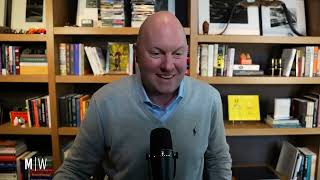
A short interview transcript in which Marc Andreessen and a second speaker discuss how extreme stress reveals people’s core personalities and attributes. Andreessen highlights Mark Zuckerberg’s "superpower" of emotional self-control—remaining analytical and calm under intense pressure—contrasting that with creative people who tend to be higher in neuroticism and respond more emotionally. The speakers emphasize that most business problems are fixable if the leadership team stays intact, and that companies often fail when the team fractures and founders/management turn on each other.
Chapters
There are certain fields in which you.
Really get to see somebody's core personality and you get to see their kind.
Of core attributes and their core virtues and their core vices and their core weaknesses. And, you know, it's, it's, it's really only people under, you know, situations of extreme stress where you really see that.
And so, so part of it is like we see that.
We see, we see people when they're at their most stressed and when they're, when they're at their worst. And, you know, then there are, you know, I would say many cases where we're, you know, one of their only remaining allies, you know, kind of at that point. So that, that's a not uncommon thing.
But I also say the other thing you see is just like, you know.
There are very specific personality types.
I'll just give you an example.
Mark Zuckerberg, you know, a great superpower that Mark Zuckerberg has that probably is not well understood enough, which is he does not get emotionally upset in stressful situations. He is able to maintain an analytical frame of mind even when other people would be, you know, literally bursting into tears and hiding under the table. And I've seen that many, many times. I've been involved almost for 20 years and, you know, we've been through almost everything good and bad, and, and I've literally not once seen him raise his voice, you know, and he's, he's very.
Sympathetic and he's very, you know, when somebody has a personal crisis, you know, it's not that he's not emotional like.
He, he engages emotionally with people and he's very supportive of people when they have issues.
And he, you know, he feels things.
Very deeply, like, like everybody does.
But, you know, he just, he has.
A level of emotional self control. You know, psychologists would say, you know, 0% neuroticism.
He just doesn't respond emotionally and as.
A consequence, he can keep his head right when, when everybody around him is, is losing theirs.
And so you've got that. Having said that, we also work with a lot of people who are, let's say, higher in neuroticism, and in particular.
People who are super creative are, are often high in neuroticism. And so sometimes you get the, you know, we get the, the artist type where they're like, incredibly creative and they're a fountain of new ideas and they just are. Have a much more, let's say, direct engagement with their emotions and they feel things, you know, I would say more directly or kind of in a more raw way. And so you know, when things go bad it really come, it really comes down to them emotionally.
I was frankly myself probably more on that, on that side of things. The good news I would say is I think most problems in business are.
Fixable as long as you can keep the team together.
I think usually when companies crack and.
Go down it's usually not.
Sometimes it's catalyzed by something that happened from the outside. But generally the thing that actually happens.
Before a company goes down is the team cracks. The team itself cracks internally and the founders turn on each other. The management team dissolves.
And so a big part of it.
Is just with these things is just like can you keep the team together?
If you can keep the team together then most of these companies can battle through most things. I've seen just as many incredible last.
Minute saves and rescues and turnarounds as I have screaming disasters. So there is reason for optimism going into even the dark times.