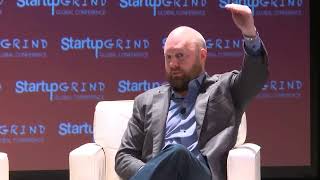
Short excerpt from a YouTube video in which Marc Andreessen argues that founder-run companies are harder to disrupt for two main reasons: (1) founders remember the company’s early fragility (‘this thing used to be zero’), which makes them more emotionally prepared to confront existential threats; and (2) founders hold moral authority inside the organization, enabling them to push through radical changes (example: Steve Jobs at Apple).
Chapters
If you just look historically at many of the important technology companies of the last 50 years, 100 years, many of them are run by their founders for decades. And a lot of it has to do with disruption. There's this cliche of founders that a lot of people believe, or used to believe, which is that founders are too stubborn, and founders get too locked into their original idea and they can't adapt as times change. We've actually found the opposite to be true. We found that when a company is going to get disrupted, the person, in many cases, with the best odds of countering the disruption is the founder. And I think there's a couple different reasons for that. I think one is the founder remembers when the business was nothing. The founder remembers what it was like when there was, like, nobody else in the office with you and when you carried out your own trash can. Like, the founder remembers, this thing used to be zero. And so the founders have a vision kind of in their heads that kind of haunts them that says, this thing used to be zero, now it's something, it could be zero again. And so when an existential threat, like somebody coming in with a disruptive product occurs, the founder, we often find, is emotionally able to wrap their head around it and then able to actually figure out what to do about it, because they know that if they don't, they're going to be in real trouble. The other thing we find with the founder mentality is that the founder can carry enormous moral weight inside the company to then be able to make the changes that are required. When Steve Jobs goes into Apple and says, times are changing and we need to do X and X is heresy compared to everything Apple had done up until that point. A Steve Jobs, a founder, is going to be able to convince the company that they have to do that, whereas a professional CEO shows up and says that, and everybody's kind of like, ooh, I don't know.









