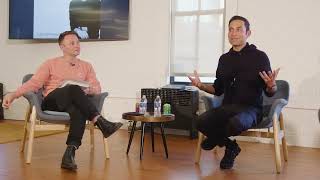
Scott Belsky recalls how Garrett Camp chose to position Uber as an aspirational personal driver service rather than a mass taxi alternative, a decision that shaped the company's entire brand and customer experience.
Chapters
It brings me back to a memory of. I know we both know Garrett Camp, and I was a very early product advisor. I mean, actually, the small story is that a few blocks from here on 17th street was the Behance office. Very early days, 2007, maybe, maybe 2008. Garrett had just reacquired his company from ebay, a company called StumbleUpon, which is like a big web discovery service, right? So he had sold it and then rebought it back. And he was an entrepreneur trying to figure out his shit. And so was I, right? We're sitting down and StumbleUpon and Behance, we're doing a partnership. He whips out this notebook and he's like, oh, I'm working on this side project that helps people summon a limo car. And I'm just like, you just bought your company back from ebay and you're really an entrepreneur. Aren't we supposed to be focused on one company at a time? But, you know, Garrett, he's not able to. Still not. Still not. And he had this vision of something that he called Uber Cab, which would be like this amazing cab on demand thing, right? We all know how that turned out. But I remember in the early days, he was sort of thinking about whether the brand narrative should be everyone's taxi or everyone's personal driver. Like being able to have something that is not accessible to anyone else. And it was an interesting decision as a brand decision, which affected their branding and everything else. They wanted to make it like everyone's private driver. This notion of something that only rich people can have, and it's an aspirational good. I think that we as consumers always want that. We always want special treatment. We always want to feel special. We want to be known. When you come into a restaurant and they remember your favorite drink or they remember your allergies, that's an amazing sensation. The whole hospitality industry exists and has really crappy software, by the way, but really has a lot of software that tries to remember this stuff about us and outfit the person at the desk or in the restaurant to remember it, to give us that magic moment. Fast forward to today. We have this opportunity now with agents and with modern browsers and AI and all these different tools to be known wherever we go. The fact that we go to a website that still asks our gender and what size our shoe is and all this stuff is just crazy to me. I mean, why would we not be known Everywhere we go, the information is there. In fact, I want everyone to know my shoe size if they're in the shoe business. And I want every restaurant in the world to know that I'm a vegetarian. And I don't mind that. I want that. I think that there's this opportunity to have a hyper personalized world where every digital experience recognizes who we are. We have this preferences profile that follows us around. And a lot of the great brand moments are feeling special as a service.