A short, first-person monologue (Steve Jobs) describing childhood experiences with Heathkit electronics kits and a neighbor engineer (Larry Lang). Jobs explains that building Heathkits—sold as parts with detailed manuals and a theory of operation—taught him how finished products were constructed, removed the sense of mystery from technology, and gave him confidence that complex devices could be understood and built through exploration and learning.
Chapters
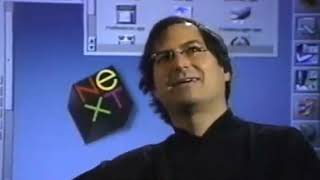
This is when you were 6, 7, 8 years old at this time. Exactly. And it was really the most wonderful place in the world to grow up. And there was a man that moved in down the street, maybe about six or seven houses down the block. And it turned out he was an engineer at Hewlett Packard, and he was a HAM radio operator and really into electronics. And I got to know this man whose name was Larry Lang, and he taught me a lot of electronics too. He. He was great. And he used to build Heath kits, which they don't really have anymore. But Heath kits were really great. These Heath kits were these products that you would buy in kit form. You'd actually pay more money for them than you would if you just went and bought the finished product if it was available. But these Heath kits would come with detailed manuals on how to put this thing together. And all the parts would be laid out in a certain way and color coded, and you'd actually build this thing yourself. And I would say that gave one several things. It gave one an understanding of what was inside a finished product and how it worked, because it would all include a theory of operation. But maybe even more importantly, it gave one the sense that one could build the things that one saw around oneself in the universe. I mean, you see, these things were not mysteries anymore. When you looked at a television set, you would think, well, I haven't built one of those, but I could. There's one of those in the Heath kit catalog. And I built two other Heath kits so I could build a television set. I could build nothing. Things became much more clear that they were the results of human creation, not these magical things that just appeared in one's environment. And one had no knowledge of their interiors. So it gave one a tremendous degree of self confidence that through exploration and learning, one could understand seemingly very complex things in one's environment. So, you know, my childhood was very fortunate in that way.