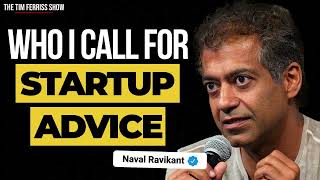
Transcript of a discussion where Naval Ravikant outlines key qualities he seeks in startup founders: intelligence (deep domain understanding), high energy/perseverance, and integrity. He also emphasizes personal compatibility—liking founders personally—since investing or partnering involves long-term time commitment.
Chapters
What do you look for in a founder? So I'm just going to ask you that, like, what are the things that you look for in founders or the red flags that disqualify an investment or a founder?
Yeah.
So number one, intelligence. You got to be smart, which means.
You have to know what you're doing to some level.
And that's a fuzzy thing, but you.
Talk to people and you kind of get a sense of do they know what they're doing or not? Do they have insight? Do they have specific knowledge? Have they thought about this problem deeply?
It's not about the age, it's not.
How many years they've spent, but just how deep is their understanding of what they're about to do.
So intelligence is energy.
Because being a founder is brutally difficult. It takes a long time, and in.
The long run, the people who succeed.
Are just the ones who persevere.
So if someone runs out of energy.
Or if they're doing this in some hesitating preliminary way, where they're looking for constant positive feedback, or if they're easily thrown off course, then they're not going to make it to the end, especially in the highly competitive startup context.
And then finally is integrity. Because if you have someone who's high.
Intelligence and high energy, but they're low.
Integrity, what you've got is a hard working, smart crook. And especially in the startup world, things.
Are very dynamic, they're very fast moving, people are very independent. So if somebody wants to screw you over, they will find a way to do it.
And fundamentally, ethics and integrity are what.
You do despite the money.
If being ethical was profitable, everybody would do it. So what you're looking for is a core sense of values that rises above.
And beyond the pure financial incentives.
So for example, if I'm talking to a founder and they offer to do something that is slightly unfair to another.
Shareholder or employee or founder in exchange for making me happy, that's a red flag.
Because if they can do it to.
Them, they can do it to me for sure.
And integrity is the hardest one to.
Figure out because it requires longitudinal relationships, meaning long term.
Exactly. So I've just become more hyper aware.
Of that piece as time goes on.
But those are kind of the three.
Things that I look for.
And then I would just say a thing that isn't really about success, but.
It'S more just about personal time, is.
When you invest in somebody or you work with somebody, you start a company with somebody, you're signing up to spend.
The next decade of your life having them in your life.
And so you just have to make.
Sure you actually genuinely like these people.
You don't consider work to have to answer a phone call or take a.
Meeting or spend time with them. If it's exhausting, if they're downers, they're negative. If they're difficult, no amount of money is worth it.
You and I will both die with.
Money in the bank.
And so it's not about money at this point. It's about do I want to spend.
My scarce time, resources, mental energy, spirit interacting with these people.
My favorite founders are actually the ones.
Who I learn from.
So every time they call me up.
Because they need help with something, I jump on it. Because I know that walking around the.