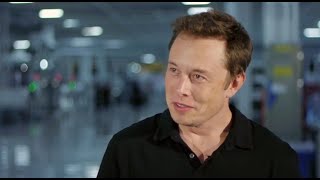
Elon Musk explains why he started companies instead of joining them. Netscape ignored his job application and he was too shy to network in their lobby, so after a summer coding he left Stanford to start Zip2 with his brother and Greg Curry. He picked problems he thought mattered most: the Internet, sustainable energy, and making life multi-planetary.
Questions this video answers
Netscape.
His brother and a friend named Greg Curry.
Chapters
I wouldn't say that. I always knew that I wanted to be an entrepreneur. I actually wasn't sure what I wanted to do growing up. At one point I thought inventing stuff or creating things would be a cool thing to do, but I wasn't really sure if that meant starting a company or whether that meant working for a company that made cool stuff. In fact, when I first came out to Silicon Valley it was to do great studies at Stanford in Piper's Extreme in 95. I kind of thought the Internet would be something that would change the world in a major way and I wanted to be part of it. And actually what I first tried to do was I tried to get a job at Netscape. So I wouldn't actually try to start a company. I tried to get a job at Netscape.
That didn't work out?
No, I didn't get any reply. You know, I didn't have a computer science degree or several years working at a software company. For whatever reason I didn't get a reply from Netscape. And I actually tried hanging out in the lobby but I was too shy to talk to anyone. So I was just like standing in the lobby. It was pretty embarrassing. I was just sort of standing there trying to see if there's someone I could talk to. And then I was too scared to talk to anyone. So then I left.
Amazing. So then you went on to do what from that point?
So I was just writing software that summer and it got to the start of the quarter for Stanford and I had to make a decision. So I decided to go into ferments. So I figure if I start a company and it doesn't work, then I can always go back to grad school. So start a company with my brother and a friend of mine, Greg Curry, and the three of us created Zip2.
So fast forward a little bit, you obviously did PayPal, that was very successful. And then at some point in time you're like, I'm going to do something crazy, something that's never been done before with Tesla and the space related stuff that you're into. Why take on such huge, very ambitious type projects? I mean, did you ever have a feeling like this might not work?
Oh yeah, absolutely. Well, so this kind of goes back to college where I was trying to figure out what are the things that would most affect the future of humanity. And the things that I thought would most affect the future would be the Internet, sustainable energy, which is both production and consumption and then also space exploration and specifically making life multi planetary. Now I didn't expect at the time to be involved in all of those areas. But those are just the areas that I thought would most affect the future. And as it turned out, I've been fortunate enough to be involved in those areas. But that's the thread that connects them. It's kind of my best guess at what would most likely affect the future in the biggest way.