The Next Generation of Software | Mamoon Hamid, Partner at Kleiner Perkins | Ep. 16
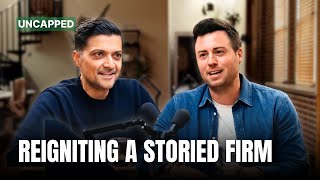
In this interview, Mamoon Hamid, partner at Kleiner Perkins, traces his journey from a 1997 engineer at Xilinx to a venture partner, using his experience to illustrate four major technology waves—semiconductors, computers, software, and the internet—where Kleiner backed dominant companies. He reflects on the dot‑com boom, the rise of cloud and mobile, and how those cycles inform his current AI super‑cycle thesis, quantifying a potential $60 trillion labor impact. Hamid explains Kleiner’s refreshed mission to “be the first call for founders who want to make history,” its lean partnership model, and a disciplined investment process focused on seeing, picking, winning, and working with founders. He details a “job‑pyramid” framework for AI‑driven copilots targeting high‑skill, mid‑skill, and low‑skill jobs, citing portfolio companies such as Box, Ambience, Harvey, Windsor, Hippocratic, and Dexterity. The conversation expands to the firm’s fund strategy: an $800 M early‑stage fund investing in ~35 companies aiming for a 5× return, a $1.2 B select fund used to double‑down on top performers, and a growth fund to capture missed opportunities, all coordinated through a co‑located partner team that makes decisions around a shared table. Hamid also shares his personal compass—family, a recent Hajj pilgrimage, and a faith‑based moral compass—that shapes his empathy toward founders, emphasizing respect, humility, and the desire to make the fundraising experience more humane. Throughout, Hamid balances optimism about AI’s economic impact with a pragmatic view of timing, talent, and cultural fit at Kleiner Perkins.
Chapters
Kleiner had made history from the days of semiconductors to then computers to software to the internet. Those four big technology waves. If you look at the list of companies in each one of those major waves across decades, we pretty much nailed every single dominant company in those waves. And so how could we make history again?
All right, Mamoon Hamid, I'm super excited to have this conversation with you. Thanks for making time for it.
Thank you for having me, Jack. Really good to see you.
Um, so I want to start by talking about your kind of history over the last couple decades or, you know, 25 years in Silicon Valley. And if you could just sort of take us back to when you came to tech in Silicon Valley and maybe sort of the experience you had through the different innovation cycles.
I was really fortunate to come to Silicon Valley, uh, as a first-time engineer from my first job outta college in 1997, uh, working for a semiconductor company of all things. That was, uh, a company called Xilinx, actually a Kleiner Perkins-backed company that, uh, was, uh, the underpinnings of lots of, uh, switching and routing equipment that was the, the backbone of the internet. And so I got to really see from that lens, uh, the rise and the fall of the internet and, uh, see my stock appreciate and then depreciate a lot. And so, uh, I, I look back at that sort of first few weeks in my cubicle at Xilinx in San Jose, uh, in 1997. I'm 19 years old. I'm very, uh, influenced by all the things that were happening around me. And, uh, I've got a Sun workstation and I'm running the Netscape browser, uh, buying books on Amazon, uh, for my grad school classes at Stanford. And turns out just that a new search engine has just come out called Google. And so these are the kinds of influences that I had in those early, early years in Silicon Valley. And, and turns out actually all those companies, Xilinx, Netscape, Sun, Google, and Amazon were all companies backed by Kleiner Perkins at the Series A. So, which also got me thinking about who are these venture capitalists? That seems pretty interesting as a job. 1997, '98, '99 were like these boom years. It felt a lot like probably today, uh, but a lot more parties maybe at the time. And people forget that that was a time of like, felt like a time of excess actually.
Was it way different feeling than now? Like on that front?
Uh, it, it slightly, because I think we still have mostly builders today. And, uh, by 1998, '99, non-builders had arrived to help monetize the internet. And a lot of interesting business models were sitting on top of You know, the, the internet hype bubble. And so, uh, I feel like we're, we're still like a few years removed from that today here. So today's still builders.
Did it all feel like smaller than in a sense? Like, I mean, the whole industry I guess was smaller. So like, did it feel like a more of like an insider club or did it feel like everyone's here and this is like a huge deal and the whole world knows?
I think it felt like everyone here actually. It felt like all around everywhere you went, uh, you know, just like the museums had parties at night and, you know, like folks were hosting like dot-com parties and they were a real thing. And then, you know, folks were up and down from San Francisco down to San Jose. It was, it, it was a palpable feeling of progress, momentum, success even. Uh, and it was, you know, for someone, I'd gone to college in the Midwest at Purdue. And so to come from Indiana to Silicon Valley in '97 and be sort of on the peripheral periphery of that felt, uh, you know, very different for one, but it did feel like a palpable energy of exuberance and excitement.
To me, I would think that it was closer to the AI moment than the ZERT moment because there was a real thing happening. So I'm, but I'm curious if that's how it felt to you and to people who were here during it. Like, was it clear that it was overinflated, but there was something very substantial? Or when the bubble popped, was it like, oh, we were all crazy?
Yeah, I think it started to feel pretty crazy. And I think all of us at the time, you know, I was an engineer with a group of 20 other engineers, part of my cohort that got recruited from college. And so, you know, things that we were doing, we were obviously on the internet, but we were also like day trading stocks. Like we all had Daytech accounts, E-Trade accounts, and Schwab accounts because some of the stuff was so silly that was going on in the markets. Company would go public, it would have a 10x in that day, and then, you know, you, you sell the next day. And I mean, I learned a lot of hard lessons in, in trading public equities in that, in those few years as a young person. But it was, it felt silly. It took like, you could not equate what was your buying and explain what it actually did and what kind of value it provided to people and humanity and, uh, to customers. And so, I mean, these are companies with no revenue and, uh, tens of billions of market cap. Uh, and so it, it, it, you cannot connect reality, uh, to the prices of, for these stocks.
Since you've lived through many of these cycles, and we'll go to the, we'll go through sort of the journey of them, but since you've lived through many of them, do you feel able to point to when we're in one now, or do you feel no more able to point to one than somebody who's not been through a bubble?
Part of the calculus of my brain is that you keep an open mind and some naivete and not be the old guy who looks at, well, I saw that happen back then, it was going to fail. And because if you have that mentality, you're going to miss everything.
You would have missed the 2010s, I guess.
Absolutely.
I mean, a lot of people did because it just kept going.
Yeah. And you just have this sort of, you know, got a half glass full here. So look at a half glass full. And, uh, imagine the possibilities, the optimism of the technology shifts that are occurring in front of us. And rather than like looking at it in a way of like, well, Pets.com didn't work, so, you know, the next, uh, Chewy is not going to work. Well, Chewy really did work. And so you have to keep an open mind and think about the why now, and is the time right for this to happen now? And I think that is the lesson, is the takeaway is, is the timing of it. A lot of the stuff that happened in the dot-com boom, the timing was just off. There weren't enough eyeballs or enough people ready to adopt these products and technologies. And it took a good 5 to 7 years later for them to become a bit more mainstream behaviors. Uh, so timing matters so much in what we do. And I think that's probably the takeaway is how do you have— take all the inputs of like how technology is making an impact, the products we can build with that technology, and how many people can those products reach. And then I think Is it the time now or is it 3, 4, 5 years from now?
Yeah. Or some even 15 years later, right? Like there were some like grocery startups that tried to do it in dot-com and that took 15 years later to get going again.
Yeah. You know, Webvan is a, you know, it took a good 15 years for that to happen. And it turns out, I think the same investor invested in both because he realized, like, kept an open mind. I think Mike Moritz kept an open mind.
It's very impressive when you think about it. It's not getting burned and deciding to sell. So, so after dot-com burst, Actually, I'm curious, 2000 to like 2005, like kind of like before cloud, like what was happening then?
What was happening then is nobody could get a job. So, um, the reason why I stayed for 6 years at the company I stayed at, Xilinx, was because I was on a visa and then eventually I did get a green card. But, but in 1999, 2000, if I wanted to go get a dot-com job, I pretty much— the window was short and you could not transfer your visa. And so you stayed at your job. And so I was fortunate to keep my job, but I also realized that things were kind of slow in the Valley. And it felt like I was looking for the next thing. And the next thing for me actually was a great opportunity for me to leave the Valley for 2 years and go to business school. I left to go to business school and went to Harvard because I wanted to, one, is leave, go somewhere new, different, but then also come back when things are more exciting again. And it was actually like the perfect time to have left in 2003 and come back in 2005.
You didn't miss much.
Didn't really miss much. And actually that was Right. Uh, yeah, it's considered interesting. I, I was a grad student at Stanford when Google got started, and I was a student at Harvard when Facebook got started. So the timing of it, seeing that was sort of the beginning of Web 2.0, web applications that were super cool, consumer-friendly, user-friendly, you know, and Facebook was kind of an innovator there on the LAMP stack. And a lot came of web, post-Web 2.0 starting 2004 or '05 onwards. And so. I land back here in 2005 and in a job now in venture capital, actually trying to do semiconductor investments, but realizing like as a young person, semis is probably not where it's at.
Yeah.
And the place to probably think about investing is in web-based software or cloud software. And that was yet not a term. Salesforce did exist, but there were not a lot of cloud software businesses or Web 2.0 consumer app businesses were just emerging. This is a time of like you're just getting uh, you know, Flickr and you've got Facebook, you've got MySpace. And so there's a palpable feeling actually, if you were, you know, just a few blocks from here in SoMa, a good friend of mine who's my classmate at HBS was Jeremy Stoppelman and he started Yelp in 2004, dropping out, uh, from our class actually to start Yelp. And he actually told me like, hey, you wanna come join me to do Yelp? And I said, ah, you know, I'm gonna go back to second year of business school and then get a VC job, then maybe I should have done that. But, but that was— Yelp was yet another one of those very early Web 2.0 companies. And so with that lens, I got to see all this like amazing, cool UI-centric web software get built. A lot of consumer stuff was coming out at the time, and I took a liking towards more of the software for, for businesses specifically around productivity. And if I look back at around just like growing up in the desktop software world, you know, in the '80s and '90s, I, I thought about just, you know, what were the applications that I used as a, as a kid growing up, you know, sure, playing games, coding, all that. But one thing I remember is you always went back to the File Explorer, you know, like you always were clicking around files, finding the executable or, you know, finding a document. And so I thought, okay, well, how do you take desktop software and moving into the browser and what would be the application that would first end up in the browser. And, uh, the, the one that I sort of perseverated around and really obsessed around was the file explorer and file sharing specifically, which actually sort of led me to my first investment in, uh, Box back in 2007. And so seeing those sort of cycles play out where, you know, was it time now to build stuff for the browser? Yes. And what was, what were the first applications that would do really well inside the browser? And then specifically What would those applications look like for productivity, for workplace, um, type, type products? And so, um, which led, you know, to this first investment in Box.
At least in that telling, there was a very, um, logical sort of, here's how the world's moving, here's what should happen next, therefore I need to find something that's doing this.
Yeah.
How much was it like that versus was it meeting Aaron and being like, this guy's awesome, I'll back whatever he wants to do?
It was both, actually. You meet Aaron for the first time and you like, I want to invest in him. And it was one of those first meeting instant, like, I need to back this person. And it was— he thought about the problem. He's 21, I believe, at the time. He thought about it as if he's been working on this problem for 10 years and he, and he really poked the holes himself before I could poke the holes myself.
And yeah, I had him on the podcast. He's been on it for now it's 20 years working on it. So he really is. I mean, like a deep interest in it, obviously, like a lifelong interest.
Yeah, it's a life— file sharing is a lifelong interest. And now obviously with AI, they've got— and, uh, it's been a boon for them. And, uh, I think they're over a billion in revenue, very profitable, all-time high market cap.
Those years, you know, 2006, '07, '08, '09, was it consensus in venture, people who were thinking all the time about this stuff, that cloud was what was going on? And maybe could you compare it to today's level of consensus on AI?
Yeah, it was not the consensus. I would say, uh, if you ask Aaron about his— the round that I invested in, uh, he would tell you like there were no other investors who wanted to invest in the company at the time.
And people weren't believing in cloud funding at the time.
Yeah, maybe like, can a young founder build an enterprise software business? Like you have to go sell to Fortune 500 companies. So that was one thing, one thing. I actually remember when my good friend Jeremy Stoppelman was raising capital, it was like, you know, he would— we'd be told like, you're wearing t-shirt and jeans to partner meetings, pitches. Like, how serious can you be about building a company? It's a bit like the whole Zuck thing when he showed up in the hoodie, extreme, like pajamas or whatever it was, and flip-flops or the Adidas sandals. But that was new to the venture ecosystem. You have to remember, like in 19— '99, 2000, uh, a lot of business folk, folks entered the VC world and, um, you know, they were like buttoned up, you know, um, slacks and shirt and some jacket and, um, investing in like, you know, networking and semiconductors and generally with not a lot of technical backgrounds. The point was more that you're investing in like all this hardware stuff that is you being you used to build out the internet, and all of a sudden you're thinking about investing in SaaS software. Like it's a, you know, you're going from chips and networking systems and selling hardware, like hardware systems. That was where, you know, some of the biggest exits came, including for Kleiner Perkins at the time, you know, like Juniper, Serent. These were like Cisco Systems was the highest market cap company in 2000 at almost half a trillion dollars. And that was the world that we lived in, and that was the consensus, was hardware networking. And play it forward a few years, it hadn't yet moved to software and cloud yet. And Salesforce was still like a, you know, I think sub-billion-dollar, you know, startup. I don't think it actually eclipsed that billion-dollar number until it went public, I think in 2004. So it was certainly not consensus at the time that people would start adopting cloud software for business work. In 2007, '08, '09.
Yeah. Did it flip at some point? Like, was there a moment that you remember where everyone was like, okay, yeah, yeah.
In the early 2010s, it took a while actually for it to flip where everyone became all about SaaS. And, you know, Jason Lemkin from— who started a company called EchoSign, I'm sure has a lot— a ton of stories as well that he couldn't get his company funded and he sold it to Adobe for a decent amount, but not like an incredible outcome. But that was sort of the era of like the obvious applications that should reside in the cloud for business, for work, were not getting funded and ended up with small outcomes. And it was not until, let's say, the 2010s or so that, that really like the, you know, it got a little hypey.
So then I guess somewhere in there on top there was mobile. And was that— did you experience that as like a completely separate wave? Was it intertwined? Because I guess that was, you know, happening in these same years to an extent.
And so cloud happens, let's say 2008, 9, 10 is when AWS comes out in 2006, 2007 really. And you can now finally start to build software in the cloud, truly in the cloud. I mean, Box for the longest time was still racking and stacking storage systems and even through like the late 2000s, 2010 even. So you didn't have all the Amazon storage products that they offered today. So it took a while to get there. Mobile comes along, I would say, I don't know if you recall this, but in 2011, uh, that's when I graduated college. And if you remember using Facebook, it was not yet a mobile app. It was sort of an HTML5 wrapper. So that you have to remember, like, even in 2011, '12, we were still doing like these wrappers and, and not, not a lot of folks had just yet built native iOS apps. There was still this debate around whether, uh, wrappers or native apps. And, uh, and I think, you know, the likes of Uber being like a killer app, and I think a lot of gaming companies like Zynga Games and a lot of the social gaming companies really made native apps that really got people. If you look at the leaderboards of the charts of the Apple, the App Store, the early days were a lot of games like Mafia Wars and, and I think gaming really drove and I think generally like some of the fun stuff really drive the, the development of technology.
Yeah.
Like it pushes things forward. Even in the Internet 1.0 days, a lot of the fun stuff pushed things forward. Even like multiplayer games drove like how like graphics and use of bandwidth, etc. And I think the same thing happened with mobile as well.
Basically then through the teens we had Cloud and mobile were dominating.
Yeah.
And sort of, you know, my experience in tech up until just recently, that was kind of my whole existence was just like cloud and mobile is just like the thing. And obviously people were like, this is the top. YC valuations are too expensive. It can't keep going. And it kind of just did. And it just like ran for like a decade there or more, I guess.
Yeah.
Then we had obviously the pullback when everybody was sad. There hadn't been the thing. Mark Andreessen recently just described that as like, there was like the wandering or searching phase. And then now we're climbing the hill. And so that brings us to AI. And, um, we talked a little bit before, you mentioned that like, you know, out of your last 15 investments, they've basically all been what you could describe as like an AI investment. Now putting AI in context of these, you know, these other moments in time through your career, can you talk about sort of your perspective on where we are? What's the same? What's different?
AI is to us the, the supercycle of all supercycles. Uh, there now that we're like 2 and a half years in, and when I say 2 and a half years, I liken the day zero to be the first time I saw ChatGPT, uh, when Sam was kind enough to give a bunch of us a demo of it in October 2022. That was like the light bulb moment is, oh my God, this stuff is real and there's going to be really exciting stuff built like it, with it. With these models, we've been on that sort of quest to invest in what we think will be those generational companies. And maybe just to take a step back though, if you look back at the, the start of our firm, Kleiner Perkins, in 1972, the overall GDP of the world was like $3 trillion. And in the last couple years, we've crossed $100 trillion of GDP of of the world. And, um, historically, sort of, it's like continued to rise as a percent. Technology has risen as a percent of GDP to about 15% of that GDP. So about $15 trillion. If we just grew at the rate that historically that tech has grown as a percent of GDP, uh, it will grow from $15 trillion to about like $30 trillion over the next decade. and that's, you know, if the GDP grows from $100 to $150 trillion. And so we're looking at these really big numbers. So there's like a doubling, like you're creating as much value in tech over the next 10 years as you did total, all of tech combined.
Yeah.
But what if tech grows faster because of the tailwinds of AI? And maybe to frame that is if you look at that $100 trillion of GDP today, 60% of it is labor, human labor. And AI is not just a new way of working, new productivity technology. It's not a new way of consumer apps. It is a— there's a strong element of labor doing the job, doing the actual work autonomously. And that is a $60 trillion opportunity. You could view as an opportunity or view it as like, oh my God, what happens to those jobs? I worry less about the jobs because humans are evolutionary and they figure out what to do with these tools. We did it 50 years ago, 40 years ago, 30 years ago. We did it in the Industrial Revolution. We do it in the computer revolution, the software revolution. We'll do it in the AI revolution. We'll figure it out. But there is up for grabs all this jobs to be done. Which are literally trillions of dollars. And, you know, I love looking at numbers and historical charts. And if you look at the, the market cap, like tech as a percent of the overall market cap of the whole world, like, you know, it's like also roughly actually close to $100 trillion is the overall market cap of all the stock markets. And tech is today about 30-35% of it. And it's rising pretty actually fast because I think it's already starting to— the effects of AI on how value gets allocated amongst enterprises is already shifting towards companies that are, you know, the Nvidias and the Metas and the Googles and those are Amazons that are benefiting from the AI tailwinds. And so I think the inevitable future is that a lot more of this, these trillions of dollars is the opportunity for all of us in the venture world. I mean, we're talking about literally like trillions.
So I guess, I mean, to state the obvious, your mindset right now is this is going to be an unbelievable period to invest. I'm curious how you think about structuring, you know, the way you're going to go about it. Like if you have to look over the next year, 2 years, 5 years, like how are you logically approaching the situation to invest?
Yeah. So we, at the end of the day, we have to break down the problem and then find places and people to invest in at the early stages. That, that is our business. and so we, what we looked at is that ChatGPT moment happens. So, okay, so how do we address this market? You know, there's, you can go after the foundation models, you can go after sort of the, the middleware infrastructure, or there's the application layer. And, uh, a lot of us at KP are pretty application-centric, and we took a point of view around, let's go think about how we address the applications. The jobs to be done, that $60 trillion. How do we go after the jobs to be done? We took a pretty simple point of view, which is, uh, we sort of created like a, the job pyramid. At the top of the pyramid are highly skilled workers who are, um, highly paid, uh, but they're also fairly scarce in nature. So those are doctors, those are lawyers, those are engineers. And if you'd look at a, a chart of the top 20 jobs in the US by pay, those are doctors, lawyers, and engineers. And so we thought, okay, so how do we invest in copilots for these job types?
Why copilots?
Because at the time, 2 and a half years ago, they were still— we're talking about like, uh, nascent in terms of what their capabilities were, and over time become more autonomous. But copilots because there are parts of these jobs that are very nuanced and the human brain needs to process those parts of the job. But there's parts that AI is scribing or like taking notes as a, as a physician when you're talking to the patient. Uh, you know, I saw my wife who's a physician take chicken scratch notes and bring them home at night and then transcribe them into her EMR, uh, when she was at Stanford. And so it's, you know, every doctor does it. And I was actually a doctor this week where doctor was still doing it. And I, I told the doctor, like, have you considered using Ambience for your AI scribe. And so the point is that you and I could be having this conversation, and this 20-minute conversation gets fully transcribed into the EMR. Yeah, with a diagnosis, with the drugs potentially to describe, to prescribe, as well as all the coding that needs to be done for billing for insurance, all happening, happening sort of in the background autonomously. But that's a job that, you know, a doctor doesn't really love doing.
Yeah, I mean, in general, it seems like there's all these conversations happening throughout our days at work, whatever, and we're just losing most of it to the ether. And I could see one day thinking that's insane that we had this conversation and I couldn't recall it or do anything with it because I just forgot about it.
Yeah. And that's the magic of products like Granola, right? Or, and so what we decided was, okay, so we invested in Ambience for, for, for doctors, for clinicians. We invested in Harvey for lawyers. we invested in, uh, Windsor for, for engineers and, uh, sort of took that sort of layer-by-layer approach to the different job types. So that pyramid of like highly skilled, highly, highly paid, sort of making $200K a year or so or, or more. And let's go invest in some copilots.
To connect it to Box way back in the day, the way you just described those again felt like you had a plan and you had a view on the world and something should exist and then you went and found that thing. Is that an accurate sort of way that you you go about doing your work and finding these companies? Or is it just they're coming to you and they make sense?
I think it's, it's a bit of both. They both, they come. So the technologists who understand technology and how to use it to build great products, uh, and when the time is right for those products to exist because the technology is refined enough, mature enough to actually use it for production environments. That's how I think, how do you match technology that's readily available today and production ready to the markets that could exist. In parallel, founders are thinking the same thing. Great founders are, and they're timing the market just like we're trying to time the market. And I think you sort of match each other up. They're starting companies and we're looking for them out there. And, uh, and I think in all those cases, those are founders came to the same conclusion that we did and they started the companies when they did and we backed them because we thought the time was right.
I guess the future-looking version of the question I asked would be, um, do you have a set of ideas right now that you are really eager to invest in. If you found the right entrepreneur, you'd be like very leaned in to invest because it's an idea that makes sense to you next.
Taking that pyramid structure again, it's that invisible pyramid I'm drawing here is, okay, so you go one layer below. Okay, what are the jobs that are like slightly less paid but still skilled? Okay, those are nurses, they're salespeople, they're financial analysts, um, they're jobs of that ilk, still very qualified, college-educated. And we found that, okay, well, now some of those parts of those jobs, you can actually just do them completely autonomously. For example, for nurses, we have a company called Hippocratic, which is an autonomous agent that does work that a nurse would do, like make a bunch of phone calls. Like they're making thousands of phone calls today to patients to talk about either like a pre-op conversation, a wellness check, do like a post-op check-in. And, and by the way, when you, you know, it turns out that patients like to respond to phone calls in the morning or in the evening, like 8 a.m. to 9 a.m. or before work or 5 p.m. to 6 p.m. Well, guess what? Like if you tell a nurse you can only call in those, those hours, that's pretty hard.
But if you can, an agent can do it. You can agent, you can tell them call, call only those hours and 10,000 people simultaneously.
Do it exactly.
Yeah.
That's the beauty of when you create abundance through AI, you can do some pretty amazing things. And, and by the way, those calls today are probably made, they go to voicemail and then you don't do a follow-up because you just don't have enough humans to make those follow-up phone calls.
AI will never give up.
AI will never give up. Yeah, right. And then that hopefully, or in the fullness of time, creates the right outcomes that these protocols are suggesting. Why should these calls be made is because there's some protocol that suggests if you make the call, you decrease the likelihood of readmission by X amount. And so all this abundance in AI creates all these opportunities to just get to the asymptote of a better, better world. And so back to your question around like, you know, what are the things that— so this phase of like in the last year or so, like a lot of autonomous agents that are doing parts of the work just completely on their own. And I think the end state is if you go down, so what is the, the lowest paid work, um, and lowest skilled? It's physical labor. And it's just the truth. It's like backbreaking work that people do and still do it. And that's probably the hardest place to attack today. And where I'm— we're thinking sort of much further out, which is like robots. Yeah, it's like humanoids. The beauty of our time was that, you know, the Transformers, LLMs, really were able to take all the corpus of the internet take lots and lots of textual data, transcript data, and understand this corpus and do really well, well with factual knowledge-based data. But when it comes to the physical world, there is so much more. And no one's fully, you know, digested every single piece of video to understand, or actions, human actions to, to solve and address robotics today.
Right.
And I think that's a magnitude's bigger problem to address that a couple of really cool companies are looking at doing. But the problem is bigger, bigger, much bigger. And the cost to actually accomplish it, magnitude's bigger.
Yes.
And, uh, I just think that's like further down the road for us.
That one could be like investing in grocery in the dot-com era instead of in 2015. And it's like an obvious outcome, but it's, you know, not there. Like, you know, even setting this room up this morning, like a lot of people had to move a lot of things around to the right place and set up stuff. Doesn't seem physically impossible that a robot could do that one day. It just doesn't seem like we're there quickly.
Yeah, it goes back to the cost equation. Yeah, I think you could get a robot. That robot probably cost you half a million dollars to do the work that was done here today. Yeah. And it would take the robot probably 5 times as long. Yep. Okay. And so it's all about the cost benefit or cost to cost equation. And I think we'll get there eventually. We always get there, but it takes some time.
Seems like that will be, to me at least, that seems like that will be like the biggest economic unlock and maybe like sort of, um, quality of life unlock imaginable to me. If you could really have humanoid robots doing all that stuff. I mean, it seems like a fantastical idea, but this keeps coming up on the podcast as like the obvious eventual conclusion. And I don't see why it wouldn't happen and why it wouldn't be like the biggest thing that ever happened.
Yeah. I haven't thought of it that way, but just, uh, one is that I'm not sure that's the humanoid form factor. Uh, that the, I don't know if you need a humanoid robot, but just a robot. Just a robot. Yeah. Robot, like on wheels, moving around, doing things that we would do. I think it's already— it's— we're closer when it comes to moving vehicles, bringing things from point A to point B, you know, like Amazon deliveries, food deliveries, all that delivery type stuff. Right. But, but things like in factories where there's very confined jobs to be done, we have a company really, it's called Dexterity, which loads, unloads boxes off of FedEx trucks or UPS trucks, you know, just like, which is again, like, it does like, if you watch the videos, it does a perfect job of like squeezing boxes into crevices that humans would never think about squeezing a box into. And so if you break the job down into very specific things, like I think you can already do it today. But I think the, you know, the very, um, dexterous robot that does a random set of things in your house— super far, super far.
Yeah, I agree. I agree. I'm just very interested in the idea of like how far can prompting go. I think about What type of business might you be able to prompt into existence in 5 years?
Yeah.
Like, could you prompt a simple e-commerce business? Seems like you could probably do that. Could you prompt, like, a SaaS business into existence, etc.? And you can, like, go down the levels of complexity of, like, what is promptable into existence. But on the robot side, if, like, one day 30 years from now you could prompt, build me a house, that'd be crazy. But it doesn't seem physically impossible at some point. I don't know.
It does not.
So I guess you're thinking through this kind of pyramid and that's informing the way that you go about your investments. I kind of want to now shift over to you building the firm and sort of how you're now, you know, marrying the apparatus that you, you know, are leading to approach the situation. Where I wanted to start was the thing that, um, I think is very impressive, rare, and interesting. Is you came to Kleiner in 2017, and Kleiner has this unbelievable history back to the early '70s, super dominant, you know, like investing in unbelievable companies. Obviously it was still like a meaningful thing, but it like went through like a trough relative to like those heights. It seems like it's pretty rare that new life gets breathed back into a really storied old venture firm. And I'm just curious to hear about what went into whatever you did to make that happen.
Yeah, no, it's, it's been the, you know, journey and honor of a lifetime to be at Kleiner Perkins since when I joined almost 8 years ago. It is the firm that really got me thinking about venture capital in the first place when I was a young engineer at Xilinx. And it at the time there were, you know, the equivalent of TechCrunch or your podcast were Red Herring and The Industry Standard. And whenever you pick up the magazine, the, the print version, uh, you read about a company and it was like literally always backed by Kleiner Perkins. It really got me thinking about what is it that these folks do? And it turns out most of the people that worked at Kleiner Perkins, like John Doerr and Manoj Khosla and Brook Byers at the time in the early, late, in the late '90s, were engineers who went to business school, usually one of two, and, uh, got into VC. And so that's sort of set my sights on, I have to go to business school to get into VC. And I, and, and so, but the, the dream job coming out of business school was to go to Kleiner Perkins. Um, quite literally I tried and tried and tried. Uh, didn't work out, but eventually I did in 2017. And, and the point, uh, of, of telling you all this is that it was the most storied venture firm through the '80s, '90s, and early 2000s. And it is the firm that I looked up to. And I think many of us in the industry looked up to and and, uh, folks like John, who I think is the, the GOAT, the best venture capitalist of all time. 2 out of the 6 or 7 trillion-dollar companies are John Series As. And so to have an opportunity to be at the firm and, uh, put, you know, our spin on it, uh, and sort of create a refounding moment of the firm in 2017, which it, which it truly, uh, was and felt like. And, uh, it is what the folks who brought me in, uh, John and Ted and Brooke, uh, wanted it to happen.
I'm just really curious because, um, I know you've gotten a chance to learn from him. Can you share anything about John that you've been able to learn that like made him so good? Because it seems unbelievable doing two Series A's of multi-trillion— like it just seems unbelievable.
John has a, a drive and like no other. When, when he sees something, he is relentless. He will not shake it off until he gets it. And that's how he probably pursued— I don't know the exact stories of how he pursued Larry and Sergey as well as Jeff, but I know that he went up to see Jeff in Seattle in his sort of makeshift loft-like building like this, uh, where Amazon was getting started, and going to the Stanford campus where Larry and Sergey were. So once he saw something in those founders, and he uniquely has worked with so many of the greats, so many $100 billion+ companies, and is still on the board of DoorDash, still on the board of Alphabet. You know, he backed Scott Cook at Intuit, Compaq Computer. The list is so insane with John in terms of like the number of $100 billion+ companies. But I think he, he has a formula of, of identifying greatness. And having this view of products and markets and people that will build probably the most insane companies in the space. John, I think, I'm sure he's missed a few too, but, and he's told me about it, some of his misses that would have made him even crazier in terms of what, what John's accomplishments would have been. But I think his relentless pursuit of, of great founders is, is is something I've learned from.
So when you came into Kleiner, what did you set out to— what did you need to do and what were you sort of planning?
First, you take stock of what's, what's actually happening on the ground. You come in. I literally spent the first 2 months meeting with every single person all the way from the front desk person to our— all of my partners, including former partners, just to understand what made us great, what were the assets and what were the liabilities. Liabilities and, you know, what are the things that didn't work or weren't working and having your own point of view on the things that weren't working. My takeaway was that what made Kleiner so great and iconic and produced these epic returns were that we were early-stage specialists who was a small partnership of early-stage technical people, practitioners who cared about the craft of venture capital, being in the trenches with founders, uh, really being truly their first partners and their best partners. That was sort of the takeaway of if you talk to Kevin Compton or Doug McKenzie or Joe Lakob, uh, I mean, these are like the epic partners of, of the '90s, um, at Kleiner. Uh, you took away like there was just and they were all very different. If you meet any of these folks, they were very complementary, different. It was truly a partnership of, of, of people who wanted to be exceptionally great at early-stage investing. And we were not just early-stage investing in 2017. So we had all kinds of different products, we had different geographies. And so we brought it back to the core, you know, we brought it sort of back to the future moment. And that was actually our tagline in 2000. 2019 when we raised KP18 was back to the future. So we went back to the future to a small, lean team of early-stage practitioners. We did add on a growth fund later on, and there was a really good reason for that. But we went back to that. You know, you know my partner Ilya Fishman, who was one of the first people I brought on because he and I saw the world very similarly, which is to, uh, you want to be small, lean team doing early-stage backing the best founders at the Series A. And actually, maybe just an aside is we never had a mission statement. And so we actually created a mission statement. Sounds a little hokey, but, uh, and the mission statement is that we want to be the first call for founders who want to make history. And the history part was that this firm had made history with its investments. And I think it would be hard for some other firm to say those, those lofty words. Uh, but truly Kleiner had made history from the days of semiconductors to then computers to software to the internet, those 4 big technology waves. If you look at the list of companies in each one of those major waves across decades, we pretty much nailed every single dominant company in those waves. And so how could we make history again within this, our body of work, this, this group of people, and especially now relevant to AI, how do we make history with our AI investments? And we sort of brought it back to its core. And had a very distinct mission to us, and that informed what kind of people we wanted to have inside the firm, the partners investing on behalf of our LPs. There we thought we wanted to have folks who are technologists, have some operating background, but truly want to be exceptional at investing. Like, this is the craft and career they want to really excel at. Not like, you know, I was a founder, that was my peak, and this is like the next thing I do after I start a company. No, no, I, I want to do this as my career. And which is why also we've groomed a lot of folks from within, even though I had many years as an operator, as an engineer, so did Ilya. We really got into venture pretty early on and we got groomed by some really amazing venture capitalists. You know, Ilya was at Khosla Ventures, got to work with Vinod. And we got to work with Pierre Lemand. Um, I got to work with Irwin Fetterman, uh, who was my mentor at USVP. Uh, uh, you know, probably the most legendary semiconductor investor. So we all had mentors and we wanted to create a, a partnership where we could groom younger folks, associates, principals, also younger partners. And that's, you know, today, um, you know, some of my partners, uh, Ev Randall and Lee Marie and Josh Cohen and so who have really grown up in the business. And, um, both Josh and Ev were associates back in 2017, '18 when I joined.
How do you think about, on that topic, growing your own talent versus, you know, recruiting in people at the GP level directly? You know, like when I look around at a lot of, at least in sort of my cohort of, you know, people in their mid-30s who I consider to be great investors, a ton of them started, you know, at the firm that they're currently at and rose into a, GP level there. So, you know, obviously there's both examples. How do you think about what you're trying to do as you grow the team?
We typically add one person a year or so, maybe max. That's like it's— and there's no hard set number about growing the team because we're not trying to necessarily grow fund sizes. And so, you know, at any given point in time, we have 5 to 7 partners. Yeah. And that's in the, the Yankee years, I call them, of the, of the, of Kleiner Perkins, where every year they're winning championships.
It was small teams.
It was like 7 partners.
Yeah.
And so I think there's also, in terms of like, you want to be able to sit around a table like this and have great debate and conversation around investments you're about to make. And at some point you go beyond the 7, uh, stuff starts to just be different. And there's actually research around it that suggests that there's a The Goldilocks is probably 6-ish. And, and so, you know, if you're 5, someone's out that week, you know, you can't have a full conversation. If you're 7, you know, maybe people aren't saying things that they want to really say because they want to upset someone. So there's a number. And I think we've continued to optimize for that number. And so to your question, how do you create that partnership? It's inevitable that not everyone's going to have a home run portfolio. And, uh, so those are the reasons usually why someone leaves. But how do you backfill or how do you have someone? And usually you sort of, you know, we've tried to grow from within.
Yeah.
And because that's so important because your culture, uh, can you live the KP culture, which is a very much a servant culture. Like we're a servant leadership. We are here to serve our founders and to— this is not about us as individuals. It's about our job to our founders, which is to work on their behalf tirelessly to help them become successful.
How do you, um, how do you assess talent on the way up? Let's say somebody's been with you for 3 years and they've got a portfolio. Do you ever have situations where somebody, their investments are good, but you actually don't believe in their future performance or vice versa? Or do you, do you sort of, do you promote inside the firm specifically based on performance, because it seems both clear-cut and the numbers are the numbers on one hand, and then on the other hand, there's quite a lot of like luck and randomness involved. And so as somebody who has now gotten the chance to see a lot of people develop, grow a lot of people, manage a lot of people in investing, what have you learned about how do you pick, you know, career pathing?
There's the seeing. Are we seeing the right investments? Then are we picking the ones that we should be in? Then there's the winning. Are we winning the ones that we should be? Like, if we decide we're going to invest, are we winning? And our internal goal is actually 100%. If we want to invest in a company, we have to win it. And we keep track of the seeing, the picking, the winning. And then the hardest one to actually, which takes the longest period of time to figure out, is working. Working in investment, meaning like, how are you helping drive the success of a company, which in many ways is the is a function of the founder and their team, but we're trying to help work it as well. If you're sort of 3 years in, you're, you know, you've, you've been seeing and you've been picking. So we know how you see and you pick. Uh, and, uh, if you're just really good at like seeing stuff and some great founders and also then winning, like you're capable of winning what we think are the investments we should be in.
Like if you can do that whole cycle.
Then you're, you know, like, and you see that, you see that day to day, like you're bringing in great investments who are great founders that we actually want to invest in as a group. And then you're actually going to win them. You can win them. Yeah, that's a sign.
Yeah.
Okay, then now that's great. That's, it's awesome. But now it's time to show that you can work them. Are they producing revenues, profits, real iconic company status, or at least are you on, on track for that? And can you have you know, per fund cycle, like one company that we all are really proud of, you know, you know, in a fund cycle we invest in 35 companies and the math suggests that we need like, like 2 outlier type outcomes and a couple more that are really great. And which means that every partner has to like deliver a company per fund that you look at like, yeah, it's a really good company.
Yeah.
And so that becomes more apparent over you know, from year 4 to 7, you know, and so, but you get to have multiple shots on goal. Uh, and so part of it's really like, can you, yeah, see, pick, win, but are there true outlier outcomes that you're producing for the firm?
You said it's important to win always if you want it.
Yeah.
Why is that? Like, why is it not okay? Why not aim for 70% win rate? Like, why is it not even— actually, maybe ask it this way. Why would you not prefer a 70% win rate implies that there were some that you went for that were so good and got so competitive and whatever.
We actually have a lower rate at the seeing. We don't need to see everything. We don't need to be fully exhaustive at seeing. And internally, like, our target is to see 60% of all Series As that get done by our peer group, peer set.
Series A is what you care the most about?
Yeah, that's where we measure it religiously. Like, we look at it on a weekly basis.
Wow.
We look at our, like, what Series As were announced, Did we see it or not? And seeing means you actually met with the company, not just like you heard about it. Yeah, you saw it.
You spent time.
You spent time on it. Yeah. And you deliberately decided to not do it. Like there was a decision made by, by you as a partner, uh, as a team, we all, uh, and so that's where we really keep it looser because you don't want to be so exhaustive that they're just chasing around companies just because you heard someone's raising a Series A. Uh, you want to have a real look at it and real assessment of the company and have a point of view on it. On the, the winning piece, we believe that, you know, and then you pick, you know, if we decide to pick, we decided like we want to do this, let's go win it. Let's go do the full team tackle. Let's use all of our resources to win and convince founders we are best suited to help them win. And that comes via endorsements from our founders, you know, getting— and that's usually the biggest thing is endorsements from our founders. It is they see some of the work that we do for them, with them, but we have to win because we have the wind in our back of like the brand of Kleiner Perkins. We have the resources of Kleiner Perkins. We have endorsements from founders. Like we, there's a network, like, and we feel like we're best suited to be that Series A partner. And if you decide otherwise, we're going to look back and introspect and why we didn't do better for you, why we couldn't convince you better, because we believe our track record from Series A to success is very high. And why would you not want to work with us? That's how we believe. But if we— if you don't pick us, we have to really introspect. And we actually keep a spreadsheet of all the losses at the— and then we revisit them at every offsite and we look at like, okay, did we miss the good ones or the not so good ones? And what was missing in our playbook as to why we didn't win that, that investment.
This movie takes me to, um, what one of the things I most wanted to talk to you about and try to learn from you is what I perceive around incredibly good picking over a lot of years into a lot of interesting companies. And, you know, I'm sure I'm going to be missing some, but just like off the cuff, I can think of, you know, we talked about Box, there's Figma, there's Applied, there's Rippling, there's like, there's more. I know there's a lot more Slack, Slack, Lean. So good ones. Um, very good. Like past a point where it's like, looks lucky, you know, it looks like something's going on. You just talked about, you know, being able to win all the time. I guess the first place I'm curious to ask about is, were those investments hypercompetitive when you did them? And was winning a huge factor in them? Or when you look back, is the part that you're more proud of that you picked something very accurately? Like, did everybody see that they were good and you just won? Or did you have an insight other people didn't have?
Yeah. If I look back at Box and Slack, which chronologically were the first two that you mentioned, those were not competitive. Not competitive. I think there were no other offers at the time of investment. Box for sure, because Aaron was having a hard time raising, raising around Slack. It was just too early for anyone else to take note of the early success. And maybe just to break it down a bit in terms of, for most of my investing career, I've really been excited about productivity. Uh, and that sort of goes back into my growing up in Germany where everything's so efficient, so productive, and you're like constantly thinking about, okay, how do I make this more efficient? How do I make this more productive? So, and I always saw that software in the cloud, lots, way better experience to, for productivity than, you know, desktop software and all kinds of other ways of doing work. And so, and I made this sort of kind of like a major of mine is workplace productivity. And so when you find, encounter a founder like Aaron around big categories of productivity, you sort of, they see the world the way you see it and you, you know, back them. And so you have what we call a prepared mind. You approach it with a prepared mind. So you already come into the meeting with a bit more of a, you're leaning in before you even met them because you, you know what they're doing. In the case of Slack, just to give you a sense, like it was a, you know, a gaming company that had pivoted, become this, this, this chat IRC thing. And we'd heard that a few of our companies were using it. And one of the founders we backed really like, hey, like, we love using this thing. And, and it was, you know, a few thousand users, but there were other, other, lots of other chat products. And by the way, like, you could say, like, why not just use iMessage or why not just use Gchat? And there were a few other products like it. So it was easy to dismiss it at the time. but what you couldn't dismiss was the level of engagement. And I think at the time no one was asking some of these— this is like 2013— no one was asking like the engagement questions around like, you know, L28s or DAO Mao. It was not a thing for enterprise software.
And engagement there was insane, right?
It was insane. It was like a 50% DAO Mao, 4 hours a day instead of Slack. And I think just being a little bit early on into understanding what was really happening with Slack and not dismissing it and actually somewhat overpaying because— and making an offer they couldn't refuse. Yeah. You know, at the time, like investing $25 million at $250 post for a Series A company felt insane in 2013, '14. But what's— I would say across the board between Aaron at Box or Stewart at Slack or Dylan at Figma or Arvin at Gleam, they're all in this general like workplace productivity category, but they were pretty product-obsessive founders. Who had poked so many holes at their own products. And as a, I would say, product-obsessed investor, I actually don't give product advice because if I've invested in a product-obsessed founder, it would be quite the insult to them to tell them where they should improve their product. But you're finding people who are way better than you at certain things, which is at product and building in categories and areas that you care about. So in, um, collaborative design, in workplace communications, in enterprise search. And these folks all had like deep, deep ties into this for many years, even though they were fairly young when they started. A couple of those folks were very young when they started. Aaron was 21. I think Dylan was maybe all of 19 or 20 when he started Figma. And in the case of Figma, you know, it was also just sort of post-launch product. Mm-hmm.
And again, they were not super competitive at the time.
I think they had other offers, but, but they were a company that had been around 5 years. Right. I have a history of investing in companies that have been around for a while before I invest in them. But the next, the new thing or the, the product they launch way many years in is the thing that works. Yeah. And in the case of Figma, 5 years in, you launch in July of 2017 or something, it starts to take off a little bit. And but it's the end is so small. And if there's one learning I've had over my career is like, or one thing I've used a lot is small and high engagement is a really good signal to invest in a company and get early, get in earlier, not competitive, better pricing, all the things that come with it, hence better returns for our investors.
Yeah.
And you know, you ask like, so what are the things, the unifying sort of archetypes here? I would say one is the product-obsessed founder and the other archetype is the Parker at Rippling, Kasser at Applied Intuition, is visionary. But the one thing they're better at than being a visionary is just an execution machine and run through brick walls, will the future towards themselves. Like, like you think about what Parker's built with Rippling, like this compound startup beyond just an HRIS to the finance cloud to IT, and literally like 25 different products now is you kind of have to will that to your way, the world your way to do that. And the same thing with what Caster has done at Applied Intuition, going into automotive and selling software into like the automotive industry is like you say, that's like DOA. You don't even go there as a startup. And what he did with the vision and selling and being very methodical and surgical about how to pursue his customer base and becoming sort of a de facto solution for like almost the whole automotive industry.
How do you figure out when you're spending time with a founder whether they are one of these things? Like, is it intuition? Is it like you've been doing this for long enough that you have a strong intuition? Is there some process to it? Do you just know it when you see it? Like, is there anything learnable from you about finding these founders? You know, because obviously it's— we all know these people now, but at the time you did it, you know, other people got to meet them too, and not everybody saw the exact same thing.
You know, I'm looking for intentions, like true intentions. Like you really want to be doing this and doing this for the next decade of your life.
How do you figure that out?
Just from conversations and things that are said, even unsaid, body language. What motivates you, what drives you, why you're willing to commit your life to this. You sacrifice family. Other things in life to go do this. It's a bit of like the je ne sais quoi, you know, around like the person, you know, you've been doing it. I know I'm, you know, I'm an engineer by trade, but like I look for the EQ and like use the EQ I have to figure out like some of those things of the other person. And yeah, like good people, moral compass, north star, like you sort of like, are you doing it for the money? Are you doing it for fame? Are you doing it for power? We talked about this earlier. Or do you just really want to solve problems that exist in the world and you're uniquely capable of solving these problems?
You talked about how, you know, Series A is the thing you care the most about. Obviously, the context that you're running the firm in is both like storied firm with, you know, infinite sort of brand and access both to entrepreneurs and dollars. And you also have you know, the sort of keys to do what you'd like with the firm. And so you could have run a lot of different strategies here and you've picked a particular one. Can you describe the strategy that you, you know, would say you're running and why you picked that for KP?
Yeah. As I mentioned, we have an early stage fund today that's $800 million. And, uh, the strategy there is we invest in about 35 companies per fund and in order to return a 5x on that fund, we need to have, you know, that'd be $4 billion, which means that that basket of companies has to be worth $40 billion and us own 10% of it.
Yep.
Okay. For the math to work for us and the simple math out of those 35 companies, you need to have 2 fund returners that get you pretty close to the 5x. So that's one part of the strategy. The other is we have a select fund, uh, which, uh, is today it's, it's a billion, $1.2 billion. And half the dollars typically go into our best companies like Figma, Rippling, and Gleam, um, and, and, and Harvey and others. And so where we double down, use it as a vehicle to double down into companies we're already on the boards of, we're already heavily involved, uh, all the resources of, of Kleiner Perkins are being applied to it. And where we just see that this is just has greatness written all over it. And sometimes you can sort of preempt it and do it very easily with the founders where it's easy for them, it's easy for us, and we want to give them more. We've done that many times in the last few fund cycles. Like, it's literally, it's like half the fund is those companies. And that's the other half is then things that we missed at the Series A or B. You know, we see a large swath of the companies inevitably we're going to miss and not pick well at the A and the B. And if we really kick ourselves, like we'll, we'll do like 1 to 2 of those a year where we, we missed out on the A and the B and we're going to do it out of the growth fund. And so this allows the, the, the one partner group to, to do invest out of both funds and it keeps it still very manageable. We all are based in one office, uh, well, two offices, San Francisco and Menlo Park. We all, go to the office on Mondays in Menlo Park for partner meetings. We all sit together and we get to see each other like multiple times a week. And that's by design. It's by like trying to use a table like this to make good decisions, sitting around the table, debating, discussing, uh, making decisions together.
I don't know if this is fair, but it almost seems like what I'm hearing is like as big and impactful as possible constrained by this one table situation.
Yeah. And I think just to take that in the context of we're in San Francisco right now. And if we all know what's going on in San Francisco, in fact, like in this like 5-block radius of here, lots of incredible stuff is happening. And if even just half of all the amazing stuff that happens in tech still comes from San Francisco to San Jose and we're there, that's plenty of pie to eat.
Yep. You don't need a Europe office. You don't need to be all over the world.
Yeah.
To maybe to wrap up, I'd be curious to hear, and I haven't gotten to spend a ton of time with you outside of this. And so I'm just interested what else in your life is important to you and like how that balances with, you know, your work, which obviously is of course very central to, you know, your life.
Yeah. The only thing that's more important to the work that I do is, uh, obviously my family. Uh, I have a wife and 4 beautiful children. And, um, and, um, I was telling you earlier, I got to go for Hajj this year, uh, so the pilgrimage to Mecca that every Muslim is supposed to do once in their lifetime. And it was quite the, the spiritual journey for me, uh, especially in a time when a lot, a lot of life hit us, uh, in our family actually. And so faith is really important to me, and it's also deeply rooted into every encounter that I have with every person. Part of the beauty of Hajj is that it is 2 million people who come from all walks of life and they have all the different skin tones in the world. But yet in front of God, we're all one and we're all the same. And, and it's just roots you into how do you treat each other as human beings. And it is sort of the moral compass that I have around, like every interaction matters. Whether it be with a 6-year-old child or a 30-year-old, you know, billionaire founder. And how do you treat each other? How do you give them the respect, the dignity and the attention in that moment in time? And so I've sort of tried to live my life and it's a— I get to remind myself of that, you know, through, through, through faith every day that, you know, there's a, there's a reason you're, you're supposed to do things a certain way. And a decorum and an etiquette and a way of life that, you know, just shows gratitude, but also, you know, shows up. And I think I try to bring the best version of me to every meeting. It's not possible, but it is part of like the— I think of it, put myself in the shoes of founder. Typically pitching to VCs is like a really— it's like the biggest thing you could be doing. That moment in time and it's intimidating. You're trying to raise capital, you're putting yourself out there. And if I can make them feel just a little bit more comfortable and more respected and acknowledge the work that they're doing and the— all the blood, sweat and tears that they're putting into this and the family sacrifice they're making and just like empathize with that and have some humility around what they're trying to do, I think we can just make that experience a lot more just, just better for all of us.
Yeah. Well, that's awesome. Well, thanks for sharing that and really appreciate you making time for this again. This was, this was great.
Thank you, Jack.
More from Mamoon
#37: AI, Venture Capital, Faith & The Future of Work with Mamoon Hamid (Kleiner Perkins)
Mamoon Hamid: AI - Where Value Accrues, Startups vs Incumbents & Scaling Laws | E1217