Building Products of future with AI and IoT | Manu Menon, Head of Strategy, Bosch
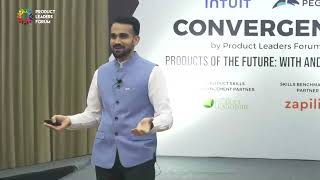
A transcript of a talk by Manu Menon (Head of Strategy, Bosch) presenting a strategist’s perspective on building future products using AI and IoT. Menon outlines macro trends (AI inflection, energy transition, geopolitics, demographics), argues that AI+IoT (AIoT) enable reimagined customer experiences and end-to-end value creation, and gives Bosch examples (multipurpose camera, Series 8 oven) and strategic advice for product leaders.
Chapters
It is my pleasure to introduce our distinguished speaker, Manu Menon. As the head of strategy for digital business division of Bosch, Manu has been instrumental in driving growth and transformation with an ambitious aim to grow the business 10x. His strategic leadership spans across AI SaaS, hardware and services, ensuring a competitive advantage in these domains. His impactful achievements include building and scaling a multimillion dollar AI driven B2B IoT mobility product from scratch, designing strategy playbooks and driving in house transformation for EIoT business development. He's an avid reader and a curious explorer who has lived and worked in 10 different countries in Asia, Europe and North America building a new school of thought in leadership. He aims to combine the best of the east with the best of the West. He's also passionate about health, wellness and fitness. In addition to being a junior biohacker, he's enthusiastic about CrossFit, swimming and squash. Today he will share his insights on building Future products with AI and IoT. Please join me in welcoming Mano Menon to the stage.
Thank you. Just a minute. Bring the. Check. Check, check. One, two, four. Something wrong? Namaskar. Ladies and gentlemen, good afternoon to all of you. Thank you so much for taking your time. It's fantastic to be here. When Satya told me about this product Leaders forum, I was definitely looking forward to see. As I understand we have many product managers and product marketeers in the house. A quick show of hands. How many product managers in the house? Great. Most of you. And how many product marketeers in the house? Just two. Coming back to the Product Leadership forum. So absolutely excited to talk about products. So today what we wanted to do was give you a perspective of how we look at product management and building businesses of the future. At Bosch, we are looking at two fundamentally enabling technologies of AI and IoT. But before that, I do have a question to all of you. If I may request you. Can you please scan the code over here? It'll take you to a mentimeter code room where we are going to have a word cloud. So the question is as product leaders, product marketers, product managers or business folks responsible for products, what keeps you up at night? I'm really intrigued. Unsolved problems. Right, So here we are. So we have quite a mixed bag. Right. So evolution of products, processing of features, AI. I mean, evidently building products of the future with AI and IoT. So. Yep. Problems, Competition, keeping up with the tech. Fascinating. Okay, anything more? Anything missing from here that we didn't talk about? Anyone wants to add. Value generation? Yeah. So if the product is going to be Successful or not. Right, right, right. Yeah. So it's shockingly, you know, being a German company active in India for 100 years, have had this problem, a lot documentation, as one gentleman put it. So I think what we can all agree on is you talked about the big tech, you talked about the AI LED displacement replacement. You also talked about aggressive digital disruptions from the B2C landscape, moving on to the B2B landscape. So all of this completely agree. This is what keeps any product manager at night very similar. But the point of view that we wanted to share from Bosch's perspective today is this. External trends as well as innovation, coupled with possibilities of many technologies are enabling us to build products of the future that are much closer to the customers than ever before. So in the presentation today, three fundamental parts that I wanted to take this opportunity to show you. The first and foremost is I lead strategy for the distribution of Bosch to give you our strategist's lens, which is similar to a product manager's lens, but not only talking about one product, but more from a corporate strategy point of view, where you may have multiple businesses, multiple products, so on and so forth. How do we look at the macro picture of context, what is happening on around us? Turn it all into a micro, into a B2B problem, or a B2C problem to look at what keeps a CSO up at night? Second, give you a point of view, when we look at products of the future, how can we completely reimagine the customer experience? And third, of course, share our own learnings in this journey of building a lot of products that are built with AI and IoT. Right. So I will take questions maybe after each and every section so that I naturally complete the logical flow of thoughts. Sounds like a plan. All right, sure. So let's get started. As a strategist, the easiest thing would be to tell you that the world ahead, it depends. But it just does not depend. Because when we look at the world ahead, sometimes the best crystal ball is your rear view mirror. But not all the times. Given everything that is happening around us from a political, economic and social technological landscape future, few things stockingly stand out. First and foremost, let's talk about technology. It's AI inflection point in every single domain subdomain, so on and so forth, as our product marketeer and product managers rightly pointed out. Second thing is specifically, when you look at the energy transitions, what we have taken as a fundamental basis for more than a century, fossil fuels are completely changing as a result. Whether you talk about power Trade in vehicles or the kind of energy generation that we have at homes, in generation plants and beyond. The entire landscape of energy is changing interestingly from the rare earth materials to the assembly points, to geographies where they are like Indonesia, Chile, etc, etc, etc. The entire energy landscape that we knew of like 20, 30 years before is going to change and evolve by 2030 even. And what was also fascinating is more than 60% of the entire world's population is online, interestingly spending 40% of their waking time. So as a percentage of time, 40% of your time that you awake is being spent online. So let's remember these as a macro technological factors. Now looking at the economic front, good news for us, which is that India has been one of the champion economies for the world economy. World economy at large growing at about 3%. However, what is rather man made and alarming is also the fact that if you look at what's happening around the geopolitical tensions dictate that there is a growing north south divide and a growing east west polarization. And as a result we have nothing but to deal with these as businesses. And finally again a good spot for India which is the whole supply chain de risking has been helping us. So China plus one as we call it in the parlance has been helping us a lot. Set up new manufacturing plans, new product lines, new global capability centers, so on and so forth in India. So that's your economic lens. Now if you look at the other part, which is more to do with your social lens or legal lens or regulatory lens, what we also clearly see is for the first time in the history of planet earth, Gen Z is going to outnumber baby boomers. So completely different consumer behavior patterns shaping up and more and more people are being sustainability conscious and at the same time being aware of everything that their products, supply chain, value chains go through. So all in all, the reason for me to tell you from a strategist lens, from a 30,000 level feed is these are all going to exist in the world of tomorrow. Whenever there is a lot of impact and whenever there is a lot of uncertainty, it is in strategy. We do what is called as scenario planning in all kinds of models of scenario planning. Now these are some things that we can take in as given. Now what does that mean for us? It means that AI gen, AI Iot here to stay. New era of energy Powertrains may evolve. Today we have EVs on the road, tomorrow we may have hydrogen, hydrogen ignition, so on and so forth. New energy means there is going to be an evolution in the energy landscape and then geopolitics are going to dictate a big part of what we're going to do from this part of the world. Protectionism, complete shift in consumer behavior, demographics and so on. So these are all, please remember this is from a very 30,000 level feet. Now as we move on we're going to slice and dice this 30,000 level feet. So the next bit of it, let's move on to the 20,000 level feet. The world population is growing to about 8 billion. Congratulations to us. We are already the most populous country in the world. Very fascinating because it's not just about the population. If you look at the number of things that have come online, it is going to touch about 19 billion as of this year. Combined with that, if you look at the economy of Bangalore, what has been driving us, which is the core IT shifting into engineering, R and D, R and D, outsourcing, so on and so forth, IT spending has been resilient. But if you look at the priorities of CSO on those IT spending, it's been on digital transformation, business transformation and complete business model reinventions coupled along with all of that R and D which has traditionally been very HQ centered, not just talking about like one company, but in most of the companies around the world, wherever you are, it has been very HQ centered. Now suddenly these tech factors, these geopolitical factors, economic factors, all of it has made it possible that the HQ centered R& D is also slowly creeping into other geographies, namely gcc, namely Bangalore, namely many of us. Which also means that in the end of all it, there is also the AI led disruptions that are happening. AI market, any market, you take CAGR of 30% plus 2030. So from a macro level, now moving down to a 20,000 level view, what is abundantly clear is these factors, these market forces are here to stay. Fine, so what? This is so what? So the so what is the sheer simple fact. Whether you're Talking about a B2B enterprise or a B2C enterprise, the CSO agenda looks far more crystal clear than it did before. Number one, how do you get hold of these technologies to completely reinvent your business models? Number two, sustainability. You know India has ratified the sustainable Paris Climate Change agreement like that, many other countries have ratified it. So therefore sustainability is here to stay. If that means regulations are going to drive sustainability impact, whether it's measurements, whether it's what, the kind of emissions that are there in the supply chains, so on and so forth. So sustainability as a Key component of decision making. Number three, today we talk a lot about Gen AI. It's been one and a half years, 20, 24, hopefully we know what exactly can be the business cases coming out of it. But at the same time, whether it's gen AI and AI today, tomorrow we may be talking about quantum, we may be talking about solid state battery, there could be a lot more. But what is clear is technology is completely evolving and every CSO needs to be on top of that to ensure that business is sustainable. And finally, good news for all of us. It also means that R and D is completely opening up. It's no more one company, one company's edge queue, but rather it's a lot of partners, it's a lot of ecosystems and multiple companies, sometimes even competitors co opting to enable a particular ecosystem. Now these are all clear imperatives. Here's one more stat, slightly dated because this survey is yet to be updated. It was a survey done by BCG of so many of around 20,000 companies around the world. And what clearly shows is that digital champions are far ahead of laggards. Common sense as you would say. But at the same time what is very intriguing is this growth gap is only going to triple as we move along. So every year any company is not going to transform, it is going to get transformed by the competitors around. So all these from a macro level, from a strategy lens, very clear. Which brings us to the sort of a micro level which is your own products, your own companies. You know we talked about what is keeping you at night. You indicated it's the big tech, whether your product is success. Well guess what, whatever domain you're talking about, whether you talk about mobility, whether you talk about energy, whether you're talking about consumer goods, the CSO agenda and what keeps CSOs at night seem strikingly clear. Number one, new business models. How can I ensure that the data that we capture is able to redefine my business model? Number two, how does software define most part of my intelligent operations? Number three, how to reduce my cac, how to increase my ltv at the same time ensure retention, all while being digitally enabled. Number four, having the entire B2B or B2C environment in an intelligent operating systems where the data can be captured, create and value can be created from it. And of course the security, the sustainability part of it. Sometimes you have to work with your competitors. What does it all mean? How do you co opt this ecosystem so long and short? The reason for telling you from the 30,000, 20,000, 10,000 and now perhaps we are at the 5000 level of view. Is this right? AI and IoT are two fundamental technological enablers that we have today. And we think a lot of these customer problems, a lot of these problems which keep CXOs at night can be effectively solved if we were to apply AI and IoT. Well, therefore we are going to talk about building products with AI and IoT. All right, so the next part, just want to show you first and foremost a vision of what a customer experience of the future can look like from the lens of what we call in the mobility industry as software defined vehicles. And then a bit about some Bosch examples and then finally about building products of the future. Before that, I'll take a pause. Any questions in the house? All right, so no, one question. Yes, sir.
I have a quick question on your planning.
I think it's a little off topic, but you said you do scenario planning.
How often do you do that?
Because you're talking at a macro level.
Which happens like a 5 year, 10 year level. Then how often at Bosch do you do so, you know, so Bosch is a very big company.
So just to give you a flavor, like in the end it really depends on the strategy teams of a particular company. But typically the timelines are very long term. So think five, 10 years. It again depends on the context. Are you talking about a business division, are you talking about entire corporate strategy of Bosch, etc. To give you a flavor, like for example, Bosch is a 90 billion euro conglomerate. We'll be looking at like every 10 year point of view, every 5 year sub point of view, and each of these divisions, which are, let's say in India, let's say in other parts of the world, will be having their own strategy teams also looking at their own specific point of views. So long story short, five, ten years, depends, right?
I think the previous slide, what you have shown, I mean, it's a great slide. I mean, so what my question is, basically each company differs in their own ways of working and having their own digital strategy being applied. Since the problems you mentioned, it may appear same, but it's not actually in real time for each organization, the challenges, what they face and how they are actually trying to solve that particular things. So what do you think about bringing a standardization into that aspect? If you talk about a digital transformation, that's a common word which has been used, you know, all across. And I'm also working on that particular product.
So.
But what do you think about bringing standardization into the place? I mean, how do you ensure that in a particular set of methodology or a framework which actually works for all the companies across and how exactly they can reap the benefits? I mean, what do you think about it? I mean, is it standardization is more required or is it like customized to each and every organization based upon their own needs? How exactly? That's got it.
Yeah.
Your point of view.
Sure. So I'll answer your question, but it's going to come up in the coming slides, so let me, you know, please spark that question if I don't answer it. So we're going to answer that question. So which gives us a good segue now to move ahead to look. Oh, Sandeep, sorry. My question is probably something closer to what he asked. He asked about how often do you do this strategy or do you do change? My question is something similar. It's more about like how soon would companies have to adopt newer technologies? If you could, I mean, probably throw some light around that. Right. Actually, I'll give you a very intriguing perspective and touch upon both of these.
Questions as well, which is that if.
You look 20, 30 years before, even strategy as a fundamental subject used to have a very diagnostic point of view, which is, oh, this is your strength and weakness. This is how we are doing in the market. Therefore we will do that. The cycles were just very long, right. It was not necessarily dynamic. Then if you look at 2000s, 2000, 20s, it started becoming more and more diagnostic, like what is going to happen in the future? Distal is completely upending the landscape. Suddenly things are becoming exponential. What we could do in one month now, we are able to do in one day. Therefore how do things change now? What we realize is now, as we'll see in the coming story as well, whatever we took as sacrosanct in the digital world is becoming more and more real, even in the physical world, like in hardware, in building smart products. Which means that all automotive industry typically to build a car, you take like five, six years across its product life cycle and everything is exceptionally well defined. There are so many departments doing their own thing, from car multimedia all the way to infotainment. Each of them very linear, each of them have their own nuances. Everything in what is called an automotive parlance as automotive safety integration level, to give you a strategy lens. But Suddenly Tesla in 2012 launched a car which is OTA over the air, update by design. So all of a sudden every car company that existed then was like, what? We knew this was coming, but we couldn't do it because of our legacy issues. But however, one company just came in and demonstrated. It's possible. So to answer your question. Yeah. Earlier on we can say five years, ten years. Increasingly we realize that we should do more scenarios. Maybe five is a good timeline. Now we realize that even that is not enough. We must have dashboarding probably every day because that's the kind of speed and change that we are talking about. Right. So whatever we see in the Silicon Valley startup, sure, it's far more complicated, it's far more heterogeneous if you look at the hardware world or let's say talk about car. But it is getting more and more real. So strategy itself as the method of let's say what is getting measured is only tracked. It is also having its own evolution given the scheme of things. Right. And so which gives us a good segue to move into the next segment, which is just wanted to show you this video of a company that I greatly admire.
In the future, my car is going to be like a spaceship. A spaceship with wheels. It'll have special powers. If I called, it would come and get me. With just a wave of my hand. The door will open just like magic. It'll recognize me. It knows how I feel, what I'm thinking. And it will drive all by itself. It's just like home. It's just like my living room. I can feel safe and cozy. My mom and daddy can sit together, talk to their friends a thousand miles away. While I can sit in the front all by myself. I can discover the whole world. Go on adventurous. When I get tired, there will be a seat so comfy it feels like a cloud. Stars. I can see polar stars. There's the lion. While I'm asleep, my car will watch out for people in the street. It'll speak to other cars in a secret language. And it's going to look so cool. Honey, it's from the future. One day it will be real and I'll call it Eve.
Guess where this company is from. Any guesses? Don't do look online.
Without looking online.
Of course, Geographically, you know, sorrow. So this is what happened Last year there was a Shanghai Auto Expo. The first one after Covid and all the automotive.
I was just giving an example of one.
So most of the mobility folks got there and what you saw was revolutionary because all of a sudden we used to think about Chinese cars like you may have heard Great Wall, Jimmy Jack. I mean not necessarily the cornerstone of car, you know, world. So when you saw what happened in the Shanghai. This is a Chinese company, Chinese startup with couple of hundreds of billion in funding. Not yet Profitable, probably the Bangladesh means more profit, but nonetheless they are going big. But the vision that they have as a Chinese company and they want to know whether it's hi fi, whether it's Ed spend, whether it's human horizons. Now these are all a series of startups like equivalent, closer to what we can think about Overlay in India or ATRA in India, two wheelers. But imagine the same thing when it comes to car and all that. When we talk about car, we just think about the hardware part of it. It's safe as long as it's safe. But more often than not, for about more than 100 years, no one really took a step back and asked this fundamental question, how do we redesign this customer experience? You know what? This car of the future is closer than ever before. And this radical shift is what we call in the mobility industry as a software defined vehicle, which means that just like many of the computers or mobile phones that we have, imagine supercomputers on the wheels with abstracted layers of hardware which can be constantly updated all throughout its life cycle, which is far more intelligent than any cars that we have on the road. And the moment you zoom out a little further, that was the mobility industry.
But whether you look at the mobility.
Industry or homes or buildings, what is Crystal clear is AI and IoT can form LEGO blocks to enable the smarter future. So all of a sudden, whether you want to take a nap in your car, your car turns into a platform and blue lights calls you to sleep, it's going to be possible. We are far closer than ever before. And what is fascinating is the exact enablers that we're seeing in the mobile industry is also true if you look at consumer goods to any other market domains.
Now let me show you a couple.
Of examples from Bosch. You probably already heard of Bosch. So Bosch is a 137 years young company, so it's been around for a while. And what keeps us awake at night is to develop products and technologies that are invented for life, that bring enhance the quality of our life, preserve natural resources and spark enthusiasm.
And if you look at AI and IoT enabled products at Bosch, we have.
Quite a lot of examples to give you a picture. We have a big business around mobility. So many things that go inside the car, starting from the software part, the hardware part, the powertrain part, all the way to consumer goods, power tools, building technologies, energy technologies, etc. So those were some of the visions. But let me tell you what is possible today. And here are a couple of examples from Bosch. This is The Bosch multi purpose camera, which is connected. The camera enables you to exchange dinner with the club. And the AI algorithms both on the edge and the cloud is able to understand what is in front, decode what the camera sees, and finally objects are recognized and user behavior is predicted. So this is how it works. That's a multipurpose camera.
Let's say a child is walking around.
The ball of the road. He's able to see it. The camera sends anonymized data to the cloud and some processing happens on the edge.
The AI is able to predict the.
Exact moment of that particular child. And before anything can happen, it's able to make that car safer and smart. AI becomes completely in control of the car. And the example. This is the Series 8 oven from Bosch. The sensors inside the oven. Now you'll probably think about oven with sensors, but let me tell you how it works.
So you have a mobile phone app and let's say you want to make.
A banana ball of cake. You just select banana ball of cake and you say if you want fluffy, not fluffy, or whatever your required parameters are, and AI is able to recognize through these sensors inside the oven what the perfect time for baking this particular cake is. Javas works.
Here's a series 8 hour.
You select your desired dish, there are sensors inside. The temperature, pressure included, humidity, so on and so forth. Sends randomized data to the cloud.
Some processing can happen on the edge as well.
And finally the normal hour, which is turning into a core, may shift, all because of the amount of AI and IoT it has. So both computing at the edge and the cloud, as well as connectivity is enabling us and the series A tower to become a Lore mission. So same lens.
If you look at any other domain.
Knowing the interaction between the product and customers, number one, connectivity using connectivity using the field data, the contestual data, the known data that is available using AI to process this, whether in the cloud or on the edge.
And based on that, giving a more.
Intelligent perspective in order to fulfill your customer needs better. That's how we see building products of tomorrow with AI and IO.
Which brings us to. That's the front end part of it.
Like it looks fancy.
Now let's also look at the back end part. But before that I'll take a pause. So next part is going to be.
About giving our perspective in this journey of building products using AI.
So here we go. So we talked a lot about a couple of examples. We talked about customer experience. I think one important takeaway is dream the customer experience. First fill in the product Limitations part of it later and thanks to AI and IOT like we talked about, it's not like launching a car or oven. And then you wait for so many years, do a market research which may not be even relevant and you completely change the product life cycle. So from such a closed loop, suddenly we have the possibility to have a full circle of value. And this is what we call as AIoT led value creation. Now abstract the same thing all across the value chain of any typical company, right? From R and D, marketing, supplies, manufacturing, consumers, field service, to recycling, entire end to end, like cradle to cradle, there are numerous stakes, like these are the most important ones, but numerous stakes that AI and IoT can help you solve. To give you a few examples, imagine a personalized marketed car just for your need, which is having XYZ requirements, personalization, at the same time having that, you know, optimizing its complete life cycle, whether it's warranty, OTA support, whether you need some features, so on and so forth. So all across the value chain there are so many stakes, these are just some high level examples that I found most prudent, but so many, so much of value that can be created and captured. So as we move in, if you want to look at the back end part of it, this is how we look at any AI and IoT enabled ecosystem. Strategically you have what is called as an orchestrator, so the one who controls an ecosystem, think Android, think Google, think iOS, think Apple. They control the entire ecosystem. And then you have contributors, the partners who make the hardware, app developers who make the apps, and then finally the users who use it. And if you look at the technology stack part of it, by and large more or less remains the same. It's just the context or the variations in that particular use case that changes. But AI and IoT enablement more or less stays the same. So key takeaway is truly believe that as product managers you are in a pole position to completely use this AIoT ecosystem. And if you were to take any analogies from the digital world into the hardware world, clearly we have not been using it as much. And finally we also, when we look at the entire tech stack and it's stipulated right from the US part of IT to product part of it, apps part of it, analytics part of it, all the way till sensing, what we also realize is, I mean no one company can solve all these problems. Which also means, as we establish in the first itself, whether it's cooperation, whether it's the entire industry coming together, we need to solve problems together. So talk about a very automotive point of view. I told you about the sdv. So Bosch is part of one such alliance called the Eclipse alliance. And what it aims to do is if you look at the, you know, as we saw in the IoT tech stack, there are so many layers that are non differentiating which means you as a particular company alone investing does not solve the ecosystem problem, but it also means that if the ecosystem gets together, all those non differentiating layers of the technology stack can be solved in a much, much better way. Right, but same thing whether you talk about consumer goods, whether you talk about industry, any other market segment equally applicable. So here is a perspective and here's our perspective. One of the learnings Convert data across your value chain into a useful product. Generate algorithms that can drive value from that data. Use the entire value chain data to give solutions to entire stakeholders of your value chain that they have never seen before. Today if you look at AI and IoT, it's very much possible and we have all the enablers, be it from pipelines of so many sources of data, CV to whatnot, to all the digital twins, we have all these enablers possible. But of course this consumer behavior shift starts with an upstart and which starts with completely rethinking and reimagining the customer experience. So finally the case for blitzscaling in Bharat. As we know the most populous country in the world. Number two, massive connected population. And if you look at massive 5G 4G connectivity and among the cheapest data rates in the world and a solid digital public infrastructure. So India is a testbed that is waiting to happen. So if you are whether you're a hardware LED or digital LED product manager, India is perhaps one of the best places there can be to demonstrate this testbed and to scale in Bharat. Right? With that said, here are three learnings from us. Number one, what we've realized is not to look at a problem from a software lens or a hardware lens or a domain lens or a mobility lens or etc etc, blur the boundaries, even geographic lens. For that matter, I think digital has been a great leveler. AI and IoT are only going to even more level that particular playing field. So number one, blur the boundaries. Number two, don't be constrained by thinking from limitations. First completely tabula ratsa, reimagine your customer experience and then look at the limitations of what is possible, what is not possible. And number three, we have also figured out this sometimes the hard way, which is the business part of it is equally important as the tech stack behind it. So find out your business rationale first before attempting to have the solution solved. Fail first and then keep iterating the same playbook again and again. That's what we saw in the products that we were successful with. That's what worked. So with that, coming to the end of the session with a note from our founder, and these are the exact words of our founder, we should all improve upon the status quo. None of us should ever be satisfied with what has been achieved, but should always strive to do more. So with that, ladies and gentlemen, hope the session was informative and hopefully entertaining. Then you are the clue.
More from Manu
Education X.O - Manu Menon/ Founder & CEO of Skillstr #educationx0 #ai #shorts #school #explore