Interview with Marc Chabot Co Founder & CEO of ForceEquals.ai

This is a YouTube video titled "Interview with Marc Chabot Co Founder & CEO of ForceEquals.ai" containing an English interview recorded in April 2025. The conversation features multiple speakers including Greg and Marc Chabot, discussing challenges in sales pipeline generation, the complexity of the software buying environment, and how Marc's company uses AI to improve lead quality and sales efficiency. The interview focuses on innovative approaches to sales and marketing technology and the onboarding process for new customers.
Hey, Mark. Good morning. How you doing?
Good.
How you doing?
Doing good. Good to see you. Always good to talk with you. You know, you and I go back a while and, you know, I. When you told me about your new company, it really piques my interest, really got me excited. And so I've been talking to a lot of people about what you're doing and during the course of a lot of those conversations, because I wasn't the best to explain the, the nuances and the intricacies of what you're doing, I promise I'd record a podcast type interview so they can hear directly from you. I also told them I try to keep it under, you know, 10 minutes and keep it kind of, you know, informational and not, not like a lot of podcasts that kind of go on and on. No one's got time to listen, you know, to that. So thanks for joining me for this. You know, as revenue leaders, you and I have been doing this for, for a while and I also talk with a lot of revenue and marketing leaders and biz dev leaders and, you know, one of the common themes that I've been hearing consistently, it's not just how difficult the selling environment is these days, but more importantly how difficult it is to create quality pipeline. And it's always been a challenge, you know, I mean, you know, if you're only as good as your pipeline, as I've commonly told many sellers, and so you need to focus on that, but it's just gotten to be infinitely harder. And it's not a new problem, but it's something that I think has got to be addressed because at the end of the day, it's like the foundation for making your number. If you don't have the quality deals in your pipeline, you know, all the great selling execution in the world isn't really going to, you know, make up that gap. So that's what we're here to talk about. And interestingly, there's like, there's no, no absence of tools and strategies to do this, right? I mean, many of those have been around for 20 plus years. You and I have used many of those things over the years. Interestingly, as a, as a result, the tech stack has actually gotten far more complex, a great deal more, you know, expensive too. And ironically, and I hope you'll talk about this, I think you will, these tools have actually become a part of the problem, right? Not a solution to the problem, but a part of the problem. And so I want this to be like the foundation for our conversation because I think this area is ripe for re engineering. You and I have both been around disruptive technologies over the years and we see this pattern right, where you know, solutions and systems, you know, become too complex and they actually are antithetical to what they were originally intended to do. Right. So want to do that. Got a little format here that I thought would make sense to keep us kind of on, on track. So I'd love to talk a little bit about how you came up with the idea to start forsql. What are the problems you're solving for, how are you doing it and what's different about the way you're approaching it, particularly in lieu of all these other technologies that are out there trying to do this but failing in many cases. If you can give us a couple of customer outcomes examples and then if we have time, you know, maybe what's it take to get started? A new customer sort of onboarded and started to, to doing this because I think that's a, a much more streamlined path than, you know, typical sales and martech investment. So, so let's just jump right in.
Greg, excited to, you know, talk about this, you know, for, you know, as you said, we go way back. You know, I started in software as an engineer, got into sales, running sales teams, leading sales organizations as CEO and CRO for many years. And always the most important thing is getting pipeline.
Right.
So if you're in the sales business and you're in software, pipeline is the gold that we have to find. And the problem is it's getting really hard to find that goal. Like you were saying, there's a lot of things contributing to that. But what I think is really interesting to do if you, if you put yourself in the perspective of the software buyer first.
Right.
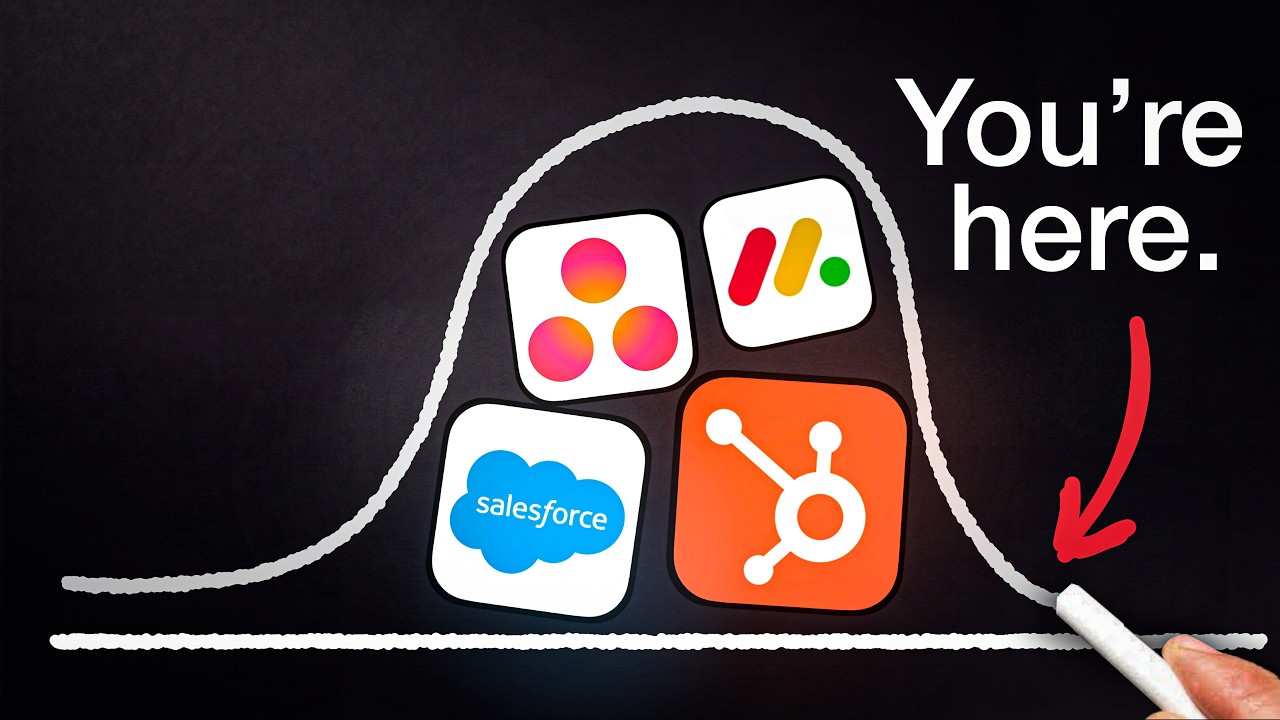
Let's look at it from the perspective of the software buyer. Their job has gotten really, really hard because one, the first thing is, is their, their, their environment is hyper complex as well. So the average company back in just 2015 had eight applications in scope for, you know, servicing their customers.
Right.
Today that averages 443 applications in their organization.
Right.
So inherently their environment is hyper complex. If I change something over here, what breaks over there, really hard to understand. So, so, you know, let's, let's, let's, let's think about the world from that perspective. When I'm trying to figure out how to solve the problems I have and then I'm trying to tackle inherently that's hyper complex to begin with.
Right.
Your buyer is stressed. Yeah, let's compound that, you know, A little bit more in 2021. So just three years ago, four years ago, three or four years ago, there were 25,000 SaaS software providers providing solutions in the world. Today there's more than 175,000 SaaS software providers providing solutions in the world. So there's been an exponential increase in the potential options that a buyer could has to understand to solve the problems they're trying to solve in their business. So that's challenging right now. There's too many options, right. How do I differentiate and how do I know one solution is the right thing while another one that sounds exactly the same is not the right fit for me? So the buyer is facing all this complexity and the historic ways that we used to reach out to these buyers were through digital marketing.
Right?
So you have your marketing team all trying to get ads and, and touches and content in front of and thought leadership in front of these potential buyers.
Right?
But that's from the standpoint that strategy started when There were less than 25000 companies in the market, right. When in your category there was probably only three or four players that had a sophisticated approach to marketing. Now you got to expect there's 20, 30 players that have a sophisticated approach to market approach to marketing in every software category. So the, so the, the, it's really hard to get people's attention through digital marketing. On top of that, we've built a go to market stack of sales automation tools, right. That increase the number, make it your ability to scale cadences, outreach cadences and email and LinkedIn and you know, any other phone calls. We've got automation that we've added into that stack, we've added AI into that stack to hyper personalize and to hyper scale.
Right.
All this has done is filled inbox. So these same buyers that are now already stressed who five, six years ago got five emails a week from vendors now are getting 500 emails a week.
Right?
It's a horrible way for them to learn about the world. It's a horrible way for them to learn about new technology. It's, it's too noisy and it's not necessarily relevant to the problems they're actually trying to solve.
Well, and like you, I get a lot of these emails throughout the week. I just, you know, I actually open and read some of them because I am interested in how people approach us and I never see one that's compelling. I don't know that you've ever even answered one of these. Certainly the buyers typically, you know that you're trying to Sell to, you know, they don't either. And obviously there are now tools to block those even more so than there ever been. So if they even get through, through into the inbox of a buyer, which chances are they're not, you know, they're being ignored, they're being deleted, you're getting blocked. So that old school marketing, you know, outreach concept to me is a great example of, you know, how the current tools are actually hurting this process, not helping it.
Yeah, the current scale, I mean the solutions have resulted. Instead of a smarter way to attack the problem, they've, they've, they've gone into scaling the way to attack the problem.
Right, you're right.
Which, which, you know, so for me in my engineering, you know, mindset as a CRO and a revenue leader, I'm like, how do I engineer a different approach?
Right.
How do I engineer a different approach that can enable me to get high quality pipeline that's a perfect fit for my solution with the intent for somebody to buy? That's why can I, can I engineer that? And that's when my brain started.
Well, this was the thing that really piqued my interest because you know, there's all these new AI tools are beginning to serve as an AI bdr, AI based cadences and things like that. And AI of course is a buzzword like no other we've seen. I've seen them all it seems like, you know, so I'm very excited about what you're doing this year. So please, like for the sake of the audience, elaborate on that one.
Yeah, sure. So I mean what we've done is we've gone built technology that goes to help the software buyer. So we've created an AI agent that helps them understand their problem in hyper detail, understand the stakeholders within their organization and outside of their organization. They need to, they need to collaborate with, to really understand what the right solution is for complex problems that they can solve with software and technology. We then help them automatically identify what that means as far as requirements are concerned.
Right.
So we're helping this buyer prepare for, collaborate within their team, get approvals, understand what's really needed, focusing on what that problem is and the needed solution. So that's what we're doing first. And this AI tool set, this AI agent for solutioning, you know, gives, you know, creates a lot of context about what problem they're trying to solve, who, who's involved with that project, you know, what those specific requirements are. And dynamically then I can say, and here are the experts in the marketplace that you should meet that you don't know of yet. Because we want to make sure that we're also giving the opportunity to get out of their current bias. As a buyer, I only know what I know. I don't know what I don't know yet. And part of the buying journey is uncovering the stuff that's hyper relevant that they need to know about.
Right.
So those are experts in the marketplace. It's also vendors in the marketplace that are a perfect fit for that project based upon the product project context.
Right.
So we're surfacing in front of these buyers, the experts and the vendors that they need to know, Right. And on the flip side, this creates momentum for, for them to start collaborating with those experts and solution providers in the marketplace. All they say is, yeah, I want to meet these people. And then boom, we pop these leads that are super high quality, perfect fit, right in front of sales reps that are in those particular account companies that would love to sell into this opportunity. We pop it right in front of them. Those reps can accept or decline meeting with these, with these people. Obviously, sales reps really typically want to meet these types of opportunities. So they're usually really strong, powerful fits and we surface them right in LinkedIn. So it's really simple, right in the workflow of a sales rep for them to grab these leads and start moving into real sales cycles that they can close at a much higher win rate than they can in anything else coming through the marketing stack that's just less qualified. This is hyper. So they should win it. 50% win rate, 60% win rates.
Gotcha. And that was one of the coolest things I remember hearing about, was that this isn't just another piece of technology that needs to be, you know, stood up and integrated and a lot of training around it. It's really a plugin to LinkedIn. Just briefly, what does it take a new customer on board and what does that journey look like?
Sure. So our companies that want to sell into the buyers, right, all it takes for them to onboard, they tell us who their sales reps are, we load them into our platform, you tell us who their target accounts are or your target account profile is, we load that into our platform. You tell us what your value proposition is in as much detail as you can, because our AI engine behind the scenes is going to be leveraging that context to help you match. So the combination of who your business is, the people on your team, your intention of who you think would be the best customers for yourself, and the context of why you should be the right solution for certain problems. That's what our AI engine in the background is working to create those matches and then surface those connections.
Super cool. Thank you for sharing that.
Your sales reps literally just sit there and during the course of the day when you they're in LinkedIn, they'll get a popup in front of them that says, do you want to match with these, with this, with this particular company?
That's awesome. No, this has been great. Thank you. I think in the spirit of keeping this short, let's kind of wrap it up right now. I think what we might want to do and I'll talk with you about this, following this call here, maybe have a follow on podcast type interview and talk a little bit more and show a little bit more about the product. I want to be, you know, be true to form with respect to keeping this one know, pretty high and tight. And I think you did a great job of that. So many thanks for, for the, for the time today. This has been, this has been great. Thank you.
I appreciate it. Thank you very much.