The First Agentic Enterprise Planning OS (Walkthrough)
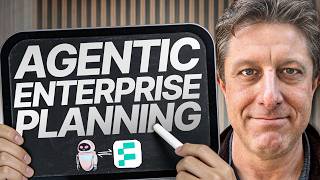
Marc Chabot demos Force Equals, an AI planning system that connects strategy to execution. It surfaces go/no-go signals on projects, auto-generates reports and code specs, and pushes them to tools like Jira or Claude with one click. Enterprises currently see 95% AI deployment failure rates due to siloed planning.
Chapters
The goal that we hear enterprise organizations, they're trying to get to this agentic-enabled enterprise where the dynamic application of strategy, prioritization, planning, project execution, operational results, traceability, accountability flow in this flywheel around the organization in a single system where they're all connected. The core question CEOs are trying to get to, it used to be, what is our plan? Instead, it's now become, is the enterprise built built for change. Right now, the enterprises are typically completely blocked by delivering this type of infrastructure. There's no system that connects from strategy all the way through execution operations. And that creates a lot of difficulty for the organization. The lack of connected processes, manual tools in strategy, portfolio prioritization, and project planning. The, the The tooling that is in place for execution, solutions like Jira, Monday, Claude, they are great at helping you execute fast, manage execution of projects, but they don't solve for the strategy through planning. So is what you're building what the enterprise actually needs? Still left open. The negative impacts are wrong projects get prioritized, poor planning, lack of alignment and coordination across the organization. Execution fails because of the planning deficiencies. Rework is required, a failure to scale is a common issue, and the slow pace of operational impact, just being unable to get solutions into operations and delivering results fast enough. And this is a real problem because companies have more projects than ever before on their plate. So in the next 3 to 5 years, an enterprise organization, they're going to deploy, you know, 500 to 2,000 agents across their organization in every business unit, every line of business, every workflow. They're going to need to be able to process and deploy hundreds to thousands of projects annually to get to that state and to stay there. And AI is creating a complexity that enterprises have never had to address previously when planning projects. And as a result, enterprises are struggling. 95% of AI deployments have failed to scale. 85% of projects that fail, fail to the lack of the right people on the project. 50% of projects are getting to execution with the wrong requirements. And it's a huge cost for the business. It's Primarily because most of this process is disconnected and manual, and that can't scale. Most of the coordination is done in meetings and in manual documentation and templates. The result is stakeholders are misaligned and there's lack of accountability and traceability to how decisions were made along the process. That's why at FourSquares we built the first Agentic Enterprise Planning operating system to attack and unblock this workflow at the enterprise. And what we do is we connect signals from operations into your strategy. We give you a place to express strategy inclusive of dynamic inputs from your operation systems and external sources, market impacts, helping you prioritize the right ideas, gaining momentum for the right project so that you can get fast to alignment with high-quality planning, and then hand those projects when they're ready and you have high confidence that execution will be successful hand them into the execution workflows so that you can drive more of this change into your operations and continuously connect on this flywheel to improve your business, making it ready for change. The entire system is built on a native Agentic AI infrastructure. So it's modern, it pushes the humans to get work done faster. It's modern in its approach. It helps drive the dynamicism of the business. Mm-hmm. Into prioritization so you gain momentum for the right projects, but also remove momentum from the projects that aren't going to deliver the impact. Getting you to faster alignment, higher levels of collaboration, uncovering risk early so that you can address it, consistent governance and guardrails applied to every potential project, especially the AI projects you're trying to get into operations, and radical traceability and accountability to decisions. The system is AI at nature. It learns what's working and learns about your enterprise so that it can always be more efficient and help you improve faster. The benefits are, you know, efficiency, quality of decisions, better decisions, projects impacting your operational results faster by ensuring you get the right projects through execution and deployed. This enables you to plan and deploy and operationalize your business at the pace you need to to become a fully agentic AI organization. Yeah. Across your operations structure and prepared for future change. None of these systems are set it and forget it. And we're preparing you for that environment. I'm going to jump out of here now and move to the product and show you how this works in a real live environment. So welcome to Force Equals. This is our enterprise planning operating system. The first thing I'm going to do is show you how you express the strategy for your organization or subgroups of your organization. In the platform. This, you click here at Strategic Brief, you start to put in information about your company, who they are, how you make decisions within this business unit, the urgency and risk at different stages of your business, as well as the ability to upload any strategy documents or sources from across your organization. So it could be dynamic feeds, it could be documentations that express your strategy, goals, OKRs, et cetera. We'll suck those right in here and help to better understand what drives the strategy in your business. The next thing is I'm looking at the project portfolio. So the project portfolio are all of the ideas that have been submitted into the portfolio of potential projects. The system takes a look at them. Our AI applies the strategy so that we can help you identify which are the ones that are clearly in alignment with your— Strategy. Business strategy, which of these sub-projects are aligned, which ones we're recommending you put more weight into, move them towards execution. We're also quickly looking at seeing which ones have potential, need to be sequenced in because of dependencies in other projects. Other projects that we're recommending keep working on. We don't have enough context to have high expectations of success at this point, but we see that there is potential alignment to your strategy. And while on the other end of the spectrum, We've got projects that, you know, should be eliminated. They should be clear no-gos. And we're going to provide you those go/no-go signals across this portfolio. Now, this is a dynamic, you know, portfolio management system. We allow you to very quickly add widgets that, you know, to help you track against different KPIs either at the portfolio level or attainment of reaching goals where you can quickly look at which projects may be overlapped. We can dig into those overlap projects and ask questions around how we could eliminate the overlap or which project should we combine this with so that we can unify the effort for a particular project. The system, very responsive. I can define any AI filters so I can quickly look at this with intelligence in a way that makes sense to me and my business unit and drive momentum again towards the projects that are ready to advance, ready to move forward, and are gaining momentum across my team and alignment across my team. So again, the whole High level here is to provide this full portfolio management of the potential ideas in related to your business and business unit. The next thing I'll look at is here for any project you can drill into it. So the solution drives you right into the dashboard, which gives you a high-level overview of what the project is. I can quickly gain context by viewing an executive summary. This is an AI-generated executive summary of this particular project. It dynamically changes based upon the context. As it changes in the project. Back to the dashboard, I can also see progress, anticipated completion dates, any specific work or questions that the system requires me to address that are in my queue. It looks at the different dimensions at which this project was planned. So the areas where we went deep, depending upon this project's specific scope and context, where do we need to evaluate and investigate so that we make, we have full context to make the right decisions? And align the right team members. So this project, we looked at, you know, 14 or 15 different dimensions of planning. The planning infrastructure is dynamic. It will evolve, adapt to any specific concepts that are important to your business or identify in real time. The AI system, AI agents will give recommendations on specific areas specific to this context that require deep definition and understanding. AI projects specifically will have dimensions specific to implementing, deploying guardrails. Mm-hmm. And implementing signals capture from those deployments so that you can capture those signals in a dynamic nature. The system's gotta look at the, how work's been assigned across the project. So which questions are still outstanding for different, that are assigned to different folks that need to be answered. And then as goals are defined for this project and agreed on, we track those goals, the solutions that will be deployed to deliver those particular goals, and the specific technical, functional, and operational requirements that flow up to deliver those specific projects and results, including the approval flows, who signed off on what, etc. So this is the dashboard overview. The system is also going to help you manage the stakeholder mapping and alignment across your organization. It's also going to automatically identify key roles or individuals the system believes need to be involved with this project for you to have full alignment and to close any gaps in context or resolve any questions or approvals that are required to deliver this particular project. Context Explorer is where the system goes deep in its ability to explore all the different dimensions of a project, including its ability to look at the unique context of a particular project and suggest areas where we should investigate and define, you know, specific— Yeah. Avenues of investigation. And this one, it's saying, hey, let's lean into change management across the organization. Let's go deep on the integration data governance 'cause this project has some unique integrations that are important. So the system will dynamically address those. We capture goals, the associated solutions to those goals, as I said before, any specific project functional, technical, operational requirements driving to any approvals that are required to be captured in assignments. Remembering who was involved in these decisions so that we've got full context for future insight. The system automatically maintains all the reports and presentation assets that you might need to present and communicate the solution across your organization. This, you can add any templates, you can chat with our AI reporting engine to drive and create any types of presentations you, you find are important for your business. The system creates them, and then maintains them dynamically as things change in the project. The solution also will, when the project's ready to be executed, it develops prototype exportables. What is this? This enables you to have all of the development resources, user persona cards, job stories, component map, user flow diagrams, wireframe prompts, style tokens, tech stack specs, systems prompt for AI builders. All of this is automatically generated. So with one click, you can upload them to Cursor, Claude, et cetera, any of the dev workflow engines and tools so that all of the context, all of the decisions, all of the requirements flow into those systems so that you can immediately start with a fully developed prototype. You can also with one click put them into Jira, Asana, monday.com, any of the workflow management systems that your team may be leveraging. To manage the execution work streams. And then obviously any parts of the project that need to be procured in the market, we are telling you which solutions potentially match and giving your, with one click, exporting that information to your procurement workflows so they can actually execute RFPs, et cetera, and know who are the potential vendors that they may want to source from. That's what we do in the platform at a high level. Again, the goal is to provide agility for an enterprise so that they can track projects from idea all the way through execution and delivering results. The last thing I'll show you is, you know, we need to make it easy and democratize the ability to get the good ideas. Once you have a system for managing ideas and a portfolio at scale, now you can say to your team, to your leaders, to the line of business, just prompt in your ideas so that we can quickly understand whether or not they're important to our strategy. We can understand how to prioritize them and figure out which ones make the cut. Do this in a consistent way across all the idea capture. And you do it just by chatting in here, adding projects, and assist your team by helping them quickly get the context that any idea or project needs so that we can start to make decisions and decide whether or not it gets support and momentum in your portfolio against all the other projects. with the resource budget, et cetera, constraints that you have that you're defining in your strategy. Anyway, that's a very high level of Force Equals. Love to get into it deeper with anyone. We typically, in a lot of enterprise deployments, we'll start with a pilot deployment, get this system set up for your project management organization or your strategy team so that they can start managing this end-to-end process of adding agility and change into your business. We'll stand up those pilots and then you can justify based upon the success The efficiency that the system's providing your team as well as the increased impact of projects going successfully operational and the results they're delivering. That's how teams are typically justifying the solution. And again, we're helping you tee up these AI environments that you're going to be rolling out to every business unit, every line of business across all the different types of projects that you might need, managing that complexity, ensuring that you have high-quality plans that you can execute with high confidence, get the results you need. That's what we're doing. Thanks a lot for your time. Thank you.







