Will AI Replace PMO Teams? (Here’s the Truth…)
Marc Chabot argues AI will automate PMO manual work like task tracking and status reporting, not replace project managers. Three things AI cannot do: make judgment calls, define ethics, or hold people accountable. At the highest maturity level, PMO work shifts from coordination to setting intent and supervising outcomes.
Chapters
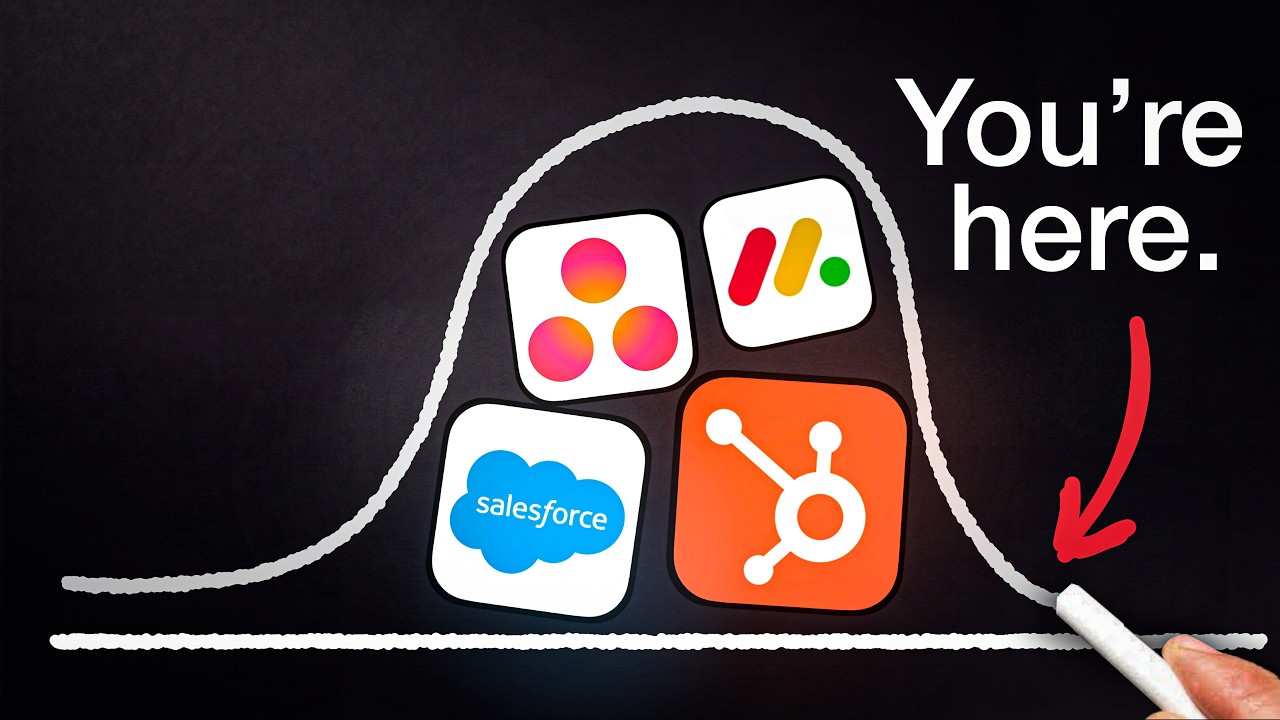
AI will not replace project managers. It will replace manual planning. And if you work in a PMO right now, that distinction is the most important thing you need to understand this year. Because here's what's actually happening. The role of the PMO is going through the biggest shift I've seen in my 20+ years working in enterprise planning. The PMOs that move on this are going to run the most important planning functions in their companies. But the ones that don't are simply going to be left behind. So in this video, I'm going to break down exactly exactly what AI is replacing inside the PMO, how the role is evolving, and what PMO leaders need to do right now to stay ahead of this shift. Let's get into it. What PMOs actually spend their time doing today. Before I talk about AI replacing anything, let's be honest about what PMO teams actually spend their time doing. Most PMOs today are stuck in what I call activity theater. Task tracking, status reporting, chasing updates, sitting through meetings, coordinating handoffs, managing documents. That's what the more majority of the hours go to. And here's the problem. None of that's what makes a PMO valuable. The real value of a PMO is supposed to be strategic. Making sure the right initiatives get prioritized. Making sure the organization is working on things that align to strategy. Making sure that when something moves to execution, it's actually ready. But most PMOs never get to operate at that level because they're drowning coordination work. And that coordination work is insanely complex. Enterprise planning spans strategy, finance, product, IT, legal, procurement, delivery, operations. There's just a lot going on. Each function owns part of the plan, uses a different language, and optimizes for their own local outcomes. Stakeholders enter and exit continuously. Information is distributive and partial. Context gets lost between different phases. And because of this, no single human can hold it all together. It's it's just inherently too complex. This is why planning breaks down. Not because people fail, but because the systems don't scale. And when planning breaks down, what happens? Delays, rework, budget overruns, scope creep, burned-out teams. But the thing is, these are just the symptoms. The root causes are almost always upstream in the planning. And the PMO gets blamed for execution failures that were actually planning failures. That's the position most project management organizations are in right now. And it's exactly why this AI shift matters so much. How AI is changing everything. Let's start with what AI can never replace, because that's probably why you clicked on the video. There are 3 main things that humans are still in charge of: judgment, ethics, and accountability. Now, those aren't buzzwords. Let me explain what I mean. Even when an agentic system is running your planning process, someone still has to do the hard stuff. Defining what success actually looks like for the organization, not just the project. Making the call on trade-offs when two valid priorities compete with each other. Deciding who has authority over what and when to override the system. Holding people accountable for outcomes, not just activity. Bringing the empathy and organizational context that no AI system can see. Those decisions require experience, political awareness, and human judgment. AI doesn't have that and it won't have that. What AI does replace in the manual orchestration that's been eating your time. I covered the GenAI versus a GenAI distinction in detail in another video on my channel that you can go watch. But the short version is this: most organizations are using AI to speed up tasks, drafting requirements faster, summarizing documents. That's GenAI. It's helpful, but the burden of running the process still sits entirely on you. Agentic AI is different. It runs the process. It maintains context across stakeholders. It identifies gaps. It asks follow-up questions. It produces execution-ready outputs. That's the part that changes the PMO. Now, implementing implement AI in your planning team will depend on one thing: the maturity of your project management organization. This is where I overview a PMO maturity model because not every PMO is in the same place. At Level 1, you've got the manual PMO. Everything is document-driven, static plans, manual handoffs. PMOs spend most of their time coordinating, updating, and chasing people. This is still where a lot of organizations are today. Level 2 is the digitized PMO. You've got templates and tools. Maybe you're using Monday, Asana, Jira, for some of this. Efficiency improves, but planning quality doesn't really change. You're just doing the same broken process with better tools. Level 3 is where GenAI comes in. GenAI-assisted PMO. AI helps create artifacts, drafts become faster, summaries are quicker, but humans are still translating plans into execution. Still, you're encountering missing stakeholders. Still resolving gaps manually. Planning's faster, but still fragmented. And human dependent. And then there's a gap, a big one. I call it the maturity gap. This is where most organizations get stuck. They've adopted GenAI. They feel like they're AI-enabled, but they're not. AI is assisting tasks, not owning outcomes. There's no autonomy, no memory across initiatives, no execution ownership. And that gap is an order of magnitude limitation, not just a small step. Level 4 is where things fundamentally change. The agentic AI PMO. AI runs the planning process. Not just pieces of it, the process itself. Planning becomes continuous, adaptive, and scalable. Execution readiness is built into the system by design, not bolted on at the end. And Level 5, the target state, is the orchestrated PMO. Planning operates as an intelligent system. Seamless handoff to execution. Multi-agent orchestration across business, technical, operation, financial, and compliance dimensions. And the PMO shifts to governance, outcomes, and decision leadership. So what does the PMO actually do at level 4 and 5? Not less work, it's different work. And honestly, it's harder work, but way more valuable. You go from tracking tasks to setting intent. Instead of managing a checklist, you're defining desired outcomes, constraints, boundaries, and success criteria for the planning system. Think of it like this: if you give an agentic system a clear goal with clear boundaries, it works fast and well. If you give it vague goals with no constraints, it goes sideways. Setting that intent well is a skill, and it's the PMO's job. You go from running status meetings to supervising outcomes. You're not asking what got done this week. You're reviewing whether the system is moving towards the right outcomes. You're challenging assumptions, looking at decision points, asking whether the evidence supports the direction. Let the systems run until you see the signals that something needs to change. You go from managing handoffs to designing governance. Who has approval authority? What are the gates? When does a human need to step in versus when can the system proceed autonomously? The core PMO work becomes orchestrating creating these governance models, assigning roles, controlling permissions, and it's work that nobody else in the organization is positioned to do. Now I wanna be honest here, the shift's uncomfortable. When work starts happening without you touching it, the first instinct is going to be that your job, it just got smaller. That feeling's normal, but it's wrong. Your control isn't shrinking, it's moving upstream. You're setting the conditions for the system to work well instead of doing the work yourself. And that's a much more powerful position to be in. Now, if you wanna see what Level 4 or 5 planning actually feels like, try running one initiative through our software, Force Equals. You can click the first link in the description. It's free to start, and it's the exact tool leading enterprises use to adopt AI in their plan. But back to the video. What PMO leaders should do right now. If you're leading a PMO or you're a project manager thinking about where this is heading, here's what I'd focus on. First, figure out where you are on the maturity Be honest about it. Most organizations are somewhere between level 2 and 3. That's fine. But you need to know your starting point before you can plan the shift. And more importantly, you need to recognize that the gap between level 3 and level 4 is not incremental. It's a structural change in how your team operates. Second, start training your team on setting intent and supervising outcomes, not just new tools. How do you define clear goals for an agentic system? How do you set boundaries that are tight enough to be useful but flexible enough for the system to operate? How do you review AI-generated outputs and challenge them with the right questions? Those are the skills that matter now, and most PMO teams haven't been trained on any of them. Third, start thinking about planning as a system, not a phase. The old mindset is planning is documentation. The new mindset is planning is an intelligent system. When you make that shift, everything changes because you're not filling in templates anymore. You're orchestrating a process that spans from strategy all the way through to execution readiness. Think of it as planning starts in an immature state and moves to a mature state, ready to execute. Now, if you want to see what this looks like in practice, how a planning system actually handles stakeholder coordination, requirements generation, and execution handoff with AI agents running the process, you can try FourSquels for free by clicking the first link in the description. We built FourSquels specifically for this enterprise planning end-to-end with multi-agent AI doing the heavy lifting so PMO teams can focus on what actually matters. Again, the link's in the description, and if you want to see a full breakdown of how to use AI in enterprise planning, then watch this video next.