How Billionaires Think And Create Innovative Solutions And How You Can Make More Money Using This
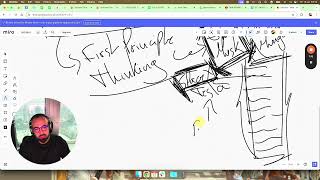
Marcel Fernandes breaks down how billionaires solve problems: define it precisely, use mental models like First-Principles thinking, do a brain dump of what you know, study the gap, write and refine your plan, then execute and iterate. He shows the framework through his online business helping students book calls, arguing that making money is just solving a problem and capturing the value you create.
Chapters
This is how billionaires think and create innovative and simple solutions to complex problems and make billions of dollars because of that, and how you can use it in your life if you want to make more money. Okay, so this video is for you if you work a 9-to-5 and you want to make more money in your job, get a promotion, get a raise, you want to impress your boss with this. If you learn this framework and you apply it in your job, your boss is going to be so impressed and you, you're you are definitely going to get a promotion or a raise because you're going to generate more value to the company, and that's what makes the company pay you more money, right? So, um, so this is for you if you work a 9-to-5, or also if you own your own business and you want to make more money in your business, because once you learn how to solve more problems, you make more money. Because the, because the way, right, you make money literally is solving problems. And so If you solve more problems, you make more money. And so let's get to the video. I recorded this video originally because an employee of mine asked a question and I decided to record a video to answer the question and I decided to post it on YouTube. So, alright, so somebody from my team just asked me a very good question and I decided to shoot a video to answer it. So I can really give a good answer and go in depth, um, in this answer, because I think this is a very, very good question, and you're going to understand why in a couple seconds. Okay, so the question he asked me is, how do I study? He said, how do I study, and how do I study lots of content fast and retain knowledge? Okay, now in order to answer this question, I'm going to explain some other things, right? Because the reason that he's asking me how I study is because he's trying to solve a big problem that I asked him to solve, okay? And so In order to solve this problem, he needs to study a lot, different solutions, research and development, right? Figure out how to, how to solve this problem. Now, unless the problem is very simple, right? And you already know instinctually, oh yeah, that's super simple. I do that all the time. Here's how you solve it. 99% of the times, if you have really complex problems, you're going to have to study a lot in order to solve that problem, right? And so this is a very good question that he asked, "How do I study?" And the reason he asked it is because I gave him a problem to solve, okay? And so let's go over this. So the first thing that we need to talk about to be able to answer this question, "How to study?" The first thing that we need to ask ourselves, the first thing that we need to do is This is the first and foremost thing. Define. First of all, we need to define the problem. Well, what do you mean, Marcel? What do you mean define? Yeah, literally define in words clearly and precisely exactly what you are trying to solve. What problem are you trying to solve? And why do we start with definition? Well, one of the smartest geniuses in the world, right, Albert Einstein, he said that 90% of a problem is defining it. And then after you define it, it's like super quick to solve it. Like it's just 10%. Oh yeah, I figured it out now. This is what I need to do, right? The hardest thing is defining the problem. And this is where most people go wrong because they have a general idea in their mind of what they're trying to do and what they're trying to solve. Like a general idea, yeah, I need to do this, but it's not really defined. And so when you get very clear on what is exactly what you are trying to solve, like Albert Einstein says, 90% of the of the solution is just defining the problem, right? Then you can figure out the solution more easily, okay? And so the first thing ever is defining the problem. So let me go over some— let me go over a mental model. I want to share in this video with you, um, some of my mental models to explain how I think, how my brain works, how I think, and how I think through problems to find unique and simple solutions to complex problems, okay? So let me give you some— let me give you a very powerful mental model. First of all, what is a mental model? It's a way that you view the world in order to navigate through complex problems. And so one of, one of the mental models that I most use is called First Principle Thinking. And this is something that some Some, you know, uh, might know this guy, right? He's not very smart, I would say. Just kidding, obviously he's a genius, um, has a 180 IQ, absolutely ridiculous. So this guy is a super genius, right? And he uses first principle thinking to solve his problems, right? And when I want to learn something, I usually go to the people that are the best at what I want to learn. And so if you want to learn how to make money, for example, you go to the top 10 people and learn from them how they made money. If you want to learn how to solve a problem, you go from the best guy in solving that problem and solve that. And so if I want to learn mental models, I go to the best people in the world that have the best mental models and that have a proven track record, right? Because it's not just cool in theory, it has to be useful in practice, right? Because you can give a bunch of fancy mental models here, but they don't, they don't solve any problems. They don't have any use for society, right? But Elon has actually proved that his mental models of first principle thinking works because everybody said that SpaceX and Tesla weren't going to work. But, you know, through the power of his mental models and his audacity and his knowledge, right, he was able to solve these extremely complex problems that everybody was saying that he could never solve, ever. And so, so like, I learned a lot of mental models from Elon Musk. Charlie Munger is another guy. Charlie Munger, he was Warren Buffett's business partner, passed away a couple, a couple years ago. So anyways, what is first principle thinking? First principle thinking is breaking down your problem into the most fundamental elements of it and then trying to solve it, right? So in the case of you know, SpaceX. Everybody was saying that he couldn't build a rocket that can be reusable. And so because it was, you know, rockets are too expensive, whatever, whatever. And so what he— what he did is he broke down literally the elements of how do you build a rocket, okay? You need titanium, you need steel, you need, you need combustion, you need this, you need that. And then he figured out, okay, can we improve upon this that we have, right? He broke it down to the most fundamental elements and then he solved the problem. Same thing with Tesla. The problem was batteries. Can't have good batteries, you don't have good range. And then he broke it down to the fundamental elements of batteries and he fixed the problem. And so And so in order to— okay, we're going to answer this, okay? So don't worry. So in order to fix your— find a solution to your problem, okay? So first of all, let's define what we are trying to fix, okay? First of all, number 1, define, okay? So what's the problem that we are exactly trying to solve? So in this case, I asked him to to solve a very specific problem, right? But, but I'm not going to get in the details of the business, but I'm going to give a general idea of what I was asking him to solve. So the problem that we are trying to solve is the following: we want to create the easiest business model so that anyone, anyone can make a couple extra thousand dollars a month. Okay, so this is the problem we're trying to solve, right? And this is what we solve in my business, right? I teach people what I think is the easiest business model that Anyone can make an extra couple thousand dollars a month. Now notice I'm not, you know, these gurus that say you're gonna make $10,000 a month, whatever. I'm saying you can make a couple extra thousand dollars a month, which for most people, this is already— for 95% of the world, an extra couple thousand dollars a month is life-changing. And do I believe anyone can do this? Well, that's the problem we're trying to solve. Like anyone that executes and does the thing can do it. But the problem is not to go on a tangent here, but you know, uh, and this is real data. 10% of people that buy online courses finish the course. So 90% don't even watch it. And so The problem we're trying to solve is create the easiest business model so that anyone that executes it, that actually goes through the whole program and does what they're supposed to do, executes on the program, can make it. So anyone that does that can make it. If you don't do that, you can't, right? So, okay, um, so here's the problem defined, okay? Create the easiest business model so that anyone can make $1,000 to $2,000 a month. Um, uh, yeah, $1,000 to $2,000 a month. And so now that we've defined, now let's use first principle thinking to break it down and define it even further. Okay, so, so what do I mean about that? Okay, so this is what we do. So this is the problem, and how do we break it down to the fundamental elements of this problem? So we need to define all the terms here. Okay, so What do you mean by create? What do you mean by easy? What do you mean by business model? What do you mean by anyone? One second, somebody's at my doorbell. Okay, I'm back. So what's anyone? What's make? They might say, Marcel, this is crazy. I mean, this is obvious. Like, it's obvious. Create easiest business model so that anyone can make a couple extra thousand dollars a month. No, it's not obvious. That's why we need to break it down, because it's only when you break it down that you can find out— you can finish the definition. Because in order to define it exactly, you need to define what you're actually saying. Right? And I already found a flaw here and how to improve our definition, right? This word "make." What does "make" mean, okay? So definition of "make," okay? Form something by putting parts together or combining substances. Make money, maybe? To earn. Yeah, this is where I wanted to get at. Earn. Okay, so this is a better definition than make. Okay, earn. To earn. And what does earn imply? It implies you deserve it. Well, why would somebody deserve to make money? What— why would somebody deserve to make money. Well, why do— why does McDonald's deserve to get paid $10 whenever you buy a Big Mac from them? Why do they deserve to get paid that? Because they're giving you something in return for your $10, right? And so why are they gonna deserve to get paid anything because they're gonna give something in return, right? And that's in business terms also known as value, right? You're giving value to somebody and in turn, in business it's called capturing value, which is getting paid, right? You're capturing that value and you're getting paid, right? You've generated value and you're capturing it. And so, anyways, we define the problem exactly, defining each term of what we want to solve, and then we have the problem defined and broken down into its fundamental elements, okay? And so, why did I say all this? Why did I explain all this before saying, "How do I study?" Because the reason he asked, "How does he study?" is because he wanted to solve a problem. Just using this mental model and this quick framework that I shared with you, you'll find it so much easier to figure out the solution of what you're trying to solve, right? Of the problem you're trying to solve. And so, um, the reason I started with this and not directly how I study is because this is the first thing that you have to do. Because if you don't have this first, you won't really know exactly what you need to study. Okay? Then you'll be kind of lost. You're just going to be watching a couple videos here and there. You're just going to be reading some books. You're going to be doing— studying random things. And we don't want to study randomness. I mean, sometimes, and that can be a whole other video, randomness is good, right? Sometimes you're so inside the business and your mind is so focused on tunnel vision on one thing, like those horses that are tunnel vision, right? And you can't see the bigger picture. And then you, if you just pick up a random book and open at a random page, like not even, not even about the topic that you're trying to solve, just literally random book, open at a page. Sometimes you get ideas and inspiration from that that'll help you solve your problem that you're so tunnel, tunnel visioned for. But anyways, this is, you know, another subject, not for right now. So, okay, so now that you've defined the problem, you know exactly, exactly what you need to study, okay? You know exactly what you need to study in order to solve this problem, okay? And so Now that you know this, okay, now that you know this, now that you have all this knowledge, okay, the next thing, okay, you figured this out, okay, this is one thing, problem definition. So definition is this whole thing, okay? You did this. Now what's the next thing that you need to do? You need to actually study in order— you need to figure out how to solve that problem, right? And best way to do that is to, you know, study, get ideas from other people, read books. And so first thing you need to do before studying is is assess your knowledge. And what does that mean? I like to do, uh, what I call a brain dump. Okay, brain dump is basically where you open a blank notepad. It could be a physical notepad, it could be just notes on the on your iPhone or whatever, right? And then you just start— you, you write down the problem that you're trying to solve, right, that we defined in the last step. And then you just let your brain go wild and just literally type down anything that comes to your mind. It could be the— it could be the most stupidest idea ever. Right? And by the way, there are no stupid ideas because stupid people don't come up with ideas. You know, sometimes we are so trapped inside this box, right? That's why, that's why there's the phrase "think outside the box," because this box is a metaphorical box, right, with all your ingrained beliefs, with all your ingrained constraints, with all your subconscious axioms and things that you believe to be true. And you might think, "Oh no, this idea is stupid," right? Belief. You might think, "This won't work." It's belief. You know, your philosophy. And most of this is unconscious. So you don't even know that these beliefs are hindering your ability to think of new solutions, innovative solutions to complex problems, right? So that's why when you think out of this philosophical, this metaphorical box, then your ideas can flow, right? In all directions, your ideas can flow. You have no constraints. You don't think about, oh, this could be wrong. This probably won't work. No, this, I'm for sure it's impossible. You can go wherever you want because your brain isn't constrained by a box anymore, right? So that's what the phrase think outside the box is so randomly tossed nowadays, and people don't actually realize the true deep meaning behind the phrase think outside the box, okay? So first of all, assess your knowledge. Do a brain dump. Just literally write anything that comes to mind. There's no stupid ideas. There's no stupid ideas. There's no constraints. Think outside the box. Let your mind go crazy. Just think of all possible solutions to this problem, right? And once you have this you have a basic outline of what you think can be a solution, then what do you do? Then you go to studying, okay? And now, before I go here, okay, because— well, it's not the least important part. Well, okay, I'm gonna come right back to here, okay? Let me, let me say another thing about this, okay? Because we can go— let me, let me fix something here. Okay, so I want to come back here real quick because I just remembered of another very important technique to define the problem, and then you're gonna basically already have the solution laid out in front of you. Like Albert Einstein said, right? 90% of solving a problem is defining it. So Okay, let me, let me give you the more— so, so let me— yeah, let me give you the actual problem that we're trying to solve in our business, okay? The actual problem that we're trying to solve is the following, right? Like in a macro view, right? Improve the program. We're trying to improve our program. And what does improve our program mean? It means that 100% of people that execute— execute get results. Now of course this is impossible because, you know, most people don't even do what they need to do. You know, business is hard. Most people don't get results from any online courses. Like we said, you know, 10% of people only complete the course, right? Let alone execute on what they need to do to make money. But anyways, the North Star, the North Star The thing that we have to look towards in order to make all our decisions in order to improve the program is 100% of people that execute get results, right? Not 100% of people that join the program. 100% of people that go through the lessons and execute everything. Okay, so this is our North Star, the thing that we look at to— in order to guide our decisions. And by the way, this is another very cool mental model that I use in order to make decisions. It's the North Star, right? You have one thing that is the pinnacle of the thing you're trying to create or solve, and then that thing guides your decisions and actions, okay? But anyways, So this is the North Star, right? 100% of people that execute get results. And so in order to improve the program, that's pretty vague. Okay, so what do we need to improve exactly? Okay, so what do we need to improve exactly? Let's go layers deeper. Okay, so we need to improve customer experience. Okay, now how? Go deeper. We improve onboarding process, right? The moment a customer joins the program, we need to improve his onboarding process, right? Improve— we need to train our customer success managers in order to deliver better onboarding, speak to the client better, be smiling, be happy. Stick to the script, you know, improve the onboarding process. And so you start breaking this problem down into its fundamental elements, and then you easily figure out what you need to do next. Okay, so improve the onboarding process. Okay, how do you improve the onboarding process? Then you go one layer deeper. Okay, how to do this? One layer deeper. And then you get to the Solution. Okay. Okay. So customer experience onboarding process, um, uh, uh, uh, customer support, uh, uh, scripts, right? Because whenever somebody asks a question, we already have a copy and paste script to answer that question so we can answer people way faster. Right? Our goal is to answer people in up to 5 minutes and have 24/7 support, right? Because again, we need to— 100% of people that execute get results. And so the faster we can answer them, the faster the student can get results, right? And the more the student is motivated to continue and everything like that. Customer support is everything, right? So Customer experience, you break it down, break it down, break it down, you find what you need to do. Now, customer success rate. Okay, so here we need to figure out what are the biggest constraints. And this is another mental model, right? You see how You see how this works? Once you start gathering up several mental models in your mind, you start to automatically use this stuff in your life, in everything you do, right? And this is magical because you start using this without even thinking about it, right? That's why it's a mental model. It's the framework that you usually think in. And so this is why it's so powerful to develop new and better mental models, right? So this is another mental model, right? The, the theory of constraints, which is basically in every system there's one constraint that, that, um, makes the system lose tons of output. And if you fix that one constraint, you'll increase tenfold, example, the output of that system. And so. For example, if you have— for example, if you have a— this is a road, okay? And then there's two lanes, okay? They both go this way. And then down the road, the lane goes to one— the street goes to— the freeway goes to one lane. Right? Then it goes back to 2 lanes. Okay, now the cars are slowing down a bunch here, and it's making traffic, traffic jams and stuff like that. Now, in order to solve this problem— well, this is obviously obvious, right? But it's just an example. You would obviously say, right, just put 2 lanes here. Okay, but yeah, obviously, but to illustrate this, let's, let's see another solution. What if, what if we put another lane here? Okay, oh, so let's make 3 lanes. Okay, we got 3 lanes. Okay, that improves a little bit the flow here. Okay, because we now have 3 lanes. Perfect. Okay, very good. But it's still constrained here. And so, um, let's say that we want to improve the app. Okay, so we need to have a KPI. Okay, this is a key performance indicator. It's what you use to measure if what you're doing is actually producing results or not. Okay, so let's say that because of this one lane here, okay, because of this one lane, the— it actually looks like it's two lanes now that I think about it, right? Shit, actually looks like it's two lanes. No, there we go. Maybe here, something like that, right? I don't know how to draw. Freeways, whatever. So anyways, because of this one lane here, there's traffic jams and whatever. And so on rush hour, the average speed that cars go through here is 20 kilometers per hour, right? Or like fucking 10 miles or something, right? And what do we need to do to improve this track this traffic jam and make people get, get home faster and not have to spend hours a day in stuck in traffic, we need to improve this KPI, this average speed within this, uh, uh, stretch of road here, right? We need to improve this average speed from 20 km/h to the speed limit, which is 110 km/h. Okay, now what if we add a third, uh, lane here? Okay, so we just improved the— let's say we add a third lane and we've improved our KPI to 40 kilometers per hour. Okay, that's good, we doubled our KPI. They're going faster here, but they're still going slow here and it's still jamming up. Okay, so What if we don't do 3 lanes, we continue with 2 lanes, but instead of 1 lane here, we just build 1 more lane there? So there's not that, that, you know, that, that constraint. And so now we've improved our KPI from 40 to 110. Okay, we've got the average speed to our goal, right? And that's because we fixed the constraint of this problem. This was the constraint of this system. You could try to fix other things. You can put 10 lanes here, and that might increase a little bit, right? You can increase it to like 70, okay?, but you're spending so much energy here when it's much easier to just fix this constraint. And so that's basically in a nutshell the theory of constraints. Okay. And so what's the constraints in the customer success rate? Why aren't students, um, why aren't, uh, students getting results? What's their most constraint? Okay. So we figured out that, um, the, the biggest constraints of our students is Number 1, booked calls, right? So you see how we're going step by step deeper into this problem, okay? So the number 1 problem is booked calls, right? So students aren't able to book, to book calls. And when we, when we figured it out, it was because There was an error, okay? No, it wasn't an error. The script that they were using needed improvement, okay? So the script to book the call wasn't good. And so see how we figure out the solutions by going deep, deep, deep? And so just by defining the problem, you start getting to the solutions, okay? So So we figured out that the booked calls rate was because poor quality scripts. Okay, so we fixed that. Boom! Increased booked calls rate. Now the next constraint was show-up rate. And, and, and This is not just this, there's other stuff. Poor quality scripts, they weren't doing follow-ups, right? We always teach to do like 7 follow-ups with the customer that seems reasonably interested because, you know, life gets in the way anyway. So follow-up, so poor quality scripts they were using, poor follow-up. We teach also in our system to shoot a video for the client to make it more personal, right? And the videos— some people were very enthusiastic and extroverted, but we figured out that lots of people weren't, and they were shy in the video, and they were robotic, like reading the script from the video. And the video quality wasn't good because the camera on the phone wasn't good, and maybe their English wasn't good. And so that was another problem as well. And so we solved that by me shooting a video and we give them the video of me and they can just copy and paste that video to every single lead in order to increase their booked calls. And so this is a bunch of things, right? But you see how when we break down the problem into its fundamental elements and constraints, now we can figure out the solution, right? And so next problem was show-up rate. And so we fixed that by doing SMS campaign before the call, email, by asking the customer, hey, is there anything that can get in the way of you making— of you showing up on this call tomorrow morning or whatever? You sure we can confirm it? I don't want anything to get in the way. But like, no, no, it's cool. Okay, we can do that, and that'll increase, right? So then we fix that. Boom. Okay, now Okay, so there's that. Another thing, the partner. So what we do is we teach people how to essentially make money online by being an online middleman. So what does that mean? So they find local businesses that need to sell more, right, that want to make more money, then they find somebody that can make this business sell more, okay, like a marketing service provider, sales expert, consultant, whatever. We— you connect these two guys and you make a commission, okay? This is basically what we teach people to do. And so another constraint was the partners. People Number 1, weren't finding good partners. And number 2, the people that are in our more advanced program where we actually give them partners, right? Some of the partners weren't fulfilling their end of the bargain, right? So we needed to fire those partners and we needed to find better partners for the students, right? And so this was another problem. And so then we fixed that. And so— the, the, the way, by the way, let me, let me go back to how I went from figuring out the constraint to the solution to the constraint, right? Because some people might be asking themselves, like, like, how did you know it was poor quality scripts? It was, it was no follow-up, it was the video, whatever. So here's the thing. You need to ask why tons of times. You need to ask why. It's a powerful question, right? And so we're here, right? This is the constraint, right? We figured out the constraint, okay? Now we need to ask ourselves why. Why is the booked calls rate low? Hmm. And so we need to go a little deeper. Figure out how do they book calls. Okay, so how do they book calls? Well, they source leads, then they reach out to those leads, then the ones that answer, they Um, send the, the, the video explaining what we do, how we can help them, and if they're interested in booking a call to learn more about it. Okay. So this is all the steps before booking the call. Yeah. And you can go even deeper in this and go like they need to build an Instagram page. Right? Need to have some posts. You can even go deeper and deeper and deeper. So the way you get deeper inside the problem that you're trying to solve is you ask why. Okay? Okay, so now let's go back here. So this that I, this, this that I just did, OK, with you guys? This here that I just did, all this here, right, is a brain dump. You basically dump everything that's in your brain, all your ideas that you have that could potentially solve the problem, and just list it step by step And ask why, ask why, ask why. You can even use another framework which is the— what's it called? It's 5W2H. This is another good framework which is what you're trying to solve, why you're trying to solve it, who's going to, you know, do it or do the solution or whatever. What's the other one? What, why, who, there's how, right? The H. How you're gonna solve it. How much is it gonna cost? When, where? It's another framework. Anyways, I'm not gonna get into this right now. So, so this that I just did is a brain dump. Okay, and this is very powerful because you define what you're trying— you define the general thing that you're trying to solve, right? So improve the program. Okay, how do I improve the program? Okay, I think there's two main things that I need to improve: customer experience and customer success rate. Okay, so how do I improve the customer experience? Okay, let me put myself in the shoes of my customer. Okay, so he just bought the program, he just swiped his credit card, he's all pumped up. He wants to do this business model. He wants to learn this new skill. He wants to generate value to the marketplace in order to capture that value and make money, right? Now, obviously he's not thinking that, you know, he's thinking— so put— putting yourself in the shoes, he's thinking, I want to make money, I'm so pumped to do this thing. Okay, so he's thinking that and he just swiped his credit card. So, okay, so he just swiped his credit card. We have 90 minutes to wow him out of his mind with customer experience, if we take more than an hour and a half to even speak to him after he swiped his credit card, it's already too late. He's already having a bad experience. Like, I've bought the thing and I'm super pumped, and you took over an hour and a half to even somebody 'Speak to me?' Like crazy, right? So you need to onboard the client or at least speak to him in max 90 minutes, okay? To improve the customer experience. Put yourself in the person's shoes, right? Okay. And how do we improve that? Okay. Let's, let's improve the sale to onboarding handoff experience. Okay. Let's improve that. Boom. Okay. Improve that. Okay. Now let's improve the onboarding experience. Okay. Now, Let's update— let's help our students make quick wins, right? Because there's a common— there's a very strong commonality within my most successful students that make money with the program fast. Is that they first use their social circle to get their first payments in, which is family, friends, and referrals. This is the most important thing. And then only after they go to strangers, okay, and try to sell to strangers, because it's much harder to sell to strangers than it is to sell to your social circle, okay? So let's teach them how to get quick wins, okay? Boom, we've improved the customer experience, even more because we, like, there's this student of ours that in 5 days literally got a $5,000 check for, I think he closed a dentist on marketing services. This one got a literal physical check. We usually don't get physical checks. We usually, you know, get paid by PayPal or, you know, ACH wire transfer, whatever. But the student got a literal physical check And he closed a student, he closed a client in just 5 days using his social circle. So if we can get the student quick wins, boom, that's another way to improve the customer experience and make the student think, wow, this program really is good, right? Because people feel so icky with online programs. They feel so icky. They feel like it's a scam, right? They feel like it doesn't work. Is this not for me? Right? And so if we can get that student to understand that This is a business model. This is what we're teaching you. It's a business. Like all those other courses, affiliate marketing, crypto, dropshipping, Amazon FBA, SMMA, all those work. It's just different business models. It's not that they don't work. They're not scams. They're just different business models and business is hard. There's a reason 95% of businesses fail in the first 5 years. Anyways, I'm going on a tangent here. So we give them quick wins. Okay, that improves the customer experience a little bit more. What else? Improve customer success scripts. Okay, now, okay, now let's also improve customer success rate. How do we do that? Okay, so how do we make more students make more money? Okay, so what's the percentage of students that execute that make money today? Okay, and what did they do to get there? Okay, they did this, this, and that. Okay, what were their metrics? Okay, they had this, this, that. What are other students' metrics? They're this, this, and that. Okay, and this is another thing, breaking things down into their fundamental elements is very important because like if you want to figure out how to improve anything in your life, you need to look at the numbers, right? Look at the numbers, look at the numbers. The numbers will tell you what? Everything, right? So if you want to, if the end result, okay, the end result that you want. The end result is money. How do you get here? What's the thing that you need to do to get here? And this is— wow, I just realized I have a bunch of mental models that now that I'm speaking to you guys and recording this video, that I'm like realizing all the mental models. This is another mental model called reverse engineering. Okay, so let's reverse engineer what we need to do. We need to make money, okay? And how do we make money? Well, we get paid by the customer, okay? So we get paid by customer for solving his problem. His problem, right? And by the way, this is the only way to make money. You need to solve somebody's problem and get paid for that. How do we get paid by the customer? We usually have a sales call, sales call, explaining to him how this thing works and whatever. And then after the sales call, if the client decides to move forward, you close him and you get paid. Okay, now what happens before the sales call? Well, you need to make the client show up, right? You need to make the client show up to the sales call. Now, but before he shows up, Don't you need to like, first of all, book a call? Exactly. So we book a call. Okay, but before you book a call, don't you need to actually invite him to book a call? Exactly. So invite to book, then he books, then he shows up, then goes to the call, then you get paid, then you make money. Okay, but before this, there's still more. Before you invite him You can't just message random people and say, "Hey, do you want to book a call to do this thing?" No, you have to persuade him to want to book a call with you because you're an absolute stranger. In order to persuade, you need to get his attention first and foremost because how are you going to speak to anybody if— how are you going to communicate anything you have to sell If somebody is not paying attention to you, right? You ever talk to somebody that's on the phone and you're talking to them and they're like, uh-huh, uh-huh, uh-huh, but they're not really paying attention? That's the same thing. And so we reverse engineer this thing. Okay. So we need to need attention and how do we get that attention? So we do that by sending cold DMs on social media. Okay. Then we persuade them to book a call, right? They answer our first message. Our attention-grabbing message, then we send another message, let's call it script 2, to invite them to book a call, right? Boom, invite them to book a call. Boom. Okay, so what, what if they don't book? What if they don't reply here? Okay, what do we do? Follow up, follow up. Okay, so anyways, what I'm saying here is we need to reverse engineer the whole thing, right? Because What are we trying to solve? Improve the program. So we need to do customer experience, we need to improve customer success rate. In order to improve customer success rate, we reverse engineer what is success. Success is money, and to make money, you got to get paid, and to get paid, you need to do a sales call. To get to do a sales call, you need— they need to show up to the sales call. To show up, they need to book a call. Then they need to book a call, they need to be invited to book a call and want to book a call. And before that, you need to persuade. Before that, you need their attention. Okay, so where in this system— so this is the whole entire system— where in this system is the— let's see if you can— let's see if you can figure out what I'm about to say. Where in the system is the constraint? The constraint, okay? And so we figured out the constraint was here. Book a call. This was the constraint. This was another constraint, okay? And so we fixed these constraints. And so this, what I'm doing is a brain dump, okay? So let's go back here now. So number 1, right, assess your knowledge, do a brain dump, okay? Define the general problem you're trying to solve and do a brain dump just like I did here, okay? And sometimes it even helps If you just jot it down, right? Like, like, just write it down. I have here my notebook with things I write down. Just jot it down, you know what I mean? Like, jot it down, jot down your ideas, just jot it down, right? Do that brain dump. Just dump everything in your brain to paper or to Notes app or whatever. After you did that, okay, now you need to study. Now we get to the part where we study. But you see how This, this question about how I study almost answers itself now, because now you can go to the laser-focused studying. So now you don't just study any random subject or whatever to try to figure out what you need to do. Now that's sometimes helpful. That's helpful in this stage here, brain dump. That's helpful in the brain dump stage. You study a bunch of random stuff, boom, boom, boom. So, okay, while I'm doing this, while I'm writing all this down, right? Okay, so what do I need to do? What's the North Star? How do I improve the program. Okay, I need to do this, I need to do this. Let me reverse engineer, need to do this. Boom, boom, boom, boom, boom. So while I'm doing this, I'm also searching YouTube, like how to improve onboarding, how to, uh, how to make customers happy, TED Talks, interview with CEOs, um, random videos. Like I'm, I'm, I'm searching, I'm searching on Google, I'm searching on YouTube. I'm figuring out if I have a book in my bookshelf or my Kindle that helps answer this question. I'm studying. Boom, boom, boom, boom, boom. Bunch of randomness, bunch of randomness in your brain, studying a bunch of stuff to be able to, to, to do this brain dump, right? Studying a bunch of stuff, boom, boom, boom. Then once you've done the brain dump and you've pinpointed, you've defined the problem more precisely, then you can go to the next stage, which is laser-focused studying. And so now you just focus that one thing that you need to solve, right? You focus that one thing that you need to solve. And you could even do this while you do the brain dump, okay? This gets ingrained. You don't need to go like, okay, step 1, okay, brain dump, okay, okay, step 2, study. No, you do this together, right? You do the brain dump while you're studying randomness and laser-focused at the same time, right? So you're studying randomness and then you figure out, oh, this is a potential solution here, this is a potential solution, this new script or this new process or whatever. Okay, now let me go deep laser-focused on this, uh, process, on, on this new thing, on this new system or whatever, right? Then, okay, then you do some laser-focused studying. And, uh, his question was also, how do I study fast and retain information? Well, okay, so here's a couple things about— first of all, Why do you need to retain information? You just need to solve a problem, okay? Now, I can give you some tactics, right? So there's been studies done on this, and they figured out that if you just read something or study something, just, you retain about 5% of the information. If you read and write down, what you studied, I think it goes to— I think it's 25% or something like that, maybe more. Let's say 30% of the information you retain. Now, if you read and teach somebody what you've just read and what you've learned, guess what? You retain 90% of the information. So this is, this is actually something that I usually do with my wife, right? When I'm studying something, when I'm pondering something, and when I'm reading, I usually discuss with her what I'm learning, and I try to teach her. Because what happens when you try to teach somebody what you are learning, right? What you're studying? Well, when you just write something, you just write it in your own words, right? You can understand. Sometimes you write nonsense, right? If you open my notes app here or my journal, There's so much nonsense, right? But I understand it because I wrote it. But when you teach somebody, you are forced to do what? Articulate. You are forced to articulate your ideas. And so you retain more of the knowledge. And so anyways, that's just a tactic that you can use. But maybe the question was asked wrong. You don't need to retain information. You just need to solve the problem. Now, okay, you can, you know, if you're reading a book, you can, you know, do this tactic, or if you're studying, you can do this to retain. But the most important thing is you need to solve a problem, okay? Now, and the other question was, "How do I study fast?" Well, I usually do in 1.x to 2x speed when I'm laser-focused. And when I'm laser-focused, I usually do lower speeds.. But when I'm, when I am randomness, when I'm in the brain dump phase, I just do 2x, maybe 2.5, 3x, just to brrr, get all that information in my brain. And then while I'm studying, okay, while I'm studying, I'm jotting down ideas, okay? Because this is what, this is what this brain dump phase and this studying phase does when you're studying randomness or studying laser-focused. It gives you two things: ideas plus inspiration. And so if you find a good idea, write it down. If you find something inspiring, write it down. Write it down. Don't let the ideas pass. Don't let it slip from your fingers, right? Because you're gonna forget it so fast. So while you're studying, while you're doing your Brain Dump, you are going to Write, write, write it down, right? Write your ideas down. And then when you're laser-focused, you're also writing ideas down. And then you're just writing in random, randomness, right? And so here comes the third step of how I study and how I solve problems and all my mental models. Iterate. To iterate is to write down all you've studied. Okay, write down all you've studied. Organize. The thoughts and writings. Organize everything you've written down, so edit something here and there and write a new brain dump. Okay, so You're gonna, uh, to iterate is to write down everything you've studied, right? You do this while you're studying, then you look at what you've written down on your phone or on your whatever paper, organize it, okay? Read it and be like, okay, you organize it in your mind, organize the thoughts, and then you do what? You do another brain dump, right? A new brain dump, and this time you go a little bit deeper into the problem, right? So maybe the first time I did the brain dump, I, I figured this out, okay? The first time I figured this out, and then I study, study, study some more. I go laser-focused, and then I get some new ideas and some new inspirations to solve this problem, and then I can improve— sorry, it is I wrote this wrong. It's not a new brain dump. This is wrong. You improve upon what you do have. I mean, sometimes it might happen where you figure out that all the first brain dump that you wrote, you scratch all that. No, I have a completely new idea. Sometimes that happens. But most of the times, generally, if you make a, you know, macro plan as a brain dump, you just improve. On the brain dump, right? Sometimes you can just scratch it, and because sometimes you get such a brilliant idea from this process, and you go like, no, this— scratch all this, let's start from scratch, from zero. This is what I'm gonna do, okay? And then, okay, you go— what this does is you go one layer deeper into this, into solving the problem. And then number 4, what you do is you repeat. So you go again. You, um, uh, you don't need to do another brain dump, but you can, uh, I mean, you should improve upon what you have. So if the first brain dump you figured out this, and then from this you derive a plan, so you derive a plan, okay, so number 1 I'm going to fix this, okay? Number 2, I'm going to do this. Number 3, I'm going to do this, right? If you did this from the first brain dump, now you've studied a little bit more and you figured out some better ideas, you can improve upon your plan. Okay, no, no, you know what? Scratch this. I'm going to do this. This is even better, okay? And this and this I'm still going to do, and I'm also going to add this. Okay, this is going to make it even better. Okay, then you're one layer deeper into solving the problem. And then you repeat the— you can talk this over to somebody, okay? You can, while you're organizing your thoughts, you can and should talk to somebody about your ideas if you have somebody that, you know, you can talk to. Because some people, you know, especially if you're an entrepreneur, it's very hard to find people that you can talk to Um, uh, you know, and so anyways, but it's good to talk to somebody to help organize your thoughts as well. And then you, you, so you figure out the, the basic plan on the first one, and then you study more, laser-focused studying, iterate, write down all you've studied, organize the thoughts, or talk to somebody. And improve on your plan. Sometimes from your plan improvement, you find the solution and then you fix it. Okay? And sometimes when you are— sorry, I forgot a step here. I forgot a very important step, which is Execute. This is a very important step, okay? Because if you just repeat and do a brain dump again, study again, iterate, repeat, brain dump, you're not going to get anywhere, right? You need to execute, okay? This is very important. You need to execute what you just wrote down, okay? So if this is your plan, boom, boom, boom, boom, boom, you execute on this plan And then while you're executing, then you can iterate again, right? While you're executing, you can iterate. You can— because while you're executing, you're going to find flaws and you're going to find— and you're going to find things that aren't going as planned. And then you can iterate your plan again and then you can Study more again, improve again if you need to do a completely new brain dump again, and then you execute again. And then sometimes the first time you execute, you already fix the problem. Sometimes it, it needs more iteration and more iteration until you fix the problem, right? So first of all, brain dump— I mean, first of all is define the problem, right? So first of all, Number 0, first thing that you need to do is define problem. Then you need to do a brain dump of what could possibly be the solution, like a, a macro high-level plan. Then you study and do laser-focused studying while doing randomness studies during the brain dump. Then you, you improve on your existing plan right here in iteration. Um, organize your thoughts, you know, improve on your existing plan. Then you execute. Then after this, you analyze your execution, then iterate, then repeat. So this is basically it, right? Plan, study, execute, analyze, iterate, and repeat. Okay? This is basically this whole thing. Anyways, I hope this video— wow, this is a super long one, an hour long. I hope this video got you a little glimpse into my mind and how I think and how I solve problems. And again, I'm not perfect. Right, this is— I just try to, as best I can, take what's in my brain and put it on a video so that hopefully I can help some people solve problems, make better decisions, make more money. Anyways, I hope this helped. If this— if you found this video interesting, please leave a comment, like, click the like button, subscribe to the channel, and tell me if you like the video, if you want to see more stuff like this, or what else do you want me to talk about. And, uh, yeah, see you in the next one.
More from Marcel


Have you ever had a moment where your soul recognized something your physical eyes hadn't se #shorts


Are you walking in your God-given purpose or trying to claim a throne that isn't yours? 👇 #shorts
What is one skill you are actively building right now to increase your value? 👇 #shorts


What is the very first door you need to walk up to and knock on today? 👇 #shorts



What is the first step you are taking today to move toward your goals? 👇 #shorts

How does knowing you are made in His exact image change the way you see your potential today #shorts