THE HYPER GRATIFICATION CULTURE AND IT'S DESTRUCTIVE CONSEQUENCES
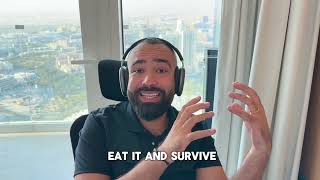
In this 39‑minute monologue Marcel Fernandes argues that the modern "hyper‑gratification" culture—characterized by endless, low‑effort dopamine hits from social media, short‑form video, and ultra‑palatable food—has become a primary driver of anxiety, depression, and loss of motivation. He begins by establishing his credibility as a self‑made millionaire from a poor background now living in Dubai, and explains that while many people seek self‑improvement, most content creators in that niche attract far fewer followers than entertainment channels because personal‑development requires sustained effort rather than instant reward. Drawing on evolutionary neuroscience, he contrasts ancient dopamine triggers (hunting, fasting) with today’s constant, engineered dopamine surges (TikTok scrolling, fast‑food). He cites experts such as Dr. Andrew Huberman, Jordan Peterson, Jim Rohn, Hamza Ahmed, and Alex Becker to reinforce his points. Marcel then outlines the short‑ and long‑term consequences of hyper‑gratification, including reduced drive, pervasive boredom, and a potential societal decline into “mindless zombies.” To counteract this, he offers concrete tactics: simplifying phone home/lock screens to only essential apps, setting daily time limits for all social media, physically storing the phone away, and gradually substituting easy dopamine activities with “hard dopamine” from meaningful work, reading, exercise, and purposeful goals. He emphasizes the importance of starting with small, manageable changes (e.g., swapping a snack, a short walk) and persisting through failure, using the mantra “until” from Jim Rohn. Throughout, Marcel frames the message as a moral obligation to raise awareness rather than a prescriptive life‑coaching sermon, encouraging viewers to share the video and begin their own self‑development journey.
Chapters
This thing is the reason most people are depressed and anxious out of their minds. So let me explain. This is slowly but surely and consistently unaliving us, and most people have no idea that this is even going on. What is slowly but consistently and surely unaliving us? And why am I using the phrase unalived. It seems to be something that you must replace with the actual word nowadays in YouTube because of the algorithm. But anyways, I digress. What I want to talk about today is the hyper— is the culture of hyper-gratification and this epidemic and its consequences. So first of all, who am I to tell you anything? Who am I to tell you how to live, right? And far from it, I don't want to tell you how to live. I'm just trying to share my knowledge and wisdom and experience best I can. Now, who am I to even say that I have knowledge and wisdom to share? Share, right? Well, I'm not a special snowflake. I've just built a good life for, for myself. Um, I was born in a poor third world country to poor parents, and I became a self-made millionaire in my 20s. And so, and now I live here in Dubai. Um, so that should give me some credibility, right? But anyways, I'm not this special snowflake guy that has tons of knowledge and wisdom that I've created out of thin air because I'm so special and the universe gives me wisdom. Um, no, but I have some ideas, some inspiration, some wisdom from that has been passed down onto me by my mentors and successful people I've learned from and modeled. And so I'm not here trying to tell anybody how to live, merely trying to put forth good ideas into the metaverse and hopefully help somebody make better decisions, improve their habits, improve their life, develop a better philosophy, improve their quality of lives, make more money, be happier, be more fulfilled, be more fulfilled, right? So anyways, what is this thing that is slowly unaliving us all and we have no idea that's happening? So Like I said, it is the culture of hyper-gratification and, um, this epidemic and its consequences, right? So first of all, what is this culture of hyper-gratification? So I was talking to ChatGPT just now, um, about, you know, I was thinking about video ideas, what kind of content that I can post, whatever. And I came to an interesting realization that didn't really surprise me. I don't— and I don't think it'll surprise most people either. And the realization that I came to is most self-development, business, entrepreneurship, online education, online businesses, make money online self-improvement, mindset channels aren't really that big, right? And I can even— let me share this with you here. So I was doing some research, right? Um, yeah, hopefully you can see my screen. So I was doing some research, and, uh, here is MrBeast, right? Biggest, uh, channel in the world. This video has 438 million views, and it's an entertainment video, right? It's, it's, it's a video that provides entertainment to the viewer. And now I was speaking here to ChatGPT, you know, and I asked, and I asked, what are the biggest YouTubers in this space, right? In the online education space and the make money online entrepreneurship, etc. And notice that Most of them, most of them, a shockingly high amount of them, high percentage of them have less than 5 million followers. See, 4. Well, you might say, well, 5 million followers is a lot. Well, yeah, but the world has 8 billion people. And MrBeast has how many followers? 259 million followers. That's almost the entire population of the United States of America, right? And so I was talking to ChatGPT like, huh, that's funny how self-development and business and entrepreneur channels never grow to sizes like entertainment channels. And And it said, you know, entertainment content is often designed to be highly engaging and easy to consume, right? And, you know, and then I was like, well, doesn't everybody want to live a better life, right? Doesn't everybody want to grow and develop and change? And at least in the most superficial virtues like making more money? Doesn't everybody want that, right? How come personal development doesn't grow as much? And this answer by ChatGPT gave me an interesting insight, and it was the reason I decided to shoot this video. So let me find exactly where it is. It's gratification. Here we go. Well, while it's true that many people want to live better lives, the growth dynamics of personal development channels on YouTube are influenced by several factors. And this is very important: interest versus action. While many people are interested in personal development, fewer are willing to consistently take actionable steps to implement what they learn. And that's very true. And I know that because I own an online education business, and I know that 1% of people that I share all my knowledge and wisdom and step-by-step and how I got to where I am today actually do the things. And so that's called complacency, right? You're comfortable where you're at and you don't really feel like changing. You would, you would like for it to change if it fell on your lap and you didn't have to do anything about it, but you most likely you most likely won't take the necessary steps, steps you need to take in order to create that change. And so entertainment content offers immediate gratification, whereas personal development offers— often requires sustained effort. And this is very true. Let me get back to my beautiful face here. So Why am I recording this video? I'm recording this video because I feel like I have a moral obligation in some sense to share my knowledge and share my wisdom because like I said, again, I'm not a special snowflake with extraordinary abilities that most people don't have. I'm just a regular guy that was once probably in the shoes that most people are in right now. Like I said, I came from a poor third world country, born to poor parents, and became a self-made millionaire in my 20s, but I do have some good ideas and good knowledge and wisdom to share. So I think the first and most important thing is curate your surroundings because— well, first of all, let's finish the first thought on hyper-gratification. So what is gratification? Is it— it's to be gratified, to have some reward, to feel a certain accomplishment, and not necessarily having to accomplish something. So when you're doom-scrolling on TikTok, on Instagram, for— or on YouTube for example, you are— your brain is injecting copious amounts of dopamine into your nervous system, and that makes you feel good, right? That's gratification. Now, there's no problem with gratification per se. The problem is when, number one, it's instant, meaning you get an instant hit of gratification, and number two, you don't have to put forth much effort in order to get that gratification. That's where the problem lies. So Now that we defined these terms, how do we change that? Or before we go to how do we change that, what are the negative short and long-term consequences of those— that hyper and instant gratification? Well, your body— first of all, I in no way, shape, or form have the amount of knowledge that Dr. Huberman has on this subject. So if you would like to go really in depth and take a deep dive into this subject of dopamine and instant gratification, you can search for— which I highly recommend— Dr. Huberman, Dr. Huberman on YouTube, where He talks about that in his lectures. So, but from a superficial view and from the perspective of a non-scientist, here's what happens. Basically, your body gets accustomed to so much dopamine release without having to do anything to achieve that dopamine, right? Because Usually, thousands and millions of years ago, how would humans get dopamine? They would get dopamine if they ate, right? And why is that interesting to note? Because they didn't eat very often. What do you mean? Well, humans would go for days and days without eating because if they didn't find anything to eat they couldn't eat, and so they would go for days and days fasting, right? And so whenever they ate, that gave a dopaminergic response, which is good, right? When we eat, we get dopamine. Problem is that fast forward to nowadays, we have so much cheap fast food that are literally scientifically engineered to create the most derpin— the most extreme dopaminergic response in our brains to give us the highest amount of pleasure possible from eating that food, like McDonald's, Burger King, etc. And so that doesn't really serve us positively. So anyways, we would get dopamine back in the day from hunting. After a successful hunt We would stand strong with our brothers, spear in hand, right? Happy, maybe screaming war scream, right? War cry or whatever. And we would have dopamine because we achieved that goal of hunting down an animal to be able to eat it and survive. And so what does that do? What, what does that do? That makes us motivated to do that thing that made us feel good more. And back in the day was hunting, right? So we needed to have a certain incentive and motivation inside us to be able to get up off our asses and hunt, or we would die. And that provided us with a dopaminergic feel-good response. And so we wanted to do that thing again, right? The problem is nowadays we have so much dopaminergic responses training us to not do anything, training us to just scroll on our phone on our sofa all day and eat Dunkin' Donuts and McDonald's. So we are— we, we are rewiring our brain in a sense to pursue these dopaminergic activities that don't take us anywhere meaningful in our life. Actually, quite the contrary. And so that is where a huge problem lies. Whereas before, our dopamine was used very— in a very useful manner for our survival, nowadays it's being used in a very negative manner, and it's not making us strive towards something great. Quite the contrary, it's just making us sit on our phones, doom scrolling and eating fast food. Now, can we rewire our brain back to the original so that we will feel motivated to achieve something in life, to do something different of our life, to improve our lives, to make more money, to be happier, to feel fulfilled? Of course, of course. Now, how do we do that? We'll get to that in a minute. Pay attention. In the days that we live in today, there's not really much incentive or need to hunt animals for food, right? So what gives? What's the problem? So the problem is everything is so easy. Food is easy, dopamine is easy. Um, food is cheap, especially in first world countries. So everything nowadays is so easy to attain, and we have so much dopamine every single day with TikTok, with social media, with short-form content, just doom scrolling, just scrolling, scrolling, scrolling infinitely, getting those hits, those dopaminergic hits, that we often lose motivation for life. And this is extraordinarily destructive and negative, and I don't think most people realize this. Now, there are a bunch of con— there, there is a bunch of content online and Bear with me, English is not my first language, okay? So I might have some grammatically wrong phrases and sentences that I put together, but bear with me and try to get the major point. Um, there are a bunch of people talking online about, you know, dopamine and dopamine detox, you know, Alex Becker, Hamza Ahmed, he's a very cool guy as well, talking about that, helping men improve themselves and self-develop. Jordan Peterson, Dr. Huberman— there are a bunch of people talking about this online, but I don't think that this gets enough attention as it's supposed to. And I think that if we don't solve for this, we will in a couple decades' time become mindless zombies, doomscrolling all day and waiting for that next hit. And worst of all, as if that weren't bad enough, we will be highly depressed, highly anxious because of the— all the short-form fast content on our phones at literally our fingertips. And that might be the doom of civilization. Now, I believe that us humans, we are creative. The thing that we have over every other life form, one of the things, right, is our creativity, right, given to us by God. And so we always find a way to fix our problems. You can, you can see that in various points in history where we were at the brink of extinction even, or at least something approximating that, and through our sheer creativity we were able to fix our problems. Now this video right here that I'm shooting right now is an attempt to to shine a light at this issue and increase awareness from people that want to improve their lives, that want to change. And, you know, most of these online gurus have a bad reputation, and that's understandable, but I would think that most people, even if they don't consciously think it, but deep down in their core, they would like to improve their life in some way, shape, or form. It would be hard to believe that nobody would like to improve— that, that, that everybody doesn't have at least one thing that they would like to improve their life. It whether it be their health, their body, their wealth, their family, their love, their relationship, their spiritualness. Everybody has that because nobody's perfect. So, okay, so now we defined the problem, we defined what is this culture of hyper-gratification and instant gratification, and how dopamine affects our brain, and why this is so important to be discussed, and what are the short and long-term possible potential consequences of this. And now I think what's important is to come to a practical approach to, okay, now I understand this. Now I understand that we are hyper-gratified, we are hyper We are getting extreme doses of dopamine, unhuman doses of dopamine that no human ever has experienced ever in history, ever. Now, what do we do about it? Well, you can't just tell Facebook and TikTok to shut down their companies. Right? They're extremely large corporations and they need to make money, right? And I appreciate all these corporations because I make a ton of money on the back of Facebook and YouTube and TikTok, right? Because I own an online education company where I help people make more money on— make money online, beginners make money online, intermediate people, you know, coaches, consultants, agency owners and SM— and, um, course sellers that are making $10,000 a month to go to over $100,000 a month. So I use these platforms in my favor. Not to say that I wouldn't want people that use the platforms to not use it as much. Now you might say, well, that's hypocritical because if you make money off these platforms, then how can you say for us not to use it? Well, I'm pretty sure that if you heed to my suggestions and ideas and you improve your life, it's pretty safe to say that you will— if you don't someday become my customer or my client in my company, in my business, or buy my stuff, that you will at least talk about me in your social circle, and that's not nothing. In fact, that's very powerful. And so you'll help spread my word and my wisdom on how you improved your own life through this guy on the internet that you saw one day named Marcel, and he helped you change your life. So That'll be worth it for me. Anyways, so now that we know all this, what do we do about it? Well, we can't just tell Facebook and Instagram and TikTok to shut down their companies, but what you can do is not use it as much or at all, preferably. Now, what happens when you don't use it as much. So let me open a parenthesis here. This is the reason— this thing is the reason most people are depressed and anxious out of their minds. Now, there's a multitude and a multifaceted multitude of reasons as to why depression and anxiety and suicide has never been so high in history. However, this is not to diminish the fact that this is a very big factor in that, which is the hyper-dopaminergic activities and instant gratification activities, which are extremely— which are extraordinarily available for free on the internet and extremely used as well. Most people use TikTok, Instagram, all these things. And so this is one of the big reasons, because once, once you have this amount of dopamine in your brain, you don't really want to do anything else. You don't really have any motivation to improve your life, to do great things, to develop, to learn more, to make more money. You don't really— I mean, you would like it, but you don't really have a compelling reason and motivation to change, right? Because your body— how can your body want to change if you're already giving it everything it literally biologically needs? Like, you see how that makes sense? Like Hamza Ahmed, which is a guy that has a self-improvement channel on YouTube which I admire a lot, he said, "If a man has a full stomach and empty balls, what motivation has he to improve?" And I think that's very true. If you have a stomach full of food and empty balls to maybe not even a real woman, but to pornography, right, which is so extraordinarily available and used nowadays, what motivation have you to improve? Like, that's literally the basic needs of a human being. Right. It's Maslow's hierarchy. What, what, what's at the lowest base of the basic human needs coined by Maslow? Right. It's security. I think it's security, sleep, food, and then sex or something like that. But, but anyways, it's an extremely basic thing. So If you, if you conquer all these things, that's basically all your body biologically needs to survive, and that's all your body will crave for and reward you dopaminergically with feel-good hormones so that you feel good and you're like, okay, my day was good, my day was fantastic, I I've done what I'm supposed to do. I've ate a bunch of food and I came. I emptied my balls, right? What motivation have you to improve, to change your life if you already are biologically satiated? I'll tell you what motivation. None. And so that's why I think this video is very important. Because I struggle with these things as well, right? I think everybody does. And I struggle with this instant gratification and highly dopaminergic culture that we live in today because it's so in your face. But I, but I now try I try my hardest to do anything and everything in my power to overcome these desires and these urges for easy dopamine and instant gratification so that I can rewire and retrain my own brain to go after difficult, quote unquote, dopamine. And difficult thousands of years ago was just the normal. Like, what do you mean difficult and easy? There's no easy, it's just the norm. It's just like how we get dopamine. We have to work hard, we have to achieve things, we have to achieve a goal, we have to develop ourselves. And then we get, oh my God, I'm feeling so good because I read a book today. Um, I'm feeling so good because my business is growing. I'm feeling so good because I'm doing better at my job. I'm learning on YouTube how to become a better salesman, how to do better at my job, how to become a better personal assistant or whatever, how to get a raise, how to improve my life. And so that's the type of positive reinforcement and dopa— and dopamine that you get from positive actions and positive habits and from rewarding actions. But So that's the quote-unquote hard and the difficult dopamine, but that's the only dopamine that'll give you purpose and give you meaning in your life and give you ultimately fulfillment and happiness and, and help all these people suffering from depression and anxiety. And now I'm not trying to say that I'm a psychologist or something like that, although I would argue that I know more, I know more about psychology than most psychologists because I've read so many books on psychology. And this is not something that only I speak of. Dr. Jordan Peterson, which is in fact a psychologist, He also advocates for this, for fixing your own room, getting some responsibility in your life. Stop instant gratification. Do difficult things, right? And that doesn't sound fun. That doesn't sound fun at all. That's the— I think something that most people don't want to hear, right? Because it doesn't sound fun to do hard things, but trust me, once you do them, you'll feel so much better. Trust me, once you start doing difficult things, you will feel so much better about yourself. And you will have more self-esteem. You will hold yourself to a higher standard, and maybe your self-conscious self-contempt will fade away into nothingness proportionally to the continual— continuous hard activities that you do daily. And you don't need to start with something staggering. Like I learned from my— one of my mentors that changed my life completely called Jim Rohn. He said you don't have to start with something staggering. Start with something, something simple. Change a Hershey bar for an apple a day. Right? Change to, I don't know, 30 minutes on the sofa watching Netflix for 30 minutes walking around the block. You don't need to start with something hard. Start with the easy stuff, and then your mind will start going to the more difficult stuff, and you will create this better sense of self that will propel you forward to do even more and more difficult things, and then creating a positive spiral because you're going to, you're going to feel even better about yourself, then you do even more difficult things, and then so on and so forth. And so, and let me give you now some practical tactics that you can do to reduce the amount of dopamine, of easy dopamine, that you consume. And eventually— so this is, this is what's beautiful about this, right? Eventually, once you stop consuming the copious amounts of easy dopamine that is highly available for free anytime, anywhere. Once you stop doing that, it's going to be difficult at first. You're going to feel the urge to open Instagram, to open TikTok. But once you stop doing that, after a couple days even, right, not even weeks, after a couple days, like staring at the white wall you're gonna start to feel bored as shit. And then you're gonna say, you know what, let me pick up that fucking book that I've been meaning to read for so long. Let me pick that shit up since I can't do anything. I can't use Instagram, I can't use TikTok, I can't use all the— you know what, let me pick up that motherfucking book. Let me read that shit. Right? Because you're gonna feel so like, oh, this is boring, this is boring, I can't— I just want to open TikTok, I just want to see who's messaging me on Instagram or whatever. You get so bored that the productive and good things start becoming things that you get dopamine from. And eventually, on a long enough time horizon, you you will make those things the norm. But evil and darkness is always lurking nearby, and so you will always have to police yourself to not open Instagram and TikTok again, because it can suck you right back in and you can go right back old to those old habits. Now And not to say that you need to do this instantly as well. I've tried and failed so many times, but the key is never stop trying. Because if you try and fail, try and fail, try and fail, you stop at fail, then you've just failed. But if you try and fail, try and fail, try and fail, try and fail infinitely until you get it— that's the key word, until you get it— then you never fail. And this is a very key word that I've learned from my mentor, Jim Rohn, the power of the word until, right? So Jim Rohn said he was doing a seminar, right? And he asked all the mothers in the audience, he said, to all the mothers in the audience, um, how long would you give your average baby to learn how to walk? Say, what do you mean? Well, how long would you— will you give your average baby until you say no, you can't try anymore, you shut them off, no, you can't try to walk anymore? Well, any mother would say what? That's insane. My baby will keep trying until he learns how to walk. Wow, look at that, what a key word, until. So don't worry about starting this new journey, this new venture of self-improvement, and soon going back to bad habits. Because it can happen, right? It happens to me, it happens to the best of us. The key is never stop trying. So let me give you some practical tactics that I do, okay? Um, Let me give you some practical tactics real quick. So first of all, starting with my home screen— well, first of all, let's start with, let's start with my lock screen. So this is my lock screen, right? And you can see there are 4 widgets in here. Why are there 4 widgets? These are my mostly used apps. So ChatGPT, Google Maps for when I'm in the car and I need to go somewhere. Google Translate for when I need to translate something, because like I said, English is not my native language, it's Portuguese. And then MyFitnessPal, where I keep track of everything I eat. These are my 4 main apps that I keep in my lock screen, right? So when I need to access them, boom, just click that and I'm there. I don't even need to unlock the phone and then search for the app, right? And now the most interesting thing, let's go to my home screen. Here we go. This is my home screen. Well, what do you mean, Marcel? Yeah, I mean, this is literally my home screen. There's, you know, this is the widgets, whatever. I don't even use these. I should, you know, take these out here. And this is my home screen. There's literally nothing on my home screen. And why is that? Well, you might say, well, that's taking it to an extreme. Marcel, is it? Is this taking it to an extreme, or is what these social media apps are doing to our brains taking it to an extreme? I would argue for the latter. So what I have down here are literally the only 4 important apps that I need to use: phone, Slack to talk with my team members, Notes to take notes, and Safari to do searches. That's literally it. Now, Marcel, what if you need to use another app, right? Right. Well, I, you know, work with social media. I use, you know, Facebook, Instagram to advertise. So if I need to access anything, if I need to access that, I'll just swipe to search, search what I need. Go to the app, like for example Instagram, do what I need to do, get out of the app. Sometimes I even go phone off in the drawer, in the drawer. I can't touch it, I can't see it. Now you need to do these quote-unquote extreme actions if you want to improve your life in any meaningful manner. So what might seem extreme to some is just somebody trying to improve their lives, right? I would much rather do this than live an anxious and depressive suicidal life. Now again, I know there's other factors to those, but this is a great factor as well. And I would prefer to do this than live an unfulfilling, unpurposeful life with no meaning and no responsibility to it. So, and also here's another tactic. Notice that when I opened Instagram, what does it say? Time limit. That's right. Because I set a time limit for 15 minutes per day for all social media apps combined, not 15 minutes per app, like 15 minutes Instagram, 15 TikTok. No, all social media combined. This is a setting that you can do on your iPhone. Okay. And so this helps me keep on track as well. Right now, sometimes I might go here, ignore limit. Oh, just one more minute. It happens, right? But the key is to do everything that's in your power to not indulge in doom scrolling and in extreme instant gratification and highly dopaminergic activities. And then once you start doing that, which, like I said, will be difficult, but you will feel so much better. You will feel so much better with yourself, with your, with your own body, with your own mind, with your own spirituality. And you will want to start improving in other areas of your life as well, which is amazing. This is something very interesting that I've learned from my teacher, Jim Rohn. By the way, Jim Rohn was one of my most important mentors. I would accredit 80% of my success today to Jim Rohn. He said, start with the easy things, don't start with the difficult things. So anyways, I ramble, right? This is already a 39-minute video, but I hope you found some value in this video. I, I really, really do. I hope this helped you in any way, or at least I hope this planted a seed in your mind that of the dangers and short and long-term consequences, negative consequences of this hyper and instant gratification culture that we live in. And I hope that that seed can flourish and grow, and maybe you can start your self-development journey or continue on that self-development journey because of this video. I really hope that this helps spread awareness to this issue. Now, if you've— if you found this video interesting or helpful or insightful or inspiring or motivating or any positive or even negative feeling, be sure to please like the video, subscribe to my channel, share this video with other people as well, maybe a family member, maybe a friend that needs to hear this. And yeah, comment also down below if you like this type of video, if you would like to see other types of videos like this where I just, you know, talk about whatever subject that you would like to, you know, hear about— philosophy, mindset, business, how to make money, etc. And, uh, yeah, hope you enjoyed it, and I'll see you in the next video.
More from Marcel


Have you ever had a moment where your soul recognized something your physical eyes hadn't se #shorts


Are you walking in your God-given purpose or trying to claim a throne that isn't yours? 👇 #shorts
What is one skill you are actively building right now to increase your value? 👇 #shorts


What is the very first door you need to walk up to and knock on today? 👇 #shorts

What is the first step you are taking today to move toward your goals? 👇 #shorts
How does knowing you are made in His exact image change the way you see your potential today #shorts