Ad Breakdown #1 – credit secrets ad w/ 32M views
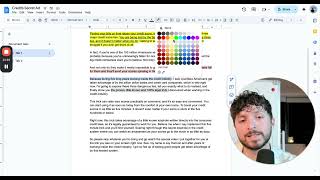
Luke Eha breaks down a Credit Secrets ad that hit 32 million views, analyzing how it hooks with three credit score lies, promises a five-minute legal trick, and layers calls-to-action to drive conversions. Learn how the ad structures pain, proof, and repeated CTAs to write denser, more persuasive direct-response copy.
Questions this video answers
153 million Americans
833,000 people
More than 2.5 million people
Five long years working inside the credit industry
A five-minute trick
Chapters
All right, so I'm going to break down an ad here. This is ad breakdown number one. If you don't know who I am, my name is Luke Eha. I'm a copywriter who's sold a lot of stuff with words. Now I teach copywriters, creative strategists, really anybody how to write better copy, sell more stuff with words. So this is going to be first in a series, just breaking down ads. I think one of the best ways to learn copy hands down. A lot of people say like, oh, you got to hand copy stuff or study theory or read books or things like that. Hands down, the best way to get better at copy or doing stuff is to write it and get feedback, ideally from an expert and or the market itself. That's the best way to get better, the second best way to do it. And it's something I think everyone should be doing. If you care about writing better ads, if you care about writing better copy is to look and read and consume ads that you already know are winning and then listen to breakdowns of them. And that's what I'm going to do in this video and hopefully make a long series that you guys can follow along. So this is an ad has, you know, eight, like tens of millions of different views. It's for a company called Credit Secret. So it's a credit ad. A lot of the ads that we break down, by the way, they're going to be direct response, different types of ads. But without further ado, let's go through and break this one down. I'm going to start with the video itself and then we'll read through the transcript and I'll go through my notes on it.
Paying your bills on time raises your credit score, right? Wrong. In fact, this is the first of three major credit score lies you're being told by the big credit companies. Fall for any of these three lies and it doesn't matter what you do, getting to 720 and above will be a long, hard struggle if you ever get there at all. In fact, if you're one of the 153 million Americans with a credit score below 720, it's probably because you've unknowingly fallen for one or more of these three deadly lies that the big credit companies want you to believe. Not only are these lies flat out wrong, and not only do they make it nearly impossible to get a great credit score, but in many cases, fall for them. And they'll send your scores spiraling in the wrong direction. Because during five long Years working inside the credit industry, I saw countless Americans get taken advantage of by the billion dollar banks and credit card companies. Which is why right now I'm going to expose these three dangerous lies, tell you exactly what to do instead, and finally show you the proven, little known and 100% legal trick I discovered when working in the credit industry. This trick can raise scores practically on command. And it's so easy and convenient you can start using it as soon as today from the comfort of your own home to boost your credit scores in as little as five minutes. It doesn't even matter if your score is stuck in the 500s or below. Right now, this trick takes advantage of a little known loophole written directly into the consumer credit laws so it's legally guaranteed to work for you. Believe me when I say implement this five minute trick and you'll find yourself soaring right through this secret loophole in the credit system where you can watch in amazement as your scores go to the moon in as little little as days. So please stop whatever you're doing and go watch the special video I put together for you at the link you see on your screen right now. See, my name is Jay Hannon, and after years of working inside the credit industry, I got so fed up of seeing good people get taken advantage of by this twisted system, I decided enough was enough and I quit. Since then, I've been blessed to help more than 833,000 people learn how to improve their scores using this simple 5 minute credit score trick each day. So if you're ready to join the 833,000 people who have discovered these three major credit score lies and turn their financial lives around the same five minute credit score trick you're about to discover. I'd like to show you exactly how you can use this simple trick too. Just click the link you see on your screen. It'll take you to a special video I created revealing everything about these awful lies and how you can use this shockingly simple trick to raise your credit scores faster than you ever thought possible. This trick practically forces banks and lenders to give you all the credit cards, loans and lines of credit you need to buy the things you want for yourself and your family at interest rates normally reserved for the wealthy. 1%. No matter how low your credit scores are right now, all you have to do is click the link and go watch the video right now. When I put it online, something amazing started to happen. Aside from being watched by more than two and a half million people so far, my inbox started overflowing with messages from some truly amazing people all across the country telling me how just by watching the video you're about to see and taking the steps I reveal inside, they changed their financial lives forever.
My score was 595, and my scores now across the board is over 700. My wife's scores jumped 124 points. I'm now well into the 800. When I started, my scores were somewhere around the high five hundreds to low six hundreds. And within maybe around six months, I had climbed in the mid seven hundreds. At that point, I was able to buy a house. Ended up increasing my score by 60 points. All the steps I was able to take my credit score and raise it up 151points. My score has jumped up over 100 points. I've been able to remove all 12 negative accounts on my credit report, and now my score is a 747. Coming from it being in the low 500s just 90 days ago, I mean, it's. It's amazing. I wanted to help my fiance as well. Her score at the time was in the low 500s as well. So I applied this information to her accounts. Now her score is over 730. This is a real blessing.
I can only help you if you decide to help yourself by clicking the link on your screen and watching this special video right now.
Cool. All right, so let's go through the transcript that I have right here, and let's start to break this one down. So I'm going to highlight some of the things that I think are the strongest. So let's see. Paying your bills on time raises your credit score. Right? Wrong. In fact, this is the first of the three major credit score lies you are being told by the big credit companies. Fall for any of these. Doesn't matter what you do, getting to 720 and above will be a long, hard struggle. If you get there at. So this is our hook. It follows a pretty classic structure, like doing this is the right way to do whatever. Right. Wrong. It's funny. I mean, that one is old as dirt, that hook, but it still works. So that's fine. I think there's a lot of other strong hooks that you could put in there, but obviously this thing is doing really, really well. Okay, it's talking about. This is the first of three major credit score lies, which is cool. I mean, typically when I like to do ads or copy what I found, that works the best. And again, I'm. I'm just giving my feedback on it. This thing is obviously crushing. So at the end of the day, don't listen to what I say. Listen to what is working. Um, it's focusing on one thing tends to work better. So if you do like a list of like, here's. Here's the three things, here's whatever, Typically one thing tends to be good. Now there are like, listicles out there. Like, top five something for this or top five something for that. So when it comes to the ad side of things that the listicle and the numbers can do, can do well. But I'm always trying to look for how I can, like, decrease complexity and make things a lot more simple. So that's all my point is there. Cool. There's some, like, victimization in here, which has always worked, right? Like, it's. It's almost a joke. Big credit, big plants, big dairy, like all these big institutionals and having some sort of enemy. But that stuff always works. I think it's that Blair Warren thing, which is like, people will do anything for those who justify their failures and throw rocks at their enemies. And there's a whole quote about it, but that's one right there. So let's look at this. If you're one of 153 million Americans, credit score below 720, it's probably because you've unknowingly fallen for one of these three deadly lies big credit companies don't want you to believe. Cool. This is like a pretty, pretty interesting thing right here. What you'll notice about good copy is. I mean, good copy primarily is about all of the thinking and the ideas that go into it beforehand. So things like mechanisms, angles, hooks, your copy blocks, which we'll talk about in a second, your characterization, your proof, that's all of, like, the. That's the main thing that goes into it. The second layer is actually writing the words itself. And so when you're writing the words itself, the one thing that you want to do is you want to make sure, like, the reading level is low. It seems so obvious. But again, I literally just got off a call with like, you know, 40 plus different marketers and business owners giving feedback. And that always comes up, which is like, hey, you have to write at a low reading level. Once you kind of hit those things, the only way to really get enhancements is to increase what I kind of call like the velocity of copy blocks, which is basically like, how much information are you fitting into a sentence, right? And so if you just look at a sentence like this as a minor example, this is why it's good. Not only do they make it nearly impossible to get a great credit score, but in many cases, fall for them and they'll send your score spiraling in the wrong direction. So you could have just left off by saying not only did they make it impossible to get a great credit, or they make it impossible to get a great credit score. But here we're increasing the intensity by saying not only by doing this, you're gonna mess things. You're not gonna get the results you want, but you're also gonna mess things up even more. Okay, so we're just intensifying the pain super subtle. But when you make those kind of decisions and add these little tags and always looking ways for like, to stack more proof, create more pain, et cetera, et cetera, you're typically gonna get a stronger ad. And if you do that over time, you're gonna end up with something super strong. For those who don't know, I have a video on my channel that goes over copy blocks, but I'm going to type them out here because they're super important. So pain is basically. That's pain. Promise is what they want. Proof is why they believe. Curiosity is your mechanism. It's the vehicle that takes people from pain to promise. And typically you want it to be something interesting. Constraints are basically without doing, et cetera, et cetera. And then your conditions are who you're targeting and who you're calling out. Okay, so for example, let's see. This would be an example of conditions. Right, right down there. This would be example of pain, et cetera. And you can kind of see these copy blocks as we go forward during five long years working inside the credit industry. This is great. If you analyze this proof, like, what does this mean? Five long years working inside the credit industry. Like, what was this guy like a bank teller? Was he like a. It. It's kind of like bogus proof. But when you say stuff like that, like because. And you're putting something in there that gives you some authority, your expertise doesn't always need to be that strong. It kind of bypasses the mind, but it does make everything a lot, a lot better. So people are typically not going to interrogate all of the proof. But. And so what happens is, you know, people have an authority or a spokesperson, and they're like, oh, I don't, you know, this person's not a doctor, this person's not a, you know, hasn't made a billion dollars. Right. But there's always a way to position yourself and create proof. And when you just weave that into the Copy. It always makes things so much stronger. I saw countless Americans get taken advantage of by the billion dollar banks and credit card companies. Which is why right now I'm going to expose these three dangerous lies. I'll tell you exactly what to do instead. And finally show you the proven, little known and 100% legal trick I discovered when working in the credit industry. This right here is an example of a characterization. Your characterization is typically what you're calling your mechanism. So your mechanism is what takes you from the pain point to the promise. It's really important. And the characterization is just a kind of a simple nickname or a way to characterize or explain what that mechanism is without having to go in depth. Typically you're going to see in headlines, you're going to see in ads, you're going to see in emails, in like super hardcore direct response stuff. This is like this ice hack, this fizzy drink, this 100% legal trick, this five second whatever, right? It's kind of a nickname that you're giving to your mechanism. Coming up with characterizations. Typically when I write copy, I don't care that much about the words. I say that all the time to people on our call. Again, it's not the words that matter that much. But characterizations is one place where it's really important to get the words down, right? Doesn't need to be complicated. This is pretty simple, proven, little known, 100% legal trick. But it's really important to have something like that because as you're making the ad or even the VSL or the email, you can kind of repeat this phrase, little known, 100% legal trick. You can repeat it over and over and over again, almost like a hypnotic mantra. And what you're doing is you're attaching everything. All the emotion gets attached to that. It's like, if I just know what that trick is, I'll be able to solve this pain point and create the goals that I want. Look at this. Practically on command. And it's so easy and convenient. Again, this is an example of our constraints. Anything that you can do to make things easy and simple. Again, the theme of our call today with those 40 plus marketers inside our program was literally all about making things so dead simple. We always want to complicate things. I am guilty of this all the time. But you, you just cannot. It just needs to be so simple right now. People say all the time like, oh, like your prospect is is dumb or your prospect's not dumb or like whatever. The point is not about whether your Your prospect is smart or dumb. Again, people have an IQ. The average IQ is 100. So that means like around half of the people have an IQ below 100. So if you just think about the. This is a quote. If you just think about the most perfectly average IQ that you ever come across, and that's a hundred, just understand that half the people are below that. Okay, so there, that is important. At the same time, people are not giving their full attention. And you're asking people sometimes to work, to do your advertising, right, or to consume your advertising. So just make it easy for them both in terms of like, the language itself is simple. And so let's, let's see actually what. This is. Grade six, so could be a little bit lower, but that's pretty good. So this is really important too, right now. This trick takes it. I mean, they've been doing this since I started copy like the same one. But the whole thing is like this idea that it's written directly into the consumer credit laws is so powerful. Like, I don't know if they're still doing this, but their old ads are like, it's this 163 word whatever or it's ordinate number 163 found on this specific page. When you're able to take something like that and make it specific and concrete, you take the curiosity like 3, 5 levels above. It is so, so, so important to make things concrete like that. So believe me when I say implement this five minute trick and you'll find yourself soaring right through this credit secret loophole in the credit system where you can watch amazement as your scores go to the moon in as little as days. I mean, let's look at this, like, implement this five minute trick. So like, this is a mixture of curiosity and it's a mixture of ease because it's five minute trick right in here. Let me show you the copy box real quick. I mean, just look at something like this, right? Five minute trick, right? It's easy and it's exciting. Curiosity invoking, soaring right through secret loophole in the credit system. Watching amazement. Your scores go to the moon in as little as days. Like you're just stacking these blocks together. And this is what I mean. When your copy is dense, right, you're hitting all of these strategic psychological points in a really small amount of space. Please stop whatever you're doing and go watch the special video. I took the other. Okay. One of the most important things you can understand with copy is just tell people what to do and they'll do It. One of my mentors is an infomercial guy. He sold literally billions of dollars with infomercials. Like Billy Mays Oxiclean. He worked with Circle Water Bottle gopro. Just a genius at this. And he demonstrated this on stage one time where he's just like, he was on stage and there was a group of people and he just told the random guy like, hey, give me that piece of paper. And the guy like rushed up and went on stage and getting the piece of paper and he was like, he's like, people are typically compliant, right? That guy had no reason to give me a piece of paper. He didn't ask why he didn't do anything. Obviously, of course there's, there's the setting in the stage and a reason for it. But it was a nice visual illustration that like people are typically compliant. When you tell someone to do something, do it right. My other mentor, Stefan Georgie, basically, you know, billion dollar copywriter would tell me all the time, like, hey, you know, if you want people to take action, just do it. If you want people to order six more bottles, just literally tell them to order six more bottles. And typically they do it. Okay. So being super, super clear with your call to actions is always really important. Jay Hannon after years, I got fed up seeing good people get taken advantage of. I twist the system again. It's that same victimization kind of enemy thing that's just seeping through this because that's really what this, this what connects with this market. Shockingly simple. Cool. And then we end with testimonials and things like, things like that in here. So we really have three structures, which is like right here we have a call to action. This is another call to action. Then we have another one here you can kind of read at the end. I can only help you if you decide to help yourself. Now in the beginning of the ad, they may come across as like pretty offensive. But when you have a three tiered kind of call to action system like that, it makes a lot of sense that like, hey, go through your most important stuff pretty quickly, like whatever you need to do. Because most people are, you know, are going to start leaving your ad. So you give them just the amount of information they need to want to click. Call to action. Call to action. Call to action. But when you get to the end and this is like the last one, this is where you can be like in their face a little bit. Like you're not calling people out, but you're like, you know, there's going to be some stragglers, people who are watching, they're obviously interested if they're sitting there watching. So you can kind of turn the knife and, and make things a little bit stronger. So that's what I have for this ad right here. If you want access to this ad into more of the breakdowns that I do, there's going to be a place for you to opt into my email list where I email and I talk about things that are going on inside our community. Stuff I'm learning creative strategist products I'm doing launches, insights from students. So lots of good stuff. And you get access to a bunch of trainings that I've, I've done on this video including a bunch of these ads. Going through forward I'm going to be doing a lot more of these ad breakdowns so let me know in the comments if these are helpful and what you would like to see. And I'll be creating places where you can submit ads. I'd love to look at your ads and break those down as well. And I think going forward I have some really cool ideas for how to structure these breakdowns so you can start to see a lot of the inner workings of the psychology behind the markets and also ways that I would create spin offs or different types of concepts and things like that. So that's all I got. Hopefully you enjoyed the video. Peace.
More from Mario


easiest way to make $30k/mo as a creative strategist (I’ve helped 100’s of people)

how to write hooks so dangerous you break people's brains (4-step "deep fry" process)



The Complete Creative Strategist Pricing Guide for 2026 (Every Deal Structure I've Seen)


this copy instinct framework makes you a monster at ads (nobody teaches this) pt. 1


why "insight vectors" are the most valuable marketing concept of 2026 (I didn't want to share this)