how this 22 yr old scaled from $0 to $100K/day in 6 days (full breakdown)
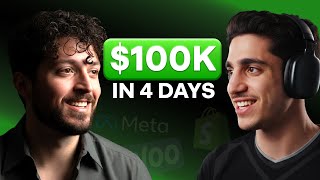
Dario, a 22-year-old Italian entrepreneur, breaks down how he scaled from zero to $100K per day in six days using VSL funnels. He covers product selection, audience targeting, creative testing velocity, AI for copy, and funnel economics, plus the operational and mindset shifts that got him there.
Questions this video answers
22 years old.
From 0 to $100K/day in 6 days (reached $150K/day by day 10).
Approximately 6% chargeback rate.
An AI image ad spent $300K and brought in about $1M in revenue in 3 weeks for a VSL/DSL campaign.
Droppedhipping course: $500; copywriting course: $3,000.
Chapters
All right, so I'm here with a friend of mine, Mr. Dario. Dario. What's up, man?
What's up, Luke?
Doing great.
Doing amazing.
So Dario is, like I said, a friend, also a member of Genesis who's had some really amazing. He's had a lot of wins and success, but I think in the last few weeks or so, really hit a stride. I think that the claim to fame is able to spend a hundred thousand dollars a day on a new funnel that was just launched. And so we're going to be talking about that, and I'm going to try to get him to open up and spill his guts as much as possible, within reason. But yeah, just want to kind of get to know. Know some of those things. So my first question for you is one just kind of paint a picture of, like, who you are, your backstory, how you even got into this game, and what is motivating you on your journey.
I'm 22 years old, Italian. I dropped out of high school at 18. So right at the end of my fourth year, before my last year of high school, I dropped out because I was hooked by one of those dropshipping gurus who sold me on the dream of having a Lamborghini. And so I bought his drop shipping course for 500 bucks. It was mostly a scam, but if it wasn't for that, I think, I mean, I'm really grateful for that information, even though it was not the best information. Started my journey. Launched my first e commerce store. Took me $1,000 to get that first sale. I mean, the first sale was paradigm shifting. So I woke up. It was a wooden puzzle, like something that I was interested in and not something that people would love to buy. And I that's the first lesson. Don't sell stuff that you like. Sell stuff that other people are actively buying already. And there is a market for spent a thousand dollars on ads. And then one day, I remember waking up and turning the airplane mode off, and within 10 seconds, I heard the Shopify notification. Cha ching. And I had this like 5 second of confusion. What is that? I never heard this before. And then I realized. And then the notification was like 29 bucks. Oh, my God. I sold something on the Internet. Right? That's crazy. And then I met my first profitable store was selling TikTok leggings. The ones that lift your butt up. They're very trending on TikTok.
You those ones too.
I, of course I used those ones. My sister has personal product.
Yeah.
And I probably did like 20k in revenue. Just ripping somebody's odds. Downloading from the media library and uploading to my ad account. I knew nothing about ads testing. I probably didn't test. I tested like five ads and this one popped off. It was a compilation ugc of just women's getting their husband or boyfriend's reaction to the leggings. Like oh my God, your butt is so huge. I'm gonna try to keep it compliant of course. And did 20k and then like with 3k profit, 4k profit selling in Australia, all drop shipping, it was a mess with sizes, colors. So I would suggest against selling fashion stuff because with the SKUs also friends who've run fashion store, it's a mess. Unless you are Debbie Fogarty, I don't suggest it. And then I sold this store on Flippa to like a random Ukrainian guy who knew nothing about ecom. But I made a very compelling sales pitch on my Flipa page. And then with that money I bought my first copywriting course from my Italian mentor. Paid 3k for it, was extremely valuable. And through the course I connected with an entrepreneur who was looking for a copywriter. Italian guy, he had a dropshipping brand in Italy doing like 30k a month with influencers. I started working as a handyman. So I was doing website customer support. I was actually actively like texting women buying this skincare product. And during Black Friday I remember that I had, I was doing like sales on WhatsApp with 2000 conversation opened trying to pitch my my new skincare bundle to fix your skin. And then we took that skincare brand from Italy to the US market and we went from 30k a month, 100k, 200k, 300k and then eventually we cracked the video sales letter in the us so long form ads we did a proper shooting with a real doctor, celebrity doctor in Miami. And we used to run these 20 minute long ads which were all story based on how the doctor met this patient and she was struggling and then she found out about the root cause of the problem and then she he discovered this new solution and invented a product basically. And that blew up quite a bit. And at the peak we were doing 1.5 million a month with that offer. Then we launched a new anti aging offer. It was August 2024. I wrote like a 10mil DSL hosted on a landing page and we run a bunch of image ads to that DSL and one image made with AI spent 300k and brought in a million dollar in revenue in 3 weeks with that one VSL. The offer was very Hot microneedling at the time was huge and eventually now we have nine figure brands like Glove Beauty, Serenova who are scaling micro needling also Cure skincare and eventually scaling so fast is actually a problem because you don't think about the fulfillment getting fucked up. The Chinese factory had to hire like 20 Chinese slaves just to create new products to fulfill to our customer. Payment processing got fucked because delays in the product shipment meant customers were receiving the product like after two months. So a lot of chargebacks. We hit 6% chargeback rate on stripe and everything above 0.75 gets you banned somehow because of the history of the account. They didn't ban us, but they wanted to know what was the color of our US air basically so like 50 page long document to explain everything about the business back and forth with Stripe support. And then we took this downfall. But it was very, it was very much of a learning activity to understand also how Stripe operates and what things other than marketing you have to take care of in your business. So operations, customer service, meet the expectation of your customers. It's the number one thing to avoid chargeback refunds. So if you set your shipping time, make sure it's correct. Update your customer with post purchase, email a lot. And that's how you keep them engaged and you keep them waiting for the product without wanting to refund, right? And then I left their business, started working with a huge affiliate who knows all the ClickBank affiliates. But I got tired of like writing one hour long ClickBank VSL for erectile dysfunction which as a 22 years old man, I cannot really relate. And then two months ago I connected again with this crazy Italian copywriter named Mattia and he was looking to launch offers in the us. I joined the team. Nothing was working for him at the moment like he was doing 2.3k a day. Joined the team, fix their new offer, double the aov, improve upon the funnel, the conversion rate offer already improved. And then we saw another offer in the same niche that a competitor was running 500 active ads. And we noticed that this competitor was targeting a very niche audience and his messaging was very masculine. So we thought, okay, let's bring this product to a more unaware audience and let's broaden the message, let's make it more genderless. So broad communication. And we scaled from 0 to 100k a day. After 6 days on day 10 we did 150k. Fulfillment got fucked, processing got fucked again of course. So we had to slow down. But eventually we closed December at seven figures and it was Mostly thanks also to your feedback within Genesys. Thanks to your review of our VSL of our funnel. We basically transcribed what you said and just rewrote the script of the vsl, what you said and that was a huge win for us. Also the funnel tips that you gave us, the upsell dsl, different ideas that you suggested. We basically implemented everything without questioning much. Use all the AI bots inside Genesys to write the copy. So I'm not writing copy by my hand since a year ago. Everything is AI, right? Also the creative everything is AI. The avatar is AI. The footage are AI. Sora 2 the avatar is with hey Jen or Sora. And with these automations and with these tools we're able to test 400 to 500 new creatives a week, which is necessary in 2026 if you want to win the bid on Facebook and keep up with the Andromeda updates, which rewards fast creative testing iterations. They say that you cannot test the same ad with multiple hooks, but we test like hundreds of hooks on the same lead on the same BSL if it's working. And what really matters the most at the core is your offer. So your offer and your audience understanding your audience doing the deep avatar research that you've explained in your infinite AI bots masterclass. That process alone was like priceless to me because it allows us to understand which segment and subsegment of our audience is the hottest to target and the most profitable. So are the ones who are most product aware are the one who are most solution aware and problem aware. There are more nuances to that as we explained in the course, but it was huge and creating then ads specifically for those sub segments was great and then we just scaled, now we're launching on YouTube, Pinterest, TikTok, uploading and launching multiple front end products. So that's been great and I'm very grateful for what you did and the help that you provided.
Yeah, that's an awesome success story man. That's awesome. Thank you. I have a bunch of questions. I have a couple first questions. One is this is a little bit weirder but I'm curious about it. What would you say are your primary skill sets or strengths and like if you can get granular with them. I remember you mentioned on the call before like you're really dialed in with like upsells. So thinking about like upsell psychology but like what would you say are your primary skill sets? Is it like I'm really great at hooks, I'm really great at upsells. I'm really great at understanding offer psychology. I'm just a crazy executor. Like I just execute like crazy. How would you kind of rank your primary skill sets that allowed you to kind of crack this?
I think at the core of it, at the base of the pyramid, the number one skill set and personality trait that I have is empathy. So I'm very extroverted. I used to be friends with all the people in my high school, all the most beautiful women. I was very friendly and they all confessed all their secrets to me. Of course I could not convert them.
Is that just being an Italian or.
Exactly. I could not convert them into buyers. So my, my closing rate was very low with women at the time. But empathy is number one. And then just, I'm very obsessive about the things that I like. For example, I'm top 20 Nunchako freestyle artists in the world. I have the World cup in a week. So when I, when I do something, I really go deep. I'm also an origami artist. I create beautiful origami pieces.
This is real. You're like a nunchuck. Like, yeah, top 20 words, that's great.
Origami. Also world class level origami. And then when I found out about marketing, about psychology, about persuasion and influence, it really hit deep for me because I think it comes from a desire to be respected and childhood insecurities of like not being accepted by the group or like feeling smaller than my peers because I also developed later on in life. So that feeling of like not feeling, feeling inferior, right, led me to wanting to study psychology, persuasion, influence. And I read all the cop writing books, done Kennedy, Gary, hallbergmoon, Sivenga, all the courses. And then I probably spent a thousand hours just looking at ads within ad spy, which is a spying tool for Facebook. And I remember like scrolling for four hours on Sundays, looking at offers, looking at ads, looking at the funnels. And that alone imprinted on my subconscious mind the psychology of what does a winning ad look like and what does a winning offer and final structure look like? And I keep studying every day looking at ads on different spy tools, looking at funnels, and actually reading the VSL scripts. So I printed a bunch of VSL scripts that I have on my bedside table. And for six months to a year I used to read VSL Gander, VSL Dr. Marty, Visual VSLs before bed just to imprint in my subconscious the pattern, the structure, the language. And I find myself even writing copy and using specific words which I don't even know. What they mean in Italian, but they just flow out of me because of the pattern that I've read and recognize and now apply within the copy. So that is number one. So I think I've understood the psychology and the structure of ads very deeply also. Upsells has been one of my best skill set just because at the core of it marketing is just two things. Behavioral psychology and then economics. So everybody focus on the copy side, the psychology part. How do I improve the headline? How do I improve the hook? How to improve the creative, the funnel. And that's fine, but if your economics are not also dialed in, so how much are you aova is your customer providing? What's the left hand value? What's the added AOV by the upsell flow? How can you improve that? How can you improve the bump offers? How can you insert a subscription element in the bump offer in the upsell? So just looking at tens or hundreds of funnels, your brain starts to recognize patterns and then starts to implement those patterns within your business. And then the next level is to actually become the pattern creator. So do innovative things, which I've never even done before. But you don't need to invent the wheel, you just need to copy and swipe whatever is working without even understanding why it's working. That's the biggest problem that people face is that they try to outsmart the market and what is working and apply their own creativity to it. But you don't need to be creative, you just need to be focused, dialed in. You copy, you don't question and then you execute relentlessly. And of course execution is another bigger, biggest part. We operate very, very fast. We could not have scaled to this speed if not by testing. I remember when we first launched, we then tested like 100 hook the first week, 10 new leads, one VSL body. The first one worked and then we tested a bunch more VSL bodies later on. So I think it's all the things. So it's psychology and then it's also economics and understanding truly on a deeper level why people actually buy stuff. What are the core emotions that you wanna, that you wanna touch upon and that you wanna stab the knife with. So for men is status, for women is security and safety. So the way you communicate and you sell to men and women is different. And understanding this stuff, understanding what is the true desire and what is the identity that you want to let your customers step into when buying your product and selling on the identity level, that also has been a huge breakthrough for me to understand how do we Create this identity and how through the copy, we make them future pay themselves into this dream scenario of wanting to live this amazing life and step into this new identity. Which means, for example, a weightless niche. A woman wanting to feel confident, wanting to feel seen by her husband, by her friends, appreciated, envied, not wanting to feel judged, not wanting to go out at dinner with her belly fat, roll out the side of the chair. So these deep things and like painting vivid pictures in your copy and really talking using images. So every sentence in your copy should create an image because if not, it becomes an abstraction and the subconscious mind cannot vividly create an image in the mind. And the message is not effective because it cannot go deep into the subconscious. So creating images within your copy and your messaging and painting these pictures of relatable scenarios and the little moments in life that are those which actually hit people deeper. Because it's not just about saying, oh, you're gonna feel confident. It's about saying you're gonna walk out on in the street in the city center and then look at the mirror like a shop window and see your reflection and actually loving the woman that you're seeing that is looking back at you and feeling empowered and confident and having that bounce in your step. You know, all these little things which are presenting their actual life experience in those little moments in a way that they can relate to. And therefore if you make them feel like you understand them better than they do understand themselves, that's how they're going to trust you and they're going to give you their money.
I have a couple of follow up questions. One other thing that I'll, I'll say, and you may not resonate with this or not, but just in telling your story and from my experience of you as I've known you, another skill set or maybe like meta skill that you have is putting yourselves in the right rooms, right? And also having the confidence to not hold yourself back. Like working with the different brands that you worked with, working with Matia, you just did an interview with Peter Kell. You're, you're, you said you offered, hey, let me come on and share my story on this. So the ability to put yourself out there, especially for, you know, there's many people 22 years old who'd be like, oh, I'm shy to like go and chat with with Peter Kell, or I'm shy to go and work with this company. I have seen this time and time again, like the individuals who just, I don't know if it's courage or retardation or lack of shame or some. Some concoction of all of it. But just putting yourselves in the right room and not holding yourself back. And in some ways, being a self promoter, I think is such a powerful skill. Obviously you have all of the hard technical skills to have the success, otherwise it didn't really matter if you promoted yourself or not. But I think those two together are like, that's a deadly combination. I don't know if you resonate with that, but that's one observation that, that I have.
Yeah. Yeah. One thing that I can touch upon is I used to be very shy and insecure on some level due to, you know, not being as developed as my other peers. For example, just simple song. When I was in middle school or early high school, I was physically smaller. I hit puberty later on and therefore all my peers were talking about, look at the woman ass making, you know, all the jokes that teenagers do. And I would not relate to them because I didn't hit puberty yet. I had not that sexual urge to look at women. Eventually it hit me. And what they realized in life is that successful people are not smarter than you. Some are, but most are not. They're just relentless in their action and they're able to keep their focus on one thing and actively pursue that one thing without being distracted with the ability of saying no to other opportunities, which may sound better than what you're doing. And everything is a shiny object at some level because you only can see the bright side and not all the promise that they come with. Whether it's a business opportunity, whether it's networking with people or going out with a woman, most of it you got to say no to. If you are in the period of life where you need to grind your ass off, basically. And then what actually allowed me to achieve the level of confidence that I have now? I think it's a combination of the proof that I've built for my. For myself that subconsciously has built the confidence. So whether it's working out and being fit or. For example, I used to call the Porsche women on the street. I was like extremely, extremely shocked.
Or without the nunchucks.
No, we are the nunchucks. Unfortunately, nunchucks come later in the relationship, you know.
Got you.
I used to be very extroverted, but when it comes to women, I was a mess. I started to cold approach women, Italy, Dubai, and just feeling comfortable with getting rejected. That has been huge for me. Whether it's with women, friends, business opportunities, and then connecting with God for Me has been a huge breakthrough and a huge shift in my worldview. I've been an atheist for 21 years, and then six months ago, I was in a deep, dark place. One of my friends helped me. He introduced me to the Bible. I started reading the Bible from the New Testament. And day by day, the more I read the word of Jesus and his teachings, they started to resonate with me on a very deep level. And I found out that all the doubts and. And the questions that I had about the world were answered. And I constructed this new worldview where now my priority in life is God is number one. And my goal as a human being and as a vessel for the Holy Spirit is to bring his heavenly kingdom into this earthly realm through my action, through my destiny, my life path which he has set for me. I'm still figuring out what it is. But what he found is that the closer I am aligned with the truth, the truth of who I am and the truth of the Word and the. The Word of God, the closer I feel the divine spark within me, and I actually acquired endless energy. Of course, I'm 22, I cannot complain. But like back six months ago, when I was in a really dark place, my soul was shattered. I could not focus, I could not write one single line of copy because I had all these trapped emotions within me. I was wasting my time away eating junk foods, watching stupid videos on social media, basically laying in bed for 24 hours a day because I didn't have a purpose. And I was so broken inside. I had no energy. I could not even speak like. And I thought, like, everybody hated me, everybody was judging me, and I was just a failure. And then eventually something sparkled within me and started reading the Bible cultivated my relationship with God daily. And that eventually led to all the things that happened within the last six months. So meeting amazing people, success in business, failure, friends, women. And I'm still young. I still need to figure out everything about the world. And the more that I know, the more I know that I don't know, as Socrates said. But yeah, that has been inspiring. And now I feel like I have this calling of wanting to inspire others to. Especially men 18 to 30 who feel lost, who are drowning in the ocean of temptation and worldly desires and pleasures and destructions that the kingdom of darkness has set in place to conquer their soul, basically. And I feel like if this calling to. To be a source of inspiration through my speech, through the things that I post on YouTube, whether it's business stuff or mindset and faith and God Related videos and I want to build my personal brand and become one of the biggest voices in the world when it comes to business and inspiring people. Just through to my message. I'm not selling anything. I just wanted to. I just wanted to help my younger self. Like every. Everything that post online is done through the lenses of, okay, if me five years ago would have watched this video, would I have gained value from it? Would it help me shift my beliefs, Mark paradigm, my worldview in a way that move me closer to the truth? And of course the truth for me is the word of Jesus and the word of God.
Nice. That's awesome. It's awesome. I wonder if I can. We can go a little bit tactical now too. I know that you're not going to share the product. Are you open to sharing the niche?
You don't have to keep it secret.
Okay, so for, I think a big part of what you did, there's two moves. One is like finding the right product. And two, it was having the intuition of two things you said, which is, let me shift the demographic that I'm targeting and let me go upstream a little bit more into the more sort of unaware market.
Right.
Which is a bigger pool of market, obviously, much harder to crack. You have to have really good advertising skills to crack that market. So walk me through that process and do it with the lens of like, if someone's watching this right now and they're like, okay, I want to replicate this success, what are the steps? What should they be paying attention to? To find a winning product. Again, I know people probably overestimate the winning product, but still, it's an important feature, finding the winning product. And also this intuition that you had, like, where did that come from? To be like, let me shift this to a different demographic and also let me sort of try to open up the market.
Got it. So first of all, you gotta sell something where. In a niche where there is already huge competition. So you want to sell something in. There are three niches, basically health, wealth and relationship. And if somebody comes up with the idea of, okay, let's invent this new thing, you know, the reason why most startup fail is because they try to create a product that they think the market is going to like, but there is no proof behind it. So you want to sell something in a niche where there are already brands, companies doing nine figures or billions of dollars already because you know that people are actively buying that. And you don't want to be scared of competition because the reason why people keep buying stuff even the same Product, the same skincare creams and all the other things that they buy is because of a concept called velocity of money, where the reason why money moves in the economy is because the core emotion that people are trying to fulfill is never actually fulfilled. Think about hanger. You eat something and then six hours later you want to eat something else. But it goes way deeper because for example, if a woman sees an ad for a skincare cream and through the ad she feels seen and understood by the spokesperson who through a nightmare story or a customer story, explains her pain points and her emotional wounds better than she explains to herself, consciously or unconsciously. And then you present a new mechanism, a new way in which this product, system, solution, service is going to allow you to get the outcome that you want. Then she's going to be inspired to buy today and try the product, but two months in, whether she gets results or not. Human motivation as we know, is not everlasting. And so if another art inspires her by connecting to her pain points and by presenting a new mechanism, a new form of proof that this new ingredient or formulation or delivery system is going to provide the outcome that she wants and the dream life that she wants, that's why she's going to buy more. So competition is not real. It is real at some level when you're already doing like eight, nine figures. And then there is a reason to say, okay, competition is real, we're going to differentiate ourselves from the competitors. But at the beginning you want to do exactly what your competitors are doing or improve upon the messaging and do what they're doing, but just better or more so test more ads. So how did you identify this winning product? We just look at the ad library and adspy and we've seen this competitor running hundreds of ads and we noticed that the product was presented by a male spokesperson using a very masculine language and it was targeting a very niche down audience within this niche. And so we thought, okay, this product is hot, it can actually be owned by pretty much every American, so why not bring it to a more unaware audience? By not doing an ad which was directly to product because the competitor was like presenting the product right away, explaining how it works, why you should have it. But by doing it in the ad for unaware people who are not even aware of the problem self. And so through the ad which is 5 to 6 minute long video run in feed on Facebook, we make them aware of the problem and the nightmare scenario that they may face in the near future by making that urgent, relevant and relatable to their Real life experience. And once they're aware of the problem, we discredit the other solutions. So we say, okay, now that you're aware of, here's why all these other products don't work to fix this. And then we present the new mechanism which is our product and how it works and how it's different from others. And then we future paste them into the dream life scenario and we sell them on the identity of being the person who. Etc, etc. And then there is a basic close of like, okay, there is an offer, there is a discount, everybody wants a discount. And then scarcity urgency, a guarantee and a CTA and they pretty much does the job. Now it seems simpler.
Yeah. Did you start with the niche first and say I want to find a product here or were you agnostic? And like I'm just looking for new emerging products. And like you said, the signal you got was people were running a bunch of ads to it. Was there anything else that you looked at when you're trying to find the winning product in terms of like, okay, I think the AOV could be high. There's this level of urgency, there's this happening sort of in culture.
So the thing that I've seen, I was agnostic about what product to launch. I've seen this guy having a bunch of active ads. There are also other people having a bunch of active ads. But the gap that we've seen in the market was that these other guys were doing very solution and product that were at showing the product right away. And their AOV, their funnel I'm guessing is like $60. Right? Multiple quantities, bump offers, but still $60. Also I bought the product from the competitor. I've seen the upsell flow. And so what I thought immediately is that I can actually take this product to have a 150 or $200 AOV and now it's well above 200. And that alone is going to allow us to outspend the competitors and to allow prospects on Facebook to get way more impressions of our ad, see our ads multiple times. And therefore, just by the sheer power of repetition, we can instill our truth to the word. Because whatever is repeated the most, it becomes the truth. Unfortunately. Unfortunately. And just through the power of stories, we're being able to influence people. Because if you do a very social network ad, there is not really much a story. I can be a customer testimonial of all the benefits that she experienced by through the story and by talking in third person, not addressing the viewer directly, not saying if you are fat and you want to lose weight. That is the stupid old way of doing advertising. But the better way is to tell a story which in third person narrates the experience of somebody else which is similar to you, in which you can identify yourself because she shares your character traits, she looks like you, or she has the same life experience as you and she experiences the same pain points. And through the story the customer identifies. And then through the story of how the personally the story life has improved indirectly, it's going to imprint in the subconscious different suggestions, ideas of how your life is going to improve as well. And once you make that connection on your own and once it becomes your own idea, the fact that you want to own this product for all the reasons that feel good and right for you, it becomes an automatic decision to then buy it. Because for someone to buy, they first have to own the product in their mind and imagine themselves owning it and using it and experiencing the benefits. And you do that through your story, through your future pacing, through actually showing very organic looking shot on iPhone footage which look the closer to real life as possible to match the experience of human beings of seeing the world through the eyes or through their iPhone. So the closer you can make your video look like real life, the deeper the influence and the persuasion goes and the deeper you can create this unconscious trust and then the easier it is for them to buy.
And then when you're doing, when you're moving things from, let's say you see someone doing a bunch of solution product or stuff you want to move it to more unaware, problem aware, that sort of bucket you mentioned doing storytelling, are there any other sort of like angles or styles of ads or things that you think about of how to open up the new market?
Yeah, it all starts from the problem. So what we can do, for example, as the lead or the hook of the ad, it can be about discrediting other solution for very late stage sophistication market, for example, weight loss, easy example for anybody to understand. If you look at V Shred ads, all V Shred ads are basically just a bunch of open loops of how these other common solutions that you know, don't actually work. And then hinting and teasing at the mechanism of this new solution which you don't have a clue about what it is, what they're selling. Even after watching a five minute ad because they're saying, oh, vegan doesn't work, carnival does work, pale doesn't work, there's a new way to lose fat. Did you know that running on the cardio on the treadmill does not actually burn calories because whatever, whatever. And then there is a customer testimonial and there is someone who says oh I lost 20 pounds but you have no idea what they're selling. And then they go into a long, one hour long VSL who brainwashes them into the actual thing which is an ebook at the end of the day. But what they do really well for example Vistrend is that they cracked the lifetime value. So they have a low ticket offer in the front end like 37 bucks. And then they upsell you into a bunch of supplements which raise the AOV to I'm guessing like 200 plus. And then in the back end they have a sales team of people actually calling the customers and on the phone upselling them. 2358K coaching programs on fitness, nutrition and being their own personal guide to allow them to get to their outcome desired outcome faster, easier and in a more safe way basically. So it's all about getting understanding the core emotion and the problems of your customer on a deeper level. And that is the behavioral psychology part. And then fixing the math. So testing different unit and bundle selector in your checkout. Not just offer one thing offer for example with supplements, all the clickbank offers they do 1 month, 3 months, 6 months. I've seen guy do 2 months, 4 months, 8 months or even up to 9 months or 12 months on the front end. And then on the upsell it's either more of the same or some new product which fixes the next problem that you have or speed up the result of the outcome that is being promised with the first product in the first front end. Bsl. So did I answer the question?
I think so. I mean it was more on like I think the ad level. So like unaware, problem aware ads. Do you, does you, do you default mostly to like stories? Like let's, let's do stories as sort of the hooks. I know some people do things like historical suppression conspiracy type angles. Not all of those apply depending on your niche and your, your, your vertical. But are you mostly focused on like stories as a way to sort of open up the market?
I am. I don't know if it's a bias because I like stories or just because it works. But I think it's stories have been the, the most powerful way to, to influence somebody. But at the core of it, the reason why stories work is because they hide the sales message, right? So they conceive the sales message which is the mechanism of advertising. How do I make my ad look like an organic post, real piece of content which they consume organically. That's why you see all the top ads. I was looking at Mad Muscle, this crazy fitness offer. And last three months alone, they spend actually four months. They spend $135 million on YouTube in four months on YouTube alone. And their ads are just like somebody on a stage speaking to an audience, which look like a TEDx or somebody on a podcast or somebody on the street, like interviewing somebody, which looks like all the different formats that are going viral organically to allow the customer to fall into trance by watching your ad, by not thinking that is an ad. Because nobody wants to be sold, but everybody wants to buy. So you got to allow them to buy and to experience your messaging in a way that is engaging and compelling. And basically your ads are trying to do two things. First, you gotta get their attention and hold their attention for as long as possible through your hook, through an angle and through the different concepts that you explain and through different mini hooks and open loops within the beginning of your video. And so every ad has two big ideas. The big idea of the hook, so how you bring people in and then the big idea of how the product actually solves the problem, the unique mechanism. So first you got to engage the attention and then you got to engage the emotions and moving them and moving their beliefs and designing your sales argument in a way that moves them from point A, which is the current worldview that they have. You want to always start with the current worldview of somebody if you want to persuade them and influence them. Because if you try to oppose what they already believe in, whether it's right or wrong, it's not going to work. So you're going to start from where they're at and what their belief about the world are. For example, conspiracy ad. There are conspiracy which are true, conspiracy that are false. But if you want to sell to a market who believes in conspiracy, and pretty much every market believes in conspiracies at some level or another, even if you don't believe it yourself, you gotta start where they're at. So what do they believe in? What political side are they on mostly? Are you selling to conservatives? Are you selling to more liberal people that is going to shape your message and your copy within your art? I don't know if I answered the question again. I just think so.
No, I think you hit on a lot. I mean the two things you said that are really smart are the big idea. Because to do an unaware problem aware ad like the, the Mecca of marketing, like the, the holy grail of marketing an ad is an ad that does a lot of persuasion, but you don't know that it's an ad. And that's a moving target, right? Like back in Gary Halbert's day, that might have been a letter in the mail that looks like a personal letter, right? And Gary Benzivenga, he used magalogs that look like magazines. We use podcasts and street interviews and things like that. Because that is always a moving target. The people who do content, fucking amazing at creating attention and grabbing attention. A lot of times, good copywriters are good at persuasion, but the geniuses are the ones who can do both at the exact same time. So what you said, big idea of the hook to suck them into the ad and then big idea of the ad to actually sell them, I think is amazing. And I also 100% agree. Like, there's, it's the yin and the yang. The one thing is you want to validate and confirm their worldview because everyone wants to be told that they're right. They, they're special, they see the world correctly, and they're, you know, stroke their ego. And the, the yang part would be. But there's a piece you're missing. So, like, yes, you're smart and perfect and you know everything, but there's a little piece, and that's the insight or the, the mechanism that you would talk about. And so it's really a balance between all those, those forces, which makes it hard to do, but obviously amazing if you can crack it.
And what I found to be true in almost all the arts is that what you're trying to do is to mention as many of the keywords that different people use to relate to their problems. So somebody, when they talk about, for example, their own skin, they don't just say, somebody is going to say, I've blemished skin, somebody's going to say, I have acne or I have breakouts, or have blackheads, or have pimples, or I have spots. So scraping Amazon reviews, Reddit forums to find all the keywords for the problems and the pain points that I mentioned and then finding all the keywords for the benefits. So clear skin, somebody's going to say glowing skin, somebody's going to say plump skin, healthy skin, natural skin, porcelain skin. So finding all these different keywords which connect to each individual customer experience, because each keyword, each word, creates an image in the mind, and the image is connected to an experience and a set of emotions, trying to fill in all the different keywords for the problems and the benefits within your copy is also a thing that I'm looking for in every script that I write and trying to then connect all of the problems. So all the keywords of the problems, whether it's weight gain, waistline, flabby arms, to then one single mechanism, which is the one single root cause of the problem, which acts as a scapegoat for all their anxieties, fears, paranoia. And one of the most powerful lines of copy is it's not your fault. Because everybody wants to give somebody else the responsibility for their own miserable life, basically. And there's one quote from a Dan Kennedy course which goes like, every person is running around with their umbilical cord in their hand looking for a place to plug it in, and there's a lot of money to be the place where they plug it in their umbilical cords. And it's a very cynical metaphor, but it paints the picture of people wanting to give away the responsibility to people who build their own authority and present their worldview in a way which basically excludes all the other ideas and worldviews and discredit them. So, for example, Vitred, of course we know that diets work for different people. So it's not true to say that vegan, paleo, carnivore diet doesn't work. But if you are polarizing in your message and if you present only one source of truth, which is your truth, people have some glitch in their brain and they're going to trust you because they all want to have the one thing. They all want to have the one solution because it implies less energy, expansion and less effort within their side. Because if there's only one thing, I just have to fix this one thing and then all my problems are going to go away. So trying to cram all the pain points within one single root cause and then present your problem, your solution, as the only solution to that root cause, and what smart marketer do is that they invent the root cause. For example, back in the 1920s, bad breath was something everybody had because nobody was brushing their teeth three times a day as we do. It was just normal, and people still procreated and had sex and had kids, even with bad breath. And as mar marketer invented the term halitosis, which did not come from a medical world, but was created by a marketer. And through the word halitosis, which was more acceptable than bad breath to use in and out, he implied that all the problems that you had of, for example, not finding a boyfriend or being rejected or not finding a husband. You know, the most famous headline is often a bridesmaid. Never a bribe, never a bride. Connected all the pain points. True stories. If you look at the stor the ads from listerine back in 1920s in newspapers, basically you can swipe those stories and create leads for your ads. Nowadays, they're pretty much the same thing. Creating the one root cause and then presenting your solution as the only solution that solves this one root cause which can be real or invented. For example, athlete foot is another word which doesn't come from the medical world, but the advertising word. We can talk also about all the propaganda by Edward Bernay. So how he sold vitamin C and oranges to America, which was actually like, it's not as healthy as we have been sold to. It's a good source of vitamin C, but vitamin C is not like the holy grail of of healthiness. Or you can think about different big ideas that have been brought forward. For example, back in the 1950s, the idea of having a music room in your house. So the music industry lobbied with the real estate industry to include a music room in everybody's house. What does a music room then compels you to do? To buy a piano, to put something in there. Another big idea, which is more recent, is to have a man's cave. You gotta have your man's cave, your place where you're gonna work. And smart marketer basically create the problems and then they sell you on the solution. For example, Ozempic and glp. It's a great product because it fixes the problem fast with all the side effects, but then it creates a bunch of other product problems. So it's probably one of the biggest niches nowadays to sell complementary products to glp. One user to fix, for example, ozempic skin, or the loose skin that you get after you lose a lot of weight fast, or the skin problems or the energy levels, stuff like that. Yeah, or think. Or we can go way more conspirational and think about the disease that was spread in 2020 and how the CEO of the pharmaceutical company which sold the solution to that disease received a $980 million parachute bonus for that year in 2022. So smart marketers create the problems and then sell you products that solve the problems. But this product that they sell, you then create a new problem. So you have a dishwasher, you gotta have dishwashing pods. Right. Subscription revenue. So it's all about creating problems for markets that are looking for an outcome. And then Allowing and then making your problems, your products not entirely solve the pro the problem or create a new problem so that you have a reason to sell them something else. If you want to be cynical, utilitarian and very capitalistic, basically.
That'S good. I have one more final question, but I want to kind of tie a bow on some of the stuff we talked about, right. So other people can replicate this. So one first thing you did was like, I'm not afraid of competition. I'm leaning into competition when I start. Because the biggest thing is, you know, going back to your original lesson about selling wooden puzzles. It's like we want to sell something that people are, a lot of people are spending money on, right? So that's the first thing we do. Next thing you said is let me validate that this is true by how many ads are aware, right? I'm not, I don't care about the niche, I don't care about this. I just want to look at the ads and see who's running things. That was the second step. Third step was like, oh shit, they're running a lot of ads, but they're only running top of funnel, like product aware, solution aware stuff. So your mind is like, I'm a great marketer, I understand the psychology as you evidence, right. You know a lot of history of advertising. You've obviously thought about this and spent a lot of time studying it. So I'm going to crack open new markets using unaware problem aware style ads, using things like stories, using the techniques you talked about, like scraping pain points and promises, connecting those two mechanisms and, and playing in that field, that skill set allowed you to open up a whole new market which allowed you to move forward. Now the last element that you did hit on, but my final question is like, is pretty much about aov, right? Because if you get your economics right, you can spend more, you can educate more, you can capture more mindshare and it just obviously is one of the biggest needle movers that you can have. So in your experience doing upsells order bumps, cross sells, down sells. Do you have any sort of just like rapid fire best practices on like here's how you come up with good upsells, here's how you write good upsells, here's how you do order bumps compared to your upsells. Just anything that comes to mind on the tactical side when trying to boost AOV using these mechanisms?
Yeah. So for a quick answer, I made three YouTube videos. One about upsells, one about bump offers, and one about offer structure and Pricing so you can watch those.
Nice, I'll link those in the bottom.
And what you want to think about is for example for the offer structure, not offer just one thing but multiple units and actually say in the VSL and show people using multiple units to embed in the subconscious mind the idea of that you gotta have more, you're not gonna just buy one cream, you gotta buy three cream. And then when it comes to bump offers they gotta be, I mean I don't wanna say they gotta be low ticket because it's not a rule. But usually I've seen the best results with like low ticket bump offers which are easy to understand, they don't create that much of a mental load and you need just two lines of copy to explain them low price, like 9, 19, $14, $29. And you can use as bump offers, for example express shipping, shipping insurance or. One thing that we've seen working quite well is offering subscription as a bump. Now we run this new bump offer with a subscription and it's not even pre selected and it has a 40% take rate. And I'm not gonna say what the bump actually says, but it's a subscription to basically join the club of people who are gonna get these benefits and that benefits. And then when it comes to upsells, it's all about identifying whether you wanna make the results of the customer faster, better or sell them on the next problem. So the upsell is just how can I achieve the outcome that I've been promised, faster, better or more easily with more support. So you can sell them like coaching or support or done for you, done with your services or how can I identify the next problem. And then in the upsell make them aware of the next problem again through a story and then sell them on this next problem with a unique solution. And on the upsell you can be way more price elastic because they already trusted you with their credit card information and now that you are a source of truth in their mind, you can actually sell commodities in the upsell and also in the back end in the email and SMS flow which just because they come from your brand, they're going to trust if you have a good experience with the product that you sold in the front end. So identify what the next problems are and do ABC offers multiple units also in the upsell, don't just offer one thing because different people have different spending patterns. Some people are going to default to getting the highest, most pricey thing that you have. And we tested for example, selling a $2,000 thing in the upsell and people are picking that or we had an ABC offer like, like 1 unit, 3 units, 6 units and then we added 12 units and some people are still buying 12 units even though we don't even mention in the upsell dsl. So these things like understand that and don't feel anxious and fearful about asking money and even a lot of money and being very price elastic and even like pricing your stuff at 10 times more what the same thing on Amazon is because I mean of course you're gonna work on your product, you're gonna have great products that actually deliver on the promises. But it can be very price elastic in the upsell and in the back end with emails, sms, cross selling other products because they really trust you.
Nice.
It's awesome.
Super good. That's all my questions and I wanna say thank you for your time. Thank you for sharing anything. Is there anything else that you wanna share?
I think, I mean one last closing thought could be to join Genesys because it has been great for us. So I would recommend any marketer, whether any advertiser or brand owner or agency, whether they sell a physical product, supplement device, gadget, subscription thing or an app or any other kind of even info products which then sell them upsell people into coaching done through, done with you packages. At the core, marketing is the same for whatever you're selling. Human desires and human behavior has been the same for the past thousands of years. So work with somebody who has sold, I don't know how much, we've sold probably hundreds of millions worth of products online. Right. Because it's all about pattern recognition and if somebody has experience and has looked at thousand of ads, thousands of funnels actually wrote copy that converted. The ability to recognize patterns is going to allow you to then get advice that saves you time, money, effort from yourself, from your team. You save time on testing new stuff because you test the right stuff instead of the wrong stuff. You save money on, on whatever you do or launching new products. So I would recommend to anybody, even like a copyright or creative strategist or somebody who's just starting out as an affiliate marketer for example, to join Genesis because it has been great for us and I would honestly recommend it to any, anybody who's selling anything online.
Cool, awesome. I'll take that. Appreciate your time man and great to catch up.
Thank you Luke.
Cool.
More from Mario


easiest way to make $30k/mo as a creative strategist (I’ve helped 100’s of people)

how to write hooks so dangerous you break people's brains (4-step "deep fry" process)



The Complete Creative Strategist Pricing Guide for 2026 (Every Deal Structure I've Seen)


this copy instinct framework makes you a monster at ads (nobody teaches this) pt. 1


why "insight vectors" are the most valuable marketing concept of 2026 (I didn't want to share this)