I Found 10 Patterns in $100M+ of Copy (Steal This Framework)
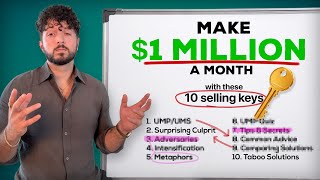
Luke Iha, who's sold over $100 million through copywriting, breaks down 10 patterns he found in high-performing copy. He explains how unique mechanisms, adversaries, intensification, and metaphors work as narrative beats to hook readers and drive sales.
In this video, I want to break down one of the most important concepts that I ever learned in copy. That once you see it will change fundamentally how you look at any kind of copy. I don't care if it's an email, an ad, a sales letter. I know that sounds very hyperbolic, but I'm very, very serious when I say that, because even experienced copywriters know what I'm about to share with you intuitively, but they don't know it explicitly. And when you don't know something explicitly, it doesn't allow you to kind of manipulate and, and think on a higher order level about it. Okay, so what I'm going to give you, it's, it's meta. I'm going to try to explain it as simple as possible and give you the resources so you can follow up later to understand it. But I promise, if you just spend a little bit of time watching this video, reading through whatever we have, it's going to be well, well worth it. Because whenever you go to write a sales letter, analyze a sales letter, read a sales letter, or you go to write a piece of copy, short copy, it's going to make this so easy. Because what I'm talking about really is not even just about sales letters. It's about, about a sales process. So the overall big meta framework, sales process, and all of the different components that you need to hit it might get a little bit abstract or philosophical or theoretical, but I have plenty of examples along the way. And I'll give you the resource if you just opt in below. That's not my bribe. Well, it is a bribe a little bit, but you opt in below, you'll get access to all my best trainings that I have so far for free. And you'll hop on my email list where I share a bunch of the stuff with you anyways. But I really hope you enjoy this video because this is really, really, really, really important stuff if you want to be great at copy and great at marketing in general. So let's dive in. Okay, so what I'm going to be talking about in this video are selling keys. There's a YouTube, there's a video on my channel around paradoxical Questions that has almost no views. I think the thumbnail must be trash or something like that. But it's a very, very powerful, powerful video. If you don't want to watch the whole thing, just take this transcript, whatever. Inside that video, I talk about paradoxical questions, which is one component of one of these 10 selling keys. So if you want to go Deeper on one, it's you can do that. And I'll be breaking down a lot more of those selling keys individually. In this video I want to give a high level overview for what these selling keys are.
Okay?
There's 10 of them. This is very different than the 10 word sales letter or any other framework. I promise. This is different because I came up with it after analyzing writing tons and tons and tons of copy. If you don't know who I am, by the way, my name is Luke Iha. I'm a copywriter who sold over $100 million of goods with my words. I have a coaching program where I help marketers leverage AI to making more money for themselves. Right. Whether they're business owner or freelancer, that's who I am. You can learn more about me below. However, after writing so much copy, I'm a very analytical person. So after writing so much copy and then breaking down so many sales letters and I'll do more on this channel but like literally breaking them down into my brain heart day after day after day, talking about hundreds of hours of doing this, trying to identify and analyze what these patterns are and fitting them all in together into a system that now I can use. And now I teach my AI how to do it. And I can write VSLs that make like lots of money for people. They're very, very good. They're scaling right now. I can write them in a day because I understand this stuff.
Okay?
So that's what I want to provide to you. The reason I call them the 10 selling keys is this is stuff that will come up over and over again inside all different kinds of copy. But the reason why they're keys, why they're very, very important is because many, many people either leave them out of their copy and I'm talking about like sales letters for instance. But this is also true for emails or things like that. They leave them out of their copy and when they do add them in, they add them in accidentally and haphazardly. They're not very conscious about them, okay? But they're incredibly, incredibly powerful, these keys. These keys are powerful for two reasons. One is because they provide an overall. They make your sales process and your marketing and your sales letters way more persuasive. Because they're answering objections that maybe your audience or your reader or your prospects may not even be conscious of that they have. But they do have them. And what these do is they answer those objections. That's the first thing. Second thing they do is they provide fodder for some of the best hooks. So much of marketing and copy, especially nowadays, relies on getting attention, and that comes down to the hooks. Okay, so if you can plug in. And that's why this is important if you write emails or ads, because let's say that you're writing an email or an ad for a sales letter or a landing page. If you're doing that, the VSL or the sales letter may not have this beat in there. But that doesn't mean that you can't come up with an angle or, or a hook or whatever based on one of these. These selling keys. Okay, I know it's a little bit abstracted, but I want you to understand why I call them the keys. They're important because they're very, very powerful, both in terms of answering objections and creating really, really good hooks. And they're powerful because most people don't know about them or don't think about them. And when they do use them or add them, they do it haphazardly and accidentally. When I go and write a VSL or sales letter now, I'm very, very conscious to make sure that all of these things are inside of my vsl. All of these are inside my copy. And if they're not, it's for a reason. It's because I chose not to add them in.
Okay?
So being conscious of this is super, super, super, super key. All right, I'm going to break down what these are. I'll just read them real quick so you'll feel like I'm gatekeeping it. You have the UMP UMS trigger. I'll explain what that is. You have surprising culprit. You have adversaries. You have intensification. You have metaphors. You have UMP quiz. You have ums, tips and secrets. You have common advice is wrong or bad. You have comparison between solutions. This stuff is really, really good, by the way. As I'm going through it, I'm like, you have taboo, solution is good. I'm feeling bad about it because I don't want people in my membership community to look at it and be mad that I'm giving it away. I don't think they will because I think once you know how important this is, you'll want to be a member of the community as well. Okay, so those are the main 10 selling keys. Now, I'm going to break them down in just a second, but I want to give a little bit more context so you can understand them. We already talk about why they're called keys, why they're so important, but I want to give you the overall framework for where they fit in. So let's jump over here. Now, when I write sales letters, I like to think in terms of beats, okay? I like to use that word, beats, and I think in terms of beat maps, right? So what is a beat? A beat is just a point. It's an idea. So, you know, a beat in a sales letter is you probably at some point want to explain who you are and why you should listen to me.
Right?
That's your credibility section. You may also want to explain why do other products fail?
Okay.
And direct response copy, at least. Why do other products fail? Cool. You might want to understand what's your unique mechanism? That's kind of a beat, right? You might want to understand what is your offer. That's a beat. So a beat is just a point. If you're thinking of, like, school days and an outline, a beat would just be one of those bullets on the outline.
Okay?
One other way to make sure you understand beats is think about a movie, okay? So if you think of a movie like Lord of the Rings, Star wars, really, any movie, there are a lot of beats that happen.
Okay?
So, for example, the hero gets the call, right? If you look at the hero's journey, there's different components of that, different beats in the story, narrative beats. So the hero gets the call. So you can think of Luke Skywalker getting the thing from Ben Kenobi, and Ben Kenobi saying, let's go on this adventure. Or you could think of Frodo when he gets the ring and whatever. Then you can also think of the beat of gathering the group of people. So think about Ocean's Eleven, where they're gathering the team. That's a beat, right? Right. For a heist film. Or you could think of gathering the team again. Lord of the Rings, you can think of him assembling the team, right? Where he's got Legolas and Gimli and whatever. I'm surprised I even remember. It's been so long since I've seen those movies.
Okay?
But he's gathering the whole team together. Then you have, like, the crisis moment, right? Where everything feels lost. And then you have the ending scene. And maybe you have something called Fun and Games. Like, you have different beats in the movie, okay? Different things. And there are patterns that emerge in all kinds of stories, all the way from sci fi to fantasy to heist films, whatever.
Right?
Now, the reason why it's important to think of movies like this is because in general, in general, it's not always True. But in general, the more beats you have in a movie, the more entertaining it's going to be. Obviously, there's diminishing returns and you can have too many beats, whatever. But in general, the more beats and moments and interesting things you have, the better.
Okay?
So in general, you want more beats than you. You want, you know. Yeah. You want more beats than you want too few beats. That's the first thing. The second thing is that you don't need to use all the beats every single time.
Okay?
So those are two really important things to share as I share this. Because when you talk about sales letter and sales copy, there are many beats that you can hit in a sales letter or an email or an ad, okay? And typically, the more that you add in and are intentional about adding in, the better and higher converting your copy is going to be. However, it does not mean that you want to stuff all of these into every letter because there's context and nuance and you need to be thoughtful about the decisions that you make when you're writing copy. But in general, the more you have and the stronger they are, the better your copy will be.
Okay?
But it doesn't mean you need all of them every single time. So that's important to understand what a beat is.
Okay?
Now I'm going to give you this document so you can check this out. But we're going to talk about sales letters just for a second. In a sales letter, these are the main sections you have. You have headlines, microleads, which are openings or little mini hooks that you have. You have the main lead, which I think of as the trailer for your sales letter. You have the background story, which explains who you are and what. What you're talking about. You have the ump, which explains the real reason why you have the problem. And you explain the ums, which is the real mechanism of the solution. Then you talk about your product and reveal your product, how it was created. Then you talk about close. So actually, this should probably be more product creation. It's the story behind your product. And then you talk about your close, which is basically your offer, right? That's the closing copy. And then you have frequently asked questions down here. What you'll notice on each of these. This is just a helpful outline, no matter what is, you'll notice that I put percentages on here because whether your VSL is 40 to 50 minutes long, 10,000 words, right? Which, believe it or not, they still are running and making a lot of money for people, okay? But markets have different attention spans and different types of VSLs you have. But whether you have a 5 minute VSL or a 10 minute VSL or a 40 minute VSL, this is in general a structure that you can follow, okay? It's not the only structure. There's many exceptions to it and many different ways to break it down. But this is a pretty tried and true structure that is still working and will probably continue to work over time. And you can see that now. What you'll also see is under each of these, you're going to see little beats. So let's talk about your background story. In your background story, you typically want to talk about who are you? You want to talk about the story of the problem that you had. You want to talk about trying different failed solutions, okay? Then when you go to the mechanism of the problem, you're probably going to want to talk about myths and mistakes that are common. You're going to want to talk about how you discovered the real nature of the problem, right? You want to understand trigger moments, you probably want to talk about the surprising cause, et cetera. So each one of these little triangles here, that's a beat, okay? Don't get too confused by this. I'll do later videos on it, but I want to give you that overall context, okay? And what you're gonna see is that inside of here you'll see that there are different selling keys, okay? So for example, common advice and comparison are two selling keys that I would put in the lead and I would also put them in the background story. So the reason I did this is so that as we go through the next 10 selling keys on a high level, you know where you want to put these in in your sales letter, okay? And of course, if you're writing an ad or an email or something like that, you can just talk about the direct key, right? You don't have to put it in an order. So let's go back and let's talk about these different keys. So the first one is what I call the UMP trigger, okay? So UMP and UMS stands for unique mechanism of the problem and unique mechanism of the solution. Typically, if you're doing direct response, you want to say, hey, I have a new solution, right? A new awareness. I'm going to explain to you what the real problem that you have is and what the real solution is. Now, typically, if I'm coming out and saying, hey, I understand the real reason why your hair falls out, for many people, the first thing you're gonna say is this bullshit, like, who are you? Like so many people have been struggling with this, like, who are you? And how did you find the act? What makes you think that you found the actual, real thing? That's what the trigger moment comes into play for.
Okay?
So the trigger moment gives justification for why you discovered the real nature of the problem and the real nature of the solution.
Okay?
There are some examples of it. For example, paradoxical questions. Bathroom habit. If you got dry joints, okay? Which is like brushing your teeth. So there's so much room for curiosity and hooks in here as well.
Okay?
So the shocking truth. So, again, it's really powerful if you can frame other solutions as actually being problems. So the shocking truth is that traditional cardio programs actually force your body to store fat.
Okay.
Which would be a surprising culprit. The next one is adversaries. People skip this one all the time. It's not relevant in every single market. But if you can create a villain, an adversary, and you'll notice these are all connected, right? If you can create an adversary that becomes even more powerful. Let's go back to the joint example, okay? Oh, I saw a Harvard study that said wear and tear is not the real problem, okay? The real problem is dry joints. What causes dry joints? Well, it's actually. Let's say again, it's actually. It's actually. I'm trying to think of a plausible one, so I'm going to give you an implausible one because I'm on the spot. The actual reason why you have dry joints is, you know, your toothpaste or something like that. And it turns out that doctors actually know that this is the case, that there's this chemical in here, but they make so much money that they never want to share with you, right? So it's creating this adversarial connection. Big food companies or Wall street doesn't want you to know about this. Traditional real estate agents, whatever, you got to be careful about this. And more sophisticated audiences or specific audiences, they're going to roll their eyes if you hear this. The amazing thing is, though, with all these beats is I'm showing you extreme examples, but you can soften these examples and use them literally in every single market.
Okay.
If I'm selling you a copywriting training, for instance, I could say, you know, why is it that the people who know the least about AI actually make the most with AI, you know? And then I could go into, like, the adversaries, like, you know, most people who you see on YouTube, they talking about AI are talking to you with so much certainty about it because they have something that they want to sell you. But I'm here to tell you that nobody really knows the truth. So you shouldn't be trying to predict the future. You should focus on the now. Here's what's working right now, et cetera, et cetera. So careful about this, okay? And more sophisticated audiences or specific audiences, they're going to roll their eyes if you hear this. The amazing thing is though, with all these beats is I'm showing you extreme examples, but you can soften these examples and use them literally in every single market, okay? As if I'm selling you a copywriting training, for instance. I could say, you know, why is it that the people who know the least about AI actually make the most with AI, you know? And then creating a villain or an adversary or someone who either is actively trying to hurt your prospect or, or is just not, doesn't have their best interests at heart, is so, so powerful. And you can turn the dial up and down, but having it in there to some capacity makes it better. Think about this like a dish. If you're cooking a dish, okay, a burnt out, fucked up pallet, right? They like fucking Takis and hot Cheetos and they don't have a sophisticated palate. And you're just going to crank up the flavor to like a 100 extreme blast goldfish, okay? That's one angle you could take, right? Which maybe some of these I could go into. Like the adversaries, like, you know, most people who you see on YouTube, they talking about AI are talking to you with so much certainty about it because they have something that they want to sell you. But I'm here to tell you that nobody really knows the truth. So you shouldn't be trying to predict the future. You should focus on the now. Here's what's working right now, et cetera, et cetera. So creating a villain or an adversary or someone who either is actively trying to hurt your prospect or is just not, doesn't feel like that. But then you can be more sophisticated and you can be like, oh, I'm going to add a little bit of sourness, a few, a few notes of fruit. I'm going to add a few sweet notes and spicy and whatever. I'm going to adjust to the palette and be sophisticated or more nuanced, depending on who I'm talking to. But I'm still going to have those flavor profiles and flavor notes in there, okay? So having an adversary is remarkably underrated when you're writing copy doesn't have their best interests at heart is so, so powerful. And you can turn the dial up and down, but having it in there to some capacity makes it better. Think about this like a dish. If you're cooking a dish, okay, a burnt out, fucked up palate, right? They like fucking Takis and hot Cheetos and they don't have a sophisticated palate. And you're just going to crank up the. And you can think about plausible ways. One way that I soften this is I say is I kind of just imply that there's an adversary.
Right.
So I could say, for example, and why don't you know about this? I don't really know.
Right.
It seems like Wall street kind of knows about this dark pool training, but they never share it. And it's probably because they're just getting all these profits. Again, I don't really know for sure, but that seems likely, right? You can present it in the sense of like, I don't know if this is actually the real flavor to like a 100 extreme blast goldfish.
Okay.
That's one angle you could take, right? Which maybe some of these. But it seems plausible. What do you think? Right. You can just leave the question in their mind to start thinking about it. The next one is intensification. This is really important.
Okay.
People leave this one out. I know this stuff may seem. Feel like that, but then you can be more sophisticated and you can be like, oh, I'm going to add a little bit of sourness, a few, a few basic. And maybe it seems great, maybe it seems basic as you're reading it. But if it seems basic, great, because we just need to be reminded of the basics. And people leave this stuff out all the time. Intensification is about how the problem gets worse. They don't fix this. You notes of fruit. I'm going to add a few sweet notes and spicy and whatever. I'm going to adjust to the palate and be sophisticated or more nuanced, depending on who I'm talking to. But I'm still going to have those flavor profiles and flavor notes in there. Okay. So having an adversary is remarkably underrated when you're writing copy.
Okay.
Sorry for these little typos. That's from AI, our good friend. So you talk about how the problem is just going to continue to get worse. So it's like testosterone levels are bad. This is not even the best example. So if you say testosterone examples are bad, what you do now is then you talk about the second, third and fourth order consequences of low T. Okay. And you can think about plausible ways. One way that I soften this is I say is I kind of just implied. So it's like testosterone levels are bad and they're getting much worse. And the crazy thing is as your testosterone gets worse, your risk there's an adversary.
Right.
So I could say, for example, and why don't you know about this? I don't really know. Risks of all these other health problems go up, not to mention the libido goes down, which how are you going to have a healthy relationship when the libido goes down? Which is why so many men continue to be lonelier and lonelier because they don't have the ambition. They spiral into dark places. Right?
Right.
It seems like Wall street kind of knows about this dark pool training, but they never share it.
Right.
And it's probably because they're just getting all these problems. So I'm taking something that's maybe seems small, like the testosterone. And I'm talking about all the ripple effects and the second, third, fourth, fifth order consequences of this intensifying the problem and increasing the urgency. The other, again, I don't really know for sure, but that seems likely. Right. You can present it in the sense of like, I don't know if this is actually the real reason, but it seems plausible. What do you think? Right. You can just leave the question in their mind. But to start thinking about what is metaphors. This one is very self explanatory. So I won't go super deep into it. But I am always shocked by how bad people are at metaphors. I was really bad when I started metaphors. It's an art. And it's the art of simplicity. It's the art of making things tangible and concrete.
Okay.
And most copywriters over complicate this. I used to as well. Here's an example. Imagine your cartilage as a wet sponge. Every time you take a step, squeeze out the fluid. The next one is intensification. This is really important.
Okay.
People leave this one out. I know this stuff may seem basic, maybe it seems great, maybe it seems basic as you're reading it. But if it seems basic, great, because we just need to be reminded of the basics. And people leave this stuff out all the time. Intensification is about how the problem gets worse. If they don't fix this, then release it, let the flow back in. But after 40, that sponge starts drying out, becoming more like cardboard. It can't absorb fluid anymore. So every step becomes bone grinding on bone. This is not exact copy, but this is the basic idea. That I used again, inside of a joint veslax that made tens of millions of dollars. It's about dry. Dry cartilage, right? Dry joints. There's not anything fancy or sophisticated or crazy about it, but it is very concrete and visual. And the V, sorry for these little typos. That's from AI, our good friend. So you talk about how the problem is just going to excel opens up with, this is the Verzaska river in the Swiss Alps, right? So it's. And if you know anything about joints, you know, you'll know it's this clear, cool, rushing fluid between the gaps, et cetera. So it's all about this visual, natural metaphor. But if you can make things concrete, metaphorical, it's just remarkably, remarkably powerful. Here's the other one, the UMP quiz. This is basically a quiz that helps people understand if they have the problem. So if, for example, you're saying that dry joints is the real problem, you may want to have a quiz that says, hey, do you think that you have dry joints? Take this little quiz, okay? And typically what you do is you make the quiz a little bit bullshit in the sense of you don't want people to take it who could be good fits and they disqualify themselves. So you want to make it broad enough and loose enough that it helps them to identify and be like, yes, I relate to that. I relate to that. I relate to that. I relate to that.
Okay?
The reason, again, why this is powerful is, yes, it's a tool to get them to nod their head and say yes. But more importantly, it's an amazing, amazing hook. You can say, hey, later in this video, I'm going to give you a quiz that will help you to understand this. You can also put the quiz in the lead and you can put the quiz in the ads, right? You want to take this quiz. It'll show you, blah, blah, blah, blah, blah. It's powerful. The next one is Tips and Secrets. This is really, really key. So one of the examples I always give was I wrote a VSL for a dog product. It was another joint product. I got a lot of joint products, but it was for pets. And one of the main ingredients was basically eggshells. Eggshell membrane, okay? For dogs. And one of the things I said in there was, like, I talked about eggshell membrane out of the section where I was like, one thing you can do is every time you cook eggs, you. You can try to peel the membrane and you can put it. Give it to your dogs, okay? And the reason I Do this is because it takes some of the sales pressure off, right? Because it's. Now it feels more like I'm saying, and really you should be trying to help people. But sometimes in the back of someone's mind, whether conscious or not, if you're trying to convince them of a new idea like eggshell membrane is the best thing for your dogs, and by the way, I'm selling you a supplement. At some point in their mind, they're going to be like, well, is he just telling me eggshell membrane is the best thing? And then he's trying to force my hand and do jiu jitsu to get me to buy the product. Which in many cases for direct response copywriting, that's kind of what you're doing, right? However, when you add in the tips and secrets, it takes a little bit of the pressure off because you can say things in the lead and through the thing like, hey, I'm going to give you all the information you need so you can just go out and solve this problem for yourself. Unfortunately, it's a little bit hard, right? To solve this problem, you're going to run into this obstacle, right? It's very, very smelly to do these eggs and you'd have to peel, you know, a dozen eggs every day. And who has the time to do that? Well, here's a simpler solution. Okay, so you're providing optionality, which takes off the pressure and makes them feel like you're not trying to force them to believe something or force them into a position. Next one is common advice is wrong and bad. This does relate to surprising culprit, but it's more so just like, hey, everyone's telling you that you need to eat less and move more. But that's the worst advice.
Okay?
So it's less of just the culprit behind the real problem and more so here's why other advice is wrong. It's even better if you can paint the advice as bad, which typically there's a way to do this as well. Never go to bed angry might be the worst relationship advice ever.
Okay?
Super, super powerful, right? And now you can open up the five word advice that you hear from every single marriage psychologist that's actually ruining most of their relationships, right? Or the why never go to bed angry is one of the worst things you could possibly do that's very, very powerful for people. An amazing hook, amazing headline and stuff like that.
Okay?
The other one is comparisons between solutions.
Comparison.
So comparing other solutions and explaining why they're not that great. Again, the reason I like this one is because it makes an amazing hook. People love comparison ones because they want clarity. And the other one is a taboo solution is actually good. This is a really, really powerful one as well. Saturated fat is great for you. You can talk about why eating a McDonald's hamburger is actually probably healthier for you than running a mile on the treadmill.
Okay?
And then you can connect it to saturated fats, et cetera, et cetera. Everyone says never borrow money, but wealth. People know that strategic debt is the fastest way to build wealth. Relationship experts say always be honest, but strategic mystery is what creates attraction.
Okay?
So why a taboo solution is actually good is remarkably, remarkably powerful. Okay, again, none of these things are groundbreaking, but I promise you, if you're writing a vsl, just go and do a double check and say, do I have all these beats in there? Second thing is, if you're writing Facebook ads, emails, any kind of short form copy, ask yourself, could I create a hook around one of these different ideas, even for organic, for YouTube or Instagram or any of these other things, you could pop those things in there.
Okay?
And in general, the more you internalize this, the more you can start to create these kind of worlds. You can do world building, right, where you create these things and you have conviction about them. Because chances are, if you really have conviction about a solution, probably there is a surprising culprit hidden underneath there. If you look hard enough, there's. There probably is a reason why you came to your perspective and a story behind it. There probably is real risk and consequences for not doing the thing that you have conviction in.
Okay?
There probably is a quiz that can help people self identify. There probably is common advice that is wrong and bad. Okay? So pulling these things out again, being conscious and explicit about them is going to be insanely, insanely powerful for you. So that's all I have on here. Again, if you want access to this, you can just opt in to my list. Just opt in and then I'll send you the link. It has all my stuff in it, super, super simple. And, and then you can get emails from me where I'll share that. And of course you can opt out on those emails if you want. And below I have a marketing newsletter which will keep you up to date. It's a really, really amazing newsletter. It'll keep you up to date on everything that's going on in AI, especially related to marketing. If you want to go deeper on like almost everything I know about copywriting, like whether you're a beginner or advanced it's really, really good. There's a copyblocks training. It's 27 bucks. It's like less than a meal. You know, a double burrito at chipotle or something like that. And you can get access to that as well. So that's all I have. And I'll see you in the next video. Thank you.
More from Mario


easiest way to make $30k/mo as a creative strategist (I’ve helped 100’s of people)

how to write hooks so dangerous you break people's brains (4-step "deep fry" process)



The Complete Creative Strategist Pricing Guide for 2026 (Every Deal Structure I've Seen)


this copy instinct framework makes you a monster at ads (nobody teaches this) pt. 1


why "insight vectors" are the most valuable marketing concept of 2026 (I didn't want to share this)