The 5 Stages of Client Acquisition for Copywriters
YouTube coaching video by Luke Eha presenting a practical framework — the "five stages of client acquisition for copywriters" — to help new and developing copywriters know what to focus on at each career stage. Luke frames his credibility with revenue/results claims, then lists the five stages (Hustler, Disciple, Marksman, Rainmaker, Icon) and explains each stage's single objective. The transcript covers Stage 1 (Hustler): get a paying client immediately (suggests Upwork, building 3 five-star reviews, proposal tips, overdeliver to earn rave testimonials). It moves into Stage 2 (Disciple): reach a minimum competence (C+) by applying a three-part development loop — volume, feedback, study — with suggested time allocation (≈70% doing, 20% feedback, 10% study). The piece is prescriptive, anecdotal, and tactical, with downloadable guides referenced.
Chapters
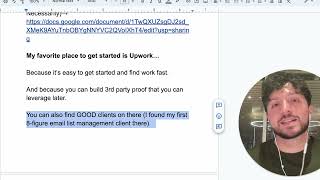
Yo, what's going on? My name is Luke Eha and in this video I'm going to walk you through the five stages of client acquisition for copywriters. If you don't know who I am, I'm a copywriter who went from knowing pretty much nothing about copy to selling multiple six figures worth of my words within just a couple years. Since then, I've sold over nine figures worth of goods, beaten 50 million dollar controls, launched a seven figure agency in less than a year. And I've now worked with hundreds, maybe even a thousand plus copywriters inside my coaching program, Genesis. And in this call, like I said, we're going to walk you through the five stages of client acquisition for copywriters and freelancers. Right? The reason why this is important is because once you understand what these stages are, you're gonna be able to know exactly what step you're in and exactly what to focus on without wasting time. This is the blueprint that I wish I had. Cause it will tell you, here's the stage you're in, here's what to focus on. Here's what to do next so you can move faster. Faster than I did. So if you work hard, have talent, and execute everything that I say, then I promise you can move incredibly fast through this game and and change your life forever within a year. It is possible. Do you believe it? If so, then let's dive in. After working with hundreds of copywriters, this is not something I just pulled out my ass. This is something that I've seen in my own life and in the lives of so many people that I've encountered. I probably know more copywriters than just about anybody. I've discovered what I call the five stages of client acquisition for copywriters. And these are them. The Hustler, the Disciple, the Marksman, the Rainmaker, and the Icon. These are the five most important stages. Each stage has one single objective. The Hustler is to get a job. The Disciple is to get good enough. The Marksman is to get a big win. The Rainmaker is to get more wins. And the icon is to get even more. Some notes. 1. You do not have to follow this flow. I just think you should. What I mean by that is you don't have to move through each of these steps sequentially. I just think this is the most efficient and most sustainable way to grow and evolve as a copywriter as you're getting clients. But again, everyone's path is unique. And you should embrace that. Your path is unique. There will be ups and downs and serendipities that you cannot account for. And that is a good thing. So let me break down each stage and show you how to execute them. So the first stage is the Hustler. And their number one objective is to get a job. So this is what I always say to anyone who's in my program, right? And they're like, I want to be a copywriter. But. And I ask, hey, have you had a job yet? And they say, no. I say, stop what you're doing. I want you to leave this call right now. I don't care what you're on. And I want you to go and get your client right away. I want you to go and start to sell your words to somebody right away. Maybe that seems easier said than done, but trust me, it is. It's pretty straightforward. You can find somebody to agree to pay you $5, $10, $15. I actually don't care what the amount is. Find somebody to agree to pay you for your words. It could be somebody, you know, a stranger that you find online. There's tons of different ways to do it, but you need to go and get that first transaction. There's the reason why this is so important is I see so many copywriters or want to be copywriters, not wannabes, but want to be's. They get stuck in this stage because they have all these limiting beliefs in their mind. So I just need to practice a little bit more. I need to read a couple more books. I need to do this. It's all bullshit. It's all smoke and mirrors. So if you do not have a client and you're watching this, I want you to go, I want you to stop this video. You don't need any more advice. You need to go and get a client. Okay? I recommend upwork, and I have some advice on how to accomplish that. But go and get a client. Because when you have someone that you're working for, there's a different level of motivation. There's a little bit of risk, there's a little bit of uncertainty, there's a little bit of pressure. And you need all of those things to propel you to actually do the work. Okay. If you're just sitting there handwriting letters or practicing copy or doing whatever, I think those exercises are great. But they are great when you're actually doing work for somebody else. Before that, it's just mental masturbation. You do not want to be wasting your time doing any of that stuff. Go and get a client and then you can start to Figure out how to fulfill for that client what you need to do, et cetera, et cetera. You don't need more training. You don't need more books. You need to get a client. Okay? I wrote a whole rant on here. Later, I'll show you how you can get this document so you can read through my rent. Okay? These are what I typically hear from people. I just need to study more. I need to get better. I need to buy xyz course, I need to do whatever. Okay? But to me, that's all fake. You need to just go commit, say, I'm going to go get a client. Okay? Because once you do, you're creating this momentum for yourself, and everything will just build from there. So the sooner that you're able to get through this hurdle, the better. And this is why this is called the Hustler, Okay? I want you to just go out and make it happen. Actually, I'll show you something in a second. So there's the rant. I have a written and a verbal rant for you. Now let's dive into the tactics. So the Hustler stage is the very first stage when you decide, I'm going to be xyz, Right. So this applies whether you want to be a copywriter or anything else. My firm conviction is that you need to be in the game, okay? So you need to jump in and make it happen. There's a couple different things that I say to people. One is, I say, when you start out, you're likely work with shitty clients, and you're also probably a shitty copywriter. So it's a match made in heaven. A lot of people worry, like, oh, my skills are not that great. My thing is, look, until you get good, most of the people you're going to work with are not that great clients either. Okay? So you're not a good copywriter, most likely. If you don't have any experience, it's impossible to be. It's not your fault. It's just. It's impossible to be it. I. I'm a great copywriter now. I was not a good copywriter when I started out. My stuff I wrote when I started was embarrassing, but I would never have gotten better unless I actually applied myself and started getting these jobs. The people I worked for, they were not great business owners. They didn't know how to run a business. They didn't really understand copy that well. So it worked okay. Everything was has as it was supposed to be. It was a great ecosystem. The other thing I say is that the Best way to learn something is to do it. When you study without application, you think you're learning something because you're reading castvertising and you're reading this newsletter and you're watching YouTube videos and you're doing whatever you think you're learning, but you're not. The learning is lost to you. Okay? And what I mean by that is I've read the same book once before I started doing copy, right? And then I read the same. The next, the same book after when I started doing copy. And everything in that book made way more sense to me because I was actually in the game. I was already thinking about things, so I was able to pair my internal experience with what I was reading in the book, and I actually was able to get the value out of the book. So, again, this is another reason why you're wasting your time. You're actually not able to learn because you're not in the process of doing it. All right, so how do you get started? Well, you can do this by friends, upwork, Reddit, Twitter, whatever. Okay? You can find somebody. It's the hustler stage for a reason. I also don't care if you work for cheap or work for free. People object to that. If you can go and get paid, and even paid well right out the gate, I fully support you. I want that for everybody in here. The reality is, is that it's hard. And I also think that being in momentum, I think that getting practice and actually writing copy is way, way, way more important and valuable to you than getting the paycheck. Okay? The paychecks will come later if you put in the work in the front end. So don't let that hold you back and think, oh, I need to get paid or I need to be paid my worth. It's like, my thing is just get out there, get the job, start the process, and you can continue to scale and get paid what you're worth later down the road. I'm going to attach this here. It's quite embarrassing, but I'm going to attach it anyways. So this is a blog post that I wrote. It was. I think it was the very first piece of copy that I did. I think the date is January 2020. So four years ago, it was the time that I decided, you know what? I'm gonna be a copywriter. I just literally went on Reddit. I don't know what it was. It was some guy who's selling something called Rune Juice, which is. I hope he's not watching it. It's A horrible name. And he was basically like, hey, I need to write these blogs, whatever. And I just said, hey, I'll write these blogs for you for free. Okay? It was just the. I just needed to write and do something for somebody and this is the very first thing that I ever did. You're seeing it live here. Okay. It's a blog. It's not even copy. But put. The important thing was I got started. As soon as I did that, I was like, okay, well now I need to get the next person, the next person, the next person, the next person. I just kept that momentum going to be able to get to the place that I'm at today. And I continue to apply that in my life going forward. Now my favorite place to get started is upwork. Some people shit on upwork, some people say it's not great. I have found a lot of success for both myself and for my students in starting on upwork. I like it because you can build third party proof, which basically means you can build your portfolio and it looks really sexy and, and it just gives you some validity, right? Because if I'm even if I'm sending a cold DM or I'm just like outreaching to somebody, they're going to look and be like, who is this guy? Right. They only have my word for what I'm capable of. But if I can point them also to an upwork profile where I have tons of five star reviews, whatever, it adds a layer of credibility. Eventually you outgrow that. But when you're first getting started, it's just amazing. There's people who want copywriters, so you just need to go and pitch your services to them. Do work, you get paid. You're building a portfolio, you're building a body of work, you're building everything that you need and you're getting better along the way. I think it's awesome. You can also find really great clients on there. So I put that on here. My first eight figure email list management client was on there and I worked with them for maybe two years, right? And they were a great company and there's tons of opportunities for me to grow with them and upsell my services and et cetera, et cetera. Eventually I grew so much I didn't want to work with them anymore. But you could find really good clients on there if you know what you're doing. Which by the way, if anyone, if you guys want me to more trainings on upwork, my specific system, let me know and I'll shoot a video on that. Okay. For now though, I'm going to give you an old version of how I got started on Upwork. How to make your first $1,000 on Upwork in 3 months or less with zero experience, step by step. So this is a guide that I wrote literally the day after I think I made my first $1,000 on Upwork. It took me an embarrassingly long time to make it, maybe a couple months. You should be able to blow right past that. I don't want anyone to wait that long. But I was a little bit slow. So it is what it is. And I wrote this thing. Yeah, I think I wrote it immediately after I made that money. I just sat down and wrote it. I think I modified it a little bit, but it walks through my entire process. Some of these things have changed, some of the things you can't do. But in general, I still use this framework. I give it to students inside of Genesis now. And those who are starting on upwork, they use it and they have a lot of success. So it continues to work to this day. There's some things that you might want to modify, but overall, this is one of the best things you could use. And. And I'm giving you that to you right now. I'll go later and do an updated one if you guys want. Here's the basic TLDR of what that document says. Okay? So this is how you can succeed on UPWORK in six easy steps. Okay, the best tips, One is fill out every feature on upwork. So first thing I say is go look at your upwork profile. Every single thing that they have on there. Resume where you went to college, make a video of yourself, get testimonials from people, make sure you're getting the reviews, et cetera. Fill out the proposal. Make sure you have portfolio samples of your work. Every single thing that you can, pop it in there. Because people just want to come on and feel like your profile is full. That's the experience. They're not even going to look or read too in detail at what your stuff is. They just want to click on your profile and be like, okay, this person is legitimate. They took time and effort and care to cultivate a nice profile. It looks full. Done. The next thing is to get three five star reviews right away. This is one thing that's changed right when you apply to jobs on Upwork. Now if you do not have at least three five star reviews, you will not get a response. So you have to do that right away. You're wasting your time just sending out Applications and proposals. If you do not have five star reviews, nobody's going to respond to it. So what I tell people all the time is go and find a friend, give your friend 10 bucks, 100 bucks, 50 bucks, and tell them to hire you, pay you that money, so you pay it to them so they can pay you back, right? If you want to be ethical with it, make sure that you actually do some work for them. Everybody needs a work. I don't care. Write an email to them, to their mom, write a something to them, right? But you need some sort of five star review and you want to make it look as good as possible and you need to get that right away. It should take a couple days at the most. I tell people all the time, I want you to do this in two days, okay? Come back to me and get this done. And they always get it done and you need it. So I put do not skip the step. Do not skip, do not skip, do not skip. The next is write your proposal like a sales letter kind of. So I put an example in the upwork doc that you can copy. You probably want to modify it and play around with it for, for yourself. But you kind of want to be smart with your proposals. So make sure your proposals are good, especially the first lines, because that's what people see when they open before actually they even open up your proposal. They're going to see the opening lines and stuff. So you want to make sure that that looks good. The next thing is to avoid downside in the beginning. Okay? So I do not work with clients who seem like they're going to be nightmare clients. I want the clients who are just like kind of laissez faire. They're going to give you five star reviews, et cetera, et cetera. So don't work with somebody who, if you go and look on the reviews they've given to other contractors, other freelancer, if they're giving like 2 stars, 3.5 stars, 4 stars, and they're just being nitpicky and critical, don't do that, okay? One four star review or three star review or whatever will not tank your profile. I think you can always come back from something, but in the beginning it's going to slow you down a lot. So avoid your downside, especially in the beginning. Next thing is to get rave reviews and testimonials. You don't want just people to be like, hey, this person was awesome. You're going to be like, this person is like the best freelancer I ever hired in my life. Okay, you really want rave, Rave gloves. Glowing reviews. The way to do this is you need to over deliver. So if they ask for three emails, send them four. Next thing is to serve them. Cut your. Your service provider. So come with the attitude of, I'm going to serve this person. So try to be anticipating what their needs are. Try to be thoughtful with the questions you have. Try to make everything easy for them. Be on time, be responsive. All those things add up to a nice experience for the person who's hiring you, which is it's easy to stand out on upwork, and it's going to make them way more likely to leave you a great testimony. The next one is care. Actually care. Like, I was so obsessed with getting better when I started that I would just write emails for people and then I would look at their landing page and offer advice, and it was even bad advice. But people just sensed that I cared. I cared more about their business or as much about their business as they did. And people are just attracted to that and they liked it. So they left me great reviews and that just supported my journey even more. Okay, the next is you can filter jobs just by putting direct response in the title of your job to filter it out. All right, the next one is the disciple. So once you've gotten started, once you've gotten your first job, maybe your first two to three jobs, okay, maybe you got paid for them, maybe you didn't get paid for them, maybe you got paid a little, maybe you got paid a lot. Maybe you got it from Reddit or Upwork or Twitter. I don't care where you got it from, but you're in the game. You have become a copywriter. You've got over a big hurdle. Your next objective is to get good enough. Now, I don't really hear anybody in copywriting, not anybody, but I don't hear a lot of people in copywriting talk about getting good. But it's probably the most important thing you can do to get clients. So let me give you an example. My business partner, Mario Castelli, has a Facebook profile picture that's 15 years old. You can't find him online. He does zero outreach. He has zero acquisition processes. He just happens to be really fucking good. So much so that he routinely turns down 35,000 and $100,000 projects just because he doesn't want to do them. That's this past month alone. Again, it's because he's good and delivers results. I'm also in a similar position and very blessed and fortunate to have people come to me for work, which is why I think getting good is a huge priority and something almost nobody talks about. This is just the reality. Again, worked with lots and lots of copywriters, and it's very rare that I see someone that I think is actually good. And it's not because it's impossible or hard. It's just that one, people don't try or care about being good that much. And the second one is they don't really have good teachers. A lot of people overcomplicate things, or they don't really have any sort of system whatever. So as long as you're committed watching this video to being good and understand the importance of being good, I'm committed to providing the best materials that I 100% have. Conviction will make you as good as possible in the shortest amount of time. Whether you want to be a copywriter or business owner or whatever it is, follow this. You will get good. I've seen it time and time again with business owners and copywriters. People who started from being bad dog water copywriters to being actually pretty fucking good. All right, so let me go. Most copywriters are dog shit. It's just true. Including a lot of people teaching copy. This is also true. It's not that hard to get good. It's just that a lot of people don't even try and they're learning very inefficiently. If you're committed to the former, I'll help you with the latter. So the whole point of the disciple is once you get started and you have a client and you should focus on getting good enough is what I'm saying. Now, what do I mean by getting good enough? Well, it's kind of hard to quantify, but if you say that copy is graded on a scale of F to A, you want to get to at least a C plus. At least. Okay, that kind of hurts me to say, because I want everyone to be A plus because I think it's possible, or at least an A or a B plus. But C plus is kind of this minimum threshold of how good you are where you can start to actually flex a little bit. You can get better clients, you can actually get results for people, et cetera. You should not stop at a C, understand me? This is the minimum threshold that you should achieve and you should continue to try to get to the B level and the A level as quick as possible. But the reason I say get good enough is because I don't want people to get stuck in this stage of not making A lot of money trying to get good. I want you to balance it a little bit. Okay. This is a mistake that I made myself. I focused so much on getting good. I didn't put equal amount of attention into scaling my income at the same time. And I still had a pretty fast rise, so. But I could have made even more money if I had focused on both simultaneously. Okay, so you just want to get good enough about a C. And with consistent effort and talent, I think you can do this in a few months. Two to three months, maybe. That seems like a lot. Maybe it seems like a little. I'm telling you it's not a lot. And if you follow all the stuff I'm telling you to do and all the videos that I'm going to be creating follow that, you will get good. And you can get to this level pretty quickly. How do you get good? Three things. So the first thing to get good is volume. The second thing is feedback. The third thing is study. Okay, you need all three of these. I'm going to say it again. You need all three of these. And I'm going to say it one more time. You need all three of these things. Volume, feedback, and study. If you are missing one of these things, you are losing out a lot. These things have a synergistic effect, which I mean is when you're doing a lot of volume of copy. I'll break them all down in a second. When you're doing a lot of volume, it's like you're going at like, you know, 10x. When you add in the feedback, now you're at like 100x. And when you're adding in the study, now you're at like 300x. I just came up with those numbers off the top of my head. The point is they're synergistic and exponential. When you're doing all three of these simultaneously, you will get better than most people. The reason why is I see copywriters, even today, copywriters have been doing this for three, four, five, six, seven years. They still are not getting consistent feedback. They're still not studying, they're not doing a lot of volume, and they're not really learning or growing. And it's the simplest thing in the world. Follow this formula and you will get better than most people because most people are not willing to do these things. That's just the truth. Now, you should also be doing these in the right ratio. So what does this mean? It means you should spend about 70% of your time doing and writing actual copy. For real clients. It's the best way to learn. You just need to be in the trenches, doing it, trying, having risk, failing, figuring it out. Okay. That's where most of your learning is going to happen. The second thing you need to do is spend about 20% of your time getting feedback from your market, if you can, from someone who's actually good. It's very hard to come by, but it's worth its weight in gold. I cannot stress this enough. If you're writing a lot, doing a lot of volume, and you get someone who's good to critique your stuff, and they know how to actually copy cheap your stuff, you will grow so fast. I've seen copywriters become experts in a domain within a few months of this process.
More from Mario


easiest way to make $30k/mo as a creative strategist (I’ve helped 100’s of people)

how to write hooks so dangerous you break people's brains (4-step "deep fry" process)



The Complete Creative Strategist Pricing Guide for 2026 (Every Deal Structure I've Seen)


this copy instinct framework makes you a monster at ads (nobody teaches this) pt. 1


why "insight vectors" are the most valuable marketing concept of 2026 (I didn't want to share this)