The 8 "vicious hook" rules behind $100mm+ in ads (this is everything I have)
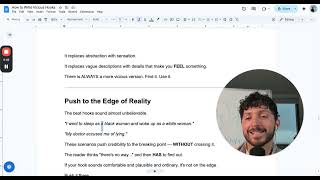
Luke Iha breaks down eight rules for writing "vicious hooks" that stop scrollers in the first 10-20 words. He's generated over $100 million in ad sales using emotionally charged, specific language that reads like information, not advertising. The formula: hit pain or curiosity, withhold key details, and lead with consequence before explanation.
Chapters
In this video, I wanna talk about how you can write vicious hooks, which basically are the best possible types of hooks that you can write. And you'll understand why I'm gonna call them vicious in just a second. And we're gonna be covering 8 different principles that make people stop scrolling. You can kind of see some of those on here, but this is very in the weeds, very, very tactical and very, very specific. But writing hooks is by far one of the most important skills that you can have when it comes to copywriting, but especially when it comes to creative strategy. When it comes to the actual writing process, I spend maybe 70, 80% of my time focused on the hook because if you can't get someone to open, to see more around the ad, to want to consume the ad, then it's dead on arrival. Okay? And I think most people, again, after coaching and working with hundreds, if not thousands of copywriters and creative strategists at this point, it's become clear to me that writing hooks is one of those things that It takes a lot of skill to develop, and it's one thing that people struggle with. So I'm gonna make this video giving you literally all of the sauce, everything that I have to help you write better and better hooks. Now, this idea around a vicious hook actually comes from someone who is the former CMO at one of Hormozy's portfolio companies. And he basically was talking about how Hormozy— and I don't understand the exact details, so I may be slightly misquoting some of it— but either in Hormozy's brand himself or as one of the specific portfolio brands, there was a set of rules for the ads. And one of the rules for those ads is that the, the ad must be vicious, vicious. And, you know, again, that's sort of anecdotal. I heard it, you know, through the grapevine, but regardless of the accuracy of it, and I believe it's accurate, that idea is very, very powerful that you want your hooks and you want your ads, but especially your hooks to be vicious. Okay. I really liked that word because I think it describes how, how important it is to craft really good hooks and how seriously you have to take it. So one thing that I found, like I said, after working with hundreds of creative strategists and copywriters, I found again, it's very, very powerful to do the hooks. And I find that people sort of underestimate just how important they are. Okay. So we're gonna go through and break this down as much as possible. If you wanna know a little bit about who I am, my name is Luke Iha. I run a program called Genesis where we have around 400 different marketers, including many creative strategists and D2C brands. We basically build AI tools that help you to do creative strategy, and we also give you the coaching and the training to make you world-class. I run private mentorship groups. We have some students who are hitting, you know, $30,000 and $40,000 months. Of course, I cannot claim in any sort of way that you'll even get remotely close to that because that's entirely up to you. But you can see some of the success we've had with students. That's Cosmin. This is Bashir from Uganda making $11K a month. Someone who hit $40K per month, someone here basically talking about the role of the creative strategist and getting job offers, people who are winning with the bots that we have, a record month, $37,000, whatever. You could pause the video if you want to kind of read these, but I'm just sharing some of these things so you know a little bit about the success that our students have had using the same principles that I'm going to share with you in here. Okay. At the same time, I also work as a creative strategist for an 8-figure brand. I'm in a bunch of different masterminds with creative strategists and D2C owners. And I've personally done over $100 million in sales, at least one VSL doing $100 million. So I've done well above that with my own copy. My only point in saying this is that I have my finger on the pulse. And most importantly, I've had to get pretty good at both writing hooks myself and teaching hooks. So this is the culmination of many, many years that I've been teaching this, many, many iterations and frameworks. And this is pretty much the most up-to-date frameworks that I have. Okay, so let's go into what vicious means. So the reason that vicious matters is because most people hedge. So most people, when I'm talking to them, even people who are decently successful, they usually start their ad actually 3 to 4 sentences in. This means that there's some kind of filler or some kind of intro or something else. And it's almost like, I think the psychology, if I were to dig underneath, is people think that they have this time. They think like they can kind of warm up to it, right? They can take their time, dribble the ball, and then shoot it, right? They don't think that there's this level of urgency. Right? And they have to go right for the kill right away. So there's a lack of almost like savageness or again, vicious. There's a lack of viciousness that people are missing and they're too lackadaisical when it comes to the hook. The thing that I tell the students who I work with is like, you almost want to— I'm using very aggressive metaphors. So understand, like, I'm not trying to be super aggressive, but I think these aggressive metaphors really communicate what I'm trying to get across. So the thing that I tell people is like, it's almost like you want to go, uh, you want to like put your foot on the neck. You want to go right for it and not let it up for one second. Like, you want to go directly for the kill, right, right away. You don't want there to be any pause, no hesitation. You need to go directly to the kill and don't let go until that person buys. Like, that's the level of intensity that you need, because again, we're just in this storm, this maelstrom of ideas and, and different things that people are exposed to. So if you hedge even a little bit your ad is dead on arrival, okay? And most people are not good at this. So if you can master the skill, you put yourself into a pretty elite class. So what I say is most people start their ad 3 to 4 sentences in. They have this breathing room, they have throat clearing and a bunch of warm-up before they get to the point. But a vicious hook goes right for the gut, right? It's something that sounds unreasonable, something that sounds crazy, something that spikes the emotion, something that feels almost transgressive or dangerous, okay? You can just pay attention to your own consumption patterns. And honestly, you're probably paying attention to ads or content that leads with something that's kind of crazy, something that strikes fear or sets the emotions on fire. It goes right for the throat and it doesn't stop for a second. It goes right for it in the very first line. And I'm going to keep reiterating this because I've seen it after teaching this many, many times, people still struggle with this. So understand, but listen to what I'm saying. I'm very serious. It has to be the absolute first line and it has to be insanely vicious. Okay? This is the hook. So what does emotionally vicious mean? It means it must grab something the reader already feels, a fear, a shame, an unspoken dread, and squeeze it so hard the reader physically cannot scroll past. A polite hook is a dead hook. A comfortable hook is a dead hook. A hook that doesn't make someone flinch, gasp, or feel personally called out is a dead hook. Okay, and I'm going to show you examples of these types of vicious hooks that I'm playing with. Okay, but I'm just really if nothing else, just watch this video and understand how seriously you need to take your hooks because it's— I can almost guarantee you're not taking them seriously enough, right? Just based on the feedback and the experience that I've had with other students. Okay, so here's the pattern. The vicious version is always the most specific, most embodied, most uncomfortable, and most charged version of your possible hook. It replaces abstraction with sensation. It replaces vague descriptions with details that make you feel something. Okay? The best hooks sound almost unbelievable. I went to sleep as a black woman and I woke up as a white woman. You're gonna see some pretty crazy hooks. A lot of these are actually written with AI using a lot of the processes that we've come up on here. Believe it or not, this sounds like a ridiculous kind of idea, but this actually quite smoothly can transition into a pretty solid ad, right? But it's something that's so unbelievable, you're like, what even happened on here? Another one, my doctor accused me of lying. This one's a little more in the ballpark of normal reality, but both of them are pushing the edge of reality. The other thing is that every word must earn its place, okay? So again, when it comes to copy and ads and stuff like that, I honestly don't pay that much attention to words. I don't spend that much time writing or even editing at this point. I spend most of my time crafting the idea. The only place where I do a lot of thinking around the specific words is in the hook again. Right? So we want to make sure that all of our words are as strong as possible. We want to use charged words. We'll talk about that in just a second. But let me show you an example of a hook before we jump into the 8 different principles. My husband came out as gay after 26 years of marriage and it nearly killed me. Right? This is a crazy, crazy hook. Definitely an unaware style hook in a story format. So it doesn't mean that all your hooks need to be this crazy, but I'm giving you a very strong example of a vicious hook. You read this and you're like, I wanna know this story. Like, I have to know what this story is. And there's some reasons why. One, it has an open loop. You wanna know what happened here. It has emotionally charged language, words like gay and killed, especially coming from a woman, carry a ton of emotional charge. This idea of stakes where somebody's dying, a marriage is being destroyed, these are real heavy consequences. And it feels transgressive and unsafe. It feels borderline dangerous. Like, you're not supposed to see this story. It touches topics other people would avoid. Again, you can adjust this according to your brand, But if you just stay safe and conservative, a lot of times you're going to leave a lot of stuff on the table. So this almost feels transgressive and unsafe. Cool. We'll come back to this flow in just a second. But let's actually go through these first— these big 8 principles. So the first principle, principle number 1, is it must be relevant in the first line. So it must be relevant to the individual in the very first line, which is usually the first 10 to 20 words. If there's nothing relevant in that first line, there's no reason for them to click. It seems obvious, like you shouldn't even have to say that. But again, I guarantee most, you know, unless you're really, really focused on this right now, you're probably making this mistake in some place, right? Because most people do. So what's important is I recommend that we watch the video that I did on unaware ads on this channel because I talk a little bit more about relevance and deeper, deeper than I can in here. But relevance is interesting because there are certain kinds of trade-offs, right? So the more specific you are, if you say Luke who lives in Miami, who's a great teacher of creative strategy, pay attention, right? That's a super, super specific hook, but it's only, and it's very, very relevant to me, but it's only relevant to one person, right? So there's oftentimes a trade-off between how specific you are. Are you calling a specific problem? Are you calling a specific identity, right? You'll actually get a lot of throughput, meaning you'll get a lot of relevance, but in general, you're gonna limit your audience. Okay, but you want to find a balance where there's enough relevance to get people to be interested and take action, and yet it's broad enough that you can reach a big majority of people. Right now, why am I talking about this? It's because you want to understand the types of relevance that you have at your disposal. Because like I said, you want relevance in the first line, but people might interpret this as saying, oh, I need to call out my pain in the first line, or call out my audience, right? Attention women who want to lose weight, or if you feel like there's fat, stuff like that. And you might be wondering, well, how does, how does a a hook like this, which doesn't tell me anything about the product. You couldn't even predict what kind of product, and this is by the way modeled off of a very successful winning ad, right? You can't predict what this is. It's like, how is this ad still relevant, right? And this is why it's important to understand these 3 parts of relevance. So hopefully you're following along and this is making sense. There are 3 categories of relevance. So the most obvious is the pain or condition callout. This is when you're calling out the pain that they have or some kind of condition or mechanism that they're already attached to. So if they know, for instance, you know, You know, if, if they're fat, that's the pain that you're going to call out, right? But if they also understand that cortisol is bad for them, then you could also call out cortisol. Cortisol is not the exact pain, but it's part of the mechanism of pain. And they believe that it's something important for them to pay attention to. So most people have no idea that the water they're drinking is feeding the bacteria and inflammation slowly killing them, right? So if they believe that inflammation is bad, then this hook is relevant to them because we're calling out a condition they already understand is bad. Makes sense? The next one is what's called a belief callout. This is where you have to be really intimate with what your market believes and you take a stance either for or against that belief. There are typically often debates, right? Does cortisol actually cause weight? Is estrogen always good or estrogen is always bad, right? There's oftentimes debates that a community will have and there's types of myths and sacred cows, things that you're never supposed to question. So those are the kind of hooks and ideas that will get attention, right? If you're talking to, you know, an entrepreneurial crowd, almost everyone has the belief that AI is good and you should be using AI. So if you start a hook talking about how AI is going to ruin so many of these different businesses, right? You're basically challenging a belief that they would have and they're more likely to listen to it. Okay? And then the last, last one. So here's, they told you red meat and butter would clog your arteries, right? So this is basically entering into this debate that they already have in their mind. And the last category of relevance is what I call just general openness. This is sort of like the soap opera. Opera hook, right? It's just something that's like gossip and general intrigue and general novelty. You don't really know anything about the product. It's not calling out a specific pain or condition or belief that they have. It's just a genuinely kind of fascinating, transgressive, borderline seemingly unsafe story that we want to kind of, you know, be voyeuristic and see what's going on. These are hard to write and they're really, really big bets because a lot of times they will completely fail. But when they win, they win really, really big. These are gonna be your grand slam ads if you can pull them off. So the first thing is there needs to be relevance in the first line. And again, this is not even a principle, it's almost like a checklist. Like, it must be relevant in the first line. A lot of people skip this. So you want to make sure that you're either calling out a pain or a condition they care about. Keyword is they care about it. If you have, for instance, a unique mechanism that you're introducing, but they don't actually know what that mechanism is, like if you have electrical imbalance, right? Let's say that your mechanism is around this idea of electrical imbalance. If they have no idea what electrical imbalance is and you're saying if you have, If you do this, you're gonna cause electrical imbalance. They're gonna skip right past it because they have no idea what it is. So it has to be connected to something they care about, which is typically a pain point or the named condition they have. And then of course, the beliefs and the general openness. Again, this should be common sense. Unfortunately, it's not very common. So make sure this is in the first line, which means it must be in the first 10 to 20 words. Absolutely. The next one, you must use emotionally charged language. This is probably one of the most important topics and it's so easy to do. Honestly, just throw this next little part of the transcript into AI or just copy and paste this. If you join my email list, you'll get access to this document. You can just throw it in AI and say, I need the most vicious possible words for this. So you want to use language that is visceral, language that's vicious, language that feels like it comes from the earth, concrete, tangible, with typically Germanic roots. Now, this may seem a little bit confusing, but inside of English, you typically have words that come from French, You have words that come from Latin, you have words that come from English, which basically is like a Germanic root. And why is this important? So like a French word for sweat would be perspire. If you think of the word perspire, you think of someone very delicate, very French, like perspire, right? It's kind of a sweet word, right? But if you think of Germans, you think of Germans, sweat, right? Sweat just has this earthy, raw kind of feel to it. And there's tons of different examples of these. Okay, I copied and pasted this from another thing on here, which is good. So here's one: fabrics versus cloth, excessive versus too much, insomnia versus sleeplessness, severe versus bad, synthetic versus man-made, perspire sweat, harmless quirk, harmless thing, right? Typically these words are gonna have a lower grade reading level, which is good 'cause it creates less friction for the reader and people are not that good at reading. And it just creates this like strong, earthy, visceral, concrete feel. Doesn't mean you need to sit there and think about, is this a Germanic root or not? But again, you could just copy and paste everything I'm telling you in here into AI and it will give you the words for it. And I guarantee your copy will be that much stronger, right? Even if you're using like AI. And again, there, beyond just using Germanic words, there are words that have strong connotations and emotional charge. I mean, look at how these words make you feel. Banned, sexless, stink, panties, lying, die, naked, killing, terrifying, mortal, beg, right? I mean, these are just such like heavy emotionally laden words. Doesn't mean every word in your hook needs it, but just tossing one or two of these words in it just creates this. You're like, whoa, like it's almost shocking. You want to, it gets people's attention, right? And if you look at the old copywriting legends, like, you know, examples from John Carlton or other places, Eugene Schwartz, they're really, really strong. They're not polite, they're not sanitized. Again, they're vicious. So paying attention to the emotionally charged language is really key. Next one is you want to use natural intrigue and open loops. You don't want to give away too much inside of the hook. One of the things that I noticed that a lot of creative strategists or copywriters or marketers or stuff that they do is they'll kind of write a hook I wish I, I'm trying to think of an example, but they'll write a hook and they think that they're doing some sort of open loop because they say this one thing, right? Don't do this one thing and whatever. Right? And when you really peel back the surface, it's like, it's, there's not actually that much of an open loop because people are gonna make predictions about what you're saying. Like this, don't do this one thing, you know, with AI, right? Or, the, the number one thing to avoid if you use this specific AI tool. Like, if they can make it an educated guess and feel confident in their guess of what you're gonna say, then they have no business to actually read the ad, if that makes sense. They have no business to actually read the ad. So what you wanna do is you wanna make really strong open loops where you're not giving away enough. It's enough that they're really curious, they need to know it, and they can't figure it out just from the hook. And then you wanna kind of drag them through the copy before you actually reveal it to them. So when I cleaned out my father's guest bedroom, I realized I inherited his sexless marriage, right? Now, we have a story that's open. We don't know what happened. There's stakes. We want to find it out. And then, of course, you can notice the words like sexless marriage— whoops— which is very, very strong in here. Okay, the next one is you want to have stakes and rubbernecking, right? So people want to look at tragedy. The rubbernecking thing basically comes from like If you're looking at a story, you want to pay attention to what people are having in their lives. But regardless, you want there to be some sort of stakes, like something heavy that is at stake. You know, your shoes might be murdering you or killing you, right? Or, you know, the gay husband hook, someone's life is falling apart. There needs to be a reason to actually pay attention to this. So, yes, make it relevant, but there also needs to be stakes, whether implicit or explicit, that if they don't understand this certain belief or topic or they don't really read the story, then there's gonna be something bad that could happen, right? Or potentially something that's good, something that's at stake. The next one is you wanna use specificity and tangibility. So again, you can overdo specificity and tangibility. This is, these are like a spice basically. So you wanna season it appropriately and not be over the top. But you can see some examples on here. Adding the specificity makes it feel more real, more concrete. The next one of course says it doesn't read like an ad. It should read like information that's promising some sort of new insight, or it's a story, or it's a confession, or something else like that. Principle 7 is that you want to use caveman language, which is super, super simple. Again, we're coming back to this Germanic-style word. You want to use just like very, very simple, rooted, earthy kind of words. Very, very powerful stuff, and you can see those examples on here. And the last one is you want to do the consequence first, but the mechanism later, okay? We've already covered this to some degree. Uh, which is, um, let's look at this one. So silver releases ions that neutralize bacteria in stored water, right? So unless they understand that releasing ions is a good thing, which most people don't, the only thing that they can actually care about is neutralizing bacteria and stored water, right? But chances are most people are not really worried about this. It's not a common pain or something that they're paying attention to. The other example I already showed you was like 'Uh, don't do this in the morning,' uh, 'or this weird morning habit causes electrical imbalance,' something, something like that, right? The only thing they can really care about is electrical imbalance, but this is your mechanism, and if it's not commonly already well known then they're not really gonna click on it. The relevance is not there. But if you said this weird morning habit spikes cortisol, well, most people already know and believe that cortisol is bad. So you could actually use this, right? So you only want to use the relevance or the consequence first and then tie in the, the mechanism later, right? So a mistake that people do is they try to put that mechanism first. This is really just an extension of the first principle, which is there needs to be relevance in the very, very first line. Okay? So what I recommend to do next is to watch my videos on unaware ads and continue to watch some of the breakdowns, ad breakdowns and things that I do on here because those are gonna be very, very powerful. But I hope these principles in here started to give you a sense of the 8 different things that you need to do when you're writing hooks. Again, this is exactly what I teach my individuals. This is what I use to train my AI. And then of course, just tons and tons and tons of different examples. Let me know in the comments below other types of videos that you want to see. If you want me to continue to do things with hooks or write hooks live or whatever you think would be most valuable to you. I just try to make as many of these videos as possible to, to service you guys. So just let me know in the comments what you thought about this video and other videos that you want to see, and I will see you in the next one. Peace.
More from Mario


easiest way to make $30k/mo as a creative strategist (I’ve helped 100’s of people)

how to write hooks so dangerous you break people's brains (4-step "deep fry" process)



The Complete Creative Strategist Pricing Guide for 2026 (Every Deal Structure I've Seen)


this copy instinct framework makes you a monster at ads (nobody teaches this) pt. 1


why "insight vectors" are the most valuable marketing concept of 2026 (I didn't want to share this)