the fastest way to become a highly paid creative strategist in 2026 (from any starting point)
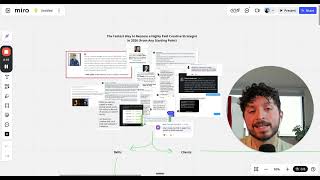
A spoken YouTube training by Luke Eha (presenter) explaining how to become a highly paid creative strategist in 2025–2026. Central claim: the value of the role is strategic thinking that creates profitable ads (not merely producing copy). He teaches concrete frameworks (Copyblocks; CASH method) for concepting, hooks, and ad structures, recommends an ideation workflow (CASH × swiping × creative brainstorming), lists production/AI tools and books, and details client-acquisition channels and tactics (Upwork, referrals, LinkedIn, cold outreach, events, content). Emphasis: massive doing, market feedback, expert mentorship, caring about clients, and using AI as both production and learning tool.
Questions this video answers
Over $100 million.
Over 350 marketers, creative strategists, and business owners.
Writing: Claude, ChatGPT; Images: Canva; Video/audio: Google v3 (3.1), Sora, 211 Labs, HeyGen; Editing: CapCut; Additional tools: VidTao, Foreplay, Calla Data.
Chapters
Okay, so in this video I'm gonna break down how anyone can become a highly paid creative strategist in 2025-2026. A creative strategist is a super interesting role. It's not a role that historically has been around for a long time and yet it's becoming increasingly popular. If you go on upwork, if you go on LinkedIn, if you go on job boards, if you go on any one of these sites, people are hiring for this role. And that's because AI has gotten so good that people don't really want to hire like I don't want to hire a copywriter, right? I want someone to come in with the expectation that they're just going to write the words themselves. Because Claude chatgpt, any of these writing tools can actually do the copy itself, right? So my expectation is not that you're going to come in and do the writing, but that you're going to come in and do the strategic thinking to organize these different tools. And so it's a really, really awesome role. It's a really, really great thing to master and know. If you're a video editor, if you're a designer, if you're currently a copywriter, email copywriter, media buyer, kind of developing this identity or at least putting this skill in your, in your toolkit I think is a super smart thing to do because I only anticipate it's going to become more and more in demand. If you look at any of the ad platforms right now, what they want more than anything is a lot of creative and good creative. Even if you look at organic right now, the demand for better and better, higher quality content is just going through the roof. AI tools that allow you to make, you know, pretty much anything, full length movies at this point are just becoming better and better and better. So this role of blending creativity with the actual strategy of what drives results is an amazing place to position yourself. And again, there's just a lot of demand right now and honestly the supply is quite low. So in this video I'm just going to break down everything that I know to help you go from whatever starting point you're in into actually starting to make money as a creative strategist. If you don't know who I am, my name is Luke Eha. I am a copywriter. I've sold over $100 million worth of goods with my words, mostly VSLs, but I've done tons of ads, tons of emails, et cetera. Now I run a program called Genesis where we have over 350 different marketers, creative strategists, business owners. We help them with AI tools, help them do better marketing, et cetera. Here's just a quick little, like, flash of things that we've been able to do. This is Ron lynch, one of our mentors. He was the marketer behind GoPro OxiClean. Here's some things from Frank Kern, Perry, Belcher, and you can see a lot of examples. Cosman. Cosman's doing great. He's, you know, when he first started working with us, was probably around 4 or 5k, maybe a little bit more. Now he's kind of cruising up to around the 20k per month thing. This is Jason Fladlin again, the king of webinars. And there's just a lot of examples on here. People who are doing copy fulfillment as well as create a strategist role, writing VSLs, et cetera. So we've been able to get results for ourselves and most importantly, get results for people who are in our community. Okay, you can go and look at my other videos and kind of check me out elsewhere, but I'm going to jump into the meat of, of this training. So there's two things that you need to know in order to become a highly paid creative strategist. Right. And of course, I'm going to keep things simple because, you know, for the sake of this video, I want it to be as direct as possible. So I'm going to leave out some things, I'm going to leave out some nuance. But in general, all you really need to know is skills and clients. Those are, like, the two most important things if you know, have really good skills and you know how to get clients done. Okay, so let's break it down. We're going to start with skills. Okay, I'm gonna do a little bit of talking about how you can develop these skills in general. And this is just based off experience that I've had, because I've been teaching this for a long time. So I know where people kind of get stuck. Okay, you need to be getting better. The best copywriters, and now creative strategists, the ones who are gonna continue to have work and continue to thrive and make more money are the ones who are the best. That's it. Cream rises to the top. You can fake it for a little bit of time. There's some people who get by just on the strength of their network and their sales ability and things like that. But at the end of the day, if you are good and skillful and you know how to Work with people and you're not a weirdo. You're going to be able to make more money with this and get more clients. It's as simple as that. So you need to find ways to get better and put that first and foremost. Everyone is successful at this. Focuses on getting really good skills. Okay? The best way to get better at anything is doing massive, massive doing. Okay? You need to have a bias towards action. So 70 to 80% of your time focusing on doing, if not 90%. Okay, then the nether way is learning and studying. So I do believe you should be reading books, you should be listening to courses, you should be watching videos like this, right? Consuming information. And I just imagine it like turn the floodgates on and just consume as much information as possible. Like, don't ask. If you're asking what book should I read? You've already fucked up. You should not be asking what book should I read? You should maybe be asking what books shouldn't I read? And how many times should I read these books? Like read all the books, every psychology book, every copywriting book, every marketing book. Become a machine and just consume this information and make it a daily habit. And you'll be amazed at how much you consume. And as you're doing and you're listening, you're going to start to contextualize this information. You're going to get really good, really fast. Okay? The other one, and this is the one that a lot of people leave out, is you need feedback. You need feedback from the market in terms of data, from ads, performance, things like that. And it helps to have feedback from an expert, somebody who's actually done this before because they can help you contextualize the data and really shortcut your path. I hired and had tons of mentors and tons of coaches in my journey and, and it shaved off literally years of my learning curve. Okay? That's the only ways to get better. But again, 70, 90% of what you need to be doing is just doing and then the learning and feedback, okay? This means you need to get started right away, right? Hopefully people who are watching this right now, you already have some momentum, okay? But if you're starting out, maybe you haven't done any sort of marketing role before or you've done marketing role like video or copy, and you don't know how. Like, how can I be a creative strategist? The best thing to do is just to get started. Get a client right now. Position yourself as creative strategist. Done. Okay? That's the fastest way that you're gonna learn. Things that get in people's way are things like imposter syndrome, fear, failure, perfection and overlearning, procrastination, laziness. Uh, if you want help on that, I recommend taking this test here. It's what I call it, it's the positive intelligence test. I obviously didn't make it, but it will show your saboteurs. So to help you understand the things that may get in your way and what I recommend is to put those that information into Claude projects and kind of have a chat with it and, and honestly, Claude plus some of these assessment tools are gonna help you get a lot of self awareness about the thing that's actually holding you back. We all have little mental bugaboos and shit that gets in our way. So understanding and identifying those is gonna help you going forward. Okay, a couple other little tips and things that's gonna help you along this process is that everything is figureoutable. You can learn anything. Especially with AI, there's, there's nothing that you can't learn, right? Media buying. Just take some, some screenshots, go into AI, talk to it. Done. Caring covers a multitude of sins. As you're working with clients, as long as you care and you put in effort, you can make mistakes. It's going to afford you the opportunity to make mistakes. Okay. The other thing is many clients also kind of suck. They don't know what they're doing. Right. So as you get started, it's okay to work with people who are not or just understand that they don't know, have all the answers either. Okay. The stuff that we're doing is honestly not that hard. So don't overcomplicate it. Most people are winging it. There are people who are gangsters who have amazing systems and that's what you should aspire to. But most people, most brands and businesses are kind of just winging it. So it's okay. Get in there, make mistakes and figure it out from there. There's always another client and you can always clean up your mess. Okay, that's some high level stuff, but let's jump into some specifics. Fundamentally create a strategy is about writing good ads, which fundamentally is about writing good copy. I know that that's super reductive because there's all these other skills, for example, media buying, understanding overall strategy, how you plan and track, how you set up the video and the creative, how you make amazing briefs, storyboards, data analysis, testing strategy. In the future we will be doing videos on all of these things to help you Get a better sense of exactly what you need to do. But at the end of the day, for all the credit strategists who I work with and who I talk to, and all the brands who are hiring for this role, all they really want are good ads, ads that make money. That's it. It's like that's the name of the game. Tons of different creative that makes money. They're happy, you're happy, done. If you know how to do that process, you know how to be a creative strategist. Everything else here is just to help facilitate this process of writing good ads. That's it. Right? The overall strategy is about how you think to come up with good ads. Planning and tracking is just basically how do you track the data to help you write better ads, video and creative in the service of ads, et cetera, et cetera. So at the end of the day, it's good copy. And I'm not just talking about the words. I'm talking about all the thinking and the creativity and the strategy, all the thinking and stuff that goes behind good copy. It's the stuff that's existed since time immemorial, but it's not just the words. If you understand that stuff, you'll understand how to make good ads. And by the way, if you know how to understand the stuff and know how to make good ads, you'll also be able to write VSLs easily. You'll be able to write emails easily. You'll be able to set up entire funnels easily. This is the training ground for all of the thinking that you will need to just become a badass marketer. That's basically it. Okay, so when it comes to feedback, right, like I mentioned, feedback is really, really important if you want to get better. It's hard to find, it's super good, it can be expensive, whatever. Just get expert feedback. Okay? That's what we have inside of Genesis. There's places where you can find more information about that, and it's amazing. Okay? The other thing is just use AI in your brain to take the data from the market, throw it into ChatGPT, throw it into Claude, obviously protecting the information, and ask it to interpret the data. Throw in your ads. If you use a little bit of common sense with AI, again, this stuff is not super, super complicated. That covers the feedback portion. If you're looking for specific books. I know I said don't ask which books you should read, but these are some of my favorite books. You can screenshot this and get started on those. I've read them all. But I recommend reading other ones because certain books are gonna hit people in other ways, right? Some like I would say this one right here, it's like almost a thousand pages. Written by Clayton Makebe. It's one of the best. It's not talked about that much. One of the best books on copy you could ever read. I think this one is great. Sixteen Word Sales Letters Gary Halbert Letters I don't really like the boron letters. Read them if you want, but I think the Gary Halbert letters are great. So much so I have them twice. Adweek Copywriting Handbook is one of my favorites. Robert Collier Letter how to Write a Good Advertisement this one is super underrated, but really, really good. And there's plenty of other ones. Okay. I have a video on my channel called Copyblocks, which is awesome. And there's a course, there's a link below. It's 27 bucks. It's like a crash course on copy. Copy 101. Even veteran copywriters, it's so easy that beginner copywriters can understand it. But even veteran copywriters who've been doing this for 5, 10 years get a lot of value from this. And I'll continue to update this and put a whole database of information and there's also free resources down below that you can check out. So let's keep going. Here are the tools that I think is pretty much all that you need. Claude for writing ChatGPT and Canva for coming up with images and static images. Google v3 now 3.1 that just came out. Sora 211 Labs these so far right now are the best for creating video as well as the audio. Cap Cut for editing. Obviously, most creative strategists are working with the editing team, but if you want to do some of the editing yourself, you can get go a long way just with cap cut arcads. Hey Gen, there's a few other UGC tools, but this is what I use for UGC. And then you can use things like VidTAO, foreplay and calla data for swiping and scraping, etc. Okay, so if it's true that create a strategy is really about writing great ads, then let's talk about how to write great ads. Okay. And I'm going to go over all of these different concepts here. There's going to be a super, super crash course into ads and we'll do deeper videos going forward on this. Okay, so let's go through this now. When you're writing an ad again at the end of the day. There's all kinds of different ads. Some ads are literally just hooks. Hooks, hooks, hooks, hooks. If you look at V shred ads, for example, they, a nine figure health fitness company, my business partner wrote a lot of their winning ads and a lot of their winning VSLs for a long time. If you look at their ads, they're some of the most insane things you'll ever see. Just go on the Facebook ad Libra and look up V shred and you'll see all this crazy stuff. You got a girl in like a Power Ranger outfit doing like squats at a million miles an hour and then an egg breaks. And all they're doing is they're just taking their hooks and just stacking hook after hook after hook after hook. The entire ad is almost a hook, right? And so this is an example of kind of an unstructured ish type of ad. But as far as, as far as what I know and how they actually do this process, it's not like they sit down and try to create this like this montage of crazy different hooks that don't make any sense. Although you could probably just skip the process and go through and make that happen. A lot of times what they're doing is they're writing an ad with a good hook. Then they're going to take the winning hook and they're going to put that on top and then take the winning hook and put that on top and put that on top and put that on top. Okay? So that's one kind of structure. But in general, when we're trying to make an ad, the thing that I recommend is just to focus on one core idea, okay? That's it. And that one core idea is something that I call a concept. Okay? So a concept is simply a fact about your product, about your avatar, or about your market that is twisted to be relevant to the person. So for example, if I'm writing, if I'm selling something, and I would say I'm a nine figure copywriter, right? Who knows what that means? But that's some kind of credibility, right? I sold over a hundred million dollars worth of stuff with my words, okay? This right here is a fact about my product, right? Because it's about me. And I could turn that into a concept simply by asking, how does this become relevant to the end user? The way it becomes relevant is, hey, hey, don't learn copy from people who've never actually written copy. They spent more time selling copy coaching and copy courses than actually being a practitioner and a craftsman. That's one concept. And I could do an entire ad around that. Okay, One core concept. And I could actually take that concept and blend it in different ways, which I'll show you how to do in just a second. The other thing is you could do a comparison, right? So this is an example, kind of a market slash product. So basically what you're doing is you're trying to look at what's going on in the market. What are the other alternatives? And how is my opportunity better than this? Okay, why is becoming an AI creative strategist better than becoming an AI copywriter? Right. I can do an entire ad around that. Tons of different hooks, tons of different angles, tons of different ways to present that idea. But that's the core concept. Why being an AI creative strategist is better than being an AI copywriter. Okay. And again, you can go through facts. There's typically around. I'll make a list in the future of all the different types of facts and concepts you can come up with. There's typically about 300 to 400. I mean, to be honest, there's almost an infinite amount, but usually around 300 to 400 that you could use for any campaign. And then from those 300 to 400, you can use different angles, probably about 12 to 24 of those. And then for those different angles, you can do styles and infinite amount of hooks. And that's how you can create infinite variety of ads. Okay, but let's keep going. You're starting with one idea. This is what we call the concept. It's a fact about your product, your market, or your avatar that you make relevant to somebody else. And you're going to see examples on here. Like I said, it's the raw idea. And then it's just that why it's relevant. Okay. And every ad should just be focused on one core concept and idea to start. Then as you start to test, you can stack things on and create more interesting ads that way. Let me get rid of this thing. Oops. Okay, so next thing is this concept of copy blocks. This is a concept that we have come up with and yet we didn't just pull it out of our ass. This is something that, like after writing copy for a long time, reviewing copy for a long time, I try to figure out and distill everything I knew into the simplest thing about copyblocks possible. Like I said, there is a training below. It's $27. It is well worth it. Veteran copywriters, beginner copywriters, a lot of people get it. I'm going to give you the, the, the basic version and there's a YouTube video that goes deeper onto this. I really do believe if you understand copyblocks, it's just a simple mental model. There's different ones, but this one is one that I think is so simple and easy to remember and, and easy to use. It's going to make writing ads so much easier. So to start, there's basically what we say is that there's six different copy blocks. Okay. There's pain, there's promise, there's proof, there's constraints, curiosity and conditions. Pain and promise is pretty self evident. Proof is also pretty self evident. Constraints is a little bit different. So constraints is really key to understand. Constraints are like objections, but a little bit broader. So we categorize constraints in terms of identity, values, belief, resources and experience. So there's five different dimensions. An identity is basically who they believe that they are. And so sometimes someone's not going to buy your product because they're attached to an identity that they don't want to let go. Okay, I try to think of an example off the top of my head. Let's. It could be as simple as like, if you identify as being a Christian man and I'm trying to sell you an only fans offer how to make money with only fans, you're not going to be willing to buy it. Okay, that's an extreme example. But it's really important to understand what is that identity because typically those identities are really tough to change. Okay. So you want to kind of work around them versus try to change them. The next level is values. Right. I could also say the same thing with the Christian man and the only fans product. Right? People have certain kind of values. If you're working for example, for like a organic plant fertilizer, which is a product that we were doing some marketing for a while back, the values they have are eco friendly values, things like that. Okay, you're not going to change those values, but you can talk about them and that makes them more likely to buy your product. Then you have beliefs which are malleable. You can change beliefs. Some are harder, easier to change than others. That's a lot of what you're doing in an ad is shifting beliefs. Then you have things like resources which are really, really, really important. These are things like time, money, energy, all of their internal resources, what it is that they think they have, and then past experiences which you could recontextualize. The main point is constraints are objections, things that hold people back. But it's a Little bit deeper than just things they say externally. It's also what they believe about themselves. If they don't believe that they're a disciplined person, if they think they're too introverted, et cetera. It's really key to remember these things. Again, nothing I'm saying is rocket science, but having it laid out like this should, at least in my experience and everyone I've taught it to, make it so easy to. When you look at an ad, you can make sure, hey, there's a bunch of copy blocks. Because really what I'm going to is every ad starts with one core idea, one core concept. You just explain that concept and then you talk about hit all the different copy blocks in your ad and that's it. Okay. And this is just a good checklist to make sure you don't miss anything. Curiosity is the other one that's a little more interesting to understand. Curiosity is basically what we will call your mechanism. So it's how you go from your pain to your promise, what's your vehicle, et cetera. The reason we call it curiosity is because you want your opportunity, your mechanism to be new and unique. So this is typically where all your curiosity comes to play. For example, we were doing a wholesaling offer, helping some people with it, and, and we were trying to come up with a name because immediately we identified that they were doing great with pain, Promise, proof, constraints, conditions, all that other stuff. But they were missing curiosity. They were missing a named mechanism that helped me understand why this was a new, innovative opportunity. So we came up with an idea. What if you call it concierge wholesaling? Right. And there's a lot of reasons why we came up with that name. And we're not saying that name would work, I would test it. But that's an example of a named mechanism that creates curiosity because people are like, well, what does that mean? Concierge, wholesaling. It sounds premium, it sounds luxury, it sounds interesting. Okay. That's what we're doing with curiosity. The final one is conditions. Conditions is basically this big catch all. It's about urgency, scarcity, calling out the audience, et cetera. So what are the conditions to make this a good fit for you right now? When you have these, you just want to make sure that all your ads hit those things. Okay? A metaphor to help you understand. This is pain is where people are at. This is the pain island. Promised land is promised. We call it Staten island here because my business partner is from Staten Island. He thinks that that's the holy land. Even Though it is a pile of trash, respectfully, proof is the pilot. Curiosity is the vehicle or the helicopter that gets you there. Constraints are all the things that are holding you back. The baggage you have to get rid of and the conditions of the dynamite that's counting down. 1, 2, 3, 2, 1. That's going to blow up if you don't make the jump. Okay, simple metaphor, just for help you understand what copy blocks are more intuitively. Two other quick things that I'll show you is there's a formula for what I call copy velocity. This is basically what is the ratio of the good selling stuff that you're saying versus filler fluff words. So a lot of times you'll hear like cut the filler, cut the fat, things like that. And that basically means that your ratio of filler words or functional words is not as dense right. As the specific type of copy blocks you have. Because typically better copy is more copy blocks and better copy blocks. Okay, so higher copy velocity, meaning for every filler word you have a high ratio of really good copy blocks. I'll just show you this example here. Okay, you can see it. Just look at the colors, right? You see how there's a lot of colors, but there's still a lot of filler words in between here you can see it's mostly colors. Okay, this is an extreme example, but you can just see the density of copy blocks is way more. So this has five copy blocks and 61 words. This has five copy blocks. This should be changed for sure. This is obviously not right. Okay, but you could, you could do the math on here. I don't know how many words this is, but a difference of like 3 or 4x. Okay, and so that's a higher version of copy velocity. And then here are the types of conditions blocks, because that was not in the original YouTube video, but you can see what those look like as well. Okay, and here's an example. So here's the headline, how to make money as a beginner marketer. And then here's an example of another headline that you could use if you understand copyblocks. 7 figure freelancer proof reveals the Corn dog method. A stupid name, but just to show you an example Curiosity block that allows anyone. This would be constraints, because anyone can do it to make 5 to 10k a month as a freelance marketer. So 5 to 10k a month is more specific than the money here. Freelance marketer is a little more specific here than beginner marketer. That's the promise as well. In just 60 days okay, this is a constraint because they're saying you can do it in a short amount of time. Works even if you have zero experience. Right. Most people would say this is probably a better headline than this one. It doesn't mean it's always going to test better because there's other things that play like clarity and understanding and things like that. But in general, more copy blocks equals better copy. So understanding copy blocks is going to help you write way better ads. I promise you that. Okay, next one is understanding ad structures. We talked about this a little bit more. There's tons of ad structures. Problem, agitate, solution. We have one that we call attention. Attention in intensity, possibility. I don't know. My business partner came up with it, so I'm forgetting it exactly right now. But we have. There's all these different frameworks and things like that. And I'll break down different types of ad structures and. But in general, I think almost every ad structure can basically be broken down into this. You have a hook, then you have your body, and then you have your call to action. That's it. Keep it super, super, super, super simple. And in your body, the only thing you need to do is explain your concept and go with your five copy blocks. That's it. Okay, so if a concept is. I discovered this method after being laid off from my job, right? That's my concept. It's a fact about my story that I want to turn into something relevant for the audience. I might say, for example, four years ago, I was a homeless retard. Respectfully. Now I make 100k a month as a creative strategist. Okay, this is going to be super, super simple. But I'm just. This is going to be dumb. This is a dumb example, but it's just to give you. To show you. I smelled so bad that McDonald's worker hosed me down while I was sleeping. It was horrible. But then everything changed. Okay, so all I mean is this right here would be me explaining the concept. I hooked you in with my concept and my idea and now I'm just going to explain what that concept means. Okay, then I'm just going to hit all my copy blocks. I discovered this method that allowed me to make 100k a month as a creative strategist. Curiosity block promise. This method doesn't require you to be smart or even have a house. Okay, I'm being a little dumb, but still, this is constraints. It works even if you're X or Y. That would be constraints. It can make you 5, 5k, 10k or even 20k, that would be another promise block. Thousands have already used it. That would be proof it was made by an ad expert behind $17 billion brands. Okay, that's more proof. Check out the X method here right now. Okay, this is obviously a silly example, but hopefully you could see. I could just go back to any one of these concepts, like this opportunity is better than X and I could come up with a hook. Why? Why being a creative strategist is better than being an AI copywriter in 2026. Okay, that could be my hook. Then all I would do in the body is just explain that concept. Right? Many people have heard about AI copywriting and it makes sense. Right? All you gotta do is press buttons and you can make different types of ads and people pay you money for that. Okay. The problem with that is that everyone in that case is still focused on selling tasks. Right? If you're selling tasks, you're always going to be selling your time for money. And more importantly, as AI and robots get better, nobody's going to pay you for tasks. And yet you didn't develop the skills to get you out of task labor. So what's the reason why I create a strategist is much better is it actually moves you one step up in terms of the leverage that you have. Now you get to use your natural taste and creativity that you already have, as well as you get to use your analytical, strategic mind and, and do things that AI currently cannot. Right. And now AI just works for you and does the task itself. Okay. It's just literally moving one step up the hierarchy, which means that it has more chance of lasting for longer, et cetera, et cetera. Okay. All I'm doing there, and not even that well is just explaining my concept, which came from my hook. Then I would transition into just hitting all my different copy blocks. So if I'm doing an ad, then I might transition into. And this is why I understand. I don't. This is why I understand. There's a lot of people who are frustrated because as everyone has flooded this AI copywriting market becomes almost impossible to even get jobs. Right? Which makes you feel like you're just spinning around in circles. Right. However, when you start to become a creative strategist using this AI created strategist method, then often you're able to start landing 2k, 3k, 5k, 10k retainers and stack those together, working only a few hours per week. Right. It doesn't even take that much time. You can do it from anywhere. It doesn't even require you to have that much ability. How do I know this? Because I've been able to help tons of different people go all the way from like 3,5k a month, all the way up to making 20k per month as creative strategist. That's super in demand. Myself, I've already sold over $100 million worth of goods and I work with brands myself as a creative strategist, et cetera, et cetera. The only problem is that we're running out of spots right now, so we only have a few more spots that are available. The, the price is going to go up on this certain amount of time, so you could still join after that time. But if you want to get in for the best deal and be on the ground floor, I highly recommend that you do this, et cetera, et cetera. Okay, that's not a perfect example, but do you understand how just knowing this, what are all the facts? How do I turn those into concepts? How do I turn those into hooks? I explain my concept and then I just go through my copy blocks. Done. My ad is done. I don't have to think about it. It's not super hard. Okay, so speaking of which, how do we write strong hooks? I could do an entire like 10 hour training just on writing hooks. It's an amazing skill. It takes time to do. But let me give you like the 8020 because this is going to help you quite a bit. Okay. So when it comes to hooks, there's typically two types of hooks. There's hooks that have the promise that I'm going to solve something for you or I'm going to show you something. Okay. So what I mean by that is a solve hook is typically what you're going to use in direct response, and show is typically what you're going to do more on organic. Right. So show. The promise is you're gonna be entertained. Right. So I'm doing a, an AI prank on my husband. Right. That would be like something that's trending right now as sort of a show and it's only entertainment value. I want to see the reaction. Awesome solve would be, I'm going to explain step by step how to become a Creative Strategist in 2026. I'm solving a problem for you. Okay. It's more of a how to. And again, there's a lot of crossover between these. Ideally, you want to be entertaining as well as actually solving a problem, but you can, you can kind of separate it between those two. Okay. The next is you want to understand positioning types. There's typically four types of positioning types that you can go through. You can make this more simple or more complex. But I like these four positioning types, which is basically internal, external, and then expert, non expert. So you can make a little grid like this and you could say internal up here, external here, and you could say expert here and you could say non expert here. And when I say internal, basically you're talking about expertise and kind of stuff that you have. I'm talking about external. You're sort of talking about like an observational lens. Okay? So internal and an expert basically means that I'm going to be a teacher. Okay? So internal expert as you can take the teacher role. So if you have a spokesperson or any someone who has this credibility in their own experience, they can adopt the teacher role. I'm going to teach you how to do xyz. Okay? The analyzer is really important. Analyzer is basically someone who is a non expert taking an external role. Okay. What's amazing is anyone can do this. Anyone can do this, right? All you're doing is you're synthesizing information and breaking things down so you could do a hook around like, hey, I studied all the best different copywriting books. I took 15 different copywriting training courses. I evaluated all of them. Here's my tier list between them. And then here's the one that I think is the best, right? That would be a good piece of organic content. And you could also position that into an ad. Okay. So you could take that positioning with it. The other one is sort of the journey. So this is a non expert going internal. So all you're doing, you know, going back to that Gary Vaynerchuk famous thing about document, don't create. Okay? So this is that area where you're just documenting your journey and your experience. Day 1 of 60 of trying to become a creative strategist. Right? And then this one here is more confessional, which is basically when you're an expert and it's sort of external as well. Okay. So you're just kind of talking about this is what happened in the past, confessional, et cetera. Okay? Those are four types of positioning that you can use. Basically the ones that you want to understand is are you going to be an expert or non expert? That's really the most important one. Okay. The other thing too, that makes really good strong hooks. And I know we're not even getting to the writing of the hooks. This is the psychology behind it, is you want to have some sort of proof of work. This is typically what makes A hook. Really, really good. If you look at Mr. Beast videos, for instance, millions and millions, billions of views at this point, right? But it's not because of a crazy thumbnail or a crazy headline. That's part of it. But it's because he actually does these crazy ass things, right? Like, you know, put 16,000 kittens inside of a bathtub and you know, you know, send it to Mars or something like that. So it's like, of course I want to see that. That's crazy. That's proof of work. Not, not everyone is going to be willing to do that. Okay? Same thing with expertise. If I say, hey, I've sold a hundred million dollar company like Hormozi and you come out, I want to listen to you, right? As long as you're not lying and I can sort of verify it and I can trust that that's proof of work. That's hard. The other one is vulnerability, right? Doing something that's scary, like cold approach, right? Going up and talking to girls or going up and getting rejected. Okay? So the willingness to put yourself out there and be vulnerable, right? Or kind of take on a journey where you could potentially fail is going to be inherently attractive to people. Good storytelling, same thing. Okay. Whenever you can actually make a promise to collapse time. Hey, I'm going to tell you everything about this book in one minute. Awesome. I kind of want to watch that. So proof of work is very, very important when it comes to hooks. Hopefully this is making sense why I'm talking about all this stuff, because this is something I think a lot of people miss. Then you want to understand different types of hooks. There's tons of ways to break these down. Here's just a grab bag way of doing it. Okay. But I'm going to give you the most basic hook framework that I use all the time. And all it is is pain, promise plus curiosity. Okay? So if you understand these curiosity blocks and pain blocks, curiosity is typically the vehicle or the named mechanism. And then you have pain and promise. So how this X create a strategy method allows you to make 5k a month, even as a beginner. Okay? All that is is promise and curiosity. Okay? Or I could flip it and say why? Why? Let's say AI copywriter is my curiosity block. I would use it. So like why AI copywriters won't make money in 2026. Okay, now I'm just hitting a pain point and using a name mechanism there. Okay, so here's some examples. Let's see. Oh yeah. Why I quit my $500,000 job at Meta. That's a confessional hook going back to positioning up here after 10 years at Google. Here's what actually matters for SEO day one. This is sort of more of the journey one. Uh, this is more of the analysis one. Right? I analyzed a thousand viral videos. Here's the pattern. Uh, and this is an example of a solve solve three steps to Viral Hooks about Paid promotion. This is an example of a show $10 wine beats a Thousand Dollar Wine in Blind test. Okay. This is super kind of abstract, I would say overall, but the main takeaway that I would take, I would use is just taking pain and promise and blending that with curiosity. That's probably one of the most important things that you could do. All right, so let's keep going back here. So remember when I said on this part that every sort of ad basically has one idea, which is what we're calling the concept, okay. And then I said the way that you get a concept is you take a fact either about your avatar, your market or your product and then you flip it into something that's relevant. That's what I'm going to talk about here because what are the all the different types of facts? I said there's probably about 300 to 400. What are all the different facts that you could begin to look at? Okay, this is a super long video. I have an entire framework on this that which one day maybe I'll share, but I'm going to give you sort of the 80 20, so you can take this and run with it. Okay, so here's examples of facts. Your product was made by a legend in this space. Okay? So credibility spokesperson who made this product is always a fact and there's probably multiple facts within that, right? Where did they go to school? Were they Harvard educated? You could do an entire ad around how this founder was Harvard educated and why that makes this the best product you could possibly use. Your product contains X ingredient. You can do an entire ad around one specific ingredient, how this ingredient was used by astronauts in space, blah blah, blah, blah, blah. Okay, your avatar hates X product for why Y reason, right? So if they hate an X, an alternative you can find all these different things, right? So for example, one of my students, he works for a storing company. One of their best ads is about showing these crazy things that happen when you use a CPAP machine, right? They lied to you about CPAP machines. That's it. So your avatar hates X product or X products is just a competitor. You can do an entire ad around why that is Bad, Okay. And you can take tons of different angles for it. Your avatar experiences a specific problem, you can just call out and create a story or a scenario that highlights that specific problem. Your market talks a lot about x new fad, right? So talk about this fad. Somebody is super famous in your market. You can do an ad around what Hormozi doesn't understand about marketing, why Hormozi is a bad marketer. Everyone's going to watch that because they'd be like, who the fuck is this guy saying Hormozi is a bad marketer? Okay. And you could always find a way to pivot it and make it work. Right? That's just an example of different types of facts. Some of this will make sense, some of it won't. But this is all the places where I go to find, to find my facts. So everything I can understand about my avatar info. We have a prompt called the build a buyer prompt. It's probably the most stolen plagiarized prompt on the Internet. I see it all the time in all kinds of products, but it basically breaks down a bunch of different information. So whatever your specific framework for avatar stuff is, you could use that. We also have something called the core wound and the pain matrix. That's something, that's great copy blocks. I would make a list of what are all the pain points, promise points, curiosity points, constraints, constraints, conditions, et cetera. And then you can use that. The next one is something I call the beat map. I don't have time to go into that, although I think in some of my other videos I do break down what the beat map is. The beat map is basically the story of your product. It goes all the way from how was it discovered, what was the trigger moment that allowed you to get the new insight, what's the mechanism of the problem, mechanism of the solution, what's the risk guarantee, all of that information. There's about 22 different types of Beats. You can map them out. Most people haven't done this explicitly, especially if it's a UGC type product or an econ product. But you can come up and map all of these different things out and you can do an ad or multiple ads about each one of those beats. Okay, the other one, I hate this phrase, but people say it all the time and it does make sense. Market crack, which is typically every market has one specific thing that they just love. So in the joint pain market, for instance, anytime that you, you find a really impressive old person doing some physical feat, 91 year old grandma deadlifts, right. 85 year old guy is a power lifter. 71 year old woman, just ran three marathons. Anytime you do something like that, it works over and over and over and over again. It almost never exhausts itself in the dating market. What to say to girls. Three things never to say to girls. Five things to say to girls to get them attracted to you. Okay. It works all the time and these patterns are almost evergreen. Okay. So super important to understand. In the weight loss market they love weird kind of tangible things like coffee, ice water, hack, fizzy drink. This melts fat for you. It exists almost perennially. So understanding what that is is really good because you can make entire ads around that. Same with constraints and objections, alternative solutions. We have something that we call insight vectors. It's a little too deep, but it's about how you generate insights and epiphanies for people. Cultural touchstones. What's going on in the zeitgeist, Right. Emerging ideas and experts. Any information about your product, competitor ads, white files, buying triggers, all of these are facts which you can gather and then you just make it relevant and then you can make an ad around that. Okay, so hopefully that gives you a little bit of a list and hopefully that's making sense. Sense. All right, so now let's go into something that I call the cache method, which is going to help you come up with an infinite amount of ads in a very short amount of time. Okay, so now we're going to talk about what I'm calling the cache methods. C A S H. So again, going back to what we just talked about, once you have all of your facts, so all these different places where you can get your facts, we already talked about it, we turned that into a concept by just figuring out how is this fact relevant to my audience. Right? Your product was made by a legend in the space, therefore it's the best. It's nothing fancy, it's very, very simple. But like I said, there's probably about anywhere from 300 to 400 of these different concepts that you can use. This is the raw idea. Now with each idea, each concept that you have those 300 to 4 hundreds, you can kind of multiply them times different angles. And the way that we think about angles are these are just lenses at which to look at that idea. So if your product was made by legend in the space, therefore it's the rep best, that's the raw concept, then you can take different angles. So you could do contrarian, Right? So you could say, for example, this is why. Why this well known product in the space is actually bad for you, right? You could do a whistleblower, right? Like kind of an insider confession of something that's happening. You could do a story, right? Again, all connected back to this idea. Now not every angle is going to perfectly map onto that concept. But if you have a list of these different types of angles and all your concepts, you can get creative very, very fast and just start trying to connect the dots and, and honestly going through that exercise is going to push your thinking because you're going to get, you're going to go past the obvious ideas and you're going to find more non obvious ideas, right? So for example, an angle would be like 8 figure DTC brand owner reveals the real reason brands don't scale that nobody talks about. This would be example kind of of like a whistleblower angle. The next thing that you can do is then you focus on the style of your ad. And so by style we mean basically what's the format of your ad? Is it going to be a static or, or is it going to be video? If it's going to be a video, is it going to be a founder based ad? Is it going to be a UGC style ad? Is going to be a talking head ad? Is it going to be an AI animation ad? There's tons of different styles that are out there. And again, any concept with any angle can likely be represented by a dozen to two dozen different styles. So hopefully you're starting to see the math right? If there's about 300 to 400 different concepts and then you have basically, you know, let's call it two dozen different angles, that's basically 24 times the 400, whatever that math works out to be. And then each one of those angles with that concept can break out into another 12 to 24 different styles. And that's a way to basically get thousands and thousands of different concepts that you can test. Okay? So if you struggle with ideation or you struggle with trying to test kind of out of the box ideas, this conceptual framework is going to help you a lot. The last part of the method is what we call the hooks. The hook is just basically the opening. Again you want to test a bunch of different hooks. I've been an X for Y years. I never thought about this. Not a single brand understands this. I hate when brands do X. The hook is basically how you're expressing the opening line of that idea. Okay? And then again, once you get your hook and you have your concept and your angle, all you do for the rest of your ad is explain that concept well and then pivot into the rest of your copy blocks. Okay. Hopefully this is starting to connect and you start to see how easy this is to do. Okay. And the last part is what I'm calling the three factor ideation. So there's sort of three methods that I recommend if you're trying to brainstorm and come up with with ads. Okay. Some people are going to over index on some methods, but you really need all three to get the best results. So the first one is the cash method, which I just recommended to you. If you know all of the facts, then all of your concepts, all of your angle styles and hooks, you can literally map out hundreds of thousands of different ad ideas and be able to test them in a systematic way. I think it's one of the best methods that you could use possible. Okay. The other one is just swiping. Okay. And in fact, the cash method helps with swiping as well. Because now when you look at a competitor ad, whether in your vertical, in your niche, or in a different niche, you can be more precise about what it is you're swiping. Are you swiping the raw concept? Are you just swiping the angle? Are you swiping the style? Are you swiping the hook? The reason why we want to do swiping is obvious, right? It's super, super easy. But it's also because no matter how good our system is up here, we're always going to leave some things out. So kind of looking at what's working in the space and borrowing the creativity of other people, but transitioning it in a way that applies to us, that's always going to be a great way to push the boundaries of what's possible. The cool thing is if you just rely on swiping, which is what so many people do, then you're missing out on one being first to market, right? Coming up with a new idea, pushing the boundaries of what's possible, and you're just kind of staying in the pocket of what everyone else is doing versus being able to kind of explore all of this uncharted territory where you may find winners. And the last one I recommend is just like raw creative brainstorming. Sometimes you just need to sit down and just let crazy ass ideas come to come to your mind. Filter the ones that don't work and then test the ones that do. And you should always be testing 10 to 20% of your ideas should be ones that either they're going to completely Bomb or they're going to crush, right? Because that's really where you push the ball forward and you're finding new types of ideas. So that's the three factor ideation. Again, hopefully this covers. I guess the last thing that I would say here is ask AI if you ever get stuck on how do I develop this skill or what's this framework again, just have this conversation with AI, make that your default. This AI is one of the best learning tools that's ever been invented, right? People are using it to make tasks go faster. But it's very underrated in terms of a learning tool, in my opinion. And the smartest people I know use it in that way. Okay, so if anything I said doesn't make sense, literally take the transcript of this video and you can ask AI how to apply it for you and, and tell it to you in a way that makes sense. But hopefully this covers all the things that you need to do for the skills side of becoming a creative strategist. Okay, now let's move into the client side. Like I said, if you really max out with your skills, people are gonna wanna keep hiring you over and over and over again. The students in my group who are actually good and get winning results, they never worry about clients, they worry about having too many clients. It's not an exaggeration. People are constantly reaching out to them, like offering them new jobs and roles that they have to turn down because they max out their skills. Because when you max out your skills, you get good proof, right? You work with better people, they refer you to more people. So this is really where a lot of your focus should be. But of course, you need to have some tactics and some frameworks for how you're going to go and get clients. So let's dive into those. I'm talking about getting infinite clients forever. I'm just going to kind of riff on three different things that I have here. So, number one, the most important thing that you can do, again, this is going to seem like common sense, but I'm saying it because it's not very common. And this is, you need to care, right? If you get a client or you're trying to get a client, you need to create an insane amount of care for them that is going to serve your career more than anything possible. I cannot tell you how many people who I've hired, freelancers, contractors, employees, et cetera, and the amount, the percentage of people who actually truly care is through the floor. Those people, not only do I continue to hire them over and over, Again, for work, But. But I also recommend them over and over and over again, okay? So the individuals and the freelancers and the people who don't care, they don't go above and beyond. They don't put effort, noticeable effort, into the things that they do. They're losing like tens of thousands of dollars every single year because I'm not gonna rehire them for work and I don't give them a recommendation. Doesn't mean I talk bad about them, but I just don't give them a recommendation. Okay? So caring means thinking, like, way more than you even think possible. How can you make the people who you work with work with? How can you make their life easy? How can you do more than what is asked? Right? How can you just use common sense? How can you not ask retarded questions? Right? Again, this shouldn't have. Should, like, kind of go without saying, but it doesn't. People ask kind of questions all the time about things that they could just figure out for themselves. So many times if I'm working with somebody, I'll send them a bunch of assets and materials and then, you know, three minutes later they're going to ask me, hey, where are these materials? And it's like, I sent it to you. Did you even spend time looking through the assets and the things that I shared? And people make this mistake all the time because. Because again, they're being lazy. They're looking for the shortcut. So just care, have self respect. You know, a lot of times people don't want to care or be too available for people because they're kind of worried about the weird power dynamics. But at the end of the day, if you have a level of self respect and you have clear boundaries and you go above and beyond, that's the perfect formula for being a winner and for people wanting to work with you more. Okay, and the last one that I'm put here is just say yes to things, right? If you crush it at one thing and you're really good with ads, they may ask you, hey, what can you do with emails? Right? Or you can kind of come up with your own ideas of what you could do with emails. And even if you're not that great with emails, like, I promise you, if you know all the stuff I just shared here and you use a little bit of common sense, you'll be able to figure that out. Okay? So caring is super, super important. Let's do some overall things. This is just a random list of things that I've noticed working with creative strategists One is it's important to track your hourly rate and time. And this is important in one part of the journey. So typically, as a freelancer or working with other types of clients, the process is going to be, I have no clients until all of a sudden you have a bunch of clients. They may not be the best, but you have way too many. And then you need to transition from having too many, like, average clients into having just a few really, really good clients. Which is the best, best of all worlds, okay? Typically in that middle, in that hump, you have to start making decisions about which clients to cut. A lot of people get stuck because they're scared of going backwards. They get scared with scarcity and lack and things like that. But understanding the hourly rate and time for each of the clients that you work with makes it super easy to make decisions about, hey, should I take this client on? And should I let this other client go? Okay? Which again, right here leads into cutting your poor performers, right? When you do this, it becomes super, super easy. You'll be like, oh, I'm only making $50 an hour with these guys, and these guys are making me $350 an hour, right? So make sure that you do that. I already mentioned this, but the process typically goes from no clients to too many clients into better clients. The other thing I'm gonna put a star right here is this concept of blue chip clients. Another name for this is trophy clients. These are clients who have brand name recognition in the space. And if you can land them as a client, even if it's a small project, and do it by whatever means necessary, you can leverage that for a long time going forward. So just to give you an example, one of the students in our program, he started working with the brand. He has winning ads with that brand, over a million dollars in spend on some of those ads. And that brand is starting to get more notoriety, right? People are breaking down the funnels. People are getting recognition. So now when he hops on a call, all he needs to say is, I work with X Company and I have ads that do a million dollars, right? And he tells me, he says it's super funny. Within like five to 10 minutes, they're like, yeah, we think you're a great fit. Without even interviewing him or talking to him, they have no idea who this guy is. The simple fact that they've worked with this brand that has this recognition, that's people want to work with you, okay? And this goes at all levels of the game. Once you get this blue chip trophy Client, the game gets on easy mode. So it's super important to keep that in mind. Almost everyone underestimates how important this is. Again, always be collecting proof in terms of your ads, your portfolio, the data, the performance. It's sometimes hard starting out, but make sure that you're doing that and then take risks. When it comes to sources of clients, these are the main sources of clients. There's a lot of different ways that you can do it. These are the ways that are most reliable that I see work all the time. So number one is Upwork. Number two is referrals. Number three is LinkedIn. Number four is called outreach and DMS. Number five is events, and number six is content. This right here is like, like the 95. 5 of all the things that you need in order to get clients. Okay, so let's keep going. Number one, I don't really care where you're at unless, like, you're at the highest levels, which most people are not. You should be on upwork getting started right away. Okay, you should be on upwork. If you're a brand new beginner, watching this video, end this video and just get on upwork and start applying for jobs. Right now. You can have a creative strategist job probably within a couple weeks if you apply. The stuff that I'm about to tell you, if you're more experienced. A lot of people I know, they're more experienced. They've had clients before, they've made $10,000, $15,000 a month. They're like, I don't want to go back on upwork. It's all low level clients. It's a lie. Like, trust me, I'm not saying that upwork is the only thing that you should be doing, especially if you're more advanced. It's not. However, you should definitely, almost always have an upwork profile. Unless you are like in the top 5% of all creative strategists right now. You have that level of proof and authority. It may not be worth your time, okay, but that's very, very few people. For everyone else. It doesn't take that much time, maybe 30 minutes to an hour to set up and maximize your upwork profile if you're efficient. And then it maybe takes 10, 15 minutes to maintain that and apply to the right jobs. There are amazing clients on upwork. In fact, I would venture to say that, that yes, you have a lot of low level people who are not trying to spend money, but a lot of the people who do make a lot of money and are willing to pay. They go on upwork because it's super fast. I hire on upwork all the time. I can just hop on there, find the people I want, reach out to them, get the job done, and I can solve this thing super fast. And if I find a winner on there, then I can expand them to do other things as well. Okay? So again, I talk to people all the time and ego gets in the way. They're like, I don't want to go back on upwork. But I'm just all everything else that everything I've heard has been an excuse. And I've seen it time and time again. You can get amazing clients, you can get consistent clients, you can get beginner clients, you can out compete other people. Like, there's almost no cons for why you should not be on upwork. Okay? So that's why I put right here is just do it. I've done other videos where I'm break down exactly what you should do on upwork to maximize it. But I'm going to give you almost everything that you need. This is literally it. Okay? Now my experience is that typically I tell people to do these things and they just don't listen to the words that I say. And they think that they can only do like a couple out of the bundle and they're like, oh, upwork doesn't work. And without fail, I go back and I'm like, you didn't do this, you didn't do that, you didn't do that. Go back and listen to the words that I'm saying. So I can. My guess is that 95% of people listening to this right now are not going to understand the words that I'm saying. And like, even smaller amount is not actually going to do the process. But for the very, very few one to three people who are listening to this, just doing precisely what I'm saying, and upwork will work for you. Okay? So number one is fill out every corner of the profile. This means literally every corner. So that means every single possible thing that you could put on your profile. The video, the testimonials, the feedback, the portfolio, the projects, this and that, Certifications, credibility, headline, the profile thing where you went to school, your past education, all of that, every single corner. I don't care if you don't have, if you don't have a certification, go and look up certifications for marketing. Take a certification. Maybe it costs you 10 bucks, 25 bucks, 50 bucks, maybe it's bullshit. I don't even know what it is. Just Put a certification on the page. The feeling and experience of having a maxed out profile again goes back to showing care. And people want to hire from that because it shows a level of effort and quality. Don't use the people. I tell this all the time. People use excuses. They're like, I, I don't have this, I don't have that, I don't have the education. Trust me, you do. There's always a way to position anything in your life to fill out every corner of the profile. If you don't do that, you're not going to be able to have success in upwork. That's number one. Number two is you should be applying to three to five jobs per day. Again, people tell me all the time upwork doesn't work because I apply to jobs. I don't get responses without fail. I go and check what they've done. They're like, oh, I did it for two weeks and they only applied eight times. I'm like, look, you're going to get a response on 1 out of 10 jobs that you apply to and, and then you'll probably be able to close about 30 to 40% of those jobs, which means you need to apply conservatively to 30 or 40 jobs to get a single job. It sounds like a lot. Yes, you have to spend connects, but if you're trying to get momentum, that is the process. Okay? And if you go with a very conservative frame of mind, you're not going to be disappointed and you're going to have the proper expectations to actually get results. So apply to three to five jobs per day and understand that you're typically going to get about 10% response rate and close about 30 to 40%. And if you do everything right, which is what I'm telling you how to do, number three is put effort into your application. We have a bunch of different frameworks and profiles and outreach messages that you can do. But the most important thing is just to put effort in your application care and treat that as a copywriting exercise. This one is you need to get three five star reviews to get started. It is almost impossible to go from a brand new cold upwork profile and start getting jobs right away without having at least three five star reviews. So this means you need to go to friends, family, reach out to people on other platforms, ask them if they can go on platform so you can do a small discrete task. It doesn't matter for what amount. You just need a five star job, five star review rating, et cetera. Okay. There are upwork policies don't be dumb when you do this. Be intelligent when you do it. Upwork wants more people on the platform, they make money on the transaction fee, etc. You ultimately pay it out of pocket. So if they're paying, you know, the job is 50 bucks, you give that to the person, they pay the 50 bucks, you cover the transaction fees. Done. Okay? Don't be dumb about this. Be smart in how you get this thing done. But typically going from a very cold start is almost impossible. So you need at least these three to get started. Next one is your first goal, when you get started is to get $1,000 earned, 100% job success and 10 plus reviews. Once you've done this in a certain amount of time, you're eligible for top rated status. And once you get top rated status, it's on easy mode. The best clients just go on there and they only filter for top rated people. And, and so you're going to pop up and they're going to want to work with you. Okay? So getting in top rated status is the most important thing. Then you get on easy mode. The other one, I don't have time to go super deep into it is something that I call the nuclear method. So this is when you have a really good client who's outside your pay grade, someone you really want to work with. By the way. This works for cold DMS as well, but it also works on upwork is I make a custom vsl. I use a software called Easy E A S Y V S L E Z B S L dot com. I shoot a basic loom video or something like that. It takes about two to three minutes. And it's a custom VSL that I make specifically for that person. Okay. When you do that, it blows people's minds. They're like, oh my God, I want to hire you. And there's a lot of creative ways to do it. I won't be able to go deep into that, but I'm just telling you this method works all the time. Okay. And then as you're doing it, you also want to be building your own custom portfolio sort of on the side and building reps. And when you have this, you have this platform forever. So even if you meet somebody off of Upwork and they want to work with you and they're like, well, show me your proof. You just send them your profile, they see all the success you had on there and they're going to hire you. Okay. The next thing to do is to get referrals. Like I said, if you Care and do a good job. This should happen basically all the time. Here's a method that one of the coaches in our community teaches, which is called a 30 second referral. And you can look at this here. The reason that he came up with this referral is that if you're going to a client that you're working with and you're like, hey, give me customers. Right. There's nothing in it for them. Right. You're just asking them for a favor, basically, which can be awkward and doesn't work. So this 30 second referral is a way to reframe your request in a way that actually benefits them. Okay, so this is a very simple script that he does. He's, he's, you know, makes multiple six figures per year as a copywriter and he has for a long time and a creative strategist as well. So basically you start by saying, hey, great, sounds like we're on the same page. This is sort of. Once you have job and you've talked through all the things, this is sort of something that you would say at the end. It sounds like we're on the same page about the direction we want to take with this project. I'll send you a written proposal after the call. This is after the discovery call. Also, before we wrap up, I want to talk to you quickly about what you can expect from me while we're working together, along with a few things I expect from my clients. Right. Nice frame. Is that okay? Yes, that sounds good. Good. The way I run my business, I want to spend as much time as possible serving my clients. I look at anything that takes my attention away from working with you as something I want to eliminate as much as possible. And that actually includes business development. So time that I spend looking for new clients is time I'm not spending working with you. You. And I don't think that's fair to you. But for the health of my own business, I do need to make sure my pipeline stays full so I don't run out of work. That's why rather than taking time, et cetera, I simply ask you give me two referrals when we're done instead. Again, if this is a full time or in house position, maybe you're not looking for referrals, but if it's one where it's sort of contract based, et cetera, and you're looking to take on multiple clients and roles, this is a really great referral system that you could use. Okay, the Next one is LinkedIn. The great thing about LinkedIn is that if you're on upwork and you follow this process, you can do the exact same thing with LinkedIn, you fill out every corner of the profile. You apply to jobs at the same level of effort as you do on upwork. One of the big hacks that you can do is if you're applying to a job on LinkedIn, everyone's applying through that portal. But with a little bit of smarts and intelligence and using a lead scraper tool, just look it up on Google. Types of lead scraper tools you can really easily find. Okay, this is the job that's hired. This is, let me go and try to find the CMO or the CEO or whoever's in charge of the business. Let me get their information, let me run it through the lead scraper tools, let me get their email and or phone number and let me shoot them a quick DM and say, hey, this is who I am. I applied for this role. Super excited. Here's my portfolio. Right? You can do the same thing with your email as well. Okay. You want to be smart about it, so you're not spamming people and not trying to do whatever. But if you just think a little bit outside the box, that thing is going to get prioritized for sure. And at the end of the day, you're applying for a marketing job. So the more creative you can be with your marketing to get the job is just proof of work that you're actually a good marketer. Does that make sense? So treat that like you're a learning process and then you can start transitioning into content on LinkedIn, making a couple pieces of content here and there. It's not going to be super huge for moving the needle in terms of actual jobs. A good content strategy is great later down the road, but just on LinkedIn, that's what you're going to do it. But LinkedIn and Upwork and is an amazing place. There's so many people hiring for creative strategists on LinkedIn. Okay, so between these three sources, you should be pretty good at this point. You can also start moving into cold outreach. My recommendation, typically with cold outreach, is that it's really helpful to have some level of proof to start. This is why I recommend things like Upwork and LinkedIn and even referrals is because you're talking to people who actively need that work. Okay, so they actively need that work. And this is a great place to start getting your proof. Right? So for example, for one of the students who I work with who's making multiple Five figures per month. He started out on upwork, he started working with clients, worked his way through it, hard work. Then he got really good clients and he started getting really good results. Now he has an amazing portfolio where he has top performing ads at some of these well known companies. People have spent millions of dollars on his ads. He has a really nice portfolio with good editing, etc. Now cold outreach makes sense to him. Okay. Because when you're reaching out to someone cold and you don't have any sort of proof or credibility, it becomes pretty hard for people to say yes. I'm not saying you can't do it. People do have success just DMing people on Instagram or sending emails and things like that. But there is a lot of saturation, a lot of people are doing it. So typically I think this is a better strategy when you have proof, but you can use it at any point in time. Okay. The process is very, very simple. One is you need to find a list of the people who you want to work with. Typically, you know, you can do mass cold outreach and cold DMs, but if you're a freelancer or a solo preneur or whatever and you're not looking for like scale of clients, I think it makes more, way more sense to take a sniper approach. Just find 12, 24, 40 or 100, your dream 100 of brands or companies that you would want to work with and apply directly to them using a sniper approach. By sniper I mean it's very targeted, very personalized to them and you put a lot of effort into your outreach. Right. It's going to increase the likelihood that you get a response. And because you're not looking to get hundreds and thousands of clients, you could probably only handle a handful at the most. It makes more sense to take that sniper approach. So first thing you do is you find a list of people who you want to work with. Okay? There's tons of different ways to do that. Figure it out. It's not that hard to do. Facebook ad library, spy tools, Google chatbots, just searching around, asking people. You'll be able to find those brands. Okay. The next thing is that you want to make something free for them that's easy to use or consume. So for example, sample ads. Sample, hey, here's some sample ad scripts. Even better, here's a fully edited ad that you could possibly use. Something that doesn't cost them a lot to test an ad test. It doesn't really cost that much. Besides the time of just uploading it into the ad thing. And if it makes money, it makes money. And if it doesn't, it doesn't get spent. So done right. It doesn't take that much time for them to test the next thing that you do. And the reason I think that that's the best is cause you're leading with value for people, whether or not they test the ad. You're just demonstrating that, hey, I care. Going back to care. I'm putting in the effort in advance. I'm showing you the value. I'm showing you that I put this thought into things. You can also film a loom video even going over the concepts I said here and say, hey, here's a bunch of different ad concepts that you could do. The problem is if you just give people. If you just give people feedback, typically a lot of brands and business owners know the things that are wrong in their funnels and in their marketing, but they just. It's. It's more of a logistical problem getting people to fix it and things like that. Okay? So sometimes they can take offense if you come out. And also if you're not that skilled and actually don't know what you're talking about, sometimes that can work against you. The other thing is, if you just give people ideas, there's no way to implement it. It's like, okay, that's a cool idea, but it's way better if you just give me something, a static ad or a video ad or something that I can look and test and see. Okay? And I'm speaking from experience. Many people that I've hired have done this exact same process. Okay? I see it all the time. This is the example of permissionless work. I forgot who came up with that, but that's basically what this is. The next thing you want to figure out is what I call an entry offer. An entry offer is basically an offer that is. This is from Jeremy Haynes, one of the guys who. Who were in his membership group. It basically talks about the you're fucking me scale. Okay? So you want to come up with an offer that seems so good that it seems like almost like they're taking advantage of you. Okay, it's an entry offer. Now what I mean is like the price to value ratio is insane. There's so much value compared to the price that you're asking for it. It's small enough, it's chunky enough that they kind of want to. They still have to make a decision to work with you, so you're creating the momentum. Right? But it's small enough that it's not that much of a risk. So what would be an example of this? If you make a free ad script for people, then you could say, hey, I'll basically make you a pack of ads in X amount of time, whatever, you can test them for free and it costs you 1,000 bucks. Normally I charge, you know, $200 per ad script or whatever, $250 per ad script, but I'll do these 10 or these 20 for you in X amount of time. It's a good entry offer that kind of just gets your foot in the door because a company is like, all right, we're going to spend a few thousand dollars. What's the worst that could happen? And, and maybe we'll get something good and they get to experience what it's like working with you. Okay, so super important. The next thing is a lot of times they're not going to respond. So you just need to follow up again. Follow up many times. I would say at least 10 times over 60 days. And this is super conservative just because I don't want to create a lot of spammers that are out there. Ideally you do a lot more than this, but at least most people don't even do this. At least 10 times over about 60 days is what you want to aim for. Okay? Now people get weird because they're like, I don't want to bug this person or follow up. But the way that you follow up is just providing more value in new thoughts. Okay? One of the amazing things that you could do is if there's a winning ad that is working in a different niche or vertical or there's something, a trend or there's a new AI tool or something, you can just share a super short email. And by the way, you can do this with all your follow ups and be like, hey, I saw this ad and I thought of you. Have you guys ever tested an angle like this? Here's a way that you could test it. Okay, right? And then you give a little bit of time. Don't hit them every day, but give them a little bit of time. Then come back and be like, oh, hey, there's this new AI tool that does this. I was playing around with something and like, here's a really cool like AI video that you could use for it, right? Or here's this cool news thing. Have you checked this out again? You're just providing values and every now and then you can hit something with like, hey, just checking in, did you get a chance to see this, etc. Okay, there are funny sort of Follow up strategies and things like that, but just start getting the reps a following up. And again, if you're going through all these steps, well, you're going to have plenty of clients, no problem. Okay, again, keep going. And then once you give them with this entry offer, you can move them into longer term stuff. Okay, that's high level. The best way to do cold outreach that I've seen. Then you can move into more advanced tactics once that's done, which is just make content about what you're doing. If you go back to the hooks over here, remember we talked about the journey or the analyzer. Even if you're not an expert and you haven't been doing this for a long time, you can still provide a lot of value by analyzing top ads. You can also provide a lot of value by talking about your journey, going from, you know, 0 to 1 to 2, et cetera. So making content about what you're doing will get eyeballs on you and it's recommended. It's just not as direct as any of these other paths. So I would just do these other paths first and then if you still have time, you do this. Okay. And the last one is going and attending events, as long as you're going to the right events. I have always found a really big ROI when you go and attend. But again, I think it makes a lot more sense to start to have a little bit of proof and reputation so that when you go to events it makes it easy to land clients from there. Okay, that is the 8020. I don't really have anything else. I think that if you follow this and go through these steps, you have what it takes to start to become a highly paid creative strategist. Obviously there's ton of nuance and tons of specific things that we'll need to fill in as we go forward. But this is a like so much of what you need. Well, you can just cover right through here. Okay, so that's all I have. Anything else that you need, you can put in the comments below. I'll continue to make videos and I will see you later. Peace.
More from Mario


easiest way to make $30k/mo as a creative strategist (I’ve helped 100’s of people)

how to write hooks so dangerous you break people's brains (4-step "deep fry" process)



The Complete Creative Strategist Pricing Guide for 2026 (Every Deal Structure I've Seen)


this copy instinct framework makes you a monster at ads (nobody teaches this) pt. 1


why "insight vectors" are the most valuable marketing concept of 2026 (I didn't want to share this)