This 18 Year Old SOLVED Shorts (Steal Her AI-Hook Bot)
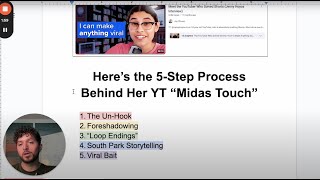
Copywriter Luke breaks down Jenny Hoyos' five-step formula for viral YouTube Shorts: strong hooks, open loops, surprise endings, South Park-style storytelling with "but" and "therefore," and viral bait. He shows an AI bot on poe.com that generates hooks automatically for $20 a month.
Chapters
Yo, what's going on? My name is Luke and in this video I am going to give you an AI bot that will write hooks as good as Jenny Hoyos, who is the 18 year old who solved shorts. And this is a really, really phenomenal process that I'm going to show you. And I'm going to break down the everything in here if you don't know who I am. Like I said, my name is Luke. I'm a copywriter who sold over nine figures worth of goods in pretty much every niche. I've had the pleasure of being able to beat unbeatable 50 million dollar controls, launch a seven figure copywriting agency and work with hundreds, if not thousands of copywriters in my coaching program Genesis over the past three to four years. Today I'm going to break down the exact framework that Jenny Hoyos has used to generate millions of views pretty much on command. And there's a lot of really good marketing psychology, whether you're doing organic or paid traffic or whatever kind of copy or marketing you're doing that is packed into this video, even beyond the bot that I'm going to give you at the end. Now, if you don't know Jenny hoyos, she's the YouTuber who solved the YouTube shorts, okay? And she's been on lots of different interviews, right? You can go follow her and look at her, her channel, all of her results herself. But this is where I first heard about her, where she broke down her entire process step by step in an interview. And pretty much all I did was listen to that, read the transcript and deconstruct and reconstruct the five step process behind her YouTube Midas Touch. This is what I call something called the unhook foreshadowing, using looped endings, south park storytelling, and something called viral bait. Okay? And this is everything that I programmed inside the AI bot that I'm going to give you, which is why it actually does like really, really good hooks. And I'm going to explain it for you because if you don't understand the underlying psychology, you're kind of sabotaging yourself a little bit. What you want to do is use the tools to be more efficient and more effective. But at the same time, don't shortcut your learning process because the more that you understand the psychology behind this, the better you'll get as a copywriter, as a marketer, as a business owner, whatever else it is. And these skills you can use everywhere, right? You can use these skills you're teaching, you can use these Skills. When you're talking to people, you can use these skills on dates. Like there's a lot of application for everything, all the psychology that's going on inside this video. So I really encourage you to understand the fundamentals, then use the tool to just go that much farther. Okay, so what I did here, and I'll show you how to get access to this doc at the end, is I color coded all of those different elements inside one of her most viral scripts. Okay. So you can kind of see where those elements come into play. And I'll do a full breakdown a little bit later in the video. Well, but let's break down each of the steps so you understand them. First is something called the unhook. Okay. Now Jenny begins all her videos with a strong hook. This is not anything special. Anyone who does viral content, organic content, paid content, everyone understands the hook, right? Hook and double hooks and triple hooks. And how do you write good hooks? Hooks are really, really, really important, okay. And that's what grabs the attention in the first place. Here's an example of some of the hooks that she uses. $1 chicken sandwich. My mom's never had a Mother's day gift. Surprising my grandma with a Christmas home makeover, etc. However, there's something to understand here, which is that these hooks are not really anything insane, right? This is not like Mr. Beast promising that he's sending a thousand puppies into space with a hot air balloon. In fact, what I said is they're kind of boring in a way. Maybe boring is not the best word. What I would say is they're a little bit more universal, meaning so many people can relate to them. So whenever you're doing any kind of tofu marketing, right? So there's like top of funnel marketing, okay? This is when you're talking to the biggest audience. So think shorts or ads, right? When you're first introducing yourself to people, you, you want to appeal to the broadest audience possible or the broadest segment of your audience as possible. Okay? So if you're doing copywriting, for instance, you want to make sure you're making things that are going to appeal to a broader number of people interested in copy versus more specific niche down subjects. And so one thing that you want to understand about these hooks is that they're instantly relatable because they deal with universal themes. So so many of her themes are about money, about family, everything else. Okay. Then they imply something to come, like a surprise or a challenge, and they're really, really easy to understand. $1 chicken sandwich. Okay? So it's like, that's just so universal. It's really, really key to understanding. The next one is that she uses foreshadowing. So after the hook, Jenny always makes sure to include some kind of foreshadowing. In copywriting, we call this an open loop, but it's basically when you promise to reveal information, resolve a conflict, or answer a question. And it's so, so key for keeping your prospect or your viewer hooked to everything that you're about to say, right? It's like an itch that they have to scratch. So here are some examples that she uses this year. I'm going to do this by reusing old decorations for her completely free. Okay? Now, Chick Fil A has the best chicken sandwiches, but I'm not paying $6, so I'm going to make it with $1 and compare. So it's this promise of, is she going to be able to make it? Is it going to compare? It's not the highest stakes in the world, right? It's just a $1 chicken sandwich. But there's something about that and the fact that we're promised in a short amount of time we'll get to see what this $1 chicken sandwich looks like that makes people just want to keep watching. Now, you have more examples on here. Each of these bits of foreshadowing promise that there will be some payoff at the end of the video, which is an essential piece to creating any kind of attention grabb copy. This foreshadowing is so, so, so, so key. The next thing she uses is loop endings. And this is what I think is probably the most characteristic part of her videos, because her endings kind of feel like they come out of nowhere. They do pay off the premise. So $1 chicken sandwich. At the end, we see something about the $1 chicken sandwich. And there's usually some kind of twist or some sort of humorous take at the same time. They happen really, really fast. It's almost like you don't see them coming. Watching the video, watching the video, watching the video. Then the ending comes, and then it loops back to the beginning of the video. And this is, I think, is interesting just from an algorithm perspective, because so many people, right when they're about to predict where your video stops and they kind of predict what that payoff is, and they get a little taste of it. As soon as they get a taste of it, they're going to like, scroll off. Okay? But Jenny waits till the very last minute it hits you out of nowhere, you get the payoff and then you're back watching the video again, which means your chances are either one, you watch the entire video, which is great, right? Because you had to get to the end. She pays off the end at the last second. And then two, you know, she may hook you again, and you may watch it one more time, right? Because you're already back into the hook and back into that. That process, which, again, from an algorithm perspective, it's just a great way to hack attention. So it's really, really important. And one thing I would say is just there's no fat or no drag or dead space when she's using these shorts, right? Though there's the hook, then there's the storytelling component, and then the payoff. The ending just comes really, really quick. Okay? And again, here's some different examples and descriptions of types of endings that she uses. You'll see how these work again in the full scripts in just a second. She also uses something called south park storytelling. And if you go on YouTube, you can go and look at the creators behind south park, talk about how they do storytelling. And one thing they say is, write out your story in an outline. Write out all the beats, right? Just, again, just an outline of the beats of your story. And then what you want to do is you want to look for any place in those beats where the connecting point is this happened, and then this happened, and then this happened, and cross out every and then and replace it with something but or therefore. So basically, what they're saying is every beat in your story needs to be connected with either a but or therefore. And the reason why is but is all about conflict and contrast. I wanted to go to the store, but it was raining, okay? So it's creating drama that may not be the most dramatic thing in the world, but again, it's creating conflict and drama, which is what makes really good storytelling. The next thing is there's the therefore component, which means everything is causally connected. I wanted to go. It was my mom's birthday, Therefore, I wanted to go buy a gift, okay? But when I got to the store, the store was closed. Therefore, I had to travel to a different place, right? But my car broke down along the way. Therefore, I had to go to a mechanic. Now you actually have something that's not just sequences of events one after another, but there's an internal logic and conflict that's moving the story along. These are subtle shifts, but we're storytelling creatures, and we're very attuned to when a story has these twists and turns that's why, you know, so many people watch, you know, binge Netflix and watch Hulu and watch movies, right? It's because of this storytelling frameworks. If you just use things like. And then I give you an example here, right? Boy wants to join a soccer team and then he buys a new soccer ball and then he practice kicking the ball and then he watches a soccer game and then he eats a healthy breakfast. It's just these disjointed series of events. It's not, it's not interesting. There's no drama. But if we have a boy wants to join the soccer team, but he's not skilled, therefore he practices day and night, right? So he goes to try out feeling prepared, but the other kids are way more experienced, therefore he can set everything during the next trial and barely makes the team. He plays the first game, but he makes a critical mistake that'll cost the team the match. There's just twists and turns. And Jenny Hoyos uses these all the time. They're so, so subtle. It's like really genius when you look at it. So, so subtle. But the results are in how viral she's gone, right, people? Even if your story you're telling seems kind of mundane and boring and slice of life, just the fact that it has these twists and turns in this internal dramatic structure just means so much. And again, I'll show you examples in a second. The last thing she uses is viral bait. So she loads her story her shorts, right? Or stories with bait that make her shorts a lot more shareable. She uses interesting visuals, cliffhanger, surprise endings, plot twists, anything that makes you, as the viewer want to share this with somebody else because you got entertainment from it, so you want to give it to somebody else. One of my mentors is somebody named Ron Lynch. Ron lynch is an infomercial king. He's a screenwriter. He's a multi talented individual. He's got patents for technology and he has written screenplays and all kinds of interesting things. But one thing he's really known for is selling over $1 billion worth of goods using infomercials. So if you've ever seen Billy May's OxiClean, he was behind a lot of those campaigns. He helped GoPro the camera go from like $1 million to the big global phenomenon that it is today. He's worked with Circle Water Bottle and another chair company. He's just a really, really interesting, talented, like wizard, like character. One thing that I learned from him is that if you look at what people do, like, you know, if you have an Apple computer, an Apple iPhone, or a certain brand on your clothing, whatever it is. People use brands as means to express their personality, right? People use brands to express who they are. There's these shortcuts to talk about. This is the person I am. I wear, you know, fucking Patagonia. So this is who I am. This is what I subscribe to. He says pretty much every personality and every human is the cross section of five or six different brands that they really rep and value. So. So this is important. Again, I'm going a little bit outside the domain of just writing shorts, but one thing he told me is that if you can arm your prospects with the ability to do your marketing for you, it makes you go so much more viral. So look at GoPro, right? He was instrumental in creating the slogan be the hero. So basically we took these webcams and now you get to be the hero. And what happens when you're the hero of your own story while you start sharing it, right? Share on Instagram, share it on Facebook, and all of a sudden people are looking at you, you're sharing it. But it's an ad for the camera itself, right? And that's how you create these viral campaigns that spread and that's how you create products that really become big. Again, this is on a small scale in the copy, but if you can give some sort of value to the people that are watching it so they can share it to somebody else and also be seen as valuable or have some sort of status or something else, that's so, so important. So always be thinking about that in the back of your mind. Okay? So now that you know the five step thing behind her Midas touch, break down some of these top performing shorts. So here's one example. So she starts by saying you could find golden dirt, which already has contrast built into it, right? Here's dirt. It's golden. What's going on here? Right? So that's a nice, pretty nice hook, right? You can find golden dirt. Then immediately she follows it up with the foreshadowing. So here's a $25 bag of dirt. How much money can I make inside of it? So now we're interested in the store. We want to know what comes next. Okay, is she going to be able to find the money? Blah, blah, blah. As we go forward, we start to see relatable things, right? She talks about this bucket hat which she always wears. So that's a humorous component. That is a shareability element. We see the storytelling here. To find the gold, you need to do this, you need to do that. I'll dip the pan into the water, let it carry away the dirt. Oh, I literally think I lost it. There's supposed to be multiple pieces. Anyway, again, we're seeing this dynamic. It's very, very subtle, but it's I do this, but this happened, therefore I do this, et cetera. And then we get to the end and it weighs nothing. Right? So right to the end, and then we loop right back to the beginning as well. Here's another example. $1 Frappuccino. My grandma and I love frappuccinos, but they're so overpriced. So I'm going to make make it with $1 and then compare to see which one is better. Hook. Here's the foreshadowing. Boom. Let's get barista in. Is that even a word? Okay, so it's another shareability element. More humor, etc. Then we have this. I put chocolate syrup, chocolate chunks, ice and sugar, where the total is $0.81. But is mine actually better? Probably, but we got to put that to the test. Again, just this back and forth. This is nothing crazy, right? We're Talking about making $1 coffees, $1 cappuccinos or espressos or whatever the fuck this is. Frappuccinos. It's not like this is any sort of big high stakes drama. But still, just the fact that they have these twists and turns in the stories keeps people hooked. They want to keep watching. And then it ends quickly with, is this good or is this not good? Right. The transcription didn't do so well. It just got, you know, probably her grandma speaking in Spanish, but it loops right back to the beginning right away. So that is her entire process. That's the five step golden touch. If you want to know more about how she does it, I recommend that you watch the video. Or you can get the transcript from that video and you can break it down and go through it. But if you don't want to do all that and instead all you want to do is automate her viral process. Well, I built out a bot here in poe.com if you don't know po. Po is basically has all of different AI models. So you get access to GPT4 or 4.0 or newest model. You get access to Claude. Pretty much every AI model that exists, you can access through po. It's $20 a month. I'm not affiliated with it at all. The tool that I use the best or the most for AI. So all the bots that I'm Going to give you in this video. Past videos and future videos will likely be built in PO and it's so, so great for $20 a month, like everybody should have access to this account. I personally have five accounts because, or maybe even six at this point because I use, I use it that much, right? So I need it so much. But anyways, you can use this bot in here. So let's say for example, we want to just do copywriting. Literally all I'm going to do is put copywriting and what you'll get are 20 different hook ideas. I wrote 100 headlines in 10 minutes using this weird trick. By the end you'll be shocked at which one went viral. And then you know, last line as well. Well, that's the one that worked. Okay, so what this one does is it just gives you hooks, gives you the foreshadowing and it gives you the last line as well as some different time elements. Right? So time lapse of writing, surprising viral reveal, a viral headline, etc. Here's another one. I turned a $5 gig into a $10,000 copywriting job. The client has no idea I'm about to text their sales. So when can you start full time? Right, that's the last line and then you have screenshots of fiverr to high paying client conversation. Look, all of these are really, really good hooks. If you ran these on shorts, I hope somebody takes this video and runs it and lets me know how good it does for them because these are really fucking good. I've shown these to a lot of copywriters and they're always like, damn, these are like, these came out great. I rewrote my mom's dating profile using copywriting formulas. Like I should really just go back to using these. I've used them in some of my shorts and they've done well. I need to go back and using them. So that's that bot there. I say don't share unless it's somebody who's watching this video. Okay? Keep it to yourself, use it for yourself, use it for your own goods and let me know how it goes. And again, if I fulfilled this video's promise, please like and subscribe so you know you can get more videos like it. I know that this is the type of video you want to watch. And then also let me know in the comments what other types of videos you want to see. And if you want access to this doc, there should be a link somewhere below where you can opt in and you can get this plus pretty much every other doc that I've done and will do in the future, including a bunch, a bunch of different bots. So thanks so much for your time. Thanks for watching it all the way through here, and I'll see you in the next video.
More from Mario


easiest way to make $30k/mo as a creative strategist (I’ve helped 100’s of people)

how to write hooks so dangerous you break people's brains (4-step "deep fry" process)



The Complete Creative Strategist Pricing Guide for 2026 (Every Deal Structure I've Seen)


this copy instinct framework makes you a monster at ads (nobody teaches this) pt. 1


why "insight vectors" are the most valuable marketing concept of 2026 (I didn't want to share this)