this email template should be illegal (kind of)
Luke Eha breaks down a high-performing email template that uses the Pain Matrix, psychological tactics, and AI-generated copy to drive sales. The framework combines stakes, insider-outsider dynamics, and proof-by-example to get opens and clicks. He walks through the repeatable process: name an insight, establish what's at risk, show 30 to 40 percent proof, create in-group versus out-group tension, and close with a clear next step.
Chapters
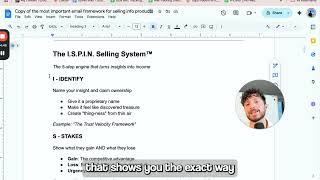
In this video, I want to talk about the most manipulative email template that you could possibly use. And yes, that is a little bit tongue in cheek, but only a little bit. So as you'll see in just a moment, obviously I'm not into manipulating and controlling people. But this template here that I'm going to show you for the email, I'll show you multiple examples and exactly how you can do it yourself. I was consistently able to use it to bring in thousands of dollars on my own email list. And it's just such a simple template. It leverages a lot of different human biases and, and it's very, very, very, very powerful. It gets people's attention and gets them to respond. And I want to show you how you can do that for yourself if you don't know who I am. My name is Luke Eha, a long time my business partner. We run a mastermind called Genesis where we help marketers, freelancers, solopreneurs and business owners use AI in marketing to make better decisions. That way they can make more money in less time. And in this video, let's just jump right into the email. I want to show it to you. Okay, so these are the emails. I have three examples right here because basically, like I said, I sent this email to my list, this first one that you're looking at, and I was like, whoa. Like, the response was like, crazy. And I send emails, you know, about 10,000 people on my list, I send emails all the time. I see which ones get, you know, crickets. I see which ones get responses, which ones get sales, which ones don't. I like to experiment with different things. So when I sent this email, I was like, wow, this is really, really cool. The other thing, just an important part of context is that we are currently building an amazing, like, AI email software that will ultimately do many, many other things. Okay. This is very different than like a bot or a ChatGPT wrapper that's just going to send an email for you. We have done that like years ago and we continue to do it and have pioneered many of those. Okay. We have plenty of those inside of Genesis. What this is doing is like basically taking the entire decision tree framework, everything that you need, all of the inputs you need to write really great emails, and then automating that. So literally you can run your daily email list with high, high quality emails that people cannot detect in a million years. No GPT detector can detect that they're AI. That's the process that we're doing. So all the emails that you're about to see. And you can get access to these emails by the way, by opting in below. All the emails you're about to see are a hundred percent written by AI. The reason I bring that up is because some of the emails are a little bit longer. And I don't want you to think, oh my God, I have to write these like crazy in depth long emails. It's just that AI wrote them for me in one shot, so it didn't matter how long they were. But you can do the same process without any of that. And by the way, I'm going to give you this exact process down here. But first I want to show you the examples and I want you to, you know, as I read through it, I'll skim some of it. As I read through it, I want to see if you can detect some of the psychology that's going on in it. So like, pay attention, see if you can detect some of this stuff. So here's how it opens. If you're a copywriter or a marketer, you're about to get wrecked by AI. Because since AI makes it easier to write a lot of copy and most people are using the same prompts, same frameworks, same generic struggle language, if you do the same thing, your copy is going to get lost in the noise like a fart in a hurricane. We're not at peak AI saturation yet, but we're close. And then it'll be a problem. By the way, it's not using AI that's the problem, it's how you use it. The Matthew effect is in full effect here. The smart marketers will get smarter and the dumber will get dumber. Which, by the way, here's a sadistic piece of advice that I think will help you avoid all this madness. By the way, the subject line for this was a sadistic Sunday email because I sent it on Sunday and I'm like, Sunday should be a fun day and I'm talking about pain. So let me kind of call that out that this is a sadistic email, okay? And I like a little alliteration. So here we go. By the way, here's a sadistic piece of advice that I think will help you avoid all this madness. We all know pain is the name of the game. In direct response, people are in pain and want help. However, most people think pain is just pain. So they write the same tired struggle language for every market and wonder why their copy feels flat, why their emails get ignored, why their sales pages convert like garbage. The Truth. You need to understand the texture, the flavor, the depth of your audience's pain. I call this the pain matrix because there's 10 dimensions of pain, almost like 10 dials on a radio. And for each dial, you can turn it to the left or right and get a different station blaring in your ear. These stations represent people's pain, and if you're not tuned to the right station, your copy is just noise. Let me break down a few key dimensions. The physiological to psychological. Is there pain physical, mental? Or a mix of both? Visibility, low and high. Can others see their problem? Urgency, low and high. By the way, it's a very, very important concept. Like outside of the scope of this email. Very, very, very important concept. Urgency. Is it lower? High? Is this a fix it now or die situation or more of a someday thing? Control, Low or high? Do they feel like they can do something about it? There's six more dimensions that can get even more specific. When you map out your market's pain across these spectrums, you stop writing generic shit like, are you tired of struggling? And. And start writing copy that feels like you've been reading their diary. Which sounds creepy when I put it like that, but you get the point. Want a real example? Take copywriters who can't land good clients for that market. You might think it's a skill issue or a know how issue. Wrong. Let's run this through the pain matrix. So we're talking to copywriters, physiological to psychological. The answer is psychological. This isn't a broken arm. It's anxiety self doubt imposter syndrome eating them alive. Visibility is low. Nobody can see their problem. They look fine to the outside while dying inside. No visible bruises from rejection emails. Urgency is high. Bills are piling up, rents due. They need clients now, not someday. Control is low. They feel powerless. They're sending the same outreach, getting the same silence, stuck in the same cycle. And that's just four out of ten dimensions. Like, do you think that this resonates with people? Like, yes, it does. When you understand all of them, you can write copy that hits multiple dimensions simultaneously. Tired of pretending your copywriter's business is going well and you're actually dying inside? We blend those, by the way. I didn't even ask AI to do it, just did it itself. And I was like, this is sick. Sick of watching Other copywriters post 10k wins while you can't figure out what you're doing wrong. Ready to stop checking your empty inbox every 10 minutes, hoping for a miracle client response. That's frequency and control. Need to land high paying clients this month before you have to explain to your family why you're moving back home. Urgency, social judgment, impact, scope. Okay, see the difference? That copy is not even great. It's not optimized. But the core idea is there in spades. And each line hits multiple pain dimensions simultaneously. That's why it feels like you're crawling inside their brain. Because you are. And when you get this right, you. Your copy doesn't just convert better, it converts dramatically better because you're speaking directly to the core wound driving their buying decisions. Most copywriters will never figure this out. The keep writing surface level pain, agitation. Wonder why their results are flatter than a pancake. But now you know better. By the way, we are eight pages in and I know that there's some reply guy in the comments who wants to tell me, oh, this email is just way too long. It doesn't work. But it's like really did it not work? Because it got more responses than any of the short or in depth or nerdy emails that I sent. And. And it made me thousands of dollars just by sending this one email that took seconds to generate with AI. So you tell me who's right or who's wrong. By the way, I don't mind criticism or any sort of feedback, but make sure the feedback and the criticism, the comments that you're leaving come from a place of education. Otherwise you got to ask yourself, what's my point for leaving this comment? Anyways? Point being we're very, very long, eight pages in, and I haven't even given a call to action. And yet how did this product. How does this email make millions or not millions? That would be awesome if it did. How does email make thousands of dollars? Right, Right. That's not an exaggeration. So let's keep going. The kind that makes people think, holy shit, this person gets me. That's the power of understanding the full spectrum of human pain. And once you see it, you can't unsee it. You'll never have to worry about those robots ever again. Let me know what you think, Luke. PS Right. PS. Inside of Genesis, we have bots trained specifically to map your market's pain across all 10 dimensions so you can generate sales copy that actually hits where it hurts. If you're interested, just shoot me an email. This was my super salesy email, right? Nine pages, probably too long for many of you guys. How long is this? 800 words. Not too bad and a little light. P.S. so how. How the Heck, did an email like this, like, get massive responses and then also a lot of sales and I'm going to break down. I'm not going to hold, hold back. Okay, so let me just go through, I'll analyze this, then I'll show you the framework and then we'll break down one more example so you can see it in action. Okay. So the first thing that I did was I established the stakes. Okay? If you're a copywriter marketer, you're about to get wrecked by AI. I established the stakes, okay? I'm not just saying you're getting replaced by AI. I'm just saying peak AI saturation and you need to be able to, to be here. Right, Right. So that's all I did. I just established what's at stake. If, you know, yes, I have a good hook and stuff like that, kind of, but even my hook's kind of weak. So the main thing is I have the stakes. People know what they have to gain and what they have to lose. The other thing that you're going to find that is really crucial to doing this is creating in group out, group dynamics. That's why I'm saying this is like, I don't know if I'm going to title this the most savage email or the most manipulative email. You know, we're definitely leveraging some psychology in here. So please be thoughtful and careful when you use, use this. Right? And if nothing else, just be aware that other people might be using this on you. Okay? In this case, I have an amazing product to sell people, so I don't think anyone's getting manipulative or scammed. Right. People love the stuff that we do and we work really hard to provide value. However, we are leveraging a bit of human psychology by using in group out, group dynamics. So look at this. This is the first instance of it. The Matthew effect is in full effect here. The smart marketers will get smarter and the dumb will get dumber. As somebody is reading this and they're bought in, do they want to be the smart marketer or the dumb marketer? Right. And I'm already setting the frame and I'm getting to kind of control the narrative of who the smart marketer and who the dumb one is. Again, I actually have conviction and believe this, but this is what I'm setting up. That's not the only place where I use in group out, group dynamics. Let's see. Most people think pain is just pain, so they write the same tired struggle language and wonder why their copy feels Flat. Okay, again, that's a little bit of outgroup stuff. Let me see if I can find the other example. Here's also what's at stake. When you get this right, your copy doesn't just convert better, it converts dramatically better. Okay? This is not the problem. This is the promise of what people can get. Look at this. Most copywriters will never figure this out in group out group dynamics. Putting you in that one, they'll keep writing surface level, paint agitation and wonder why the results are flatter than a pancake. Again, so I'm using in group out group dynamics. First thing is the stakes. Second thing is in group out group dynamics. Now the next thing that I do is I have a name. Very, very, very important, but I have a concept and a name for what I'm talking about. This is called the Pain matrix. It is a very, very cool concept. It took me a long time to develop it, but it's a concept and I give it a name, the Pain Matrix. Very, very, very, very important. Now what I'm doing is then I start explaining it and guess what? How many dimensions to pain? 10. And how many did I describe here? 4. Interesting. Do you think that was intentional or unintentional? No, it's very, very intentional. I didn't give everyone everything. I just gave them a little bit. Enough to show them that this is real and for them to see the value on it. And if you're only four and I'm like, oh my God, this is so good. I want the other six. Okay. And notice that I'm not sitting here saying, haha, I can't, I'm not gonna tell you everything. It's almost a throwaway line like, yeah, here's four dimensions and there's six more that get more dimension. But let's, you know, we don't have time for that right now. Right? And they're like, no, we have time. I want to know. I literally had people email like, what are the other dimensions? What are the other dimensions? And I'm like, well, you gotta join the program and use the bots to get it. Okay? This is especially true if you're selling information products now. We don't do information, we do coaching. Which I actually like that model because it allows me to share way more liberally with my email list with you guys. Like, I share so many concepts and information and I don't feel bad because inside our paid community for coaching, we keep so much of the good stuff. Like we go way, way, way, way deeper into our community and we have the coaching calls to help you actually implement it. And most importantly, we have amazing tools like bots for, like, every single thing that I show that will do the work for you. And, you know, I can share the information, but you don't have access to the tools to actually make it happen. Okay, so that's how I split that dichotomy. But still, in this case, you know, people did buy a product, and this was an important part of it. So out of respect, I don't want to share it. And I wanted to see what happens when you hold back a little bit of the information. That's very, very important. So pay attention to that. Let's keep going. Now, this right here is probably my favorite part. Yeah, it's this part right here. Not only do I describe the concept, but I give them examples so they can see that this is actually important. This is the only hard part of the system. Hard. You can actually get away without it just by naming the concept and kind of teasing it a little bit. But this becomes nuclear. We when you're able to show examples, because that is proof. Like, the best kind of proof it goes back to Gary Benzivenga is demonstration. So if I'm saying, hey, here's a really cool concept, pain matrix, right? Here's some of the interests, I could just tease it. But when I'm like, let me actually demonstrate to you and prove to you how powerful this is, okay? And guess what? I didn't just prove it for, like, people who are reading this email list are copywriters and marketers, right? Or people who are interested who know the power of copy as business owners. Okay? So while I am using an example to prove it to them, I'm also talking directly to who they are so they can verify if this is accurate for them. Then they know how more accurate, and they want this because there's how powerful it is. If I did it for, like, automotive people, they would have no idea whether what I'm talking about is accurate or not. So it's very, very meta. I'm talking to them. I'm doing whatever. I'm also talking to you. If you're a copywriter, marketer, probably you read this and you're like, oh, this is pretty good. This guy understands some stuff. Okay? Because again, the concept is very, very smart if I don't say so myself or do say so myself. So anyways, I go through it, I'm teasing it. I'm talking directly to them, and I'm saying that's just 4 out of 10 dimensions, I'm giving a little bit more proof. Then I do something else that's a little bit more subtle. But I say that copy is not even great. It's not optimized, okay? This is very, very, very important, right? If you are giving some information away, whatever, there's always the case that someone will look at it and be like, that's not that good. Which, you know, to be fair, it's decent. But I would make this a lot better if I worked on it right now. What I could do is I could spend my time to try to work in and try to, you know, respond to that reply guy. Or I just be a little dismissive and be like, yeah, the copy is not great. It's not optimized. I didn't fix it, okay? And that sort of buys me a little bit of time because people can still feel the idea without seeing the actual optimized copy. Then I keep going. Like I said, we're adding more in, group out, group dynamics. And then all I do is say, if you want to know all of this, not only the other 10 dimensions, but also use the bot for it, just shoot me an email. Now. They got to come to papa, right? They got to respond an email to me and then I send them the link and then they purchase. Okay? It's a very, very simple email, but let me show you the exact framework. Do you have to guess anymore? You guys can get access to this if you just opt in below. And again, you can look at the doc here calling this insight arbitrage, cognitive capital, et cetera. The main system is what I call the I spin selling system. This is how you can turn any idea into gold. First thing you need to do is you need to identify a specific insight that you have come up with and, and give it a name. I had a longer video and if you guys want me to do that, I will do that. If you respond in the comments below, I have a much longer video that shows you the exact way to find the insights that you have and to create new insights. It's a very, very systematic process. I've been doing it for a long, long, long, long time. And it's not fugazi, it's not fake. It's like, how do you actually create insight within your market and start to kind of buy up some of that cognitive capital that I'm talking about. But for now, all you need to do is identify any concept that you have and give it a name. There's probably many concepts, things that you have already and you just need a name for it. Okay. We happen to have an AI that's trained on like 2000 hours. It's about 10 million different words, which is 13 Bibles, by the way. I calculated it. 10 million different words of information from, like, literally years of every training video we've ever done, everything we've ever done. And people in our community get access to that. And it can ask any question, which means I can go into it and say, hey, give me a list of all your concepts. It'll give me hundreds of different concepts, both ones that we explicitly figured out and ones that are implicit. Then I can name them and I could use the same process. So I could literally, you know, take this email and I would have like hundreds of different variations, and then I could probably have seven variations of those, which would be 700 emails, which means I could send these emails every day for a year without even trying. Okay. And just continuously make money. But I like to experiment and try different emails as well. So first thing is you identify your insight and you give it a name. The second thing is you establish the stakes. What do people have to gain? More importantly, what do they have to lose? Right? Like, again, this is just basic human psychology. Humans, like, literally, they study this. Humans value loss much, much greater than pain. So just figure out what they could lose, because it's not true. It's like, it's not mathematical, but, like, they are not logical. But if they're going to lose something, they're going to value it way, way higher. And then there's urgency. Right? There's other elements in here, but these are the most powerful three. So just identify it. Be like, okay, trust, velocity, framework. Right, Whatever that is. I don't love the name, but let's say that that's the thing. Then you just say, what do people have to gain if they have it? Awesome. What do they have to lose? Right? Really? And then why is there urgency around this problem? Next thing you do is proof. And the best proof, like I said, is demonstration. So you just demonstrate it works, but only partially show about 30 to 40% of the framework, provide depth without getting everything. Create the I need the rest feeling and just prove it. Okay? And you can use some of the techniques that I showed you and that makes people really want it. This is the other really key dimension. Insider create us versus them. Positioning. Smart people. Get this most, never will. You're special for understanding, done. And then all you do is you casually say, here's the next step. I build a tool that does this. Just Reply and I'll give it to you. That's the basic system. It's so, so, so, so simple. Many people won't do it, but those who do, you know, put a comment below, send me a message, lucopycoders, AI, and tell me how well this worked and how you were able to make money with it. Okay, here's a quick process. The only other thing that I would add on here is your frame. We call these hooks, right? But you know, in Genesis we call them frames, but they're basically hooks. So like, how can you set this up? You can have a paradox. Sorry if this is hard to read, but I think AI kind of messed that up. There's a paradox, there's a threat. So the last one that I just showed you here was a threat. You're about to get wrecked. You could do a paradoxical question. You could do a discovery. You could do an insider myth busting pattern frame. There's many, many frames. These are just types of emails or hooks. You still want to have some sort of hook or frame to open it up. And then the meat and potatoes is everything that I just shared. And then some of the advanced tactics, which I already mentioned, but I'll put on here is the casualties. So you share four out of 10 dimensions, 30 to 40%. And then you just casually tease that there's more. You're not saying, I won't tell you. You're implying that there's naturally more depth that one email can cover. It's sort of a throwaway. There's sidebar moments. Okay, that's just kind of fun and just like general email copywriting stuff. Preemptive downplay. We talked about this admitting limitations before making your point. That copy's not even great. It's not optimized with the core idea is there in space. This disarms skepticism. It makes the actual value feel more authentic. You're saying, even the mediocre version of this works. Okay, then there's the zoom in the third option. Proof stacking, sensory metaphors like fart and hurricanes. Kind of funny that that made it on there and then the soft close as well. Okay, this is a very, very basic framework that you can use. Let me show you one more example on here. Again, I wrote this first email and I was like, wow, this really worked. Let me just test and see if it works again. So I'll read through this, see if you can spot some of the things that we talked about. In fact, let me list them again so you can really pay attention and look out for them, look for the identified, the named concept. Look for what's at stake. Both gain loss and urgency. Look for the demonstration of proof. Look for the insider and look for the next step. I was hoping that somebody in my email list would, would call me out and be like, you just did an email just like this. Right? Because I sent it the day after and nobody did. Right. So that just shows you what you can do, I think. By the way, the subject line for this one was Mario's idiot proof ad formula. Pretty sure. Mario is my business partner and that's the subject line that I chose. Okay, so let's read it. A few months ago, Mario spoke to a few hundred people at Perry Belcher's AI Bot summit, and he introduced this totally new concept we've been working on that we haven't talked much about on this list. I don't think the quality of the AI in this one is not quite as right as we dial it in, but it's okay. It's pretty good, but makes ad writing ridiculously easier. So I'm just kind of like doing like a little hook. We're talking about this thing, blah, blah, blah, blah. So I figured I'd share. It's kind of one of those things that's subtle. So subtle that you might not really grasp the implications at first, but once you do get it, it actually turns out to be one of the most powerful frameworks we discovered in copywriting, one that very few people know about or use. Look at all the techniques right in here. It's something that is very, very subtle. That's preemptive dismissal, right? Because I know people are going to look at it and be like, oh, that's too basic. So I'm telling them, you're going to think it's basic, but if you're smart, one of the few people insider dynamics, you're going to grasp the implications because it really is powerful. And again, this really is powerful. So if you want people to pay attention and listen to what you're talking about, do these processes, people will pay more attention. See, whenever people think about ads, they typically turn to PAs, right? PAs, for those who don't know, stands for problem, agitate, Solution. Again, that's a little mistake. It's a classic direct response formula. But here's the thing. PAS is a little outdated because it forces you to start with the problem as you're hooked and it kind of restricts your creativity. So instead of pas, we use aip, which stands for Attention, intensity, Possibility. And it's so easy an ape can do it. That's Mario's dumbass joke, not mine. A little preemptive stuff on there as well. So right here we have our named concept aip. And look, we talked about only few. This is our insider knowledge. Once you do get it, turns out to be very powerful. That's. That's what's at stake. Okay? And we have this, which is preemptive. Shit, I wish I had some better color coordination. But I'm just pointing out the most important elements. So what do you think we're going to do? We're probably going to demonstrate, right? The main insight with AIP is that it's universal. Instead of being forced to start with pain, you can start with any copy block. Let me break it down for you. Attention. This is your opening hook, and it can be built by using any copy block. Curiosity, constraints, proof, pain, promise, whatever. By the way, I have a training on copy blocks. The first video on this channel, it's got about 5,000 views at this point of viewing. Many people really like it and refer to it and. And there's a paid product below. It's 27 bucks, but it's like the PhD level. But if you want the free version, just watch the free version. One thing that I will say about this email is I actually do think that I give away a lot of this whole formula. And then I just say, hey, if you want to use a bot to do it, use the bot to write it. Which is kind of the same thing as like holding information back. Because I'm like, here's everything you can do. If you want the bot, the bot will write it for you. So anyway, then you've got intensity. This where you amplify the stakes. Then I do a demonstration. I'm going to use a super clickbaity weight loss examination. I show the different examples. Again, I show more examples. Obviously, there's a lot of nuance here. What's that an example of preemptive whatever you. You would have to use what we call rhetorical frames and market psychology maps to really dial in these hooks. Right. Here's me teasing a little bit more of some of the other information that we have. I'm landing the point that AIP is modular. And then I'm coming in here and saying, inside of Genesis, we're building an AIP bot that's going to make writing copy with this framework brain dead easy. We'll be done next week. I talked about a bunch of other bots. Our bot team is literally meeting with us, going through our highest level stuff. Split testing prompts and enterprise grade tools coming with the best stuff. They're not the only ones. We're also having new members generate bots for the community. This is also true. And again, we're talking about all these different bots on here. Our community has been killing it. If you're interested in being part of it, let me know. We're about to drop a major update. It's going to make earning inside the community even easier. Done. Okay, so in this case, I actually give away most of the formula and I'd say if you want the bot to do it, you can do that same process again. This email made me many sales. Let's look at this example. This is about paradoxical questions. Okay. And I'll just leave this one. You can go ahead and read it again. I go through everything in paradoxical questions, why it's so important. And then I basically say, inside of Genesis, we have a little bot that will write it for you. Okay. And it kind of goes through this entire process on here. So very, very, very basic. Again, TLDR version. Identify any concepts that you have, give them a name, figure out what's at stake, prove that it actually works with demonstration. Create insider outsider dynamics, those who know this versus those who don't. And then introduce the next step. And you will make people very, very hungry to want to buy your stuff. That's all I got for now. Peace.
More from Mario


easiest way to make $30k/mo as a creative strategist (I’ve helped 100’s of people)

how to write hooks so dangerous you break people's brains (4-step "deep fry" process)



The Complete Creative Strategist Pricing Guide for 2026 (Every Deal Structure I've Seen)


this copy instinct framework makes you a monster at ads (nobody teaches this) pt. 1


why "insight vectors" are the most valuable marketing concept of 2026 (I didn't want to share this)