why "paid to feel" is the most valuable marketing skill of 2026 ($3K-$10K/client)
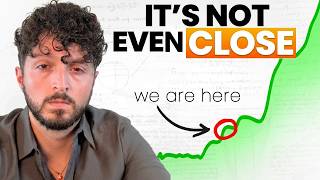
In this video the speaker argues that the paid creative strategist – a role that blends AI‑generated ad production with human judgment – will be the highest‑demand marketing job in 2026. He distinguishes paid from organic creative strategy, explains that the core work is not writing copy but directing AI tools and selecting the highest‑signal outputs, a process he calls “being paid to feel.” The demand surge is driven by three market forces: AI making content production cheap and abundant, Meta’s new Andromeda algorithm that rewards creative diversity, and the industry shift toward performance‑based marketing where creative itself becomes the primary targeting variable. The speaker backs the claim with Google Trends data, job‑board screenshots, and numerous student earnings anecdotes ranging from $5K to $120K+ per month. He cautions that results are not guaranteed and emphasizes that success depends on the individual’s dedication. The video concludes with a call to action: subscribe, join the email list, and enroll in various free and paid trainings (copy‑block course, AI Creative Strategy Academy, mentorship) to acquire the judgment, taste, and AI‑orchestration skills needed to become a paid creative strategist.
Chapters
I want to talk about what is the most in-demand marketing role of 2026 by a long shot, not even close. And more importantly, I want to talk about how you can capitalize on it to potentially get some clients for yourself, because this role is paying anywhere from $3,000 to $10,000 per month per client, and many people can stack these clients together. Okay, that's the success of my past students, not any indication that you can do it as well, because that's entirely up to you. I do want to tell you about this role. In fact, when you look up this role right here, you will see in 2026, you can look this on Google Trends. In fact, everything that I'm going to share in this video, I highly encourage you to go and do your own research because you will be even more convinced by your own research than you will by this video. And what you'll see is like, all right, this is like 2022, not too much. And then 2026, a huge spike of interest right now. This role is the creative strategist, which we're going to talk about and we cover a lot inside of this channel. And this is a very important role if you're a copywriter or a marketer or a media buyer, if you have that past experience. But honestly, even if you're just starting out and you kind of want to jump in, I still think this is a reasonable role for you to kind of move into. Okay. So this is the role of the creative strategist. Now let's talk about what exactly is a creative strategist, because you will notice that there's a couple of different definitions that are floating around. One is an organic creative strategist, which is somebody who looks at your IGs or, uh, or your TikTok or your YouTube. And they're basically strategizing from a branding, from a positioning perspective, from an entertainment perspective, from an attention perspective. They're basically building all of your organic. On the other side, you have what's called a paid creative strategist. This is somebody who essentially is writing ads and then also getting into building things like advertorials, funnels, more things like that. But a big majority of the job is just to focus on ads. And there is a huge overlap for sure, because both creative strategist, whether you're organic or paid, need to understand how to get attention. But in this video, we're talking specifically about the paid creative strategist. I think both roles, to be honest, are great roles to kind of explore, but they're separate. And hopefully this distinction is going to be clear because you will see people talking about a creative strategist simply from an organic point of view, and you'll see people talking about it from a paid point of view. And it's important to clarify those distinctions because people use those interchangeably. Okay. I think knowing both is great. But the one that we're gonna focus on today and the one that we focus mostly on in our training programs is the paid creative strategist. Okay, cool. Now a paid creative strategist here is focused on performance. They blend in a lot of belief shifting, which is really persuasion, right? So typically people who do organic really well are amazing at getting attention. They're amazing at being tapped into culture. They're amazing at hooks, right? Where they start to fall a little bit weaker is how do you take that raw attention and convert it into belief shifting that then gets someone to actually wanna buy things? And this is typically where a copywriter or a marketer or people who have direct response training really, really shine because they know how to get attention. But more importantly, how do you take that attention, alchemize those, that raw attention, that raw emotion, and turn it into belief-shifting stuff that actually gets people to buy? So let's talk about what a paid creative strategist actually does. The number one thing that they do is they write ads, usually for D2C e-com brands. So this means basically anytime that you go on a store and it's a Shopify store or it's just any sort of like online business that's selling, you know, supplements or gadgets or functional items, stuff that you saw on TikTok or TikTok Shop, stuff that you find a Facebook ad or an Instagram ad for, anything that's not sending you to Amazon basically is D2C, right? Which just means direct-to-consumer. And you'll see that direct-to-consumer, D2C, is just continuing to rise and escalate, right? It's basically a straight shot up. You can look at this for yourself. Um, and so basically what you're doing is you're writing ads for these brands. Sometimes you're writing ads for info and coaching brands as well. I mean, anyone who's running advertising could use a creative strategist, but it's basically these two types of businesses, D2C e-com brands especially, and some info and coaching brands that want to hire a creative strategist. Okay. Now I say most of the job is writing ads and I put writing in scare quotes because most of the time you're not even doing writing anymore. As you know, unless you've been living under a rock, you know that AI has gotten very, very powerful at writing, right? It's a very, very powerful writing tool. We have amazing AI tools that I think do the best part of, of copy and marketing. And, you know, other people agree with that as well. However, the, the cool part is no matter which AI tool that you're using, typically AI is pretty good at actually writing and creating the stuff. So you are sitting as someone who's orchestrating and directing the AI and what to do. And very importantly, something a lot of people don't talk about is actually judging the production. So basically have AI write a bunch of ads and then you look at the ads and decide which ones you want to run. Right? We call this being paid to feel. And this is probably the most important concept in the whole video. There's an overabundance of stuff out there right now. An overabundance of AI stuff. And yes, AI is taking jobs. You can just look at, you know, all the big layoffs that are happening. Unemployment numbers have actually increased lately. And a lot of people are talking about AI taking jobs. And, you know, that's a topic of a longer video, but I am in the camp that, yeah, very obviously AI is going to be taking jobs. However, for creative strategy, this is what's interesting. This is a role that was created by AI. It's one of the few roles that were created by AI, especially when it comes to marketing. Now there's such an overabundance of content and creative that we need people to sit at the hub, organize it, and make decisions about what to test and what not to test, right? So basically because of AI has made production so easy for images, videos, and text. Now there is so much content that's out there, it's created this new problem, this new bottleneck of, okay, if you have all of this content options that are out there, Who's gonna sit there and decide what is slop and what actually is signal? And we call this being paid to feel or monetizing your humanity. This is what my business partner and I call it because this is really what you're doing, right? AI doesn't have a nervous system, which sounds kind of funny, but essentially as a creative strategist, your job is to look at ads, look at advertising, look at headlines, look at images, look at copy, steer the AI in the right direction you want to go and sit at the hub to choose between all the things that it produces, which ones you think are the best and which ones are gonna work the best, okay? There is a skill component involved and there is more to it than that, but fundamentally it's not an oversimplification to say that this is what the role is about, right? Judgment and taste and being paid to feel. I'm gonna show you like a very simple example right here. I want you to just look at these two headlines and all I want you to do, like, again, this may seem silly, but I want you to try this. You just like close your eyes. Well, actually don't close your eyes because you need to have your eyes. So you can just sit there and you want to just look at each headline and and ask yourself what you feel in your body. Like literally, like what sensation, not thought, like what sensation? Do you feel something in your chest, in your gut, in your neck? What do you feel? And I promise you, if you train your sensitivity enough, you'll notice that you have a bodily reaction to each one of these headlines. And typically, at least for me, when I look at this headline, I notice like just a little bit of amplification, a little bit of elevation. I'm like, ooh, something here is a little more interesting. It kind of activates something for me. And that tells me that this has higher signal. There's something in here that's actually kind of getting my attention. Ooh, it's good. And the more sensitive you get at noticing those distinctions, the better you are at this role. Okay? And it's fundamentally what it is all about. Now, we won't go into it here. This headline is better, not just because it's longer, right? Because I could have made it bullshit and longer. This headline is better because it has all the copy blocks, which is another video on this channel, which is, you know, a bunch of psychological tools. So if you felt like this headline was better, That's good, it means your feelers are working. This only has 1 copy block, right? And this one has 6 copy blocks, okay? That's why it's a lot stronger. However, it doesn't really matter. The main point is did you feel something or not? That's really what this is about. Now, I wanna talk about why this role of the creative strategist is suddenly exploding. Like I said, number 1, it makes, AI makes production easy. Number 2 is Meta changed the game, right? So you can look up something called Andromeda. Basically because there were so many ads that Meta had to sift through, so many people making so many more ads because AI made it so much easier, Meta had to completely change this algorithm to deal with this insane inventory of ads, which means that now Andromeda focuses on creative diversity. It focuses on a few different things, right? But the moral of the story is that what it has done is it's caused D2C brands to focus on, they need better creative, They need more targeted creative. They need creative that's broken down for different segments and different awareness levels, and they need a lot more of it, right? So AI created this, which, you know, forced Meta to kind of change this algorithm, which now has forced these D2C e-com brands to be competitive, to need this specific role. The other sort of trend that you'll see is that creative is the new targeting. So back in the day, it used to be you had someone who did the messaging like a copywriter and someone who did the traffic, which is a media buyer. The copywriter decided what to say, the media buyer decided who actually gets to see it, right? And how we basically advocate who, who are, yeah, who we're targeting, who we're gonna go for. Now things have shifted where now creative, the actual messaging and words that are in there, Meta's algorithm does it for you and, and sends it to the people it thinks is most likely to convert, which means that your creative is that much more important. It needs to be really clear who it is for. Creative is the most important variable now. And the last one is that there's a shift to performance marketing. So the thing with D2C brands that's interesting is a lot of these brands are bootstrapped, whereas in the past you had big brands with big marketing budgets, big spend, and they could, they could be kind of frothy with the stuff that they did. They didn't need conversions. They needed brand awareness. Things weren't measured or tracked, right? There was kind of like not a lot of accountability. But when you're working with D2C brands that are bootstrapped, they need a positive ROI. They need direct response. And even big brands are making the shift to performance marketing. They want to see an ROI on the dollar spent. All these things together, the shift to performance marketing or direct response, the AI making production so easy, Meta changing its algorithm as well as other ad platforms, and creative overall becoming the new targeting makes this role so, so, so in demand. And there's proof of this everywhere. Like I said, we've seen this trend, this graph for Google Trends. If you go on Upwork or LinkedIn every single day, this is a screenshot. It's a little hard to see, but this is from a single day. And I guarantee if you went on there right now, you would see just as many postings. This is my old business partner, Stefan Georgi, basically in his email list. He runs a big brand with a bunch of D2C business owners always looking for creative strategists. Here's some screenshots of different friends that I have, right? Or different masterminds that we pay money to be in. People urgently need a creative strategist. Creative strategist now more required than media buyers. I urgently, I need so many creative strategists, right? Here's people asking us personally, my business partner and I, to post jobs. This is inside of our community Genesis. We're posting a bunch of jobs here. This is another e-com company that costs like 5 figures a month, or sorry, 5 figures a year to be a part of. And this is them saying basically that creative strategists are the most high-demand people right now, right? And basically sometimes they're paying them $10,000 per month or even trying to figure out how to poach them from other companies. There's recruiting firms that do creative strategists. And then here's a bunch of results from our own community. Here's Cosmin, who's getting basically a $5K gig for scripts per week. Uh, here's Bashir from Uganda making $11K a month from clients. Here's somebody hit $40,000 a month. Uh, here's someone offering $120,000 plus bonuses. Uh, here's someone got 3 winning ads in a row, a record month, first at $37,000, $3 million on ads, brought in approximately $500K last year, went from $12K to $106K a month. My income is 7x, etc. You can continue to see the results on there. Now, real big urgent disclaimer: am I promising that you will get any of these results? Absolutely not. That is 100% contingent on you. These are different types of success stories, right? These are— you can consider these the outliers, even though we have many of them in here, right? So it is hard and it takes work and it takes dedication to get these results. But that's a good thing because you want to be spending your time and your skills doing something that takes dedication. All right. So I'm not promising by any means that you will get any of these results. I'm just sharing some of the success that our students have had. Right. And most importantly, to show you that, hey, there is demand for the creative strategist role. That's it. Now, the other thing that you can do and that I encourage you to do is just go and look at all these different tools. ChatGPT, Gemini, Perplexity, and Claude. Let me actually show you. Okay, so this is, this is Claude. Is the role of creative strategist growing in 2026? Short answer, yes, and significantly. Here's the data. Motion is saying every fast-growing D2C brand is hiring for this position. Tried and true. Cool. Lots of things on here. How much longevity does this role have? Here's my honest read on longevity. The role itself has staying power, but it will keep evolving, right? Is it possible for beginners? Yes, absolutely. And it's explaining why 2026 may be a good time because barriers to entry have dropped. AI has compressed the learning curve. There's free high-quality trainings. The common entry paths are accessible. Let's look at what Perplexity says. Is it growing in 2026? Yes, it's growing. Here's somebody who said big in 2025 and continues to grow in 2026. The single biggest growth area in their inbound roles. It explains why. Does it have longevity? Yes, it's durable, right? Research on future marketing roles indicate that doer jobs are most exposed while strategy and analytics-focused creative roles are expected to grow through 2030. Okay, again, I don't make predictions, but I'm just showing you what this says. Is it possible for beginners? Right. It explains. Yes. Powerful. Let's look at what Gemini has to say. Is it growing? Yes. The role is growing, experiencing massive growth in 2026. How much longevity does it have? Short answer, extremely high. But the mechanics are going to shift. It's basically saying creative strategy is one of the most AI-resilient career paths in the marketing world. And it's entirely possible. And I like this. In fact, because the modern iteration for this role is so new, there's no formal university degree or traditional corporate ladder for it. Most of the top creative strategists today pivoted from adjacent fields. Awesome. Let's ask ChatGPT. Yes, it is actually growing, becoming more central. Creative is becoming the new targeting. What did I say? Hybrid roles are replacing traditional creative departments. AI is increasing demand, not replacing it. Creative strategy salaries are rising. This role is exploding specifically in ads. The next evolution, and then it continues to expand. Why you're seeing the role early. AI plus creative strategy plus performance marketing. Powerful. How much longevity does it have? Absolutely has longevity. The title may change, but the function is permanent. The answer is yes, probably more than ever, but the shape of the role will evolve. And then it explains that. Okay? So I just share all that because you can go and do your own research, right? To see this for yourself and see a really unbiased view. I really encourage you to do it to understand why this role is so powerful. Okay? So what do you need to do to get started? Well, number one thing is subscribe to this YouTube channel because everything I'm gonna be doing is me talking about creative strategy. We run a program right now that has 400+ marketers, D2C brand owners, and creative strategists in our program. I have a personal mentorship where I work one-on-one credit strategists to help them get to $15,000 and $20,000 a month. And I actively work as a credit strategist, and I mean, you know, basically spend $11,000 a month of my own money to be inside of masterminds around creative strategists and other DDC brand owners. And I have tons of friends in the space. I only say that because I have my finger on the pulse. And so in this channel, I'm going to continue to give you free resources and free sauce to help you understand exactly what you need to do and how to get started. There's also trainings down below, like Copyblocks training, which is more general copywriting training, $27, but it's by far to me the best thing that that you can do to get started in terms of copy. It's one of the best crash courses and best mental models you can have. There's a free email list below where you'll get access to this plus any other resource, free resources that I've done. I've done a lot of resources on this channel and you'll get access to all of them just by plugging in your email. And you'll continue to see trainings, free workshops and trainings that we run every single week showing how you could become a creative strategist. We run those, like I said, every single week and I'll probably put some details below on how to do that. And there's a bunch of additional things that you'll find. As well. Okay. Including our AI Creative Strategy Academy and many, many more. But the most important thing is to follow this YouTube channel, get on the email list, and I'll continue to share as many of these videos as possible. But the number one thing that I think you should do is just do your research for yourself to understand what this role is. And if this is something that you feel like you can do because you're a creative person, because you like kind of sitting in the strategy position, then I highly recommend that you check it out. 'Cause I think it's by far gonna be one of the most powerful things that you could do.
More from Mario


easiest way to make $30k/mo as a creative strategist (I’ve helped 100’s of people)

how to write hooks so dangerous you break people's brains (4-step "deep fry" process)



The Complete Creative Strategist Pricing Guide for 2026 (Every Deal Structure I've Seen)


this copy instinct framework makes you a monster at ads (nobody teaches this) pt. 1


why "insight vectors" are the most valuable marketing concept of 2026 (I didn't want to share this)