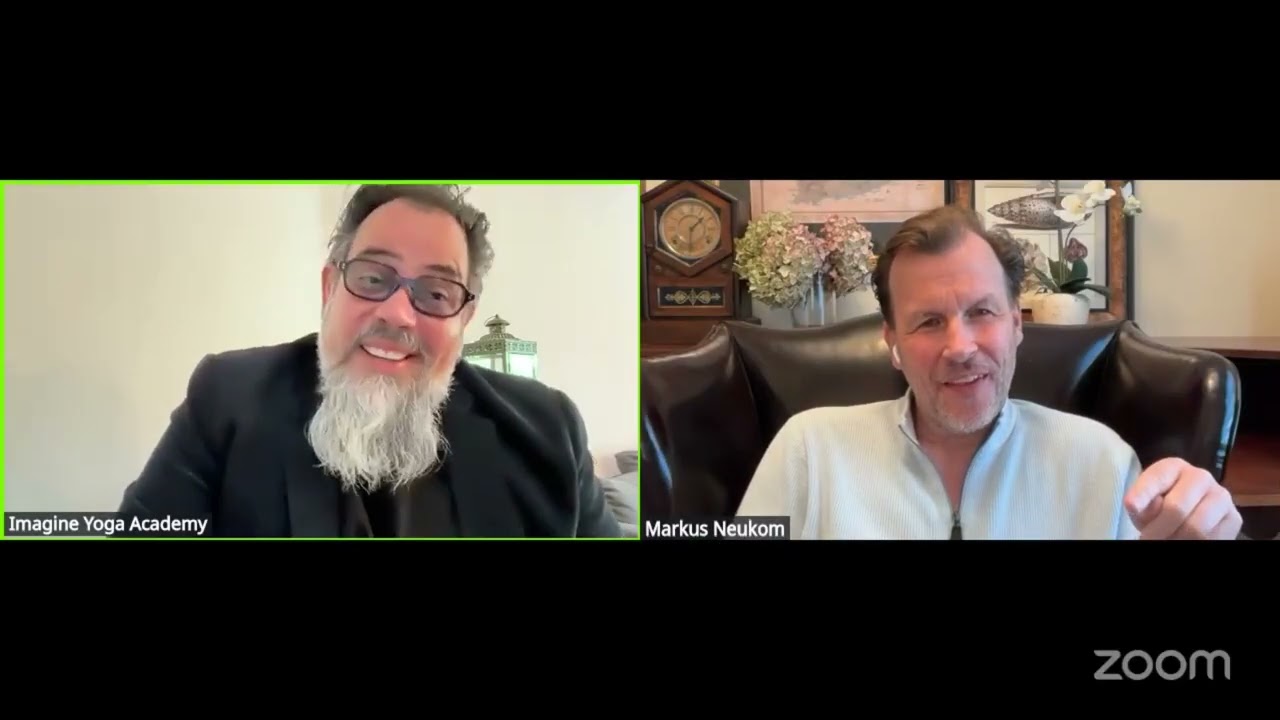
Ep 48 Stewardship Without Ego A Conversation with Iván C López

In this fireside‑style episode of Remembering the Forgotten, host Markus Neukom engages Iván C. López in a wide‑ranging dialogue about leadership, personal values, and the practice of stewardship that transcends ego. The conversation opens with a definition of coherence—alignment of body, mind, emotions, and action—and stillness, the pre‑cognitive space that informs clear decision‑making. López shares how he grounds his professional and personal life in a set of core values, using them to shape goals and, uniquely, “anti‑goals” that define what he will not do. He illustrates this framework through concrete family rituals such as Wednesday date nights and Thursday family dinners, emphasizing that consistent, values‑driven practices create coherence across work and home. The dialogue expands to a broader view of wealth, referencing Safi Blum’s The 5 Types of Wealth to argue that time, health, relationships, and community are as vital as money. Respect emerges as a recurring theme: López stresses the power of using people’s names and acknowledging every role in an organization, linking this practice to social cohesion and energy efficiency. He connects the erosion of respect to a loss of self‑respect and the dominance of ego, suggesting that when individuals fail to respect themselves they cannot extend respect outward. Critical thinking is championed as a counter‑balance to echo chambers. Both guests discuss deliberately surrounding themselves with contrarians—whom López calls “critical thinkers” and “lifelong learners”—to surface blind spots in business, academia, and policy. The conversation touches on modern Stoicism, critiquing its static interpretation and advocating for a dynamic, lived practice. Political discourse is examined through the lens of party homogeneity, with examples such as the handling of President Zelensky’s attire, underscoring the need for diverse perspectives in governance. Practical business insights follow: pressure‑driven innovation (COVID‑era takeout, Uber Eats, banking check reforms) illustrates how questioning the status quo yields new opportunities. The episode concludes with a calming recommendation for overwhelmed listeners to return to small, grounding experiences—family moments, nature, and simple pleasures—to regain clarity and peace. Overall, the episode weaves philosophical reflections, personal anecdotes, and concrete examples to portray stewardship as a disciplined, value‑centered approach that replaces ego‑driven authority with responsible, coherent leadership.
Chapters
Welcome to Remembering the Forgotten, a space where leaders think out loud without polish or performance. No scripts, no personas, just what becomes audible when the noise drops and the mind is free to speak for itself. These conversations are not about delivering insight, They are about thinking together in real time, testing ideas against stillness, letting 2 open minds stretch each other. The intention is simple: to create a space where clarity can emerge and where listeners don't just consume perspectives but feel permission to engage their own thinking more honestly. Today I'm joined by Ivan Lopez. Ivan has spent decades inside environments where responsibility is not abstract. It is fiduciary, regulatory, global. Boardrooms, audit committees, cross-border operations generating hundreds of millions in revenue. Decisions that shape markets, cultures, and livelihoods. But this conversation isn't about tides. It's about stewardship. We explore what happens when authority matures into responsibility, how governance is not bureaucracy but disciplined care. How strategic oversight, when clean, becomes protection rather than pressure. This exchange is not about corporate mechanics. It's about integrity under scale. Because when scale meets clarity, power becomes stewardship. And when stewardship replaces ego— Leadership stabilizes systems instead of distorting them. What matters here isn't control, it's coherence, insight, consequence. And with that, welcome Ivan to the show.
Thank you for having me, Markus. It's a pleasure to be here.
Likewise. So before we begin, When I speak of coherence, I'm pointing to a state where nothing inside is in conflict. Body, thoughts, emotions, and action aligned, moving as one. No push, no urgency, no fear driving the moment. And when I speak of stillness, I don't mean silence. I mean the part of you untouched by expectation or performance, the place that knows before the mind tries to manage it. That's the ground I'd like us to meet on today.
Excellent. I think that's, that's a great topic. As, as I was listening to you, one of the things that come to my mind is the concept of having balance or in synchronicity between your life, your business life, your personal life, and your family life. And in my experience, what I always try to do is to guide my business and personal life by the same principles. And those are typically higher or clear than any business principles because I guide myself by my values and apply them to the everyday decisions and the decisions that I hope that my teams make. And if I can say that I did that, I sleep very well no matter how complex is the business environment around me or the decisions that I have to take.
That is beautiful. You know, Yvonne, that reminded me when we first met. At first, we met in Virtual Advisory Board, in the group itself, right?
Of course.
And we didn't have like too much interaction in that moment. And when we first met, I was expecting based on your LinkedIn profile, Can you imagine what I expected, right? Could you, Shiri? Could you, Shiri? Could you, Shiri? But then I met Yvonne as a human being. That was such a beautiful surprise for me still, by the way. Thank you. And now hearing you talk about what that triggered when what I shared totally corresponds with what you said. So would you mind telling me a little bit more about those principles?
You know, it's interesting, and before I go there, I was, right now I'm reading a book that is called The 5 Types of Wealth from Safi Blum. And it talks a lot about how wealth cannot be defined by money. Yes, at certain level, money enables you to do some things, but that's at a very basic level because there are things that you value a lot more and things that as you grow older, you wish that you have always valued or recognized the value And here I'm talking about the value of time, the value of your own health, your value of connections, the value of family, and how all your— the value of that, you have to Create a set of values that will guide you through life in all these buckets, and at some point some of them may be more important than others. But all of them have to be important, and you have to make conscious decisions as to in what stage you're going to pay more more attention to one thing. or the other. And it also talks about goals or the anti-goals. And that to me is very important.
That's an interesting concept.
So tell me a
bit more about that, please.
Yeah, those are whenever you have a goal in mind, the anti-goals are the things that you are not going to fall into or you're not going to sacrifice. Because it's not a goal.
That's a fascinating concept. So that makes you actually accountable.
Yes.
Because let's be honest, most goal setting is pretty much wishful thinking and kind of BS, right?
Yeah.
Especially at the end of the year for the new year. So what you're saying is, I'll try to paraphrase it. So you set a goal and in order to hold yourself accountable, You identify things you are not going to do. So in order of not doing those things, your goal automatically becomes reality.
Yes. And then you try to put like micro goals or intermediary goals in the journey to that ultimate goal. Because in reality, all life is, is a journey. A journey that you have to learn how to enjoy it because the destination is not that important other than your north. But if the end goal will be to arrive someplace, then whenever you arrive, you will be completely satisfied, but you will be maybe miserable on the way. And in my life, My idea of what I try to do is try to enjoy the journey because I don't know when it's going to stop. So I'm— I have to enjoy it while I'm getting there.
That's such an interesting concept because, you know, some people say, Ivan, the journey is the destination, which sounds very romantic.
Yeah.
And you know me, I live by that thesis. My journey is my destination. And you mentioned something, happiness. Would you say, and this is a little bit insinuating, would you say that this could be one of the reasons why there is so little happiness, so little joy in businesses, but sadly as well in private lives and in marriages?
Definitely.
Because there is something striving all the time towards something that we do not have, and interesting enough, mostly have no control about. And I think that's the worst.
One of the examples that I relate to, and it's someone describing this book and others, is when you're younger, you always think that you have a job and you will be happy whenever you arrive to this position or achieve X amount of financial reward. And again, having a level of financial security, it's important.
Mm-hmm.
But how you get to or pursue it, it's way more important. And again, life goes by while you're trying to achieve that goal. And if you're going to be unhappy in that journey, then it's not worthwhile. And there are things that you should not sacrifice. One of the examples that I relate to, because I in a way do it in my life, is that if you are in a marriage. and you're working 100 hours a week, and you're not really paying that much attention, but you tend to believe that you're doing it for the sake of the marriage in the future, you're certainly not paying attention to something that may be important to you, like your partner, spouse, or your family. So one of the things that you can have as a goal to make sure that that's true, and that you live your values, assuming that that's one of them, is like Wednesday is date night. And everybody knows it. And you are very clear with everyone. So for your partner, that person knows how important they are. And from anyone else will know that that's your space. And if you practice this, very soon you start people just making sure that Wednesday they know you're not going to be available at night because you're going to be taking care of something that is important. Right now, in the stage of my life, I'm lucky to have my kids this year both living in the same state and close to me. So we Implemented Thursday dinner.
That's beautiful.
So no matter what happens,
they're both not 12 years old anymore, so it's not taken for granted, right?
And Thursday I'll be cooking, or we're gonna go someplace, but there will be dinner and there will be a seat for them waiting for them to come. And it's their choice, but I'll be waiting for them. And it's very powerful. And it—
I like that.
And it lets you yourself, the family, and anyone know how important family is for you. And that is one of my most important values. You know, when we talk about my values, Family is up there. The sense of helping others is really high. The opportunity to make a difference in normal people's life without expecting someone something back is very important to me. I believe that. If more people will actually stop thinking a little bit about themselves and about differences and just talk about how can they help each other in small stuff, we will be doing great things. And by the way, this is not only—
That's really sad.
For the social piece, it works in business.
Oh, absolutely. And it makes you successful.
Yeah. And people, if you worry about people, they will give 120% for you. Yeah. You know, and it's, that's how, you know, your life, your family life, your work life have to be connected and live by the same values. And when that doesn't happen is when you create tensions, and unhappiness in your own life. And if it takes you too long to learn this, then you come to an age when you're gonna have a lot of regrets. And certainly, you have more days that have passed than the ones that are in front of you. So the sooner we realize that, it's super important.
That's deep. You know, that is one of my desires and wishes that any age actually gets to hear these episodes. Because imagine if you suddenly have 106 episodes available after 12 months. Imagine you and I, 10, 15 years old, and we would actually dive into the wisdom Of every guest. Wow. So one thing I always wondered, where did this begin for you?
That's a great question. And I will say that generational-wise, when I was young, compared to my students now, as you know, I'm teaching in Georgia State. Right now, in our generation, the first job that I took was the one that paid the most out of college.
Mm-hmm.
I never had that concern about life balance or let's— let me do something that I enjoy. And in that sense, I think that the current generations are better aware of that. How they go about it, I may not be— I may not agree with it completely, but at least they have a better idea of the importance of that. In my case, I always was very aware of my surroundings and the people around me, and that comes from my parents. My father was an executive in, uh, in multiple companies. But one of the things that I remember is going with him to work, and he wanted to arrive at 6:45 or 7 in the morning because he wanted to have breakfast with the cleaning ladies and the people that will get the building ready. And he will know everyone by name. And to me, that is always important because everyone has a role to play and everyone is important and deserves to be respected.
That's why everyone has a name.
Yeah. And, you know, that's always been super important to me. And they do things that we take for granted. It's like when you're in a building and people don't say hi to each other, good morning, or they don't acknowledge that someone cleaned the office or someone did something that allows you to do your thing.
Yeah, literally taken for granted. Like, I hear people say, why should I be grateful? They're paid.
They don't exist. They don't even have names or faces. They see us outside work and they don't recognize us.
But let me ask you something when you just mentioned names. Why is it, Ivan, that people do not use names anymore, either in verbal conversation or in writing? They address each other as you. And this is something which I pay attention to so fast. Like you and I, if we would count how many times we use our names in the conversation, other people would say, why do these guys do that? I think it's connection. It's connection, maybe, is the name, right? But why do you think has this fallen away?
I don't know why it has fallen away, but I'm very sad it has.
Likewise, yeah.
Because one of the secrets of life is that we are social beings. And in reality, it's very difficult to be happy and fulfilled alone. You need that social interaction. And part of that respect is knowing someone's name, because it's a sign of recognition. is a sign of respect. I never understood in society how we tend to respect levels in organization. I always say you respect everyone and everyone should respect you. A title is not— does not define that the person is good or bad.
It's usually bottom up, right?
Yeah.
The respect, which is crazy.
It's respect. Respect goes to everyone, and you should hope to be respected by everyone. You know, I wouldn't say that you should be expected, but yes, that's what you want.
Let me ask a question about respect. Is it possible that because people do not respect themselves, they have totally lost the art of showing respect to somebody else?
Definitely. I agree with that statement 100%.
But think about what this means.
You're trying to make a point.
So that means, like, think about for a moment, and we are both executives. If we had not had the people at our side, we would never have been as successful as we have been. Never.
Completely true.
I believe even skipping the name using would have cost us 20 to 30% energy use, which otherwise we'd not have had to use. Because everyone who listens here and thinks that Ivan and I, we are crazy, we are not. Because if somebody really feels respected and feels addressed, they're opening natural resources we could never demand.
Agreed.
Agreed. Never demand, like going the extra mile. No, I don't have to pay 200% for that. It's being more interested than interesting. That's one of the quotes I kept from one of a friend of mine. He always said, look, people try to be interesting and that fails. That's ego.
Yeah.
Like, look at how great I am. No, I want to know about you.
Yeah, you know, there is another— there's a good— another good book. In this case, it's Ryan Holiday, that is on the Stoic philosophy, and it's called The Ego Is on the Way, or The Obstacle Is on the Way. And there's another one about ego, which is great.
Fascinating.
Great. But in terms of respect, one point that I really wanted to put emphasis is that people believe that some people Belief and respect has to do with agreeing with the other person. And to me, in business and in life, I try to surround myself with people that necessarily don't agree with me.
I love that.
But that they're gonna make me think and evaluate things that allow me to see things from different vantage points, that evaluate and help me to see my blind sides. And those are the people that I want on my table if I'm going to make a business decision or an important family decision, because that way I could see the situation from different perspectives and be able to make a decision which may be the same one that I was thinking at the beginning, or maybe something different. And I appreciate when someone respectfully offers a different opinion with foundation from where I am, which to me is super important. It goes back to another value or another behavior that to me is super important and we're losing, which is the value or the behavior of critical thinking.
Totally.
And now with AI, we even try to like outsource sometimes critical thinking. And I tell my students and in business, if whatever you're going to tell me, I can find it in ChatGPT or Claude or whatever AI, maybe I don't need you. I need someone that can think outside the box and can challenge analyze and say, why not? Or why is it that we're doing this this way? Or why don't we think about this other way? So I think that, you know, and I know we're bouncing around, but critical thinking is a skill—
We're here for it.
Undervalued.
And that's absolutely what we're here for.
We need people to really pay attention, and it's something that's been It's ancient. We're talking about, you know, the Stoics, the Greeks. This is nothing new. We just sometimes forget that it's an incredible skill.
You know, it's interesting that you mentioned the Stoics because, as you can imagine, I love Stoicism. However, I suddenly got to a point where I realized it is too rigid. It's static. And then I had a conversation with one of my mentors and friends who is really knowledgeable about history. And I said, to be honest, if I look at Marcus Aurelius, if I look at all these great Stoics, what is taught today as Stoicism Doesn't resemble what I know about those people. It's interesting what my mentor said. He said, Markus, people today have made Stoicism into a static program.
Right.
Think about if the real Stoics would read those books about Stoicism, They will probably pull out their hair and say, goodness me, where's the dynamic? We met on the marketplace. We had debates.
Yeah.
Not like Ivan says something, Markus says something, right? Static. No, alive. And that's when I fell in love with Stoicism again. Because Stoicism, I believe, is a kind of a groundedness, but then dynamic is moving the rest.
Agreed, agreed. And everything has to be transforming and changing according to times. Nothing can be static. Whatever is static dies. But we see that everything regretful in the society in the US a lot, and also internationally. But even in politics, you know, the overall idea that from a good debate, a respectful debate, a better idea will come out.
That's exactly—
It's completely forgotten in the political system and environment that we live right now.
Yeah, sadly.
You know, I take it to whenever a law is passed and is discussed and you expect everyone in one party to vote the same way. And I always question, well, if everyone in a party is going to vote the same way, why do we need 400 of them? We only do these top 3, and that's it.
Absolutely right.
2 or 3, and we can save the rest of the money. Yeah. The idea is that you have intelligent people from different experience seeing the problem from different vantage points that can bring different ideas, and hopefully something will rise that makes more sense And will help more people.
Because in the end, it's theatrics, right?
Yep.
It's not about making change anymore or moving something forward. And, you know, as you know, I'm from Switzerland originally, and Switzerland has definitely a many-party system.
Yeah.
I think it's about 6 or 7 really strong ones. And that's definitely what's missing in the US. There's no discourse.
Definitely.
And depends who sits in the White House, stifles discourse even more. So you could literally reduce it to one representative plus the president. And that's pretty much what it needed. The rest is—
And it is interesting because I always say, well, Fine, if you don't want to have more parties, or you— but then inside the party, those have— there has to be discussions. And it's never about being on one side or the other side of the party. It's about discussing the problem and voting based on what you believe is best. Not about where You know, a group is going to be voting. And I wish, I wish that, uh, that we learn, uh, we learn to do things differently and better, because there are many, many problems that could be solved in a more efficient way than what we're doing right now.
But you know, hasn't it to do with the 3-letter word ego?
Definitely.
Right?
Definitely.
Because you mentioned something really interesting before, and I play it a little bit further. You said the kind of people you surround yourself with in business, in academia, and as well as in your private life. Do you second that, that many people surround themselves with people who are like them in order not to have conflict?
Definitely.
In order not to have too much distortion, and especially in business, which is very dangerous as well as in academia, as I know, if you surround yourself with yes-sayers, it's very dangerous. Do you deliberately surround yourself with contrarians?
All the time.
Isn't that amazing?
Yeah, I don't like to call them contrarians, but yes. And I typically don't surround myself with people that have the same background or the same ideas that I do.
How would you call them if not contrarians? Because I take them as the literal sense of the word, because I can tell you, I'm proud to be a contrarian. That's why I have become who I am, because I contradict myself constantly.
I like to call them critical thinkers, lifetime learners.
That's beautiful. That's beautiful. I love that. So those are the critical thinkers, the lost art of critical thinking.
Yeah, and people that—
Are you teaching it when you teach at the—
So I include critical thinking concepts in my global business course. I start with that and end with that, and in the middle I just bring different concepts. I also am a guest speaker at the graduate school for a critical thinking in business class.
Really?
And what I do is I bring just examples from my life and just ask them, listen, these are the facts. You are the executives. What should you be thinking? What is your concern? And after that, I say, well, this is what I heard that people were talking, and this is what resulted. And I give also examples of real life. And to give you one that may be a little controversial, but this is just us talking in the living room, so we're good.
Exactly. It's just us.
So you got the president of Ukraine in one of the first visits to the White House. And if you remember, he came dressed in black like he was going to war or an exercise. And he had a lukewarm reception in that room with the president and vice president. And it doesn't matter what you believe in the war or with the US or with Ukraine. If you were in that table preparing the president of Ukraine coming to the US, someone should have raised their hand and say, hey, Donald Trump is a very— he likes formality. He always shows up with a suit and tie, and always is a dark suit.
Mm-hmm.
So if we're gonna go and ask for something, To increase the chances of being heard, it's important that you dress accordingly.
That's an interesting aspect.
And someone will also say, he definitely wants to be recognized. I would definitely recommend to say thank you several times at the beginning. And again, this is a discussion about strategy, about business. that I'm doing. I'm not talking about politics. I'm talking about the critical thinker that has to be at the table. I agree with you. Saying, you have these things and how you feel, but the ultimate objective is to get this from this meeting. And in order to get this, you have to do the groundwork in some things. And these are things that are common, it's common sense. But nobody told him, or he decided not to listen. But someone had to be in the room telling them to do things differently. And there are many applications of this in business.
I like that. I like that. And you know what's interesting? There could have been a critical thinker at that table to actually say to the president and to the vice president, Mr. Zelensky is in war and he will dress accordingly, because that's what he said.
Yeah, but who—
He said, I'm not showing up in suit and tie until the war is over.
But who wants what from who?
That's exactly it. That's what most people do not understand, right? And I believe, you see what's interesting, one thing that comes to mind, another quality that's missing in terms of allowing critical thinkers at your table is self-confidence.
Yes.
You need to be self-confident to allow and to welcome a critical thinker at your table?
Well, you have to give them permission. They have to know that they have permission to be a critical thinker.
Exactly.
And that they are not here to be a yes person.
Yeah.
They're, on the contrary, they're here to provoke discussions, to provoke a thought process, to provoke thinking outside the box. And at some point in those discussions, as a leader, you can say, okay, I got all the information. You appreciate the feedback, let them know, and then you make a decision. And if you chose the right group, they should know that once the final decision is taken, everybody gets behind it. But in the meantime, Everything is open to discussion.
Yeah.
You know,
and they both had to— just go ahead.
No, I was going to say, to take an example outside the political spectrum, because it's always controversial and people are afraid of talking about this, let's go to financial services. And in the US, in my time, you open a bank account and they give you 300 checks or 400 checks until someone— by the way, in Europe, for decades before, it was not like that. But someone said, well, why do we need checks if we can pay? Because we have debit cards. You could pay with debit cards. There were other ways of doing things, but it took someone to either copy it from Europe or just ask why. Well, why not?
It's interesting.
You know, and there are many examples like that in business. In COVID, people suddenly realized that you could actually in a restaurant Prepare food for pickup. The opportunity was always there. COVID created that now everyone can do, you know, takeout. But the opportunity was there. The business opportunity was there.
It is crazy if you think about it. Because, you know, I always thought that the US was the country of takeout. No, it was the country of fast food.
Yeah, the fast food.
And only COVID created the takeout and delivery.
Well, Uber was a transportation company and they realized if we transport people, why can we not transport food?
Right.
Uber Eats got created.
Which is incredible. So that's another sign that In order to create change, quite often pressure is required. If we don't change, it will change us.
Definitely.
So if you don't listen to— I see nature in the background of your thing. Like, imagine at one time, suddenly the water was rising more and more and more and more, and people saw this huge wave coming toward them and said, whoa, is that beautiful? Yeah. Exactly, it was a tsunami. No one saw that coming.
Great. Those are the critical thinkers and the people that are brave enough to talk, and a boss that has his head in the right place to say, you know, you have permission to challenge stuff.
As I was sure we will have an amazing fireside chat together, and so we did. Ivan, this brings me already to my last question. If someone feels— yeah, so we'll catch up very soon. If someone feels overwhelmed right now, which is quite likely, right? What would you want them to return to?
You know, I think that And this is a— this is an issue with younger and older people right now. I think that we all have to go back to the basic and to the small things, because in our mind we tend to make challenges, concerns, worries a lot bigger than what they are.
Mm-hmm.
When we when we confront a problem, before the consequences of that problem or the pain is real, we are already suffering. And we forget to see the small things that may be good around ourselves. So really concentrating and taking You know, look at small things that are valuable for you. At least to me, it brings me peace when I have a big challenge. When I was doing expanding and opening countries, companies in different countries, I will come home and I will look at my daughter. as a baby and realize how happy she can be with simple things and how happy I was with her and grateful for the opportunity to hold her. The opportunity of just— you look at my background and, uh, you— in my case, I'm an island boy. It doesn't matter where I am. If I can go to the beach and look at the ocean and immediately feel at peace and try to concentrate on myself and what I can control. Hopefully that answers the question.
Beautiful. Wow. What a beautiful way to end our fireside chat, Johan. Thank you so much for having been my guest.
Thank you for the invitation. I look forward to seeing you next time.
Likewise. This was Remembering the Forgotten, a conversation held in clarity, not performance. If something in this exchange shifted how you see, Let it stay with you. A few quiet pointers are waiting below.
More from Markus




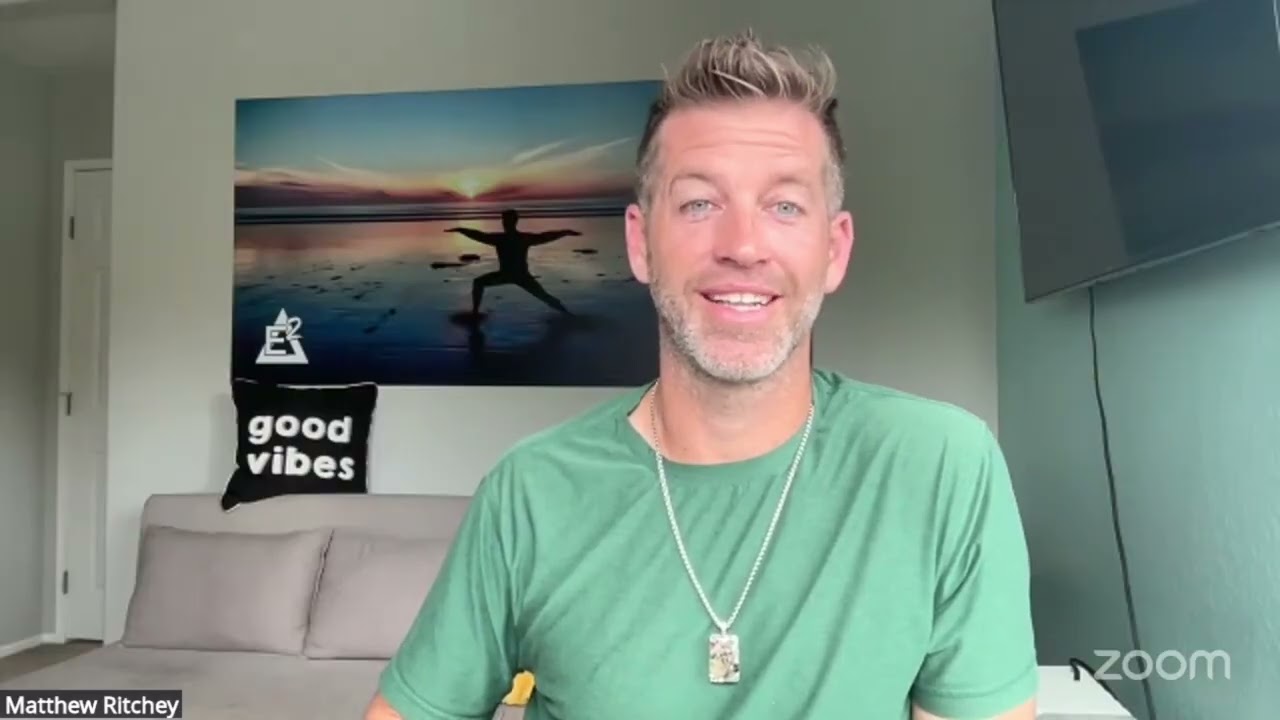
Ep 66 Breath, Trauma, and the Fear of Being Fully Seen A Conversation with Matt Ritchey

Ep 65 Truth, Trust, and the Courage to Be Seen A Conversation with Troy Gregory