Rise of the AIccountants
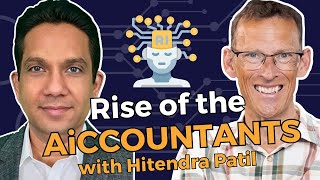
A recorded livestream conversation (host Mark Wickersham; guest Hitendra R. Patil) about how recent advances in AI — especially large language models like ChatGPT — affect the accounting profession. Key themes: why AI surged in 2023, risks such as hallucination and data bias, privacy/security concerns when using third-party LLMs, how accounting and tax software will embed AI, and how accountants’ roles will shift toward oversight, industry-specialization and human-centred advisory.
Questions this video answers
July 27, 2023.
Amazon (Kindle and paperback), Google Books, and Apple Books.
August 10 and August 11 (year implied as next event after the livestream).
Chapters
He is the author of the book Rise of the I need to check up. Pronounce it right. AI countenance. It's quite a hard. I'm not sure how to say it, Hitendra, but let's bring you on. I know you're a consultant, professional as well, and an expert in all things AI. How are you doing, Hitendra?
Very, very good. Thank you for having me, Mark. And at the outset, let me promise everyone out here that I'm not a deep fake AI robot here. I'm the real person.
We are both real at the moment. We are both real. Who knows, this time next year it may be we have our avatars presenting this session. I don't know. It's incredible the speed at which things are happening right now. And on that issue, the speed of change. Do you think that accounting professionals should be worried about the future? Should we be worried there's a lot of scaremongering going on, or should we be excited? What's your view? View?
Yeah, I think to begin with, one must be curiously studious about AI. That's the only way you're going to be taming the AI beast. There is a lot in AI which is not visible to all of us. It happens behind the scenes in those programs, and even those programs don't know what's going to come up through the AI answers. So it's always going to be difficult to understand. But based on my own studies over the years, I found that it's just a technology. It follows a certain way of structuring, and once you know how AI is created and how it works, you're able to kind of direct it towards the results that you want. So treat it as a tool, Take it as a very powerful tool that you never had before. And I'm not talking just about ChatGPT and language models, but AI as a technology has a lot to offer and you got to stay ahead of the curve. Yeah.
And of course, AI is nothing actually new. It's been around. I think it's been around about 70 years. AI. So what is the reason why everybody's talking about it in 2023?
Yeah, I think ChatGPT was definitely the trigger point where everybody started looking at AI because they made it so easy for layman to interact with AI. Before that, AI was always embedded and only those AI data scientists knew what it was. And artificial intelligence came to be like a very. A difficult term to understand because it sounded like there is magic there, there is fascination around that. Right. But it's still technology and all that this language model did was picked up data from Internet for three years and started giving answers back to the questions that are the prompts. As we say, you ask the. Because it became so easy to interact with, suddenly everything became, you know, a big news in the whole world. And AI has been kind of doing rounds within the accounting, payroll and tax solutions, audit solutions, but those were behind the scenes, embedded deep within. So we never interacted as human beings with AI. So that's one big thing that changed because of ChatGPT. And again, it's just a language model, it's trained on data. And that's another thing to know right up front is everything in AI is based on data that it is trained on. Right. So it's within. And if there are any accountants out here, the first thing that you need to kind of know is whatever you're doing for your clients, that is not inside the data, meaning the client is thinking about growth or thinking about risk or whatever those are in the heads of your clients, that is not inside the data that you are dealing with in ChatGPT and things like that. Right. So there is a world data world, and there is a world outside of that, and those two interact with each other through professionals like you. And you're always going to be there in business, irrespective of how much AI progresses.
Okay, great answer. And that's kind of my view as well. I think these are really exciting, exciting times to be in the accounting profession. And of course, although AI has not been, has been around for a long time, it has been, I think it was last November when ChatGPT, when OpenAI made it publicly available. That's really when everything started kicking off. You're right that AI has been around us for several years now. I mean, you only have to think of when Siri came out. And Alexa and Apple have had AI built into their phones for ages now with facial recognition. And all modern cars we buy have AI. We've even got driverless cars now available. But I think that the change with large language models and with ChatGPT, it's the first really big change that is things that will affect us in business. I think a lot of the things in the past we've either taken for granted all the things that affect us personally, like Siri and so on, but now I think the changes are things that are affecting the profession, affecting business. And you wrote a great book which I read a few months back, which you wrote specifically for accountants. It could have been written for anybody, but you specifically decided to Write for accountants. So tell me, tell us about your book. Why did you write your book.
And why should people read your book?
In fact, the term AI contents was coined like four or five years ago. I was working on a project for a software company to turn their support into an AI chatbot. And at that time, first time when I saw that, I thought AI chatbot would be like magic. It would just take everything and start answering. It's not that you got to train, you got to build databases behind the scenes. So that was my first exposure almost six, seven years ago, maybe five years ago. And then I figured, look, this is more critical in the accounting profession because you are responsible as a professional to make sure all the regulatory compliance is done correctly. So anything that is highly regulated and has to do with either financial or real life of a human being, you got to be very careful as to what technology should do and can do and will do, right? And then I figured, if some wrong answers are given, who's going to be responsible for that? What's the impact of all of that, right? So till such time, the rules that we set up in, let's say QuickBooks and all those are data matching things, right? So it's a very hard coded and very sacrosanct kind of thing. But AI can just go in and fabricate answers. That's what I learned. Interestingly, my first interaction with ChatGPT was I asked it give me seven male names, starting with H and ending with A, with seven letters in each name. So it gave me seven names, all started with H but did not end in A. And I'm like, what? This is not correct, you're wrong, and it doesn't end in A. So give me proper names. What? The question that I asked, all that it did was it added an A to the previous answer for each name.
Then I said, wait, this is not correct. And then I did more research and then I found AI can hallucinate. And there was this very recent case in the US where an attorney cited six different cases in a real case that he was fighting for a client. And the court took those citations, went and researched, and there were no such cases. So I essentially created those based on the data that it was available. And the attorney did not know that AI can fabricate answers and things like that. And I was always looking at such things as to what can go wrong. And based on that, I said, look, accountants are far too responsible for everything, and it's always good that they should know first how AI works. It's easy to jump on a ChatGPT or a Bard and get very fascinated by it. But once you know how AI is created, how AI learns on its own and how AI ultimately works, then you are able to kind of predict something and you are able to control what you're doing with the output. So if you just copy paste the output, it's going to be a danger for you and especially in the accounting profession. And that cannot be done. So I thought, let me bring in the whole game in a book, especially for accountants. And first, and I think almost half of the book is what exactly AI is, how it works and things and how should accountants look for signs of trouble while they're also leveraging marketing. Great writing, emails, text, fantastic. It cuts down on so much of research time. Instead of doing a Google research, for example, it can bring up quick answers and you're then taking it forward. So it, it helps you a lot. But when you apply that to your clients, real business situations or tax situations, you got to be a little careful. So I wanted to make sure that I bring the entire picture in front of accountants. And because I've been in the industry for 20 years plus, I thought the only thing that I know is accountants. So let me bring everything that I know about AI to account this.
Yeah, it's a great book. Picking up on the. So the hallucination. The hallucination thing is a big issue. And that case you talked about, I have mentioned that myself before and there was.
From what I understand the outcome of the case, I thought it was very funny because it must have been really embarrassing for the lawyers. What amazed me about the case is I thought they might be struck off or something. But I believe that they were fined something like four or $5,000, which I thought was incredibly small. But what I think was more embarrassing for them is those six cases you mentioned, what they were, I think what they were told to do is they had to go to each of the judges that were involved in those cases that were cited, incorrectly cited and apologize. Which I thought that must have been embarrassing. But my, my first experience of hallucination in ChatGPT is I started using it many months ago now back in, I think February, March time, I thought let's try using it for planning a short vacation. We were going to go, we did a three day trip around a certain part of Portugal and I started having a conversation to explain that we like the outdoors, walking, what could it recommend? And I told it that we had three days. We were leaving Lisbon at 9 o' clock in the Morning on this day, we had to be back. And it came up with an amazing itinerary. It was really impressive and sounding. You could do this walk, it'll take you this long. Do this. I also asked, can you recommend some hotels to stay in for the two nights? And it recommended this hotel. I said, why? And it told me why. And I read it. I thought, that sounds amazing. And so I then went to go onto Google to have a look at booking the hotel. And I realized that the hotel did exist, but not the address. It said it was a completely different part of Portugal, many, many hundreds of miles away. And I thought, that's strange. It was so convincing. It gave the name of the hotel, it gave this address that was pretty much where we were going. But it was. All the things didn't match. It wasn't the address of the hotel, it was some private residence. And that's when I first came across this hallucination. And it is a big issue. But my question for you is hallucination is one of the things that once you're aware of it, there are certain things where it does hallucinate, but that doesn't. As long as you're aware of those things, there are many, many things that it does incredibly well. What have you found are the sort of things that it will hallucinate. Where have we got to be careful when we're doing work inside a tool like ChatGPT?
So in a sense, you know, why does AI hallucinate? You know, it's based on the structure or the. The technology itself, how it is created. So essentially, you know, if you look at a large language model like a chatgpt, all that it does is it finds the next word which is the most probable in a given sequence, trying to understand. So it will try to find something similar that you're asking. It tries to make some context and tries to give you that answer. So as long as some information is already there in the database, tokenized, as they say, and it will find that, and if the next information or next word is not found, it will try to find that next word somewhere else within the database. And that's where the quality of the data, volume of the data matter a lot, when AI has to produce a better result. So essentially, if that is the case, all that you're doing is in a chatgpt kind of thing, we'll come to accounting. And within accounting, what AI is at a later point in this talk. But when you use a language model, use it for creating or generating language perfectly okay. No Worries at all. But the moment you are taking information as truth. So which is a third party information in your case, the address. And coincidentally I went to British Columbia in Canada just a couple of weeks ago and I did the same thing, asked for it for a good itinerary and it gave a pretty good quick result. Otherwise I would have spent a lot of time on researching Google.
Right.
So if you're looking at the names of the companies, for example citations here, court cases or you know, the laws, especially when it comes to accountant, if you're talking of, okay, here is a tax law that is applicable in this situation, you better check it. And they say here, you know, I think Ronald Reagan, the president did the term very famously said trust but verify. Okay. So in those cases you got to trust and verify. Essentially if you're taking reference to anything which has happened in the past and if AI told you you better do a cross research and only then take it from there. So let's say you have a specific situation on a tax angle for a given client and you're asking AI to cut short on your research time. It will give you some answer. It has done a great work for you, it has made you more productive. But let's say it produces two or three different.
Regulations. Cite some sections, you better go back and check in the real world. You know, go to IRS site here in for example in the US that is very critically important. Essentially anything that you think is a fact and based on that you are making a decision for yourself or your clients, you better double check that.
That's such good advice. Yes, I might come back to this whole question because I.
I've got lots of questions about ChatGPT to ask you, but I think there's some other things we need to explore in terms of AI. And one of the things I'd be interested to know your thoughts are is I'm now finding that pretty much on a weekly basis, if not daily. Now we have a lot of things in our tech stack internally, tools that we use and we keep getting invoices, emails now announcements that this piece of software has now introduced AI. I think it was a week or so ago, a lot of people that follow me use Loom and Loom introduced AI when it creates the videos, which I thought was really interesting. So what's your thoughts on, on how AI is starting to get into the various software solutions and how will that impact us in the profession?
Yeah, that is always going to be a big, big thing for all accountants out here. Anything that comes in as AI within the very large solutions in the profession, you got to watch out for When I say large solution, obviously, because they have a large data set with them and it's all your data. And everybody went onto cloud last 10, 15 years. So all the data resides in cloud. Whether you gave specific permissions for the software company to use your data or not. As long as they have data, they're able to use that to create their own AI systems. So how it can work in, let's say an accounting software, for example, you're entering a transaction or bank feeds brought in some transactions and you know some of those transactions can go wrong in classifications you're reviewing in all of that. So what will happen when AI comes in? So AI can technically go and look at, okay, here are few million businesses who had dealt with this particular vendor for similar transactions. And here are the top three classifications that most people used to. So it can give you those suggestions pretty quickly rather than you relying on your own experience to recode or reclassify those, those kinds of things can come in into AI. And now imagine that this is a very simple example. Imagine that happening in let's say a tax software for a general standard basic cookie cutter tax return, single source of income, nothing really complicated. How will that work? And I saw somewhere a tax return can be done in four minutes. That's what a software company said using AI. So how does it do it right? Somebody's got to plug in some numbers. It's not doing automatically. You still have to manually trigger something. But after that it's going to be very different way things will work. Especially for basic work where data input is very simple. Those can get more automated, those can get more validated within the accounting solutions. You're not looking at large language model to do something for you because it's all embedded with.
Happen obviously is.
Based on the, let's say financial statement, monthly financial statement. If you're advising something. So you're looking at things, you're applying your expertise, you're coming up with, oh, here is what I should talk to my client. All of that can be done by AI because it can write that thing for you, you know, and that advice is something that you would want to verify. You know, I remember six, seven years ago I did a little cartoon in one of my blogs and it said an accountant is sitting in his office. A client comes in and says here is a tax return prepared by irs. I'm not sure whether it is correct. So the accountant checks it and says the IRS prepared tax return is absolutely accurate and my fee is 4,000 for verifying that.
So all that I'm trying to say here is AI will do a lot of time dependent work for you and it will do it much more better than your large language models. Because AI will be inbuilt in these top accounting and tax solutions because they have the data up to the latest point. It's not like a historical data like September 2021, whatever ChatGPT says. So those things are going to surely happen. So what do you do in that case? Right. As an accountant, if you feel, oh, most of my work where I applied, applied, my expertise is going to be done by AI, what will I do? Won't clients know that? Look, you know, I can ask the software what I was asking accountant, what will happen in that case? Right. And that's, that's a big question mark, but it's also a false question because even to, even to benefit from.
Proper AI software, you need the expertise of how to use that AI software or what to ask. And you ask great tax questions because you are a tax expert. Your clients are not. They'll probably ask bad questions, get bad answers, get penalized and then they'll come running to you.
Absolutely. I heard somewhere that someone said that many, many years ago when Microsoft brought out Excel, people were saying Excel, people won't need accountants anymore. And yet we've realized that Excel hasn't replaced accountants. It's just a tool and most clients that use Excel make a complete mess of it. And I think to some extent, as you were pretty much saying, is that AI and things like ChatGPT, they're a tool, they're a tool, but you've got to know how to use it properly. You've got to know about the weaknesses. We've talked about Hallucination, for example, we have to know about those. Also I was teaching, I've been teaching quite a bit recently on how we can use ChatGPT for business advisory work. And I think it makes business advisory work so much easier where we can use it in very powerful ways to come up with complete strategies for a business with a few powerful prompts. And someone said to me that means that we're not going to have a job anymore doing advisory work for our clients because they'll be able to do this themselves. But my answer to that is, well, firstly, probably most business owners wouldn't even think to go to ChatGPT to start to come up with a strategy for their business. Secondly, even if they did, they wouldn't know the Right. Prompts to ask, and perhaps we'll go on to this later, but prompt engineering is so, so important. The way that you craft your prompts has a huge impact on the outcome and where the outcome is. It is a good outcome or a bad outcome. So I think I'm with you on that.
It's not going to replace the profession at all. It's a tool to be used. But it will, as you said, it will replace certain types of work. Some of the. It'll save us a lot of time, It's a big opportunity. So how do you kind of following on from that, how do you think the future of accountants is going to look like in this AI driven world? What, what sort of things will we be doing in a few years time that perhaps we're not doing now? And what things will we not be doing anymore?
So let me come to that question a little later, but let me continue with your thought that you just expressed. Let's say the business plan or strategy. And as of now, if you go to ChatGPT language model trained on Internet data or information which not necessarily everything is accurate, but what it does not have is the financials or financial databases of those millions of companies. It's just language, right? Even if somebody creates a good business plan or strategy based on language alone, the professional is the one who has that experience. Look, if we implement this plan, here is how the financial might turn out to be. Based on my financial experience of 10 years, 20 years or whatever, right? Who's going to validate that with the numbers? But at the same time the big time accounting software companies, they might have these numbers because they have millions of businesses businesses databases, right? So the equation changes there completely. All that I'm trying to say here again is limitations of each AI model. You got to understand that as a professional that what data it does not have or may not have or has an old data. Old data is very dangerous in accounting profession. Let's say somebody does an AI based on 2 year old data in 2 years some new regulations came in. So how do you make sure that everything that AI is generating is correct? So it's got to be relevant, it got to be recent and all that stuff. So those are typical limitations of AI. And again, you cannot train an AI system on the world's entire data. You don't know how much system requirement would be. I read somewhere that.
The OpenAI runs a bill of $100 million a a month to run the systems. It's that complex and that's just part of the database. Right. So that's the issue. So given this and given the limitations of AI technology itself, it will never be in all encompassing. It will take a humongous amount of capital to do that. So which means we will have private AIs, industry specific AIs, those kinds of things. We should be as a profession looking at that industry specific AI. Keep a watch on what the large companies, software companies in our profession are doing or will be doing. They keep announcing their AI plans and all that stuff. Right. So that is where you would watch. Now, given that a lot of these expertise from accountants would likely be inside the AI databases, which means the clients themselves can possibly ping into the AI and find some answers just to get the initial thought processes going. So that's likely to happen. So maybe them calling you for advice on a little little thing that might go down over a period of time, tax returns. I'll be surprised if IRS starts accepting AI generated tax returns till such time that does not happen. You don't have to worry. But I would be very skeptical that that will happen sometime soon. But the very fact that the clients themselves will know about AI and they'll be aware AI can do a lot of things. They'll most likely get fascinated and get into the AI world and think that okay, we can do it without professionals. They will be taking that risk, but they may not know that they are taking that risk. So what's going to happen? One, obviously you got to keep a watch on these AIs limitations, biases, hallucinations and whatnot, inaccurate responses so that the work that you do as a professional, you're sure that you're not skipped the gun and gone into AI generated answers. So that's 1, 2. I see auditors getting into AI audits, meaning whatever AI has generated or AI systems have created. Auditors will become the technology auditors who will make sure that the AI systems in the profession are more or less created correctly. Right. Three, Most importantly, I think the human factor will come to the fore. Your interactions with your clients, your ability to understand their goals, fears, plans, risks and all that. How do you relate to those human beings based on all the technological tools that you have, including AI and their financial information? Now that's going to increase phenomenally. This is my take on the AI future of accountants. And if you're mostly in front of your computer, kind of a person who doesn't deal too much with in person or face to face or on phone calls with your clients, you better develop those skills because that's going to be crucial in terms of how the clients will start expecting what their accountant does for them. Right. And most of the time it will be, look, I need to be able to speak with you, not just get a monthly report. And with your two line commentary on that, that's not going to be helpful to me. Right. Because most of the stuff, including your clients, you and your clients will be using AI to make it more productive, more and more efficient. So that's the future that we are going towards. Which means you got to understand the industry, not just accounting. And this is typical. Some accounting firms go in niches because they start developing skills and expertise around those niches. So any business that you're serving as an accountant, you got to know everything about that industry. And that AI will give you that time to understand that AI will give you the tools to really analyze that particular industry and develop that expertise in your head. So that is where it's going toward it. It's never going to be input equal to output and regulatory compliance. So here are the financial statements, here are the tax returns, here is the output that used to happen till such time AI came in. Now with AI, things are going to change.
Okay, interesting. So we've talked a bit about some of the weaknesses. We talked about hallucinations as a big weakness. And you mentioned in that list, you said the limitations. You talk about auditors becoming the technical auditors and the human factor. And the human factor certainly is very important. So let's talk a bit more about weaknesses and limitations a bit more. What are the, in addition to hallucination, what are the other things we have to be aware of?
Yeah, they say there are several types of biases in AI systems that can creep in. And that's for two, three different reasons. One is the data bias itself based on the data that things get trained on as AI tool, if that data itself is not fully representative of the entire market or every single situation that can happen, which is very much difficult for any industry to be so comprehensive. So it can perpetuate those biases. Now, getting access to this large volumes of data may not be always possible for many of these software companies. So they can likely generate data by AI itself. And if AI itself generates data to train itself, the biases can get compounded. That's going to be one of the things in typical examples you'll find in most of the Google searches or if you are ChatGPT, what are the biases it will tell you. But typical things that people say is okay, if penalties are issued by the regulatory authorities, they are issued mostly to or more to the people of color than not. And that's like a social bias that comes in. Right. The same way banks, when they're giving loans, they can be charging more interest because they see people of color have more risks compared to others. Now this is based on what I see. It's not my opinion, but that's because AI works the way it works. And that's why I always keep telling accountants, first learn how AI works, how it is created. That will tell you. So that's one of the data bias. Then the next is how the technologies themselves create the AI. Those are ultimately human beings they might have, okay, here is how technology should work. And if they put everything in their power to program it like that, their own biases can come into picture as to how the AI will produce what it's supposed to produce. So there are plenty of such biases. And again, what happens because of bias is as a human being, it's impossible for us to verify such large amounts of data. So it's natural for us to trust what AI throws at us. We might go and verify, but you may not have an explainability on what AI did. That's another bias that say most AI systems are worried about not being able to explain what AI produced. Google's CEO is on record that their programmers don't really fully understand why AI went the way it went. So that's the explainability bias. So if AI itself cannot explain, how are you going to explain your client's situation that you use AI to use for? Right. So those are the things that you would want to watch out for in my book and I have a list of those biases and how they will appear in the accounting profession and how you can overcome them. So plenty of examples in the book, but fair to say that there are biases. Just like human beings, AI systems can have biases. And again, two separate buckets. One, the large language models that you see today versus the industry specific private models that will come in future. And as you are subscribers to those solutions, accounting, payroll tax audit, you are dealing with those companies, software companies. Right. So you can always ask, how is this going to work in our solution? Give us more information. You don't have to worry about ChatGPTs and you know, asking Chat GPT, how did you code certain things? You won't get an answer, but possibly you'll get an answer from your accounting solution company.
Sure. Okay. And so the other linked to limitations. The other issue that I think in the profession that I see people having a concern over and I'm thinking, particularly with ChatGPT using it, putting things into prompts is the issue over privacy and security. So what's your view on privacy and security and when people are using ChatGPT, what recommendations might you have?
Yeah, that was my first instant reaction the day I got access to ChatGPT because I knew that AI needs to be trained on data. So obviously they started with some database and now I'm asking everything, it shows me my previous chats and all that stuff. Although I cleared those chats, I did not know where is my chat information going, my prompts, Right. So I'm putting information in there. And then I actually wrote in my book that be careful, don't put private data because I don't know where it's going to be stored. And like after a couple of months, OpenAI came up with that explanation that you can opt out of, you know, your data getting used, but even then the data will be stored for 30 days to make sure that somebody's not misusing no chat GPT, you know, for nefarious reasons. Right. So till such time that data exists somewhere in some AI company's database, who has access to that? Does that AI company have enough data security to make sure your data is protected? If you take all your clients tax information, put Social Security number in, where does that data go and reside? Who can have access? And as we know, cyber security threats are terrible. Means the best of the best companies, big time technology companies, have had cyber security incidences. So how are you going to be sure that your data or your client's data is not going to be landing in somebody else's hand? So there are two different aspects here. One is within the AI solution is your data getting used for training. Most likely it will get tokenized, which means it will be anonymous. That's okay, but why should you do that? That's first thing. The second is the systems of the AI company itself. How secure are they? And there's no guarantee in this world on cyber security. Right. So it's ideal to leave out privately identifiable information and anonymize it and make it like a case. And you can still ask, okay, I have a client, ABC, who has $300,000 in net loss, but he has revenue or whatever that you can generalize into it to get some answers. That's okay. Where as far as the large language models or third party models are concerned, don't put private information in there. Accounting software, payroll software, they already have all the private information. Of your clients, you don't have to worry about it and hopefully they're protecting it, otherwise they won't be in business. You don't have to really worry. So in private AI models like accounting and tax and payroll, when you're asking a question about a given client, the data is already there. So you don't have to really worry. You have to worry only about the situation. The only thing that you should worry is don't ask a question about a client in another client's chat session in that solution. Right. So which means you're mixing the database. I had experiences where my staff members would start inputting data furiously in QuickBooks, only to know later, after half an hour, oh, wait, this is some other client's invoices. And then delete. Right. So don't do that. So the privacy is a major, major concern. Your clients might be concerned. They might start asking you, you're using AI perfectly. Okay, but how am I going to be sure that someone from your office is not exposing my data to my competitors, for example? Those could be real fears or perceptions of your clients. You got to be ready with those answers.
Yeah, yeah. And I think.
My perception is that certainly with ChatGPT, they are a, a responsible company. I know that back in, I think it was March that it was banned in Italy and one of the big reasons was because of security privacy issues. And they reacted pretty fast. And I think it was partly as a result of that. That's when they brought in the settings, the ability for you to not share. There was a privacy option you could change in the data control setting. So I know that's a big issue.
But I think your advice is the same as my advice would be, is that just don't share information.
That can identify the client. For example, someone once said, treat it the same way as the social media. Would you share that information on social media? And if the answer is no, then.
Use the same caution.
That's right. Exactly. Right. Yeah. And it's hard for anyone to really know how users will use these large language models. Models. Right. You can't control users. So if somebody starts copy pasting everything into chat GPT, what happens after? Not just chatgpt, any AI model for that matter. Right. So that's going to be trouble. And then you're ultimately, as an accountant, you are the guardian of your client's private information. That's an implicit agreement. Right. Did you take permission from your client to post their private data all over the Internet, for example? No, you don't.
Right.
So that's how you will deal with it. And I'm not saying chatgpt or Bards will not have security arrangements and all that. They should have the best in class worldwide. But you don't need to put that data to get your answers. You can still, as I said, anonymize or generalize and still get your answers.
Do you have a view on what Meta have just done? They've launched llama2 to compete with the likes of the Bards and the.
And ChatGPT, but they've made it an open, an open source model.
I don't know whether you've got a view on that particularly. I think it came out last week. It's kind of hot off the press. But obviously Meta are pretty Meta. The guys behind Facebook are one of the big players. And so I just wonder if you've got any thoughts on what they're doing and making them. So.
Their model, Llama 2 is one that's open source, so anybody can build it into their software, whereas ChatGPT, you have to have the APIs in place. Any thoughts on that?
There are already solutions out there. I think every day there are like 100 AI solutions getting launched, right? And many of them are based off ChatGPT or whatever. But the solutions out there to give you the AI engine to train it on your own data already exists. So you can actually go and put in 100 PDFs and get answers in a question in as FAQs for that matter, or use AI to train up on your own databases so that you get your own answer. So your data source will be limited very small, but you can still do that. But again, the same story. Where does this data go? Where does it reside? How do you know those data centers are secure? How do you know there are copies of the same database in five different countries, for example, for disaster recovery purposes, right? So once you upload that, it's gone somewhere. So you got to know, at least you know, ask those questions, where is my data going to reside? Can I keep it here myself? Again, there is no security. If you put it in your own office, you know, there's better put it in Meta's servers because they'll be far more secure than your own office, right? So that's going to happen. Those private AIs can be expensive to build, but if some large company like this brings that power to you, it's actually an opportunity. But you got to decide on the business case, what would you do it for? Not just to test AI or use AI for Doing something, is it going to give you some advantage in your business or practice? Is it going to cut short on time? Is it going to help serve the clients better? Is it going to help you research something faster? So you got to prepare a business case and it's not going to be free forever. Initially there might be land grab mode and things will be free and once you get in they'll start asking for payments. In that case it becomes the same way. When you buy a software, you're always doing a cost benefit analysis. You got to look at it. But that's a big opportunity because I was not really happy when I saw ChatGPT took so many millions of dollars to create. What if I have information in my head that I want to use AI to make it easier for a lot of people to access my information or expertise? I should be able to do it, but I can't create AI on my own. I don't have the resources. But now these kinds of things can be really good tools. But I need to make a business case for it.
Sure, yes. I've got loads more questions to ask because I find this fascinating, but I'm conscious that a few emails are just coming in. A few. Sorry, a few questions are coming in. So let me just go back a section. I think there were three emails, three questions.
So the first question that came in earlier was I don't know what the person name is. Info Documents. At the moment I find Chat GPT to be a little more glorified than Google. Your comments please. I'm not quite sure what you mean by glorified, but if you've got any thoughts on that question.
Yeah, it's the same story and it's like the fascination mode. Suddenly you feel the technology is actually giving me answers that I never thought would be possible without doing a lengthy Google research. So you get very much enamored by that. So glorified is in that sense that look, this is far more powerful than a big Google search. It's more productive for sure. But again, if we don't know what database goes behind the scenes, then we just don't know. Can somebody go, for example, okay, there's a medical situation or a medical.
You know, situation that says, okay, I am having this pain in my left ear. For the last six months I haven't gone to the doctor, let me ask ChatGPT or Bard and can I take that advice and you know, implement that? I don't know what AI was trained on. Did it get trained on actual real life cases or is just, you know, what's there on websites of Mayos and all that stuff. Right, right. So that's a risk that you will always take. So that from that angle, yes, it is glorified. We think that it knows everything. Like God.
It is not. So that's why you know three things I always repeat all the time. Learn how AI is created, learn how AI learns on its own and learn how AI works. And for accountants, these three things are very crucially important.
Yep, agreed. Another question, this is from I think Lauramond Jean Pierre and I think I know the answer, but I'll let you answer it first. Can AI read a bank statement and code it through a chart of accounts.
That was given to.
Can provided you know how to issue those prompts. And essentially it will be a sequence of prompts before you just dump everything in. It is possible. But the biggest thing for me is why would you want to do that? You know, for example, accounting softwares have been having these bank feeds and rules and all that. A lot of stuff is automated. Most of the stuff goes incorrectly. You're looking at Maybe let's say 2% of the transactions not coded correctly by those automated rules. So you're looking at only those 2% where you need those answers. Right. And can you do it manually, quickly or is it 2%? Is it less than 1%? I don't know. Right. So putting the entire bank statement in, let's say a bigger business has 6,000 transactions in the bank statement. You don't want to put all of that in again. There are limits on those number of tokens that you can use in a prompt. So those things come into picture. And many times we just don't know. And at times AI may not tell you that, look, you've gone far beyond. But it will start producing the answer because it needs to find the next word and it will give you a half cooked answer. So are you going to be satisfied with that? So you got to kind of look at again, you know, what's the benefit? Is it worthwhile doing all that effort to put everything in there and get two transactions coded correctly? Well, if it's like a routine thing regularly, I would definitely say take the exceptions and go with that to AI. That might help you.
Yep, interesting answer. I kind of thought the same thing. Why would you do that when something like QBO can do the do that. But certainly you can do it.
There are other tools that will read bank statements, third party, various tools out there. You could also do it with a. You can also do it now with the brand new code interpreter that's extremely impressive what that can do. So yes, there are. The simple answer is yes, you can do that. The question is perhaps why would you do that? Next question. I've not read this one so I have no idea what Richard Bruin's saying because it's quite a long one, just come in but let me just pull it up. Richard says, do you think that accountants can confidently rely on their fintech suppliers to make the AI progressions for them or should they be thinking about mapping their own processes and taking their own actions to build their automation? Fascinating question, Richard.
Yeah, I think it's a very important question and there are two different aspects to this particular question. One is the traditional automation that we do is manually control database rules. Really so you as a user get some access to set up those rules, all that, so hence you think you're doing automation. Two, you might be using some API. If you have programming capabilities with your firm, you can connect two different software solutions on multiple to do certain automation. But when it comes to AI, in the true sense of the word AI, let's say big time or accounting software company, has millions of businesses databases with them and billions of transactions coded and all that stuff. Now that gets used as a training database so that every time a transaction comes in is the AI which is doing the coding, not the rules. So that can be developed only by these companies and most likely they'll do a great job of it because the database itself will be so solid for them it would probably cover almost every single situation, every single transaction that can occur in the future. So they'll be very much good at doing that. But at the same time you will always have the ability to review what AI has done within your software. I would leave it to those accounting software companies to do the grunt work and make sure that I'm looking at things that they may not be doing. And for example, if I have clients where I have discussions with them every week, the AI driven accounting software is not going to be doing that for you. Right. So I would rather focus on how do I automate information discovery so that I can have more meaningful discussions with my clients. I would go that route again. Business case.
Okay, great. Thanks for the answer there. Right, I've got a few questions. There's no more questions coming yet.
We've talked quite a bit, we've used this phrase large language models and we've mentioned ChatGPT and Bard and so on. But I know in your book when I read it there was a useful section where you described the different types of AI of which.
Large language models is just one particular type of AI. So of all the different types of AI that are out there, which one do you think is going to be the most relevant to the accounting profession?
I think to my mind the future is where things are going to get integrated or a confluence of these systems. So you have the vision model where camera can recognize used in let's say Tesla cars and things like that. You have large language models, you have financial data models that are coming in from Bloomberg's and intuits and things like that. Once they start integrating, you will have far different impact. Let's say auditor who is required to go on field to audit something, inventory for example and all that stuff. How does that work in that case it becomes a very different picture altogether once these confluence starts building in. But as of now, large language model, fantastic for your marketing, sales, emailing, writing summaries of financial statements and things like that. Very good. It will save you a ton of time, right? But making sure the accounting is accurate, taxes are accurate and all that stuff. Yet to be there. I have not seen the tax model. In fact, interestingly, somebody launched a website where it said ask your tax question, just describe your tax situation, don't put in your Social Security or anything, just ask me the tax question and the chatbot gives you the answer. Here are the rules applicable to your situation. And at the end of it it gives me another message saying do you want to get this validated by a tax professional for $5? Right. So the system knows it's all in the database and it's one on one kind of okay, likely matching, but doesn't mean that the chatbot has taken into account everything about that business because you're just answering one question. So those kinds of things might be easier for you to save time on. But when it comes to actual responsibility of being accurate, correct, compliant, we are yet to get there. But again, you know, now the field is open and let's see where it goes.
Awesome.
Okay, we have six minutes left and I need a minute just to wrap up and talk about what's happening in the next couple of weeks. But I don't want to forget this question and that is Hitendra, if people want to find out more about you, what should they do?
I think the best way to connect with me is on LinkedIn. I'm pretty hyperactive on LinkedIn, although lots of it is automated, but I do look at every single message and things like that. So that's the way. And once you're connected with your LinkedIn, obviously you're in my network, you'll start getting lots of information and otherwise you can send me an email. Most likely Once you're on LinkedIn you don't need my email, you can just message me. So that's the best way to get in touch with me.
Great. And I'm fairly sure Sarah will put some links into the comments at some point. She's on the phone at the moment. And the other question is, if someone wants to read your book, where's the best place to get your book?
It's on Amazon, it's on Google Books, it's on Apple Books. But when you search you may not find it because all these AI systems, when you type in the word AI C, C O U N T S, it converts that into normal accountant and then it starts showing accounting books. It won't show you AI accountants book. So you be very careful when you do that. And I think if you can share those links it will be great. But Amazon is the best you can find really quickly. Both Kindle and Paperback, both models are there.
Yeah, we'll get the link shared. I did actually just beforehand go on to Amazon just to search for the book as well and I couldn't find it. Came up with the Accountant, the movie all the time. But it did come up when I typed your name in.
So that worked better just to type your name into Amazon. Anyway, we will put the links in at some point. Sarah will do it, but she's got lots of social platforms to do it. It will appear in the description as well. I'm gonna have. There's no other questions from other people, I don't think, but. So a question I've got for you is let's go back to ChatGPT because that's my favorite tool at the moment. What's your number one or top three, whichever you prefer, use for it. What do you use it for regularly? What's it best for from your point of view?
Yeah, I do it mostly for research. If I have a topic in my mind, which obviously is not a repeat of something else. I'm always trying to find a new value for my audience through my content. So some idea kind of goes on in my mind and then I kind of do quick research. I used to do Google research before that. Obviously it takes time. So I would go on ChatGpts and Bard both. I don't just use one and see what the difference that comes up when they show me the content. Most of the content is obviously because it's on the databases somewhere it comes back. So anything new that I want to create, it's not that helpful. But it also gives me an idea as to how people are expressing those ideas. Should I be doing a different thing? So as a writer is definitely very, very helpful for me to do that. Then writing emails sometimes they say, okay, it's hard to express something very briefly. As a writer you tend to write a lot, right? So sometimes I write long emails and they say I need to shorten this. How do I express this? So I go on ChatGpts and find, okay, can you summarize this for me and see what comes up? So most of it is words and language. That's what I use it for. Sometimes I do do some Excel calculations for whatever reasons and instead of looking at, you know, how do I do this in Excel formula, I use that in ChatGPT trying to come up with the formula. Sometimes it, it does give a little hazy kind of formula, but my work has reduced because of that. So that's, that's another thing that I do. I used.
The mid journeys to create those images. In fact the book cover on my book AI book is based on that. So sometimes I, but that's just fascination. I, I don't find too much of a business use unless I'm a marketer myself. So those are the things that I use and sometime I would go on and try and find if there are previous known real life factual cases that I can take and say, okay, here is the research that I found and what can you say about this research? So two, three years ago if somebody did a research in accounting profession, I would get some quick information on that. So that cuts down on the research time for sure. So as of now that I'm very, very eagerly awaiting the Bloomberg GPTs and Intuit GPTs. Intuit has a Genos, but that's again a language model. I'm looking at actual accounting or tax GPTs that can actually do some work and once that comes in, I think things will change very completely and I think that will be book version two for me.
Awesome. We're at the. Unfortunately at the end of our time together I could keep going with this because I think it's a fascinating conversation and I do notice that Sarah has put links to your book across all the channels now. So they are there. I need a couple of minutes just to wrap up with everybody else with a couple of things I want to say, but I just want to finish off by just saying thank you so much, Hitender, for coming on. I found it fascinating. Some of the things you've said have been really eye opening.
Thank you. Thank you for having me and for the opportunity and I hope the attendees here are taking back some value.
Yeah, absolutely. I've seen the comments that are coming in. There's some great comments. Thank you. Okay, so two quick things just to wrap up for about, actually probably about 30 seconds rather than any longer because we're pretty much up on the hour. So two quick things. First one's a reminder just to let you know that we are running the two day virtual summit AI and ChatGPT for accountants and bookkeepers. So if you want to go deeper on this topic, it's August 10th, August 11th and you can either use your smartphone and grab that QR code or there's the link in the comments Sarah shared earlier. And the other thing to tell you about is next live stream is next week, same day as this but back to the usual time. So today we start at half past four UK time, Portugal time, it'll be back to four o', clock, 11 o' clock Eastern Standard Time. This time next week it'll be me and Emily and what we'll be sharing. It was fascinating hearing about Hitendra's. The way he uses ChatGPT and research is a great one. Emily and I are going to share with you our top 12 different ways that you can use ChatGPT to save hours of time and to create more value for your clients. So that's the theme of next week's livestream. I hope to see you there. As usual, I'm going to play with some music. Gives me a chance to just read through all your comments. Let me know in the chat box what's the thing that you've. The thing you've got out of today that you thought. Yeah, that's a really good point. Let me know your number one learning point. It'll be great feedback for me and Hitendra. Okay, I will hopefully see you this time next week. Bye for now.
I wasted all my time I wasted all my nights I wasted it on someone who's indifferent he didn't love me right he told me I was blind but I never really wanted to listen.
You have been here since day one my ups and downs.
Never left my side once you stuck around.
I knew it was you you have been here all along you have always been the one you who knew it was you you have always been the one that.
My.
You.
I never saw the signs he didn't treat me right? But I just couldn't let him go? You waited patiently? You waited for me? He showed me what it was? Was too love?
You have been here since day one? See my ups and downs?
Never left my s? You stuck around?
I knew it was you? You have been here all along? You have always been the one? You knew it was you? You have always been the one?
You have been here all.
My?
You have been here since day one?
I.
Never left my s once I.
Do?
You have always been the one? That's the truth?
More from Mark








Effective Pricing Training: Mastering Software Settings for Optimised Pricing

Can Pricing Be Done in Writing? How to Handle Value Conversations Without Calls

