Fight Unfair Medical Bills And WIN (w/Marshall Allen) | An Investigative Journalist Explains
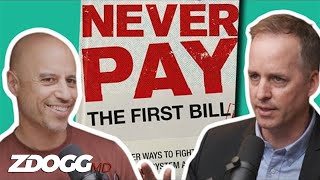
ZDoggMD interviews Marshall Allen (author of Never Pay the First Bill). Allen describes investigative reporting that exposed exploitation in U.S. healthcare (e.g., J‑1 visa "Indentured Doctors" in Las Vegas), contrasts price transparency and patient experiences in the U.S. vs Nairobi, and explains systemic incentives—insurance, employers, hospitals, and PBMs—that produce opaque, high-priced care. He offers practical consumer tactics: request itemized bills and billing codes, compare to Medicare/cash prices, gather medical records, and use small claims court to force settlements. He urges employer-driven market pressure (direct contracting, centers of excellence, direct primary care) as large-scale remedies; highlights waste/fraud estimates and the normalization of deviance in healthcare.
Chapters
Hey, everyone. ZDoggMD. Welcome to the ZDoggMD Show. Today I have Marshall Allen. He is a ProPublica reporter and author of Never Pay the First Bill. Okay. And Other Ways to Fight the Healthcare System and Win. So Marshall is one of my personal heroes. He's worked with Dr. Marty Makary, who you guys all know. He has advocated for not just patients, which we all are, but healthcare professionals through his journalistic endeavors, through his books and all of that. Now, remember this during the beginning of the pandemic. Hey, by the way. Hi.
Hi. Thank you for having me. Great to see you.
Look, at the beginning of the pandemic, you were doing pieces for ProPublica about how frontline healthcare nurses and professionals were not getting ppe. And I remember you reached out to me and you're like, hey, if there's stories that you're hearing, et cetera. And I reach out to my people and they're like, oh, I got stories for you.
Yep.
You told the story about a nurse who used a GoFundMe to raise money for PPE.
Yeah. As if you need another example of what's wrong with her healthcare system. But when we have a pandemic, the frontline healthcare providers who are doing the life saving in the hospitals around the country, they have to go to GoFundMe to get the PPE that they need. But this was one of those man bites dog stories, because not only was the problem that the poor nurse had to raise money to supply her colleagues with the safety equipment they needed, but then she brought it to the hospital, and instead of being applauded or rewarded by the hospital administration, they suspended her.
Oh, that's right.
No good deed goes unpunished. And I don't know what the hospital administration in hospitals around the country was expecting the nurses and doctors to do, but I heard cases, I know you did, too, around the country of our frontline providers during a pandemic, being told not to wear masks and other safety.
Because it'll frighten the patients. Right, right.
I mean, anyway, so the frontline providers have always been my best sources for my stories. And so even everything I have in the book, without the people on the front lines telling me what's happening and then helping me understand it because I'm a layperson, I'm coming to this with no medical training, I wouldn't be able to do my job. So I have a great appreciation for you and for your audience. I love what you guys are doing here. And I'm a follower of what you guys have going on here. And a huge fan of the videos too. So the music videos, I mean, we can't sleep on those. I mean, I'm a big fan, so it's an honor to be here.
I appreciate it, man. So the honor's actually mine. And the reason is this. Like you said, you're a muggle, you're a non medical person. Yeah. And yet you worked one of your gigs in the past was working for the sun in Las Vegas.
That's right.
Which I'm intimately familiar with. We didn't cross paths because you left in 2011. I arrived in 2012. That's where you learned about how screwed up healthcare is.
Yes.
Because you saw it at its worst in the place that has some of the worst in the country, which is Las Vegas. And I can say this. Having been there, having built a clinic, having struggled against the prevailing winds of that system, you have multiple for profit systems. You have horrible, horrible malfeasance going on, actually. Which you uncovered.
Yes.
And so tell me, I mean, how did that even. Were the doctors talking to you? How did you get your tips and tell us some of the stories?
So when I started covering healthcare, I had five years of journalism experience. I definitely had an investigative edge to what I did, but I had done kind of like smaller community journalism. I wrote a lot about crime, I wrote a lot about city politics, school board meetings, all the kind of nickel and dime stories you do as a local reporter. I start covering healthcare in Las Vegas. And the great thing about the sun is that they really had a mission where they wanted to do more investigative stories and dig deeper. And so they had brought in some great editors, they had brought in some up and coming reporters. And my strategy has always been to be very open about what I don't understand. And I don't understand most of how the healthcare system works.
I joined the club.
Yeah, exactly. So I feel like I have enough understanding. I could write a book about it, but there is still so much I don't understand about this system. So 15 years ago when I started, I had no knowledge, no understanding. I just started making appointments with doctors and nurses and hospital administrators, anybody in the Vegas healthcare community who would meet with me. And I said, hey, I'm a reporter at the Las Vegas Sun. I'm writing about healthcare. Tell me what I should write about. What do you think I should do? And inevitably, that would lead to some very interesting conversations. So one that was. That really stands out. My first big investigation. I'm sitting down with this foreign medical graduate. Actually this person had been a doctor in Vegas for quite a while and was very well connected. We get done having our conversation and frankly the conversation wasn't that interesting. I'm folding up my notebook, I'm getting ready to leave and. And this guy says to me, oh, hey, has anybody ever told you about how foreign medical doctors are being exploited in Las Vegas?
And I was like, wait, what? Wait, what? Do tell. I sit down, I pull out my notebook, and this guy tells me the most unbelievable and extraordinary thing I could even imagine at that time, given my lack of knowledge about the healthcare system. Because when you look at American healthcare, it has this veneer, this facade for all the muggles out there of competence, of being evidence based, of being fair and being about healing. You know, I mean, we trust our healthcare clinicians to take care of us. Right? So naturally the big hospital system where they all work must be a great place too. Right? Well, so this guy tells me about the exploitation of foreign medical graduates and he tells me about this federal program called The G. The J1, the J1 visa waiver program. And this is a program which I'm sure you're familiar with it, where doctors who are, who graduate from foreign medical schools, which about a third of the doctors in the United States are foreign medical grads.
Let that settle in. 30% of our doctors trained in another country.
That's right. And so again, anytime anybody wants to be anti immigration, you know, as you know, I'm like, do you understand that we are bringing the cream of the crop of the brightest people from other countries who become doctors in their countries are immigrating to the States, then they come here, they have to do another residency or another fellowship. And then under this program, they don't have to return to their home country. They can get a visa, a special visa waiver if they work in an underserved community. So this is one of these rural communities where American born doctors don't want to work or a blighted urban community. So in Vegas it was like Pahrump out, out in the rural areas in the sticks or North Las Vegas.
Right. By the way, my parents both did this thing.
They did the J1 program.
I don't know if they did J1, but they did the whole thing of coming, doing the second residency, working in urban blighted areas, working in rural California, they did all that.
It's a great program.
Yeah.
And actually, I mean, maybe people would have ethical issues with stealing the best and brightest from other countries and bringing.
Them here, but it's because America attracts them.
Yes. And it is a wonderful thing for our country. So I learned about this program. And here's the catch with the program. The visas are sponsored by the people who employ the doctors. This is the fatal flaw with the program. And so what was happening is it was usually other foreign medical graduates who had become doctors in Las Vegas, who then sponsored visas for other foreign medical graduates. And rather than use this as a public service opportunity to serve these underserved communities that they exploited these doctors, they overworked them, they cheated them out of their contracts, and they set up these ghost clinics in the rural or urban areas where the doctor was supposed to serve. And instead they sent them to all the money making. The money making Las Vegas hospitals.
Yep. Yep.
When I learned about this, I was absolutely blown away that this could happen in the United States of America. In fact, we called the series of stories Indentured Doctors.
Yeah.
Because it was an indentured doctor situation. And so I was having these secretive meetings in casinos with these exhausted, poor, exploited foreign medical graduates, you know, and they're telling me about what's happening, and I'm getting enough of them to tell me what's happening that I could actually name the employers who are the worst offenders.
Yeah.
The state did intervene as a result of those stories.
Wow.
The state took away the ability for some doctors to have any more foreign medical grads with them, and they cleaned up the program. But it wasn't just Vegas. It was happening in other parts of the country, too. So I documented it also in other states. But that was my introduction to American healthcare. As a journalist who I care a lot about people and I care a lot about. I'm looking at it from the point of view of the patient, usually, who is funding this entire system through their taxes, through their premiums, and through their out of pocket costs. They have the most at stake. They're funding the system, and yet they are being exploited on a regular basis, just like those poor foreign doctors were being exploited. The American, especially the working Americans, are being exploited by this system.
So there's so much to say just to that, because when I arrived in Vegas, that work was already legendary. We had a term in the medical community that was the brown mafia that was doing this, actually.
That's right.
And they were bringing in these people, torturing them, almost like slavers back in the day were often from certain tribes in Africa. They were the first to, like funnel more slaves onto the ships. And it felt like that, like these guys were beneficiaries of the same system. And they turn around and exploit it. And so your sense of justice clearly was violated, and you wrote about it by shining sunlight on it. You disinfected it to some degree.
Right.
And so that's where. I think this is where, like, I was really compelled by what you did here, because this book is about how our own healthcare system exploits everyone, including clinicians. Right?
Yes, of course.
And that's where you and Marty have so much synergy and you've worked together. This is about the injustice that happens every single day that we're absolutely blind to until we become a patient. And even then, we're blind to it in the sense that we accept it as just a fact of nature, that we can be bullied by this juggernaut, that nobody designed. It just kind of evolved, like the system. And you say that in here, this healthcare system's not broken. It's working exactly as it was designed.
That's right. That's right. We have. I don't know, you've probably heard the term the normalization of deviance.
Yes. Explain it, though, for me.
Well, so we have a situation where deviant behavior has become so common that it's become normalized. And so we accept it as the status quo.
Yes.
We accept this deviant behavior as just how it's supposed to be. And so in my book, I'm really reframing the way we look at our healthcare system so that people can kind of have the blinders fall off their eyes. Like, wait a minute. Why is it that we can't get prices? Well, the prices. In fact, let me. I want to tell you a story.
Because even your mechanic gives you an estimate.
Even your mechanic gives you a price.
Itemized.
They can give you an itemized price. I want to tell you a story about the most remarkable hospital experience I ever had, because I think it really does illustrate what we're talking about here with prices. The most amazing hospital experience I ever had happened while I was traveling. My wife had a migraine headache. My wife, unfortunately, gets a lot of migraines. It was nighttime and it was a weekend. It was the worst possible time for her to need medical care because there was no doctor's office I could take her to. There was no urgent care I could take her to. So we had to go to the hospital emergency room. Well, you know, you walk into a hospital emergency room with a migraine and you know that you're going to get hit with, like, CT scans or, you know, all types of examinations, all types of treatment. It's just like Ripe for exploitation. So my wife walks in, she's holding her head. And I walk in. I'm holding my head because I'm anticipating how they're going to screw us. So we walk up to the front desk, and I'm bracing myself, like, the guy doesn't ask me anything. He's already typing on a computer, and all of a sudden, he spits out an invoice.
This is a registration guy.
Yeah, this is the guy registering us. And he says, that'll be $30. I'm like, $30? He's like, well, that's the price for your visit. I'm like, what are you talking about? Well, of course I paid him the 30 bucks. But I was shocked, right? They lead us to the back where we're gonna go talk to the doctor. And I'm like, okay, this is where the doctor's gonna get us. Because we've had this happen before. They always recommend scanning her head, even though we know she's not having an aneurysm. We know what this is. She just needs some pain meds. Well, we go back and talk to the doctor. He's extremely kind, and he says, it sounds like you just need some pain meds. You can get those on the pharmacy on the way out. I'm like, oh, this is where they're going to get us. Pharmacy. Oh, here we go.
Yeah, yeah.
PBMs. Who knows what kind of deals they've got?
Yeah, exactly.
We go to walk out, and we go and we pay for our meds. It's about 20 bucks. And I pay in cash right there on the spot. I get the drugs right there. And I'm like, what in the world is going on here? I had never been treated with that much kindness and that much transparency and that much fairness. And the. The problem is, I was at the Nairobi Hospital in Africa.
This.
Tell me where this is, because I'm going to get my care there.
This greatest hospital experience I've ever had in my life was not in the United States of America.
It was in the developing world.
It was in East Africa.
Wow.
And that's the point of this. This system is not broken. It was made this way. So think about Kenya. Okay? So my wife and I actually did ministry there for three years.
So.
And her. She grew up there for years. So I have a special attachment to Kenya. But Kenya is a developing nation. You have to. When you're driving in Kenya, you have to, like, steer around the potholes. They have regular brownouts because the electricity grid is so unreliable. You have to filter the water because it's, it's not safe to drink. And yet at the Nairobi hospital, they can give you a price up front. They can, you can pay right there. You're not getting price gouged. And at least for us, obviously, we're tourists, obviously, this was one experience. But the system is set up to treat you fairly. So the problem in the United States is not that we're not advanced enough or oh, how do you, how do you come up with these prices? Like with the hospital price transparency rule. So now hospitals are required, and I talk about this in the book, they're required to post their prices. Well, many, most hospitals are not complying with this rule. They are required by the federal government to post all their prices on their website. And it's just not happening. And you know what you hear from like the American Hospital association and others, oh, it's too hard. It's too difficult really. We're the wealthiest nation in the country. We spend twice as much on healthcare compared to other developed nations. But you can't figure this out. I go down to, you know, some hole in the wall restaurant, they can figure it out. You're the most sophisticated, educated people. You have all the wealth, you have all the power, but you can't figure out how to post the prices. No, the issue is you don't want to post the prices.
That's right. It's just not in your interest. You're not incentivized to do it. And in fact, you're incentivized to obfuscate the prices because these are the money games they play with the insurance companies, et cetera. And then who ends up paying the rack rate? The patient who's either uninsured or underinsured. They get this huge and suddenly they're in collections. And that's what I love about this book, is that you go through and you're like, oh, no, here's some action items. Here's what you do, right? First of all, here's why you do it. Right? You have these reasons, why should you even fight? Why should you even care? And one of them, reason one is we are the ones paying for healthcare, right? So why shouldn't we get value for what we pay?
Right? But you know, a lot of working Americans who are in an employer sponsored health plan, they've been told your employer pays a portion of it.
Yeah.
Or they think, oh, the insurance company is paying for it.
Yeah.
No, no, no, no, that's not how it works. There's not some magic money tree because even if you know your insurance plan pays it this year, your premiums and your deductibles are going to go up the next year to cover those costs. So there's a reason why we've had ongoing increases every year for the last two decades.
And your wages are stagnant for a.
Your wages are stagnant. It's because the, the compensation. So the employer funds the health plan, no question about it. But they are funding employee compensation. So you know, when you get hired, you get your wages, you get your paid time off, you get your maybe a 401k contribution or something and you get your healthcare benefits. 100% of the cost of those healthcare benefits belongs to the employees compensation.
Yeah.
So I appreciate that the employers are funding it, but once they fund it, it becomes the employee's money. And so if you're an employee and you're like, oh, my health plan covered it, that's great, dude, it's your compensation, you covered it. And so then when your compensation gets eaten up by these markups and middlemen in medicine.
Your employer has less money to give you a raise. And so if you look at studies by economists show that our wages are being stagnated, they're being held down because of these outrageous health care costs. And I just think a lot of people don't understand what's going on here.
Yeah. And I think the medical community might say a few things that I think are important to acknowledge. One is that the cost of the pressure of litigation, malpractice, cover your butt medicine, those kind of things can ratchet up costs. The fact that it's always a war between insurance and them. So this third party payroll fees, so all that is actually very valid, but it's a part of a bigger picture, which is we also have no desire to change it because we're all getting paid through the system.
Yes.
Yeah. But even the doctors are on the health plans that their employers set up.
In fact, many of the stories in my book are about doctors and nurses and other insiders getting screwed. Yeah. And there's. I find that. Yeah, you are in here. So even as a, as a muggle. Right. As an everyday American, just non medical person.
Yeah.
I find it darkly encouraging that you are getting screwed just like I am. I'm thankful for that actually, because it makes me. It just goes to show that this isn't because the patients are dumb. It's because the system is set up to deceive them and take advantage of them and not show them things and not be Upfront with them. So even you have your own case study in the book.
And I'll say this interesting. I recently spoke to a friend who's an emergency physician and she told me that she really wants to retire. She's in her 50s. She really wants to retire because the system has gotten so terrible unpleasant to work in and there's so much isolation and siloing and electronic health record and everything. The joy of practice was gone for her. But she said the reason she's staying is until she can reach Medicare age because her insurance bills would be too high without her employer's subsidization. I mean, that's sick.
That's sick.
She's trapped because we have a broken healthcare system and she's part of this broken healthcare system.
Yes.
Yeah, yeah.
There are victims everywhere. Everywhere you look.
This beautiful reason too, here in the book. The customer is always right. But healthcare power players don't consider you their most important customer.
Right.
Unpack that for me.
Well, so another reason we need to fight back is because when you undergo a healthcare interaction, you assume that you're the customer. I mean, your insurance is paying for it or you're paying for it out of pocket. You're the one undergoing the care. So you think that you're the customer. And in America, we say the customer is always right. It's this long standing tradition that we have this assumption in health care, though, the customer is always right. But you're not the customer. The customer of the hospital is the other stakeholders, the insurance plans. In fact, when you look at who do they call the payer? The insurance company is the one they call the payer. Well, look, we're the payers. I'm sorry, the doctors they need to keep in their networks, those are the customers of the hospital. And so that's why when you have a dispute with a hospital over a billing issue or some other problem and you feel like you're getting the runaround, or you call your insurance company, even if you find something that was on your bill that was an error, something that never happened that got put on your medical bill, your insurance company will side with the hospital or they'll side with the doctor. They say, well, that's what they put on their claim. So that must be the way it is.
Yep.
Well, no, that's not how it is. I'm the patient. I'm actually telling you what happened. And I'm telling you this didn't happen. So I don't want to pay for it. They always side with the doctors and the hospitals. And that's because those are their primary customers. Those are the ones they're loyal to. They're not loyal to their members in their insurance plans. And so that's why once you understand that, you go, oh, no wonder you give me the run around when I try and get a straight answer. Or no wonder you won't fix the problem that I'm having.
It's like the story that came up recently of a pathologist in Texas who got a in house in his own facility. COVID test. Did you write that?
I wrote that.
You wrote that?
That's my story. Yeah, that's right.
And I did a show about it. Yes, tell us that story real quick.
It's an incredible story. Yeah. So this was a pathologist who set up the antibody testing at one of these freestanding emergency rooms in Texas, which are notorious, of course, for all kinds of gouging.
Yeah.
So he had kind of a side job to set up this antibody testing. He needed an antibody test. He goes into his own facility and he thinks he's going to get the bro deal. I mean, of course he knows everybody there. He knows the test only costs eight bucks, so he thought they'd give him one on the house. Right, right. But they took his insurance information.
They gave him the test, everything turned out fine with the test. A few weeks later he gets his explanation of benefits from his insurance plan and he finds that they have billed more than $10,000 for this one antibody test. And even more remarkable, the insurance plan paid in full. Paid it 100%. Paid it, no discount.
So what's going on?
So this guy, of course, he is so alarmed. The dude actually emails his boss at the freestanding emergency center and he resigns on the spot. That's right. He's like, I am so concerned about this. I believe this is a fraudulent bill. I can no longer work here in good conscience. He quits his job, he calls the insurance company and he talks to a fraud investigator at the insurance company and the fraud investigators kind of like, yeah, you know, we kind of see this stuff all the time. And I have a whole chapter in the book about fraud and I've done a lot of reporting about fraud and how insurance companies are not really the guardians of our dollars that we think that they are.
Which you would think they are. You would think, well, they're spending the money, they're trying to save the profit.
You would think. But then think about it this way. Most employer sponsored plans are self funded, which means it's the employer's Money.
That's right. They're just the administrator.
They're the administrator of it. So is it harder or easier for them as an administrator to vigilantly protect those employer dollars? It's harder. It's more expensive.
More expensive. More time, more bureaucracy.
Plus their loyalty is to the doctors and the hospitals.
Correct.
And so if there's a little upco that goes on here and there.
Well, you know what? Walmart's paying for it.
Yeah, it probably was complicated. Yeah.
And so, and there's the medical loss ratio thing too. Right, the medical loss ratio for non self funded employers. You know, the insurance company is able to keep 80%. No, they have to spend 80% of the premiums on actual care and then they get to take 20% to cover overhead and profit.
That's right.
If the actual care costs more, they get a bigger percentage.
Right. So that also incentivizes letting some of this stuff go through or letting a lot of it go through, just raise.
Premiums the next year.
That's right. When you look at. I've talked now to more than a dozen fraud investigators who work for the big companies, Aetna, Cigna, United, all of them say it's easy to find healthcare fraud. We find it all the time. We're overrun with it. In fact, experts would say that 10% of our healthcare spending is fraudulent. We could just cut that out right away.
Save billions.
Hundreds of billions of dollars would be saved immediately. Everybody's costs could go down by 10%. But what they say is that internally, when they take it to the attorneys for the insurance companies, and I've talked to the attorneys too, they say, look, it's going to cost a lot of money to go after Dr. So and so for upcoding or for unnecessary care. So we'll send them some warning letters, we'll tell them to stop, but we won't actually pursue them for a repayment or we certainly won't prosecute them criminally. The criminal prosecution coming out of the insurance companies is almost non existent. Meanwhile, the Medicaid fraud control units and the Medicare fraud investigators are like they're reeling in, I mean you see the headlines all the time. They're reeling in fraudulent practices.
Yeah.
But in the commercial space, the employer funded space, no incentive. You don't see it.
No incentive.
Yeah, you don't see it.
Interesting. And you know, then that, that relates I think to another reason. And again we're talking about the reasons to fight. And then the book is really about how do you fight?
That's right.
How do you fight? But one of the other reasons is the healthcare industry wastes obscene amounts of your money. Dude, I can attest to this. So much of what we do, they say 30% of our unnecessary. I think it's 50%.
Wow.
Yeah. I mean unnecessary meaning we're doing it with good intent. Yeah, we're trained to do it. But it's bs, it doesn't help, it causes harm. Like all the scans that your wife would have been offered for her migraine.
That's right.
The Nairobi docs were probably like, well, first of all, we don't necessarily use that many resources. Cause we don't have that many resources. Yeah, they don't, which is nice. And actually I have the speculation and I could be completely off and I could be proven wrong by data in the future. I don't think the trial's been done. I think part of the reason other countries do better than us, apart from the single payer and all that, is that they just do less stuff to people.
You may be right about that.
And I think that we are incentivized to do stuff to people, not for people in this country. That's right. We're really good at it. We're science minded, we're well intentioned and we cause harm and it costs a ton of money. And then all the ripple down effects of unnecessary billing, medical bankruptcy, having to go to court, all this other stuff. Yeah.
Well, I joke in the book, we're all tempted to do more if you pay us more to do more. Sure. And if you would have paid me a dollar a word to write that.
Book, it had been $10 million, it.
Would have been a million. It would have been a million word book. I can promise you the readers would have been over treated too. So I understand the incentives and I don't want to be, you know, I'm sensitive to those temptations. But as the people paying for it and being indebted by it, we've got to start asking more questions. Because when we see that all of this is wasted and the system is just set up to keep doing more to us, even though we don't need it, we have to be the ones to step in. And I've had people tell me this sounds hard and I'm like, well yeah, but how does it sound going into debt for something that shouldn't have been done? It is hard and it's unfair. It's ridiculous that I even had to write this book. But it is necessary. Sadly, given the situation that we're in.
You know it's funny, I just thought of something like, I will fight tooth and nail for, like, $20 of what's perceived to be overcharged by Comcast Cable or Cox Cable because they failed to, you know, they mischarged something. And the sense of injustice that rises in me that I will sit on a phone for two hours with someone who just doesn't want to be there yelling at them. Let me talk to your manager for 20 bucks.
Yes.
I get a bill for $3,000 for three stitches and a tetanus shot from an emergency department at Summerlin Hospital in Las Vegas.
Unbelievable.
Undisclosed. Never knew. And they extorted the $50 copay before I could ever get the stitches. And remember, I've had a concussion. So at this point, I'm like, sure, 50 bucks. Here you go. Oh, thank you. Beautiful doctor. Wonderful person. Did a great job. Everything. Nailed it. I get the itemized bill three months later, right? For 3,000 bucks. And I have a high deductible plan. So I'm paying all of it. And it's itemized like Neosporin packet, $35. Wow. You know, tetanus shot. $450. I'm like, I know, a tetanus shot is unbelievable. I give it at my clinic, right? My clinic's closed when I had to go there, so after hours. So I had no choice. But, boy. So this idea that then I didn't even think to haggle about that bill, right?
And that's where you see people who have enough money. So you and I are in a class where if we get hit with a $3,000 bill, we can pay it, right? And I'm thankful for that. But at the same time, the median income for an American family in the United states is about $60,000 for a family of four. So a $3,000 bill for someone like that, or the typical American doesn't have more than about $400 in their savings account. So a $3,000 bill for someone on a high deductible plan, in that situation.
It'S a breaking point.
They are put into debt, they're put on a payment plan. I love that solution. Anytime you call the billing department about an unfair bill, oh, well, we can just put you on a payment plan. Oh, well, that makes sense, right? You've overcharged me for something. And a payment plan is the solution that the revenue cycle managers offer to the patients. And so I think this is a huge inequity situation. You and I of the class that has enough money that we can pay that bill frankly, the people who have the money and have the means have abdicated their responsibility to the people who don't have the money and don't have the means. And so I, because I've talked to a lot of like, more white collar people who go, well, I don't know, I'm just going to pay the bill. It just sounds like a big hassle. And I'm like, well, I understand why you would do that, because for you.
The time is more time is more.
Valuable than that money. But think about all of the other people who don't have that type of an income and don't have that revenue. They're going into debt. I mean, one in six Americans has medical debt in collections. I had to write a whole chapter on what to do if you're being chased by a debt collector for medical debt.
Wow.
You know, I couldn't write a consumer guide without that.
Right.
And that's sad because again, we spend so much more than any other country. It's not because we're not spending enough. It's because everything is screwed up with the alignment of the system and it's set up to exploit people's sickness for profit.
Yeah.
And that's not right. So, you know, I really try and show people how to fight back and win. And for example, let's say you didn't have the money on that $3,000 bill. You've gotten the itemized bill so you can see where you're being ripped off. We now have the ability, when we get the billing codes to look up prices or at least price estimates. So I show people how to do that in the book.
Okay.
And so people gather this evidence and then I recommend suing in small claims court.
Wait, what?
Suing in small claims court.
So wait, they sue you or you sue them?
We sue them.
What?
Yes. So imagine you get hit with an unfair bill.
Okay. Don't have to imagine it. It's happened many times.
It has happened many times. And that billing department is giving you the runaround.
Yes.
They won't correct it.
Correct.
And you've established that you're being overcharged. Let's say that you can see that a fair price estimate for your stitches is $1,000 instead of 3,000, which I'm just guessing. That still sounds high.
But you have to acknowledge that you went to an emergency facility that has a lot of overhead and.
Yeah, yeah. So let's say you get the Medicare rates or the hospital has now posted their prices in compliance with federal law.
Right.
Well, now the limits in Small claims courts around the country are high enough that they can cover a lot of these kind of episodic medical bills. So what I recommend and what I show in the book is how a lot of people are doing this. And I've actually been helping friends and people who email into me. I've been helping them do this. Very successful.
So how does this work?
Well, so a friend of mine at church has a run in with his dentist, where the dentist has been over billing them by about 300 bucks for a root canal where they didn't run it properly through the insurance plan. They build their credit card instead. Yeah, he's getting the run around for years by the dentist and the billing person for the dentist. So I told my friend, I'm like, look, I think you could sue him in small claims court. Costs you about 30 bucks to file the case. And then think of the problem that creates for the other side right now. First of all, they're going to be accountable in front of a judge for what they've done.
Yes.
If you've already followed the steps in the book where you have the itemized bill, you have your medical records, you've done a fair price estimate, you've gathered your evidence already, so you're prepared to argue your side of the case. And the beauty of our American judicial system is that it has been set up for this. Every state has small claims courts. The limits vary, but some of them are high. In Texas, it's $20,000.
Wow.
Tennessee, it's 25,000. Where I live in New Jersey, you can go to the special civil branch up to 15,000, but you don't have to be an attorney. You don't need an attorney to represent you.
Yeah, I've seen people's court. It's straightforward, man. Yeah, Judge Walker.
Exactly. We've all seen it. That's exactly it. So you file the case. So my friend files a case against the dentist.
Okay.
Well, a few weeks later, he gets a call from the attorney for the dentist, and he says, hey, we'd really not like this to be a public thing. We don't want this to go to court, and we will pay you. He got his check.
Wow. Immediately out of court. Yeah, of course. Because who wants to go and sit in court?
Nobody wants to sit in court.
Now, let me object, your honor. I object. So I'm gonna object on behalf of some independent physicians who I know are very good people, who.
They would say, well, a lot of times these surprise bills are not the fault of the physician. They're the fault of insurance, calling this out of network and not disclosing and so on and not paying the bill. And then the patients are angry at us, but really it's the insurance company. How do you think about.
Well, whoever is sending you the bill is the party that is responsible for the bill that they're sending.
Right.
So if they would like to come to a fair payment, all the small claims court is for is to incentivize them to treat us fairly. So rather than have a bill from the out of network doctor that is 3 times Medicare or 5 times Medicare or 10 times Medicare, get a fair bill, give me a fair price, I'll pay you. I'm not saying people shouldn't pay their bills. I'm just saying that the price gouging has become so common and there's such an entitlement.
It's systemic.
It's systemic built into the system. Yeah, it's just built into the system. It's assumed. And so I'm trying to, like, shake people up, and unfortunately, they don't get really, like, they don't come to attention until you file that case. And then all of a sudden they're like, oh, I have to go before a judge. That's expensive and a hassle. Let's just come to a deal. That's fair.
So what about. So a question I'd have is, what about a big health system that gives you that bill? So do you sue the health system?
Yeah.
So you can sue big companies in some small business.
Yes.
Absolute is where it becomes a game changer, because I have a little discomfort with suing mom and pop docs who just don't know better, and they've been doing this thing and she's.
I don't think they're the biggest problem, quite honestly.
Right, right, right, right. It's really these systems. Can you sue an insurance company?
The insurance company wouldn't be the one sending you the bill, so you'd want to be suing the party that's billing you. Right. And when I've helped people do this, they have sued the hospital. So another case of a young woman that I helped, she got overbilled for an ER visit. So because of price transparency, she could see that the Level 3 ER visit where she went was charged. The negotiated rate was $5,800 that she was expected to pay for a level three emergency room visit, but she was covered by UnitedHealthcare. The Blue Cross negotiated rate was $757 for that same level three ER visit. The Medicare payment was about $230, and the cash price was $256. Whoa. So in this case, she was blown off and blown off and blown off. She filed the case in small claims court. She quickly got a call from the attorney for the hospital. The attorney said, hey, look, we'll knock it down. We'll cut it in half your portion. Her health plan had already paid about 3,100.
I see.
And she was expected to pay another 2,800.
I see.
The attorney said, look, we'll cut it in half. Pay us 1400, we're good. She said, no deal. I'm not going to do that. He said, okay, we'll waive it. We'll take it down to zero, but you need to sign an NDA.
Oh, wow.
And this is common? Actually, the NDAs are very common. I feel very conflicted with non disclosure agreements, gag orders to silence the patient.
Because they could go out publicly and go, hey, I got these guys to stop abusing us.
That's right.
Hey, I punched this bully in the face. But he doesn't want you to know about it.
That's right. Exactly. Or you could post something on Yelp or wherever.
Right.
And so they. That's. And so I talked to some attorney friends of mine. I've been talking to a lot of people about how to do this, and what the attorneys will say is, look, from their side, they want something out of this deal too.
Sure. Yeah.
That's their defense. Yeah. Anyway, all I can tell you is the case was settled to the satisfaction of the parties. And. And, But. But I'm telling you, she got results.
Yeah.
She had the CF that hospital call her and urge her to take the deal.
Wow. So this is really kind of remarkable. Basically, if we had an army of people that all said, hey, I got a crazy bill. Crazy bill.
Yeah.
I'm gonna go to small claims court. Now. The problem is there may be some abuse of that the other way. You may get a bill that's perfectly transparent and people think they can dissuade.
And if that's happening, then I would encourage that doctor or hospital or dentist or whoever it is to go to court, defend themselves in court. And the risk that you take if you file in small claims court is that if you lose, you're gonna have to pay that bill.
Oh, yeah.
So it's not without risk, and so it's not something people want to do frivolously. And frankly, most of the stuff never goes to court. It's really designed to prompt a settlement, arbitration, and so hopefully it can be settled and then it won't have to go to court. But all I'm saying is we should use the powers available to us as American consumers. And in this country we have this beautiful system already set up up, it's being used for other things. Why aren't we using it for our medical bills?
Yeah, I think that's brilliant. You know what I think though, from a systemic standpoint, what that will do, it's going to cause short term pain for some systems and providers, but long term it's going to cause a forced shift in how we do business in general. Price transparency, a change in our relationship with these third party payers. Insurance and I think self funded employers who hold all the cards and yet use none of them. Yes, they have all this leverage. They're paying for 50% of American healthcare, more or less and they don't do anything. They let themselves get stomped on by TPAs, stomped on by insurance brokers, stomped on by the insurance administrators and they just take it as par for the course. That $20,000 for every family that works for them.
Is going to healthcare. And they just go, well, that's just part of the compensation package.
I think they wish that someone else would take care of. Yeah, and I wish someone else would too. It's just that again, remember, healthcare isn't broken, it was made this way.
Right.
This system is working very well for the powerful stakeholders that are running it and that are profiting off of it.
No incentive to change it.
No incentive for them to change it. So they have an entitlement complex that they just keep thinking they can take more of our money. And until we as individuals and employers stand up to them, it's not going to change. Why would they change it? It works great for them and there's.
Precedent for this in medicine. So the direct primary care movement basically says, look, here's an upfront fee. It's a flat fee per patient, per you, per month, like a gym membership. And you get unlimited access to me and my services and I will do everything I can at the top of my license and powers to keep you out of specialty clutches and hospital clutches and so on.
That's right. And that's where it's important too. Obviously. I'm an investigative reporter, so I am writing the horror stories and I am naming names and I'm calling out the bad practices. But in every story I do, and throughout this book I show there are good guys too. And so we need to stop just focusing on, we need to wise up first of all, and realize, okay, we now have 20 years of data that shows year after year we're being exploited and taken advantage of and these costs are unjustified. So now that we have this data, well, price variation means there's high prices and there's reasonable prices.
Right?
So the way I my exhortation for employers is employers hold all the power. Imagine the money that they have and the system needs their money. Imagine if they just found the fair doctors and the fair hospitals and the fair minded insurance companies and TPAs and everyone else. Bright spots, transparent, fair pricing, no hidden, you know, markups. Imagine if we just redirected all of our money toward the people who treat us fairly. And then anybody, even if it's a big marquee medical system that's screwing people and everyone knows they're screwing people. Imagine if all the employers just said, you know what, we're going to create a network and you're shunned, you're out, you're not part of our network now. And we'll come to you if we need to and we'll negotiate, you know, we'll negotiate a price and if you overcharge us, we'll come at you legally. But imagine how that would change the system. So I think employers are like the sleeping giants of healthcare reform.
I agree.
They could do this and some of them are doing it. And so we need to follow the lead of the ones who are kind of blazing that trail and then I think we can turn this around. I do. I have huge optimism for this.
I agree. It's already in our power. And you don't even have to eliminate all the insurance companies and go to a single payer plan. You don't have to do that. You can actually do it with the engine of American capitalism, which is the businesses that already are paying for most, you know, 50% of healthcare. Right. And then what happens is it puts pressure on everything to say, okay, we got to obey the rules of any market if we're gonna call American medicine a free market thing, which we seem to want to do in America. All right, if that's the case, then treat it like free market. Price transparency, competition on cost, convenience and value. And if we can do that, like you said, then you start to self select the market, self selects for bright spots where it actually works and true disruption, which you're describing, where it's like legacy players that are calcified, that are no incentive to change, like the Xerox back in the day, central copy machine. You have to go to their facility and make copies. Remember that? And then these little upstarts, even their own company starts to disrupt itself. It makes these portable copiers. Now suddenly the quality is not as good, like the dots per inch aren't as good. But man, it's so easy. Pretty soon the next thing you know, the market has spoken and these guys are out of business. Yes, Kodak is gone.
So I like to think about this, being a journalist, the way the media has been disrupted during my career.
Tell me about this.
Well, so again, we're at this stage of the disruption where we're still afraid what's going to happen. They're so big, they're so intimidating, they're so smart. They have all these attorneys, whatever. We're intimidated, we're afraid. Right. But you're seeing people make these changes, whether it's the direct primary care, whether it's employers that are leaving the, you know, the Blue Cross, United Health Plans and they're going to an independent third party administrator, an independent pbm. So I have all those examples in the book.
Oh, great. Yeah.
So we're seeing it happen. It's already happening, this disruption. Right now though, the big players, they're making so much money doing things the same old way, they don't want to disrupt themselves. But I think sometimes people don't want to talk about the fact that there will be winners and losers. Right now we're the losers. The public is the loser, the industry is the winner.
That's not fair. And so we can't. But when we talk about lowering healthcare spending, we. Let's say we're spending upwards of almost 4 trillion a year now. And let's say we should be spending about 3 trillion a year now. We have a trillion dollars in waste that needs to be weeded out of the system. That's going to cause shareholders to freak out. That's going to cause big losses for these companies that are like the big media moguls of back in the day. So I was in newsrooms when the Internet came on board.
Oh goodness.
Oh, people made fun of the Internet. I mean, it was this prestige thing. Yeah, yeah. When publications started publishing online and they had a website, the old school journalists were like, why do we have a website? We have a newspaper that goes out to everybody. Why do we have a website? And then the reporters, when there would be reporters and one of their stories would get published online, you'd be like, well, yeah, it was online, but it wasn't in print.
I remember those days. My story's on the front Page. This is like a print.
It's above the fold.
It's above the fold. Your thing went on the Internet. Seriously. Okay, whatever.
And now.
And now we have all been humbled greatly. And unfortunately, sadly, the media outlets that have kept doing things the same old way, our revenue model got destroyed. I mean, there's a lot of reasons for it, but they didn't take it seriously. And so I think that we may be in a similar situation. Again, you mentioned Kodak. It happens all in other industries. It happened in the airline industry. Right. Where things change. And the old school status quo, fat cats making money the old way, they're just counting their money doing it the same old way.
Right.
Well, things could flip pretty quickly on them, and then the tables could turn.
And this is something that I think we're very afraid to talk about, especially in healthcare. There will be losers in this transformation. The losers are the people that are doing the best right now. So if you're doing really well right now, you should be looking over your shoulder, because change is coming. The thing is, if you're doing that well, you have a bit of a Pareto distribution. You already have a ton of money. You can pivot to something else. You can change. You have every ability to do that. The people at the bottom don't. The people who are screwed, like our patients, like the people that you defend in this book, have no power to do that. Perceived. No perceived power to do that. Now you're saying with this. What's remarkable about this is you're saying, you know what? Here's some power you have. You can just sue these assholes in small claims court, and they're already doing really well. They have no incentive to change. You are like a little marble that gets stuck in the jet engine.
Right.
That is gonna throw it for a loop. And if enough marbles get stuck in there, the engine shuts down.
That's right.
And then you have to build a new engine that's. That's tolerant of marbles or that doesn't induce marbles to be shot into it.
That's right. So imagine if everybody demanded an itemized medical bill when they went for their hospital care. Well, eventually they'd be fielding so many calls and providing so many itemized bills that they might just start to give people itemized medical bills.
Yeah. Or a flat fee.
Or a flat fee.
It's just gonna cost this.
Yeah, exactly. And so I hear people who are skeptics saying, marshall, people are never gonna do this. This is too hard. First of all, sometimes it's really easy. Okay, it doesn't always have to be hard, but. But sometimes it's hard. So I'll give you that. But we're talking about a population. Let's say 155 million Americans are in these employer sponsored plans, and let's say another 30 million are uninsured. So we've got about 180 million Americans. If 1% of them were to push back, if 1% of them demanded an itemized medical bill every time they had a hospital bill, if 1% of them said, I need to make sure you have the billing codes, so please give me the billing codes. And then they just go to Google, look up the billing codes, get your medical records. It's your legal right to have your medical records. I show you how to do that in the book. Get your medical records, see if the medical records align with the bill. It's not actually that hard to do. It takes some persistence, it takes some phone calls. And then you can see, you can look up and see a fair price and see if you're getting screwed or not. If you're not getting screwed, pay the bill. It's fair. I'm not saying don't pay the bill, but if you're being ripped off, well, now it's time to contest the bill. We can do this the easy way or we can do this the hard way. But I think that the thing is that we have more power than we think. And if just 1% of that 180 million pushed back.
They could not handle that. Imagine the hassle. In fact, another fascinating case study. I get a lot of calls from people, and so I'm trying to help people now through this process. I spoke recently to a benefits advisor for.
An employer in a town where they're getting hit with all these surprise medical bills from this hospital. And I was like, well, how many employees have been hit with surprise medical bills? They're like, man, I don't know, 50 or 60. I'm like, wow, okay. I said, let's have a webinar. I said, now, I don't know if you guys are going to want to do this, but I want to do it. Yeah, yeah, yeah, let's have a webinar. I'll talk to all your employees. I'll show them how. I'll walk them through the process of how to sue in small claims court. Imagine if every surprise medical bill that came in that's unfair. Was met with a lawsuit in response in small claims court from the patient. It would be an incredible. It's like jujitsu. You know, you take the aggression of your opponent and you turn it back on them. And this is legal, it's fair. It's just we just haven't been doing it. We've been asleep. We've been trusting them, and that's the problem. They've been violating our trust. And so we're put in this position where we have to fight back.
You know, and one thing I want to say about this sense of unfairness, and I can tell you're very passionate about this.
Oh, yeah. Oh, yeah.
And it seems like some of this may be even extracted. You said you did missionary work in Kenya. You know, there's like a evangelical passion.
Oh, definitely.
It's infectious.
I love it.
I love it. And, you know, I think this idea that this surprise billing feels so unfair is. I think there's analogies. I think Marty makes these analogies too. Like, if you fly on a plane, you have a predetermined fee that's gonna cost to fly on that flight. Remember how much outrage there was when they started charging nickel and diming for bags, meals, and all that? People pushed back because they realized there's a better way to do this. Here's what it costs to fly. It's not that the airline's saying, well, you know, there could be a delay that could raise costs. It could be that we use a little more fuel because there's some obese people on the flight. It could be that one of the stewardesses calls in stick and we have to staff up with a. Yeah.
Or rerouted because of weather.
Rerouted because of weather, which means more airport fees and so on. So we can't tell you the price until you land. Actually, until a couple months after you land, in which case you'll get a bill. By the way, if you don't pay that bill, you're gonna go. We're gonna sue you for collections. It's insanity.
Right? It would never work.
So why wouldn't it work in healthcare to say, here's a bundled price. And you know what? That's gonna hold us accountable to do the right thing for you if we cause a complication that's now on us.
Yes.
If you're non compliant. Right. And you make it more expensive. Well, that means that we better do a better job of even lobbying for better social services so that you have support at home, not just discharging you to the street and then wondering what to do. Which, by the way, all falls on us, the social system, which is not fair. We need the social structures in place to support. How are you going to treat a homeless person and expect them to do well in a bundled payment? We know they're going to come right back. So these kind of things, it seems complex, but sometimes I feel like, Marshall, we just have to blow the whole system up and build or don't blow it up, let it be. Build a parallel one that's better, that disrupts it.
So you do see that with some of the centers of excellence models that some employers are entering into with direct contracts for things like orthopedic services or things like delivering babies, where they've identified the high value, high quality hospitals and doctors and they have steered their patients, their employees toward them. And again, some patients like, well, what about free choice for patients? Well, what they tell their employees is you can either have all your out of pocket and coinsurance costs waived and go to our center of excellence where, by the way, you're going to get better care because it's a global payment. They're going to follow up with you to make sure you're doing well afterward. Or you can have your coinsurance and pay your deductible and go wherever you want. Well, employees love that choice. You mean I have no out of pocket if I go here and it's going to be better? That is absolutely happening. So in New York City, one of the plans that has gone direct pay for birth and delivery, they're sending cars to pick up the moms, you know, to bring them to their appointments. I mean, they're like catering to the patient prenatal care. Yes. They want that patient to thrive because they know they're not going to get paid on the back end if there's complications.
So our partners at Turntable Health, Iora Health, they were just acquired by one medical, actually. And this really big deal, I don't know anything about that, but I'll say this. They were paid by Medicare Advantage to take care of a population of seniors for primary care. They did everything they could to keep that population healthy, including pay for an Uber to get the person into the visit, buy the patient an ipod so they're not bored in dialysis. So they stop not coming to dialysis, missing dialysis, having high potassium and getting up in the er, anything it took. And that involved time, relationships, a certain degree of money. But you know what? They're incentivized just to do the right thing for the patient in exchange for the flat rate they're gonna get. And next year the rate might be higher because they did a Good job. Okay. That's how we can transform healthcare and everything you describe as centers of excellence. It's funny, Marshall, like, this isn't an isolated. It's not like you're the only person saying this. I've had so many people on the show, everyone from Robbie Pearl to you, Marty Makary coming and saying the same thing. These are smart people who are passionate about this. What's stopping us from doing it?
I think the employers are stopping us. Ooh. The employers are not stepping up to the plate. And so when I wrote this book, I actually talked to lots of benefit advisors and I was like, how hard should I be on the employers? How much should I beat up the employers? Because what they've been doing over the last 20 years is passively watching the cost rise and then passing it on to their employees. Higher deductibles, higher premiums, less coverage. That's been the standard year after year after year. So.
I do sympathize a bit with the employers. Right. They're trying to run a business doing something else. And now I've got to figure out the American healthcare system. I mean that is absolutely outrageous. So I have some sympathy for them. But you know, employers like this trend has now been going on for decades, year after year. If you're not really actually taking it seriously, you're sticking your head in the sand and it's costing your employees, it's harming your employees by you not intervening and by you all not working together on this. And we now have enough models of where it's working. So you mentioned Dr. Pearl or Marty or others have shown this works like employer sponsored plans that do things in a smarter way, can save 30, 40% off the top while taking away deductibles and coinsurance, lowering the cost for their employees, delivering better care, saving 30 or 40%.
It's incredible, really. It's a no brainer. And yet I'm glad you're holding these employers accountable. And I gotta say, I've worked with these people, so I've done talks for them. The biggest benefits managers of the top companies, self funded companies in the country, like the hugest companies and 201. They are wonderful people. Wonderful people. They care deeply about their employees. They're mission driven and they're terrified. They're terrified they have inertia, they're scared to rock the boat, they're worried what their CFO is gonna say. They're afraid to take risk. And yet their company is in existential danger of falling behind internationally and Locally by this huge albatross of healthcare costs.
Right. They're afra. That's where ultimately this takes courage, and it also takes educating your employees. So with the book, part of my vision for the book is because I know there's this inertia in the C suite and in the HR departments for all these employers. I'm trying to educate the employees so they understand what's going on. Because I think one of the very real things that employers are afraid of is, well, what if I tell my employee they can't go to this doctor anymore or that this hospital is not the preferred hospital? They want you to go to the other hospital?
That's a real fear.
It's a legitimate fear. And in the HR departments, they don't want to deal with all those calls from all the employees, so they just go with the big blanket network plan that does the same old, same old. Because employees think that if it says UnitedHealthcare or Blue Cross, it's better than some plan that doesn't. The employee doesn't understand. They've really bought into the branding.
Right?
So I'm trying to use this book to educate the employees so that the brush fire will start at the ground and go up.
I like it.
So that they will go to the HR department and their CFO and they'll be like, hey, is this really happening? How is this actually working in our company? In fact, I had a friend just read the book, and I was so satisfied to see how he took action in his law firm, sending emails to the administrator of the firm to ask, how is our broker being compensated? How is this happening in our plan? And that's the thing that employees need to be doing. Oh, the costs are going up. They don't know that it's unjustified. We just think healthcare costs a lot. People don't realize that a third of it is wasted. So I hope that employees and employers can get on the same page where they work together to overcome some of these problems and come up with some more disruptive types of solutions.
All right, look, Z pack like this, get it, read it. If you're a patient, if you're a caregiver, this is an action item where we can actually induce real change, save money, stop being bullied, induce change in the system, be compassionate to physicians and others that are working to actually do the right thing. Take this albatross off of all of our necks. Marshall Allen, you are a personal hero of mine. The work that you've done in journalism to shine lights in places that are dark and disinfect them with the sunlight off your of your writing and your exposing truth has been powerful and important and I hope you continue to do it. Guys. Share this video and thank you man.
Thank you so much. It's been an honor. Honor to be here.
It's a thrill. And we are out. Peace.
Hey.
Become a subscriber. Click the subscribe button, then right to the right of his little bell. Hit that bell.
Booyah.
You get notifications. Never miss any of our stuff. I love you guys. We out.
More from Marshall






Marshall Allen, "Never Pay the First Bill' Part 1 | The Ovation Show w/ Dan Labroad




