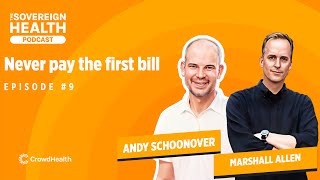
Lessons Learned: How Our Healthcare System is Exploiting Us For Profit...

Investigative journalist Marshall Allen explains how hospitals exploit pricing opacity and administrative bloat to maximize profits. He walks through concrete tactics: disputing bills in small claims court, using price transparency before treatment, and employers switching to reference-based pricing to cut costs by 30 percent or more.
Chapters
Happy Friday everyone. Thanks for joining our webinar. We're very excited to have so many people participating on behalf of Gary Becker, our CEO and the entire Script Sourcing team. I'm Eric Nelson, Script Sourcing's President.
Last quarter we had the privilege of attending a conference in Dallas where Marshall Allen was the keynote speaker. He captivated the audience with his incredible insights, immediately thought about how we could help spread his message through our webinar.
Marshall has 15 years of experience investigating the healthcare industry. He's an award winning ProPublica reporter and author. He's the founder of Allen Health Academy, which educates and empowers employees to navigate the healthcare system. He has a new book that's just come out on the 22nd called Never Pay the First Bill. You can order it on Amazon now. His book details some pretty shocking stories about insights into the hidden costs of the healthcare industry. What I really love about it is he also gives you proven methods and actionable steps so you can fight back. He's recently been featured in countless interviews including ABC News and National Public Radio, and he's here with us today to help educate us about the fallacies of the US Health care system. We'd like to welcome Marshall here today.
Well, the fully insured option is kind of traditionally what we think about in terms of health insurance. And before I started digging in deep on this topic, I didn't even know what self funding was. So I think from a typical employee level they don't even know the difference. But I do point out in my book that it's important for them to know the difference because if an employee has a problem with their health plan, if you're in a fully insured plan, that means the insurance company is bearing all the risk, the employer and the employees pay the premium. The coverage is set by the insurance plan. It's all determined by the insurance plan in a self funded arrangement. And by the way, it's kind of a black box. That fully insured plan is you can't get your data, you can't really control anything with the plan, you can't customize the plan. And that's kind of what we traditionally think of as health insurance for employees. Whereas the self funded arrangement you have a lot more control because the employer is actually the one bearing the risk and actually funding the cost of the health plan out of the money that the employer funds toward employee compensation. So I do like to point out on behalf of employees and I think it's important to make this distinction that the employer funds the plan but it is employee compensation that's funding these plans. And I think that's something we need to communicate to employees so they understand why it is so important for them to work with their employer to actually protect those healthcare dollars. Right. If an employee thinks someone else is paying the bill like their employer or an insurance company, and then they say method deductible, they might just be like, oh, it doesn't really matter if I go get a better price on an MRI or it doesn't matter if I get a better price on a specialty drug. So I think it's important for people to understand employees to understand the difference in a self funded arrangement. We're seeing, I think the trend for smaller and smaller employers to try self funding and that's just because you can have greater control over your cost, at least theoretically if you're in a self funding arrangement. So I think in the past people would say that it was never a company smaller than 200 that would be self funded. That's at least what I've heard in talking to people. Now I think you're seeing more like people with 100 employees, people with 50 employees. They're trying it and then they're having a stop loss plan that protects them. So that's kind of the safety net if those costs get too high for the employer to bear. I think what's really important with self funding is that you have a good advisor, right? You need to have an advisor who's helping you put the pieces in place to save your plan money without compromising the quality of care. And I've talked to lots of these advisors and I've talked to their employers and what you find is even a small company can save sometimes 30 or 40% off of their base level spend. And this is by the way, while reducing premiums, while reducing deductible deductibles and out of pocket costs for their employees. They're literally putting money back in the pockets of their employees by going self funded. And then to be more progressive, they need to get a hold of their data. They need to have someone with expertise, either in house or maybe a third party vendor analyzing their data to make sure that the claims are being processed properly to become they're not make sure they're not becoming a victim of fraud. So I think the more employees can understand this, the more they can be a partner with the employer to manage that cost together. So I think sometimes employees have this misconception where they think anything their employer is telling them to do is taking away their Benefits. Or maybe, you know, let's say you want to enter into a direct primary care relationship. Right. Where you say we're going to have a primary care doctor who's dedicated to our company. Well, some employees might say, well, I want to go to my own doctor. Well, I understand that in a lot of cases, people are still able to do that no matter what type of plan they have. But with a direct primary care relationship, it can actually be better care for a much lower price. But the employee needs to be willing to sometimes try something different than what they're accustomed to. Yeah.
So if I had to put them all under one umbrella, I would put them under the umbrella of wasted healthcare spending. Back in 2012, the Institute of Medicine put out a report that estimated that the U.S. health care system was wasting $865 billion a year. And I spent an entire year, the year of 2017, I went and I did a deep dive series of stories for ProPublica that I just called wasted medicine. And basically I went on this quest to identify all the most egregious types of waste that we have in our health care system. And I found some real doozies. I mean, first of all, prices are too high. That's something that everybody complains about. We see that, we know that, it's very clear that our prices are too high. But another, another huge source of waste is administrative excessive costs. Whether it's a bloated hospital or insurance company staff or the pain of trying to get claims paid that doctors have to go through, hospitals have to go through because they're dealing with hundreds of insurance plans, all with different rules. The wasted spending that comes with prior authorization, I mean, these things are costing. When you look at just the claims processing alone, they say if we simplified our claims processing, it could save hundreds of billions of dollars a year. So these are not like nickels and dimes we're saving. This is big Money. They estimate 25% of all health care spending or all health care provided is unnecessary. So we have a huge over treatment problem. So I have a chapter in my book about the key questions employees can ask to avoid unnecessary care. So these are things that the healthcare system doesn't have the incentive to reduce. And we have to engage ourselves, realizing that the system isn't going to fix this for us. We have to actually be proactive and get engaged and learn how the incentives are operating against us and then get dialed in and fix these problems. Because unfortunately, no one is coming to our rescue. The employers and the employees are in A position where they have to fix these things themselves. And in fact, when you look at your, let's say you're going with one of the big box, you know, what people in the industry call the Buca health insurance companies. So you've got your Blue Cross, your United, your Cigna, your Aetna, your Humana, these big multi like hundred billion dollar companies, they have a set way of doing things that is not always in the best interest of the employer and the employee. And a lot of times you think that you're the member, so they're going to care most about you. But what you find is that the loyalty of the insurance company is more to the hospitals and the doctors that are in their networks than it is to the employers and the employees who are their members. And, and when it comes to negotiating prices, I just want to tell you a quick story, one of the more remarkable ones that I've been dealing with.
I get emails all the time. People ask me, why did I write this book? Well, it's because I get emails and phone calls from patients and employees almost daily. And I can't write stories about all these things. But since I've been writing the book, I've been trying to help more people myself, just to get a real on the ground perspective of what it's like. I've written dozens of stories about these things, but I wanted to kind of help people navigate this. So there's a young woman in New Jersey who I helped a little while ago with her medical bill. And because of the new hospital price transparency rule, which went into effect at the beginning of this year, we can now see hospitals negotiated prices with different insurance companies. And this to me is one of the biggest breakthroughs we've had that benefit the consumer and the employers who are funding these plans. So this young woman had gone to an emergency room near her home in New Jersey. She had gotten three stitches in her finger. And because of the hospital price transparency rule, she could look. I showed her she could look on the hospital website and she could see all of the emergency room. It was a level 3 emergency room visit that she had been billed the highest for. Okay, the billed charge was like $13,000. And we all know that the billed rates, the charges are fictitious fantasy numbers that the hospitals just throw out there. And then you're supposed to get a discount off of those fictitious charges. Well, you think that your insurance company is negotiating a good rate for you. You assume that that's how they market their plans to us. But this woman, her negotiated rate with her United Healthcare plan for a level three ER visit was $5,800. So her employer plan ended up paying 3,100. And then because of her deductible, she ended up paying $2,700, or at least she was being billed for 27. And this is where I got involved, because she knew that this seemed unreal, like she only got three stitches in her finger. It was a very small cut in her finger. In fact, I met up with her in person and she showed me the scar. Okay, so this was like $2,000 per stitch she was being charged.
So we looked on the website and the most remarkable thing was the United Healthcare negotiated rate for that ER visit was $5,805. The Blue Cross negotiated rate was about $767. The Medicare negotiated rate was $230, and the cash price was $256. So in other words, if she would have gone in as an uninsured patient paying cash, she would have paid 256, at least for that particular charge. But in this case, because United Healthcare had given her a special negotiated rate, she was on the hook and her plan was on the hook for $5,800. And in that case, I walked her through the process of how to sue in small claims court. And I have a chapter in my book about this because I'm really trying to empower patients to stand up for themselves when they're being overcharged or unfairly charged. So she sent a letter, a 30 day warning letter to the hospital. And I have a template of it in my book. So anybody who gets my book, you can just fill in the blanks of that letter. And basically it warns the hospital, if you don't give me a fair deal, I'm going to sue you in small claims court.
In that case, they ignored her letter. She sent it to the CFO himself and the billing department. They, of course, they didn't respond, although advocates I've talked to said often that is enough to bring them to the table. And this young woman said, I'm giving you two options. You can either give me the cash price, return the money to United Healthcare and my employer sponsored plan, and I will pay you the cash price, or you keep the money that my employer's given you and you leave me alone for the 2,700 you're coming after me for. So believe me, she had been ignored by this billing department for weeks and months. They had never complied with anything. Once she filed the case in small claims court, well, that Turns the tables. Now the hospital has to hire an attorney to defend the case. The hospital has to go sit before a judge to explain their unfair billing practices. And that's not something hospitals want to do. And so she gets a call from the attorney for the hospital, and the attorney says, okay. And by the way, she recorded all these calls with the permission of the hospital. So I have actually listened to these recordings. The attorney says, look, we'll cut the price in half. Give us $1,350, we'll call it good.
Yeah. This young woman says, no deal. She says, I gave you two options, you need to take one of my two options. So the attorney calls her back and says, okay, I've talked to the hospital. We'll waive the cost for you. We'll keep the money that the insurance plan said it would be. But you have to sign a non disclosure agreement, in other words, a gag clause, so that you're not allowed to have any conversations with anybody about what happened in this case. And so I cannot tell you because she's not allowed to say the precise outcome of this case. But I can tell you that I have a recording from the CFO himself called her on the phone and urged her to take this deal. So she went from the CFO of the health system ignoring her, the billing department ignoring her, to. To the CFO himself calling her and urging her to take this deal. And all I can say is the two parties entered into an agreement that they're not allowed to talk about the terms of. But that's. But I can tell you what happened up to that point and that both parties were satisfied with the outcome. So small claims court is a game changer. And so I'm trying to tell people we need to think about this stuff differently, right? As employees and as employers, definitely.
They estimate that up to 10% of all healthcare spending might be fraudulent. And sometimes it's criminals. I mean, it's literally criminals. If you look at the top 10 most wanted list that the FBI has and that the office of the Inspector General's office has, most of them are. They have foreign sounding names and they have fled to other parts of the world.
For committing healthcare fraud in the United States. So we have bad actors and it's very, very easy for them to commit fraud. And it's really surprising, actually how easy it is, in fact, to tell you another story about this. There's a man named David Williams who is right now sitting in a federal prison in Texas, and he was a personal trainer. And David Williams Just created NPI numbers. In fact, Medicare will give an NPI number to anybody who applies because Medicare doesn't actually check to make sure the NPI numbers go out to actual medical providers. The NPI is called a National Provider Identifier. It's what's filled in on any healthcare claim that gets submitted to an insurance payer. So Medicare is not checking to make sure actual doctors get NPI numbers. And you can get one online. You can get an NPI online within minutes. So this guy, David Williams, just created NPI numbers and then he started billing. United, Aetna, Cigna, all the big commercial insurance plans, and most of them were self funded. In fact, the biggest victim of this fraud was Southwest Airlines because UnitedHealthcare, UnitedHealthcare, which was their third party administrator, kept just paying these bills. So basically this new doctor, David Williams, pops up in the Fort Worth area and he starts putting out a notice to employees that their health coverage can get covered by insurance. And so he starts fraudulently billing and he gets paid. This went on for four years. He billed more than $25 million and he was paid more than 4 million before finally he was turned in and the FBI investigated and he was prosecuted. So fraud from criminals is extremely common. But I want to say that there's also maybe an even more common type of fraud. And that's the fraud that happens with upcoding by hospitals and by doctors who just lean on those billing codes a little more than they should. You know, like a level one to a level five emergency room visit. This particular young woman I just talked about, she was billed at a level three. A level three emergency room visit is supposed to be for a case of moderate complexity. A case where there is an extended problem focused history and physical examination done of the patient. She went in for three stitches on her finger. This was not a complex medical case. It should have been billed at a level one. But this type of upcoding where hospitals and doctors just lean on the codes and upcode it to something that's a more severe case so they can get paid more. This is extremely common. And so if an employer is not reviewing their claims and they're trusting United or Aetna or Cigna or these other big insurance companies to do it for them, they're not going to do it for them, especially if they're self funded. Because if you're self funded, it's actually your money that's being used to pay that claim, right? So what incentive does the big insurance company have to protect your money? Not A lot please need to be on the front lines here. Like in the Southwest Airlines case, some of the before he started just sending in just random bills, right. Because he, for a while it was just, a lot of it was just fraudulent. But he was actually telling employees of Southwest Airlines, the flight attendants, that their workouts could be covered. He was a personal trainer and so he advertised that they could get all their workouts covered by their insurance plan. So the employees definitely bought into it. They went and got workouts with personal trainers that worked for David Williams and David Williams was then submitting claims. And this is why employees need to understand that they need to look at their EOBs. They need to understand their health plan and not just take think. They can't think that there's some magic money tree that's funding all of this healthcare or all this fraud in this case. They need to realize this is coming out of their compensation. And so the reason their wages don't continue to go up is because these unjustified healthcare costs are sucking all of the money out of their compensation pool. Right.
Paying a higher price and getting worse coverage for years. It should be the other way around. I mean, we spend more than about twice as much per person in the United States on health care compared to the citizens of other countries, and yet we still have massive deductibles. So the employees are bearing much of the cost. We still have about 30 million Americans completely uninsured. So we're spending way more and we're getting way less. And let's face it, the politicians are not coming to our rescue. We can't wait on them to fix it for us. And so I believe that the employers have not yet really started to push back. We're seeing it on a small level. We're seeing those early adopters who are working with really savvy advisors getting connected to hospitals, tpas, other vendors who can help them. And they're doing it. They're saving a lot of money. So I've documented a lot of these cases. Like.
In my book, I talk about a case of an advisor named Carl Schuessler who's one of the Health Rosetta advisors and one of his clients is the Gasparilla Innovation. The Gasparilla Inn is a resort down off of an island in Boca Grande in Florida. And they were able to rein in their out of control healthcare costs and save their spending by I think it was about 30%. They provided better care, direct primary care, lower costs for drug spend and direct contracting relationships in some cases with hospitals. Or another company I talked to was Palmer Johnson Power Systems, which is a heavy equipment distributor in Wisconsin. They saved so much money when they started doing things differently. They took all of their employees on an all expenses paid trip to Colorado where they went whitewater rafting and they rode on ATVs. I mean, they saved so much money. And this is by the way, while eliminating their deductibles, eliminating their out of pocket costs. So you're seeing also employers do centers of excellence models for things like orthopedic surgery where they identify a high performing hospital and doctor in their community and then they direct their patients to them and they have a global payment for that surgery instead of a fee for service payment. And that incentivizes the provider to provide better care and avoid complications. And you're seeing in some cases where these plans are different, the hospital is sending a car to come pick up the employee and take them to the hospital and they're having nurses call up after the fact to make sure they're recovering. So we're seeing better care for a much lower price. And so if more employers were to adopt these solutions, it would be an absolute game changer because it would reward the healthcare community where they're treating people fairly and it would penalize the ones who are not treating us fairly. And all I'm calling for is fair treatment. Right? And actually it's better for the doctors and hospitals too because they don't have to deal with the filing the claims with these insurance payers who also deny a lot of their claims, make them jump through all these administrative hoops. It's very difficult for a doctor in a hospital just to get paid from an insurance company. So I really think that employers have a tremendous amount of power that they haven't yet utilized.
I have a question here from Colin. How much does it cost to get something through small claims court?
It's very inexpensive and the reason it's inexpensive is because you don't have to hire an attorney to represent yourself. It's about $30 is the average cost, $30 to $40 to file a claim in small claims court. So that's your cost right there. Now I do recommend, I'm calling it the never pay pathway. Okay. So my book is called never pay the first bill. And with the title of my book, I'm not saying don't pay your bills, I'm saying never pay the first bill until you have analyzed it and made sure that it's accurate, that it's priced fairly. And the way you do that is by taking the following steps. You want to get an itemized bill, make sure that you have the billing codes included. Then check the prices of each of the things that you are charged. Check those at the hospital website or go to fairhealthconsumer.org fairhealthconsumer.org gathers insurance companies actual payments for services in zip codes all over the country. And then you can look up the billing code, and you can look up the description of the service you received and were billed for, and you can see if it's a fair price. And so if the prices aren't fair or they're inaccurate because many medical bills are inaccurate, then that would be the amount that you would want to sue for in small claims court. If they're over billing you and then you've gathered the evidence to show it, because you have the itemized bill, you've done the price checks, maybe you even get your medical records. I show you how to do that as well in the book, then you've gathered your evidence. So you've made your whole case. You've already tried to fix this with the billing department, and they've ignored you. So before you file any case in court, you want to show that you made a good faith effort to have the problem resolved. But again, billing departments tend to ignore us as consumers. So once you file that case, you've already done all the legwork to get to that point. It's easy to do. It does take persistence. It takes phone calls and emails, but it doesn't take a lot of hours, and it's not really hard. What it is, I would say, is it's a little stressful, right, because you don't know the outcome. You're nervous. You've never done this before.
And it's gonna catch them by surprise. I mean, this is certainly heightening the conflict, right? But what you find is it gives them the incentive to come to the table and treat you fairly. So I urge people to do it. I think if more people did this, Eric, I really think it would force hospital billing departments to treat us more fairly. I think it would not give them the incentive to overprice us in the first place, overcharge us in the first place, and we might also be able to clean up some of these billing errors. Because if you talk to experts who review medical bills for a living, they will tell you that most of them contain some kind of an error. So we have got to be checking that. And by the way, the employee is the first line of defense for checking those Errors in the bills.
Great.
We have a number of other questions still to go and I would encourage everybody to keep asking. We have a little bit time here and.
What a great opportunity is to hear from someone that has done all the research on this. Can you upcode outside of the emergency room? That's a question from Colin.
Yes. Yeah, you can upcode anytime. In fact.
I mean, I'm telling you, I think upcoding is so common that it's just standard practice, you know, And a lot of it is consultants are advising hospitals and doctors about how to maximize their revenue. Right. So the consultants are telling them, hey, if you do this, if you add this diagnosis code, you can get paid more. So I'll give you a quick example. My family got struck with COVID recently. So I got Covid, my wife got Covid, my oldest son got Covid. Thankfully, we're all doing fine. We're all okay. But all five of us, I have three kids, all five of us had to get Covid tests. Well, four of our bills were fine, covered 100% as they should be. But my wife's COVID test, somehow there was a diagnosis code put on that bill. It was really put in the record. That then led to the bill for acute respiratory distress syndrome, which is a very severe complication related to COVID 19. My wife had no respiratory problems at all. She had no symptoms. This was a complete error on the bill. But because they diagnosed it as acute respiratory distress syndrome, we ended up getting sent a bill. And so I was able to see the error in it because I was checking it. I called them and explained that this wasn't the case. And thankfully in this case, they corrected it quickly. But upcoding is. It's like the pandemic. We're all experiencing it at the same time. And some of us don't realize it, some of us do, but we're all afflicted with it.
Thank you for that. There's got some great questions coming in here. I've got one from David. What role does reference based pricing play in reducing costs for employers and employees?
So I think reference based pricing is super smart to do whether you actually have a reference based plan or not. So I look at the Medicare price myself and I encourage people to do that and I show them how to do that in my book. Because the Medicare price is typically the lowest price, because Medicare is setting those prices for hospitals. And so if you can see the Medicare price, then you can see if your price is a fair price or not. And so whether or not you're in an official reference based pricing health care plan which is, which is a much more sort of progressive way to design your health benefits. I think employees need to understand that they as working Americans are being charged two to five to even 10 times more than a Medicare, Medicare patient is being charged for the exact same thing. So I like to joke like if my, if, if McDonald's work the way hospitals work and my mom and I went in for a Big Mac, my mom would pay $3 for the big Mac because I'm younger than she is, I'm not 65 or older, I would be charged two times. So I'd be charged between six to thirty dollars for that big Mac. This to me is price discrimination against working Americans. I don't know another way to say it. And it's something that the industry just accepts. They just say, oh well, we don't make money on Medicare claims, we don't make money on Medicaid, so we cost shift. This is an example of the normalized deviance that has taken root in our health care system where they use this to justify overcharging working Americans. First of all, I think they do make money on Medicare. I question the assumption that they're not making money on Medicare. And if they're not making money on Medicare, maybe they need to reduce their administrative excessive costs. Maybe they need to find some smarter ways to operate their businesses just like the rest of us do. Right. So I think Medicare pricing, whether you're in an official reference based pricing plan or not, is a really important thing for all of us to look at. And I also have seen examples where it's been very effective for employer sponsored plans too. So if you're in a position where you've progressed to the point where you want to start setting your own prices, I have seen it be effective, but it will create some possible friction. Right. When you. I've seen hospitals that have told health plans, we're not going to take your price. Right. Well, that, that it's more like a game of chicken in some cases, but in other cases it works great.
Well, thank you. Yeah, so many of these issues hit home for every American. I mean it's just.
Very challenging environment with the increase in costs going on. I've got a question here from Eric. Any suggestion on surprise bills when a patient enters the hospital receives a bill from an out of network third party?
Yes. I believe that if every surprise bill was met with a small claims court lawsuit in return, it would be the end of surprise billing. So imagine if you know that out of network pathologist or anesthesiologist or that assistant surgeon who somehow stepped in on the case and then hit you with a bill that was even bigger than the surgeon's bill, imagine if you as a consumer were to say, hey, you know what, that's really not fair. You didn't give me the price up front and you're not allowed to overcharge me. So there's actually a part of our Uniform Commercial Code in the laws called the open price term. And I have this again in my book. I encourage you read the chapter I have on small claims court in my book, never pay the first bill. Because the open price contract term says if a consumer engages in some type of an agreement with some type of a business and they're not given a price up front, they have entered into an open price agreement and it's assumed that the price that they are given will be a fair and reasonable price. So in other words, the Uniform Commercial Code says that they aren't allowed to bill you whatever they want. And so these surprise bills are just an example of.
Out of network providers exploiting our sickness for profit, taking advantage of us when we're vulnerable. And that's not okay. So I do recommend that.
We do take it into our own hands with small claims court. I want to tell you another story about that because I think this is also really interesting about out of network bills. One of the most remarkable stories I did was about the New Jersey State and educator employee health plan. So the state of New Jersey had a health plan where they had, they had out of network spending that was just out of control for their acupuncturists, chiropractors and physical therapists. Their plan really didn't have any limits for out of network spending on these. In fact, if you know fair health, they would pay at 90% of fair health. So in other words, if that bill was super high, if all the bills were super high, then people would keep getting paid at 90% of the highest range of those bills in the state of New Jersey. So I did a public records request and I got all of the amounts paid and the number of cases for the different acupuncturists, chiropractors and physical therapists around New Jersey. And I did an analysis of this data and it showed that acupuncturists, some of them, were making on average $600 per session. There was one acupuncturist who was paid by the educator plan more than $1 million in a year. I mean, just from that one health plan, that's how much that acupuncturist brought in. These, these numbers, first of all, are not really feasible. But it was because they were overcharging, because they were out of network. Now, the plan administrators knew this. So this is the remarkable thing. In fact, they had caught onto this scheme by the out of network providers years before. But the plan design committee was really controlled and being blocked in the change of the design by the teachers unions. So meanwhile, this is what's so fascinating about this story. They had another plan for other state employees, for cops, and for town officials. They changed the plan where they put caps on those out of network spending bills for those same three types of providers. And they estimated that if they put the same change in place on the teacher plan, they would save $120 million a year in overspending on out of network bills. So eventually I wrote the story and thankfully the story, I think helped create the leverage for that plan design committee to change the plan. And I talked to the people in charge of that plan just a couple months ago and I said, hey, look, did that actually save you $120 million when you put that change into place? And they said, yes, it did. In fact, when I asked them in my story, how much money have you wasted on this outrageously high out of network spending for these three types of providers? They estimated that they had wasted about half a billion dollars. That's a lot of teachers that could be in the classroom. The teachers had been going on strike during the same time because their healthcare costs were too high and their wages were too low. Well, their out of network spending was a big reason that this was a problem. So it doesn't just have to be surprise bills. Sometimes it's that out of network spending where the surprise bill doesn't come to the patient, but the health plan is just getting unreasonably charged in so many ways.
Thank you.
That's a great answer.
We have some additional questions coming in here. And again, I'll just reiterate that Marshall is open to any and all questions. He loves pushback and there's really no question that's off limits.
You disagree with me, I invite you to please correct me if you think I'm wrong. I welcome it. I'm continually astonished, actually, by the things that I report. And I'm very careful, by the way, to make sure that I don't exaggerate these things. Like, go, go look me up on the ProPublica site. Read the stories I have attributed all this information. I have documented my findings. And I have people ask me sometimes, what do people at the hospitals or insurance companies say about your stories? And I'm like, what can they say? It's true. They know it's true. They already know it. So the people who are inside the industry usually know this already. But at the same time, I'm not out on the front line. So people, please. I mean, if you have a different perspective, I'd love to hear it.
I will certainly keep track of that here if those questions come in. I do have a great question here from Trey, just came in. I heard that the penalties for not complying with the transparency rules are not high enough to incent most hospitals to comply. So will they just pay the penalties and continue overcharged? Do you know what the penalties are?
Yeah, the penalty is. It's only $300 a day for a lack of compliance. That's not much. So it's true. There's not a big incentive. But I think that public pressure is going to grow. And I have heard from people who are gathering this data that more hospitals are coming online. So I think that we just need more public awareness of this and we need more public pressure to demand those prices.
Great.
I think increasing the penalty would also be smart, but I'm not, again, I'm not counting on people doing those things. I think we can take this into our hands ourselves.
Excellent. Thank you for that. And we continue to have the questions flowing in, so appreciate everybody's engagement with this. What do you say to those. This is from Dennis. What do you say to those who say we use employer sponsored plans to offset Medicare and cash patients because hospitals can't stay in business with Medicare? Meaning if all we did what you're saying, wouldn't that just increase the cost of cash for a patient?
I tell them to prove it. I've never seen this studied. I've never seen a real project done where they analyze. Are hospitals able to get by on Medicare alone? They tell us that. I don't believe it. And so show me. Like I'm, you know, I mean, someone could do some research on this and show me, but I. There's a tool that Marilyn Bartlett developed. So I feature Marilyn Bartlett in my book. Marilyn Bartlett is like a folk hero in the employer sponsored benefits space. And I'm sure a lot of you know who she is. She really turned around the Montana state employee benefit plan. That plan was going underwater. It was losing tons of money. Marilyn came in, she put in a reference based Pricing plan. She stood up to the hospitals. She put in a PBM arrangement that saved tons of money, made sure the plan got their rebates eliminated, spread pricing. She's really a dynamic and amazing leader. She ended up leaving the state of Montana employment and now works for NASP or nashpe, national association of. I don't, I don't really know what the acronym stands for, so I don't want to guess and I'm afraid I'll get it wrong. But you can look her up. Marilyn put together a tool so that you can plug in the some information from hospital cost reports. So hospital cost reports are public information. She created a tool in Microsoft Excel that's available on the NASP website so that you can look and see how much your local hospital is making for Medicare patients. So it's a, it's basically a tool that helps you analyze Medicare cost reports. I mentioned it in the book, but if somebody wants to do a deep dive on that, I think it's available for people who have the, the energy and the knowledge to do that.
Excellent, Excellent. Let's see here.
We've got one in from Vance.
How can we get an autographed copy of Marshall's book? Can't wait to read it. There you go.
So the book is available on Amazon.com in fact, Amazon just dropped the prices to under $16. So it's like 35% discount right now on Amazon. So you could go there and get it. If you want autograph copies, I can actually get you those. I do that for $20 per copy plus shipping. So send me an email and reach out to me and then I can do that via my website. My website is marshallallen.com and so I welcome anybody who wants to reach out and get an autographed book from me. And I really appreciate the great response to the book. I mean, this is launch week for me. So I spent about a year and a half writing this book, and it's building on the work I've done at ProPublica. So really, it's like 15 years of my healthcare journalism poured into this book. But when you put something like this out there, and especially I'm calling for something rather, you know, vociferously. Right. I mean, you can see I feel passionate about this because I've talked to so many patients who have been harmed by the system physically and financially. So the book has had great response. So I appreciate your interest in it. Get it on Amazon right now. And if you want autographed copies, you can contact me.
Fantastic. Also, I think in a similar vein, could you explain the Allen Institute and.
Yeah, yeah. So this is another. Yes, thank you for asking that. So Allen Health Academy, which the acronym is AHA because I want to help people have these AHA moments, right, where they see things in a little different way with their healthcare costs. I was asked by a health insurance advisor or a health benefits advisor after he had read the book and I talked to him about the book. Actually, it was before he had read the book, I guess, but he said what I really need, I need a series of health literacy videos that I can give to my employees. So it takes the principles of the book and condenses it into a series of like three to five minute videos. So I'm in the process right now of producing a series of short three to five minute videos. It'll be about an hour of content. And the idea is that employers would be able to roll this out and benefits advisors would be able to roll this out to their employee population so they could become neverpay certified. You know, they could understand how to analyze a medical bill, why they need to analyze a medical bill, how to identify fraudulent claims, how to push back, how to use things like hospital financial assistance policies, which are also greatly underused and could save employees a ton of money. So I think there's a tremendous return on the investment. So whether it's an individual who orders it and you can buy it individually on the site right now, you can pre order it, or whether it's rolled out to a benefits advisor who wants to provide this for their clients, or whether it's an employer who wants to roll it out for their employees, I'm going to be. We're in the process of getting these videos out. I'm producing them now to help educate people so that they have this base knowledge about how the healthcare system is preying on them financially and then what they can do about it. And I think the return on the investment is huge for people who decide to do this for their employees. Because if you even do some of the. Any of these tactics could save you hundreds or even thousands of dollars with every healthcare encounter. And it doesn't mean you're always going to save money, but you can save money if you try these different tactics. And obviously that's an individual savings. A health plan can save exponentially more if their employees start engaging the healthcare system in a much more literate way. By the way, on my website, sign up for my newsletter, marshallallen.com and then you'll get the introduction of the book. But also you'll be up to date on the production of the videos when all that's going to come out, the pricing and all those other details.
Fantastic. I do have a couple of questions. Similar and similar kind of question. Are we going to record this webinar? It might be one for us. Julie, just.
It looks like that's a yes. So yes, we will. We'll make it available.
Someone here's a comment. Just ordered the book on Amazon. Looking forward to it. That's from Brian.
Thank you Brian. You make me happy. I appreciate it.
Here's one from Dylan. I think I recognize that name. One of our script sourcing folks that are all nonprofit hospital systems, I guess, guilty of the same things. In other words, I think you know what that means.
No, no, not at all. In fact, when we talk about price variation, we're talking about variation. And so like when Marilyn Bartlett was in the state of Montana, she had 13 hospitals. You know, it's a more rural state. So there was only 13 hospitals that made up most of her spending in the entire state. So she could see, she did an analysis with her consultants and they could show the kind of reference based pricing comparison from the low priced hospitals to the high priced hospitals. Well, I went to, I think it was in Bozeman. I actually went and visited these hospitals in Bozeman and sat with the CFOs and the executives of both these hospitals. Well, one of the hospitals was the big fancy medical center that had the big brand name, did the marketing and advertising everyone assumed was the better hospital. That was the high priced hospital. The other hospital was a much lower priced hospital. Well, one thing Marilyn did in her very shrewd, great negotiating, she got the lower priced hospital on board with the reference based plan first and then she went to the higher priced hospital and said hey, the other guys are on board, they're taking this price. And in fact, by the way, for that lower priced hospital, the reference based price that they put in place there in Montana was a pay raise for them. They got an increase with the reference based pricing plan that Maryland put into place. The high price hospital had to bring the cost down. And I remember talking to the CFO of the hospital and he said we just realized it was take it or leave it. We were going to lose these employees or we needed to take their offer. So we took their offer. And so we need to reward the hospitals and others who are treating us fairly and giving us a fair price. So there's a spectrum of behavior here. Obviously as an investigative reporter, I'm often pointing out the problems and calling them out, pointing them out, holding them accountable. But I'm also always trying to show the solutions. And so we need to identify the people who have the best prices because most healthcare, they want to pretend like every knee replacement is like a snowflake, right? Where it's all different. Knee replacements are knee replacements. It's a very common elective operation. You can get a great knee replacement at a community hospital or you can get a great knee replacement at a high priced marquee medical center. Why go to the place that's more expensive when it's just something that you can get for less money somewhere else?
Excellent. Thank you. I'm just going through a couple of, couple of questions here. I think we've got one that maybe I didn't get to yet. Oh yes, I look forward to getting your book.
So here's the question. What risk do you have for collection activity and how do you hold off collections while disputing a bill?
So this is how sad our medical system has become. I had to include a chapter on what to do when you're being hounded by a medical debt collector. So they estimate one in six Americans has medical debt in collections. So I have a whole chapter to give people advice about how to handle that. That's not exactly the question. But if your bill is being disputed, they're not supposed to send you to collections. And if you ever do get sent to collections, make sure that you immediately dispute the bill in writing. Okay, Dispute the collection activity in wr. Again, I have a template in the book to help people do that, but this process of contesting the bill doesn't actually take that long. So you're not going to get sent to collections till three or six months after the bill is due. So make sure that right when you get the bill, you start analyzing it and making sure you can tell if it's fair or not. And so within that three month window, that's plenty of time to get the itemized medical bill, to look up the fair prices, to get your medical records. That process shouldn't take more than about a week, maybe two weeks. So you will know right away if you've been overcharged or if your bill is inaccurate. And if your bill is fair and accurate, well then pay the bill, no problem. And if it's not, then that's when you want to consider escalating the issue. But it's really easy to do that before that three month window is passed.
Fantastic.
Thank you.
I've got some interesting comments coming in one here. I think you'll get a laugh out of this. I pre ordered the book and I'll be damned if the doorbell rang during this webinar and it was Amazon dropping it off.
Wow. Amazon is my friend today. That's amazing.
Yep, yep, I know. We're kind of quickly approaching the.
Time.
Allotted for this, for this webinar. Are there any further questions out there?
I hope. I think we're getting to that point where maybe I can help wrap things.
Up a little bit.
First of all, Marshall, you know, thank you for your incredible insight. All the hard work you've done to investigate a lot of these issues and what you're talking about is so incredibly relevant during this day and time. And I know given all the questions that we had and a lot of the comments that I think the audience really feels that way as well. And hopefully.
If you did not get your question answered, we would love to follow up with you. So feel free to reach out.
I think you can see the various websites where you can either reach us or Marshall. And again, Marshall, we really appreciate the valuable insight and your time. Love what you're doing with us here. I want to thank everyone who's joined us today on this Friday afternoon and I hope you all have a great weekend and looking forward to hearing from you and take care. Thank you.
Thank you.
More from Marshall






Marshall Allen, "Never Pay the First Bill' Part 1 | The Ovation Show w/ Dan Labroad