The Sovereign Health Podcast #9: Never pay the first bill with Marshall Allen
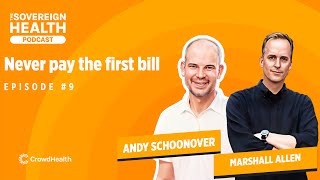
Marshall Allen, formerly of ProPublica, explains how to negotiate medical bills down. Use Medicare rates as benchmarks, demand itemized bills, and cite the Uniform Commercial Code's "open price term" for reasonable pricing. An air ambulance bill dropped from $75,000 to $10,000 using these tactics.
Chapters
The promise that I make to people is that if you engage with health care literacy, you can save hundreds or even thousands of dollars per healthcare encounter. Our healthcare industry has conditioned us to be very passive and to think that we're helpless and that we don't have a voice. What you find is they usually crumble like a house of cards because they don't have any.
Truth in what they're doing.
Hey, everybody. Welcome to the Sovereign Health Podcast. My name is Andy Schoonover and we're on a mission to inspire radical personal responsibility for both the financial and physical aspects of your health. We get the joy of hosting thought leaders who are reimagining how healthcare is delivered. Today we have Marshall Allen, one of my heroes, author, formerly of ProPublica. His latest book is Never Pay the First Bill, which is an extensive guide on how patients can fight back against the healthcare system. Marshall Allen, welcome to the podcast. Glad to have you.
Great to be here. Thanks, Andy.
Yeah. You are an inspiration to me because I know your book Never Paid the First Bill has saved probably millions. Have you ever, like, looked and figured out, like, how much does that book save patient? It has to be in the millions, right?
I mean, I wish I could quantify that. Obviously, it would be great for, for letting people know why they have urgency to buy the book, you know? Yeah, I, I would. The promise that I make to people is that if you.
Engage with healthcare literacy and get. Just learn some basic principles and tips, you can save hundreds or even thousands of dollars per healthcare encounter. So that's the promise I make. Now, that doesn't mean you're always going to save that much money because you're not always being overcharged. I mean, it doesn't, it doesn't happen every time, but as you know, it probably happens most of the time.
Yeah.
And so if you can learn some basic tactics and the principles that you need to know, just get educated. So I tell people, healthcare literacy is financial literacy. If you care about your money, you need to not just be looking at your bank account, your credit card statements, you need to be looking at your medical bills, and you need to be looking at where you go for healthcare, because you can save tons of money. So it's hard to know, you know, like, how many people have actually saved. But I hear from people every day. I help people every day, and they're saving tons of money. So it's really been fun.
I love that. Well, we have 4,000 members now. I know our members have saved millions of dollars. So you can add and A lot of what we do is based very much on what you have outlined in your book. So you can add know, millions of dollars to your tally of the amount saved. You know, I read your book and man, I wish I would have read it a year earlier than I did. I, I, I probably bore people with this story, but I think it's, it, it hits a lot of people the same way it hit our family, which is, you know, we, we went in for a medical treatment that our doctor said was, was necessary and you know, the health plan comes back and says, oh, it's medically unnecessary. So they deny our claim. And so we get, we're stuck, we're like, what do we do? Yeah, and I didn't know that you could negotiate. And that's probably the, I know this is super simplistic and we'll talk more about this, but like one of the things I get away from your book, maybe the most impactful to me is you can negotiate. You have the power to negotiate. We think we're all these little, you know, nothings in this behemoth of the healthcare system of United Healthcares and massive hospital systems, and who are we to negotiate? No, you can negotiate. And that's the number one thing I've, I pulled away from, from your book. You can negotiate. We just paid an $8,000 bill because we thought we had to like, you know, or they were going to send us to collections. If you just negotiated, I mean, how important is that? And you know, do you have any great stories about people, you know, saving a bunch of money by just doing simple things like negotiate?
Yeah, I do. I mean, I have a lot of those stories. And I think the thing that you're talking about though is that our healthcare industry has conditioned us to be very passive and to think that we're helpless and that we don't have a voice. And the truth is this is a three party transaction, right? If you, if you know, you have your medical provider, the doctor, the clinician, whoever's providing the service, you have the payer, which, we are the payers. But in the industry they talk about your insurance plan or whatever the third party is that's handling the reimbursement for the services. But then you have.
The, you have the patient, you have the provider and you have the payer, the third party reimbursement entity, whatever that is. But the one who's always ignored is the patient. And these are contractual obligations we're entering into where we're obligated to pay amounts of money. That we have not agreed to pay at the time we get the services in most cases. And so it's like this three party transaction where only two of the parties are setting the prices and then demanding that the third party, us, the patient, just pay it. There's no other type of contractual arrangement in our consumer world where we would agree to those terms. We would never do that. And the only reason that we're behind the eight ball in healthcare is because it's our health or the health of our loved ones is dependent on agreeing to these extortion like terms. It's not fair to the patient. And so what I'm trying to do with my book and with my health literacy videos is show the patient that they do have power, they do have a voice, they have to learn to use it and they have to be engaged. But when they learn to use their voice and when they stand up for themselves, they can save hundreds or thousands of dollars per healthcare encounter. I mean, that's the promise I make and that delivers. In fact, some cases it's way more than that. So I can tell you some stories. So there's a patient named Jodi who I helped. She got an air ambulance bill for a trip, which air ambulances are notoriously expensive. $75,000 for a short air ambulance ride. Of course they demanded that she pay it. Of course they said the bill is past due and if you don't pay it, we're going to send you to collections. All the threats that they always make. Well, in my book, I talk about using Medicare as a benchmark price. You can find the Medicare rate for air ambulances, and the Medicare rate is multiples less than what working Americans are charged. And again, in our health care system, you don't know this, but it's price discrimination against working Americans is the standard way our health care system is set up. Medicare patients pay way less if they're over age 65 on Medicare or disabled on Medicare. They're paying, let's say they pay $100 for a service. A working person would pay $200 or $500 or $1,000 for the same service. It's not fair. And that's just the way things have worked. But if you know that, and you know that they'll accept that Medicare rate from other patients, then you can make that your benchmark for negotiating. So in this case, Jody sent them a letter, offered them 200% of Medicare. They took it. And so she knocked $65,000 off of her air ambulance price.
Wow.
So it was still, it was still a big burden. You know, $10,000 is still a lot to pay, but it wasn't the kind of burden that was going to bankrupt the family. It was the kind of burden where they could put it on a payment plan and pay it off over time. There's another guy who I just helped. In fact, I've sent out a newsletter. This will be in tomorrow's newsletter. A guy named Don Jones who gets regular blood work done. And his doctor is a telehealth doctor that lives in Florida and he lives in Ohio. So somehow LabCorp and Anthem, when they're primarily processing these bills, keep attributing it to the site of the visit being Florida, when it was a telehealth visit in Florida. So his bills are being rejected as out of network. So the first time he used my tactics, in 2022, he saved about $4,000 because he, he was able to write a letter to Anthem and LabCorp basically threatening to sue them in small claims court if they didn't correct the erroneous claim. Because what happens is they, they're shameless. I mean, they don't really care if they make mistakes on the bills. Even when you call them on the mistakes, sometimes they'll fix them and sometimes they won't. But what leverage do you have? And so I show in my book and I show in my videos how to sue in small claims court to protect yourself. And before you sue, you want to send them a 30 day warning letter that explains, if you don't correct this problem, I will sue you in small claims court. So once he sent that letter and he copied the CEO of Anthem and the CEO of LabCorp and he copied the general counsel for both companies on the letter, within a week they corrected it. So that was 2022. He saved about $4,000. Then a few months ago, I hear back from Don again, he goes, hey, you'll never guess. It happened again. But this time he knew the drill. He reached out to them again, got it corrected. So don's up to $6200 now saving just because he learned to assert himself in a strategic way, to use the leverage of small claims court to put pressure on them to back off. Right? That's what we need them to do, back off. Because they're so accustomed and seemingly entitled to billing us whatever they want that they just keep doing it and it just keeps persisting. But when you stand up to them, what you find is they usually crumble like a house of cards because they don't have Any.
Truth in what they're doing. And so we have the moral force of what's right on our side. So you might be intimidated, right? Oh, I'm just one person. What can I do? How can I stand up to a big giant company like LabCorp or Anthem or whoever it is that's billing me or a doctor, even if it's just a doctor they went to medical school? I mean, how could they be billing me in a way that's incorrect or unfair? But never underestimate the power and the moral force of one person who's willing to stand up for themselves and tell the truth. Tell the truth and show them you are ripping me off by charging me two times, five times, ten times. I've seen, I've seen an $18,000 MRI, and MRI should be about 400 bucks. Yeah, I've seen a patient get hit with an $18,000 MRI in the hospital. Not back down and claim that that was a fair price. Well, they wouldn't actually claim it was a fair price. They claimed it was their price.
Yeah, exactly. Well, I think, I think it was. Or my last podcast, I had somebody on who said that they had a cat scan for $26,000. And I, and I said, I, I think a cardiac calcium score, I think it's. Is a CAT scan. I don't know if I'm, if I'm maybe not correct here, but it's like.
Isn'T it something topography, computed topography or something like that? I don't know. What does CT stand for in a cat?
Yeah, whatever that is, it was, it's like I got one and it was $150. And I'm just like, what the heck is going on here? And we've been psyoped into thinking that we can't do anything about it. You know, somebody would come to our door and say, I'm gonna low your mow your lawn. And they mow your lawn and come back and give you a five thousand dollar bill. You'd be like, there's no way in hell I'll get him to give you $5,000. Yet we've somehow been psyopped into thinking that these, these hospitals can charge us whatever, whatever they want, and we have no right, no legal grounds to fight it.
Yeah, I like the PsyOps comparison where it's like being gaslighted. Right? It's like the American people are being gaslighted by the healthcare industry.
They are.
And we're being told that something is normal and that it's acceptable when it's Deviant. It's normalized deviance. This idea that deviants become so much, much the pattern of the way things operate that it becomes normalized. That's the situation we have with health care billing for working people in the United States and this idea that they can charge whatever they want and get away with it. Again, in my book, I show this in my videos. And this is why it's important that people get educated. Because once you learn a few of these, just a few of these basic things, it gives you the firm moral conviction and foundation you need to stand up for yourself.
Yeah.
So there's a law in the United States called the Uniform commercial code.
The UCC 2, 3, 0, 5, right. Come on.
What's that?
2, 3, 05, I think.
Are you talking about the open price.
Open price term? Yeah.
Yeah. So that's it. So the open price term is part of the Uniform Commercial Code. And people can Google it, look it up. This law applies in every state, and what it says is if you're not given a price up front at the time you receive a service, as a consumer, it's assumed that the price will be reasonable and set in good faith. So in other words, if you and I, Andy, decide, I'm going to mow your lawn.
But we don't set a price, and then we get done with the lawn, and I say, hey, andy, that'll be $10,000. That would be a violation of the Uniform Commercial Code. We didn't have a price up front. The law says it's supposed to be reasonable and set in good faith. So then the question is, okay, well, what's reasonable? Well, an $18,000 MRI or a $26,000 CT scan is not reasonable. In fact, I would say if a hospital or a doctor is taking the Medicare rate for a CT scan and it's, say, $500. Well, is it reasonable to charge someone who's not on Medicare $1,000? I don't think so. So you could say that two times the Medicare rate is not reasonable. In fact, I would say it's not reasonable for me or any patient to pay more than any other patient pays for the same service in the same facility. Why would someone pay more than someone else for a particular service just because of the type of insurance that they're covered by? That makes no sense. Not reasonable. So when we know that, then we can push back on these things. And, you know, they may not listen. They often don't. And so what I like to say is we have to give them the incentive that they need to be fair with us. So it's almost like disciplining a child. You know, the child isn't always going to agree with you, but you have to know more about this stuff than they do. And frankly, that's not too hard because they don't actually know all that much. They've never really thought of it from our perspective. So you have to kind of wake them up a little bit. You have to be like, hey, hey, hey. Just FYI, your price is three times the Medicare rate. Or now, with hospital price transparency, you can go on hospital websites and you can see what they charge for different services to different health plans. So once you can do that, then you can say, hold on, sorry, I'm getting a call here on my computer.
Once you. Once you know that you can do that, well, now you know that the law is actually on your side. They can't charge you whatever you want. And so now you just have to enter into that process of contesting the bill, negotiating the bill, and trying to again, give them that incentive that they need to hopefully be fair with you when they give you a discount on the bill.
Yeah. Has fair and reasonable, or I guess it's reasonable and in good faith is the language that they use, has any precedent been set on what fair and reasonable is? I mean, has anybody really taken this to court and battled it out?
So there's a huge precedent that was set in Colorado by the Colorado Supreme Court. And this is a super interesting case. It's a patient named Lisa French who is a clerk for a shipping company. So this is not a high wage earner. She got an estimate for how much it would cost for her spinal surgery at a hospital in Colorado, and they told her with her insurance plan that her share would be something like $1,400 and that the overall cost of the spinal fusion was going to be about $70,000.
Geez.
So she underwent the spinal fusion. She paid $1,000, doctors up front.
Then after the procedure was done, they came back to her and said, oops, sorry, we don't take your health plan. You're not in network with us. So now we're charging you the full Chargemaster rates. Now, your listeners, your crowd health members are way more educated than most consumers are about health care. So they might know what the Chargemaster is. The Chargemaster is the fictional, falsely inflated fantasy number that the hospital sets for all their services. It's sky high. Then they're negotiating discounts by different insurance plans off the Chargemaster rate. So the Chargemaster in this case was something like $300,000.
So they go to this clerk, they send her a bill for 300 grand, and lo and behold, of course the poor woman couldn't pay it. And so the hospital doubles down and actually sues the woman in court for the money. The insurance plan ended up paying about $70,000. So I think they sued her for like $229,000. Again, like that's a fortune that would bankrupt most families in America if you got hit with a $229,000 bill. You know, like, I could never take a bill like that. Almost no one could. So the hospital is audacious suzer. It goes to trial and the jury finds in favor of Lisa French. And they found in favor of her because of this open price term. So this is a precedent that was set in Colorado and they said that no price was given up front. So it was determined that it should be a reasonable price. And in this case, they determined that the reasonable price was around 70,000 or so dollars. She had already gotten the. The hospital had already been paid most of it by the insurance plan. So Lisa French owed like another 400 bucks or something like that. Well, the hospital doubled down, took it to the appeals court. The appeals court found in favor of the hospital. Then that was taken up to the Supreme Court. And in the Supreme Court's decision in Colorado, again, this is the president precedent. Now in Colorado, they decided in favor of the jury that originally found in favor of Lisa French. They said the price wasn't given up front, the price needs to be reasonable. And so Colorado essentially outlawed unreasonable hospital prices right there with that decision.
I wonder what that 70,000 was in terms of Medicare. What is the multiple of Medicare?
I didn't see that in the Supreme Court decision. I only read the Supreme Court decision. I didn't read all the testimony in the case. So they might have had more on that in there. But yeah, it's still a high price, right, for a surgery like that. But anyway, the court has determined that they can't just charge whatever they want. Prices need to be reasonable. So that's then the debate, what's reasonable, what's not reasonable? And what I really hope people can do is get educated about these things before you need your healthcare services. Because the ideal is, again, I'm really a free market person in terms of how I hope that this disruption of our healthcare industry will work out. Because there's price variation. That means that there are price gougers and then there are different medical entities that are being Fair and they're charging fair prices. So what we need to do is identify the ones who are fair with us and give them our service. And we need to shun the hospitals or doctors or whoever insists on overcharging us. Just shun them.
Yeah. Amen.
Fight them if they get hit. If they hit us with an unfair bill, we're going to fight them, but mainly we want to avoid them in the first place and make sure that we're going to places that are going to be fair with us.
Yeah. Amen.
The rip a little bit on.
All the folks at Crowd Health are private payments. You know, they pay in cash, you know, and, and so there's an expectation, at least from the private pay folks, is that, hey, I'm, I'm paying you in, in cash. You don't have to do any of the insurance stuff. You don't have to wait to get paid. You know, you got a percent and a half or 2% or whatever the debit card or credit card fee is, as opposed to the, you know, upwards of 30% that it cost you to charge. So, you know, you need to give me a discount as a, as a result of that. I think that the pushback on that has been, at least from people that I've talked to in the hospital spaces, they said, well, you know, we have to get paid two or three or four times Medicare because Medicare's rates, we just, we just can't do it. We can't do Medicare rates and survive, you know, and I don't know if you know enough about kind of hospital finance, but can they survive on Medicare? I mean, is, can that be a reasonable price in which a hospital can, can survive off of.
So that's a myth that is perpetuated by hospital administrators that they cannot get by on Medicare.
There's not a lot of research done on this. So I have researched this. There's not a lot of research done that proves this one way or another. And if people know of research that's been done, please send it to me because I have looked, I've talked to a lot of people about.
What the hospitals really need to do is get rid of the waste in the system and all the squandered health care dollars.
They estimate that about a fourth of all healthcare spending is wasted. So we spend about 4 trillion a year and we're wasting about a fourth of it. So rather than just say everybody needs to keep paying more, the system needs to improve its efficiency so that they can get by on less, and you do See analytics of Medicare cost reports where there are hospitals that are getting by on just Medicare, but many will say that they can't, and many and most will. And almost all of them will say they can't get by on Medicaid rates. So there is some truth to it. But there's a lot of wasted healthcare spending that's going on in hospitals that needs to be corrected. And it still doesn't make sense why you would assume that working people should pay more. I remember sitting in a hospital CFO's office and talking to them about this very thing. And I asked them, how is it fair to make working people pay more? This cost shifting, again, this is the normalization of DVDs.
Cost shifting.
Yeah, yeah, let's not talk about cost shifting as if it's normal. And what should be done, that's deviant behavior. So you're making some people pay two to ten times more than others just because you say the other people don't pay you enough. How is that fair to the people who are being demanded to pay more? That isn't fair. And that's what the CFO said. She said it's not fair. It doesn't make any sense, but it's just what we've always done. And so there are all these established norms, again, deviant norms in the healthcare system. And what I'm doing with my book and with my videos and with my newsletter is I'm pointing at these norms and I'm saying, I don't accept these. We should not accept these. Just because this is the norm and this is the way you've done it does not mean that it should continue. In fact, it needs to stop. I'll give you another example.
We spend.
About two times more per citizen for health care in the United States than any. Almost any other developed nation around the world.
Mm.
So there are some that spend. No one spends close to us at all. And we are getting much, much less for our money. When you look at the number of uninsured people we have, the number of underinsured people we have, these other countries are spending half as much, and they are covering. They're providing healthcare coverage to their entire population. Meanwhile, we have, say, 40 million uninsured and 40 more million who are underinsured, meaning they have high deductible health plans where they owe the first 2,000, 5,000, even $10,000 before the health plan even kicks in.
So we pay twice as much. We have 80 million or more who are underinsured or uninsured. We're getting less for our money. And yet the assumption is that health care costs, they just have to keep rising. So again, the norm is health care costs keep going up. And by the way, they're projected to continue going higher and higher and higher and higher. Yeah, I don't accept that. If you look at all the studies about the wasted health care spending, about the inefficiencies, about the administrative bloat, about the unnecessary treatment that's provided over and over and over again, we need to stop these practices so we can actually bring down the cost of healthcare. People should be paying less and getting more, not paying more and getting less. And so that's what we need to push for. And once you kind of see this, you go, oh, wow. So everything in the healthcare world is just upside down and backwards in terms of the way we expect things to be.
At least in terms of the financing and the pricing of things. So once people realize that, again, it gives you that standing, that moral conviction, that backbone that you need to have the guts. Because for some people it does. It takes a lot of courage to call them up and call them on their crab basically and say, hey, wait, this isn't going to be okay. We're going to have to get this corrected in a way that's fair.
Yeah, I mean, one of the things I love about your book, amongst many things, is you do make this process approachable. You know, it's, it is something that pretty much everybody can do, you know, so we can walk through. An example is, you know, you go to the er, they stick you with a massive bill, you don't think it's fair. You know, it's, you can go back to them and you can say, hey listen, give me a fair and reasonable price. UCC 2, 305 says what is called an open price contract or something, right? Is that what it's called, the open price term? Yeah, open price term. You have to give me a fair and reasonable price and you know, see what they say, you know, and then, and then say, hey, if you're, if you don't give me a fair and reasonable price, then I'm going to take you to small claims court. Which by the way, what we've, I've seen in many small claims courts across the country just, just legislated rules here is small claims have raised have gone up pretty significantly. It used to be $5,000. I think many are going to 10 or $20,000. I think Texas now is $20,000, which.
20,000. Yeah.
So most of the time you can you can sue them for the entire bill under the 20,000 limit? Is it. How hard is this? How hard is this to do, Marshall, with. With just, you know, a normal person, uninsured person who wants to do this? How difficult is this to do? Do I need an attorney involved? Can I do it myself? How hard is this?
So it's. With small claims court, it's not logistically difficult, but it. But it is stressful. It's anxiety inducing. It's. It's more of an emotional burden, I think, for most people, because it. It's such a foreign thing to do. And unless you have, you know, everybody's got a different personality. You know, my personality, as you can probably tell, I mean, I'm a fighter type of a personality. Right.
I.
To me, standing up to bullies is something that I kind of get a rush out of that y. I kind of like it.
I can't tell. I can't tell.
Yeah. So I'm always up for that. Right. But most people are. Many people are not like me. Right. They're more like. My wife is a. Is a very much of a peacekeeping type of a personality. For her, this would be something that would really cause her a lot of stress. She would not want to do it. But they have pinned the. The peacekeepers, they back them into a corner, too, financially. I mean, if you're getting hit with a bill for thousands of dollars, it's not fair or not accurate, and they're not correcting it. They've given you no choice. So whether you're a peacemaker or whether you're a fighter, you have to use the resources that you have at your disposal to protect yourself. Logistically, it's actually quite simple to do. The courts all have brochures. They have clerks who can walk you through the process. They won't give you legal advice, but they will walk you through the process. It's a matter of paying a filing fee, you know, 50 bucks, 40 bucks, you can do it all online. You write a very short, brief description of what your case is about. You really don't want to go into a lot of detail there. These are contract disputes, so that would be kind of the category it would fall in. They're violating an agreement with you to be fair and reasonable in their pricing.
And what happens, though, when you file that case? So you pay $50, you take an hour or whatever it takes. You have to make sure it's served properly. And again, the court will have all the explanation about how to do this. You might have to Pay another small fee to get it served properly. What happens then is they are legally required to show up for that court date and defend themselves in small claims court. Now, if you followed the process that I lay out in my book, in my videos, you've already priced out your, your, your bill. You've gotten an itemized bill, you've checked it to make sure that it's accurate. You can nail down how much you're being overcharged by looking again at hospital websites, by looking at the website fairhealthconsumer.org, the website healthcarebluebook.com is very helpful. So you can get kind of an estimate of what you should be paying, and then you can see what they're overcharging you. And then that, that chasm between those two is what your damages are. That's what you're trying to get the court to free you of. So you've done your homework already at this point, and it doesn't take that long to do that homework either. Again, I would estimate it takes less than an hour to do that. You have to know how to do it. You have to make the calls, you have to send some emails. You have to engage. You do have to engage, but it's not hard to do if you're motivated to do it and if you know what to do and I show you what to do. So let's say you spent an hour to find out how much you're being overcharged. Let's say you spend another hour to file the claim. So you've taken two hours and you've invested about 100 bucks to file your case and serve it. Now, that hospital or that doctor or dentist or whoever it is, they probably in their case are going to want to hire an attorney to defend themselves. Attorneys per hour charge between 500 and $1000 per hour. So if your claim is only for $500 or $1000 or $2000, it's really not worth their financial effort to defend the case. It's in their best interest to settle that case with you. And in most, in almost every case where I've helped a patient do this or heard of a patient doing this, they settle the case before it goes to court. So you're not even thinking, I'm going to court, I'm going to have to stand in front of a judge, you're thinking, I really want to motivate them to settle this case so that we don't have to go to court. And in most cases, that's what happens. So they're spending 500 to 1,000 an hour to defend that. And then imagine they're going to have to show up in court and stand in front of an independent judge. Now this is where it raises the stakes. If you lose in court, you're going to have to pay. If they lose in court, they're going to have to allow you not to pay. Sometimes a judge will say you don't have a claim until you've paid the bill because you can't show the damages. I've seen this both ways. So. So again, you don't quite know what that judge is going to do. So that is where it's riskier for the patient as well. But you can always withdraw the case. If you don't want to go to court, you can dismiss it and decide not to do it. And by the way, I should have mentioned before you file a case like I mentioned, that story of Don Jones. Don, I have a 30 day warning letter in my book and in my videos that people can adapt for their case where you send that warning letter and say, hey, if you don't correct this, I'm going to sue you. So that's kind of the step that you take before and oftentimes it'll get correct directed at that stage too. So how hard is it? It's not that hard, but it is emotional for anybody, it's emotional, it raises the stakes. But that's what our small claims court system exists for. And again, I love the United States. Our country has problems, but our country has some amazing things in it that let the little guy stand up for himself. And I love small claims court because it does just that.
Do you make an offer in that 30 day warning letter? Because I think I remember in your book, didn't somebody even write them a check and say here's the check for it was like a significantly less than that. And if you cash this check that it means you've agreed to it and they cash the check.
Yeah, That's a tactic that Al Lewis from Quizify talks about. Al is a Harvard Law School trained attorney. And Al says write your amount that you're agreeing to pay.
Right on the back of your check. You know, cashing this check is considered acceptance of payment in full.
Yeah.
And then have have the billing department just cash that check. And then what Al says is that does give you more grounds in court to say, look, I sent them the payment and I said that if they accepted this, it was paid in full and they cash the check. So therefore I'm Paid in full. Yeah, that's, that's an Al Lewis method.
I love that. I love that. I love all these little tricks. Again, Marshall's book is Never Pay the First Bill. He. You also have the Allen Health Academy, which is a series of videos that help consumers like me and you navigate some of this. What's, what's the latest on the Allen Health Academy? What can we expect if we go over there?
I took the, the book and I had some consultants who work with employer sponsored plans ask me to turn it into a series of health literacy videos. So basically I've taken the book and I've turned it into a video curriculum. And people can look that up. It's@allenhealthacademy.com and it's 16 videos. The videos are about five minutes each. It's really the same content in a book, but the advantage of it is it's for a lot. For some people it'll be more engaging than if they read the book. People might be visual learners. And also I have show notes with each video. So the videos talk about each one of these different tactics. And then I have show notes with links to other resources that might help people as they're doing whatever the video is talking about. And so the other thing that's great about the video is they're just easier to update with additional resources and things like that.
So my vision here is to equip and empower every working American to navigate the healthcare system to be able to protect themselves when they're being overcharged or when their insurance companies denying payment or showing them how to use financial assistance policies at hospitals. I think these are maybe the most underutilized resource that can just forgive your bills entirely. Nonprofit hospitals are required to provide financial assistance required by the irs. And so especially anybody who's on the lower income level, but not always so low. I mean 200 to 400% of the federal poverty limit, especially if you have a family, if you have kids, anybody in that kind of middle income range can probably qualify for some forgiveness of their hospital bills. So if you go to the hospital, the first thing you should do is look to see if the hospital financial assistance policy qualifies you for forgiveness of the bill or partial reduction in the bill. And a lot of these are very generous policies. I've seen policies at hospitals where people who make six figures can have a 90% reduction in their bill depending on how many other bills they have, how big their family is, things like that. So again, if people know that up front, well Then they're not even going to be hitting those bills because they can use the financial assistance policies. And I also refer people to an organization called $4. They're at $4. Org and all your members should be using $4. They're a charity, and they will actually file the hospital financial assistance paperwork for you. They'll follow up on it, and they will get it closed out for you. And they're incredibly successful at this. They are. They are really number one when it comes to assistance policies. And so, you know, check out $4 if you have a hospital bill and see if they can help you out.
Yeah. What is. What is your answer to the folks? You'd say, oh, well, you know, you should pay something because you're. What you're doing is you're just, you know, taking. Taking this away from the hospitals. The hospitals need some money to survive, and so you're. You're getting free care. You need to pay for. For at least some of this. What is your kind of response to that?
Well, my response to that would be that hospitals that are nonprofit are saving millions of dollars a year in taxes because of their nonprofit status. And the law says that in return, they're expected to provide a community benefit to patients. And so this is part of their fulfillment of their nonprofit mission, being a benefit to the community. So, no, I don't think that people need to just pay something. That hospital owes this to the community. They're saving so much in taxes by being nonprofit. This is what they're required to do as part of their community benefit. People should not feel bad about applying for financial assistance or feel like they're somehow morally doing something that they shouldn't be doing.
This is. The hospitals owe this to their communities. They are saving so much money by not paying taxes that this is what they are obligated under the law to do in return. So we just need to know about it and then take advantage of it.
Yeah, absolutely. Well, you have three parts of your book, which, again, I love the book. The first two are really focused on the consumer. If we can even say that within health care. It's kind of weird that we're not even considered the. The consumers in health care.
First section is. Is fighting back. You know, and I just love some of the titles of these sections. The five hidden reasons you should fight back, which is awesome.
The insurance warriors guide to winning your appeal. Like, how awesome is that? Like, this is a great book. Everybody should get it. You know, the cool thing about having Marshall on is all members of Crowd Health are eligible for a free copy of Never Pay the First Bill. So we will put the details of that down below. We'll send you an email. We want everybody to read this because we think this is, you know, arguably the, the, the best book. If you're going to read one book on how to navigate the healthc care system, this is probably the book to. To read. We'd also like to open up access to the Allen Health Academy to anybody at Crowd Health who wants to, to watch those, those videos again, Alan or Marshall, what do you think? One or the other? Or do you think they're both helpful? What?
I think they're both helpful. I think it just depends more on learning style and how people, how people like to learn. The video is the advantage there. I have links to some more resources that are more updated, but the book, everything in the book is more current now than it was when I wrote it.
Yeah.
So this, this problem just keeps getting worse. And so we have to have multiple approaches. I also have a newsletter. My newsletter is free, so I encourage people to subscribe. And that's@marshallallen.substack.com great. And the newsletter, I just call these victory stories. Every two weeks, I publish more stories of individual people who fought the system and won. I mean, this is David beats Goliath every time. And it's important to share these things because we want to normalize this behavior and show people, give them the information they need and also the inspiration they need. Because it can feel very discouraging, it can feel overwhelming. And I know how that feels. I mean, it's new, it's complicated. You got to read the fine print. You have to look things up. It takes some engagement and some effort. And so what I want to try and encourage people with is you can get equipped, you can get empowered. And when you do, it brings about a lot of satisfaction. And also you protect your money and your family's money going forward for years. Like the story of Don Jones. Right. I mean, two years in a row, he got hit with the same problem. If we roll over and just pay these unreasonable bills or go get overpriced health care, we're just validating their dysfunction and we're enabling it. And so I look at this sometimes, like, what can one person do to change the system? And sometimes people say, oh, well, the system's never going to change because, you know, most people are never going to do that. And so my response there is, I'm like, okay, let's say there's 200 million Americans getting screwed in this particular way, let's just say that 1% of them pushes back. That's 2 million people. If 2 million people demanded an itemized bill, priced out the bill, made sure it's accurate, made sure it's fair, pushed back when it's not.
We would create so much hassle for them to continue with this nonsense that I do think it would bring about a change. So I'm really trying to bring about a movement of change at the grassroots, at the level of the people who are being harmed, to protect them and also to change these norms so that we say. We stand up and say these norms are not okay.
Yeah. And again, the book has inspired us, you know, at Crowd Health because you know what we will do, a service that we do provide is we'll take a look at those itemized bills. We'll take a look and make sure that the CPT codes that they're using are the right CPT codes. We also have a team of attorneys who will help you walk through, you know, fighting the hospital if you need to. So if you're not a fighter, if you're a flighter, that's okay. Let us fight for you. Like I said, we got a team who, you know, these attorneys can help you walk through that. And what we have found is if you are willing to put on some boxing gloves or even tell people that you're going to put on some boxing gloves, they typically will back down. It is not in their best interest, whether financially priority, to fight people over medical bills. This is not something that they want to do. And so they are taking advantage of you because they know that you don't want to put on the boxing gloves. Right. In reality, they don't want to put on the boxing gloves either. So, you know, any of your member of crowd health watching this, you know, please call your care advocate if you have, you know, this type of situation come up because we do have the resources to help you do this and we're going to push back. I mean, somebody's got to push back and do this work. So, Marshall, thank you. You know, you told us where we could find your website. Can we follow you on LinkedIn or Twitter or Facebook or are there any other places I can find you?
I'm on LinkedIn. I'm easy to find there. My website is MarshallAllen.com and people can message me too, because I love what you're doing there at Crowd Health. You guys are on the cutting edge of bringing about change and also protecting people's pocketbooks. And I love that. And even all your members are a tremendous army that can rise up to stand up against these wrongs. And we're doing it. When we do it, we're doing it for ourselves. And also we're doing it for each other. Because the more all of us collectively say, this is not okay, we're going to save ourselves money, and then we're also going to be protecting the money of other people who are also getting taken advantage of.
Yeah. Amen. Marshall, thanks for joining us. We really appreciate it.
My pleasure. Thanks for having me here.
Have a good one.
More from Marshall






Marshall Allen, "Never Pay the First Bill' Part 1 | The Ovation Show w/ Dan Labroad




