How to fight the healthcare system and WIN featuring author and journalist Marshall Allen
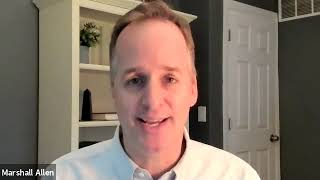
Recorded conversation (hosts Mike Hill and Ben Conner) with author/journalist Marshall Allen about his book Never Pay the First Bill and Other Ways to Fight the Health Care System and Win. Allen summarizes 15 years of healthcare investigative reporting, documents problems (fraud, upcoding, opaque pricing, wide price variation, administrative waste estimated ~25%), and presents practical consumer- and employer-facing tactics: read and contest bills, use EOBs and hospital price data, appeal denials, sue in small claims court, deploy employer-driven plan design and oversight, and educate employees via his Allen Health Academy video series (about 17 short videos) and planned app/forum. Hosts add employer perspectives (auto-adjudication risks, leverage of employers, examples of administrative differences) and encourage attendees to act.
Chapters
Good morning. I'm Mike Hill with Total Control Health Plans in Colebrook and Insurance, and on behalf of my co host Ben Connor with Conner Insurance, I'd like to welcome you all to what I know will be an engaging discussion today. Throughout our conversation you'll likely experience emotions ranging from frustration and anger about the current state of the healthcare system, but also excitement about what is possible when you push back against a broken system. While Ben and I were convinced that the healthcare system is broken a number of years ago from our work with employers who face unrelenting cost increases, pushing back against the status quo is an arduous task and at times we've questioned if we're on the right track. In those dark moments, though, we'd only need to turn to the most recent article written by Marshall Allen for ProPublica and we'd be reassured that we are in fact heading in the right direction. While his articles are more than enough to convince you that the system is broken, having the opportunity to hear Marshall speak leaves absolutely no doubt. Ben and I have had the chance to listen to Marshall twice in person this year and we've really enjoyed getting to know him because we are absolutely on the same mission. We are firmly convinced that if we all work together and push in the same direction, we can make the incremental changes that is needed to bring consistently high quality care to all the members that we know our country is capable of, while at the same time not bankrupting all of our citizens. At this time, I'd like to turn it over to my co host, Ben Connor, the CEO of Conner Insurance, to say a few words and to introduce our speaker, Marshall Allen. Ben.
Thanks Mike. Happy to be here again for another partnership with Total Control Health Plans and Conner Insurance and our esteemed guest, Marshall Allen. As Mike mentioned, we've had a chance to meet him and we're thrilled to have him here. And what's really different about today is versus what we've talked about before is a lot of things we've talked about when we talk about compliance or simply other healthcare strategies, it's what can the employer do to support their employees or your members on your health plan? This conversation is. There's going to be certainly a hint of that, no question about it, and we're going to be able to tie those together, but we're going to talk about the consumer. So as we have our conversation today, I'd like to put yourself in just your own shoes today and think about your engagement in the healthcare system and how you have experienced maybe some frustrating things and how what Marshall has done can really apply to you and even your friends and family. And then we can put ourselves in our employee shoes and then ultimately we can distill what we've heard and how do we help our employees. Our employees and from a corporate strategy. But again, we're pleased to have Marshall. I have the pleasure to introduce him officially. So we have as our, as our keynote this morning Marshall Allen, who's the author of Never Pay the First Bill and Other Ways to Fight the Health Care System and win. Marshall spent 15 years investigating the health care system as a journalist, including a decade as a reporter for ProPublica. Marshall is a two time Pulitzer Prize finalist and a recipient of the Harvard Kennedy School's Goldsmith Prize for Investigative Reporting. He's also taught investigative reporting for more than a decade. Before he was in journalism, Marshall spent five years in full time ministry including three years in Nairobi, Kenya. He now works for the Office of the Inspector General for the US Department of Health and Human Services Services and runs Allen Health Academy to help boost the healthcare literacy of working Americans. Now, even though he works currently for the Inspector General and for hhs, he is not here representing the federal government, but he is here in his own accord and representing the book that he's, that he's written and what you'll hear more about with the Allen Health Academy. So Marshall, we're pleased to have you today.
Thank you Ben, so much. I really appreciate you inviting me here. Thank you Mike for this invitation. It really is a pleasure for me to talk to you all. I have been having so much fun talking to people about my book, talking to people about what I am doing with Allen Health Academy and I have been so encouraged and gratified by the response to the book. So Never Pay the First Bill came out at the end of June. It's sold very well, it's been very well received. I'm already getting emails from people who are putting the tactics in the book into place. The subtitle of the book is it's called Never Pay the First Bill and Other Ways to Fight the Healthcare System and Win and the and when part I think is really the most important part because while I have spent 15 years as an investigative journalist and author documenting the problems with the system.
The angle I took on the book that I think is unique is that it's a how to guide for employers and employees to work together to tackle this problem of ridiculously, unjustifiably high health care costs. I wanted to give you a bit of My background. Ben and Mike wanted me to tell a bit of my story to kick off our conversation here. And then we're going to enter into some conversation between the three of us. But if you have questions, please throw them in the chat and we will certainly address any questions that we get. I think the more you can ask questions then the more we'll be assured that we address the things that you really want us to talk about. So like Ben said, I started off in full time ministry and so I never intended to be in the position I'm in now. I had no real plan for my career, but I ended up doing full time ministry. For five years I did youth ministry. And sometimes I wonder why in the world did my path start in ministry and then it went to journalism and now I'm an author and educator and working for the federal government of all places. I think that the theme that runs through those is that I'm interested in real people and how our health care system affects the lives of real people. And I think that's the thread maybe that runs from my ministry background into my journalism and into my writing. And the other thing that's interesting is that we're talking about moral and ethical issues here. When we look at our health care system and the way it functions in the United States, much of what we talk about is not illegal, although we are going to have some conversations about fraud today. And fraud obviously is illegal, but other things that happen in our healthcare system, it's not that they're illegal, it's that there are unethical and my argument would be immoral ways that our healthcare system is extracting more money than it needs to from working Americans. And the reason I feel like that's not right morally and ethically is because it is breaking the backs of the American people. Americans cannot continue to fund health care at the expense that they've been having to fund it. You've probably seen the statistics. About one out of every five Americans has medical debt in collections. And working Americans are being hit the hardest by this. And I experienced this myself as a journalist and now as a government employee. Thankfully, I've been able to stay out of medical debt because I've been able to make more money. But my health care costs have gone up by 5%, 8%, 10% one year. They went up by 13% every year. So every year we're on this march upward of high health care costs, while at the same time we spend about twice as much per person compared to the citizens of any other country. So the problem isn't that we're not spending enough. The problem is we have a health care system that is extracting unjustifiable amounts of money from our paychecks, our pocketbooks, from your employer's ledgers, on their profit and loss statements. So I started covering healthcare in Las Vegas. I was a journalist full time for 20 years, starting in 2001. In 2006, when I went to Las Vegas, my editor pulled me aside and said, hey, we want you to start covering the health care beat. I knew nothing about health care. I had read a lot of, frankly, really boring healthcare stories. And, and so I actually told my editor, I said, I can't really imagine anything more boring than writing about health care, but if you want me to do it, I'll take a stab at it. Well, what I found right away is that, especially because I'm morally and ethically minded, I found that there were so many ways that the patients were getting taken advantage of, whether it was a patient safety issue that wasn't disclosed to them, or people actually losing their loved ones due to medical errors and other hospital acquired infections. I spent years covering patient safety problems, then looking into the high cost of care. I remember a story I did in Las Vegas about.
A war photographer, a guy who worked for the military as a photojournalist. He got injured while on assignment in a war territory. His Tricare health insurance plan would not cover the injuries that he had received while on the job. This guy and his wife fought for a year and a half to get them to cover their healthcare costs. Again, this is a veteran who was serving our country, got injured on the job, and his insurance plan is denying him the care that he needs. What I found is when I wrote about these things, they would immediately change them and correct them. What it shows there is, first of all, the power of the media and the power of reputation and image. Health care companies, insurance companies, are often more concerned with their image than they are the reality of how they treat people. So if you can get a journalist covering a story, things will change. But more importantly, what it shows for everybody, employers and employees, is that you can push back and bring about change. It's not impossible to do something about it. You just have to know what the leverage points are and you have to know what the strategies are. So I spent five years investigating healthcare at the Las Vegas sun newspaper. Then I went to ProPublica in 2011. And at ProPublica, I did a lot of deep dive stories about the high cost of care and the poor quality of health care across the country. And sometimes I compare this situation to the pandemic because the pandemic gave us this feeling that we were all in this situation together. Everybody was suffering the same thing. Whether you're in Michigan or Indianapolis or California or where I am in New Jersey, we all have had this experience of the pandemic. Well, that's the same as our high health care costs. When we talk about the fraud that's rampant in the system, when we talk about the price variation that makes some people pay way more than other people for the exact same service at the exact same facility, or when we talk about over treatment or all the other problems in our healthcare system, It's a ubiquitous problem that's happening in every state, in every city, in every community. This is something that we are all experiencing together and that we need to get a handle on because it's been going on for so long that it's out in the open now. It's known.
At ProPublica. The last few years before the pandemic, I spent covering health insurance and the way we pay for health care. In 2017, I did a whole series of stories on wasted health care spending. This really became, I would say, the foundation for my argument in my book and for my argument now. They estimate that we waste about 25% of what we spend on healthcare. It's wasted on things like administrative expense, the complexity in claims processing with all of our different insurance companies and insurance plans, ridiculous high prices and frankly, sometimes schemes. I did a story that was one of the more entertaining ones I think that I did about this drug here called Vimovo. So Vimovo is something I got prescribed to me by an orthopedic specialist for some pain I had in my shoulder. I had never heard of this drug and it was unusual the way they prescribed it to me because they told me to go to a mail order pharmacy, not my local drugstore, to pick it up and they said, oh, don't worry. I said, well, how much is it going to cost? They said, oh, don't worry about that. The copay is covered and you go through, you just have to go through this special pharmacy. Well, I looked into it and Vimovo is billed as a specialty drug, but it's actually just a combination of two over the counter medications, Nexium and Aleve. The Aleve is supposed to help your pain and the Nexium is supposed to help any upset stomach that might be caused by the pain medication. Well, all they did is they combined two common over the counter medications into one specialty drug called Vimovo. And then they build my insurance plan, $3,200 for this one bottle of Vimovo, a 30 day supply. Well, if you go over the counter, you can get these medications for about 20 to $30. So it's just an example of the type of scheme that happens all the time in our health care system. In my case, my insurance plan rejected that claim. But I looked Horizon Pharma, which makes Vimovo and Duexis and some other drugs that are nothing more than combinations of cheap over the counter medications. They have made close to a billion dollars by now selling these types of drugs to employer sponsored health plans. And so a lot of these, again, this is where I come back to the ethics and the morality of it. This is a scheme to get access to a health care plan so that you can overbill the plan and make the plan pay more than it should for something that you could get at the drugstore for 20 or $30. And so this is something that we need to be alerted to, we need to be aware of, and then we need to actually take action. And so the main focus of Never pay the first bill is what can we do about this? And so in each chapter I highlight a different problem. So I do chapters on medical bills, errors in medical bills, unfair prices in medical bills. I show employees how to understand your medical bill, how to understand your eob, how to contest medical bills, even how to sue in small claims court if you're being taken advantage of. I mean, we have a big surprise billing problem, right? Imagine if every surprise bill was met with a lawsuit in small claims court, from that consumer to that private equity owned emergency room or whoever the company is that's, that's doing that. Someone's asking for the spelling of the drug. It's Vimovo v. I M O V O Vimovo. Look it up and make sure it's not on your formulary for your insurance plan. But we can do a lot about it. And that's what my book is about. And that's what we're here to talk about today. I'm excited to talk to Mike and Ben here today because we're going to have a conversation not just about the problems, but about the solutions that Mike and Ben and other advisors like them are putting into place right now for employer sponsored health plans. And that's the thing I think needs to happen. Employers and employees have a huge amount of leverage to bring about change. Right now. It's like this game of High health care costs has been happening and the employers and the employees have been sitting on the sidelines. I've made it my mission to equip and empower the employees and the employers. But that's really, Ben and Mike's specialty is more on the employer side, on the benefit design side. But we can work together to bring about a lot of change here. We don't have to be paying these high healthcare costs. That's more what we're going to talk about today. Mike and Ben, take it away.
Marshall, thank you for the intro and thank you for giving the background.
Of your book and your passion and your mission to really equip people, individuals. It's just really been fascinating as I've met you, how you've taken that, your passion and how you've helped people individually through your writing and now you're doing it across the country.
With your guidebook. So never pay the first bill. Marshall, Allen and I wanted to.
Open up the discussion by inviting Mike Hill back. And we're going to do a question and answer time with with Marshall and Mike. Marshall's going to be talking about just the execution of the book and Mike can talk to the employers about how we can kind of relate this back to our health plan and how we can really set ourselves up for the best success possible with the methodology in our health plan. But I just wanted to get started. Marshall, we talked just briefly in the intro about the Allen Health Academy. Can you kind of give us some insight about the Allen Health Academy and where that fits in just in your strategy coupled with the book?
Absolutely. So when I, when I wrote the book and I was starting to promote the book and share it with some different brokers and advisors, I had a broker ask me to create a series of healthcare literacy videos, a curriculum that was based on the book. He read the book and he was like, the book is great, but I'm concerned that my employees that are in my health plans aren't going to read it, which is a legitimate concern. Right? I mean, a lot of people don't read books. And so he said, could you create a series of videos based on the book? And so I have recorded about 17 three to five minute videos that are taking the how to tactics in the book, like how to understand your medical bill, how to even look up billing codes to see if it's priced fairly, how to look up prices, how to prevent yourself from undergoing treatment that you don't need over treatment is a huge problem, how to look at your EOBs, how to use hospital financial assistance policies. All these things that consumers would never really expect. Nobody really knows about the hidden price variation in our health care system. For example, I'm rolling these videos out. I'm actually doing a crowdfunding campaign right now to fund the production of the videos, like the animation costs and graphics and things like that. We're also creating a smartphone app and I'm going to have a forum, like an online forum, maybe even just like a Facebook group for employees, for HR people, for advisors, brokers. Anybody can jump in there and I'll moderate it and then we can have conversations as people have issues come up and we can brainstorm as a crowd. It's like crowdsourcing the solutions here. I'm going to throw a link to the the Indiegogo campaign here for crowdfunding. And there's two weeks left in the campaign. I've been very thrilled by the response to it and I'm planning on rolling those videos out early next year.
Marshall, I think, I think that's huge. You know.
We have a hard time if we send a letter to employees, let alone, you know, trusting them to read a book. So I think you're 100% on point with getting these videos out there and starting that process for the attendees. I'm going to put an email address in the chat and if you're interested in learning more about the video series, you know, through Total Control Health Plans or Conner, just send an email.
To this web address, to this email address and just say I want to learn more about the videos and we'll get a conversation going. But my next question, and Mike, I have to apologize, I know we had a couple questions that we were going to go through, but I'm pretty terrible with the script, so I'm just kind of going a little rogue here. But Mike.
Tell me what goes through your mind when in Marshall's opening he talks about the movo and duexis in the schemes that exist within a health insurance program.
How does that hit you and how does that speak to your mission and the team at Total Control Health Plans?
Great question, Ben. Appreciate the opportunity to weigh in, stuff like that. At the outset of the conversation I said you might be a little angry or frustrated at how broken the healthcare system is throughout this conversation and stuff like that is just a no brainer. It drives you crazy and you wouldn't let that happen to you as an individual. But we have all kind of gotten lulled into this sense of complacency where we think that our health insurance plans are fighting on our behalf and don't let that stuff happen. But here's a perfect example. Just at the end of last year, there was new legislation passed that was going to make health insurance plans disclose all their pricing, their discounted pricing with all the health carers they work with and also disclose the price of the drugs that the insurance companies pay. And now this whole system is fighting back against that and pushing back. And we've gotten unlimited delay now on when health insurance plans have to disclose the cost of drugs. So we don't know when the government's going to start enforcing that. And on the transparency side, on the actual cost that health plans pay, that's been delayed at least six months. So we have this incredible machine stacked against us as consumers, as an employer that manage employer sponsored health plans and we have to take matters into our own hands. And that's what I love so much about Marshall's book is it talks directly to the American consumer or one consumer at a time, we can push back. And what our focus on at Total Control Health Plans and you at Conner Insurance is helping an employer, one employer plan at a time, say enough is enough. We're not going to tolerate this anymore. And when you do that, amazing things happen. So we're really excited about just sharing the word and we just love the fact that Marshall is independent, objective observer of what's going on, is also supporting what it is that you and I have come to believe over the last few years. We may have a dog in this fight certainly because this is what we do for a l but Marshall is supporting everything that we believe and have come to see that you can do when you are willing to push back.
Yeah, that's a great point, Mike. The argument I would make there is that we cannot wait for someone else to come to our rescue here. I mean, we've been waiting for decades for our elected officials to figure this out or we have listened for too long to the promises of the big health care power players who talk about oh well, we're now doing value based payment or they have all these catchphrases and buzzwords to promise that oh no, things are going to be different, costs are going to come down, but we need to stop listening to what they say and start looking at the data. Right? We have got decades now of data that shows year after year after year there is a ongoing march upward of health care costs and what really needs to happen. If you look at the data and if you look at the research about the overspending in our health care system, we should be cutting about 25 to 35% off of our overall healthcare costs. You know, you look at other industries and how they've been disrupted, and I'm coming out of journalism, right? Journalism is a great example. The Internet came along and undermined the advertising model of newspapers. And the newspapers that were making literally 50% profits, in some cases they were living fat and happy until the Internet came along and disrupted their model. And now they didn't adapt and they are shut down. You see that happen a lot in a lot of industries that don't adapt. I think right now our health care system is like that bloated newspaper industry was back in the 80s or 90s. And there are solutions. And that's the thing. When health plans put these solutions into place, they can save 20, 30, 40% on their health care costs while improving the care that the employees receive. And that's what I show in the book, and that's what I've learned. That's probably one of the most astonishing things I learned as I dug into this was just how unjustifiable the high costs are and the fact that people are doing things about it. And where employers have the courage to step up and do something, they can save tons of money. And where employees have the knowledge and the courage to stand up and push for themselves, they can save hundreds or even thousands of dollars per healthcare interaction.
Marshall, just real quickly, Ben, just to follow up on one point that you made. Health care is probably ground zero for buzzwords. If you look at any press release, any marketing material from an insurance company or a hospital system or whatever it happens to be, you always hear high quality healthcare. That's what everybody's saying right now. The thing I challenge everybody that's listening to this today is to ask if somebody ever says that to you, ask the question, how do you define high quality health care? What do you mean by that? What is the objective data you're basing those recommendations and decisions on? And if you ask an insurance company, they'll just give you some kind of touchy feely answer because they know that not every doctor that they allow access to in their network is high quality, but they are unwilling to make those changes or share that information with you. And so ask the question. Just don't get lulled into what's in the press release because it's way more detailed than that and important than that. And just listening to high quality health care.
Fantastic. Marshall, you mentioned something in your opening again and something that you've mentioned when I've had the chance to speak with you before. That was really. I've never thought about it, but you've mentioned using small claims court to your advantage. And we're going to put ourselves in the consumer seat. We're all consumers of health care in some degree. Can you go into detail or not necessarily detail, but can you kind of go into how small claims court can be utilized and how you've seen it be successful?
Yeah, absolutely. So our small claims court system exists in every state, all over the country, and it's created to help weak individuals, or individuals who don't have to have an attorney advocating for them in small claims court, stand up to more powerful individuals or more powerful company or entities that they believe are taking advantage of them. And when you look at the problems, let's just say problems with medical bills, I'll give you an example of some friends of mine, Josh and Jennifer, people at my church, who had a billing dispute with a dentist. Jennifer went in for a root canal. They gave their credit card information to the dentist. The dentist charged hundreds of dollars more on the credit card than he should have just because he didn't run things properly through their insurance plan. And yet when they went to the dentist and the billing company that worked for the dentist, they could not get this reconciled, they couldn't get it resolved. And this went on for a year and a half, two years, they could get no response. And this is a common thing for patients, right? If you've ever had to contest a medical bill, you often just get the runaround. Your insurance company doesn't do anything about it because all the insurance company is going to do is say, well, was this claim coded properly? Did it have an NPI number on it? Did it have a date on it? Did it have codes for the type of service, not whether the service was actually provided or whether the billing codes were actually appropriate? They're not actually taking that close of a look at it. The insurance companies, I have found, are more loyal to the doctors and the hospitals that they have in their networks than they are to their own members. It's very common for patients to not be able to get these billing problems resolved, even if it's a clear error. So in this case with the dentist, it was an error. And I talked to Josh and I said, you know, if you sued in small claims court, you would give them the incentive they need to do the right thing. Because let's look at this. The patient already knows if they've done a proper analysis of their bill, which is What I show people how to do in my book, get an itemized medical bill. Get the billing codes. Look up the billing codes and see if they describe accurately the services that you received. Get your medical records. Every patient has a right to their medical records. The bills have to reflect what's in the records. Check prices. You know, now you can go on hospital websites because of the hospital price transparency rule and you can see what prices should be for different, what prices are for different services under different health insurance plans. So maybe I found one young woman I helped who her UnitedHealthcare negotiated discounted rate for a level three emergency room visit was $5,805. The cash price for the same billing code was $256. The Medicare price was $230. The Blue Cross price was $787. So somehow because she had UnitedHealthcare, she was told that she and her health plan had to pay $5,805. Anyone on any other plan, even someone paying cash, would have paid a lot less. So my argument is, why would I, as a patient be required to pay more for the exact same service that some other patient would get for a lot less? That makes no sense. And so hospitals and insurance companies set these prices together based on what's important to them. What they forget about is what's important to us, you know, the people actually paying for it. Whether it's an employer sponsored plan or an employee, we are the ones footing the bill on this. And we have a right to make sure that what we're paying is fair and accurate. So if you've done that homework, you've gathered the evidence you need to file your case in small claims court, it only costs about $30 or $40 to file a case. You can do it online in about 10 minutes. There's guides for consumers, really clear brochures in every state about how to use the system. And then when you file that case, let's say my friend Josh, his was for about $300. Well, in New Jersey, there's a branch of court here where you can sue for up to $15,000 without an attorney. In Texas, the small claims limit are $20,000. In Tennessee, it's 25,000. I grew up in Colorado. It's $7,500 in Colorado. So the limits in small claims court are actually quite high in a lot of states. And they're high enough that you can a lot of these, let's just say kind of the typical medical bills would fall under those limits. Or you can sue up to those limits. Now think about what happens when you file that case. So Josh filed the case against his dentist. Well, within a couple weeks he had a call from the attorney for the dentist saying, hey, look, we don't want to deal with this in public, in court. It's costing hundreds of dollars an hour now for the dentist to hire his attorney to deal with Josh's complaint. So it creates an expense for them, it creates accountability for them. And like I like to say, it gives them the incentive they need to come to the table and do the right thing. And that's just give us a fair price. Like when I, when I called the book, never pay the first bill. I don't mean never pay your bills, I mean never pay the first bill until you know that it's been priced fairly and it's been priced accurately. And what happens with insurance plans nowadays is they've negotiated prices that are sometimes outrageously high. Well, that's not fair to the, to the patient. And the employer sponsored plan that's footing the bill for that. And so they look at it and they go, no problem. Well, they're just auto adjudicating these bills, running things through the pipeline without checking the prices, without checking the accuracy of the bills, without in many cases even catching things that are blatantly fraudulent. And so if we don't pay attention and get engaged, we are letting money fly out the window. And this is the cause of these ongoing high health care costs. And let's remember, insurance companies make more money as healthcare costs go up. They're just a middleman that takes a cut of what gets spent. So if the spending goes higher, their cut gets bigger and bigger and bigger. And they ultimately answer to their shareholders, not their members. And so their mission is to make more money. They make more money when health care costs go up. So they're not intervening in the way that they kind of promote themselves. You know, they promote themselves to be these guardians of our health care dollars. That's not the case.
Marshall. Sorry.
Yeah, there's a lot of good stuff there.
I think one thing that. And Mike, I have a question for you. But first, one thing that just kind of came to my mind is to take courage in something that seems so daunting. What we see in society, for a lot of different causes, if you will, you need support, you need someone to tell you that it's okay to stand up for yourself. And I really think that the employer is in a wonderful spot to be supportive to their employee in that regard. And there's A couple things you said. And Mike, I want to throw it over to you about.
What are some steps employers can take. But one of those things that Marshall mentioned is just.
How automatic the processing of claims is in the nerd insurance world. We call it auto adjudication, but ultimately it's the churn of claims submitted and then it's rubber stamped and paid. Mike, what can employers do to get off of that merry go round and really be the watchdog for their employees and for their money?
That's a great question, Ben. A couple things to follow up on that. First and foremost, we are at the cusp of something that I believe will likely mean the end of the insurance network in the coming years. The fact that hospitals, although it's not being enforced very well and it's being postponed, hospitals are required to disclose their negotiated rates with every payer they deal with. That is opening up the kimono, which is an incredible opportunity for us. And employers should demand that that happens. And once, if you haven't looked at these prices that some hospitals have posted, it'll blow your mind, the variability there. And so if we can just do away with that, number one, are we going to do away with all the variability and just agree what is a fair price for a particular procedure and that's it. But we're going to eliminate so much waste in the health care system today that's associated with billing and figuring out, okay, I got to submit this same claim and if I send it to Blue Cross, it's got to get reprocessed down to here and it's a disaster. And there's so much overhead associated with just billing and reprocessing claims. So employers should continue to demand you talk to anybody that leads a hospital system, ask them why haven't you posted the pricing yet and what's it going to take to get a fair price across the board for everybody. But then in the meantime to your question, Ben, auto adjudication. So we just recently did a request for proposal for one of our clients and we went out to nine different administrators. So they have a self funded plan. And we went to nine different administrators and asked a number of questions. And one was what percentage of the claims that come into your, into you to administer get processed by our computer or auto adjudicated. A large health insurance company, one of the big names that you'd recognize, almost 98% of the claims that come in get processed by a computer where one of the boutique third party administrators we work with, less than 15% get administered by A computer. And here's a perfect example of that. If you have a knee replacement or any sort of appliance put into your body, so a shoulder, elbow, whatever it happens to be, hospital buys that from a manufacturer, marks it up astronomically, and then sells it back to your health plan at whatever discount your health plan gets. One of the administrators we work with looks at all of those and says, no way, no how. We want the itemized bill. We want to see exactly what the hospital paid for that particular device. And we're only going to give you a 20% margin on it. That's it. And every time they do that, the hospitals never push back. They're like, okay, sounds good. Even though they would have been guaranteed more had it gone through the network. The point is, it's so broken. And if we're not looking at it with an actual individual looking at those types of things, we're going to pay way more than we need to. So the point is, auto adjudication is not your friend. It's oftentimes held up that, hey, it's going to expedite claims processing. It's a good thing. It's not. And so one of the things you should ask your administrator is what percentage of the claims are administered by a computer.
Yeah. And they want to tell you, you know, they will brag about the high rate that are auto adjudicated. Right. That's, that's to them, something that's a talking point for. Look how, look how quickly we can process claims.
The stories that I do, and throughout my book, I like to highlight the most absurd examples of these problems to really expose just how bad it is. Like the Vimovo example. And so there's a story I did, the most outrageous fraud story I ever did, which is saying something because I've done a lot of them, is about this personal trainer in Texas named David Williams who wasn't licensed as a doctor, but he was able to get these National Provider Identifier numbers from Medicare because Medicare doesn't check to make sure you're a doctor before they give you these numbers. So this guy fraudulently obtained these NPI numbers and then he started billing all of the big insurance plans for doctor office visits. Now he was just doing workouts with people, jumping jacks and like push ups and burpees. But he was billing these things as Level 5 office visits to UnitedHealthcare, Aetna, Cigna, other big insurance companies. They were just paying the bills. They weren't checking. They also didn't check by the way to make sure he was actually a doctor because he wasn't one. They would have been immediately able to identify that. But they auto adjudicated all of these claims, which means all they did is they just checked. Is there an NPI number, Is there a name of a provider? Yes, David Williams was his name, but he wasn't a doctor. Is there a billing code? Yes, there's a billing code, but there was no medical service provided. This guy over a span of four years billed these big name insurance companies more than $25 million in level five office visits. Again, you don't have to be a rocket scientist to see a new provider comes on board, only bills at level five. Wouldn't somebody take notice of that? They did not take notice. They just processed the claims. And in a lot of cases they'll have limits. Like they might set a limit at $10,000 where any bill under 10,000 doesn't even get examined, doesn't even get looked at. And this, this case was such an interesting case study because it resulted. Eventually he got caught, eventually the FBI got involved and then this went to trial, and it went to trial and they had the head of the fraud investigation units for these big insurance companies come in and testify and this all got laid out in court. All the absurd ways that they process claims, just how many gaping holes there are in the claims adjudication system, just how easy it is for fraudsters to enter the system and take advantage. In fact, they estimate nobody knows for sure, but maybe 10% of our healthcare system spending is lost to fraud. And so, you know, it's so much worse than anybody would expect it to be because it's not profitable for the insurance companies to police this. It's expensive for them to check all these claims, it's expensive for them to enforce fraud. And so, and also frankly, if they're going to really enforce fraud, they're going to be cracking down on the upcoding of a lot of the hospitals and the doctors and their networks. It becomes very litigious if they enforce that. And so they just let it go. I did another story where I actually challenged all the big insurance companies to please provide me with any examples they could send me of their investigative unit identifying a case of fraud and either getting a repayment or a criminal prosecution based on their investigation. If you look at Medicare or Medicaid, there are government funded entities, including the Office of the Inspector General where I now work. They police fraud in Medicare and Medicaid, but in the commercial plans that's left up to the insurance companies, and they couldn't point me to any cases again. I said, will you please show me? Because it's public information if they have sued a provider and demanded repayment or if they've prosecuted anyone, that's public. It's not secret. They could not send me one case where they had done that. And then I called the prosecutors in California, throughout the state of California, who deal with fraud, and I said, have the insurance companies ever contacted you and referred a case for you to prosecute fraud? They laughed at me. They said, no, of course the insurance companies don't do this. We could only track down. I talked to almost all of them in the state of California, about 20 cases over a span of two years where the insurance companies had referred a case to the fraud enforcement agents in the different districts in California. I'll post the story here in the chat. But it is a huge problem.
Yeah.
One thing that you mentioned, Marshall, that.
I've actually seen some examples personally, is the concept of upcoding and how that can happen. Can you go into that a little bit of what you've seen?
Yeah, yeah. Like I mentioned, David Williams was coding everything as a level five office visit.
The office visits and emergency room visits, for example, are coded from level one to five. Level one would be a really minor, small, quick case. Level five would be an intensive case. But there are actual requirements for what has to be done in order to qualify as a level three or level four or level five. Like, you have to have a very complex case that requires complex medical decision making. You have to do an extended examination of the patient. You have to do an extended history of the patient to understand the complexity of the problem. These things are not happening in a lot of cases. But the doctors or the hospitals will upcode it. They'll code it as a level three when it should be a level one, or they'll code it as a level four when it should be a level two. And nobody is checking the upcoding. And I think that's the most common type of fraud. I think it's endemic throughout the system. I see it all the time and I talk to patients all the time who are getting hit with these upcoded bills.
Yeah, Marshall, I've actually seen one of those circumstances personally where a member of my family had a higher level for their office visit.
And you know, my daughter, she's certainly strong willed, but I don't know if that's necessarily part of the coding system of being able to charge more, which was. It's really Disappointing. And again, I think that we have to create a community where it's okay to ask questions because from my experience, that additional $10 because they coded it up.
That might seem nominal, but if you have five kids and it's 10, you know, we're working hard as employers to recruit and retain and raise compensation from $13 an hour to $15 an hour. And the challenge is if we don't support our employees, it's getting siphoned out into a different system and our employees can't take that home. So before we move to the, to the next.
Conversation, I just want to.
Encourage people, if you have any questions, feel free to put it in the Q and A, the Q and A box.
But you know, one thing that.
You know, we talked earlier about.
Just how it's going to take a community to really change what's going on and really give people, our employees support. Mike, what can employers do to really educate and come around their workforce to help solve some of these problems?
Great question, Ben. I think sharing Marshall's story. And Marshall, what I think you do well in the book is you first come and you start talking directly to the consumer and you talk about some of the issues with employer sponsored plans, but then you also talk to employers about what they can do about managing plans better. And you know, people are accustomed to hating their insurance carrier, health insurance carrier. They're right up there with your cable company. And so what the employer needs to do is first start talking to their members about, listen, we're all on the same side here. We're going on offense now. We are not going to take this anymore. We're frustrated as you are, but we need to work together. And the point is, is that if we want to get different outcomes, we need to approach this differently. So we're going to build our own custom health plan, our plan that's built for us and we're not building it to fight with you. That would be crazy for us to do such a thing. So we need to open the lines of communication, help the employees understand that the employer is working to help them out to address all the stuff that you bring up in your book, Marshall. But we all need to think about the way we've approached healthcare differently. It's, you know, so accustomed to just the rubber stamp. And the rubber stamp is nice and it feels great and everything gets paid, but the problem is you're paying for that out of your paycheck in terms of premium, what your deductibles are and they continue to go up so we need to be willing to change our mindset, and it's up to the employer to continue to reinforce that message.
Mike, I appreciate that. Marshall, do you have something to add?
Well, I was going to say that's absolutely right. And what I'm trying to do is reframe this conversation. You know, we've been passive, we've been too trusting as employees and employers. We keep thinking someone else is going to intervene on our behalf and protect us. And I'm trying to reframe all this and say, no, we actually need to get engaged. If we don't get engaged at this point, we're being negligent, especially at the employer level. The employers have seen this happen for so many years, and they've been passing the costs onto their employees in the form of higher deductibles, higher premiums, to the point that it's, you know, many employees are effectively uninsured because they just don't even make enough money to cover these costs. And then they also haven't equipped their employees about how to. How to deal with the system. And I think, frankly, that's not anything nefarious going on. It's just most people don't even understand how the system is taking advantage of them. And I think that's the privilege I had is doing 15 years of investigative journalism. I dug in on so many individual cases, hundreds of them, and every time I featured a patient in a story, I had them waive their HIPAA privacy rights so that I could ask the insurance company questions, and I could ask the hospital and the doctor questions, and nobody could hide behind the HIPAA privacy law. And so I feel like I've done a very careful and fair and objective investigation of this, looking at it from the point of view of the patients to come to the conclusions I've come to. But it's after doing 15 years of deep work, most employers have never done 15 years of independent investigation. Right. I mean, they're trying to run businesses, they're trying to take care of all the other employee needs. So I think, I don't necessarily blame the employers, but at the same time, there's a lot more employers could be doing other than just believing that health care costs have to go up year after year. They don't have to go up year after year. And. And that's sort of the dirty secret that I've realized after investigating this for so long.
Marshall.
What'S been like, maybe some of your favorite items of feedback since your books come out?
My favorite by far, is the Victory stories when people take the book and learn from it and fight back and win. And I can give you some examples.
If you even go on my book on the reviews. I love when people give me reviews and they say something that they actually did.
From the book. So I'm just looking at this review from earlier this month from this person, S. Harris. They say it's a very empowering and practical guide to fighting back against the hidden fees, fraudulent charges and general incompetence of the medical system. Alan's book helped me successfully get one medical conglomerate to drop a $350 facility fee. Then they also said, and then just today, I successfully fought back against a dentist office that tried to charge me an extra $175 for something they couldn't even explain when I called them out on it. And I mean, that's the thing people also don't realize is that when you start pressing for answers to justify the cost, the emperor has no clothes. There are no good answers that justify the high cost other than, oh well, we've always billed you these fees or we've always billed you these unjustifiably high prices and in the past you've paid them. Well, that's not a good answer. And so I think when people push for answers, they often don't get them and then that gives them the leverage they need to keep pushing. And so I've been getting lots of feedback like that. I have a chapter on how to win an appeal against an insurance company and I had a patient save $78,000 because her insurance plan had previously denied the care that she needed. She got stuck with a $78,000 bill. Her family was contemplating bankruptcy. But by using the tactics in my book, she was able to make an evidence based appeal to her employer and her health plan and get that overturned. It's tremendously satisfying to me to see people empowered and equipped and then see them saving a ton of money.
Kim asked if it's available in Spanish. Not right now. I've talked to the publisher about that. I am hoping to translate my videos into Spanish. So that's something that is on my radar, but not yet.
Fantastic. Mike, what are some.
Can you tell us some, maybe a success story of where you're seeing an employer step out and be bold and put in some parameters that are really being supportive and are protecting their employees from some of the practices that we heard or even some of the over billing like we heard about them over.
Great question, Ben. Here's the thing that we need. Let's Start with the things that we can all agree on and start with the facts as we know them. Employers, almost to every single one of them wants to offer something that their employees find value in and want to offer a good benefit. They care about their members. They don't want to hear about them going bankrupt because their health care bills were so high. And so what we have seen is that, you know, the challenge is employers need to have the right mindset and one, be convinced that they can do something about it and then two, have the bandwidth to do that. And that's what you guys at Counterinsurance are doing and we in Michigan at Total Control Health Plans are doing is trying to put employers in a position to be aware of the fact they can pull any number of levers and they can get better results. So I've got got lots of success stories, but the point in a nutshell is the employers that we're having the most success with are ones that have an open mind, want to, number one, make sure their employees are getting high quality care, want to minimize what that costs their member. And here I just said high quality care. And if you ask me, I do have a very good definition for it if you, if you want to get into that. But we want to make sure that we're using all the data that's available to us to give people the best possible care at the right place at the right time. And we want to cover as much of it as we possibly can as employers. And we are doing that with number of employers and having a ton of success. We're doing a lot of smart things as pushing back on the basics, making sure we're not overpaying on prescription drugs, making sure dumb things like Vimovo aren't covered, making sure that when there's commodities like durable medical equipment, we're not overpaying for that stuff. Because there's so much that a healthcare health plan pays for that's a commodity. So just being smart and when you have visibility into why your plan is running the way it is, you can look at where there's leakage and where there's opportunities to fine tune it. And I guess, you know, we call them total control health plans for a reason, because we are empowering employer to be fully in control of their plan to achieve their results or their goals that they have. And employers who are embracing that are exactly that, reducing costs and providing higher quality care to their members.
Mike, that's fantastic. Marshall, you said something early on that, and this is just in closing, since we Just have a couple minutes. But just mentioning, and I didn't know this about. You probably should have asked more questions earlier, but you mentioned that you were in the youth in youth ministry and that your job at being in youth ministry was.
To make. It really is to help make kids or help kids learn how to make good ethical decisions and obviously point them to Jesus, which is awesome. What I think is so interesting and what you're doing in this world is.
You'Re helping, you're helping people in training people how to hold the healthcare system accountable to be good and ethical, which is the foundation of where you came from as a youth minister. So I just kind of found that parallel to be. So.
So yeah, it is interesting and it's also where I'm trying to reframe this conversation because you talk to anybody. In fact, I've once, some people have asked me, oh, what do people in hospital say about your book? Or what are people. What do insurance companies say about your book? And the funny thing is, is that nobody disagrees with what I'm saying. Everybody knows that this is a huge problem. Everybody knows that the working American.
And employers are being charged unjustifiably high costs and that it's breaking them. Everybody knows that this is not actually a controversial statement. It's true. The problem is everybody is making so much money doing that that they're not incentivized to really bring about the change. And so we can't expect people to go against their financial incentives. And so the hospitals, the insurance companies, others, honestly, they kind of look the other way, they kind of blame it on the system and they go, well, look, I'm just part of this big thing. I mean, yeah, I work for a billing company and a lot of our bills are up coded, but we're just trying to maximize revenue for our bottom line, right? I mean, everybody can justify it and look the other way. And that's why I think my argument is not a policy argument, it's a moral and ethical argument. It's not right to exploit people's sickness for profit. And that's what's been happening in our health care system too often. And it's not right in healthcare. It's different. It's not like a different consumer purchase where you're going to a fancy restaurant or you're buying a fancy car. And so it's justifiable to spend more. These are not optional purchases people are making. They're going at the advice of their doctor to get care that they need to save their lives in many cases. So in those cases, it's really not ethical to do the price gouging and things that we see all the time.
Healthcare.
All right, just a couple hot takes from everybody, and I'll go first since I thought of the question and I could think of an answer quickly. But what do you guys believe are just in a statement are some of the biggest lies of the health care system that employers need to be mindful of. And from my perspective.
I have heard that transparency will only make prices go higher. So that's my hot take of a really big lie that's being fed into society about health care. Marshall, what about you?
My hot take is that there's nothing we can do about this. And that's the myth I'm trying to destroy. We do have a lot of leverage and a lot of power here. We have not yet exercised it. So that's what I'm trying to spur people to do.
Awesome. And Marshall, I know you need to drop off for another one of these at noon, so if you have to drop off while I give my hot take, have at it. Thank you for being here. By the way, I have two hot takes for you. Number one, that health insurance companies have an interest in seeing health care costs go down. Not true at all. And I've forgotten my other one. But I will say something else that's really important is that if you're a guest of Total Control Health Plans and Coldbrook Insurance, follow up with us. And we've got a copy of Marshall's book for you. And the same thing if you're a guest of Conner Insurance, follow up and you'll get a copy of Marshall's book as well. Ben, back to you.
Thanks, Mike. Thanks, Marshall, for joining us today. And thanks, everyone for joining in the conversation and asking questions. Until next time. We'll see. We'll see you all later.
Thank you all.
More from Marshall






Marshall Allen, "Never Pay the First Bill' Part 1 | The Ovation Show w/ Dan Labroad




