Interview with Marshall Allen, author of “Never Pay This First Bill!”
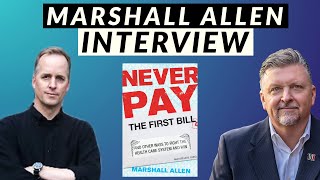
Recording of a Benefit Hackers interview (John Millen) with investigative health journalist Marshall Allen (ProPublica) about his forthcoming book Never Pay the First Bill (released in June). Allen (15+ years reporting) frames the book as a patient-centered how-to guide to "hack" the healthcare system and offers concrete tactics for consumers and employers. Key examples: a Texas man on a $10,000 deductible was quoted $11,000 (insurance) or $9,000 (cash) for two MRIs at a hospital-affiliated center but saved ~$8,000 by using Green Imaging to book independent centers for $950 total; GoodRx and Good Shepherd Pharmacy (membership $5/month) are offered as prescription-drug cost tactics; Allen highlights PBM spread-pricing abuses (Ohio Medicaid found $221M taken on generics) and a Senate Finance report on insulin pricing. He emphasizes that ~155 million Americans receive employer-sponsored benefits, that employer-paid premiums are really employee compensation, and urges employee education, asking cash prices, direct contracting, and fiduciary diligence by employers/brokers to reduce waste and improve benefits.
Questions this video answers
Never Pay the First Bill (and Other Ways to Fight the Health Care System)
June (year of interview/publication context)
About 155 million Americans
$10,000 deductible
$11,000 if billed through insurance; $9,000 cash price quoted
Chapters
Hey, everybody. John Millen here with Benefit Hackers. I am really excited about today's podcast interview with Marshall Allen. You might have seen, if you're on social media, you might have started seeing some of this come out. There's a new book coming out, but Marshall Allen has over 15 years experience investigating and digging into health care and the health care system and how complicated and how unfair it is. That's a lot of experience for someone that's really researched and probably talked and communicated over well over a decade. And for the past decade, he's actually worked for a company nonprofit called ProPublica. And his work has been featured in some top awards for journalism and actually has a new book coming out called Never Pay the First Bill and Other Ways to Fight the Health Care System. And I like this part, Marshall, and when is going to come out and win. It's going to be released in June. Marshall, thanks for coming on the call today. I really appreciate it.
Thank you so much for having me here.
Yeah, so we were just chatting before we started the call, and one thing that I want, 15 years of experience is a meaningful amount, right? That's expert status. Tell me why you've drawn to this healthcare industry. Your work every day, not just putting the book aside, your. Your work every day is related to healthcare. What's drawing you to that type of mission to help?
Well, there are several things as a journalist that I like about healthcare, especially for investigative reporting. The injustices are all around us. They're happening every day whether people are aware of it or not. So it's like shooting fish in a barrel when you're looking for an investigative story. As a healthcare reporter, and my job is to find good stories, and so I want to find stories that are relevant to people that people care about. I'm a very curious person and I like to learn. And I find that in.
Healthcare space, it's so vast and so broad. I mean, I've spent years writing about patient safety issues, writing about the quality of care, investigating how we pay for healthcare, and I've barely scratched the surface. I mean, it's one fifth of our economy, and so the field is so massive and there are so many interesting people doing interesting things that I'm always learning something new. And then maybe the most important thing is I really care about the patients. I care about the people who are the recipients of healthcare more than anything else. So every story I write, I'm writing it and my book, too. I'm writing from the perspective of the patient and what it's like to be a patient navigating this system and how unfair and unjust this system is for the patients who have to navigate it. So that's something that.
Really gets me energized. It's very stimulating to learn about. There's so many outrages and so many things that are going wrong for the public that I also have a strong social justice streak. So I get, I get fired up when I see things going wrong for people and when I see people get taken advantage of and it makes me want to do something about it. So thankfully, as a journalist, I have this outlet where I can report on these problems, I can point to solutions. And then with my book, my book is really kind of taking that to the next level. It's really more of a how to guide to help people hack the healthcare system so that they can push back, they can use strategies, they can use different tactics and they can get better healthcare for a lot less money if they learn some of these principles. So that's what I'm trying to do with the book.
Yeah, it's fantastic. I love that. Hack the system, right? In a good way. And you know, probably, I don't know if you want to share this, but what I found is people that have a passion for something as long as you have, or as long as I have. Sometimes there's something that happened in the past you got mad at or you got upset about or something that happened. I don't know if that's the way with you, but.
Sometimes the reason you stay in this, because being in journalism or being in business or writing a book is not easy. It takes a lot of effort and time. Is there anything in the past that's triggering this, that's saying, hey, this is why I want to fix this? Because you got burned or someone else, you know, got burned?
No, I mean, I do know people who have been burned. I mean, including my own family members. But that's not really what has motivated me or kept me engaged. I mean, I honestly have to. I've written columns before about my faith and kind of how my faith influences my investigative journalism. I started off my career in full time ministry, so I.
Did youth ministry for five years full time. I went to seminary, I got a master's degree in theology and I thought I would continue doing ministry full time. And.
So I think that's sort of where my justice streak comes from. You know, it's deeper for me than just when I see something going wrong for somebody, I just go, hey, you shouldn't do that. I Mean, I really do, at the core, believe that people are created in God's image, and so they have inherent value and they need to be treated with dignity and respect. And so when I see our healthcare system exploiting people and exploiting their sickness for profit, that gets me very motivated, gets me very interested. And I have learned over time in my personal life and also as a journalist that sometimes if someone stands up to the bully, the bully will back off. And so that's very satisfying for me. When I can call attention to these problems, I can name the people or the institutions that are responsible for it, and then sometimes the problems can get rectified. And so that's very satisfying. And at least, even if the problem doesn't get rectified by telling a story, you've given the person who's being victimized the dignity and the respect of telling their story fairly and accurately and holding the people accountable for whatever wrongdoing they've caused. So it is. It's that I have a deep sense of satisfaction doing this work that goes beyond just what's happened to me or my family. Gotcha. But I think every American family is being taken advantage of. So I think that's the thing. Everybody's got a story to tell about getting taken advantage of by the healthcare system, whether they realize it or not. It's just some people just pay more than they should without even realizing it, you know?
Yep. No, that's great. I appreciate that. So what I want to focus on today in our short time, is maybe not talk about why the system is what it is, because I think sometimes people get overwhelmed, like there's nothing I can do. So maybe we just talk. And there's probably so many examples you could throw around, but maybe one is a video testimonial or a success story you just published about getting an mri, which is a scan of your body. Talk about what the problem is with that scenario. We've all had at some point, an mri, a CAT scan, an X ray, a child gets injured. Tell me about the problem, generally about that and what you think people can do going forward with that issue.
Yeah, thank you for asking about that. This is what I'm calling victory stories. And you can see them on my website, which is marshallallen.com I have a form there. I'm inviting people to share their victory stories with me. And so I published the first one, which was a story of a guy in Amarillo, Texas. He happens to be an insurance broker, but not health insurance, property and casualty insurance. And he needed to get 2 MRIs of his back because he had a procedure coming up, so he had to have these scans done. And he was referred to an imaging center that was affiliated with a hospital. A lot of people don't know this, but if you're in this industry, if you're an insider, you know that hospital affiliated imaging services are much more.
Expensive than, or they tend to be much more expensive than services that are done through an independent imaging center.
So this guy didn't know that, but he was also on a high deductible plan. He had a $10,000 deductible, so he knew he was going to be paying out of pocket for whatever the cost would be. So he gets a quote from the company.
For the cost of the images. And they said, well, it'll be $11,000 if we run it through your insurance. If you pay cash, it'll be $9,000. And he knew that sounded like a high price. And of course, he kind of gasped when they told him that. And they told him what a lot of consumers hear, which they said, oh, don't worry, we have a payment plan we can put you on.
If that price is too high for you. And that's again, one of the total outrages of this system that they would just think a payment plan is a good solution for price gouging. One in six Americans has medical debt in collections. In fact, it's such a pervasive problem that I have a whole chapter in my book devoted to what people can do when they're being hounded by debt collectors for medical bills. And there are things people can do, but it's a huge, huge problem. So anyway, he knew a friend, Josh Butler, who happens to be a benefits consultant that does health benefits in Amarillo. You may know him. And Josh told him about green imaging. And green imaging is a service that exists nationwide. Go online to greenimaging.net he typed in. Well, he sent his orders there. And green imaging does direct contracting with independent imaging centers. And so he was able to get his two MRIs for $950. He saved more than $8,000 by avoiding the hospital MRI center or the hospital imaging center going through green imaging to. To an independent imaging center that was about half a mile away from the one he was originally going to go to. And he saved more than $8,000. I mean, $8,000 is real money.
I mean, that's more than just two vacations.
Yeah, that's more than I paid for my last car. In fact, that's more than any of the three cars I own are worth. Actually I own two cars. It was my son's car that was the eight grand. But you get the point. Like that's just for the MRIs. He saved $8,000. So these kinds of savings are all around us. And I just think people don't that the system is set up now. What I do that is maybe a little different is I just point out that this is deceptive and it's exploitation and it's wrong. It's wrong to just take advantage of somebody because they don't know what a fair price is and then gouge them for more money than you should. I believe that's wrong. I'm a morally minded person. As I said, it's wrong to do that.
Yeah, especially at that level, that level of that amount of profit on top of it's an image. Right. It's not knee surgery you're talking about. It's an image that is fairly common. The equipment's probably the same equipment in the hospital there.
It's the exact same equipment. So it's really obvious in that kind of a case because it's such a clear case. But you can look at knee replacements and it's a very similar thing. I mean, knee replacements are very standard, low risk, elective operation that lots of people get, hundreds of thousands a year. The price variation on knee replacements is maybe not that extreme, but just about as extreme. You could go one place and pay four times more than you would pay at another place. And if people don't know that, if people running self funded health plans don't know that they are going to be overpaying every time someone goes for a knee replacement. And so we need to be smarter consumers and we need to demand that we get a fair price. And so that's the kind of thing I write about in the book, is we need to change the way we think about this. We need to be more on guard against this system that is functionally predatory. It is functionally full of really nice people who are finding creative and deceptive ways to take more and more of our money out of our paychecks and out of our bank accounts and out of our wallets. And so as consumers, we now have seen decades of this pattern established where we don't need to wonder anymore whether they're operating in our best financial interest. They're not and it's not justified. And so if we wise up, there are things we can do about it. And so, you know, you're not always going to win. You're not always going to get a better deal, but you can at least check and see where you might be able to.
No, that's excellent advice. And you know, one of the things that we, we talk to our clients about since we're in the employee benefits space is look, every year costs go up and every year benefits go down. I can give you the stats that in six years, seven years, your benefits budget will double, which shocks CFOs. When I talk to them like, what are you spending now? Half a million. Okay, in seven years it's going to be a million. Really? Yeah, because it's compounded on itself at 8 to 12%.
That's right.
And then what we're doing is we're making the coverage a little worse every year. So nothing's changed except the coverage got worse and the price went up. And this is the song and dance and this is the responsibility of employers. You're hitting it from the employee and individual side. And the reason I wanted to connect with you is because we can do this same job with employers and employees. Because what, what is the stat, Marshall? 70%. 70% of people get benefits through their employer. 80%. It's a really high number.
It's about 155 million Americans get their benefits through their employer. And I also have a section in the book for employers. So there is a lot that employers could be doing too. So that's my two target audiences for my book are employers and employees who get their benefits through their job.
Excellent. So let's stay on the employee individual for a second before we pivot to employers. So you're talking about MRIs, what about prescription drugs? This gets a lot of different type of thing. What can consumers do when it comes to prescriptions? Whether they're cheap maintenance or whether they're real expensive tier 4 drugs.
Well, so first of all, let me establish this. I am not an expert in every type of aspect of the healthcare system, so I can recommend a few things people can do. But everybody has so many different circumstances that it's one. That's one of the challenges I had writing the book. You know, you can't write a book that applies to everybody and then key in on every single individual situation. But so a couple things you can do is, you know, GoodRx is a solution where you can get an individually priced lower price for individual drugs. And so the studies that have come out have shown massive price variation on prescription drugs depend even at the same at pharmacies in the same town. So where those things have been Looked at, they have found massive price variation. So if you need an individual drug, you can check the Goodrx price and shop around at different pharmacies to see if you can get a better deal. You can also check. There's a pharmacy out of Memphis called Good Shepherd Pharmacy. I don't know if you're familiar with Good Shepherd Pharmacy, but they have a membership plan.
That is $5 a month, and they have hundreds of different generic drugs that are available at a cost of $5 a month. They also have insulin pricing for good, better deals on insulin and also better deals on specialty drugs. And some of it is tiered more for people who are on a lower income. But also the services are also available to everybody. So I always tell people, check Good Shepherd. I've talked to Phil Baker, who's the pharmacist who founded Good Shepherd Pharmacy, and they are building up this service. In fact, I have a victory story I'm hoping to do about their program to donate cancer drugs where they're able to legally get unused cancer medication and then redistribute those to cancer patients who can't afford their meds. It's a great service that they're doing at Good Shepherd. I have heard of some other pharmacies doing similar things.
So look around for these types of solutions. I guess they might be out there.
Yep, absolutely. And I'll just put a side note from an employer perspective or an advisor perspective, one of the things we have noticed when we go into a new potential client, you know, doing our fact finding, we're like, okay, there's no pharmacy coverage in your medical plan at all.
Wow. Wow.
None. And that's happening because the trend has been high deductible plans, HSA plans. Save money. Give them a little bit of. Give them 500 bucks, they're going to be happy. Well, I just read an article, I don't know who wrote it, that Medicare did a study that when you raise just the copay of meds, it increases mortality. Like, people are dying more because it's costly. And I know. So that's something employers can do is there's a place for these high deductible HSA plans. But you may want to also offer a traditional plan with. With prescription coverage because we know people rationing insulin. And I don't know if you've seen that.
Yes. And that's. Yeah, I saw those same studies. The Senate Finance Committee did an incredible report digging in on the prices of insulin and how they've gone up over the decades. They got they said 100,000 documents, internal documents from the drug companies and the PBMs.
To produce this report. The report's hundreds of pages long. And what they showed is that the drug manufacturers and PBMs raising prices of insulin in lockstep with one another, with adding no benefit, no improvement to the drug, just raising the prices. And so the prices of insulin have skyrocketed. And you do, you literally are having people rationing their drugs because they can't afford them. So another thing I recommend employers do is.
Find a consultant who's willing to find some of these solutions for you. So the benefits brokers and consultants play, and they play an incredibly valuable role, but they can do it one of two ways. They can just go with what the kind of big box BUCA insurance plan is telling them, where they say, oh, use this pbm, here's your plan, here's your benefits. Don't ask any questions, it's all packaged for you. There you go.
Well, that's, do me a favor, just for the people listening, define Buka so people may know what that, what that means.
Oh yeah, so sorry, that's such, that's such a funny industry term, isn't it? So that's Blue Cross, UnitedHealthcare, Cigna, Aetna and Humana is the Buca's of the world, right? The big insurance companies, which by the way have been doing very well during our pandemic, right? The profits of these companies are going through the roof and they are always a few steps ahead of us when it comes to finding new ways to make money. And so we need to be pushing back against these massive mega billion dollar corporations that have told us, don't worry about it, we've got it taken care of. And so you see that really a lot in the prescription drug world. You're seeing now with prescription drugs. Medicaid plans are examining their spread pricing in the drug world. And the spread pricing is that amount of money that they're taking off the top. It's just taking a cut, a profit as a middleman for every generic drug prescribed. For instance, the Ohio Medicaid plan did an analysis of the spread pricing and found that the PBM was taking $221 million just on their generic drugs in a single year. If we can reduce that spread pricing so that they can't just take a massive cut off of the price of each prescription, that's huge savings. That's not the actual cost of the drug. That's a massive percentage that the middleman is just extracting and adding to the cost. And that's the same thing they were finding in that Senate report with the insulin pricing. It's not an actual higher cost of the drug. It's the higher cost that a middleman has inserted into the process and pulled out. And that's what the big PBMs are doing. And so with a good benefits consultant, employers can make better decisions, or at least more informed decisions. So they can say, oh, I want to use employee compensation to give massive spread pricing to PBMs. I don't think they would do that if they knew how the system worked. But it requires partnering with a consultant who's going to actually tell them this is how the system works. And you might need to work against the system in order to save money and provide better benefits.
That's right. That's right. Yeah. It's interesting the number of employers I still talk to that sometimes the response is, there's nothing I can really do, John. It's going to be 8% a year. And it's not because they're not smart people. They're running multi million dollar businesses. So it's just this, employees, individuals, there's nothing I can do. Marshall, when I go to the doctor and he says, get some blood work and I'm in his office, I need to go downstairs at the hospital and get the blood work. Talk to me about those types of situations. Maybe it's not an mri, maybe it's just routine blood work or things like that. Are there ways that employees can do something different?
Example, where if you go to an independent lab, you're going to be much better off than going to a hospital. You can also always ask the cash price. Cash prices might be better on these things than it would be to run through your insurance plan. So I have a whole chapter in the book on asking the cash price. Always ask the cash price. What if I just don't run this through my insurance? How much will it cost?
And you might find more often than you think that the cash prices are much, much lower than the rates your insurance plan has negotiated for whatever service it is you're going after. Let me ask you this. Why do you think employers think that there's nothing they can do about it? Why is it they're passive about it?
So my opinion is that just like consumers feel there's not much I can do, it's the way it is. I do what my doctor says. He says, go downstairs, I get the blood work, and then it's $400 versus LabCorp is $32. Because you're afraid to push back on the dock. So you're afraid your condition.
You know, if you pull back the curtain in an insurance brokerage world, as premiums go up 12% on average per year according to Kaiser foundation, and your commission, your compensation is tied at 4 or 5% of that number. You make more money the more they spend. So there's a disincentive in the industry. I'm not saying all brokers are bad people. It may not even be the broker you're talking to, but that parent company that they report to. You're darn right they're seeing those bonuses on the high end. And there's a disincentive. Where's the incentive to chop costs? So I hear this a lot. Marshall, my broker said we're getting a 6% renewal. He said that's pretty good.
Yep. Yeah.
Okay.
It's going to be interesting as brokers have to disclose their compensation to employers. Hopefully employers will see again. This is something I've written about a lot and I write about in the book, I just call it the conflict of interest. It's undermining all employer benefit purchases. When your broker is being funded by the health insurance companies, the PBMs, all the vendors that are attached to the plan for all the other types of insurance products. When your broker is funded through that mechanism, who's your broker's loyalty to? Are they loyal to the employer who they're supposed to be representing or are they loyal to the industry that is paying them bonuses and commissions based on the amount of spend? Right. So I think there is a transition happening in the industry where people are wising up to how these things work. People like me are writing about it, lots of journalists are writing about this stuff and employers are losing their cover when it comes to just saying there's nothing we can do.
There are things they can do and they're running out of excuses for not doing it.
That's right. And you had mentioned self funded. So for any people listening from the corporate side, there's four tiers. There's four different ways you can fund your health care. There's fully insured, there's self insured, there's reference based pricing and then there's a consortium level and it's a tiering. Not everyone can fit into those. But as you move from fully insured to self insured, most employers don't realize just like their 401k, they have an ERISA responsibility to make sure their fees aren't so high, their employees are getting hammered. They have an ERISA responsibility to make sure that their medical costs are managed.
So they have a fiduciary responsibility. Right. And I mean, I'm hearing whispers of lawsuits being prepared on behalf of employees against employers. I mean, we'll see if that happens. I don't know if that's going to become a thing or not, but I'm certainly hearing people talk about it. And you know, if an employer is not really engaged in making sure that the plan is not being ripped off, they could be liable for violating their fiduciary responsibility. And this is another thing, again, I talk about in the book a lot is let's get more accurate about whose money this really is. Okay, so we like to talk about how employers provide the health care. Employers fund employee compensation, but those health benefits are funded 100% out of employee compensation. And so therefore, as an employee, I get my salary, I get my health benefits, I get my vacation, I get maybe a 401k contribution. That's my salary and benefits package. That employer portion paying my premium is coming out of my compensation. I think we need to stop saying employers are the ones paying for health care. I think we need to more accurately say employee compensation is funding these employer sponsored health plans. The employers fund it. So I'm not trying to knock them. I mean, the employers are paying this compensation cost, but then that money is the employee money, it's the employee compensation. And when it gets blown irresponsibly on high health care costs, then there's less money to give pay raises because it's all coming out of the same pool of money. And so I talked to some economists and show some studies in my book that show one of the reasons we've had such wage stagnation in the United States over the last 20 to 30 years is because rising healthcare costs are consuming our employee compensation. And so that fiduciary responsibility that employers have is really real. It's essential. And if employees understand this, I mean, my goal is to help employees understand this so then they can begin to push back. And so then they can say, hey, wait a minute, you know, I want to raise this year. You know, you need to manage the health benefits in a better way, in a smarter way. And employees also need to be flexible and be willing to do things outside the box so they can save money.
Absolutely. That's dead on me because a lot of the conversations I have, I had one last year with a, a really good client. We picked up and on the first call I said, how many Employees do you have on medical? They said 110 or 105. I said, so you're spending about 600 to $700,000 a year total on your. Just your health care. And they were like, no, a million Sounds about right.
So I said, how do you feel about that investment?
Yeah.
And they're like, we have two high deductible plans. Yeah. So you're spending all this money and for the privilege of your employees to spend another five grand or three grand, and then there's no coverage. So sometimes it's waking up the employer to go, let's look at what you're spending now. You may have to spend a little more. You can always spend less. But talking the truth, I think with people, and it's probably what you're seeing with your. I would guess. Right. Just be truthful with people. Tell them this is the way it works.
Yeah. I think that's the thing. Employers and employees need to work together to overcome this problem. And so that starts with employers being real about how the money works. I think we should stop saying that the employer pays this portion. I think we should say the employer funds the compensation. And then we need to show and educate employees to say this is where your compensation is going. And union plans actually break it out that way in a much better way sometimes. But I think we need to stop saying employers are the ones paying for our health care. Employee compensation is paying for health care. It's funded by employers. But it changes the way you think about it as an employee. If you go, oh, my employer's paying for it. No, not really.
Yeah, they pay the whole thing.
I have an analogy for this that I write about in the book where imagine if your boss comes up to you and says, hey, let's go out to dinner. And he takes you out, or she takes you out to a really fancy five star restaurant. Your boss says, order whatever you want. So you get the big old 42 ounce steak, you know, you get like the dessert, you get the appetizers, you're having drinks, you're having a great time. And then at the end of the meal, your boss, she reaches into your wallet and she pulls out your credit card and she pays for the meal. And you're like, what are you doing, boss? You can't. And then you go, she goes to work the next day and she tells everyone how the company took you out to dinner. And you're like, well, wait a minute, you took me out to dinner? I paid for that out of my own money. That's what's happening with employer sponsored health benefits. And if employees realize that, they'd be like, wait a minute, my company's not paying for this, I'm paying for this. The insurance company is not paying for it, I'm paying for it. The government isn't paying for our health care. The Medicare plan is not the government paying it, it's us paying it. Look at your paycheck. There's a Medicare extraction from your salary right there. I mean, a lot of people look at their pay stubs. One and a half percent, one and a half percent per employee is going right to Medicare. It's right there on your pay stub. So I think people need to have a little more ownership of these rising health care costs. And if they were better informed, better educated about it, I think they'd be pretty fired up. And it's just that no one's ever taken the time to explain this. So this is the way it works, you know, and so that's what I'm trying to do and I'm trying to do, I think, go on these like employee education tours. Like I'm trying to partner with.
Yeah, I'm thinking as you're talking this out, like you get the book, you get the leadership on board first. So when the book comes out in June, you get the book in the hands. And that's what I'm going to do. I'm going to get the book in the hands of all my client, principals, owners, CFOs, HR, and maybe highlight. It sounds like you've got some employer stuff in there. So go to chapter whatever seven. And by the way, I think we should incorporate this in our open enrollment meetings. A piece of this. And maybe it's. So you think you can build on that?
Yeah. My goal, and this is something I have been talking to some consultants about, is the idea of doing these employee education sessions. And it may be that I just do some zoom meetings with maybe a broker or a consultant will want to organize all their employees and we'll do a big zoom meeting and I'll talk to them about the way the system works and the top 10 things you can do to save money on your health care.
Yeah, yeah.
Or I've even been thinking about building out a curriculum, you know, like a series of short videos, kind of like my victory story videos to show people. Like, here's how you analyze a medical bill to make sure that you're not being ripped off. Here are the key ways that you avoid unnecessary medical care. I mean, there's nothing Worse than paying money on.
Care you didn't need. And also you're putting yourself at risk when you do that as well. Here's where it sometimes is better to pay cash rather than running things through insurance plan. Here's what you can do to find the best price on prescription drug.
When you need drugs. So I'm thinking about building that out. I'm not sure where that's going to go yet, but this is, the book comes out in a little over three months. And I'm just brainstorming now about the best way to roll that out. But I really am trying to. I didn't just write this book where I'm like, oh, I wrote the book and now I'm done with it. I really am feeling like I want to empower employees and employers so that they understand the system, so that they can push back against it and so that they can win. You can save hundreds or thousands of dollars if you just put some of these steps into place. And you're not going to win every time, but you will lose every time you don't fight. And so if you just can be a little savvier, a little smarter, you're going to have some wins and you're going to save a lot of money when you do.
Absolutely. And I'll say, you know, some employers need to stop being the babysitter of their employees. Like I see sometimes you go overboard. We do everything for our employees. Well, they're an adult running a half a million dollar piece of machinery. They sure know how to figure that out. I think they can figure out how to get an eob.
I think that's right.
And I think we coddle them too much and they just get dependent like, oh, I don't know what to do.
They need to be in power. And here's the thing. If they knew that it was all their compensation funding that plan and that the reason they're not getting a bigger raise the next year is because the plan costs were out of control, I think that they would be more empowered. And I hear a lot of times too people, they love to be paternalistic about employees, like, oh, well, they'll never do that. I mean, I know a lot of people would say this about my book. Oh, they're never going to do that. Well, you know what? Some of them will. Yeah, so many of them won't. I mean, what I'm writing about, some people might be like, oh, well that sounds, some of that sounds kind of confrontational. Like I have a whole chapter on how to sue in small claims court if you're not being treated fairly.
We have a small claims court system that would be very effective for some of these unfair medical bills. That's a good point. And if people knew how to use it, that American justice is on our side. When you're in the right and that helps you stand up as the little guy against a big company or against a hospital that's billing you unfairly. So I have a whole chapter on how to do that. So a lot of people aren't going to do that. But, you know, we're talking about 155 million Americans that get their coverage through their employer. Imagine if one percent of them pushed back. That's one and a half million people now pushing back on this system. That's going to create some change. It's going to create some friction. It's going to create some expense for the system that's accustomed to us being lazy and rolling over. And I think that is going to drive a lot of change.
No, you're right. And you said something here that is a reorganization in my head of a thought. So I have heard for 20 years, people stand in front of the room and I might even have done it initially said it, okay, guys, the reason our rates went up 10% is because we collectively used it too much. So if we're better consumers this coming year and do this, this and this, and go to the anthem website before you get your da da da da, it could help us later. That's very different than what you just said, which is, look, from leadership. I'm spending this much money towards your health care. It's part of your compensation now. It's like, oh, I'm not going to wait until next year to hope the renewal is less. I have an impact right now to help that. And that's a different twist on help getting them engaged.
Right. And it's not. You have to be very clear. Right. And I know you're not saying this, but I always want to be explicit and say we're not talking about getting worse care or not getting the care you need. When employers actually change the way they think about this, they deliver much, much better benefits. They waive co pays, they waive deductibles because they set up a direct contract with an orthopedic surgeon to do a knee replacement. So as long as the employee goes there, they have no cost out of pocket. Or they can still choose to go to the overpriced marquee medical center and pay their coinsurance and their CO pays, right. So there are a lot of things that can be done where you're saving piles of money and improving the benefits, not making them worse, improving them. And that's what I think is. So that flips people's concept upside down because they've been told by the industry and by the brokers funded by the industry in some cases that this is inevitable, that this is just because of the rising cost of healthcare. No, it's not. Actually. We spend almost twice as much on healthcare per person in the United States than the citizens of almost every other developed nation. We're spending way more money than we need to be. The reason isn't because we use a lot more healthcare. The reason is because there's a system in place that's set up to deceptively exploit our sickness for profit and we haven't pushed back on it yet.
That's.
Right.
Now you're dead on. And there's a number of ways that everyone can help, whether it's the employer, the employee, the broker, the consultant, you writing a book, people talking about. Sometimes it's. I've learned. It's like you're the third person that told me about Goodrx. The first two people I didn't believe. Now I'm hearing a third time. Okay, now I'm gonna look at it. Sometimes we as a society are like, I don't. I'm not gonna listen to the first 10 times I hear it because I don't believe it. But then mom says it one day, okay, mom, we're gonna do that right now. So sometimes it's repetition, just hearing enough times, that's true, and it's finally gonna resonate. Any closing comments? Marshall, what would you. What would you say? It's kind of like a final tip or thought to an individual and maybe an employer, to what they can maybe start doing immediately or soon to start addressing some of these issues.
I mean, I think I've talked about it. I just think we need to change. We need to reframe the way we think about this and stop thinking there's nothing we can do and start doing the things that we can do. And there's a lot we can do. So I think that we need to, like, there's a myth that the cost is just going to keep going higher and the benefits are going to keep getting worse. That's a myth. And so let's put that out of our heads and realize that there are people right now, individuals and employers, that are saving a lot of money and getting better benefits. For the money that they spend. So it's not true. It's not true that the costs have to keep going up. That is what the industry wants us to think. They need to keep raising the cost so that their shareholders keep getting their returns. But that's not a justified reason to be putting one in six Americans in debt because of high medical costs. Right. We still have, you know, we have tens of millions of Americans who have no insurance. You know, we, we should, we should be ashamed that this is how the American people get treated where our sickness is used for profit, then lots of people don't get the care they need. I mean, that's just not right.
Yeah, well said. Well said. Well, I would like to maybe at some point in the near future jump back on, continue to talk about this. There's so many things. We were just chatting before the podcast. There are so many things this can go in. And I think the main thing that I picked up is that I'm really glad and, glad and proud that you wrote this book. I know it took a year and a half or almost two years maybe to get it, to get it out, but I, but I think your heart's in the right place and you want to help people for the right reasons. And I think it's going to be a great.
Thank you. I mean, it's been a delight for me to write this book. I mean, I'm just finishing the fact checking of it now and it has been so much fun because, you know, we're taking as assumed that the system is messed up and there's. And a lot of people think there's nothing we can do about it. And I really talk to all of these kind of experts or guides, kind of these people who are insiders who have figured it out. Some of them aren't insiders, some of them are patients. And they figured out how to hack the system and how to do it in a different way. And they're showing that it can be done. And so the book really highlights their successes. And so it's been really fun for me to learn these things, to talk to these people, to highlight these solutions. And I think it will be very empowering. I'm excited to get it out there in the world and hear what people think about it.
I bet you are. Bet you are. Marshall, how can people learn more about you? Tell us about your website and maybe some social media. Tell me where.
Well, so the main place I would love people to go is marshallallen.com is my website and I would love for people to share victory stories. So if people have these little hacks, these little ways that they have saved money, I'm looking for the stories from employers and individuals and anybody who's got an example of how, like the guy who saved $8,000 on his MRIs. Any little example, even if you saved 100 bucks by doing something differently, that's stuff that we can learn from, and that's stuff that we can share with other people. And that's also dispelling the myth that there's nothing we can do about it.
Yep. That's right. Excellent. Marshallalen.com, marshall, thanks for having me. Thanks for being on the show today. Really appreciate it. And maybe we can do another episode here in the near future.
Let's do it. This is fun. Thank you, John.
Thank you so much.
More from Marshall






Marshall Allen, "Never Pay the First Bill' Part 1 | The Ovation Show w/ Dan Labroad




