Marshall Allen on how to contest hospital bills and avoid treatment you don’t need
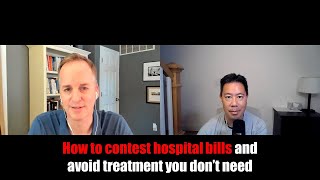
Investigative journalist Marshall Allen explains how fee-for-service incentives drive unnecessary medical care and walks through concrete steps to fight back: ask your doctor what happens if you wait, demand itemized bills, check price transparency tools, and contest charges in small claims court if needed.
Chapters
Hi and welcome to the show where we share the stories of the many who intersect with our healthcare system but are rarely heard from. My name is Kevin Poe, founder and editor of Kevin MD Today. On the show we have Marshall Allen. He spent 15 years as an investigative journalist and is the author of the book Never pay the first Bill and other ways to fight the healthcare system and win. He wrote an excerpt on Kevin MD and that's titled how to avoid treatment you don't need. Marshall, welcome to the show.
Thank you, Kevin. It's a pleasure to be here.
So get into your excerpt and book in a little bit. But first off, can you share your story and journey to where you are today?
I have had a. I feel like it's just a completely wonderfully accidental journey, Kevin. I actually studied English in college, got a degree in English. I ended up going into full time ministry for five years because my wife had been a missionary kid and had lived overseas. So I spent three years in Nairobi, Kenya, five years in ministry. I thought I would continue that. I went and got a master's degree in theology. But I started freelance writing during this time and that led me into journalism. I spent five years doing just small community news kind of journalism. Then in Las Vegas at the Las Vegas sun in 2006, I started covering healthcare and I was introduced to what was like the wild west of healthcare in Las Vegas, where there was a lot of profiteering, there were a lot of patient safety problems. And I always have written about healthcare from the point of view of the patient. The patient is engaging with this system. It's very fragmented, it's super complicated and it's ridiculously expensive. And so I'm always writing stories, thinking about what's this like for the patients navigating and paying and who are at risk when they undergo any healthcare. So that's led to 15 years of investigative reporting, including 10 years at ProPublica. I recently just left ProPublica. I now work for the Office of the Inspector General. I'm obviously not speaking on behalf of the Inspector General's office, but I'm looking forward, I literally just started this job and so I'm looking forward to continuing to look into the healthcare system on behalf now of beneficiaries, you know, more people in Medicare, Medicaid plans looking at how taxpayer money is spent. So my mission has changed a little bit in terms of the platform and I'm working in a much more collaborative way now. But the book came out of this 15 years of investigative reporting. So it just published in June and the book is really trying to equip and empower individuals and employers to fight back against these really unjustifiably high health care costs. And so that's what led to the book. I've been really excited by the reception of it, and I really am excited to talk to you about that today.
What would say are some of the biggest challenges that you face as a journalist covering our healthcare system here in the United States?
I think the biggest challenge is understanding what is actually going on. It is incredibly complicated and confusing. And that's where I have to thank people like the experts in your audience. It's the clinicians on the front lines who are generating. Every story that I've ever written about healthcare has come from someone on the front line who saw something that was going on that they were not comfortable with. And even when they tried to get it corrected within the system, usually they got rebuffed. It's the type of thing where if they saw a patient safety problem or they saw some issue with wasted healthcare spending, the system often doesn't look kindly on people who are trying to be change agents. And so those people end up becoming sources for journalists, sometimes off the record, often on the record. But no matter what story I did, I always knew I was outside of my area of expertise. I've never been a frontline clinician taking care of patients. I've never had formal medical training outside of a first responder course I took when I was a rafting guide. Right. So I don't know the complexities of this. I'm not an expert in healthcare finance, so I'm always needing insiders in the insurance companies, in the hospitals, the frontline clinicians to guide me and show me what's the most important thing to write about. How do I write about it in a really fair and accurate way? And what's, you know, you want to focus on the right thing. You know, you don't want to sensationalize something. That's a minor point. You don't want to be used by people who have agendas. So I'm utterly dependent and appreciative of the clinicians out there for guiding me. And they guide other journalists, too. I mean, we could not do our work without the frontline people showing us what to do.
All right, so let's go ahead and talk about your book. It's titled Never Pay the First Bill and Other Ways to Fight the Healthcare System and Win. There's an excerpt on Kevin MD that was published in June. It's titled how to Avoid Treatment yout Don't Need. Now, for those who didn't get a chance to read that excerpt, can you just walk my audience through it and share why you decided to share this particular excerpt?
Yeah, I was really surprised when I started covering healthcare by the amount of unnecessary care that gets provided. And, and if you look at There was a report by the Institute of medicine back in 2012 that I spent a whole year writing about in 2017. I called the series Wasted Medicine. And it's looking at all of the money that's spent on unnecessary treatment. Administrative complexity, high prices, the complexity in the payment system, dealing with all the insurance payers and all the prior authorization and everything else. I spent a whole year digging in on that and, and the unnecessary treatment.
Americans say that the high cost of healthcare is their number one financial concern year after year after year, while they estimate that maybe 25% of all healthcare might be unnecessary. If we could just eliminate the unnecessary care, we could reduce healthcare spending by a lot and really lighten the burden for the American people. So I focused on one of some of the experts from the Lowen Institute who have done a lot of interesting research into the problem of unnecessary treatment. And then I tried to show people what are the questions you can ask? Patients need to engage in their care. They are the ones responsible for giving consent, and they're responsible for being informed patients. Right. And so what are the questions that they can ask their doctors or other clinicians before they undergo something that is discretionary? Let's say it's a procedure or a treatment or a drug that they're considering taking, or maybe it's being recommended to them rather than just automatically say yes, explore this issue with your clinician, with your doctor. Ask them some key questions. And one of the main key questions, maybe the most important one that I found the most insightful, is ask your doctor what happens if we wait. Sometimes this conversation with the doctor is steered toward taking action and doing something. And when you ask the question, what happens if we wait? And it reframes the conversation in a way that says, okay, let's not assume that we're going to do something. Let's just look at the worst case scenario if we don't do something. In other words, if I don't get this MRI right now, am I at risk of some great catastrophe? Or is it just that this is like a belt and suspenders type of an approach? And maybe we could wait, maybe we could take another approach. Maybe there's a less expensive type of a scan that would be just as good. Same with drugs, same with procedures. So that was the guidance that I tried to share in that excerpt from the book.
Now, can you share some case studies or examples of common instances that care may be deemed unnecessary?
Well, mammograms are a really common one. Like I mentioned in the book, my wife's example, because she's had this every year when she goes to her doctor for her annual checkups. My wife would be in the category that the US Preventive Services Task Force would say that a mammogram is actually not recommended. And she's under age 50, has no risk factors for breast cancer, no family history of breast cancer, and yet every time she's gone to the doctor for the last decade, she has been pressed and encouraged and even somewhat, well, pressured, I guess I would say she'll tell the doctor. While I'm trying to follow these guidelines of the U.S. preventive Services Task Force, which, if people don't know the task force, they are an independent panel of volunteer experts that's funded. Their work is funded by the federal government, and they are looking at the latest guidelines, the latest studies, the most independent guidelines and studies, and they're trying to make recommendations based on that, especially for things like preventive screenings, like mammograms. And I think what their recommendation is now is that they recommend biannual mammograms for women once they hit age 50. I think that's a recommendation, and I realize it's controversial. I realize people have differing opinions. Some of the other groups say that you should do them every year or at a younger age. Some of those groups, though, I like to point out, make their money by doing mammograms. So I also encourage people to look at the incentives of anybody who's giving you advice and try and value the advice of people who are independent over the advice of people who are really feeding their families based on whether or not you undergo this treatment. It's similar to me as an investigative reporter. Nobody ever influenced my work. We had very strict policies. Every outlet I ever worked at, including ProPublica, we were not allowed to take any gift from anybody, whether we were writing about them or not. There was no money influencing any of the stories that we did. It was based on our judgment and based on the information we got from sources. When you're funded and make your money by doing a particular practice and then you recommend that practice, it just gives cause for concern about whether those are independently given guidelines.
So I want to talk a little bit more about Those conflicting guidelines, because as a patient you see guidelines from the U.S. preventive Services Task Force and sometimes they're in conflict with other professional medical associations. And one example, of course, is PSA test for prostate cancer screening because you have the U.S. prevented Services Task Force saying one thing and the American Urological association saying another. So as a patient, these are all professional physician organizations. How are patients able to sort through all these guidelines that may tell them different things?
Well, that's why I say value the independent guidelines more than the guidelines of groups that are not independent. That is just bottom line. We have seen over and over again the influence of, say, payments to physicians related to pharmaceuticals or devices influencing the recommendations made by physicians. So it's just a fact that we get influenced by the way that we're paid or the way that we're funded. And so give higher weight. I encourage people to give higher weight to the independent guidelines. That does not mean discard the other guidelines. There's a tension here between what one guideline says versus another guideline. And that's also why I like to ask that question. So let's say your, your physician is saying, well, look, this guideline says you should do this every year. This other independent one says you should do it every other year or past a certain age. And you haven't yet met that age. That's why I like to ask the physician, what happens if we wait, what's the biggest risk if we don't do this right now? So I understand, let's say the American College of Radiology or whatever is saying, do this every year, do this now. Well, I would like to know what happens if I don't do it now. I don't have a risk factor for this. I'm under the age that the independent guidelines say I should get this test. So what happens? Can you just tell me what's the risk here? Is there going to be a rapidly forming growth within me? Is there any sign that I have something growing inside of me that needs to be discovered by this? Because a lot of times people also don't focus on the risk of the false positives or the over treatment that occurs with false positives and the harm that that causes to patients. And so it's a balance, right? And ultimately the patient is the one who needs to make that decision. And even the US Preventive Services Task Force says it should be an independent decision by the patient. But here's what the recommendations say based on our independent analysis of the research. But ultimately it comes down to what that patient wants, and if the patient wants to do that, then I think that the patient should go ahead and do it if it's recommended by their clinician. So it's definitely a tension there. And this is why I think we end up with a lot of over treatment because people want to have that belt and suspenders approach, well, just in case or doctors or others might be afraid of medical malpractice. So they say, well, I don't want to miss anything, so I'm going to go ahead and do this. I understand the fear there and the concern, but I think we need to always let the evidence and the science and what's seen by the best, most independent research guide what we do, not something like the fear factor.
In your excerpt, you talk about some of the causes for unnecessary care. And clearly one of the causes is the fee for service system that pervades American health care. I was wondering, do patients play any role in pressuring the healthcare system for more tests? Because there is a perception among some patients that more care is better care. And now with things like patient satisfaction scores, a lot of physicians may feel pressure to acquiesce to patient requests for more tests. So through your years of investigative reporting, can you comment on that and does that play a role?
I think it plays a huge role. And that's why in my book and in that particular chapter, I'm trying to help educate patients so that they understand more care is not necessarily better care. And many times it is the patient demanding that they do something. I think when we look at the over prescribing of antibiotics, that's a huge factor, right? You've got the mom or the dad, I've been there, my kid is sick. And I'm like, just give them something. And the doctors tell me, well, actually you need to understand that's not how it works. Your child doesn't have something that would indicate giving an antibiotic. And then of course I back off. But I also know that urge, that feeling that you just want it to be fixed. And so there's a tremendous amount of pressure put on the medical community by patients. And my book is really an attempt to help people understand in all ways patients need to be more engaged. And so I'm trying to spur the public along to get more engaged with the financial and particularly the financial side of their healthcare, because that's the focus of my book. But certainly, you know, the pressure provided by patients is a huge factor in a lot of the over treatment. And that's something that needs to be corrected and Help patients get more educated about that.
You'd be surprised about how many billing questions that I get in the exam room. So if patients receive a bill from their hospital, and sometimes it's just not just one bill, when you go into the hospital, er, you get a bill from not only the hospital, but the emergency physician group, the radiology department, the lab department, they'll get four or five separate bills. So if patients get these plethora of bills from a simple hospital visit, what should they do?
Well, the first thing you should always do is ask for an itemized bill that includes the billing codes. And when you have that itemized bill, that breaks down all the individual charges that make up the total. And that allows you to make sure that everything you're being charged for are things that actually occurred. Because you believe it or not, there are a lot of bills that include charges for things that did not occur. The billing codes also help people price their bill to make sure that it was priced fairly. And I call a fair price the lowest available price that a hospital will give to any of its patients. So I don't accept the.
Line where people say, well, your insurance company negotiated this massive overpayment with the hospital. So we're just following their contracted rates. I'm sorry, if my insurance company's Contracted rates are 2, 3, 4, 5 times higher than those of other commercial insurers or Medicare patients or cash paying patients, and then I have a deductible and I have coinsurance. You don't have a right. Hospitals do not have a right to just charge people whatever they want just because the insurance company gave them a sweetheart deal. The patient needs to be involved in approving these prices. And so the book really shows patients how to identify these errors and overcharges and also what to do about them, how to contest them. And I even recommend suing in small claims court if your hospital or your clinician or whoever it is, your dentist will not be fair with you in correcting an inaccurate or overpriced bill.
So if a patient gets an itemized bill and you talk about ways of contesting it, is this something that they could simply call the billing department, the hospital? Do you need to hire a lawyer? What's the next step?
You call the billing department of the hospital to get an itemized bill. Your insurance company, if you're insured, can also provide those itemized charges with the billing code. So you can go two different routes there if the hospital is not cooperating, and then with the contesting, that's A negotiating game. Right. But what you need to realize is if they're taking, let's say that the procedure is a colonoscopy and they're taking $2,000 from commercial insurer and they're charging you 4,000, you know, if they're taking 2,000 from one, they can take 2,000 from another. So that's my line of thinking. There's no reason why I should get charged more or one patient should get charged more because they're covered by UnitedHealthcare. Whatever. These are pricing games that the insurers and the hospitals have been playing based on their leverage in negotiations. That has nothing to do with the care that's provided. It has everything to do with extracting as much money as possible out of the patient's pockets. And so I don't accept that. And I encourage patients to understand how they're being overcharged and then tell them, show them. Like, you can now look on hospital websites because of the hospital price transparency rule, and you can see what their individual insured negotiated rates are for their services. It's in a spreadsheet on all the different hospital websites. It's supposed to be if they're following the federal rule, and sadly many are not. But that's coming online now. You can also look at the website fairhealthconsumer.org and that will give you the average price that insurance companies in your zip code are paying. So those are ways you can tell if your bill has been priced fairly. If it's priced fairly, of course, pay your bill. I'm definitely not saying don't pay your bills. I'm saying don't accept it if they're, if they're price gouging you. That's really my argument. If it's an unfair bill or an inaccurate bill, that's when you contest it. And in small claims court, you know, the limits in small claims court are actually quite high. In a lot of states they're high enough to cover a lot of these, you know, kind of one off type of situations. Like In Texas it's $20,000. In Tennessee it's $25,000. I grew up in Colorado, it's a little lower there, $7,500. But these limits on small claims court are small enough that they cover a lot of these bills. And we don't need an attorney. When we go to small claims court, we can file a case for about $30. And then the hospital needs to respond and treat us. They need to be accountable then to the justice system and they need to possibly even hire an attorney to defend themselves, which is going to cost them a lot of money. So it gives us a lot of leverage because you don't really want to go to small claims court, but you need them to take you seriously when you say, I need you to give me a fair deal.
Now it sounds like a lot of work for patients to do all this. This is on top of whatever reason they went to the hospital or office for now, in general, when they contest these bills, how successful are the outcomes?
Well, I don't think there's data that shows in a really quantifiable way how successful they are, but anecdotally I can tell you they're very successful. I've helped two different people with small claims court myself and I've documented a lot of cases in the book where advocates and other individuals have used small claims court to sue hospitals. One was a dental dispute billing dispute that I helped with. But it's incredibly successful because it flips all the leverage into the favor of the consumer. And it's not worth the hospital's time and money to fight to spend hundreds of dollars an hour to hire an attorney to defend themselves when they're doing something that's not defensible. So it's very successful. Now is it a lot of work? Yes, it's not a lot of work, I would say on the logistical side, but on the emotional side. And it takes a lot of courage, it's stressful, it creates anxiety. So a lot of people won't have sort of the aptitude to go that route. But. And a lot of people are disabled, they're sick, you know, they're not well, they really won't be able to do it. But my perspective there is that we have about 180 million Americans who are in this situation. These are working Americans who are covered by employer sponsored plans or uninsured or their families. If just 1% of those people were to contest their bills, demand itemized bills, check prices, sue in small claims court when the prices are inaccurate or unfair, that would overwhelm the hospitals who are doing these unfair bills. And this price gouging, it would make it, it would give them the incentive that they need to treat the consumer fairly. And look at out of network bills like these surprise medical bills. If each surprise medical bill, and I'm talking about a price gouging surprise medical bill, if each of those was met by a small claims court lawsuit in response, I think it would no longer be in the incentive and in the interest of the doctors or whatever other type of clinician it is sending a surprise bill or their doctor group or whoever, their private equity company, whoever it is, it would not be profitable for them to do that if they were responded with a small claims court lawsuit for over billing and for violation of the contract with the patient by charging an unreasonable and non customary price for a procedure that the patient could have gotten for a lot less money somewhere else. So there's a doctrine in the law called the open price contract Rule. This is part of our Uniform Commercial Code and it says if a price is not given to anyone up front, a consumer upfront, it's assumed to be a reasonable and customary price that's set in good faith. A lot of these surprise bills are not set in good faith. They're price gouging and they're done because they think they can just set it however they want because they're out of network. But actually that's not okay. It's really not fair to the consumer. And so my book really shows how people can defend themselves against these practices.
We're talking to Marshall Allen. He spent 15 years as an investigative journalist and he's the author of the book Never Pay the First Bill and Other Ways to Fight the Healthcare System and Win. Marshall, what are some of the things that clinicians can do in the exam room to help patients with their potential exorbitant medical bills?
Well, so here's my message for clinicians. I think the time is never better to position yourself as somebody who's going to be fair to patients in a financial way. With all the price transparency coming on board, I think that a progressively minded doctor or other clinician should post their prices. They should have a cash price available that's a fair deal for them and will not make it necessary for them to go through the ridiculous insurance company system. So I think that clinicians have a great opportunity right now to treat patients fairly, post prices that are transparent, that are still fair to them, of course, and be very open about the pricing. And I think if they did that, that would help move these middlemen, these insurance companies and others out of the way so that the doctors can be working directly with the patients and with the employer sponsored health plans through maybe direct contracting relationships or center of excellence relationships or just by having posted prices to draw patients in, by showing them, I'm going to treat you fairly financially.
And my final question, what's your take home message that you want to leave with the Kevin MD audience?
My take home message is that you can fight back and win in my subtitle. So the book is Never Pay the First Bill and Other Ways to Fight the Healthcare System and Win. The winning is the key part. And when I say win, each individual can save hundreds or even thousands of dollars with every healthcare interaction if they avoid unnecessary care, if they avoid the variation, kind of the high end of the price. Gougers go to the places with value. And that's why I hope that more doctors will position themselves as the places where you can get good care and good value for that care, because people can't afford the way it's been going so far. So people are looking for something different right now.
Marshall, it's wonderful talking to you. Thank you so much for sharing your time and insight. And thanks again for being on the show.
My pleasure. Thank you. Kevin.
More from Marshall






Marshall Allen, "Never Pay the First Bill' Part 1 | The Ovation Show w/ Dan Labroad




