Never pay the first bill | The Future Of | Yang Speaks
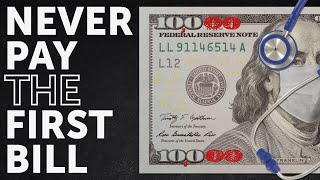
Marshall Allen, author of Never Pay the First Bill, explains how hospitals systematically overcharge patients through upcoding and hidden fees, then walks through concrete tactics: request itemized bills, verify medical codes, dispute errors, and negotiate with debt collectors. He also covers employer pressure and price transparency as systemic fixes.
Chapters
What a lot of people don't know is that nobody's actually looking at these bills. Nobody's actually analyzing this bill before it gets paid and before it gets sent on to you.
These claims spit out.
Yeah. Are auto adjudicated by a system that's processing millions of claims a day, spitting things out. Computers are auto adjudicating these things. There are strategies that the hospitals are using to upcode your claims, which means they are inflating the complexity of the medical codes they use so that they can charge more. But it's not justified. In fact, it's fraudulent. If they're willfully doing that, it's fraudulent. The system is also incredibly sloppy. Errors that show up in the bills or inflated prices or costs necessitate each of us realizing, oh wait, this bill, let's assume it's not accurate. Before we just assume it's accurate, let's assume it's not accurate.
Sa.
Welcome back to your next episode of Yang Speaks on the Future of We're talking about the future of medical bills today, which doesn't sound that sexy, but I promise it's probably the most practical thing we've ever done on this podcast. I'm Zach Rouman. I was Andrew Yang's campaign manager during his presidential run and now hosting our special series every Thursday on Our Future. And look, today's guest is a guy named Marshall Allen. He's the author of the book the Never Pay the First Bill. And it's literally a how to guide on how to avoid your insurance companies and your medical billing collectors, whoever is billing you for medical payments, how to avoid getting stuck paying more than you're supposed to. And you are going to be blown away with how often that happens. It's happened to me, it's happened to Carly, it's happened to a bunch of people who have been on this podcast before. So I want you guys to tune in. Marshall Allen, author of Never Pay the First Bill, joins Yang Speak to teach us how to avoid paying too much to these medical companies. Tune in, learn about the future. Right now.
It is my privilege to welcome to Yang Speaks the future of reporter and author of his newest book, Never Pay the First Bill. I want to talk about the future of healthcare and basically how you navigate the healthcare system. Welcome to Yang Speaks.
Marshall Allen.
How are you, sir?
Thank you, Zach. I am excited to be here. I'm really excited to talk about this with you.
This topic is a person basically personal interest to me because basically since I've I used to work on Wall street and the Healthcare was not great particularly and not necessarily cheap when you're on Wall street with a company that's at. But I was simple in that I knew what I was getting. And then since I've gone to politics, I've now worked for multiple orgs and campaigns and that sort of thing. So I've had to navigate the system and worse off, manage people who are navigating the system and they're asking their boss of questions and I'm like, I don't know. So what your book talks about, never pay the first bill, highlights all the complexities of what our system is and how average people should navigate it. So I'm glad this is what we want to dig into. Thank you for being here. Let's start though. How the heck did you get into this? And you were a reporter, you worked a number of places. Let's talk a little bit about you and how you got interested in this topic.
So I actually have kind of an unusual background for a journalist. I started in full time ministry, so I did full time Christian ministry for five years. I went to seminary, got a master's degree in theology, and then I started freelancing and then I decided to become a full time journalist. So I sort of am like an accidental journalist.
But I look at the world through a very moral lens, I have to say. And so when I became a reporter, I got really interested in investigative journalism. And my first five years I covered all the stuff you cover when you're starting out in journalism. Community politics, school board meetings, businesses opening. I didn't do that much healthcare coverage until I went to Las Vegas at the Las Vegas sun and they asked me to cover healthcare there. And again I knew almost. I knew nothing about it. But what I learned once I started covering healthcare is that there are so many schemes and deceptive practices that are built into the very legal way that healthcare is practiced in this country. That if you're a morally minded person who cares about people, it is a target rich environment for an investigative reporter. I mean, the number of astonishing and outrageous things that I have uncovered now in the last 15 years of covering healthcare, it really does continue to astonish me every day. I keep thinking I won't be surprised and then I'm more surprised.
We should have probably led with the fact that you're a moral journalist because no offense to the journalists I've had on this podcast before, but that's a bit of an oxymoron at times especially.
I understand that. I agree with it. But my argument would be that when journalism is practiced with integrity, genuine truth telling with integrity, I think it's a very moral enterprise. But of course you do see things that.
Oh yeah, honestly, it's like. I think it's most. And probably what we'll talk about today, most of life comes down to incentive. Most of the problems we're frustrated with comes down to incentive problems where you have good people incentivized to do slightly bad things and when they. Or just like little selfish things or whatever it is. And then the snowball grows and grows. The next thing you know, people are piling up the bottom people getting really hurt.
That gets at the big problem with healthcare in the United States. Right. What is the incentive from the industry side? The incentive is to make money. It's a profit driven system. And so we have, I like to say sometimes we have the healthcare system almost that we deserve as Americans because it really does reflect who we are.
We love money.
Yeah, we love money in the United States. And frankly, a lot of times what makes money is seen as acceptable. And so the health care industry makes a lot of money and employs a lot of people. And so people might have a hard time saying it's wrong, but the fact is we pay twice as much per person for health care in this country than the citizens of any other country, and we're getting much, much less in return. We still have tens of millions of people who are uninsured and they say now that one in six Americans has medical debt in collections, so we're paying twice as much and we're getting very, very little for our money. When you look at what people pay.
It'S laughable because this isn't. I think I've talked about this on the podcast before. If you look at the list of problems like social problems that are out there, there's a number of them that like poverty, for example, like, you could debate the solutions to that a number of different ways. And we do. But health care, to me, you go down the list of all the social problems that are difficult but healthcare, other countries have solved for this, which is to me is like we're doing it wrong. And I agree it comes down to worshiping the almighty dollar in this country. If you make a billion dollars hurting people, whether you're making addictive drugs or frack hurting the environment or exploiting people or selling their data, we'll put you on the COVID of Forbes magazine, we'll put you on whatever, we'll celebrate you. If you make a billion dollars running the Boys and Girls Club, helping kids all over the country. We'll crucify you. Actually, if you make $250,000 or a million dollars, that's right, a fraction of that will crucify you. So your book, which I.
Basically talked all about how people can beat the system or navigate the system where.
Almost like navigating the incentives you're talking about. Talk to me a little bit about before we get to the tactics, like let's talk about. You talk about incentives, but what are you seeing that was the biggest pain point for people as they're trying to navigate this stuff?
Well, it's hard to say the number. There are a number of pain points, but they combine to, to create.
This massive problem for the American people. I mean, we've just come through the pandemic and yet you and I and everyone we know has a shared experience, almost like we had this shared experience with COVID19 where we have massive headaches with the system. One of the big problems is the fragmentation of the system. It's impossible to understand. It's all these siloed entities, whether it's drug companies or physicians or hospitals or insurance companies, employers, all these self interested stakeholders involved in this incredibly needlessly complicated system that now we as individuals are supposed to somehow navigate. Very difficult to navigate the fragmented system. Another big problem, it's opaque, it's not transparent. We're not told what the price is before we get a procedure or before we get a drug like we would with any other consumer interaction. I mean, imagine if you went down to your McDonald's and you got your burger and you didn't get a bill till three weeks later and it was four, you know, five times more than you should have paid for that burger. Or imagine if I walk in there with my mom who's over age 65, she gets the price for the Medicare price for people over age 65. So she pays $3 for her big Mac. But then me as a working American, I get charged $15 for my big Mac, which is really.
The working Americans are paying exponentially more than Medicare patients. And that's a standard accepted way of doing business. But it's normalized deviance. There's no reason that working Americans should be required to pay two to five to even 10 times more than a Medicare patient for something like a knee replacement or an MRI or whatever health care you need. It's ridiculous. And yet the system has decided that this cost shifting, where they say, well, we don't make enough for Medicare, so we're going to shift the cost on to working Americans. That's the standard way of doing business. And I, first of all, don't believe that nobody is making money on Medicare. I think that is a myth.
But you know, that's true.
We need to actually investigate that. And then second, there's so much waste in the system that maybe they need to become more efficient, maybe they need to not be so bloated with their administration. Maybe we need to simplify the way we pay claims, which is wasting hundreds of billions of dollars a year. There are other things that we could do to lower the cost of care. And I think I've just come to the conclusion, Zach, that we now have more than 20 years of data that shows year by year cost increases, massive spikes in the cost of care that are being borne by working Americans. And if the system wanted to change, it could. If our elected officials wanted to change the system, they could do it. I have come to the conclusion that no one is going to save us. We have got to. Yeah, we, we have got to stand up for ourselves because we've been bullied for so long. And so that's why I wrote the book. I mean, the book is called Never Pay the First Bill. And the subtitle is and Other Ways to Fight the System and Win. And I really focus on the winning part.
Okay.
I like to win, and I think everybody likes to win. And the dirty secret is that for the insiders who know the industry, they don't interact with the industry in the same way with the rest of us. They know the hacks, they know the workarounds, they know how to avoid getting ripped off. And so with each chapter in the book, I've kind of broken down how people can follow the advice of insiders and what are the how to tactics to fight the system and win.
I love so many things you just said because one thing we talk about, Andrew and I talk about a lot, it's like, hey, we've met the leaders. We've both in the for profit and the nonprofit and the political space. And the calorie's not coming. It's not. And the other challenge is the people that actually have the power.
We have our own challenge. We're distracted. We're distracted by either working all day and putting food on the table or meeting rent or our own healthcare issues. Navigating this system because we think we have to. Or I mean, other things. Entertainment, the Kardashians, Netflix. I mean, you know, this attention economy, we are not paying attention. What I love about your book and why I wanted you on here is because there are things our government needs to do and I'm excited about that. I think we eventually we have to get there at some point. But if it's not going to fix itself or it's not going to fix in the short term, what can you actually do in the short term? That's what your book literally lays out, like how to win. So break this down for me, brother.
Tell me.
I'm assuming this, this playbook you have, if you will, starts after you get the treatment, like, here's the bill, time to pay up. Is that where the journey begins, where your solutions start helping? Walk me through it.
There's various ways you can look at this. So let's just pretend that you've gotten a medical bill. Let's just start with the title of the book, Never pay the first Bill. I'm not saying never pay your medical bills. The principle here is never pay the first bill until you have analyzed it, until you have scrutinized it to make sure that it's accurate and fairly priced. Because what a lot of people don't know is that nobody's actually looking at these bills. Nobody's actually.
Analyzing this bill before it gets paid and before it gets sent on to you.
These claims spit out. Yeah.
Are auto adjudicated by a system that's processing millions of claims a day, spitting things out. Computers are auto adjudicating these things. There are strategies that the hospitals are using to upcode your claims, which means they are inflating the complexity of the medical codes they use so that they can charge more. But it's not justified. In fact, it's fraudulent. If they're willfully doing that, it's fraudulent. The system is also incredibly sloppy. The number of things that get put onto people's medical bills that are wrong, totally in error. I have talked to people who review medical bills for a living, who tell me they have seen bills for patients who receive two circumcisions. I don't think anybody has ever had two of those. One is enough. You know, multiple gallbladder removals on the same patient on the same day. I mean, these are things. Pregnancy tests on 82 year old women or on women who've had hysterectomies. You know, so these are things like the amount of errors that show up in the bills or inflated prices or costs necessitate each of us realizing, oh wait, this bill, let's assume it's not accurate. Before we just assume it's accurate. Let's assume it's not accurate. So the first step I tell people is get an itemized medical bill. The bill from the hospital might say medical services, pharmaceutical services. Well, what goes into medical services? That's like going to the grocery store and getting one lump sum bill for all your groceries. You wouldn't be able to compare the price of your eggs or your milk or your cheese and see if you're being cheated or to make sure like, hey, why is bread on my grocery store receipt? I didn't buy bread.
I'm glued. I have a gluten allergy. I never would.
I have a gluten allergy. Right, so get an itemized bill. It's your right to have one. And you want that itemized bill to include the medical billing codes. And now this is going to sound to people like totally intimidating. I get that. But if you practice some of these tactics and are willing to learn just a few basic steps, you can save hundreds or even thousands of dollars with every healthcare interaction. I don't, I don't think.
You know what also is intimidating? Thousands of dollars in healthcare bills.
That's right. How about medical debt? How does that feel?
Yeah, that sounds real intimidating.
So, so get an itemized bill. If you're, if your hospital won't give you those billing codes, you can get them from the insurance company. And in the book I lay all this out, I explain for people how to do this. The billing codes, you can look up those online, go to Google, type in medical billing code with that five digit billing number and it will explain what that bill means. When you go for health care services, they create a medical record. The billers translate the medical record into a claim that they submit to your insurance plan or that they turn into a bill and give to you. You can check your medical records to see if the care in the record actually shows up in the bill. You can check to see if the medical record is accurate. So you can also get your medical records. It's your legal right to have them. It's a good idea to have your records anyway. So then you can check the bills. You can check prices now. So prices used to be completely blinded. Now the federal government requires hospitals to post their prices for common procedures.
Is the person I'm complaining or asking for clarification to or asking for the price breakdown? Is it the, like the billing department, billing department of whatever this. And sometimes it's a third party.
It might be a doctor, it might be a hospital, whoever it is you just want.
So you have the right to ask.
Whoever'S Sending you the bill, you call the billing department and ask for an itemized bill. And then if you have questions or you've identified things that are errors on the bill, or maybe your insurance company didn't actually process the bill properly. In fact, I got a bill from an urgent care center where I took my son last year. The bill came in the mail for $250. It said, amount due, 250. Responsible party Marshall Allen pay. Now, it had a little thing to put in your credit card or call. If I was to follow it, I would pay it. But I have a very expensive health insurance plan that has good benefits. In fact, I have a zero deductible plan. So that's the amount of money you have to pay before your plan kicks in. So I knew, I was like, man, what happened here? I called the insurance company and I said, hey, did they submit this bill? They said, no, it never got submitted. So the bill didn't even get submitted to my insurance plan. The urgent care just sent me the bill. Well, I called the urgent care and I said, hi, I think you sent me this bill and error. I called my insurance plan and they said it never got submitted. The person contested a little bit. They said, well, we did submit it. I don't think it ever got submitted. I said, would you please try and submit it again? They submitted it again. I never saw a bill for that. So a lot of there's mistakes that happen at every step of the process. I had to get five Covid tests for my family. I have three kids. I was getting the insurance company explanation of benefits. Right. The EOB. And I explained how to look at EOBs as well. Well, four of them were fine. But you're not supposed to pay for Covid tests.
No.
That'S the closest thing we've had to Medicare for all.
That's right. Well, lo and behold, one of the bills included a charge that was passed on to me. I called and inquired, why was this charge passed on to me for a COVID test? And they said, oh, because the diagnosis on that, the test for your wife was acute respiratory distress syndrome, which is a really severe.
Symptom of COVID My wife wasn't in a. She had no respiratory issues with COVID She had no problems. Well, they put the wrong diagnosis code on it. That led to a bill for me. Again, it was an error. I sent it back, they corrected it, and I never saw a bill for that. But you have to assume that things are an error rather than. Rather than assume that these people Know what they're doing. It's chaos out there.
This is like what I was over time in the beginning with incentives. If you're the CEO of a health care company, your job is to maximize profits for shareholders. Thank you. Every business school in the 1980s and I guess still today, that's the goal.
That's right.
So you're like, hey, if we lean six Sigma, our efficiencies, for those of you don't know that is, that's when you like, that's. You could take a course on lean six sigma course and make sure your process is hyper efficient. No errors or very smaller margin of error. If you don't do that, if you just let it be, let errors, incentivize errors, never double check the work, that's going to yield 5% of errors, 10%, 20% that, and every time there's an error, it usually means more money for us. And you can model that out. You are going to intentionally or unintentionally, probably intentionally, maybe not staff up the air department. Maybe never double check the work because you're gonna have. You're gonna see more money and it's not. And then you're like, well, that CEO is a jerk. But the reality is if he doesn't do that or she doesn't do that, sadly, it's statistically probably a he.
He's gonna get fired or she's gonna get fired. That's what's gonna happen. The board will vote him out because they won't see enough money.
And that is, in fact, their bonuses depend on profitability.
Yeah, that error rate needs to be high. It's really dark. And your point, which I love, is like, well, the best thing, you could either hope the CEO conscience or you can hope our government gets Zach together to stop that. Or you could defend yourself and follow the steps you have in this book.
Hey, are you like everybody who has taken a mental toll during COVID Because I have. And my saving grace has been BetterHelp. And this episode of Yang Speaks is sponsored by BetterHelp. And what is BetterHelp? It is professional counseling done privately, securely and simply online. If you go to BetterHelp's website, you get matched on a very convenient website that you can start communicating with professional counselor in under 48 hours. It's not a crisis line. It's not even self help. It's just professional counseling done securely online. So you can talk about whether you're depressed or you're stressed, you're anxious, you have relationship issues or you're not sleeping well or you're angry. For me, it's about direction and I call it my steam valve. I just blow off some steam once a week and it's freaking fantastic. It's all confidential, it's convenient, it's professional, it's affordable. I'm a big, big, big believer in this. It's time to stop just like tiptoeing around the fact that we all need someone to talk to. So listen up. I want you to start living a happier life today. And as a listener to Yang Speaks, you'll get 10% off your first month by visiting our sponsor. Sponsor betterhelp.com Yang so join over 1 million people who have taken charge of their mental health. That's betterhelp.com Yang.
The big question then is, okay, so you've identified an overcharge or an inaccurate charge or you've identified. In fact, I helped, I've now made this my hobby to start helping people with their medical bills. And I've even started now a side business that I'm calling Allen Health Academy to create a series of videos that are based on the book.
That will train consumers and employees in these tactics so that they can be equipped and empowered to fight back. What do you do then if they won't correct it? Right? Like, sometimes it's easy, you know, they. And this is also the thing. Nothing is standard here. You might, it might sound like a total pain and it might take you. Like for my urgent care bill, it took me about three minutes and I saved $250. It was so easy to fix both those examples I gave you. It might be easy, it might be complicated. They might not respond. So I think the game changer, I have a chapter in the book on how to defend yourself in small claims court if you're being over billed. And so let me give you an example. There's a young woman who I just helped with her medical bill, a bridge designer here in New Jersey. She went to the hospital, got three stitches in her finger, and she was charged. The negotiated discounted rate was about $6,000 for three stitches, about $2,000 per stitch. She got her itemized bill and she could see that most of the charge came from one particular service. It was the emergency room exam. They build this thing at what's called a level three emergency room exam. Now, because of the federal government's price transparency rule, the hospital has to have its posted prices on its website, even the negotiated rates for each insurance company. So she could see by looking at that bill that the UnitedHealthcare negotiated. Discounted price for that exam was $5,800. Meanwhile, the cash rate was $256. So in other words, if she would have been uninsured and paid cash, she would have paid 22 times less than she was required to pay with her UnitedHealth care insurance plan.
This young woman contested this. They refused to negotiate with her, they refused to change it. She sent. I have a copy of a warning letter to send to a hospital before you sue them. It's a, it's a sample letter. People can plug in their own details. Gives them 30 days. And if you follow the process where you've got the medical bill, the itemized bill, you've got your medical records, you've looked up the prices so you can see whether you're being screwed and just how badly, well, then you sue them in small claims court for the amount that you're being overbilled. So she sued them in small claims court, and it resulted in the hospital coming to the table and settling it with her for, for, for nothing.
So I had this issue essentially with, with a landlord, which is obviously a different system, but small claims court. Small claims court in some ways. But one of the things that the landlord was able to do was.
Mess up my credit for a short period of time where they went to the credit agency and they're like, well, because I was basically saying, you didn't do xyz, so I'm not paying you rent until you do it. Right? Like not to get into it. But that was where it was. And it's very similar here. It's like, well, you are charging me this, I'm not paying that. So I'm not paying you anything until you come to the table or whatever you want to do. But they can go to whatever a creditor and say, boom. And the next thing you know, your credit's down a couple hundred points or whatever it is, and that can hurt you and other things. What are your thoughts there and how to handle that? Or I think if you show that you're disputing it, they'll. They have to put it down. But I'm not sure the answer to that.
That's correct. But I think the other key here is this process doesn't actually take that long. And so usually you won't get to that stage until you're probably past about three months. As soon as you get the bill, you need to take a look at it. And it doesn't take long to do this, but you do have to be Intentional. And you have to learn this new skill. You might have to be persistent to make sure you get the itemized bill so you can see if you're being screwed or not. And if you're not being screwed, then pay the bill. Pay what's fair. But if you're being ripped off, then you want to contest it. And you can easily do this within that three month time frame. But it's really important to know these skills in advance so that you know how to handle it. So that's, that's really what I'm trying to do, is equip people so they're prepped.
You make your own decision before this happens. Okay, they're gouging me by an extra hundred bucks.
Is it worth it? Yeah. And so some people might be like, look, it's not that big a deal. I'll just pay it. Other people might say, no, I'm gonna fight this thing. Yeah.
Because it's economically prudent, right?
That's right. Everybody is in a different situation. But if all of us started demanding fair treatment in this way. So think of what happens when you sue them. In small claims court, you can do this for about $30 without an attorney. It's very easy. You've already gathered all your evidence on their side. Now they probably need to hire an attorney at a cost of thousands of.
Dollars in attorney fees.
Thousands of dollars in attorney's fees to defend a case that's maybe worth a few hundred dollars, maybe it's worth a few thousand dollars. What we do when we do that is we take the game out of the playing field where they make all the rules in their favor, and we bring it into our American judicial system, which is not perfect, but it does allow for small claims court for consumers to defend themselves. And in a lot of states, the limits are big. Like we have a branch called the Special Civil Branch. Here in New Jersey, where I live, the limit's $15,000. In Texas, the small claims limit is $20,000. In Tennessee, it's 25,000. I think that's the highest in the nation. But so this covers a lot of medical bills, especially the typical kind of easy episodic, maybe emergency room care or something like that. So it gives them the incentive they need. In fact, another case I just helped, a friend of mine at my church had a dispute with their dentist, where the dentist overcharged them by about $300 because he didn't run it through their insurance plan the way he should have. They fought that dentist for years. They argued with him they called the biller, they got the runaround. It's much easier actually to go, you can do it all online, by the way, file the case online.
The dentist got served with a lawsuit. They got a call from the dentist attorney a few weeks later once he had been served and they got a check, they settled it right away. They didn't want to go to that hearing and have to deal with all that nonsense. So it changes the leverage. So what I'm trying to do is show people, here's the leverage we have. And by the way, employers have huge leverage that they have not even started using. So I have eight chapters in the book that are focused on what individuals can do, looking at different scenarios where you need some people need advice. And then I have three chapters for employers. And I think employers are really the sleeping giant in all this.
Healthcare reform battle. Employers have been passively passing this cost on to their employees. That's what's been happening over the past decades. It's now become so unbearable and shameful that everybody knows it because everyday working Americans just can't even afford these deductibles and high premiums that they're being forced to pay. So I think that if employers and employees could get on the same page and realize how much of their money is being unjustly burned and wasted and squandered by our healthcare system, we have what they need to survive. They need our money. If they don't have our money, they've got nothing. And so what we need to do is identify there's price variation for every product in every market, find the people who are giving you the low price, the fair price and reward them with your business. And if somebody is charging you a high price, don't give them your business. It's really as simple as that. And once, once we start, you know, you're seeing that now where more employers who are self funded or entering into direct contracts with primary care doctors or even with specialists, you see like Walmart has their centers of excellence plan where if you need a knee replacement, say, they say, well, you can go anywhere you want, but if you go to this center in your region that we have a direct pay relationship with, we'll waive all your co pays, all your deductibles, all your cost sharing and you'll get that paid for 100% by the employer sponsored health benefits plan. Nothing out of your pocket. The quality is actually going to be better and the care is going to be a lot cheaper. And so you see more progressively minded employers Creating these different models. And I think that really is the future of where we're going and where we need to go. There can be debates. I feel like Medicare for All is like a political football that people like to kick back and forth, use as a talking point to rile up their base. But the difficulty of putting something in place like that, I mean, the obstacles that would have to be overcome are absolutely enormous. Whereas what we can do right now is employers and employees can get on the same page. They can see how they, they've been exploited and they can start going to the people who treat them fairly and shunning the ones that don't. And sometimes the ones that don't treat us fairly are the big brand name marquee insurance companies and medical facilities. Those, frankly, are some of the worst offenders and we need to shun them. Yeah.
Andrew and I have talked a lot. I don't love the concept of your health care being tied to your employment. I think that in the 21st century economy, it makes less and less sense over and over. The more you unpack, you peel back that onion. But it is a competitive differentiator for employees or for employers to say, hey, you come work here. Like, your healthcare is covered, we got your back. And like, and good companies do that.
Yeah. But let me, let me just point out something here. I mean, I'm trying to reframe the way we think about this stuff because there's even a myth of this idea of rich health benefits. Right. Because all of that money that the employer is paying in health benefits belongs to the employee in the form of the employee compensation.
They're paying too much and it should be going to the person.
Yeah. That's just taking more money out of your wages. So these rich health benefits that all the white collar workers get, Touche. They're being fooled. This is how the system wants you to think about it. Oh, your employer's paying. No, you're the one paying for this.
You're right.
The employer is funding the compensation. And then we're compensated through our wages, our health benefits, our paid time off, or maybe hopefully a retirement plan contribution. So that's our benefits package. That is our pool of compensation. But 100% of the money, once the employer funds our health benefits, that all belongs to the employee. And I compare this to like your employer taking you out, saying, hey, I want to take you out to a fancy restaurant, let's go out for dinner. So you go to this five star place, your employer says, order whatever you want. It's on it's on me. You're like, great. So you know, you're getting the steak, you're getting the flambe, dessert, you know, wine. Well, they bring the check and they put it on the table. And your employer reaches into your wallet and pulls out your credit card and pays the bill.
That's what it's like when you have rich health benefits that are supposedly paid for by your employer. It's not paid for by your employer, folks. It's coming out of your compensation. And so then there's less money available to pay you wages. And if you look at the studies that have been done, it shows wages are stagnant in the United States over the last two decades, in large part because health care costs are consuming employee compensation at an unreasonable rate.
That's fascinating. And that's right, because I pay, depending on the company we've run, it's 500 to 1000 bucks a month per employee. And you can get scale on that. You can dial up, dial down the benefits. Um, but, and in most cases of what I just talked about, let's say I land at $750 an employee right in the middle there. The employee still has a paper crap like it doesn't even fully. So not only I taking 750 bucks a month from you, the employee, but also you're still stuck with.
Whatever the difference is in your actual medical bills. It's a mess.
Okay. This episode of Yang Speaks is sponsored by Athletic Greens. I just had this, I have this little awesome athletic greens bowl. I put my athletic greens powder in it. I take a scoop every morning, put it in some water, mix it up. It tastes delicious and it's very good for you. It's got 75 vitamins, minerals, whole food source ingredients including a multivitamin, multi mineral probiotic, green superfood blend and more. And they all work together to fill the nutrition nutritional gaps in your diet, increase your energy and focus and help with digestion and immune system and everything you need in one powder instead of multiple products. So here's the deal. Simply visit athleticgreens.com yang and join Health experts, athletes and health conscious go getters around the world to make a daily commitment to their health every day. And if you do it now, they're offering our audience a free one year supply of vitamin D and five free travel packs, which I do love. So visit athleticgreens.com yang get your free year supply of vitamin D and 5 free travel packs Today.
Your book talks about this and your website will eventually have advice for People to start to navigate this. I love the advice on how to go to small claims court because that sounds daunting and like a pain in the butt. And it's probably not. I mean, it's time consuming. Right. But it's if done well. I mean, a lot of judges, when it's the small human versus the big company, they're, they're inclined in that type of court to side with the human.
Especially if they're someone who probably takes the time to read your book and know their stuff, if you will. Another thing you say in your book is, so I'm making friends with your debt collector.
How does that work? Because that's like, I don't know, maybe it's like you were in ministry. I think back in biblical terms, it's like we don't like the debt collectors or whatever. I mean, maybe Jesus did, but that's.
Right, the tax collectors are the worst, right? Yeah, I would say the debt collector is the modern day tax collector scorned.
The parasite on here.
So I think the thing is that I talked for this chapter. So in each chapter I tried to feature an expert who could be like a guide into this world to help us, to show us how to win. Right. I don't know. Personally, I thankfully have not had medical debt. Thankfully. And so I haven't had to encounter this myself. But I talked to Jerry Ashton, who founded the charity RIP Medical Debt. And he used to be a debt collector for decades in healthcare. And so Jerry knows the ins and the outs of the industry. And that led him to start this charity that actually buys people's medical debt and forgives it. So I asked Jerry, what's the right approach here? How do you handle this? And he explained, again, medical debt, like your medical bills, you don't want to avoid it when the medical debt collector calls you. In fact, the first thing you want to do is dispute the debt in writing immediately. Even if you think, oh, I did go to that doctor, I went to that hospital, dispute it in writing. Make them prove that they're the ones that own the debt, that they're the ones that are justified to collect for it. Also, I would assume that any medical debt that's out there is based on erroneous bills and jacked up unfair prices, because that's the standard in the industry. So I would not assume personally that any medical debt is as a result of just somebody not paying an honest bill. And so it's also, I think, one of the just great shames of our country that we have this problem. But the point is, you have to negotiate with that medical debt collector to get out from under the debt. Let's say it's a legitimate debt. You're going to dispute it, but let's say you're going to come to a. You need to come to an agreement. I like to use the term we need to come to an agreement that works well for both of us. So when you're talking to that medical debt collector, you need to understand how much money can that debt collector get from you and still be seen as a winner in his boss's eyes. I did it right. I won. Hey, boss, I won for you. I collected. And the surprising thing is, what Jerry told me is if your debt gets sold to a debt buyer, it was probably sold for pennies on the dollar. He said, maybe a nickel on the dollar at the most. So therefore, if you owe $1,000, the hospital says you owe 1,000, it would have been sold to a debt collector for.
What'S 5%, 50 bucks.
In other words, if you pay more than 50 to that debt buyer, they're profiting. So I asked Jerry, what do you think is the range, the ratio of discount that you think would make the debt buyer and debt collector feel like they got a win? He said, probably 15%. So let's say you're going to try and get that thousand dollars you owe down to 15%. This all comes now down to negotiation.
Right?
I'm sure you've done a lot of negotiating. I've done some negotiating in my time. I love that process. But it doesn't help to have it be hostile and confrontational. So you're going to want to cuss that debt collector out. You're going to want to tell them how unfair it is that they're coming after you, what a scumbag they are to be in the business they're doing. I mean, you're going to maybe want to say all those things, but what if you said, hey, look, I would really love to pay you this. The problem is I don't have the money, and unless you can give me a massive discount, I am not going to be able to pay anything to you, and you're just going to take an L on this one. So what? Tell me. Let's. Let's talk. Let me tell you about my family. I got bills. You know, have them get to know you. Get to know them as a human being. And then if you do come to an agreement, Jerry's other big piece of advice is do not ever enter an agreement with a medical debt collector that you won't be able to stay true to, because if you violate that agreement, even once you miss one payment on a payment plan, they will come after you then for the entire amount. It's the whole thing. So just hold them off. Your credit's already hurt because of the medical debt. Hold them off. Make them think they're not going to get anything unless they get a great deal from you. Be the friendliest person they've ever met so that you know they actually want to give you a good deal. It's amazing how much, you know, more bees with honey. Whenever. More bees with honey, Right? So I think that's really good advice. It's counterintuitive, but it makes sense.
Of course, because you want to. You're so mad because I dealt.
This is.
I had this with basically a rent dispute. And everybody I talked to in writing from the management company was like, you owe this much. You owe this much. I'm like, I'm not paying that much. I don't want to go to court over this, but I'm not paying that much.
It's ridiculous.
But once I finally got to the end player, like the final boss, whatever you want to call it, who's like. Who's like. I'm like, I finally got on the phone, I was like, look, I'll be real with you. Like, you don't want to go to court over this. I don't want to deal with this crap anymore. Like, this is what I think is fair and what I owe. And this gives you money now that either. If I go to court, I think I'm going to win. Maybe you do. Who knows? But even then, you're going to have legal fees. You're not going to get it all. What do you think? He's like, great. Can you send over today?
Yes.
Done.
Period.
The solved.
And if you pay in a lump sum right now, you're going to get a discount on this.
A discount.
Which I did. That's right.
And what your book is teaching, which I love, is, hey, this is an art. It's not science. Stand up for yourself. You have more power than you think.
And you're getting deceived in terms of. Because I think a lot of us get that fear. You get that bill. You're like, oh, crap, I owe this. And then you're like, how am I going to pay for it? How am I going to pay for it? How am I going to figure it out? And the reality is you're saying, pump the brakes.
That may not be what you owe. It may not be close to what you owe. It could actually be an error.
That's right. Make them. Make them verify it. Make them prove it. And if you're getting screwed, don't back down. I mean, I think the other thing, you know, maybe from my ministry background, I look at this as a moral issue and I frame it as a moral argument. But there is incredible moral force behind the truth of one person's story. And it's kind of like how in a movie, you know, when there's that scene where the person's getting bullied by the big bad bully and everybody can identify with that. Right. But when that person then stands up to the bully and wins, it's not because they're more powerful or stronger than the bully. Not usually. It's usually because they have what's right on their side. And as patients, we have the moral high ground here. We're the victim here. And we need to speak up and call folks out and make them justify the unjust things they're doing, which they won't be able to do. Make them prove that we owe what they claim we owe, which often they won't be able to do, and then refuse to pay it. But not because we're not paying bills that are fair, but because we're saying, you don't have a right to exploit my sickness for profit. You're not entitled to. To just take as much money from me as you want. That's not okay. And when we stand up for ourselves in that way, there's moral force just in us asserting what's true. Right.
One of the few things that actually scales is truth and facts. So to your point like this is it is sometimes a painful fight. Sometimes there's a lot of labor involved. It's complicated, annoying, but you should win it because you should have. You realistically have facts on your side. If someone is profiting off of something you cannot control.
Yeah. Let me. Let me give you a few other topics here where it's really important. If you know how things work, it's actually easy to save a lot of money. One example is avoiding unnecessary care. I have a friend named Jeff. I often have people call me and ask me to help them find a doctor, you know, because I've done a lot of reporting on patient safety issues, quality of care issues. Anyway, Jeff had a lot of spine pain and thought he needed a spinal surgery. So I helped him find a couple doctors. But I also told him, you know, Jeff, many back surgeries are Unnecessary and can be treated with physical therapy, lifestyle changes. So look into that, too. Just be aware that you might not need back surgery. Well, he went to a spinal surgeon, and the spinal surgeon told him, this is an emergency. We need to operate right now. If you go out and play golf, you could be paralyzed. Jeff went to another spine surgeon. The other guy also. He didn't. He wasn't quite as dire, but he recommended definitely, I think we need to operate. Well, Jeff wasn't quite comfortable with that. He thought he'd give us some time. He went to physical therapy. Six sessions. He learned some exercises he could do at home. He changed his diet. He changed the way he did his martial arts training to tone it down a little bit. And the back pain went away and he had no problem. And now he just shakes his head thinking about how much it would have cost him and how much harm it would have caused him if he would have had a spinal fusion or some other type of spinal surgery. So we can save a lot of money just by avoiding care we don't need. And so the number one question I always recommend people ask their doctor or nurse practitioner or whoever when they're offering you something that's like a discretionary procedure or test or drug, Ask them this question. Ask them, hey, what happens if we wait? What's the worst thing that could happen to me if we don't proceed with this right now? Make them articulate that for you. Find out what the options are. If you take a minute, research it some more, go home. Obviously, we're not talking about an emergency case or a trauma case or a case where you have confirmed cancer that needs to be treated. We're talking about discretionary care. And most medical care is discretionary. So find out what happens if we wait. Make them frame it that way, and then we can avoid unnecessary care.
I love that. I'm a big believer in second opinions. I've had certain doctors tell me. I'm like, hey, my stomach hurts. On xyz, one will say, you need surgery. And the other says, just here are five foods to avoid. And like the difference. And you're like, maybe I'll get a third or fourth opinion. Because you guys are all over the map. And, you know, plenty of insurance companies have a network of doctors. They don't need to be world class. You just go and you set up an appointment when you're free. So. Or even someone will do on the phone. And now within Covid, a lot of them do virtually. So I love that because there's some Sort of.
And it's frustrating. And you probably feel this. We all want to trust our doctor. You know, there's a desire you go in like, doc, tell me what's wrong. And there's a couple problems there. One, they are human, like us. And two, to our point earlier, their incentives aren't always aligned with yours. Many times it's more procedures and treatments. Even if they're honest, they're like, yeah, you know, I get paid for this. It's probably helpful for them.
It'll eat what you kill. It's eat what you kill. You know, they get paid by the procedure, and so they're incentivized that way. Yeah.
So how can. If people want to find your book find you? Is it marshallallen.com, where can people go?
The book's available on Amazon, Barnes and Noble, anywhere books are sold. I have a Penguin Random House as a publisher, and they've done an amazing job getting the book out there. For more information about me or my curriculum, if people are interested in that, for more health literacy, go to marshallallen.com and people can sign up for my newsletter. Learn more about me and the work I'm doing. I'm really excited, Zach. I mean, I wrote this book because I have done 15 years of careful investigating of the system on behalf of the public, and nobody's paid me to have a particular opinion. I love ProPublica because they let me do deep dives. I mean, the stories I do for ProPublica take months each of them.
Yeah. And so rare in journalism today.
It's so rare. It's so rare. And they're genuinely interested in me doing these stories on behalf of the public. And so I don't write about healthcare from the point of view of what's good for the hospitals or for the economy or for employment or for shareholders. I write about it from the point of view of the patients. And this book really was a privilege because it allowed me to take 15 years of what I've learned and add more of my personality to it and more kind of how to tactics about what to do about these things. And I really think, I really hope it will empower and equip people to not become victimized by the system.
There's a certain wholesomeness and real life superhero aspect to what you're doing. So thank you for doing what you're doing because it's very much aligned with kind of humanity. First concept is about you and helping the people, and you're talking about where it hits at the ground level where this system, the rubber, meets the road. And that's where most of the pain is. So I'm excited. I mean, look, if millions of people read your book, millions of people will get help. That's like the reality of how simple and straightforward and practically tactical this book is.
So, Marshall. Yeah. Thank you. If people put these tactics into place, they can save hundreds or thousands of dollars with every healthcare interaction and they will flip the system upside down. The system will have to respond if people get engaged.
That's the. And that is the real takeaway that's across anything. If people start caring more, things will start to change until they, like, you know, or we're going to be. It's probably just going to keep getting worse. So, Marshall, thank you. You guys can pick up the book. We'll have the link. Never pay the first bill. Seriously, don't pay the first bill. Ask. Do your homework, guys. I hope no one gets stuck with crazy medical bills. And with that, thank you for joining the Future of. It's great to be with you, Marshall.
Thanks, Zach.
More from Marshall






Marshall Allen, "Never Pay the First Bill' Part 1 | The Ovation Show w/ Dan Labroad




