Never Pay the First Bill - The Brothers on Books Podcast - Episode 21
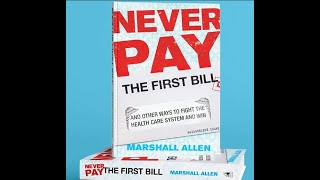
Marshall Allen, an investigative journalist who spent 10 years at ProPublica covering healthcare, explains how billing errors and opaque pricing inflate medical costs. He shares concrete tactics: never pay the first bill, ask for the cash price, add a consent clause limiting charges to Medicare rates, and use small claims court if needed.
Questions this video answers
2019
One in five Americans (20%)
About $21,000 per year
About 3–5% of total premiums
Medicare prices are usually between 2 and 10 times less than commercial insurance prices
Chapters
Foreign.
This is the Brothers on Book podcast where we find great books that will give you real value and actionable steps and have fun in the process. Please reach out to us@brothersonbooksmail.com for any book recommendations or if you would like to be a guest host for a particular book that you have in mind. A great review or rating on whichever platform you're listening to would be greatly appreciated. And lastly, if you can think of any friend, family member or co worker that might like this episode, please pass it along. I'm Alex Olwell and with me, as always, is my brother, Jack Allwell. And today we have a very special guest, Marshall Allen, the author of the book we'll be doing, Never Pay the First Bill. So, Jack Marshall, how are you guys?
Great. Thanks for having me here.
Doing great as always.
Alright, thanks for coming on. Marshall, would you like to give a brief introduction about yourself and sort of how you came about writing this book, Never Pay the First Bill?
Yeah, sure. So my name is Marshall Allen. I've spent 20 years as an investigative journalist. Fifteen of those was investigating the healthcare industry. I started investigating healthcare as a journalist in 2006 when I was at the Las Vegas sun newspaper and then I spent the last 10 years at ProPublica up until July. I just recently left ProPublica and I now work for the federal government.
But I always have to say when I work for the federal government that I am not speaking here on behalf of the agency I work for. I work for the Office of the Inspector General for the Department of Health and Human Services. In a way, it's an extension of the investigative reporting I was doing. The job I have now, our role is to do inspections and evaluations of federal government spending on health care. But yeah, I mean, the book came out of my 15 years of covering healthcare as a journalist and I was getting emails and phone calls every day from patients who were just getting ripped off by the system. I did a lot of stories about the quality of care and patient safety problems. I did tons of stories about medical billing problems. Just crazy, absurd nightmare scenarios that you can't even believe are happening. That's the kind of stuff that you run into every day when you're covering health care in the United States. I did these stories I would learn like, oh, here's how you dig into a medical bill, or here's how you read medical records, or here's how you read insurance company documents.
And.
And I learned about all the wasted healthcare spending in our system and all the inaccuracies in Medical bills. And I was like, well, there's stuff people can do about this. And so I got this book deal in 2019, and the book is called Never Pay the First Bill. And then the subtitle is and Other Ways to Fight the Health Care System and Win. And the. And winning part is really the most important part maybe of the whole title, because the book is really a how to book that's a guide for the tactics that people can take to. To stand up for themselves when the financial side of the healthcare system is bullying them. They have to stand up against the bully. And with the tactics I show in the book, people can save a ton of money. I mean, you can identify errors and overcharges in your medical bills. You can win appeals against insurance companies that are denying you care. You can avoid unnecessary treatment. All of this stuff is costing individuals and families hundreds or thousands of dollars per year. And so it's been really fun to share these tactics and now to hear from readers about how they're applying them and saving a lot of money on their healthcare bills.
Thank you, Marshall. I think the first section we usually do in our episodes is how we felt after finishing the book. So I guess, Jack, do you want.
To just briefly, I'm eager to hear how you guys felt after reading the book.
Yes, first. First couple thoughts. So I wish I would have had this book, this book years ago because I had a problem with some health care that I received where I thought I was.
Getting in network care. I went to an urgent care facility. I was urinating blood. They took me by ambulance to a hospital and I thought it's in network. And they keep me at the hospital.
Two days. They said I was going to need a kidney biopsy. I ended up not seeing a doctor the entire time. Then they said my levels went to normal and they just released me with a uti. And a couple of weeks later, I think I probably did hit my deductible, but I was thinking my in network deductible of like 5,000 and it ended up being like 11,000.
Oh man.
This has been a pain on my credit for years now because I refused to pay some of it. And I finally got it off of one of the credit bureaus, but two of them still have it on and I was calling all the wrong people. I was doing all the wrong things. And I wish I had this book then.
I'm sorry to hear that, Jack. I mean, but that story is all too common.
And unfortunately the healthcare system has made it a business practice to take Advantage of people who are in the situation that you're in. Why do they have networks? Why do we need to have networks where if you go to one hospital, you're in network. If you go to another hospital, you're not? That makes no sense. When you're in an emergency situation, you can't control where you go, and yet you're the one being penalized for it. This is just a way that the hospitals and the insurance companies are making business decisions with one another that have nothing to do with what's best for the patient. In fact, it's harmful to the patient.
Man, I'm sorry to hear that. But that's a common situation. Now, are you still under the weight of those bills?
They got sent to collections, and I think one of them was removed from one of the credit bureaus. And honestly, I got so tired of trying to. I mean, I paid a someone to help me fight it or at least get it off the credit report, but I guess they're still on two of the reports, so it is ongoing. And that was 2017.
Man. Are you getting chased by bill collectors?
No, I'm not.
Okay. Wow. Sorry to hear that.
So, Al, what were your thoughts of this book?
I had a couple thoughts. The first, I would say, was the emotion of just anger. And I mean, some. Some of the things that you talk about in this just seem ridiculous. And I think we'll probably get into them. Like, how is it possible that you're paying more money when you have insurance for some care? That. That was just baffling to me.
Yeah, the chapter about how sometimes you can save money by paying cash instead of using your insurance.
Yeah. It was just. It was just a wild concept to me, like, because I don't. I don't think anyone in the country, like, I mean, very few people I think, in the country would know to even ask for that.
And that. I legitimately have no idea how our healthcare system works before I read this. I mean, I still probably don't have a great understanding, but I guess since Jack told his one medical care story, I'll tell mine, which isn't nearly as bad. But I was an employee of Vanderbilt University probably the better part of eight years ago. I thought I had broken my thumb.
Vanderbilt has a medical. It's part of a medical center.
I was a Vanderbilt Medical center employee. I went to a Vanderbilt clinic. The doctor suggested that I get an X ray. And I said, okay. She said it wasn't broken. She then said, you probably want a brace. And she then gave me A brace. And I said, okay. And I just assumed that, all right, I paid my $20 copay, and then I, too, went home. And about three weeks later, I got a bill for. It wasn't quite as much, but I got a bill for $250 for this bracelet that I then, you know, found at a Walgreens for $25.
No way.
Come on.
Yeah. No. And, you know, they. They called me. They called me and harassed me for a while, and I. I told them I was willing to pay the $25 from the Walgreens, and, you know, I just sort of kept ignoring them. And it. Eventually, I never paid it, but they've stopped calling me, so I don't know what happened with it.
But, man, these stories, though, you guys sounds like everyday guys, and these are everyday stories, right? And the thing is, is that any family you talk to has similar types of stories, right? We are being oppressed by our health care system. Like, that's a joke. I mean, $250 for a $25 brace?
Brace, yeah, it was a joke. And I.
It's absurd. But the thing is, is that it's real. It's happening, and that kind of stuff is happening every day. And as a healthcare journalist, all I had to do is just pick the most outrageous ones. I mean, it's not like your stories, both of them, by the way, are totally outrageous, right? I mean, both of those are crazy stories. And I compare it sometimes to the pandemic. The pandemic is this thing that all of us have been experiencing over the last two years. Collectively. We've all been suffering and afflicted by it. It's changed the way we live our lives. The same thing is true with the high cost of health care in the United States today. We now have one in five Americans that has medical debt in collections. So, Jack, you're part of the 20% of Americans that have been crippled financially. You think about what that does to your credit rating. You think about what it does to your ability to pay other bills when you have to pay off this other debt.
It's causing real harm. It's causing financial harm, but it's also causing physical harm. There are studies now that show there are a large percentage of patients who are actually avoiding the care they need because of the high cost. And as I point out in the book, the problem isn't that we're not spending enough money. We spend twice as much per person on health care in the United States than the citizens of any other developed country. Almost every other developed country. So we're spending tons of money, but the problem is all the money is getting siphoned out of the system by these profiteering companies and individuals, frankly, some of them who are just charging $250 for a brace that they got for that you could get retail for 25 bucks. I mean, it's crazy.
So, Marshall, I guess if we could just take a step back and kind of go back in time and try.
To.
Chop up the events that brought us to now, what caused the incentives to be set up the way they are and the framework that we're operating in?
I think it starts with this concept of the business of medicine. Somewhere along the way we got the idea in the United States that healthcare is a business. And so in other businesses, if you have some shady or hidden ways of making, maybe overcharging people, let's say you're making televisions.
And you decide, you know what, it only cost me $100 to make this TV, but I'm going to charge $3,000 for it just because I can. Maybe my brand is a well known brand and maybe it's fancier in some ways than others, but I'm going to make a massive profit margin on this. Well, people can choose whether or not they're going to buy a tv, right? They don't have to have a tv. They can choose when they're going to buy one. They can choose which ones they want to buy. It's actually a luxury item. You don't need a TV to live. But like Jack, when you needed to go to an emergency room, you couldn't choose what you're going to do. And that's this concept of inelastic demand. It's called inelastic demand. That's an economics term because there's no control over the demand that's in the market, right? People are always going to need, diabetics are always going to need insulin. A certain number of people are going to need to go to the emergency room. And so when they know that and then they put these inflated high prices on things, it's unethical. And so I think we've lost our way in health care. Because healthcare used to be about serving people and about healing people and even about providing charity care. I mean, in the early days of healthcare, it was a lot of charity care and a lot of nonprofits, a lot of religious organizations were providing health care and they were providing it at a low cost. But once the business mindset came in and the profiteering mindset took over. That's when I think we started running into problems. I don't know when exactly that was.
But we've had problems with high health care costs in the United States for decades. This isn't a new problem. It's been going on for generations. I'd say at least for 40 years, people have been complaining about the high cost of health care in the United States.
So you sort of, at one point in the book, you make the point that we need a. I think your wording was like a single price. Like, so how do hospitals and doctors get away with sort of hiding what they're charging? Like, and how is this, how is this the only industry where that happens? Because you make sort of the analogy you would go to a mechanic for, for car work and they give you the price up front. So how do hospitals get away with this? Because, yeah, I found this frustrating as well. When I go into a doctor, I have no idea what anything costs.
I think they've gotten away with it for so long that they continue to do it because it's how they make a lot of money when they hide the price and don't give you a price up front. They can bill you whatever they want on the back end and chase you into collections to try and get the money that they bill you. Or they can tell you, oh, by the way, now that you're wearing that brace that cost $250 when it didn't really cost $250. It was one of the guy, an expert I talked to in the book is the one who said we need a single price system. That's what he said. He said we don't need a single payer system, we need a single price system. And I think that he has a good point because the price variation is totally unjustified. And, and so hospitals and insurance companies, they don't set their prices based on the actual cost of providing the care that someone needs. They set prices based on negotiations. The insurance company says, Okay, I represent 100,000 people in this community. And the hospital says, well, yeah, and all your 100,000 people want to come to my big name brand hospital. And so they have a bunch of negotiations based on market share based on brand name, but it's not actually based on what's the most reasonable value price that someone can get for a service. And this is changing now. I think the good news is this is changing. And I talk about in the book, this hospital price transparency final rule. And this is the federal government's rule that went into effect at the beginning of this year that says now hospitals have to post their prices on their websites. If your local hospital is not doing that, they're violating the federal rules right now, and many hospitals are. They're refusing to post their prices. Any patient now can find out the prices of different procedures, tests, image studies, things like that that are done at their local hospital. They can find out the cash price and the price that all the different insurance companies have negotiated at that hospital. The power there is that. Now, let's say you need to get a colonoscopy. Well, you can now look at different hospital websites and see what they charge. You can call different independent outpatient.
Surgery centers and ask them, what do you charge for a colonoscopy? You can now start shopping in advance. Also, if you get hit with some ridiculous bill after the fact, that you can look up the prices and see if what you were charged was a fair price. And I argue in my book that we should be using small claims court to protect ourselves. So in both your cases, if they were coming after you for bills that were unfair, like Alex, your $250 brace is a great example. You found a retail for 25. So if they were to keep coming after you for that bill and say, we're going to send you to collections, you took the brace, you owe us 250. You could sue them in small claims court and say, leave me alone, I will give you $25. And when you sue them in small claims court, then they have to justify their prices in front of a judge. They don't want to have to do that. And they have to hire an attorney to defend themselves against your lawsuit. They also don't want to do that. It would cost them hundreds of dollars an hour to defend themselves against you. And the bill is only worth 250. So small claims court, I think, is a really valuable tool for consumers to protect themselves against this type of price gouging. And now with price transparency, we can see prices a lot easier, and that gives us a lot more power when we're trying to negotiate for a better deal.
So I thought that was a very good point in terms of fighting. Another thing you bring up in terms of just preventing costs to begin with is if you get sent to an er, actually insert a little statement that says, I agree to pay a reasonable price, but only up to two times the Medicare rate. Can you go into that a little bit?
Yeah. So it's funny, when we go to the doctor, we go to the hospital, they put that financial form in front of you, that's an agreement that you sign that says you'll be responsible to pay the bills, right. When they come, somehow they just act like you're supposed to sign that. But how many contracts do you enter into in your life that you don't even read right, or that you don't have any say in what you do? So I don't know if you guys have ever bought a car at a car dealership. There's negotiation that happens there. You read the contract and you go, hey.
What'S this lot fee? They always have these crazy fees on there. What's this $800 lot fee?
Paper preparation fee.
Paper preparation fee? Yeah, they have all these crazy fees on there. Well, in a car deal, you should go to the dealer and you should cross that off and say, you know what, I want to waive that fee. I don't want that one. But when we go to the hospital, typically you just sign it and we expect that we're going to be treated fairly, but unfortunately, then we aren't treated fairly. So my argument, this is actually a tactic that I got from a company called Quizify, which is another health literacy company, and they call it the Battlefield Consent. So when you're in the emergency room or in the urgent care and you need the care, so you can't go shop for care, you can write in there, I agree to pay up to 200% of the Medicare rate for the services I received, for all necessary services I received. That's another good thing to put in there. They have to be necessary services, not unnecessary. And the Medicare rate. This is another crazy thing about health care pricing. The federal government, which runs Medicare and Medicare is for people over age 65 or people who are disabled, they set the prices for hospitals. They don't ask or let the hospital bill whatever they want. The federal government figures out what's a fair price for all the services that are provided. And then they give a price, and the price is adjusted based on the part of the country. You know, some places are higher, cost of living, stuff like that. But it's a price that's set by the federal government. Well, Medicare prices are usually between 2 and 10 times less than the prices that are set by commercial insurance companies, the insurance companies that cover working Americans. And so I kind of like to joke about it this way. Like if my mom Both went to McDonald's and, you know, my mom's on Medicare, so she's over age 65, and we both got a Big Mac, this would be like my mom paying $3 for her Big Mac. And then McDonald's telling me I need to pay $6, $15, $21, $30. It doesn't work that way at McDonald's, and it shouldn't work that way in healthcare either. But this is a normal practice across the country where working Americans pay rates that are 2, 5, 7, even as high as 10 times higher than Medicare. So by using Medicare as like a benchmark and saying, I only agree to pay you up to two times the Medicare rate, alter that agreement, you actually write it into the agreement, and if it's an electronic agreement, ask them for a printed one. Say, hey, I need to see a printed one. Then write it on the printed one, take a picture of it so you have a record of it. Or if they're sitting there at the desk, say, hey, would you type this into my agreement? If you have an electronic access to my agreement, I want to amend it. I want to negotiate the terms on my own, too. I'm part of this contract, so I have a right to say what's fair for me. Okay. And that's been very successful in a lot of different cases. And it doesn't mean they won't bill you. They might still bill you some crazy amount, but what it gives you the power to do is then negotiate it on the back end. And even you've gathered a very key piece of evidence if you ever go to small claims court to defend that. To defend that case.
So I guess you sort of make the other point that I guess hospitals complain that Medicare payments aren't enough, but they continue to accept Medicare payment, which short of his evidence that they are, in fact, enough, I guess, why write 200% of Medicare? Why not just write, I agree to pay, you know, the Medicare rate? And because, I mean.
Yeah.
Yet again, that's what that is. That is. That's like age discrimination, correct?
I mean, yes.
Yeah.
I mean, yeah. I like to say this is discriminating against working Americans.
Right. And isn't that. That is illegal, right?
No, I mean, it's normal in health care.
In other ways, it's illegal literally everywhere else in the country. You can't discriminate. Right, Jack?
Isn't that correct?
I think you're correct. Yeah. I don't think that you're allowed to discriminate against people based on age. I don't know. In every circumstance. Maybe there are some exceptions. But the point is another point I like to make in the book and the way I'm trying to reframe the way we think about These things is that just because it's legal doesn't mean it's right. Sure. I look at this problem through a moral and an ethical lens. When Jack is still suffering with medical debt because he got taken advantage of because he got a UTI. A UTI should not cost you $11,000. A UTI should not take many days to diagnose. And unfortunately now he's stuck with those bills.
This is a moral and ethical problem. When they're charging you, Alex, $250 for a brace that costs $25 retail, that's unethical. That's bad behavior. Those are bad actors. We've not ever called it that, but I'm really calling it out. I'm saying, look, this is immoral behavior and it needs to stop. And so that's really.
This type of discrimination against working Americans by making them pay more is wrong behavior and it needs to stop. And I think you're making a good point. You could write in that I'll pay the Medicare rate. You could argue that. I think 200% is just something that they can't really fight against and they can't argue with. So 200% is being generous, but you could say 100% of Medicare. Yeah, no, I don't think that's a bad idea.
Another, I guess, party you mentioned a lot were the brokers. This is a party I didn't really think about. But can you describe the incentives of the brokers in our current system?
Yeah. So if you're on an employer sponsored health plan, which means you get your benefits through your job, chances are your employer has a relationship with a health insurance broker and that's the benefits advisor that tells your HR department which health plan to choose or guides your HR department when they're making that decision. And the brokers are supposed to be advisors to the employers and they're trusted by the employers to give them good advice. But one thing that's not talked about a lot is the conflict of interest that is undermining the advice that brokers are giving employers. Because brokers are paid by the insurance companies, paid by the pharmacy benefit managers, and by the other vendors in the industry that are making money off the health plans. So you have basically a.
Broker giving advice to an employer that might end up.
Leading to better or worse profit for them. So let's say the broker is paid. Usually the base commission is 3 to 4 or 5% of the total amount that's spent in premiums. So if you have.
100 employees in a company, the premiums might be, say, total around a million dollars a year for those employees. That means that broker is making 30, 40 or $50,000 in that range as a commission from the insurance company just for selling that insurance plan to that employer. They also get bonuses. They get bonuses for retention. So if they keep employers signed up to different insurance plans, UnitedHealthcare will give them a bonus. It's just like a frequent flyer bonus or like a rewards program like you have at a restaurant or an airline. They also give them bonuses for volume. So the more employees and companies that a broker brings to, say, UnitedHealthcare, they'll give them bigger bonuses. And so these incentives are all misaligned. What incentive does that broker have to find a cheaper, better health plan for that employer and for those employees if it's going to end up costing that broker in their commission and in their bonuses? And so a lot of brokers now have switched their relationship.
With their employers. And the more direct way to do it is to have the employer pay the broker a fee. So now brokers are becoming advisors. They're still getting paid 30 grand or 40 grand. I mean, they're worth it if they can give good advice about how to run a health plan. You need somebody to help you. Employers need someone to help them. But now the employer is paying it directly to the broker. And when you have that relationship, the broker is really incentivized to go out and find solutions that will provide the same high quality health care, but at much lower price. And so where this is happening, you're seeing employers lower their health care costs for their employees by 30, 40, even 50% in some cases. And they're getting better care. So their premiums are going down, their deductibles are going down, their co payments are going down, even being eliminated. I wrote about one company in Wisconsin. They saved so much money on their health care when they went to a different fee arrangement with their broker that the company ended up taking all the employees on an all expenses paid trip to Colorado where they went like whitewater rafting and road ATVs. They had a great time because they saved so much money on their health plan. The next year, they saved so much money again that they gave each employee $700 back at the end of the year because they hadn't even spent all the money that they had set aside for health care. It is possible to save a lot of money on health care. Employees don't know that because they don't know how the system works. Employees just keep getting told, oh, Your premium's going up again, all your deductibles going up again. Oh, your coverage is getting worse again. And everyone kind of shrugs their shoulders like this is just how it has to be. And it doesn't have to be that way because there's so much waste in the system. There are so many middlemen that are finding ways to take money out of the system that if you can cut those things out, you can save a ton of money on healthcare and still get the care that you need.
I think backtracking a little bit. Can you sort of explain the difference between self funded and then fully funded plans?
Yeah. This is another thing that again, as an employee, you never think about. Right. You would never even know this. In fact.
Yeah, I had no idea what this was.
Yeah, I had been a journalist covering healthcare for 10 years before I really understood this. But we typically think of health insurance. The traditional way is what you call a fully insured plan. And that's where you pay a premium to the insurance company and then they cover the cost of the care that you receive. They pay for it out of all the premiums they've collected. That's a fully insured plan and that's traditional insurance. That's what we think about as health insurance. But actually, most working Americans, probably 60%, are not in these type of health plans. They're actually in what's called a self funded plan. That means that the employer is actually assuming the responsibility of paying all of those medical costs. It's usually bigger. Employers, like employers that have, say 200 employees on up, would typically be in a self funded plan. So the employer pools the employee compensation that they're devoting to healthcare costs. Then they hire an insurance company. So they'll still hire like United Healthcare or Aetna or Cigna or Blue Cross, typically. So the employee still has that insurance card. You know, they think it's an insurance card. It's actually that insurance company is acting as an administrator of the plan. So they pay the claims, they send out the plan documents, you go through the website for the insurance plan to sign up or to look at your benefits, things like that, to go call customer service, they run the plan, but all they're doing actually is taking money out of the employer's bank account to pay the claims. And so it's a huge difference because if you get, let's say your insurance company denies you care that you need, which is a very common problem that patients have, you go to the doctor, the doctor says, we need to do this procedure and the insurance company says, we're not paying for that, that's not medically necessary. Well, now you have a fight with your insurance company, right? You have to get them to a, that you need. Well, if you're in a self funded plan, your employer is actually the one that's making those rules about what gets covered. The insurance company is just administering the plan, but they're not actually setting the rules. So if you're in a self funded plan and you're being denied the care that you need, you need to go to your employer and complain to them. You need to go to your employer and say, hey, I'm being denied this drug or this operation or this test or whatever it is I need, or my family needs, or my love, my, my child needs. You need to help me make sure I get this covered because this is, this is medically necessary. I'm not screwing around here, you know, so it makes a big difference. The other thing is insurance companies have no motivation to control the cost in a self funded plan because all they do is they just process the claims, they don't actually pay them. And so especially a problem like fraud. I have a whole chapter in the book on fraud. Well, that's not the insurance company's money that's getting lost to fraud, that's the self funded employer's money. And so they estimate that our fraud might be costing us 10% a year of what we spend on healthcare. So if we spend.
I don't know, think about a family, a typical family's healthcare premiums are about $21,000 a year right now. As much as 2,000 of that could be sucked away by fraud. And I mean, when I say fraud, it is a massive problem. And the big insurance companies do very little to protect us from fraud.
I mean, yeah, when, when you were in your chapter on fraud, when you were describing, I think his name was Williams, who was doing the, like the PT or the physical training. Yeah, I mean that was, that was like laughable.
When they were, he was just billing as a doctor and they knew he wasn't a doctor but they kept paying him. I mean it just made, it's almost unbelievable what, what you were writing.
It is unbelievable, especially because the insurance companies have fraud investigators who are supposed to be policing this stuff and protecting our money. And they're not, they can identify it. I've talked to lots of these investigators who work for insurance companies. They have no problem identifying the fraud. The problem is the lawyers and the executives who work for the insurance company don't want to report the doctors for fraud. They don't want to turn in the hospitals that are committing fraud. They don't want to prosecute them because it costs too much money to litigate that, to fight that in court and it costs a lot of money. Also they want to keep them in their networks. They need to keep the hospitals and doctors in their networks and so they go easy on them and maybe they'll ask him to pay some of the money back. But if you or I were right now to go steal 100 or $1,000 or $10,000, we would be thrown in jail in a second, as we would deserve to be. And yet if someone commits healthcare fraud, they can get away with it for years and years and steal millions of dollars and people will not even pursue them and prosecute them.
Yeah, that was wild.
Going one more quick question on the self funded plan. So if you're denied coverage and you're in a self funded plan, so if you have to sue, like if you were then to sue for the coverage, would you in fact be suing your employer or would you be suing the insurance company?
Well, your employer, I mean, I don't know how you would sue. That might be a tough thing to do. But if you had to, yeah, your fight would be with your employer, which is why. Awkward, right? If you've been denied care you need, and you need this care basically to save your life, well then your fight is including your employer. It's a very awkward position to put employees in. And it's another just weird thing about having our health benefits run through our employers is a very strange.
Way to have our employer is engaged with our healthcare. Like if you think about that for a minute, it doesn't make a lot of sense.
Yeah, no, you're right. It is sort of odd. I mean, once you say it.
Yes, I guess if you could give, what would your advice be to let's say an employee is listening to this like they don't have any problems right now. But as a preventative measure, what would you advise them to do in terms of changing the system? What can we do now? I mean, I think you mentioned send a letter to the CFO and CEO at least to question I guess how the brokers are getting paid. Maybe.
Well, so the first thing I would recommend is do not assume that this system is competent on the financial side and do not assume that it's looking out for your best interests when you go to the doctor or when a nurse takes care of you or a physical therapist. I really do trust, and I believe that in general, they're really trying to do what's best for you physically to help you heal. Right. The problem is not the clinicians who are not trying to help us. They are, I think generally, of course, there are some bad apples, but I mean, generally speaking, the clinical side is trying to help us, but on the financial and business side, they're not to be trusted. And so the mistake we make is we trust the financial side just like we trust the clinical side. And sadly, our trust is getting violated day after day after day, and we're getting hit with $250 bills for $25 braces. Even at your own employer, you were working for Vanderbilt at the time, and so don't trust that the system is protecting you financially and don't trust that the system is competent. So on the financial side, the billing, they are processing millions of claims a day. These giant insurance companies, they're using antiquated IT systems on their computers. They're just churning through bills. They're not checking them to see if they're priced accurately. They're not checking to see if they're priced fairly. And so you have to check your bills. And so I called the book, never pay the first bill, not because you shouldn't pay your bills, but because you should never pay the first bill until you have checked to make sure that it's accurate and to make sure that it's priced in a fair way. And if you don't do those things, you could be losing hundreds or even thousands of dollars per encounter, Per healthcare encounter. So, Alex, I think your brace is a great example, right? What would happen if you hadn't have checked to see the retail price of that brace?
I mean, when I saw the bill, I thought it was ridiculous, and I just sort of said, I'm not going to pay this regardless.
But, well, so a lot of people would have still paid that bill. A lot of people would have still said, well, I guess it's health care, maybe I need to pay it. They sent me a bill. I mean, no one would imagine that they're charging you 10 times the retail price. Right? And so we have to be skeptical. And it sounds like you were appropriately skeptical and you caught them trying to pull one over on you. But how many patients did not catch that? How many patients went ahead and paid that bill? Or if they couldn't afford that bill, maybe they even got sent to collections for that 250 bucks?
So I think don't trust that the system is watching out for you financially, it's actually in a lot of ways preying on us. Financially, we need to protect ourselves.
Praying seems to be a good word as to how I think it should be described.
It is sad, but I think it's accurate.
Marshall, if you could just out of curiosity, when someone asks you about a single payer system in America, how do you address that question?
Well, my first response is that politicians love to distract us by arguing about things like a single payer system or Medicare for all. Politically, I don't see how that would ever come to be. When you look at the power of the insurance companies and the hospitals and the doctor groups, all of them would fight against a single payer system. I really don't see how that would ever happen. And so that's why I almost like in my book, I don't talk about political policies or I don't even engage in that because frankly, I think it's distracting and it's making people focus on something that's sort of a fantasy that they like to argue about when the reality is that people are getting screwed every day. And so I want to try and stay focused on what's happening. That being said.
Studies have been done that show that if we had a single payer system instead of dozens of insurance companies with hundreds of different health plans, all these different rules, it would simplify the way we pay claims so much that we would save hundreds of billions of dollars a year. It would obviously save a lot of money to run all of these payments through one payer who has one price. So this idea of Medicare for all or something.
In some ways it would probably save a ton of money and simplify the system a lot. But I think it's like talking about.
A unicorn.
And in other ways I don't think it would be as positive. Right. Because I think it would stifle a lot of innovation and have other issues with it. So anyway, but I guess that's kind of a long answer to your question.
I guess just sort of in a ideal situation, how do you think. I mean, this is probably sort of going to take a long answer, but how do you think the healthcare system with insurance should be set up? I mean, I guess. How would you set it up?
Well, let's see here. You know, it's kind of interesting how car insurance is not set up the way health care insurance is. Right?
Right. Neither is house insurance, for that matter.
Neither is homeowners insurance. Right. So somehow we've gotten to the point where we feel like we have to have Insurance cover every single thing that we do. And the problem there is that when you have this middleman, this insurance company inserting itself between every purchase you make as a healthcare consumer, which is, which is unfortunately what you are. You know, when you need health care, you are a consumer. And in many cases, most cases, you can choose where you go for health care. Most healthcare is not emergency care. I think it would be.
Better if we could negotiate directly for a lot of the healthcare that we receive. Now, I'm just speculating here. I don't think we're going to reach this type of a system. But imagine how if you went to the doctor and you were paying cash and there was no hassle for the doctor to bill an insurance plan for the services they provided to you, it would actually be a lot easier for the doctor. It would save a lot of administrative costs for the doctor, too. This is why you see more and more doctors now willing to offer cash rates and take cash payments. You see doctors, you see hospitals, you see outpatient surgery centers more and more willing to take cash. It creates much more of consumer accountability. When I'm the one paying cash for something and then they're delivering the service to me. I'm the customer, they're the service provider, and they take care of the needs that I have. If we could put more cash into the hands of patients and patients would be engaged, but right now, patients have been so conditioned not to be engaged that it's tough to just say, oh, well, let's just flip it all this way. There needs to be a lot more health literacy and a lot more equipping of patients to be savvier health care consumers. That's what I'm doing in my book. I do think that the more people can engage with their health care decision making and understand the way the system works, the more they'll be empowered to navigate the system on their own. Because up until now, we've kind of trusted, oh, well, my employer will take care of it for me, or, oh, the insurance company will take care of it for me. And when we trust these other parties, they're not really looking out for our best interests the way we need to look out for our own best interests. So I don't know. I feel like I didn't really answer your question. I don't have a big solution other than to say that right now, the way the system is set up now, the individual employees and the employers need to work together to push back against all of these ways that we're getting ripped off that's what I know right now needs to be done. And that's possible. And it's also never been done. The employers have been sitting on the sidelines. The employees have just been getting victimized, hit with these massive bills. And so what I'm trying to do is equip everyone and show them, okay, this is how the system works. This is what you can do in these different common scenarios. And this is also how you can design health plans down the road to save a lot of money and deliver better care to patients. I don't have great.
Ideas about how I would strip the whole thing down and recreate it. What I'm trying to do is show people how to navigate it as the system is right now.
Well, we are coming up on time. Al, do you have any closing thoughts?
I guess my.
I think the one thing that I'll really take away from the book is to always ask for the cash price.
I think that's. That's the thing that has. Has really stuck with me after reading it.
I will definitely ask for the cash price. And I'm definitely going to remember to add those lines about how much I'm willing to pay on the consent form. That was great. I loved all the sample letters and things in the appendices. Marshall is really quite.
Oh, good.
Quite helpful.
You like that? I think the thing is, there's no one size fits all easy answer to every scenario people are going to encounter. But what I tried to do is show the common scenarios and then show the principles that apply. Have skepticism, check and double check. When they tell you you need a service, ask them, what happens if I don't get the service right now? Am I going to die?
Can I walk out right now and be okay? Or what's the risk of not doing this procedure or this test right now? Because they'll throw the whole kitchen sink at you and say, oh, we should probably do this test. Well, why should we probably do that test? Please explain the medical necessity of this test for me right now. What are we going to learn? What happens if we wait, Be more skeptical, ask more questions? Then these things don't always work either. The cash price is not always going to be better than the insured price. And even though you write the limitation on the charges in your consent document, they might still hit you with a big bill. But we have nothing to lose by fighting back and we have everything to gain. And one of my favorite things I'll just close you with. I've been loving these reviews of my book.
Because.
I'M seeing people put these tactics into practice. Let me just read you this one that just came in this week.
Let's see here. Let me find it.
This is from I love this reader's name. This person's name is Hope. Hope says, wow, did this book help. I would have never considered trying to challenge a bill from a doctor or hospital. But when I went in for a blood test and saw they charge $51,350 for one blood test, I remember what I read in this book and went after them. Bottom line, the charge was removed and I saved $1,350. Amazing. Thank you. So I think like that reader Hope said, I never knew that I could challenge them, but after I read this book, I went after them and that brings me great satisfaction because we need to start going after them as employers and as individuals. And I mean in a polite, nice way, but we need to stand up for ourselves. And I compare it to standing up to a bully. You know, I don't know if you guys ever got bullied on the playground, but when I was a kid I got bullied a little bit and that bully just wanted you to run from them. But when you stand up to the bully, you can often make the bully go away. And that's very true with the healthcare system.
Awesome. Yeah, I really enjoyed the book, Marshall.
Thanks.
I did as well. It was very eye opening.
And where can people go to find more about you and the book?
So the book is available everywhere like Amazon or Barnes and Noble. I would encourage people to go to my website, marshallallen.com and you can sign up for my newsletter there and keep up on these victory stories I'm sharing. I'm trying to share new tactics of how people fight back and when. I'm also producing a series of health literacy videos that are based on the book and I should have those available early next year. And so it'll take these concepts and communicate them in a series of short, engaging three to five minute on demand videos. So I look forward to rolling that out soon too.
Great. Well, with that, please reach out to us@brothersonbooksmail.com for any book recommendations or if you would like to be a guest host for a particular book you have in mind a great review or rating on whichever platform you're listening to. This would be greatly appreciated. And lastly, if you can think of any friend, family member or co worker that might like this episode, please pass it along. And with that I'll say goodbye.
Thanks guys.
Take care.
More from Marshall






Marshall Allen, "Never Pay the First Bill' Part 1 | The Ovation Show w/ Dan Labroad




