177: Upgrading your money mindset, ft. Denise Duffield-Thomas
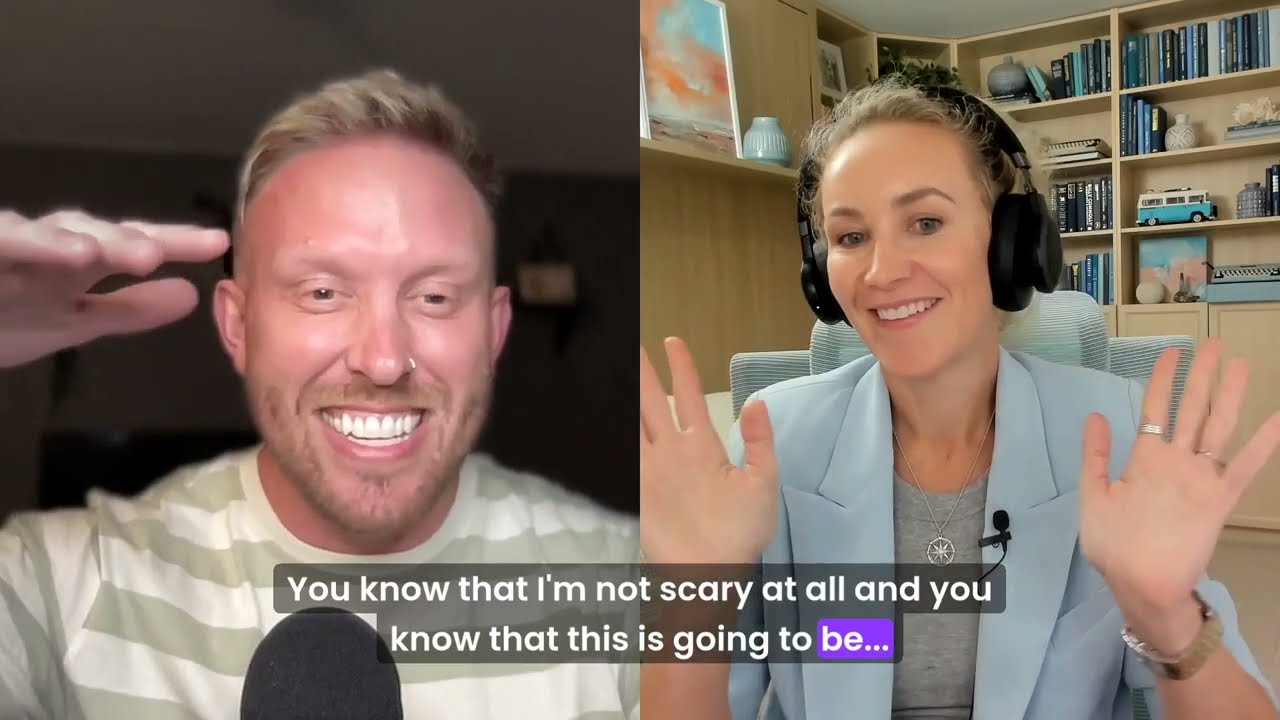
Denise Duffield-Thomas, author of Lucky Bitch and Get Rich Lucky Bitch, talks about rewiring money beliefs formed in childhood. She shares how she manifested a beach house and built Money Bootcamp, and explains her Sacred Money Archetypes framework for uncovering what blocks your wealth.
Chapters
Hello everyone and welcome back to another episode of Canny Crystals, the podcast. As you know by now, my name is Mart Tweedy, I'm your host, and this week on the show I'm actually thrilled to welcome a true pioneer in the realm of money mindset and manifestation. You might know her from her groundbreaking books Lucky Bitch, Get Rich Lucky Bitch, and Chill and Prosper. She's helped thousands of people shift their perspectives on money, blending actionable financial strategies and money mindset with the art of manifesting abundance. So in our conversation, we're going to be exploring her own personal journey We're going to look at the turning points that redefined her relationship with wealth, and also I'm going to be talking to her about a few rituals that she swears by for cultivating both prosperity and inner peace. So without further ado, I'm actually shaking here, but please welcome to the show, it's none other than Denise Duffield-Thomas. Hello gorgeous, how are you?
You are so cute, Mark. We have met several times now, you know that I'm not scary at all.
And you know, no, but look, my hand is still shaking.
It's probably because it's quite late at night there too, right?
Yeah, I was just going to say thank you so much for giving me your time and energy because obviously as I sit here and record this, it's 11 PM here in the UK. But as soon as I saw that that was pretty much the only time that you could do in your calendar, I was like, yep, I'm taking it. I don't care if it's 4 in the morning, we are doing this. Because Denise, I have to say, I'm totally going to have a fangirl moment here. I've been obsessed with your work ever since I first came across you. So I was watching a TEDx talk on YouTube, um, just while I was working one day, and you know, the next video that came on autoplay, it was you, and you started talking about money mindset. And as I was working away, I was just listening to you thinking, who is this woman? I could totally relate to everything that you were saying. And then shortly after that, I followed you on Instagram. I saw that you had this incredible container of people kind of all wanting to enhance their money mindset called Money Bootcamp. And I joined, I joined like that, all off the back of a YouTube video. And then I think about a year later, I was doing a podcast episode all about money mindset, and I sent an email to your team asking if you'd like to come on the podcast. And then, as if by magic, here you are. This is a huge manifestation that you're here. So thank you so much for your time, firstly.
Of course. So, and thank you for being part of my community. You know, we— as you know, we don't have a lot of men in our community. Yeah. And I love, I love your energy in there and the perspective that you bring, and I love that the work and seeing what you have created so quickly has been very inspiring.
No, thank you. I want to know, I want to start off by asking, you know, how did your personal journey transform your mindset about money and lead you to embrace abundance? Kind of what was the turning point in your life when you realized that shifting your money mindset was actually key to your success?
I was actually quite young, so I grew up, um, kind of— did you ever watch Home and Away?
Oh yeah, I loved Home and Away.
Okay, so the best way I can explain it is I lived in a town that was very similar to Home and Away. So it was a beach town, um, and I didn't— I grew up with a single mom. We didn't have a lot of money, but I wouldn't say that that was the thing that defined my money mindset, the thing that really drove me from a young age was this feeling of wanting to have financial independence. Because I saw my mom, um, she'd be in relationships that, that weren't great, but she felt like she had to be because of money, and she didn't have a lot of choice. I saw the same thing with my grandmother, actually. My grandmother, from a very young age, would tell me, um, how much she hated my grandfather, which is really horrible, but I all of my, um, all of the women in my family, most of the time they were single parents, didn't have a lot of money or power. And I was the oldest grandkid. My mom had me when I was 17. And they would always say to me, never trust a man, like, and I'd go, okay, I won't. And so I kind of had it ingrained in me from a young age that making my own money was such an important mission, I think, for me. Um, which has its own overcompensations, which we can talk about later, of when you're so fiercely independent you could become a bit of a control freak, right? And, you know, it has its own stuff. So I'm not saying that was a healthy thing at all, but, um, I used to watch Oprah after school, and so I'd race home, I'd watch that, and I felt like that planted a lot of seeds for me. Of just realizing there are things greater than ourselves. Because her show would be very diverse. One week it would be about the AIDS crisis, another week it would be an author, another week it would be about practicing gratitude. And so I really soaked these things up. And I remember after school I'd always go to this bookstore, and because having undiagnosed ADHD, I'd forget my keys every day and I'd always be locked out of my house until my mom came home. So I'd go to this secondhand bookstore near house. And at first I read Stephen King books, and I would just sit in there and read. But I found this book one day, and it was called The Magic of Believing, and it was by Claude M. Bristol. And it was kind of one of those books of that time, very much like Think and Grow Rich, or like any of those metaphysical books that came out at that time, very much written for men.
Yeah.
And almost written for like salesmen in a way, because they would always talk about, you know, when you're going out and talking to people, be positive and use their name and make eye contact and speak out loud what you want to create. And that was the first time that I realized that you could change your thoughts and that you could change your reality. It really planted a massive seed in me, and I think That led me to a few other books, but like, um, How to Win Friends and Influence People, I read as a teenager too. And so I started to practice journaling and writing goals out and affirmations. Um, I really struggled with studying, but I found this subliminal affirmation cassette, um, and I listened to that as a teenager too to study. And so um, it was really hard to find all of these things, right? You know where you'd find them? At crystal stores. Yeah, back then that was, that was a real portal, I think, to learning about tarot and crystals. But personal development, I think, um, came from those beautiful crystal stores that I think were such lifelines to so many people, especially, you know, in small towns. Um, so yeah, that's, that's kind of how I started really. And then from there, it's very much trying to find my path in how to use those tools to helping people. So it wasn't until I was in my 30s that I became a coach and became a business coach and then realized how much I loved talking about money. But even then, I felt, um, very fearful about it. And so I've always then asked the universe, and I said, hey universe, I will talk about money, but you have to make it really easy for me and send me people, send me nice people, and, and I'll, I'll do it. But so I've always had that, um, kind of relationship, I think, with the universe to, to believe in synchronicities and to pay attention to those things.
I love that you bring a lot of manifestation elements into your books as well. Um, how did you weave that kind of personal experience into them? What was the most challenging part for you in writing your books?
Well, Uh, procrastination is probably the biggest thing. Um, I, I'm not someone who can just sit down and write things. So actually, one of the first books I ever wrote was about internet dating. Um, and I think I've always been the person who, like watching Oprah after school, distilling lessons and then sharing them with other people. And so my first book was I'm doing internet dating as a young single person living in London. Wow, people are really bad at that. Let me tell— let me show them a better way. And I think when you get over the fact that you don't have to have the perfect book, then you can just be like, oh, here's some advice that I know, and, and do this thing. Yeah, and having deadlines for writing books has been very helpful too.
Yeah, I've just recently launched my first ever book, my first published book, on February 6th. And I think the accountability calls every 2 weeks just to make sure I was where I was supposed to be, that really helped because I procrastinated a lot. And I think within my second week of writing my book, when I first started it last January, we welcomed our baby boy. And it was just so hard to then have a baby here and a MacBook here and just be trying to type and he's crying and, oh, it was chaotic. So I totally get what you're saying with the procrastination, because you just want to put it off all the time. But I have to say, Chill and Prosper is one of my favourite books of all time. I learned so much from that book. So in your view, what does it really mean to make money with ease? How can other people adopt that approach?
Yes, because I think we're in a tricky time sometimes, especially when there's economic inequality, There is so much going on in the world, and actually it's perfect you asked me this question because I was quoted in an article this week actually, and it was a negative thing, and it's really just played in my mind. And it was, when times are tough, people turn to manifesting. And it was kind of a little quote for me, and it made me sound very trite. And it was like, oh, Denise just says, oh, if you want to be a millionaire, just do it. And I've really resisted emailing the author, not because I feel insulted, because I totally get what she's Yeah, I totally get where she's coming from, that we have to be careful sometimes to not gaslight ourselves that there is stuff going on in the world, and not gaslight other people and think, oh, the only answer is to sit and meditate and money will fall from the sky. Because we always have to meet the universe halfway. We always have to do the work. Like, none of your successes just happened. Has it?
Yeah. Yeah.
Right. But the mindset piece has helped 100% because we can block ourselves by all our negative thoughts and feelings about money. And if you're constantly saying to yourself, I'm not worthy, I'm not good enough, you're not going to do any of the work to put yourself into that. Um, when you can have that bonus of going, good things happen to me. You know, like I'm always looking for good, you know, people like me, people will buy from me. It's a self-fulfilling prophecy in lots of ways because you feel good. So you then do the work. So then of course people then find you. So those, the practical and the woo-woo go hand in hand in my mind. And I don't know if that's just cause I'm a Virgo, but, um, like I think that there is a really fine line. Right, of delusion and desperation and thinking that those tools can save us, and giving ourselves permission to prosper, to make money, to look for opportunities, to trust ourselves, and also to trust that if we do the work, then there will be some magic that sometimes happens and the synchronicities will come in. And so it's a really like hand— like, we have to do those tools hand in hand with work.
Yeah.
But the way we make things easier for ourselves and make more money with ease, I think, is to find ways that feel incongruent with our values, with our strengths, with our skill set. And, you know, you've done my Sacred Money Archetypes course. There's something there about when we're honest about Who we are, how we can help people, how we best work. You know, I think in times of burnout, what has not burnt me out is the amount of work I've done. It's maybe if it hasn't felt good, it hasn't felt in alignment with my strengths. That's when I burn out. So know thyself and prosper is what I talk about a lot in, um, in some of my work, because what works for you might not work for someone else and vice versa. So being true to yourself is the way to make it easier, you know. And I say it's effortless, not effort none.
Yeah, yeah, it is so true though, because self-worth really does play a part in wealth creation. Like, I think it's quite surprising— well, it was to me personally— that when once you increase your self-worth, your wealth is also enhanced. It's something that I'm working on a lot at the moment. Um, but can I just say as well that you, you mentioned there that, you know, money just doesn't fall from the sky, but in your case it actually did.
It actually did, you're right. So let me tell this story. So, um, there's been times in my life where really lucky, weird things have happened, and I wrote about this in my first book, Lucky Bitch, that in the space of a year where I was very serious about changing my life, I went on honeymoon, I looked up at the sky and I was like, more of this, please, universe. In that next year, um, I won a publishing, um, uh, course because I was like, I want to write a book. Okay, here you go, universe. I really wanted to become a coach. I won a scholarship to a life coaching course. I really wanted to find more entrepreneurs. Someone gave me a free ticket to a conference that changed my life. And then, um, a couple other things happened. I, uh, didn't have the tuition for my university, and I got a bank error in my favor like 3 days before to pay for it. And, um, and then the big one that I talk about in that book is that I won 6 months all-expenses-paid travel around the world, um, for a honeymoon company. So literally, when I said, 'More of this, please, universe,' the universe was like, 'Oh, you're on honeymoon? Let's send you on a 6-month honeymoon.' So That, that was a really interesting, like, experiment in just being open to stuff. But where it came up, the money falling out of the sky thing, we had, um, worked for a couple of years to buy this house by the beach, and it was a manifesting thing that I put everything into. But when we're going to pick up the keys, I felt absolutely sick about it. And you know those feelings where you go, I've manifested it, but maybe I don't really deserve it.
Yeah.
And that's what I was feeling. I was thinking, who am I to do this? Like, you know, this is an area where people live where they've worked their whole life, you know, or my neighbors are wealthy.
Who—
they're going to think I'm such a fraud. I was feeling sick about it. And I also felt like I've manifested this thing, so therefore there has to be a corresponding, like, shift. I have to give up something. To get that. And so, we were in the car and I said to Mark, "We're really going to have to tighten our belts in the next year." And he was like, "Look at—" He goes, "That doesn't sound like you." And I said, "You're right. There's always more money." And as I said that, a shower of money hit our car. It was literally like the weirdest experience. Our $50 notes in Australia are bright yellow. Like, I can't even imagine how many— thousands and thousands of dollars hit our car in that moment, and we screamed, and the windscreen wipers came on, came on, and I— we just burst out laughing. And I was so happy that he was in the car because I would have thought that that was a hallucination because it happened so fast. It just went bang and then flew all around the road, and I just laughed and I went, oh my God, there is always more money. And I've had similar things happen Even recently where I'll meet up with someone and they'll go, "Oh, Denise, you know, you're the lucky bitch." And I'll go, "Yeah." And then I'll just go like this and like a $20 note will just appear from somewhere. And it's just, it is hilarious. But I have to say, sometimes I feel like I do, I have to remind myself that I can do that. And it's easy to lose it sometimes, which we can talk about as well. But yes, literally sometimes money can fall out of the sky. I did an experiment recently where I went, I wonder if I could just manifest $1 million. Because I thought, I've done it so many times in weird ways, why don't I do it? And I kid you not, the next day our mortgage broker called us and said, um, you know, the bank is doing some restructuring of your loans. They wanted to know if you wanted to pull out $1 million of equity. And I was like, I wasn't specific. Yeah. Like saying free and clear, but I just wanted to experiment to see if I could like do it. And it's like sometimes you do have to be a bit more specific, but also sometimes it is a practice, right? And it's a practice in what happens when those things do happen. Do you talk yourself out of it? Do you then sabotage in another way to kind of balance the universe out? It's a really fascinating experiment. It is.
And it's funny because you used to call everyone Lucky Bitch because that was the name of your first book. And then I think because of censorship or some reason, we started calling ourselves Lucky Bees. And you know, the little bee is a little symbol of Money Boot Camp. And every time I see a bee, I'm reminded of that, and it anchors me into that, you know, I am a wealthy bitch. So it's funny because just the weekend just gone, I spent, um, like a week in the Bahamas with one of my friends for her 40th birthday. We're at this really, really bougie hotel, and the whole time I was there, I was like, oh my God, this room bill— the room bill came to like 5,000 Bahamian dollars. And I was just like sat there with fear. And the night before we came home, we went to the Four Seasons Hotel for this beautiful meal. And as soon as I walked in there, there was a huge— and I mean huge— piece of artwork by an amazing artist, and it was on the wall, and it was just a giant bumblebee. And it— for me, that was a symbol to think, okay, you can afford this, it's fine. And it just brought me back down to reality, and I just thought you know what, I am a lucky bitch and I can afford this. And I'm so lucky that I'm here in the Bahamas with my friends when some people are at work and, you know, in the snow back home. And I just thought, yeah, I am a lucky bitch. So when it comes to luck with you in the context of creating wealth, what role does luck kind of play with that? And, you know, does mindset actually play in it, or is it just luck?
I love this question because Um, I read this book a long time ago that shifted something for me. It was called The Luck Factor, and I think it's Richard Wiseman. And he talks about a luck experiment that they did. And so they put in the paper, like, you know, do you think you're lucky or unlucky, or what? I can't even remember what the wording was. And they had to go to the office and fill out forms and stuff, and they planted money outside of the building. And it was really interesting because they, they did a, like, a bit of a study on, like, who found the money. Was it the people who described themselves as lucky? And of course it was, rather than the people who described themselves as unlucky, right? And so you go, well, what, what is that? So I was at the fair recently with a friend, and she was saying, I never win anything, I never win anything. And I was like, well don't say that. Like, which one do you want to win? And she's so admired in that I never win anything. And so what he just discovered is the people who were pessimistic by whatever metrics they use, they never really found the money because they're not expecting good things to have happened to them. And even if they do see the money, they would be, well, that's not for me. Um, you know, they— one, they just wouldn't see it. Two, they wouldn't see the opportunity. So he said when you describe yourself as lucky, you're looking for opportunities. You're putting yourself in, like, in places where you could find opportunity. You're more inclined to say yes and to take action on those opportunities. And then of course it becomes self-fulfilling. Yeah, you know, and so is it magic or is it a series of tiny little coincidental things? I think it's a bit of both.
Yeah, I believe it's a bit of both. I do think it's a lot to do with mindset as well. Like, there was a few years ago, I was on a TV game show in the UK, and I specifically said to my partner before I went, I'm going to win £3,500. Now, there were 4 contestants on that show, and there was one girl who was quite sheepish. She was quite shy and nervous, and she admitted at the start, I'm no good at general knowledge questions, I'm not going to win anything. Everyone else won something and she came last and she didn't win a thing. So backstage I was talking to her because I just recently discovered, um, The Secret at that point, and I said, give this book a read, it'll change your life, it'll change your perspective and your mindset about how these opportunities can come about. You know, when we've got our RAS going on in our brain and we are actively looking for things to be positive about, positive experience naturally come to us. So I explained all this to her, she added me on Facebook, and I think it was like probably about 6 to 8 months later she messaged me and said, I've just won loads of money because of your like recommendation with that book. And I was like, oh my God, how much did you win? She won £10,000. And I just thought, that is because you've changed your mindset, you're actively now looking for it. So I do kind of think that there's a lot to do with mindset, but it is luck. But I think it's luck that we bestow upon ourselves.
From the mindset shifts that we create within us. Absolutely. Because you think, like, if I don't win anything— you see an opportunity like a contest that you have to enter, well, there's no point. Yeah, there's literally no point. I never win anything. Whereas when I won that, uh, like, all-expenses-paid trip around the world, it was literally because I was telling everybody, I was like, Mark and I are going to go traveling. And so a friend saw the ad, she sent it to me and said, this is your perfect job. She thought of me because I had been saying it out loud. Mark came home and I was like, this, we're gonna win this. And he was like, what do you mean? I said, we have to do a video. We like, we had to get it in by midnight. It was the most frustrating thing. I wish there was outtakes because we would do it and I'd be like, you weren't looking at the camera, you were looking at the other side of the phone. And then he'd like do it and I was like I'm gonna murder you, like, what are you doing? But because I was like, we're gonna win this, because I put out to the universe. So the hurdles, like, so many more times I would have gone, I can't be bothered, I can't be bothered, it's not— why, what's the point? I'm not going to win it anyway. No one ever wins those things, they're a scam. The whole— and it took about maybe 3 months of different tests, and, you know, and every time I was like, but we're gonna, we're gonna win it. One of the things too that we did in that is when we got to the top 10, we got invited to a weekend retreat where we had to do— it was like the Amazing Race things. We went there. I'd already told my boss, I'd already given notice. We'd already found people to rent our apartment. Like, whereas most of the people there, they had all these things. What am I going to tell my boss if I get this? What am I going to do with my— who's going to look after my cats? What am I going to do about the thing? I had, I'd sorted all of these things out, and people then were saying, but what if you didn't win? One, it didn't matter because I was like, well, I'll just find something else because I'm ready to go. That's what I've said that I wanted to do. I want to go traveling around the world. This job isn't the destination. This is something that has been sucked into my determination, and it's not this, it's something else. And that's where People will sometimes come to me and go, well, can I win the lottery? And I go, but you don't want to win the lottery, you want what you think the lottery, lottery will give you. What's that? And then the money will come in in other ways because you're attaching yourself to that desire. And then you do things that you not wouldn't normally do and put yourself out of your comfort zone. And literally getting that video in, like, that 30,000 people applied for that job. I like— but none of them were as certain as me.
I think this conversation—
keep going. No, I was going to say one other thing, right? When you were talking about all the anchors, you know how much I love that. I had a necklace that said yes on it, and so I wore it for the, the final judging panel, right? And it's just like that little subliminal thing, you know, they were like saying yes, yes, yes.
I love it. And I think this conversation leads perfectly onto my next question, which is about some limiting beliefs, because, you know, everyone has limiting beliefs, but what are the most common ones that people have about money and how can they overcome them?
I think a big one, it's very unspoken, but sometimes it's like, I'm just not that kind of person, or I'm not meant to be wealthy. And something that you said when we last met really stuck in my mind. I think about it often, if you're willing to share, about when you talked about your success with your, with your gran, I think.
You know what's funny? I heard you talking about this on your podcast the other day, and I was like, that's me she's talking about. I knew it was my story. And you—
yeah, can you tell that? Because I think that really illustrates one of the beliefs that we might have. Yeah, yeah.
So basically, um, I told my nan how much I'd, um, taken from Chanel. They paid me £27,000 to dress their summer ball. I sent them loads of crystals, went down and dressed it and everything. And I told my Nana, and she said, get that down off the internet now. And I said, what do you mean? And I said, I've just shared it on Facebook. And she said, you'll be beheaded, you'll get your house broken into, people will be coming there looking for the cash. And I just thought, what kind of world do you live in? And she said, footballers are beheaded all the time, footballers are kidnapped, they have their houses raided. And I'm like, Nana, I'm not a footballer, I'm just some little guy here in Newcastle selling crystals. And it was just her limiting beliefs. But I could see how that trickled down to my mom as well, because my mom said to me, you shouldn't have put that online because people will think that you're something that you're not, or people will think that you're being big-headed and shouting about it. But the only reason I did put it online was to show other people what is actually possible, because my mindset is totally different to theirs. I put it online not as a brag, it's as if to say like, look, this time last year I was making £27,000 a year 'Now I've made £27,000 in a day. It is possible, and if it's possible for me, it's possible for you too.' That was what I was passing down.
And I love that you did that, and especially working with big brands too. I think that was an extra layer of that inspiration for people. Um, but I think what you illustrated in that is that we have these unspoken fears about money, and so some of it is I don't belong, or I'm not meant to be wealthy. I think especially in Europe, not so much in Australia, there's definitely still a bit of a hierarchy of this is the class that I'm born into and I can't, I, I can't get out of that, or people will not like me, they'll think I'm too big for my boots, or something unsafe will happen. And everyone's got their own version of it. Mine was never so much someone would try and steal it from me. It was always like, they're just not going to like me. Yeah, you know, and I won't have community, or I won't be relatable. And so I think that's a massive block for, for so many people. It doesn't matter how much money you grew up with, it's— there's a fear of the unknown sometimes. Um, sometimes people's fears, it's not so much making money, but it's how they make money. So if your family have always made money a certain way then it's not safe. And I've heard this from someone who was an actress, and she said her dad said to her, um, if you like, we'll support you in doing this, but you'll never make a penny out of it. And she really— it was almost like she took that vow at that time to say, I will accept your terms, I want to be an actress, and I will not make a penny out of it. And until we kind of unraveled that a little bit, and, you know, she's, she's a very successful actress now and not because of me, obviously, but she just realized, I have to, I have to break that vow. And there's so many things like that. And I will even say to people, if you've grown up in the church, there's like, undo that vow of poverty that you may have done in a previous life, but also unconsciously agreed to in this life. You might have agreed unconsciously to never overshadow a member of your family. And so it's like, well, I'm the youngest sibling, so I'm not allowed to make more money than them. Yeah. Um, there's a— there's so many interesting dynamics in here. I was deathly afraid of paying taxes because growing up in the welfare system, I was so scared of authority and doing something wrong. And so meeting with an accountant made me realize that I had that real fear of something bad happening to me from the taxman. Yeah. I also think being Australian and so many of, you know, the first wave of Australians who came here were in trouble with the law from the authorities, right, from England. And so I, I really had to unpack that as well, um, and just getting into trouble like fear of screwing it up and getting into trouble and being sent on a ship to— you know, it's all of those things live within us, and we think, oh God, all I want to do is sell a crystal to someone who wants a crystal.
Why? Why? What daily practices do you recommend then for someone who wants to reprogram their subconscious for financial abundance? Like, what rituals or daily habits do you personally practice to maintain that positive money energy?
Yes. Oh, I'm a big fan of the daily rituals because with my ADHD, I don't always remember to do stuff, and I always felt like, oh, I should write my goals down every day, and I didn't remember to do it. So I felt like that naughty kid who forgot to do her homework. And so the things that I teach are very much about automatic upgrades in your life and also anchors. As you know, when we first come into Money Bootcamp, there is a bit of, like a bit more work at the start of just like uncovering some of your money memories and uncovering some of the big stuff. But after that, I feel like then putting as many reminders as possible into your day. I like to think of my different senses. What am I listening to? So what am I listening to when I'm in my car? What am I listening to for the news? What's— who am I listening to, as in who am I surrounding myself with? Who am I trying to get advice from? I think visually, what would make me feel abundant? So there's a lot of things actually in my office that are a little money anchors. So you can see my typewriter. I've got— I've actually got two typewriters in my office. They were a very important anchor for me at the start of my writing journey. To remind myself, well, to, to kind of trick myself into believing that I was an author. Um, I also put author in my bio in my email, and I would look at that for a year. I just went, what a fraud, what a fraud. And then people start to believe you, right? Um, there's my blue Kombi van. So for me, that's freedom. I owned a Kombi for a while, and then I realized it's not freedom because they break down a lot. There's a Goddess Fortuna, so you can see my little Goddess Fortuna there. So she was a massive anchor for me because, um, she's, she's blindfolded but she's smiling and she's carrying a horn of never-ending money. And it's the trust in the abundance of the universe. So I've got a lot of things. Blue, even as a color for me, is an abundance anchor for when I was manifesting my beach house. And, um, like Everything in my life is blue. And so there's a lot of things that you can do to activate your scent, you know, smell for me. What is, what did my beach house smell like? You know, what does, um, like when I was manifesting my rose farm, like what does my rose farm smell like? All of those things, uh, to crowd out the negative thoughts that are naturally going to come in and also to make you feel good now. And I'm a Big, big fan of that is don't think of you now and your future self as two separate beings. You are flawed and they are perfect. You are that person already. So what can you do to start to meld those versions together? So if you've got your future life where you think, I'm going to get up every day and do yoga, and I'm going to do all those things. Well, what, what are those things that you can start to experience now? Because if you can't experience that now, you're always gonna be pushing it away. And so do you allow yourself to use your best mug? Do you get yourself a fresh tea bag? Do you give yourself permission to wear clothes that feel good now, even if you're thrifting them? You know, are you— and so this is where I always talk about the upgrading your life is that you do it so incrementally that none of it is so jarring that you think, well, that's not me. It's like, Oh, and you increase your standards bit by bit. You don't realize, I think, at the start of your journey how many things you put up with. Yeah, you deny yourself, and those things are symbolic. They're very symbolic. And then as you make more money, you can upgrade, you know, more things. But actually, I find that things at the start are more about permission and giving yourself permission to have pleasure and to like what you like.
I was going to say some of the little things that I upgraded when I first joined Money Bootcamp were just like socks with holes in, and I thought, that's not wealthy, why am I putting up with that? Or like I'd have a mug and it would have a little chip out of the handle, or you know, just chipped crockery, that kind of thing. And I just thought, why am I putting up with this? And then I think one day I decluttered my wardrobe and I thought, what are all these mismatched plastic crappy hangers? And I got some really bougie, like felty veloury ones. And I just match my entire wardrobe. And now every time I open that wardrobe, I feel wealthy just looking at it. And it is just a little anchor and a little trigger, and it's just such a small little thing. It cost me like £10 or something to get all of those hangers, but it just anchors me into wealth every time I do that. And then I give myself permission to go a bit bigger, and I upgraded my car, and, you know, all these different things. So thank you for that. And I think thank you as well for, uh, bringing tapping into my life. Because before you, I didn't even know what tapping was. And I remember being sat on a call one day and we were all doing this, and I was like, what is happening? What's going on? Is this witchcraft? Um, and I use tapping every single day. It's one of my favorite spiritual practices that I do. It's just a great way of like clearing all of that negative chatter in my head and replacing it and tapping in kind of new affirmations. And I know you use tapping a lot, don't you? But you use it in terms of business as well. Is that kind of how you keep your business operations so chill even when challenges come up for you?
Um, yes and no. Like, I would say the reason why my business is chill is because I've systematically, like, decluttered— I love it you brought up decluttering— things that don't feel good, and to be true to myself, what works for me, and have boundaries. I definitely needed tapping a lot in my early days. I actually found it when I was working in corporate. Um, we had a temporary secretary and she was an actress, a photographer, all these things. And she took, you know, a temp job just to make some money. And she started telling me about things like that. And back then she lent me her DVD, like it was like 6 DVDs to learn how to do it. And I took them home and I just went, oh my God, this feels so good. And I think the reason why it feels great is because you give yourself permission to say the thing that you're scared about, you know, even though I'm not deserving of money, even though I have this fear. And I use it for when I do public speaking, when I'm nervous about something, but also the feeling that still comes up sometimes that I'm not worthy still comes up all the time. And so I don't always sit and, you know, write it all down, but I could just be like, I deeply and completely love and accept myself, and it's enough to, to get me out. And I think that's what we're trying to do with all of these practices. We layer them in so when we have mindset relapses, which we absolutely will, we've already got a foundation. We're not falling to where we were before because we've built— that's our new normal, and we can be compassionate, and it doesn't become a a massive, massive sabotage. And we just have to, you know, be loving and compassionate to ourselves is probably the key to most things, I think.
Yeah, I think, you know, you mentioned earlier about having ADHD as well. What practical advice would you give to other entrepreneurs out there that also have ADHD just to help them stay focused and productive?
Well, when I first wrote my book, Chill and Prosper, it was pre-diagnosis. Yes. Yeah. I've been able to mention it when I did a new edition of it. And so I didn't realize that I was writing an ADHD manual for entrepreneurs because so many things in there were how I'd learned to manage my ADHD-ness. So one of the chapters in there is called Keyless Life. Yeah. And that the concept of that is how do you make things as easy and stress-free as possible? And so it's started for me because I used to lose my keys all the time. So, from when I was a kid, from when I was a teenager, from my 20s when I was living in London, I'd have to sit outside and wait for my flatmates to come home. And so, I put electronic keypads on all of my houses. And I really resist when, we've just built a new house, and I've got it on my laundry and my front door because the laundry is where we get out to the pool, And I was like, if that door shuts, I don't want to have to go and find a key for it, you know? And so it's, it's built on that thing of like, don't try and change your behavior because that's one of the hardest things to change. It's like, try and find a way where that behavior isn't a problem and actually is enhanced in your life. And so the keyless life concept in your business is how can you automate stuff? How can you make things easier for yourself so you're not doing repetitive things or you're not making your sabotages apparent. And like, for example, if you're someone who has a Maverick type personality and gets very bored with things, a sabotage is to create a business model where you are stuck doing the same thing over and over again. Yeah. And I see this where people, they can sell something. I've seen Mavericks sell masterminds many times, like 18-month, 12-month masterminds, they're bored at month 2 or 3 because they haven't set it up for themselves to thrive in it. And so a similar thing happened when Mark came in— my husband Mark came in the business. He said, you should run a mastermind. And I was like, it doesn't work for my personality. It's not— and the phase of life that I'm at, because obviously you're a parent too, is that keyless life changes depending on what phase of life and business you're at, what's what, what do you need to thrive? And at the start of my business, I did everything myself, right? And then there was a point where I outsourced some things, but then I was like, but that's, that doesn't work for my personality, having a lot of team to manage. Yeah, right. So a big team might be keyless life for one person. For me, it was not. Um, and it's just always making those, uh, I think being aware what feels good, what doesn't, and not being afraid to change things. To better suit you and your personality.
And I know you mentioned there as well about our different money archetypes, and this is something that I only learned about a couple of years ago, again through yourself. And I did your Sacred Money Archetypes course, and it just taught me, you know, more about myself, but also about my customer base as well, and what my customers are actually looking for, and, you know, their diverse needs, because every customer is different. And it just let me so, so much. So my personality types are— let me get this right— I am a ruler— I'm a romantic ruler maverick. So predominantly romantic, then ruler, then maverick. But how can other people find out their archetypes? Because you have a quiz online, don't you, that people can take for free as well? Yes, absolutely.
So you and I have the same archetypes but in different— yeah, in a different order. And, um, So if people go to denisedt.com/quiz, um, you can get— take the free quiz and then you get a workshop, a 3-part workshop actually, where it talks about your personality and how it might be sabotaging you in business. And what's really fascinating too is that you mentioned your top 3, and that's what people— you want to look at the how those interact, because each archetype has its own sabotages, it has its own strengths And sometimes we're unwittingly working in the weaknesses of all of our personality types for so many different reasons— to please other people, because we don't know any better, we're trying to fit our business model into someone else's business model. And it's really interesting to look at all of those nuances. And I think just the acceptance of that, you know, the acceptance that, okay, I am a Ruler, so I am going to overcomplicate things because That's like, it's the maximizer, right? The Maverick is always gonna be a bit like, why don't we like, why don't we screw this up a little bit? Cause we're bored. And then the Romantic is always like, how can we make this easier? Because is it okay if we just want to buy ourselves a little treat and watch TV all day? And you can see how all of those would absolutely war, be at war with each other. And the more that we can bring them into harmony and also not set ourselves up for failure, um, is, is huge. Like, I have to— with my boundaries, I have to have a gatekeeper. I have to have a team, because if people ask me to do things, I just go, yeah, okay, why not? Yeah, you know, okay, that sounds good. And then, so that's a little thing for us, is to go, nope, it doesn't come to Denise because she'll say yes. Yeah. And I can't, I can't change that about myself. I mean, I can try And I always think behavior change is so hard. So what can we do to like make it automatic to be able to thrive in spite of ourselves? Yeah.
Speaking of behaviors, what are some of the earlier signs that, you know, a person is shifting from a scarcity mindset to an abundance mindset? How can, you know, shifting from that scarcity mindset lead to making money with ease? Yes.
Well, a thing that I always notice, and I'm sure you do as well, is how someone talks about money. And the words that they use about money. And that's often, um, it's a habit, it's a pattern. Sometimes we don't realize we're saying it. Sometimes we're parroting things we've heard growing up, you know. And, and I didn't realize, like, when— until I had a kid. So my first kid, we're at the farmer's market and she wanted to buy an apple. And so I was like, oh, I want to teach her independence. I'm going to give her money and she can go and buy the apple. And I gave her a 50-cent coin, which in Australia, they're really big, about this big. And of course, she went to put it in her mouth as kids do. And I went, "No, no, don't do that. Money's dirty." And I went, how many times have I heard that as a kid? And I didn't consciously remember hearing it. But if that is our first interaction with money, this— because my daughter, she went bright red. She like, she had this massive jolt to her nervous system. And I went, Oh my God, I am perpetuating this. And so I wanted to undo it really quickly in the moment, and I said to her, I went, ah, we don't put money in our mouth. In our family, we take care of money. And I, I'm aiming for neutrality around things. So one of the first things you can do is just to be aware, what am I saying out loud? And often then You'll hear it in other people. You'll hear it in your friends, your partner, your parents. And it's very tempting at the start to then try and just fix everyone else's stuff all the time. Um, so I think just changing your words first of all is really powerful. I love affirmations for their just quick little jingle way. Um, and so very, very early on with Mark and I, when I wanted to try and change the language, I'd say to him, "Lucky we're rich," if something bad happened, instead of just going, "Oh, like, you know, I can't believe this happened," or, um, I just say, "Lucky we're rich," and it became a bit of an anchor for us that we use all the time even now, and we actually are rich now, just to go, "Oh, it's okay, we're safe," and that doesn't mean that bad things don't happen to me, but I can just go, "Oh," Lucky, lucky we're rich. And I even encourage people, if you don't feel rich now, to try it because you actually start to realize, you go, you know what, I am richer than 99% of the people on this planet. Like, I am, even if I don't feel it right now. So you start with the language and then the upgrades to make yourself feel more abundant is you can start doing that. And then also to deliberately put yourself in situations to practice feeling more abundant, like going to fancy hotels. You might not have the money to stay there, but you're allowed to walk in and use the bathroom. You're allowed to, you know, I remember checking my bank account to see if I could afford a glass of champagne at a fancy restaurant in town, but I felt, I felt wealthy, and I toasted myself, and I was like, more of this, Universe, more of this, please. And it is a little fake it till you make it stuff, but it is also like acclimatizing. If you are going somewhere where the air is thinner, it takes you a while to acclimatize to it. And I feel like wealth is the same way. You start to— like, you go, I don't belong here. Oh, maybe I do belong here. Sometimes it's demystifying those things. Like when, um, a friend who— she's a Celebrity archetype, so she feels very confident being in fancy stores, even as a multi-millionaire. I didn't feel as confident. So she took me in there and I realized, oh, these are just normal people. And then you can start to get that discernment. Do I like it? Do I not like it? And I, I do think as people become more abundant, you do make mistakes around it. I don't know if you have, but I definitely have, where I've gone, oh, obviously I have to wear fancy shoes now. And then I go, it's not really me. Yeah, you know. Yeah, yeah, you overcompensate, but then you find what your like what your real tastes and desires are. And I actually have come almost a bit full circle now. I love thrifting again. I love, um, and, but I don't make it mean anything about myself. I can buy something that's expensive, but I can buy something that's cheap, and I feel okay either way.
Yeah, I love that as well because it is kind of, you know, embracing a manifestation mindset as you do it. Um, do you think that that's influenced the way that you make financial decisions in your business, in your personal life? Do you think that you always just think, oh well, there's always more and, you know, the universe is abundant, so it's fine? Or do you sometimes hold back? You know, how do you make those financial decisions?
Well, again, I think it is so personality-driven, right? So when I was poor and when I've been rich, I have made instant gratification decisions. And so I've made really dumb investments. Yeah, and I've made boring investments. And I think I said to you last time when I saw you too, when you said, I've made all this money, and I said, great, make sure you're saving some, right? Yeah, because I feel like that's the challenge, is, um, your money personality doesn't change, right? And so I remember when I was a waitress and a student and I bought this antique tuxedo for $300 because it felt really good, and it was just such a dumb decision to make because I probably spent my rent money. But then I've done that with money too, right? So I've always made sure that I have smarter people than me, and sometimes I listen to my financial advisors and sometimes I don't. But see how it's that the lesson is there's not me and a perfect version of me. Yeah. And so you will still make mistakes. You know, making money doesn't make you perfect, but not having money doesn't make you better than anyone else either, right? And so once you have that self-compassion and humanity, you go, oh, I'm allowed to be rich. I'm still going to make mistakes. Like, oh, I'm still, you know, whatever, like whatever trait I am, that is me, just with more money.
Yeah, I did think that that was a little bit risqué because I was going to actually ask you something around that. I was going to ask, do you believe that manifesting wealth is more about energy and mindset than traditional financial planning? Oh, that is juicy.
Um, yeah, interesting, because I have seen people make lots of money and lose everything, and I really felt like I was not on that trajectory so much because I know that I would always just work. But I could see, I was like, oh, you have to really like, um, respect the time and the economy that you're in as well. And so a couple of years ago, I could kind of see that coming, and I remember speaking to our financial advisor and they were like, you guys, you're making heaps of money, but you're not spending it in the best ways. 'Cause we had our big beach house, we had our farm. And so we went and bought a lot of very boring investment properties. And we did a little bit of stock market stuff. We're doing that more now and making sure that we've invested in our pensions and all that kind of stuff. So I think it's both because sometimes they have been flabbergasted by, like they've said, no, don't do that because it's not sensible. And I'll go, watch me, and they'll see how that has driven me. But also, I'm really grateful when I wanted to take some time off over the last 18 months that I could afford to do it. And also, with the so much instability that's happening in America at the moment, my business is very American-focused. Yeah. So I love the fact that we don't have to do a launch and we can shift other financial things around. And one of the reasons we're selling our rose farm is because we've identified it as a risk for our family. Yeah, you know, and so that feels like there's a real— I actually did a lot of work around this with my kinesiologist because I was— we'd had the farm for 6 years and it's something I've never been able to put my whole energy into. So the business side of that is both a distraction but also it's not how I would want it to be, right? You know, like the Airbnb stuff does great, but then I go and I go, why isn't there rose toilet paper here? Oh, okay, I have to create a manual for my cleaner for the thing, you know. And it's a distraction from my business. And so I was saying to my kinesiologist, I was like, what block is it? Am I bored with it, or is it my block of being stubborn and doing something beyond like where it's helpful for me. And I wrestled with that for so long, and I feel like I got to a point where I was like, oh, I can choose to sell it. It doesn't mean anything about myself because the dream has changed and shifted. Yeah. And I don't have to overcompensate and stay with something if it no longer brings me joy because other people are going to think I'm a flake or that I haven't tried hard enough. It was really interesting. I did months and months of work on that before I even told anybody that I did it. And so that felt like a graduation in myself. Um, yeah, but another like kind of sensible thing I did recently was just deciding not to do a launch. That felt like— I was like, oh, I can just choose not to. Like, I don't have to manipulate time and space and pull all these big manifestations out of my butt to make it happen. I can also I choose not to. And that shifted my ego and identity a little bit too, because I was like, no, but I'm the girl who can. And I was like, oh, maybe I can choose not to as well. So it's a— I think it's a mix, right? Again, it's that, that practical and woo-woo, they can combine. Because I see people sometimes flying too close to the sun. Yeah. And you know that whole thing, there's always more money. I think I took it a little bit to the extreme because then I was like, yeah, but you're allowed to save some. Yeah, you don't always have to be, ah, there's always more, there's always more. It's like, yeah, there is, and you can also just take some time off. Like, that was a hard thing. Yeah, to reconcile.
I think I was going to say, because there's a lot of, um, studies about, you know, lottery winners and things where they've actually won and come into a lot of wealth and then they tend to either blown it or lost it on stupid financial risks that they've taken. And I think it's just because their money mindset isn't there. So I was kind of wondering, just before we wrap up this episode, Denise, like, what is one unconventional tip that you would offer to those who feel stuck in their current financial situation? And I was going to say, I bet she says shave your legs, because, you know, We are all bald now in Money Bootcamp because we're always bloody shaven. So what is one unconventional tip that you'd offer?
Yes, well, that's exactly what I was going to say. But I think the story behind that is how powerful decluttering can be and to change your state, but also it serves so many purposes, right? Back when I was coaching people on finding their soulmate, it's what I got them to do as well. I said declutter half of your wardrobe, declutter half of your bed, declutter your calendar. I had a lady who, she was like, I want, you know, I want to manifest a soulmate. And I said, you're running a meditation like studio out of your house, when are you gonna, when are you gonna go on dates? Like, there's no space, you can't even get in your door without it being a business. And so whatever you want to create, you can let go of something first. And it's a bit of a show of faith sometimes. So if someone says, I want to start a new business, well, what are your failed businesses and Do you still have the business cards lying around? You know, and same with every time I've wanted to sell a house or even buy a house, I've gone, I'm unpacking. And actually, I just, when I decided to sell my beach house, my mum had, it was Christmas, my mum had her friend over and I said, let's put it on the market. And her friend's going, what are they doing? Mum's going, they're decluttering. They've made the decision. Like, cause I know that's always the first step, right? Make space for something. And so I always say in Money Bootcamp, 'When in doubt, shave your legs,' because sometimes we just need to do something to shift the energy. Um, so that might be— for me, I'll sometimes go into my phone and delete some screenshots, or delete an app, or close down all the tabs on my computer, or scrub something, because I want to shift the energy, and I want to tell the universe, 'I'm ready, I'm ready for more. I'm creating, I'm creating a vacuum so you can fill it with something.' good. And sometimes we think, well, I can't get rid of that cup with the chip on it because I, like, I won't have a cup. And I think that's that faith thing, right? We realize, oh, I don't believe something good is going to come, or I don't believe I'm worthy where I can be trusted with a nice cup. And when it's so— all those little low-stakes things, they are practices for receiving more. If you can't accept, um, someone buying you a cup of coffee and you're pushing away that abundance, then it's really hard to have those bigger abundances, right? Because you, you're not open, you're not open to it. And remember, I think it's that perfectionism. You're not going to be perfect with or without money, so it's more fun to be imperfect with money than without it. Amen to that.
Well, Denise, it's been an absolute pleasure talking to you. After meeting you in Bristol back in 2023, 3. That event changed my entire life. So thank you so much from the bottom of my heart for being here today. It really was a huge manifestation of mine to have you here. I feel like such a fangirl who sat here talking to you. Um, how can people find you and your incredible work online? How can they join Money Bootcamp? Please tell everyone. Yes, sure.
So I'm super easy to find online. DeniseDT.com is my website. I mentioned the /quiz. Um, Bootcamp is at /bootcamp. So easy. But, and I'm also on social media at Denise DT, most of my handles as well. And yeah, I, I love meeting, you know, more beautiful people like yourself because I think— I feel like it's so important. You know, 50 years ago we would have been all in our little towns just going like, is there something else for me? And the fact that we live in this time where we can connect and help each other and share resources. I, I just, I feel so lucky to be in this time, and I, I feel incredibly lucky to be connected to you. You are such a beautiful shining light in the world, and I know that the, you know, you talking about money helps so many people. It really does. So thank you for the work.
Thank you, and likewise, because I think the last time I spoke about Money Bootcamp on the podcast, I had like 10, 15 people say, oh, I've just signed up, and I was like, what? I need an affiliate code. Absolutely.
Well, you're the best. Thank you so much. I really appreciate it.
Thank you so much, Denise. I've loved our chat. And for everyone out there listening, you can check out Denise's links in the show notes for today's episode. If you've loved our chat, please forward this episode on to someone that— who you think needs to learn all about enhancing their money mindset. Don't forget to also rate, review, and subscribe wherever you're listening to this podcast at. And I will see you all again next Friday. Have a lush week everyone, bye!
More from Mart


186: Blending science and soul with intuitive psychology, ft. Jill Ritchie and Sarah Gregg