Let’s make sure the future is (not) boring | Marvin von Hagen | TEDxPlaceMuseux
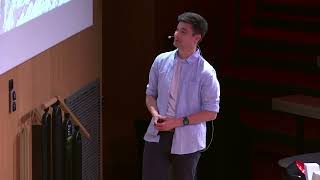
Marvin von Hagen built a 12-meter tunnel boring machine with 65 students at Munich's Technical University to compete in Elon Musk's 2020 Boring Competition. He argues that moonshot projects, not incremental improvements, drive real innovation. The team raised nearly €1 million and competed in Las Vegas, motivated by the possibility of transformative impact rather than guaranteed returns.
Chapters
Traffic sucks. Whether you're commuting daily or traveling to another place, you don't want to waste your time getting from point A to B. That's what I was looking for, the best transportation mode to come from my home in Amsterdam to Sciences Po for this talk. By car, it takes over 5 hours from Amsterdam to Paris. By plane, I would have made it in 1.5 hours, but this would have been even more environmentally harmful than by car. So I chose to come by train, but this takes 3.5 hours. So now imagine a world with a transportation system that would take you from Amsterdam to Paris in half an hour and still be environmentally friendly. This is what Elon Musk did in 2013 and he came up with the concept of the Hyperloop. The Hyperloop is a new kind of transportation system, which is basically a tube with a vacuum in it, and you travel in pods that are magnetically, magnetically levitated and accelerated to over 1,000 kilometers an hour. This enables speeds never seen before. And to spark innovation from young students to get closer to this becoming a reality, SpaceX announced the SpaceX Hyperloop Pod Competition in 2015. This competition challenged students from around the world to build their own Hyperloop pod prototypes. SpaceX then built a 1-mile-long tube in front of their headquarters in Los Angeles, which served as a test track where the students could test out their pods. In the process of building this tube, however, and thinking further about Hyperloops connecting cities, SpaceX noticed that not the Hyperloop technology itself, but the technology to build these tubes is the real problem for this to become reality. So current tunnel boring machines are both too slow and too expensive for Hyperloop to become feasible. To change this, SpaceX engineers founded The Boring Company in 2016 with the goal to develop radically faster tunnel boring machines for both Hyperloop systems around the world and Loop systems. Because then they thought a step further. What would happen if we could actually bore tunnels much faster and cheaper than today? What if we could build huge tunnel networks under cities? So currently with a car, you have to wait a lot for other cars and pedestrians, for example, to pass at intersections. By metro, you don't have this problem and could theoretically travel much faster. But here you have to stop and wait at every metro station so other passengers can get in and out. Vastly improving tunneling speed and cost would make it feasible to build large 3-dimensional tunneling networks under cities, which The Boring Company calls loops, which would look like this, with lots of roads under the ground. And here we have the, the speed of a metro, but without, without the slowdown, stop, and accelerate again, because of the intermediary stops. So this would reduce your travel time by 80% in cities, and this would mean roughly a full hour saved a day for city commuters. So, however, for any of this to become possible, iterating on current tunneling technologies is not enough. Instead, an improvement of more than 10 times the current speed is needed. And to gather fresh ideas again, Elon Musk announced the Not a Boring Competition in July 2020. Having had to commute more than an hour a day all my life myself, I personally know the struggle and can't even imagine how great technology like this would be for the world. For this reason, together with fellow students, I decided to found a team to participate in the Not a Boring Competition. We then founded a nonprofit organization called TUM Boring based on our university, the Technical University of Munich, and recruited 65 students to join us on our mission. While 25 of our members contacted over 500 companies to raise money, our 40 engineers developed a technical concept for a tunnel boring machine that we would eventually build. In early 2021, SpaceX and The Boring Company then told us that our technical concept has been selected out of 400 teams worldwide. Because of this, they've challenged us to actually build our proposed machine and invited us to Las Vegas, where we should compete against 11 other finalists, including Swissloop from ETH Zurich and MIT Hyperloop from the US. After a year of pulling all-nighters and working beyond the limit, we actually managed to raise the required amount of almost €1 million and built a 22-ton heavy and 12-meter-long tunnel boring machine. And here's a short video which shows that machine. So, and I would also like to share some impressions from the final in Las Vegas. So, um, here we traveled with our whole, almost whole team of 65 students, and this is our, uh, tunnel boring machine at the competition site in Las Vegas where the final was. And here you can see our cutter head directly before it started boring and us waiting patiently for it to start. Here you can see the back of our machine, which is a conveyor belt that throws out all the dirt that we got from the front out of the bottom. And here you can see our team with the trophy after the final. So now that you've heard all of this, You might wonder, why are so many students around the world working day and night for over a year to found a nonprofit organization where they don't get any money and participate in a competition which also has no real prize money? And why do people care about it when they could just work in an incumbent company, make progress safely, and even get money for their work? So, to understand the answers to these questions, we need to understand the reasons why people are motivated in what they work on, the projects, whatever, actually what motivates them. So the incumbent companies in most industries are working towards incremental progress. For example, for the last decades, incumbent car companies have tried to make their cars a little bit faster and a little bit less environmentally harmful every year. In an average year, an incumbent car company might have reduced emissions of their cars by 2%. And in some years a little bit less or more than that. The expected results of incremental progress can be modeled with normal distributions. Normal distributions are called normal distributions because they are ubiquitous in nature and life. So, for example, the heights of humans closely resemble normal distributions, as you can see here. So, you can see there's not a lot of deviation, and that means if the largest person in this lecture hall, for example, would leave the room, the average height would roughly stay the same. However, startups work differently. To be able to pay salaries and other expenses, most founders seek funding from venture capitalists, or short, VCs. In a nutshell, these VCs have a certain amount of money to invest in a number of startups, for example, 50. Their goal is then that after a decade, the combined return of all startups is worth more than the money they initially invested in all of them. When looking at typical returns of these so-called VC funds, one can see that in most cases, one single startup gives more returns than all other startups combined. So this distribution here is fundamentally different. As you can see, there's one startup, the number one startup, which has the number one most returns in this VC fund, has more returns than all other 49 companies combined. And as you can see, even after the 8th startup, for example, which has almost no returns, the 9th startup to 50th startup, they all have no returns at all because they fail completely. So the relationship between the nth best startup and its return is called power law. And because of this distribution, most VCs only invest in a startup when it could single-handedly return more money than the VC invested in all 50 companies combined. This leads to VCs funding extremely unlikely moonshot ideas and incentivizes startups to think big and shoot for the stars. For those working on moonshot projects with odds following the power law, the incentives are fundamentally different than for those working on incremental progress. To compare the incentives, let's come back to the example of working on more efficient combustion engines. So as you can see here, in a bad year, you don't make progress, and because of that, you might receive a slightly lower performance bonus. And in a very good year, you might actually not make 2% progress, but you might save 5% in emissions of the specific car model of the specific manufacturer you're working at. So that's not really a big difference worth putting everything and more into. So on the other hand, the difference is huge when looking at moonshot projects. For example, working on electric cars in the beginning, years ago, or working on hydrogen-based motors, which currently do not look like they succeed, but still, if you succeed, you could revolutionize the industry and help in moving humanity away from fossil fuels. And if you lose, you lose your job and everything you've worked on. So, just looking at it from a game-theoretic point of view, one can clearly see that humans working on radical innovations are way more incentivized to put in everything at work. So, in addition to the incentives themselves, there's a lot of thrill involved working on all-or-nothing challenges, just like in sports games. And, for example, so many experts and employees of incumbent companies told us in the beginning of our project that we would never make it and literally laughed at us for us being so naive for thinking we could build a functioning tunnel boring machine within a year. But this thought of "Will we make it and prove them wrong?" really motivated us and kept us going. And this pushes humans to do their best work. The higher the aim, the stronger the incentives, the more the thrill, and the better the performance. Currently, a lot of companies try to become more like Silicon Valley startups by having a table tennis table in the office, offering snacks, and starting to address each other by their first names. However, the more fundamental difference is the risk and opportunities of the goal you're working towards and importance of each individual employee's impact on the outcome. So because of that, if companies want to actually not catch up to the startups, then they should start actively acting more like them. So, for example, they should start taking bold moonshots themselves in small dedicated teams and actively plan for the fact that most of them will fail. So, to wrap it up, the success of startups compared to incumbent companies is not only to be found in the mindset or brilliance of people involved or the way they work on their missions. Instead, the fundamental difference is in the boldness of the missions they are working towards. However, everyone is different, and it's also important to have people work towards instrumental progress and stable careers. So just ask yourself: Do you want to accept the risk involved and take your shot at making a dent in the universe? Thank you.