OpenClaw for normies is here
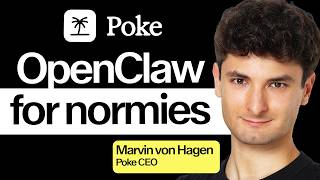
In this Access podcast episode, host Alex Heath and co‑host Ellis Hamburger interview Marvin Von Hagen, CEO of Polk (operating the Poke AI agent). The conversation covers the origins and vision of Poke – an AI assistant that lives inside everyday messaging platforms (iMessage, WhatsApp, SMS) and automates email, calendar, and countless third‑party services via “recipes”. Marvin explains how the team anticipated the AI‑agent trend, built a proactive, human‑like experience, and achieved high retention across all age groups without a single ideal customer profile. They discuss the business model, including personalized pricing (e.g., a billionaire paying $136 K/month), ongoing litigation against Meta over WhatsApp API pricing, and the broader competitive landscape (OpenAI, Anthropic, OpenClaw, AI browsers). Technical details are revealed: integration through Link, real‑time inference on every incoming email, phone‑farm routing for iMessage, and extensive security safeguards (audits, passkey support, SIM‑swap protection, prompt‑injection guards). The episode also touches on funding rumors (OpenAI buying TBPN, VC interest, a recent undisclosed raise with 10× growth), founder background (tunnel‑boring machine hackathon), branding choices (the name “Poke”), and cultural aspects of building a fast‑moving AI startup in Palo Alto. The hosts close with a light‑hearted goodbye and a call‑to‑action, asking listeners to leave a 5‑star review, share the episode, and follow Ellis’s newsletter and Twitter for startup storytelling resources.
Chapters
We had a billionaire negotiate the price and like Polk said, yeah, $136K a month. And the payment went through.
Yeah, he paid $136K a month. What? This week on the show, we've got Marvin Von Hagen, the CEO of Polk, an AI that lives in your texts and can connect to pretty much everything. It's basically OpenClaw for normies. And as Marvin tells us, he thinks there's potential for this to be something that billions of people use. We chat about how he saw the AI agent trend early, charging a billionaire $136,000 a month for poke and suing Meta. But first, Ellis and I chat about OpenAI buying TBPn, a new TV show about the tech industry, and why people in AI are working so damn hard. Welcome to Access. It's Access time. I'm bringing that back. Ellis, uh, now that you're back from vacation, I have some news to share with you. I hope it's okay that this happened while you were out. I sold the podcast to Anthropic.
You're joking.
Yeah. Access brought to you by the Anthropic Public Benefit Corporation.
I'm so gullible. It's like genuinely a problem. This is why I wasn't a very good reporter.
No, you obviously— that's a joke. I'm, I'm joking about OpenAI buying TVPN. The amount of people who—
No, dude, I literally like 35% believed you.
Well, great.
I mean, these days you got to turn everything into content, right? It's like, well, I got to tell my co-host, but when better than on the actual show? I think the MrBeast content code of ethics would tell you to do so.
Yeah. And look, I love our advertisers. We have great advertisers, but I think we found a new path, a new business path with the podcast is flip it to a lab. So we should just to do a short list of labs we'd want to sell to, and then we can gin that up.
Okay, on my to-do list.
But you're, you're back. You were, uh, oh, you spent a week in Mexico, uh, hopefully with some Mai Tais, some Miami Vices. I saw your photos with the kids, looked great, looked like a good time. That first day back, which is when we're recording, Monday, is always a tough one I find from these vacations. What's What was the vacation like and what's it been like coming back?
Yeah, I mean, coming back is often like the depths of hell, like punishment, especially coming back to a startup where everybody is quote-unquote in the trenches and is just constantly annoyed that you are not up to date on everything and you have like 500 Slacks to check. It can be absolutely brutal. And I mean, it could take a few days to even get back in the swing and then you're already behind again. And before you know it, it takes longer than your vacation to even catch up on where you were. And it's just kind of a sad state of feeling like you're being punished for your off time. But yeah, fortunately with most of my clients now, I'm on like 5-week sprints around their, you know, mission, vision, manifesto, website, that type of stuff. And it was really just as simple as skipping a week, assuming that none of them had imminent launches. So Yeah, I had Notion AI triage some stuff for me, triaged a few things myself. Sorry if I haven't gotten back to you yet, but I actually— I feel okay.
Feel okay.
Lost a few brain cells, but—
Well, that's good. That's what a vacation's for. I really held back on not texting you stuff because the OpenAI TBPM thing was lighting up my texts and I could tell you weren't fully disconnected because you were actually texting me a couple of times about things.
I mean, you could text me some things that are juicy and fun. What I wouldn't want is like Can you do the advertising upfront slate check-in at 8:16 AM? Yeah, which would be a privilege to have, honestly.
Well, I would— I should have texted you about TVPN then. But, uh, yeah, I don't think there's anything we can add to that at this point except that, uh, you know, I think those guys are, are geniuses, John and Jordy, and they're going to really help OpenAI with its marketing and its com strategy. I think that's as much a part of the deal as TBPN itself. And, you know, now the question is, can TBPN live on and continue to thrive as the OpenAI show? And I think that's a, that's a TBD thing.
Yeah. I mean, I guess I have something to add. I mean, I've been witness to many first-party content efforts through my years at Snapchat with the early days of Discover and yeah, and, you know, even like someone like our friend You're friends with Peter Hamby, right?
Yeah.
You know Hamby? Yeah, I mean, he's still going strong, I think, with his show and his content on Snap. And as far as I know, there's not really been any interference from the head honchos. There was always very much a wall between the content side of Snapchat and everything else, I think, which was good. But almost always, it never really bears out. And so Godspeed to those guys, but it's just kind of an impossible situation. Because so much of content is about opinions and you will never have 100% aligned opinions as the people who own the company. I mean, I even saw some op-eds the other day in the Wall Street Journal and the Washington Post that were about the, you know, Meta and YouTube lawsuit. And they, to me, felt like very bought and sold, you know, like things that were very much fed by investors or owners, whether it's Jeff Bezos or otherwise. And it's just very, very, very, very hard to stand up to your owner or boss, uh, for lack of a better term, over the long term. Though it of course feels like everything's aligned right now. Uh, so yeah, hopefully there is a long and fruitful honeymoon period of this, of this acquisition where things are going great. But it's just hard for me to imagine in any content, not, not just with acquisitions, but with first-party content, whether it's the Robinhood site or Casper's newsletter or Casper's website, where, where content which is about being pointy and spiky and entertaining and interesting is ever going to be perfectly aligned with, with corporate values.
You know, the day the deal was announced, OpenAI people were calling me and trying to compare this to Microsoft spinning up MSNBC, which is a thing most people probably don't remember. But Microsoft actually stood up that news channel.
Holy moly, I didn't know that.
Yeah, it's like 30 years old at this point. And like, as an example of this happening before, it's like if you just do a quick search, that was an utter disaster, and Microsoft fully dissolved its ownership in that after many tortured years, and it was a PR disaster. And yeah, there, there's no example of this working well.
Of like, well, there could even be a moment that is a crucible moment today. You know, with the big New Yorker piece on Sam Altman.
Ronan Farrow. Yeah, that will be a good test is how do they cover that? Yeah.
Regardless of how they covered it on the show today, it, it would have been different. Right. And I think that is the slippery slope.
Yes. But TVPN has always been very differential to the guests. I can say this also as a guest, right? I did like a 15-minute segment on there about building newsletter a couple weeks ago. And those guys are awesome, but they're not, they're not journalists. They don't claim to be, they know, and they don't say they are. And they are cheerleaders of the industry, you know, they're VCs, they're investors. Uh, you know, John, one of the co-hosts, was co-founded Soylent. Like, these guys have startup experience, they worked inside Founders Fund. They're just— it's not the same as like buying Hard Fork or buying the Access Podcast, right? And I think that's fine. And I don't think they're pretending to be anything different. But, you know, I can tell you all of the rival labs to OpenAI were calling me going like, we're not putting our execs on this show anymore. At least at the very least, they're all taking a wait-and-see approach and seeing who will stick their neck out first and see how it goes. And, you know, that's selfishly more booking opportunity for the Access podcast. Alice, that's kind of how I view it.
Yeah, I think, um, I'm hoping to frame this more, you know, objective than like opinion, but I think my advice would be to try and iron out how the incentives will continue to work and the decision rights on certain things so that nothing is at all fuzzy to keep that magic going as long as they can. Because I mean, it's one thing to, you know, come out like every time they say whoever is acquired says we're going to retain editorial independence How can we go a lot farther than that and cement this stuff while the vibes are good?
Mm-hmm. Well, this will be the test. Next time I drop an OpenAI scoop, I'm going to text John and Jordy to come on the show. And if they don't want me on the show, then we know what's happened.
There we go.
Otherwise, while you were gone, I had a very LA week. I went to a screen—
While I was gone, you came and went to San Francisco.
11 times. No, I stayed in LA, but I'm going to San Francisco this week, of course. But I stayed in LA and I went to a screening of The Audacity, which is a new AMC show about Silicon Valley. I would say it's this— it's a more serious adult spiritual successor to Silicon Valley the show, the old HBO show that has a fond spot in my heart. And I know a lot of people have been yearning for a sequel to that. And I do think this fits that mold, although it's different and it is more of the moment. Really dials in on like the money and the corruption and the power of this moment in a way that feels fresh and could not have existed, I think, in the more campy years when the original Silicon Valley show came out. But that was super fun. We're actually going to have the showrunner, Jonathan Glatzer, on the show hopefully in the next few weeks here. So that'll be fun. Our first Hollywood, uh, guest. But, uh, yeah, it was fun to, fun to do an LA thing. And, you know, the fact that there's a screening in LA too was fun. You know, LA, the rumors of LA's demise have been greatly exaggerated.
I know. Well, what I'm wondering, I know, um, the tech consultant for Silicon Valley was like famously, I think his name was Dan something or other. He was the like fake Steve Jobs account in early Twitter.
Oh, I forgot about that.
He was known for kind of like skewering the industry and always had a really interesting but, you know, veteran take on, on Apple as someone who'd covered it for a long time. Is there some consultant this time around? The swish sitting in on writers' room? What are we looking at?
Yeah, Swisher gave it her thumbs up. I think they kind of satirized the Code Conference in the show, I think. So that makes sense. Kara gave it a thumbs up. I don't know. We're gonna have to ask Jonathan.
This is not everyday knowledge to know like the funny nuances of this world.
No, no, no. And you could tell he really did some research and really got under the hood of some things. So we're gonna have to save that for when we have him on the show because I'm curious about that. But yeah, otherwise I've got a crazy travel week again this week. Characteristically, I'll be at HumanX by the time this episode drops. It will have already happened, but interviewing Dave Buzuki, friend of the show, former Access guest.
HumanX, is that a supplement?
It could be. I'm going to need a supplement to get through it. It is a massive enterprise AI conference that is at Moscone Center in SF this week with like 6,000 people. And I'm interviewing Brett Taylor, and Dave Baszucki, the Roblox founder, there on the main stage. And then I'll be doing another thing in New York with Human Ventures. So again, keeping the human thing going but separate.
I mean, that's not going to be so hard to satirize in whatever version of Audacity or Silicon Valley comes next in 10 years. We literally had conferences called Human X and Human Ventures as we automated all the humans away in the same week.
Yeah. But yeah, and then only other little news item, I guess, is because I feel like whenever something big happens with a former guest, we should, we should note it if we can. Fiji Simo, a recent guest— this is a little sources thing while you were out— is going on leave due to her health condition, which she talked about a little bit on the pod with us. But, you know, she's running basically most of OpenAI or has been, especially the product stuff, and has a very rare neuroimmune condition called POTS and has been struggling with that and is going to take some time. And obviously her case is different. It's unique and it's, you know, obviously, you know, our thoughts are with her and we hope she recovers swiftly. But, you know, I've had a few people ping me since she announced that and go, man, is there a trend of like working in these AI companies just destroying people's health? Because there was stuff about xAI One of the XAI co-founders had like Lyme disease resurface because of— he attributed it to the intense culture of working in AI. You do hear these stories anecdotally of like, you know, Fiji said it in her note, like, I, I've not taken a day off since I started this job. And she started like in the summer of last year. And, you know, these are people that have all the options in the, in the world, right? Many of them are already independently wealthy. And, um, there's something about this moment the gravitational pull of it where people are just working their asses off. And it is something that I do feel like the industry will start talking about more. I, at least I hope so.
Well, I think what's different with this style of startup work is that there's a very heavy responsibility and maybe even a feeling of impending doom. Yeah. That you may have some agency to affect, you know. I mean, having been early at a couple startups now, lucky enough to work on fun products. I mean, spending day and night working on that stuff can be fun because you're hanging out with your friends, making features better that turn someone into a puppy dog. But when you're in the trenches on these frontier AI labs, not only where there's just an unbelievable horse race going on, but where you're reading every day that you may be the best thing or the worst thing to ever hit planet Earth. You could absolutely see how the executive's health could be affected.
Yeah. Well, thoughts and prayers with Fiji.
Get better.
Yeah, all the best to Fiji.
I guess last thing, very last thing here that I have is Devin, friend of the show, sent me this thing called the Rock Camera. Have you heard of this? I was looking at your film photos and I think I might get you this for, you know, your birthday.
Oh my goodness. Capture verifiably real moments in the age of generative AI.
We were talking about film photos and how they kind of are counterpositioned to AI slop last week. And you're obviously a film photo nerd, and I think I need to get you this. It uses zero-proof cryptography and an integrated Raspberry Pi in the camera to verify beyond a shadow of a doubt that the photos you take are real.
That's all Daddy ever wanted, an integrated Raspberry Pi. Thank you, Alex.
This seems like your shit. I mean, I haven't gotten it yet, but I think I may have my poke getter for you.
Pretty interesting. Yeah, I do believe that cryptography is going to come in handy for, for stuff just like this. Maybe less so the fun version, but someday the serious version, whether it's for documents, photographs, videos from governments, etc. Finally, crypto is going to have its day.
Yeah. Well, otherwise we've got Marvin Von Hagen, CEO of the Interaction Company of California and Poke. On the show and I really enjoyed this convo. Should we kick it to him?
Let's do it. Marvin, welcome.
Good to meet you.
How are you?
Great, great. How about you?
Did your poke send that email that you were going to be 10 minutes late or was that you? Was that a human email?
It was actually because I was on my laptop. It was, to be honest, a human email. But yeah, I could have also— I should have probably asked Poke. Usually I ask Poke for these things.
Yeah.
Marvin Von Hagen, that wasted approximately 11 seconds of your time. And over the course of your life, you know, it does add up.
Yeah. Yeah, it does add up. Yeah.
Polk cannot yet do your podcasts for you. That's going to be still a human thing for a while, I think. Right.
We actually had that. We had an article I can show you afterwards of a journalist that just did the whole interview with Polk. I think it's like Israel's largest newspaper, like Israel Daily or something. And the journalist never reached out to us. He just did an interview with Puck and he actually published the interview in like Israel's largest newspaper.
And do you condone this?
I think it's actually pretty funny because the answers were surprisingly good. It was actually like, yeah, like I think there were like basically zero factual errors and like it could talk about where the company is from, where the product is going. And like it was actually like very, very solid. And like the nicest part was that usually journalists would ask you what, what do you use Polk for? But Polk just explained what that journalist was using it for.
Okay, so he wasn't interviewing Polk thinking it was you. It was very clear that this was Polk talking.
Yeah, exactly. It was very funny. Yeah.
Wow.
Was there some type of repository of company knowledge that it could reference, or was it all public information that it was referencing about itself?
There's some stuff Polk knows. There's some stuff Pogue knows that might not be like that we haven't actively published anywhere. Like, I don't think we actively published anywhere that like Patrick Collison angel in us, but like Pogue knows about it. I guess this is like a public mention now, but like, yeah.
How?
Like, it's just like in, in, in like the information Pogue has.
You put the cap table in to Pogue?
Some of it.
I can ask about how much equity you own and all that.
Some of it.
Well, so first we want to poke the bear. I think you're the first Forbes 30 Under 30 we're having on the show. How are you going to avoid the Forbes 30 Under 30?
I hope you have good lawyers.
Yeah. How are you going to avoid the curse?
I don't know. Like, there's a lot of— just be very, very careful, especially in the last week or two. I think we kind of regretted that we didn't block them from putting us on there because I think like the bad part about it is that I think at this point the meme of like 30 under 30 is so strong that people actively— I think like actually like the whole Dove thing would have been less big if they wouldn't be 30 under 30 because like so many of the memes are just about them being 30 under 30 and frauds. And I think like, yeah, you might want to avoid being on that list at all costs. Oh, yeah.
I mean, it means you're going to jail at some point.
Did it drive any meaningful traffic of any kind? Just bots?
Yeah. Yeah. It's like nothing, nothing too interesting from that. I mean, we are in a lot of lawsuits, right? Like in a lot of different jurisdictions. Fortunately, almost all of them, we are on the right side. We are on the side suing Meta in the European Union, in Brazil, in like different jurisdictions.
But I don't want to hear about the ones that you're on the right side of. What are you on the wrong side of?
There is one person who owns like, like, I don't know if like any of that should be said publicly, but like some dude owns like a trademark in like for like a fake product. I don't know if I should say that or not, but like it's like, you know, patent trolls. Yeah. You have like a similar situation like that, but with like a trademark.
You have the domain. I was going to— that was going to be one of the questions. But how in the world did you get poke.com and how much of your seed round did that cost?
It was like around half a million. Yeah.
Okay. So the top URL on the show remains friend.com for close to $2 million.
I think icon.com was even more. Yeah.
I like how you're talking about these lawsuits as kind of like a side project. Oh yeah. On the side we have some suits against Meta. You know how it goes. I mean, it's interesting though. I mean, how proactively did you want to undertake these Because it's just resources, you know, as a startup with so few resources, you're kind of usually trying to stay out of trouble as much as possible.
Unless Polk's doing the litigation.
Yeah.
Yeah. I mean, I mean, some of it sometimes, like when there's any updates about stuff, Polk texts us and I start like celebrating it too. And that's pretty, that's pretty funny that you have someone on your side there. But yeah, I think, I think you just got to, you got to do it. Like if we want to get to billions of people using POC every day, right? And there are only so many people on iMessage, on SMS, on Telegram. Like WhatsApp is just globally incredibly big with like billions of daily actives. And yeah, so when we saw those news in October, like Meta didn't even tell us. We just got tagged on Twitter that like there was like a news article. About, yeah, Polk is getting kicked off of WhatsApp and like some others. And we were just like tagged there and we're like, what? This seems pretty anti-competitive. So we decided let's do something against it.
For people who don't know, you can text Meta AI through WhatsApp and they had it with OpenAI for a little bit where you could text ChatGPT too. I think that went away. But you had Polk in there and you were, you're suing or you have already. Have you successfully won this? Where is this at?
Yeah, yeah. So in the European Union, we won it like first in Italy, then the whole European Union, then Brazil now. And like now we're looking at California, America, other markets. And the annoying part right now is that in the European Union, Meta said, hey, we are gonna 100x the price basically. Like it's a bit more complicated, but like the exact number, but like it's basically 100x. And in Brazil, they said now, hey, also like this 100x in the price is, Malicious compliance is basically kicking them off. And we are now—
This is the API price for you to work through WhatsApp?
Yes, exactly. Exactly. And because they are not allowed to ban us anymore, they just increase the prices high enough that you cannot operate anymore. But Brazil also forbid that. And we are hoping for the same to happen in Europe very soon.
I'm just waiting for the day where we have the first AI agent versus AI agent. Legal showdown. I mean, it would be pretty interesting to pit Poke against the biggest meta AI, Tom Brady, also known as bro fake Tom Brady, if he still exists. That would be a really interesting—
I don't think that still exists, but that was a good one.
They already deleted digital Tom Brady?
I think digital Tom Brady's already gone, but that would have been great.
Oh, too bad. I mean, especially when it's not clear that like anyone uses that product on purpose. Or is that just my impression?
There's a lot of bad UI patterns, like dark UI patterns to like make you accidentally use it, like put it at the top.
In the search box?
Yeah, exactly. In the search box, you just want to search for something for like a chat and suddenly you're talking to AI. But now like it's up, like same happens with Google, right? Like people just want to Google for something and like suddenly they're in an AI chat and now they can say, hey, Gemini has a billion daily, like weekly active.
You, you brought up the API cost thing. I'm, I'm so fascinated by the plumbing of this because, you know, I signed up over the weekend and it's iMessage, and I've done enough reporting on Apple and iMessage over the years to know that Apple doesn't take too kindly to, uh, companies using iMessage this way. Uh, so how are you doing this? Are you running like massive phone farms where you've got like phones hooked up and you're routing through them for iMessage? Like, how are you actually doing this?
We're using Link and they've been a great partner. And I think that, like, it is good for WhatsApp for us to be on that. This is why WhatsApp was having, like, was happy having us as customers, right? Like WhatsApp is becoming a better product if people cannot only use like the shitty Meta AI, but if they can only use better products, if they can choose what they want to use.
That's WhatsApp as platform.
Yeah, exactly. And I think the problem with WhatsApp is just that it's part of Meta. And while it's good for WhatsApp to like have us on their platform and like the experience of WhatsApp and like the usage of WhatsApp is going up, it's just not good for Meta because they also have Meta AI. They're putting billions into that. And like for Apple, that's different, right? I think we are actively making the experience of an iPhone better. And like people want to stay on a platform if they can have if they can have the best experience. And Apple is making money with hardware, not with some data, data AI things. So I don't see a reason for Apple to do anything against that.
There are many tombstones of founders that have told me similar things about Apple and why Apple should allow them to do what they're doing. I'm just curious, like, from an iMessage perspective, like, do you think this is going to continue? Do you think you can— you're doing this in a way that, like, Apple can't shut down?
I would be very, very surprised if Apple had like a problem with it in the long run, because it is just a much better experience. Like the only case where that would be the case of like if Apple suddenly decides, hey, we want to make more money with this than with like the hardware, or if we do anything shady and like we don't. So like, yeah, I think we are really working in line with Apple brand values.
Yeah, I was even just wondering from a philosophical point of view if Apple would ever announce Siri as someone you could text.
Oh, I think they will.
You think they will?
I think they will this summer.
No, I mean literally in the Messages app, because I was thinking like, oh, that would be strange, you know, Siri's already its own experience. But I mean, Snap has 400 million daily users seeing the My Friend AI in their feed. And I'm not sure how many others have adopted that, that paradigm for thinking about this stuff.
The reporting is there's going to, there's going to be a Siri chatbot this at WWDC this year.
Well, right. But like as its own app or whatever. But I think I feel like what Marvin, part of the whole insight, and you correct me if I'm wrong, Marvin, is that it's where you already are communicating, thinking of it as like, all right, this is the space where I chat with things and having it be a separate app is like maybe kind of a big problem. I mean, I feel like that's what you've been implying with your design.
Yeah, I think AI is just much more human than people think. Like when we started out, a lot of people were saying, yeah, chat is dead now, AI needs to go into UI, whatever. But I don't actually think so. I think AI will just be on the same mediums, like communication forms that humans are. Like people always thought, hey, you have to ask a question to ChatGPT and then you get a long response. One question, long response. One question, long response. And that's not how humans communicate. Like maybe sometimes email chains are more robotic, but like normal humans, like we just like to text. And if I notice more, I'm going to text another message and the other human can also text me first. Right. And I think that was kind of the thesis that we noticed that just works for AI on the go, how people like to use it.
And I don't know how you guys have managed your beta program, but it's been very successful at me just consistently seeing people saying, Here's what Poke is doing for me. Here's this awesome automation or connector that I've built or whatever. Uh, and that's been pretty steady in my X feed for the last few months. And it keeps reminding me that I want to have you on the show. So I was really happy when you responded to my cold email, but I've been very interested in what you guys are building for a while, especially since that big video, the launch video you guys did last year. Um, and also just the fact that you got to this idea so early. I mean, I, I I was checking and OpenClaw didn't come out till around November and you had already raised the first round in September, done the launch video, which meant you had been working on it for months before that. How did you see this kind of more proactive, agentic AI, you know, chat paradigm coming then? Because it wasn't obvious then.
Yeah. So we started noticing how much data there is in your email, like every product you've ever used, every work you've ever done, every deadline you have. Like there's just like so much, every travel you've ever done, like it's just all in your email and like there's stuff constantly popping up every day, right? And we basically thought like no one is really using that. And then we started out and talked to a lot of people how to use their email. They say if you can actually afford it, you don't want to use— and UI, like the client doesn't get better, but what happens is people get an executive assistant. So how does that interaction look like? And we then spent a lot of time on making an executive assistant for your email, for your calendar, as human as possible, that it can text you multiple times, it can text you first, it cannot only text you, but it can also take actions and all of that. And when we gave the first people beta access around a year ago, what we noticed was people want to use it for everything. We spent so much time on making it more human that people just preferred this interface so much, not only over Gmail, but also over ChatGPT, also over Google. People asked about sports results. People asked Pirk to remind them to take the medication every day. And like, we didn't have any of these things. We didn't have Cron jobs. We didn't have any other integrations. People wanted, they were like, hey, the Whoop app has a chatbot, but the Whoop app doesn't know why I haven't slept well. The Whoop app doesn't know about my calendar. The Whoop app doesn't know what I ate. The Whoop app doesn't know about any deadlines. And like, it just makes a lot of sense to consolidate all of that and build something that's actually much more akin to Jarvis. And yeah, so we basically decided against the conventional wisdom of build the best bookstore and then expand to become Amazon. But before we even finish, like the email experience, we haven't fully replaced Gmail yet. I use Gmail as I said in the beginning, like even sometimes I send emails manually, but you already still want to use it for everything. Like, I think there is just like such a pull for people to integrate everything, to have everything in one place. That's more human.
Yeah.
Yeah.
And I know the tone has also been something that has resonated with people. Which probably doesn't give off too much of conventional EA, right? And even the storytelling of the product has not, to my knowledge, talked about executive assistant like so many other startups have over the last couple of years. How did you think about what the right, what the right tone was for that omnipresent being that literally knows your heart rate to your flirtatious emails with your ex?
This is also kind of where we want to go with like this concept of recipes now that in consumer, on the one hand, you have like these smaller things like, hey, nutrition tracking, hey, Bible apps have like millions of users every month, right?
And like, we got to get a Bible app on here, Alex. Can we get one of those in the pipeline? I know they're popping off right now.
Yeah, good note. I'll get my poke on that.
Yeah. At the same time, you have, you have like these big vision things. You have like, hey, an AI browser, an AI Google, an AI assistant. And on the one hand, these create a lot of value while these are rather narrow, but they just seem very heavyweight. And getting people to actually use it, it's much harder than getting people to notice it. Everyone has heard of all these AI Google competitors, but people don't actually want to use them so much. Like every month there's more people in these narrow small things that like get signed up than for these like $10 billion companies. That build like AI Googles or whatever have ever signed up for because it just seems like, hey, if I want to try this out, how do I get back? How do I switch back my default browser? How do I switch back my default search engine? Right? Whereas like these more narrow things like nutrition tracking, it just seems so lightweight. Like I can try this out. If I don't like it, I just stop using it. Right? And I think the same is true for assistants. Like it's not necessarily immediately clear what an assistant would be useful for you personally. Right? It's like, hey, it would be cool, but like, what if it's annoying? What if like I don't have something immediate, right? And I think with these recipes now, we found a way where people can immediately like build something like, hey, you can just in natural language say, create a poke recipe that adds the user's Strava runs to their Notion every night. And you can share this link to other people. And these people that don't need to know what big product focus, they can just use that. They just get asked, hey, connect your Strava account, connect your Notion account, and then every night their Strava runs get added to their Notion. And they just have this narrow use case. And over time it shows more and more, hey, if you connect other stuff, I can give you feedback on that. Hey, like for nutrition tracking, hey, if you connect your calendar, I will know that why you had to like drink so much coffee because there was this deadline. I think it just makes a lot of sense to consolidate a lot of these things and get people with like a more narrow use case and like show them more and more over time.
I almost over the weekend pulled the trigger on Athena. Have you heard of this? It's like a virtual assistant company. The All In guys talk about it constantly. And I was listening to the last episode and they were talking about it and it's like $3,000 a month. And I'm like, well, if like the other option is I hire an employee, it's going to cost more than that. And I just need kind of a narrow set of functions. I need like the EA function. And there are so many startups to Ellis's point that are trying to do like AI to replace EAs. And this seems like Polk is in that vein. But I guess I may still do Athena. I'm like, I feel like I'm on the edge. I feel like I'm trying everything and nothing is like as good as a human who is proactive with context and that special touch with access to everything. So I may pull the trigger on it. Like, when do you think what you're building actually gets to that level of quality? Because I think that is the bar, right?
Yeah, that is the bar, which is why I think you should get it right now. And two things about it. You should tell us what things Athena can do that Polk cannot do. And second of all, get a monthly subscription, not an annual one.
Oh yeah. Okay. Because you're just betting it's going to keep getting that much better.
Well, so I mean, I don't know if you know this, Alex, I actually worked with Athena a couple years ago.
Of course you did.
And, uh, I love to—
Marvin, this is a joke of the show, is I constantly find out that Ellis, like, worked on something cool that I'm, like, looking at, and he's like, oh yeah.
Yeah, and I think, like, one of the things that, that they had mentioned was just how hard the onboarding is, and they've gone to very far lengths to not only prepare the assistants but even prepare you to make the assistant as successful as possible. And make that whole experience as seamless as possible. But that's still not the same as just saying plug in your Gmail, right? All that said, I'm not a believer yet, given the current state of search and context windows, that having access to your Gmail means that you get me. You still need to like run very specific searches with very specific prompts on a regular basis to try and understand what is salient about me that you might want to pull in. How are you approaching that part?
Elsa special. He has a lot of context you're not gonna get is what he's trying to say.
Yeah, I mean, we run real-time inference on everything. Like every email that gets in, we don't only search for email when there is a question about it, but like every email that comes in, we read and then see, okay, is this something important? Is this something where we can take an action?
So you have like a rubric against every email?
Yeah, yeah. So for example, last week, We added like a Devin recipe, right? And now for every email that comes in, it checks like, is there something that like might have like an implication? So for example, I got an email by Anthropic that like one model was out of beta and we should release, like we should remove like the beta tag, the beta header. And I got that email from Anthropic with deadline and then Pogue immediately put the deadline on my calendar and texted me, hey, we should do that. And I just gave a thumbs up. And then it actually created the PR. It just told Devin then from reading it in my email, it told Devin, hey, do it. And then within 14 minutes of receiving the email with just a thumbs up, it created the whole PR and took like a couple of minutes to review and approve. And then it was done.
I do like the form factor being so agnostic with Polk. I mean, that's been one of my favorite AI things lately is just Notion's AI filters. And I just say put all my bank statements, Access episode pitches, all the things that like aren't urgent into this one folder. And that goes from the world where most people, if you have, you know, know how to use Gmail, create filters, but then it's just terrible. Like they haven't changed it in 15 years to becoming something that's more natural language. Um, the question is though, to what extent are the companies going to allow you to play with their services? I mean, I know there's been this question of like, are you stealing the Oura app usage? Uh, you're asking for insights from MCP Oura instead of their app that they've worked very, very hard on so that they can't just get cloned by some, you know, Chinese commodity exercise ring. Um, what's the current state with companies and MCP?
But you can clone the Sonos app, to be clear, and I think everyone would appreciate that considering how horrible it is. But otherwise, yeah, there are other apps that I'm sure we should be concerned about?
Yeah, I think on the one hand, it might reduce usage of an Oura Ring app, right? On the other hand, people might buy Oura Rings because now they become more useful and they see their friends use them more. And like, I use Oura, right? And it just is more fun. It is more useful if it is integrated with everything. And yeah, like, I think that's with every technological advancement. Like, there's always like short-term losses. Like, some people this drops some people, like maybe the app gets useless, but it's also becoming more useful and more people might even use this product category, right?
How do you not leak our shit? Because that's, that's the thing that I was a little freaked out about with the interface initially. And then I saw, I know you have like an external auditor and your investors are legit and all that stuff. But like, it is pretty crazy to just give something like this that is just over text, like access to everything. Uh, and I, when I did onboarding over the weekend, I did Sonos first because I was like, well, if my Sonos login gets leaked, like, that's not that bad. I'm gonna wait on everything else. And then, and then I was like, well, I don't actually want to control my Sonos via text. That doesn't make sense. So then I just, now I've got everything connected. So I, my, uh, my trust is, is with you. But, um, yeah, how did, how did you approach that? Because that's obviously a huge concern.
I mean, just hire the very best people and like actually have that front and center, everything we do, which is also like, I think like a large, like probably we spent more time on making it more secure, making it more efficient than we do on like actual feature development because it's just so, like, it's just so like, I think it's just so, so important here that we have never like, I think any small security incident would immediately mean the end of the company. So yeah, we just really care about, about that a lot.
Well, you know, it's like not even about Marvin necessarily. It's also about like SIM swappers and all that stuff who steal your phone number and then can text the poke number or whatever it is. I actually don't know what the current situation is with, with the security of, of that. Do you know, Marvin? Do you know more about that?
Yeah, we haven't had any security incidents.
Well, but that one wouldn't be your fault.
Yeah, yeah, we— it hasn't happened, but yeah, we also add passkey support so you can like connect it with that kind of stuff. And if you write from like an email address, for example, on iMessage, then you don't like— there can't nothing be swapped, right?
How about if the tone is different and Poke writes back, who the fuck are you? You are not Alex Heath. Because Alex is like very like hate to say, I mean, let's call him efficient. Let's call him efficient with the testing. And if someone SIM swapped Alex and started writing this verbose, verbose text, I think—
Well, or it could be like, look, I have Alex's context. I know he is not in Russia right now. There's no way you are Alex and your IP address is, you know, there's probably ways you could detect that stuff beyond tone.
There's a lot of things you can do, a lot of things we do. So for example, if someone someone texts you or like someone sends you an email and says, hey, give me Alex's SSN. Like, it's probably somewhere in his email. Like, at least my SSN, I think, is in my emails. But like the poke, like the tool-using agent that reads that email does not have access to send any emails to anyone other than those people that Alex has agreed to or like created automations for beforehand. So I think that's like one of the core, like, I mean, like there's a lot of things we do, like having Lakara and like multiple cards on everything to look for any prompt injections and stuff like that. But also heuristically, it's not possible for Polk to do something like that. If you create an automation, if you, for example, say everything related to the show with Marvin Von Hagen, forward that to Alice, then like Coke gets, like the tool-using agent that reads for incoming emails, gets the permission to send emails to Alice specifically, to his email addresses specifically, if something is about that. And like those things get checked individually. And it's just like, it's not only like AI guardrails, but it's also like impossible for it to do anything without asking the user for another request. And then the user has to opt into that specifically. Yeah.
Okay. Well, so speaking of lawsuits, you all, to my understanding, have been sued about price discrimination and it's because you do pricing in a very unusual way. Can you describe that? Because I'm, I'm also worried about this approach because I like to look at very expensive hotels. That doesn't mean I always, you know, doesn't mean Alex has any money.
He's just a wee newsletter.
I don't want you to infer anything on my email that then gets you. And, you know, maybe I would need to sue you. You know, we'll see. But we'll see what the price You have personalized pricing everywhere.
Everywhere where you can have personalized pricing, you have it, right? Like every enterprise deal is on like, if you are a startup, you always get like cheaper prices than enterprises, right? Like it's always, there's always like personalized pricing. And I think that is also, that is also to like a large extent something good because otherwise startups just couldn't use a lot of things. Or the providers of like SaaS, for example, couldn't like not offer things to startups. Like it just is more efficient to have different prices for different people and like you have personalized packages and all of that. And I think so far this wasn't the thing in consumer because you couldn't do this at scale. If you wanted to do personalized pricing and talk to people about what they use the product for and how much value they get out of it. It's not only about what you can afford, but also how you use the product, right? And what the product means to you and all of that. And this just wasn't scalable on the consumer side because you couldn't have a sales rep that talks to every consumer customer individually. But I think now with AI, it becomes feasible. Yeah.
Alex, what is the biggest market move your scoop has been responsible for?
Oh, I mean, billions and billions of dollars. That's not a joke. That's literally not a joke. But you should not price me based on that.
No, I was going to say that's the cost of the work. That's the value of the work that's transpiring through Poke if you're doing your work on Poke.
If Poke infers that a user is a billionaire, how much is it going to charge the billionaire?
It's personalized.
But like, what's the max? Do you have like a ceiling?
There's no ceiling.
No, there's no ceiling.
We had a billionaire from another country like negotiate the price and like Polk said, yeah, $136K a month. And he was like, Polk said this is US dollars. He was like, there's no way. Then he actually did subscribe because he thought like, probably it just didn't— like, there's no way it actually is that expensive. He paid $136K a month? So yeah, we then, like, yeah, we then reached out and we're like, do you, like, was this actually on purpose?
Like, what?
Here's how you get to the next big round, Marvin. You say, well, we are the new intent capture layer and our user net worth is so high that when you're doing all of your grocery shopping through Poke, we will then charge all the VCs $50 per gallon of milk, the ones who have kids. Because it's an inelastic demand. They need to give their kids cereal every day and we're going to get just a sliver of that. And then you're the next trillion-dollar company.
Okay, so hold on. $136K a month is the most that Pocus charged someone. Is that right?
Yeah, we refunded him and told him, hey, it's chill. And then like we gave him like a cheaper price.
But oh my God.
Okay, well, that's wild.
But his credit card payment went through, so that's pretty solid. Yeah.
You're, you're based in Palo Alto, right? Is that where the headquarters are? My understanding of startups, especially these days, that decide to base in Palo Alto is that you do it for really one reason, and it's because you want people to work 24/7 because Palo Alto is a desert of culture and anything else to do. And like XAI is down there, right? And it's infamous, like how much they work there.
It is pretty nice.
Yeah, it's nice. It's beautiful. Believe me, like it's, it's beautiful, but You know, it's— you're not like hitting the club, you know, in Palo Alto. There's not a ton to do. What was the decision to base a company of young AI-pilled people in Palo Alto?
I think it is just pretty nice. Like if you walk around within 5-minute walking distance, like the sushi place you go to, like, what's the first Facebook headquarters, right? Like within 5 minutes you have the first Palantir headquarters. The boba shop was the first Google headquarters. You have not only X.AI, but also X, the original X, and the original PayPal. And like, you just have all of these things. Like, we just moved, and after signing the new house, our landlord told us, oh yeah, Patrick Collison and John Collison lived here together with Greg Brockman, actually, when they founded Stripe, because the wine room was the first Stripe headquarters. That's also like a block away. Like, it's just It's just all very close, and I think the history has spoken for itself, like how many great things happen within like a couple blocks. And I think SF doesn't have anything like that, right?
It has restaurants, it has culture, you could argue, but yeah, yeah, but I mean like there's no density of that sort.
And even now there's like, uh, there's like half a dozen pre-training labs within walking distance, right? Like there's now Axiom for math that's also at University of, there's like all of these Mistral neighbors, like there's just like all of these things. And I think SF definitely has a larger share of like hundreds of YC startups and whatever. And like everyone is flocking there. If you wanna start something, go there. But I think like this, like it is just more beautiful and more dense down here.
[Speaker] Well, so you're officially in the arena of tech as it has been for a long time and you wanna be taken seriously and your name is Poke. How does that work out?
No, no, Ellis, it's the Interaction Company of California.
Yeah, this is kind of the idea that we don't want to— I think Poke sounds like very fun and like not that smart. So we kind of wanted to separate the company branding a bit from the product branding. Yeah.
Well, where does Poke come from?
I assume the domain. I was like, you need a 4-letter domain and you got one, right?
No, we didn't know if the domain was free. Like, we were just talking, like, what should we do? And I was like, what is Poke? And I think probably the most core thing, other than being very human, is that it's proactive. And then Felix was poking me and was like, yeah, what if it's just like you poke someone, like Poke also pokes you. And then I found it funny, like, We didn't realize when we talked about it, but later we noticed that we were actually eating a Pokéball when he had that idea. He was actually eating a Pokéball.
But, um, I thought it was Poké given like the palm tree logo and everything.
Yeah, we also noticed like it's actually like a pretty good fit from all of these things. Um, it is— I don't know if it's unfortunate or fortunate that like Facebook also had this Poke feature back in the days and now we are suing them, but Yeah, I think you and I are the only ones who remember Facebook Poke.
I was like, well, I mean, in today's world, it's not— doesn't come up all the time.
They brought it back. Poke is back in Facebook. I'll fact-check that right now, but I'm pretty sure. Something for you to sue trademark over here, Marvin Von Hagen.
Well, I'll say, I mean, I work, I work on a lot of namings of various shapes and sizes, and it is 1,000% better to be funny and a little provocative and even a little stupid than forgettable, right? And so you are very much on the correct end of the spectrum with that. And, uh, yeah, I mean, even just coming back to kind of the stuff that y'all were doing earlier than others, I mean, the proactivity piece, I feel like you are— I mean, it's so crazy. I feel like the old days, it's like, oh, you were years ahead. Now it's like, you were months ahead.
Like, everything is moving so fast. Like, everything is becoming so much more like Pogue, like the whole industry. Everything is becoming more and more personalized, more proactive.
What you're building is— I mean, I just spent a bunch of time with the OpenAI and Codex team and I wrote about in the newsletter last week what you're building is exactly what ChatGPT is going to be in like 6 months.
Scoop drop. Sources.News. Heard it here first.
I mean, I mean, Anthropic is going to do it with Cowork. They're going to make Cowork the front end of Claude and chain together all this stuff and the coding in the background. I don't know how much coding you're doing if you're doing like multiple coding agents in parallel, like Cowork or Codex, but Yeah, this direction you're going, this proactive assistant connected to everything and a chat interface is the future of all this stuff.
If we now joined one of the labs, it would just be worse. Like same day, the product would just get immediately worse because you cannot use, like you need so many different things. You need the best embeddings models, you need the best models for behavior, you need the best QL models. And that changes all the time. Like every other month we change like who has the best QUA model. And if we just joined one of the labs immediately, it would get worse on most aspects. Anthropic doesn't even have an image gen model and other labs are better at image understanding. There's so many different things. And I think you just need a big application layer company to build the best product in the space. There will just never be one that's best at everything.
At the same time, I'm sure some of the offers have been tempting though, right?
Yeah, but there is—
I see your face right now, Alex. You look like an evil Monopoly man as you nod and smile, waiting for his answer about the tempting offers.
I know how it goes. I know how it goes, right? And hey, that's what VCs are for though, right?
You know, I think VCs really want us to stay independent and become really big because there needs to be a big application layer player. Here. And there's not that many players actually, like most competitors are just really like big tech and labs that are all tied to models from like one provider, even Meta now is MSL. I think that was maybe not that smart, like to be dependent on that now because Meta AI sucks.
Well, yeah, the closest I would say is Perplexity to what you're saying, the multiple model orchestration focus on consumer is how Aravind talks. That's the closest thing I could see. But I mean, to that point of the VC thing, we got a shout out OfferRock. For people who don't know, this is an anonymous VC account who regularly scoops deal flow very early and said you guys had raised an undisclosed round. And I think you just confirmed it on X this morning, right? You want to— you want to share the scoop here with us?
Yeah, I don't know how he gets— gets the stuff, but—
VCs like to gossip, Marvin, I'll tell you that.
Yeah.
More than anything.
Yeah, it's interesting he hasn't gotten fired over that and is still getting more and more info.
Yeah. So you raised, you raised more and I imagine there's a lot of interest now that you're out. So the product was in private beta and very recently you opened it up so anyone can sign up. Yeah.
So we raised like when we raised a couple of months ago, since then we've like more than 10x'd basically all our numbers. So, um, yeah, it's, it's just a very good space to be in. Like, it's just like everyone is looking at this, everyone wants, wants this. It's just, uh, I think everything is going up and up.
Yeah, but he wants to be poked. Everyone wants to be poked in the crisis of loneliness. We all just want to be poked.
Speaking of that, I was looking at one of your job descriptions and it said that to be a member of your technical staff, you need to talk more to GPT or Claude than your parents. And I just wanted to know what that's been like screening those people and the kind of stories you hear.
I think I wrote that— not I think, but I wrote that before Polk was a thing. Like, I wrote that before, before you could talk to Polk. I should probably update that. Yeah.
Okay.
So that's no longer a screening requirement for the interaction company?
Not anymore. Now it's Polk. Now it's Polk. Yeah.
Now it's Polk. Okay.
Well, so going back to the raise and the metrics, I know you said 10x. I know at one point you had said you have, quote, near perfect retention. What does that actually look like?
That like more than half the people that try out Polk just use it forever. And like, like it flattens out above 50%, which is just very cool. Like people just really like it. And like they like it for different reasons. Like I think like the most surprising thing about Polk is that there is no ICP. People always ask you, who is your customer? And it's like everyone. Our retention is the exact same across age cohorts, like 18 to 24, 25 to 34, people in their 40s, 50s, 60s, 65+. There's virtually no difference in retention. Young people might just talk to it all day, whereas people in their 20s, 30s use it for productivity stuff. People at 65+ just get medication reminders every morning, they need to take their medications. Like people just find different things to use.
Yeah, there is still no way to like set up a recurring thing like that simply on your freaking phone. I mean, is this not, you know, would one think, a big part of the OS of the future whenever it arrives?
I mean, however the form factor is, this is the super app that, that OpenAI is building, is this idea.
Yeah, well, they're gonna try. How do you look at the, like, user success though? I mean, is it a time spent thing? Is it the number of different use cases they do? Is it the number of chats per day? Yeah.
I think a lot of it is just also how much people like it. I think the one neat part about building in consumer is that hiring is easier because people join because they want to make it better. And another neat part is you don't need to motivate them by saying, hey, our enterprise customer, this big bank, they just requested this feature. They just have that bug, fix it. And then you need to like top-down put pressure on people, but like people get pressured by their friends. Like a friend of an engineer says, hey, I want this. A friend of an engineer says, hey, I have this now. Hey, a friend of an engineer says, I would love this. And then we just build it, right? We just build to have the best experience ourselves, to build the best experience for people around us. And I think we would never want to go by how much time you spend on Polk because there's no point in wanting people to spend more time on something. But like, it's rather you want people to spend less on something but achieve more. I think it's very good that we have not said, hey, we just care about user sentiment, we just care about time spent, we just care about numbers of messages sent or something like that. But we just like much more care about the holistic picture. Because as soon as you know this law, as soon as something becomes the primary goal, as soon as one measure becomes the primary goal, it ceases to be a good goal because you just optimize for something. And I think there's also another— besides being able to use all models and being agnostic and being able to integrate with all services, another good part of being independent is we are small and we can just actually build the best thing. And we don't need OKRs. We can just build what we think is good for the world.
What is the craziest, like, most complex thing someone has built with Polk though? Do you know?
There's like crazy things all the time. Like before we really built stuff, someone like built automation where Polk would just water his plants and like had like a camera to look at the plants and like water them and like also look at the weather and like stuff like that. That was pretty cool. But yeah, that's just a lot of bottom-up stuff. It's surprising how much people like to build stuff. And in hindsight, we should have probably released an open-source self-hosted version last fall, because then somebody else built an open-source version and released that. Went pretty big. So I think, uh, I think that would have been a good idea. Yeah.
Well, yeah, you're talking about OpenClaw, right? I mean, that's the thing, like, this is OpenClaw for normies, and I haven't done OpenClaw because I'm kind of terrified of setting it up, even though I've like talked to Peter about it. He's tried to assure me it'll be fine. But like, yeah, I mean, when you see what he's done in OpenClaw, um, what is— yeah, are you doing OpenClaw for normies? Is that the that idea?
No, he, he, like, I think around the time when he started, uh, or like the OpenClaw repository, he tweeted that he is like doing the get things done company of Vienna. So I don't know if we had an OpenClaw for normies, so he's like the Vienna version.
But when you see the success of OpenClaw, right, and it's like the thing Jensen's talking about on stage at GTC and all that stuff, like, what do you think? Like, what is going to happen to OpenClaw and what you're building? Can they coexist?
Yeah, I think it is pretty cool that there is an open source Salesforce version, right? It is just like, it's especially because like there's no real profit motive behind it. It's not like someone is like doing anything bad. It's just like, I think it's generally very good for the world that it exists. Like the one thing that might be bad is just that people became more, um, like more afraid of the security implications because there have been a bunch of incidents with OpenClaw because it was just vibe-coded by like a dude or two, you know, like it's just, there has just been like much, much, much, much, much less work on that stuff. And we also saw because of that users of us asking more of that. Like I feel like if OpenClaw hadn't been a thing, Alice would have asked fewer questions about security, you know. And I think that might be probably like the worst the worst aspect of it.
Well, it's nice that— I mean, yeah, OpenClaw, you know, there's no profit motive. And I mean, yeah, they're not charging a VC or billionaire $136,000 a month for access. And, you know, that'll— that's an incredible story just because it speaks to like what you've built and that someone was— I mean, it's a billionaire but was willing to fork over that much money. I'll be very curious to get my poke bill after this because I haven't gotten it yet.
So OpenClaw's key performance metric is how many users have self-immolated. Using the tool, destroyed all their emails, destroyed all their documents, destroyed all their photos.
Marvin, with the limited time we have left, your background is fascinating. You have a background in tunneling, is that correct?
Yeah. Like the biggest thing we did before was building a tunnel boring machine. Yes.
So this was not part of Elon Musk's Boring Company, but it was part of like a hackathon or something that he judged.
It was a competition that the Boring Company and SpaceX hosted. Where people around the world build their own organizations. So we saw, I saw like a tweet from Elon, hey, he's challenging people around the world to build their own tunnel boring machines that are not commercial, but without profit motive, just build something for the sake of it, the fastest tunnel boring machine with like exact specifications just for the fun. And then I called Felix and we said, hey, let's do it and hired Within the first 10 weeks of seeing the tweet, we hired and onboarded 65 people full-time. So that was like a much faster-moving thing than anything in startup world because we just said, hey, let's do a nonprofit. And because of COVID politicians wanted to reduce like the unemployment rates. So there was basically UBI for students and recent grads if you don't do anything that pays you. So we had 65 people that like work for free for a year building a 22-ton, 40-foot-long tunnel boring machine, which was like a crazy experience. Yeah.
Well, my camera has overheated, so I guess that means it's going to be over. Yeah, absolutely, I'm sure.
That's a great—
I'm not even kidding.
That's a great way to say bye. Yeah.
Yeah. These color bars are, yeah, not planned, but This is our cue, I guess. Ellis, anything else?
For those who can't see and are just listening, Alex Heath is currently symbolized by a no signal.
We're going to keep this in the show. You know what? I've just decided.
Yeah.
But yeah, Marvin, we appreciate your time. I will keep playing with poke again. I'm looking forward to that bill. Please do not read too much into my hotel emails.
And we cannot see any of that.
So thank you. Thank you for coming on the show.
Also famous last words. Thank you, Marvin.
Thank you, Marvin.
Thanks a lot. See ya. Bye.
That's it for this week's show. Thanks to Marvin for coming on. I've got some things to poke at.
All right. If you like this show, don't forget to like and subscribe everywhere you get podcasts.
We are Access.show online, and you can find us in video at Access. AccessPod on YouTube.
If you really like this episode, we'd love a 5-star review, a share with a friend, or even pay Alex for his newsletter.
That would be awesome.
Uh, you can find my newsletter at sources.news, and you can find me @hamburger on Twitter and at meaning.company for your startup storytelling needs.
Access is part of the Vox Media Podcast Network, and the show is produced by Hooked Creators. Bye!
More from Marvin

Let’s make sure the future is (not) boring | Marvin von Hagen | TEDxPlaceMuseux