5 Critical Strategies for Raising a Sensory Child - Mary Kostka
Mary Kostka presents five core strategies for supporting sensory children, emphasizing how to tell a sensory meltdown (an involuntary physiological reaction that the child cannot "turn off") apart from a goal-driven tantrum. She introduces the Ohana 3C method — calm yourself, calm the environment, calm the child — and practical tactics: lowering body position and voice, reducing light and noise, creating cozy/safe spaces, using breath-based tools (bubbles/Bubble Mountain) to engage the vagus nerve, and fitting noise-reduction/headphone strategies. The talk also highlights parental self-awareness (identify what you and your child seek or avoid sensory-wise), sibling/spousal mismatches, and a planned app/community resource for caregivers.
Okay, welcome to the five Critical strategies for Raising Sensory Child. All right, so the I'm going to go over the top five things that I really like to make sure all parents understand. And the first one is the difference between a meltdown and a tantrum. And just looking at these pictures I can kind of guess, but I don't really know. I mean I can kind of guess. This bottom left one, he looks like he might be having a tantrum. The bottom middle one looks like a sensory meltdown, but I don't really know because as you can see they both can look the same. They can be screaming, kicking, shouting, stomping, swearing, biting, throwing, hitting, just, you know, full on explosion. But a tantrum is driven by a want or a goal where a meltdown is truly a reaction to something. And it's often something we don't detect. It could just be like the buzzing fluorescent lights or it could be they smelled something that they didn't like, but you don't. A lot of times we can't figure it out like, and what's bugging them. And so a tantrum, they usually wanted something like the classic I want a cookie. And a meltown is definitely a reaction to feeling overwhelmed, overloaded. And one way that you can tell when you're watching them is the child that's having a tantrums seeing if you're paying attention. They're seeing if you're paying attention to them because they're trying to see is this going to get me what I want? Where a child who's having a reaction, a meltdown, it doesn't matter if anybody's watching them or not watching them, they're just freaking out. And so, so the behavior with the meltdown, it'll continue whether there's anybody there or not. And once the child, this is a big one. Like if the, if the child got what they wanted, like you gave them the cookie, they could turn it off. So a tantrum, they can turn off. A meltdown they can't turn off. A lot of times they're just going and going and going and it can last an hour or more. So with the tantrum it can end abruptly. With the meltdown, it's only going to stop when they feel calmed down. So when the, the loved one has helped them like regain control, help them self regulate. So for observation, what you can tell is that the tantrum, you're not really seeing autonomic nervous system signs, but with a meltdown you are. So what we'll notice is, is like redness in the ears, the top of the ear will get really red. You'll see their eyes dilate, you'll see them sweating. It's just if you look you. You'll see other things are going on besides just being mad. I think the change in color of their face in their ears is probably the. Or like right here on their neck is like the first thing I see. So if it's just a tantrum, they can turn it off and they can regain control really quickly, but they're just out of control with the meltdown.
And.
Yeah, I had another thought that it just kind of went out of my head. But yeah, the pupils, that's another thing. Like just look at their pupils and that can kind of give you an idea. Oh, I know. I was going to say it gets tricky. It's not this clear because the tantrum will sometimes turn into a meltdown because they literally overstimulate themselves from the tantrum. So it can be a. A little tricky because the one can turn into the other one and so the next one. I like to call this the ohana's 3C method. And I like everybody to understand that in order to help the child, you have to do three things. You have to calm yourself, you have to calm the environment and calm the child. So I'll talk a little more about bubbles in a minute. But that's one of the reasons I love bubbles. We have them in every single room in Ohana. And I swear I would not raise kids again. My kids are all grown without having bubbles with me everywhere. I would just have them in a Ziploc bag and take them with me everywhere. And the reason why you can do all three of these things, if you're blowing bubbles, you're keeping yourself calm and regulated, you're calming your vagus nerve. It's changing the environment with these floating, calm bubbles. So even if they're. They don't want to pay attention to them. Their. Their primitive brain can't help but to notice a change in the environment. So they start attending to something a little different. And if we can get them to do three blows, then they're going to calm down more. But that's just one example. I mean, it could be so many things. It could be that you turn down the lights, it could be that you. You. We'll get into more of these things a little later in the talk. But. But oftentimes when you're struggling with your child, you're missing one of these three things. So it's just something to consider. So getting Low and quiet can be a number of different things. This is number three. So can you see both pictures okay?
Yes.
Okay, good. Because my. My little. Our faces are blocking one of them, but you can't see that. So it's very interesting to me. There's a really big difference when the adult is higher up than the child. And if you can, their nervous system will respond differently. If you can get yourself lower. Now, of course, if they're kicking or something, you don't want to get hurt. You know, you don't put yourself in danger, but you have to, you know, use your common sense about it. But the picture on the left reminds me of. Of a technique called hands and eyes. That, like, you're just connecting with a child and you're. You're just. And you just say hands and eyes. And if they don't like looking at you, they could, like, look at your forehead or something. I don't force kids to make eye contact, but. But basically just kind of being calm yourself and getting lower will help. But the other thing is be quiet. You can see on the left, she's just being quiet with her. And what we tend to do. Oops, I gotta go back. What we tend to do is say, why are you upset? Take a deep breath. You know, we just keep talking and talking. The problem is the talking and talking when they're in a meltdown is adding stimulation. And they usually just need a little bit of quiet. So I had an aide that was. He was really fun. Cody. He was so tall. He had a duck between. Used to be a football player and he had a duck to get in the doorway. And when he wanted to come work for me, I'm just like, oh, my gosh, you are so tall. I don't know. And it would be really funny because when we'd be working with the kids, I'd be like, you gotta make yourself small, smaller. So he would kneel down and he'd still be taller than the kids. And I'd have to get him, like, down on his elbows. Because times that the kids just need you to be lower than them. And it makes it. It's amazing to me. I would just watch the kids totally change, like, when he would do that. But then, of course, they wanted to pounce on him and rustle. He was so fun. He was great. We did. We, like, dress up for Halloween. And we did. We did Moana because we had him. He's like. He's totally Maui. And it was really fun. So low and quiet can be done through lighting I would say lighting and noise are the two biggest triggers after seeing thousands and thousands of kids over the last 16 years in. In the clinic. One of the first things we do when the kids are starting to kind of disregulate as we turn down the lights. In fact, the lights are off like half the time in our clinic or more so you can kind of get a sense even looking at the picture. Those bright lights make you feel one way and the low lights make you feel another way. We really like using galaxy lights. We have. There's a lot of different kinds, but the ones like, they'll be like this disco lights. There's all different kinds. I'm. I've been sampling so many because I'm making a. I'm making like a starter kit that has certain things in it. But the ones that the kids seem the most calm with are the ones that look kind of like an aurora borealis. And that's the kind I'm getting for our kits. But it's just they usually. If you Google it or on Amazon under galaxy light or aurora borealis light, you can get the ones that are just kind. They're just kind of waves instead of like circles going around. Okay. Super calming. And. And some of them have. The one I'm going to get for the kit has a Bluetooth so you can play like the heartbeat or you can play any kind of like with Ziggy, with our. We call Alexa Ziggy. I don't want to. With Ziggy, our calming music is usually. I think it's called like Disney instrumental or Disney piano. And then there's instrumental lullaby, some. Some kinds of like guitar music. But you just want to find like music that's super calming. And then a really important thing is like that kids need a safe space to go that will get that low, that lower light and it being quieter. And I think my favorite are these pup tents that you can just. Because they don't take up a lot of room and you can just fold them flat. Like we just keep them in our closet. But when the kids. A lot of times they just need like a little shelter, a little space, throw some blankets and pillows in there that the light is different, the sound is different. It's one of the. I feel like every classroom should have one of these somewhere.
Yeah.
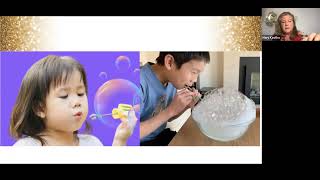
You know, and then. Or a cozy corner at home and in the clinic. But you can just easily make them, you know, making a little fort or something like that can really. It dampens the light and it dampens the noise and Boxes are awesome, too. And so I talked a little about bubbles already. But, like, I. What happens is when you. When you blow, it's one of the ways that you can calm the vagus nerve. And the vagus nerve is the one that's making the heart beat fast, making your body pump out all that adrenaline and everything. And so we have to get the message to the vagus nerve that everything's okay. And when you start breathing slower and it's. The longer the exhale. The longer the exhale, the quicker the vagus nerve will calm down. And so I especially like Bubble Mountain because of that. On the right. Bubble Mountain is. You guys probably already. Already know this, but it's like an inch or two of water and then a squirt of any kind of liquid soap, and then you just blow with straws. And you can make this so big. But the cool thing is the longer and harder that they blow, they get a bigger result, and it's pretty easy to do. And then they can also, like, put the straw in one of those bubbles and then make that bubble bigger. And if they go really slow, it'll start to spin. And. Which is just a really cool thing. But that the kids. I don't know if I've ever met a kid that didn't like Bubble Mountain. And it's such an easy thing to do at home. I think it'd be the perfect thing to do while you're trying to make dinner. Everybody's getting a little crazy. And. And just another thought on that is that when I worked in a skilled nursing facility and I'd walk with these elderly patients, and then you could see they were kind of getting a little out of breath or whatever, we'd stop, check their oxygen, and it would have dropped down maybe to 70 or 80 or something. And then we'd stop and say, smell the. Smell the roses, blow out the candles, do that a few times. Then I'd recheck the oxygen, and we'd be back up in the 90s. And it blew my mind. Like, it really only took three or four breaths to have the oxygen level jump up that much. So I'm sure the kids, when they're getting upset and they can't think straight, I'm sure their oxygen levels are dropping. So these big breaths get. Get everything working right again. The bubbles are my. They're my go to. And even it's interesting, like, if you start blowing them and they're just really gone, and they. They. They almost act like they're more mad when you're doing it. It's funny. You just keep doing it and you just keep staying calm. They're going to start to mirror you because we have mirror neurons. Just like if you yawn, I yawn. So if I just keep doing that, it allows me to really, really stay calm. And eventually they come around because they can't help themselves. And then like I said, if you can get them to blow a few times, then you got them and they're. Then they're. They're good. Like I said, light and noise are the two biggest triggers. And so there's a lot of options for noise reduction. Oh, I just want to mention this for before I forget. The biggest issues with going out in public for the kids are the hand dryers and the automatic flushers. The automatic flushers, you can put a. Keep like a sticky note with you or something and you can put it over the sensor because a lot of it's that for one thing, they don't know when it's going to happen. And sometimes it happens when you're sitting there. Totally freaks them out. And it's so loud. But you can, you can block the sensor with, with the. Just bring something with you and just put it over it. And the. These are three different types of things to help with noise. Noise reduction. So the headphones, they come in all kinds of sizes and shapes and how tight they are. And. And I can tell you that almost every child will not wear them right away because it's this tactile thing that they have to get used to. Most of them, it's just like if you were going to have them start to wear glasses, they're just not going to want to do it at first. But after a little while they're like, oh, I can see things better. I like this. These are the same thing. So you want to make sure they're not like too. Most of the kids don't actually like them super tight, so I usually will get adult ones. It's good to get the cheaper ones because sometimes they will break that. They'll just get mad and they'll pull them apart. Harbor Freight has some that are under $10. They're like $5. And I just recommend getting the less expensive ones to start with. And what I do is I just model it. I'll wear them and then I'll go like, la, la, la, la, la la la. And I'll stick them on them for a second while I'm making a sound so that they can hear that it sounds different. And then I'll take them right off and I'll be like, la la la la la. Put them on. La la la la. Off, on, off. And I'll just be like on me for a little bit, on them for a little bit. Little by little, I make it a little longer. I just did this with a kiddo who would never allow them on his head. And we got, we got him up to almost a minute. So it's good to kind of keep track of how long did I. So you don't feel discouraged, like, oh, five seconds, 30 seconds, 45 seconds, a minute. O we passed a minute. Next thing you know they're grabbing them and putting them on their head. And you also want to leave them where they can get them because at some point when they make that connection like this makes me feel better, then they'll just start to put them on themselves. These other two are more for the parents because I think it's important or like adolescents, I think it's really important. A lot of times when we have kids that are really loud, it just really sets off the adult's nervous system a lot. And the ones on the top a lot of our staff wear, they're called flare F L A R E and they're not really a plug, but they change the pitch of the sound. So it's, it just makes loud sounds more tolerable or high pitched sounds more tolerable. And then the other ones are called loop and they're more like a plug but they have this cute little circle thing on them. So those are just some options for sound. And then on the, on the lines of the adult, you want to think about what you seek and you avoid. Because a lot of times, a lot of the challenges with the kids are that they're a mismatch for the parent. That's what I see. Because let's say you have like a kiddo that's super, super sensory seeking. And both the parents are super sensory seeking. It's really natural for them to just do all this. You know, maybe they go skiing all the time or they go hiking all the time or I know they kind of enjoy the same things. So a lot of times it, it doesn't create tensions or problems as much. It's like the parents intuitively know what they need because their sensory systems are similar. But the vast majority of, of parents and kids that come to Ohana, there's a big mismatch. So like one of the things I'll see a lot of time is the kid loves spinning in circles and the Mom's watching them and, and feeling like this kid on the top. It makes them feel nauseous because their vestibular system's getting triggered just by watching the child. Just, just like when you're in a car wash and all of a sudden it feels like you moved or, or the car next to you moves and you. You get that sensation like you moved. It's because the. The neurons are firing together. They're wired together, the vestibular, the sense of movement and vision. And so a lot of times, if you have like, a parent that is very sensitive to motion and their kid is just all over the place, they're just in a constant state of, like, it affects them. And so I'll recommend things like, like, if we're spinning a kid on a swing or something, I'm like, don't watch them. Look at the floor, look at the wall. You have to be like, really aware that this, you know, if it bothers you, don't. Don't look at them while they're doing that. And in this picture, you could see their kids. Like, obviously. This one's like, give me more. And this one's like, I don't want to move. I'm feeling sick. So we have to be really aware of our own. Our own sensory systems. Another thing that I see is sometimes you have, like, really loud parents. They're people that, they're wonderful people, but they just kind of have a loud, booming voice. And you'll see the kids just like, you know, it's like the parents always over stimulating the kid because they just have a loud voice. And the kid's got auditory sensitivity. So it's just really good to start thinking about, like, what do. What do I seek, what do I avoid? And is. Is that a difference from my child? So do I avoid or speak movement? Do I like slow music music or fast music? You know, am I somebody that just loves, like, just smelling at my house with all kinds of stuff, but that maybe my child's, like, overwhelmed by that? But I like it because it makes me feel calm. Touch is a big thing. Like some, you know, some people want firm, you know, big hugs, and other people are just like, no, I don't want that. And it's. I've really learned to respect that because I'm a hugger. In fact, I really realized how much of a hugger I am during COVID because I had this, like, hugging reflex every time I'd see somebody, and then I'd stop, I'd be like, oh, I can't hug you. And I realized I did that like all day long. I'm like, apparently I hug people all day long normally, but I didn't even realize it until I could. Wasn't allowed to. Well, some of my staff are not huggers and so, you know, they'll maybe take a side hug or something, but you know, I'm just. You just have to be really aware. Some of our kids don't want to be hugged and grandma wants to hug them, they come, it's Christmas, oh, honey, come here. And the kid's like, oh, blah. And then, you know, you might have the opposite. Like you have a parent that just doesn't want all that physical touch and the kids just are craving it. So it's really important to kind of be aware. And then you can start to kind of figure out like, okay, how do we make this work when we. How can we respect each other's nervous systems? But being more self aware of our own and visual is another thing. I don't know what it is about school teachers, elementary school teachers, but man, do they like visual clutter. I worked in the schools for 17 years and I'd be like, my kids need a, a blank space on the wall to look, just to rest their nervous system. And there's nothing, there's not even a two, there's not even two foot square that doesn't have stuff on it. And. And so like, I feel like the, the typical classroom is very overstimulating for our kids. You know, they might just have to like look out the window or something, but they got to have like a way to rest. So some homes are very cluttered and some homes are very uncluttered. That could be affecting the child as well. So you might want to have just like a. Depending on what the child needs, you know, they might need a little. I was just talking about this with somebody. What did we call it? A. It was one of my employees. They're like, I feel like I need a crate. Oh, I know she called it, I feel like I need a crazy corner. That's what she called it. I feel like I need a great. You know, sometimes you need a calm corner. She felt like she needed a crazy corner. So like, like I need to make a crazy corner. Like it has the crash pad and then this and that for her little guy because he just wants to be crazy. So everybody's different, you know, everybody needs different things. So we talked about this, but you know, we were talking about parent, child, grandparent child, sibling is a big one. A Lot of sibling conflict is because of the sensory mismatch and my. My two. I had a sensory avoider and a sensory seeker. And it was a challenge. It was a challenge because the one just wanted to climb all over the other one and the other one's like, give me space. And then I think I could do a whole thing for marriages because I feel like a whole lot of spousal conflict has to do with our sensory systems. And the quickest assessment is just going to ride together. You know, the temperature, is the window open or close? What kind of music, how loud is the music? I mean, man, you learn. You learn in five minutes. So much about a person just going on a ride with them. My husband, I'll pick on him a little bit. He. I was the sensory seeker and he's the sensory avoider. And I've known him since high school. And I feel bad now that I know more about how much I tortured him. But I'd be like roller coaster rides and this and that because. Because he was in love with me. He did all these things that were super uncomfortable to him. I remember we flew through the Grand Canyon in little Cessna. I have this picture of him and he looks literally green coming out of the. Like he should have never gone on that ride. And. And I just made him do all this stuff that was miserable for him. I can't drive when we're together because he gets car sick in the winter. He has the window down. He has to have the cold air blasting on his face. And the rest of us are bundled up. We just go with extra blankets, extra everything. Because if we're going to drive in the winter, he. That's what we have to do as a family. But that's. We just accommodate him. So it's crazy. But I think a lot of conflict comes from that. So let's see. I might have said most of these already. Ways to take care of each other. So I talked about like having some blank spaces looking at like if you're over stimulated by your kid being crazy, just like not watching the movement so much but like look beyond them at the wall or the floor if they're. Especially if they're spinning. We talked about auditory. No noise reduction options. Another thing is like if your child's really loud, get more sound absorbing stuff in your house. So you know, pillows and rugs and stuffies and curtains and just things that kind of absorb the sound more. It's it interesting. I've been in a lot of air b Airbnbs lately and it's interesting to me, like how some of them, you just sound like you're in a can because they don't have like enough sound absorption stuff. And I think it's because it's easier to keep them clean. But it, I notice it really bugs me. We talked about touch. Firm touch is more calming. So when we teach like joint compression and these different handling techniques, we teach to not use your fingers, but use flat, firm hands so they don't feel like they're like being grabbed. It's more calming in general movement if it's resistive. So like saying you're pumping a swing and you're, you know, it's resistive because you're using your muscles. And if it's in a straight line, it's going to be the calming kind of movement. Swimming, riding a bike, lifting weights, straight swinging is all very calming. If, if a child is needing more stimulation, the rotary is the most stimulating. And we have a lot of kids that are under responsive and we're trying, we're almost having to simulate amusement parker rides, like doing fast blasts, like as fast we can one way, as fast we can another way. We do a few of those stops, see if they feel it yet. They don't feel it yet. Do it again until the moment that you. They just are kind of like, oh, I felt that. They kind of stare off or they just look a little different. Then we stop. The second we can see it registered, then we stop because we finally turned it on. But most of the kids that come to Ohana have a really, really messed up vestibular system where they do not. They just don't feel it and they're always moving. But once you, once you stimulate it, then it's like it like wakes it up and then it starts to develop and, and then they don't need it anymore. So to recap the. The five things I just. This started out, we changed the title, but I was just like five things every, every sensory parent needs to know. These are like the five things I just feel are so important to really understand the difference between a meltdown and tantrum. Those three Cs, calm yourself, calm the child, and calm the environment. Low and quiet. So body position, lighting, sounds, even just giving quiet space. Oh, I know I was going to tell the story. This one kiddo that I used to see come in after school and he just needed to sit in the blue tunnel with the ball on top for 10, 15 minutes. Oh, wow. And then he was perfectly happy if we didn't let him do that first. He was crazy the entire time. It was kind of nice because mom and I got to chitchat and talk because he couldn't hear us really very much because of the ball. But he. He's like, I just need quiet. And I think a lot of times when kids get in the car, when pick them up from school and we're like, how's your day? And they're just like, I just want quiet, you know, because they've been overstimulated all day long. But that was. Yeah, this kiddo, he would. Once we figured that out, we were able to make so much progress with him. But when we didn't let him do that, he was just dysregulated and not able to do anything. Low and quiet. Bubbles talked a lot about that noise reduction and then just knowing what you seek and what you avoid and just having that awareness. So now it's your turn. What out of all of that was kind of like, did you have any, like, oh, an aha or big takeaway?
I think it's mostly like thinking on my end of it, like, understanding my sensory needs versus, like the kids. Like, that makes a lot of sense why I would get over stimulated as well. And the end of the day, like, oh, my gosh, just, you know, I'm ready for them to go to bed. I can find ways to try not to be too over stimulated. Can try to figure out those triggers. Yeah, I think that's my biggest takeaway because, I mean, we have been to Ohana for almost two years, so I have some of this knowledge, but this is definitely more like in, you know, in depth. Like. Yeah, like, I like that we. I can use bubbles. Like, maybe I'll just take some bubbles with me wherever I go.
Yeah. And use them. Sorry, I didn't mean to click on that yet, but. Oh, well, that's okay. Yes. Even for us. I mean, honestly, it's how we cope because, I mean, you can imagine how many meltdowns we deal within a week. And. And if we just keep ourselves calm, then at some point the. The child's gonna respond, you know?
Yeah. I also like the sticky note on the toilet because my daughter actually really struggles with that.
Yeah. You know what? It's all so very loud. I saw. I wish I. I wish I. Maybe I can find it if I just Google it on YouTube. I saw this little girl that did it. Her science report was probably like a fifth grader on. On how loud the handwriters are and if they were damaging to the children's ears and they were like, she, she was able to, like she got some kind of way she could measure the decibels and like that, that they were literally, you know, dangerous for children. Wow. Yeah. And I, I just thought it was fascinating that she, I mean, obviously she probably doesn't like hand dryers and so she decided to research it.
Yeah.
But I thought that was really cool. Well, I'm glad that that was your takeaway because I, I was thinking that that is an area we don't get to talk about enough. You know, we're trying to teach you guys stuff while we're working with the kid and, and it's challenging. So this is something I'm working on right now. It's about a third of the way done. And it's an app because for, for years people have asked me to make one. So I'm finally making one and it has one whole week in it. One whole section of. It's all about the part, this part about how do we, how do we take care of our own sensory needs, you know, and so it's, it breaks down everything. It's 30. It's going to be a 30 day challenge where it's 15 minutes a day. And it. Each week, like there's a whole week on how to calm the child, a whole week on yourself, and a whole week on the environment. So it's a lot, it's a lot more in depth. So I'm excited it's coming.
Okay.
Awesome. Very motivated and it just, it's very. Has videos and handouts and all kinds of stuff. I have had parents say, I just want to have you in my pocket, Mary. And I think the only thing this can be really cool is that when you're trying to explain something to a family member or a friend, then you can just go to that little talk that I'm doing and say, listen to what Mary says.
Yeah, yeah, I know that would be.
Helpful because it's hard to find. It's taken me decades to be able to explain things easily, clearly to people.
Yeah.
Because it is, you know, it's very, it's kind of complicated stuff, you know, and it's not. The thing is, it's not common knowledge. And the other reason for doing this app, there's a community in it. And I've asked, people have asked me to not do it like on a social media because people want more privacy. Even if it's a private group, they just still don't like to talk about their kids that, in a, that kind of a setting. And so the app has a community in it, so we can talk to each other in the. In the app, so people can ask questions. But I also just wanted to create, like, all the parents just. They all come to us feeling so alone, like they're the only parent dealing with this stuff, and you're not. You know, there's so many.
Yeah.
So that is the whole presentation. Well, I'm going to go ahead and stop recording, and then we'll do questions.










