About Mary
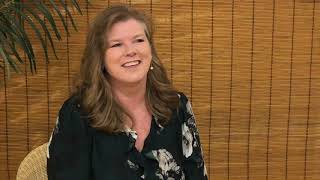
Mary Kostka founded Ohana Occupational Therapy in Wenatchee after 31 years as an OT, 17 of them in schools. She uses an AIR sensory integration approach and teaches parents during sessions. Her son Nikolai went from struggling with coordination to swimming in college after eight months of therapy.
Questions this video answers
Mary Kostka
Wenatchee, Washington, United States
Leavenworth, Washington, United States
About 31 years
About 17 years
Aloha, magnificent moms and dads. I'm Mary Koska, and I am the owner of and the founder of Ohana Occupational Therapy, which is located in Wenatchee, Washington, in the United States. And I thought I would just give a little background, a little introduction to who I am. And I am so passionate and motivated to help families with kids that have sensory processing disorder. In fact, that is my main purpose to be here on the planet, is to do everything I can do to help you guys. A little background About Me I grew up in Southern California until I was 10. Then my family moved to Illinois. And then I went to school in Michigan, Western Michigan University in Kalamazoo, Michigan. Then my husband and I decided that we wanted to live somewhere really beautiful. And so we moved to the Pacific Northwest, and we are here in Leavenworth, Washington, and we also have the clinic in Wenatchee, Washington. So I have right now about 31 years experience being an occupational therapist. And I've really worked in all the different areas of occupational therapy. So I've worked with traumatic brain injury and spinal cord injury and stroke, all the elderly care type of things, rehab, and just in that whole medical area. And then I have. The majority of my career has been with children. So I have about 17 years that I've worked with children in the schools, and then the past 11 have been with my own clinic. And I was very driven and excited to create my own clinic because then I could create the perfect environment to help kids with sensory processing disorder. And I could truly do the AIR sensory integration approach, where you need a lot of space and hanging equipment and just where I could do everything my way. When I worked in the school, I heard twice from two different special ed directors that we don't have to do the Cadillac, just the Volkswagen. And I was like, no, I want the Cadillac. So I'm pretty excited that I get to do the Cadillac. But the other thing is, I really wanted. I wanted to be able to teach the parents. And so having my own clinic, we require the parents to be in the sessions. And the reason we do that is we teach you every single session. And these videos initially were designed to help supplement that teaching because sometimes it's a little hard because I'm with the child and I'm talking to the parent. And, you know, there's just a lot going on. And this way you can just watch the video when the kids are in bed and help it all sink in. And it's a lot of information that you're getting anyway. But these videos are also going to be beneficial if you don't come to Ohana, if you are somewhere else in the world. They're just a lot of our best tips and tricks and things that work. I've also experienced the sensory processing disorder problems just within my own family as well as the therapy. So as a parent, both my children have very interesting sensory systems. And my younger son, Nikolai, when he was in fourth grade, he was just having a hard time keeping up with the other kids and PE and just was kind of sluggish. And I was in the midst of my 120 hours of the training for air sensory integration and I decided to use him as a case study. And he was and still is. And I'm looking over here because he's helping me film these. Nikolai, he was a very verbal kid, so. And just a kid that would just get you into debate and negotiating and just so, so much behavior verbally that a lot of times and. And he would be emotional at times too. And a lot of times you couldn't really see where he was struggling because all of that was in front. Even though as an ot, I couldn't always see it. So when I did the case study with him, oh my gosh, I saw so many things that he was struggling with from the point of view of strength and coordination and sensory processing. And so during the case or during the training, they said, mary, he is working so hard. You can't be his therapist. He comes home, he holds it together all day at school and he would come home and fall apart. He just needed me to be mom and, and not be the one doing the pushing and the just right challenge and all of that. He really needed a therapeutic relationship with a therapist. So my friend Heather, who owns another private practice out of her home, I had her treat him for eight months. And it was so life changing. It was so amazing to watch from the parent side of things and to see most importantly, how happy it made him. We'd finish our sessions and we'd go to Target and he would just be. Instead of dragging along and I'm like, come on, Nikolai, let's go. He was ahead of me, jumping from the reflections on the lights, on the floor, jumping and just perky and happy and had all this energy and just was so pulled together and coordinated. I was just amazed at watching the difference. And he, within that eight months, by the time we were done, he was in the middle of the pack. He wasn't the last, the slowest one in pe. He was in the middle. He was so happy. He felt like he could keep up with everybody and he really was able to participate better. He started doing, he did wrestling, he did football, and then he really found his main groove in swimming. And still to this day he's at college and he's swimming and swimming at college as well. And he's been a lifeguard or is a lifeguard and teaches swimming, he's a swim team coach. All these wonderful things that really all came together when he was able to get that boost of being able to get those occupational therapy services. And so I'm really invested, not just because of it professionally, but because how life changing I know that these things are for our kids and being able to see the difference in him has really been a really good motivator for me. And it's just I was already passionate, but made me even that much more passionate. Hi again. I am so glad that you took the time to watch this video and I'm really proud of you because I know you're busy and it takes time to sit down and focus and learn something new and just really proud of you. Give yourself a pat on the back. You're going to see this after each video because I just want to reinforce you and just let you know I'm proud of you. And change isn't easy. Some of these things. You hear the idea and then implementing it. You know, we're all habitual, so it's not always easy to do. So just do your best to make little baby steps forward and make little changes that are positive and keep watching. See you in the next video. Aloha.










