HW Pencil Pressure Too Light or Too Dark
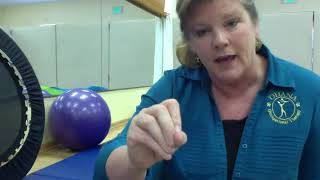
A short instructional YouTube video by Mary Kostka (Ohana OT) focusing on handwriting pencil pressure—why children press too lightly or too hard, how retained primitive reflexes (ATNR, STNR) contribute, simple tests to detect reflex retention, and motor/sensory strategies to improve grip (rocking horse/giraffe exercises, weighted pencils, Play-Doh, carbon-paper layers, shading). Encourages occupational therapy evaluation and points to Ohana OT resources.
Aloha.
Mary Koska here with Ohana ot and we are in the midst of our how to improve handwriting course. And this lesson is all about pencil pressure. And sometimes it's too light, sometimes it's too hard for too light of pressure. I like using a softer lead pencil so that they're able to not use as much pressure and still produce a nice dark line. More commonly we see too hard of pressure. They're squeezing so tight that their fingers are turning, they're blanching, they're turning white, they're pressing so hard that they're indenting the paper. You can feel a ridge on the backside when you're pressing that hard. It's really hard to be very functional with your writing, to be very fast or efficient, and it just take so much energy. This is usually when you're getting huge complaints that they have to write more than a few words or a sentence because it's just exhausting. It's really hard for them to do. One of the biggest reasons that I have found that this is occurring is due to a retained primitive reflex called the asymmetrical tonic neck reflex. And I'm going to show you an exercise, the rocking giraffe, that can help loosen up that grip. Another reflex that impacts their positioning at the table and how tight they're holding on is the symmetrical tonic neck reflex. And I will show you the, oh, did I call it the rocking giraffe. It's the rocking horse for the ATNR and the rocking giraffe for the stnr. Anyway, I'll show you them both and how that all works out. These motor activities are one way to integrate the reflexes. The fastest method that we have found is actually through a very revolutionary thing called the QRI laser. And it's something that we do to fast track our clients to help them get better, much faster. Faster. You can check it out on our website under Wellness. So let me explain a little bit more about these reflexes. So primitive reflexes are these were born with these pre programmed movement patterns. And a lot of them you can think of very easily. Like a grasping reflex, a stepping reflex, a rooting reflex. The asymmetrical tonic neck reflex has the job of helping the baby develop reaching. So they turn their head and it makes their arm straighten up, but it also makes the other side bend, they call it. It's kind of like a fencing position and the legs do the same thing. Well, what happens is when this is hasn't gone all the way in the background and been integrated, that when they're writing and they turn their head. The arm wants to move, and so they develop a habit of stabilizing by squeezing, pressing really hard. It's kind of at a subconscious level that they do this. And once that reflex is integrated, the grip just loosens right up. So just from that one thing alone, we have seen dramatic changes in handwriting. It's probably one of the biggest or most common things that we see that helps improve handwriting. So I'm going to show you how you can help them with that. I'm going to also show you how to. How to test for it. So to test for it, what we.
Do is have them get on all fours and make sure the arms are not locked, that they're a little bit relaxed, because they can override it just by locking. And so you want them to be relaxed, head even with the back, and you're going to turn the head and you'll feel it's like a switch. Their shoulder will drop and the elbow will bend if the reflex is not integrated yet, just like that. So they should be able to move their head without that happening. The other one, the symmetrical tonic neck reflex, has the job getting us up against gravity. So when your little baby's on the. Their belly's on the floor and they lift their head up, the arms come up. When they look down, the little bottom comes up. And little by little, they figure out how to get both the shoulders and the hips up off the ground in a crawling position.
So what happens when that one's not fully integrated is that the kids are sitting at the desk with their head down and their hips want to open up, and it makes them want to slide right out of the chair. So it's another thing that causes them to kind of try to stabilize and hold their body together. So they press hard so that their body isn't stuck sliding out of the chair. So they're kind of fighting against themselves. So the two exercises you can do to help loosen up the grip are the rocking horse and the rocking giraffe.
So the rocking horse, all they have to do for this one is turn.
Trying to figure out the best way to show this to you.
Probably this way, it's just make sure the arms are not locked, get on all fours, turn the head, and they're going to rock their shoulders past their hands. I'm going to go further back so you can see.
Let's try it this way.
So here my hands are under my shoulders, my head's turned, and I'm going to rock my shoulders past my Hands slowly and then back. I'm just going to repeat that, then do it on the other side.
Until.
They'Re able to control that urge for the elbow to bend without locking it. The rocking giraffe is going to be just head up, same thing, Shoulders past the hands. That is a great exercise to help.
Loosen up the grip. So another thing that happens is that sometimes they're pressing really hard just so they can feel it. Maybe their sensation's off a little bit in their hands, and they're just seeking that input to their hands. So sometimes when you put weight, if you weight the pencil, then that helps them relax their hands. And I like doing that with just. I just have a roll of pennies taped to a pencil, and you want to position it about like that. And then what happens is their third finger can rest on it like a little shelf, and it works really well. So if that's the case, what happens is you put something heavy in their hand, and you'll just see their hand just kind of relax once the weight is in there. If they're weak at all in their hands, this isn't going to work at all because it's just going to make it harder if you're struggling to really figure out what's going on. An occupational therapy evaluation. The occupational therapists are experts in figuring all this out, so highly recommend that you have a thorough occupational therapy evaluation if you're still needing some help after this course. And I'm actually available on Skype as well, so anywhere in the world, if you're anywhere living anywhere in the world, I can help you. So just go to ohanaot.com and under resources, you can see what some of our services are, and we'll be happy to help you out. One more. A couple more things. Playing with Play DOH and modeling clay can help help them develop that appropriate pressure control. And one more thing I like to do when they press hard is to give them a little visual feedback. So you get carbon paper and layer it. Between multiple layers of paper, you might have three or four or five and see how many layers their normal pressure goes through. And then have them try to go a little lighter, a little lighter, and then they can look and see how many layers it went through. Another activity I enjoy doing with them is shading. So press really, really hard. Make a dark black, then make it a dark gray, and then a lighter gray and then a barely there gray. And so that they can get some visual feedback how hard they're pressing and how dark it makes the line so those are my favorite things to help with pencil pressure. And it's actually a really big thing because when the kids are pressing, especially if they're pressing really hard, they're just exhausted after a few words or even a sentence. And they will fight you because it's hard, exhausting. They don't like it.
And.
So making it so that it's easier for them physically is really important. And then they just naturally will resist less. So thank you for watching, and I'll see you on the next video.
Aloha.










